Create the Courage to Change with Nick Darland
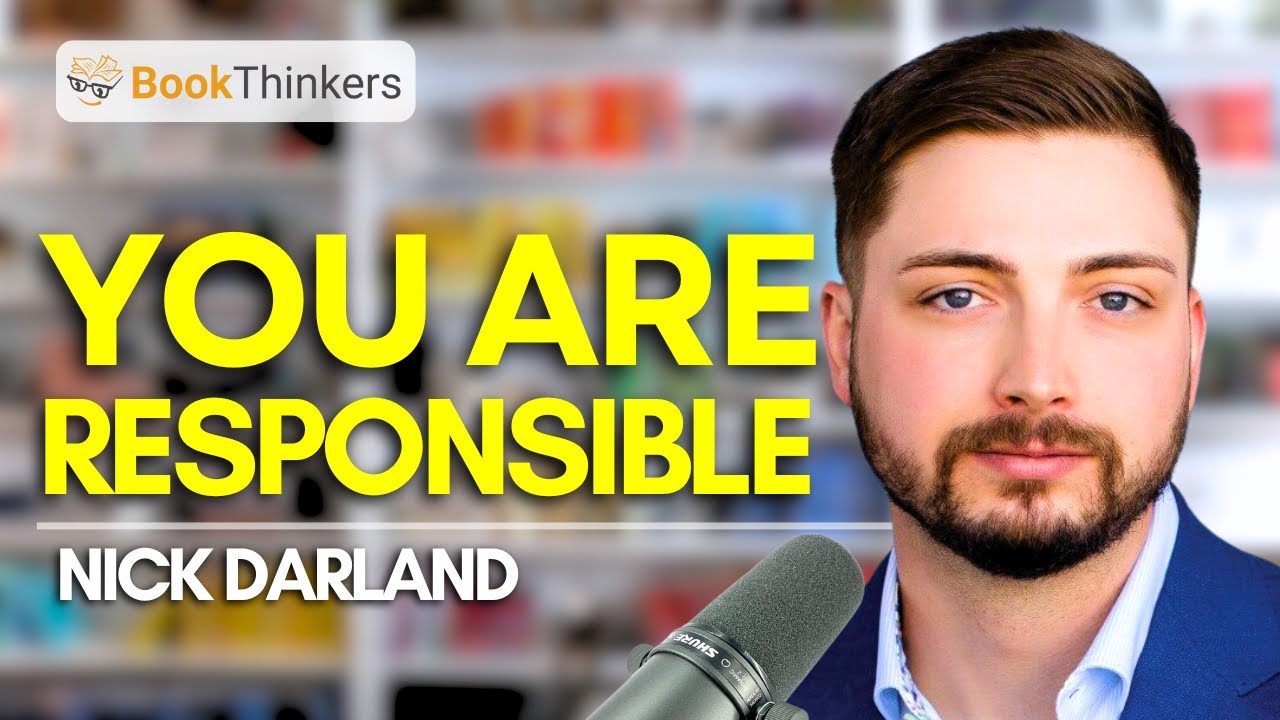
Nick Darland shares his memoir Power and Chaos, recounting a turbulent childhood marked by addiction and abuse that led to a military awakening in 2019. He explains how taking responsibility for his role in his circumstances became the foundation for change, and offers practical advice for people stuck comparing themselves to others.
Chapters
I took responsibility for my role played. Uh, that is 100% what it comes down to. Uh, in everything that you do and every person that you try to become, every version of yourself, there is a, no matter what, there is a role played. Right. Um, and people have bad childhoods. It's never the child's fault. Never. However, there does come a point in time where you have to stand up and you have to move out. And are you going to take responsibility in that moment or not? Are you going to hang on to that past and let it define your future? Or are you going to stand up and say, this is done. I'm done with this. I don't know what this looks like moving forward, but it's definitely a lot better than where I'm at now. And you know, the, the people that are still stuck in their brokenness there, to some point they're choosing to stay there. It's, it's a dartboard on the wall. And they're always hitting a bullseye because they've established their excuse and nobody but themselves can change their mind. Where my picture painted is I'd rather throw a dart at a big, beautiful white wall and anywhere that it lands is a greater version of where I'm at now.
Nick Darland, so excited to finally have you on the Book Thinkers Life-Changing Books podcast. We get to talk about your book, Power and Chaos. If it's— there it is on the screen. I am— beautiful book. Absolutely beautiful. Great. It's also a really well-written book. I wanted to open up with the poem that you have in the preface of the book, because when I first read it, when I started reading your book, it gave me chills. And I was like, I want to give our viewers, our listeners, some, some chills. So, and then I have a question after I read it. So it's this: Courage and hope Step into something that's bigger than you. Imagine the things you might do. As you grow, your heart will too. Step into something that's bigger than you. Now, the question I have is that you wrote this in 2019 and you were going through some tough times. So I would love you to kind of paint a picture of what was going on in your life at the time that you wrote that.
Yeah, it's It was a, I like to say it was an accumulation of everything. Uh, I remember the night that I wrote that, uh, I was at Camp Ripley in Minnesota and we were getting ready for a deployment. So we were, uh, we were on, we were on base, but we were in a QRF scenario. So I was up on this outwatch laying there staring at the stars, thinking about how shitty my life has been. You know, just everything that I was going through. And I was on Instagram. And if you look at my Instagram, when I switched it to a professional profile, I actually left the post there. It was a picture of a baby lion that was stepping into a puddle and the reflection was its older self. And just the poem just came to me. And I actually have it in my notes here. I'll tell you the exact day I wrote it. And it was July 26th, 2019.
Wow. That's awesome.
Yeah. Yeah, right there. So, it was for me a smitten of a light in a moment of darkness. Um, I was, I was growing, but it, growth is hard. Development is hard and people don't talk about that. Right. Um, I, I actually just thought of another quote that I wrote down in my office the other day on a sticky note. And it's like, the curse of development is once you hack it, it never stops. And what that means is that everybody talks about, you know, you gotta grow, you gotta develop, you gotta, you just gotta keep going. You gotta keep moving forward. But like that in itself is exhausting.
Right.
And so, when I wrote the book, I wanted that to be the premises that I wanted that to be the first thing that somebody read because I wanted them, I wanted it to really lay the foundation of, you know, in order to be something more than you are now, it is going to require you to step into a new version. that you don't know yet. And that, and that in itself is scary. But the idea of doing so and the idea of who you could become should be motivating enough to get started.
Yeah, man, that's, that's so beautiful. And I would love for you to maybe paint a picture a little bit of your upbringing, because it's really easy to look at you now. And anybody from the outside looking in would be like, man, this guy's so successful, it probably all came easy to him. Because that's the automatic assumption that we have most of the Which is crazy, but that's what we assume. Oh, he must have had this stuff handed to him. So I would love for you to just maybe talk a little bit about your childhood and what you went through. And maybe we can even start with, you know, you said you became an alcoholic at a young age in your book, so maybe you can talk us a little bit through that.
Yeah, dude. Um, growing up, I was not the kid that was pinned to be anybody. Uh, to, to really paint that picture for you, A couple years ago, I ended up doing an event for the military at my high school, Twin Cedars. And I remember I walked into the front office to say hi to the secretary because I hadn't seen them since, you know, I left my senior year. And I walked into the principal's office, Mr. Roby, and he's scolding this kid that is just sitting there, you know, a lot like I did. And I walk in and Mr. Roby looks at me and he goes, you want to hear a success story? Here he is. And at this time, I hadn't even started Homer Visions yet. I'm just somebody who didn't end up in prison. And so, my life growing up, like I wrote in the book, my parents did the best they could with what they had. And it doesn't mean that it was Great. It was a very broken family. My stepdad, my ex-stepdad, I guess, he to this day still battles with meth addiction. And he was very abusive. When he was good, he was good, right? But when he was bad, it was bad. And I come from a family of addicts and alcoholics, both on my mom and dad's side. Alcoholism and addiction runs deep in me on both fronts. And it just, as I got older and the feeling of not being seen by the people that are supposed to see you really kind of gave me a rebellious attitude. You know, because at the end of the day, I got to the point where if I'm getting negative attention, that I'm getting some type of attention, right? And so it really forged a path for me to— I'm gonna blame my parents, I'm gonna blame my life and how shitty it was, and I'm gonna do what I can for people to see me because I just need someone to see me. I don't care if it's good, bad, or indifferent. I just need to be noticed. My dad was never really around until— realistically, we didn't have much of a relationship until just 5 or 6 years ago. You know, it was my wife actually that pushed me to that because when my wife and I first got together, I didn't want anything to do with my dad. And she told me, am I ever going to meet him? And there's family members that to this day, my wife— Has not met, and so that's been really rekindling. It took a lot of work, and it took a lot of growth on both ends, right? My my relationship with my stepdad and my mother is not good to this day, and it's funny because you know I was telling my baby brother he was over the other day, and he was like, "How are you so calm?" With everything that mom— my mom's pissed about this book. He's like, how are you just so calm? And I'm like, Jesse, I went from the worst kid that anybody could ever have to— there was nothing I could do wrong, right? As I got more successful and as I obtained more of a status, so to speak, my parents were proud. Everybody was proud. I was the perfect son. And then I, and then I wrote this book and, you know, in my mom's words, the only way she was going to be all right with this if I paid off her mortgage. And so, you know, now I'm back to the dysfunction and the people could care less if I existed or not. But the difference is, is I don't care. You know, It's heartbreaking to say that because that's my mom, but if she's not going to provide value to me and my life and my family and her granddaughter, then it's your problem, not mine. And, uh, I think when people embrace the brokenness and they find a lesson through it, then they can start to forge that mentality, uh, that, hey, it's, it's on you. And it hurts, but you can love someone from a distance and that's okay. Right. My mom knows where I live. She knows that at any time when she's ready to talk, I'll be there. But until then, she's gotta, she's gotta forge her own journey and, and create that narrative for herself that, that doesn't just put me as the blame game.
So.
Um, yeah, it, it was a turmoil of different events. Um, you know, I'd stealing cars, breaking into houses, um, always in trouble with the law. Like, and it was a son of a bitch too because my uncle was a sheriff's deputy. So to think that I would ever get away with anything never existed because he would have a conversation with my father before The next morning, right? And then it it really changed at 17. I I left home and deemed myself homeless, and I was just talking to a gentleman yesterday. He's coming on my podcast. His name is Chris Gathers, and he gave me goosebumps because he was he was talking about similar backgrounds, right? And, and he was talking about, you know, in his, in his, uh, late 20s, when he was 28, he had this like kind of reconciliation, this vision of a life without trauma, happiness. Um, and I'm like, dude, that's insane because I had that exact same thing happen to me at, at 17. Like almost verbatim what he said. You know, it happened to me. And so it, uh, it's cool to talk to those kinds of people because they do exist and to, to share those stories and, and the strength in it is, in my opinion, unparalleled, you know, when you decide to quit being the victim and start becoming the victor. So.
Well, thanks for painting that picture for us, Nick. I remember reading your story and I actually, I was going on a couple of longer drives with my wife around the same time that I was reading your book. And we talked quite a bit about you and your journey because sometimes over in our neck of the woods, we sort of lose perspective that, um, you can go through such a traumatic and kind of horrific childhood and come from such a broken situation, but build such an amazing life. And today, I think everybody in the audience can tell how calm and at peace you are. And you're in the middle of this personal development journey, which is really cool. The other thing I wanted to highlight that you made me think about, a couple of years ago, we had Grant and Elena Cardone on the show. And Elena was talking about how a lot of successful people, once they become successful, they close the curtain. They don't open up and talk about how they got there. They just closed the curtain. And what you've done is you've let it all hang out there. You are raw, real, transparent, vulnerable. And so my question for you is this: why did you decide to open up your life and show, you know, your past and your family's past to everybody with ultimate transparency instead of just saying, oh no, I had a great life and kind of move on?
Because it gives hope to the little guys. It gives hope to the, to the kids like me that they see these successful people. And you're right. You know, I talked about it in one of my podcasts is like, it seems like the mentality is, is once you reach a certain level, uh, you just identify with that and you forget about what got you there. And like, that's so much more important. It's, it's not about where you are. Yes, that's important, but it's, it's, it's about where you've been because the, those, that journey and those experiences remind you and guide you. Right. Um, and so I wanted, for me, it's not about success is important. I, and I agree with that, but, but it's not about being well known. It's be— it's about being worth knowing. And so, um, when I wrote the book, I, I posted on, on social media yesterday, I said, you know, I wrote this for me, but I published it for you. And that's because there are people, there are so many people in this world that go through worse things than I did. And there are people that, you know, just have a flat tire and their day's fucking ruined. Um, but the idea that Somebody has the, the courage and the boldness to, to be open like that and to share their story. My, my, my, I pray that it gives them hope that they can do the same. That doesn't mean they have to turn around and write a book about their life and publish it, but if it helps one person, then I did my job. So.
What a line. It's not about being well known. It's about being worth knowing. I just wrote that down. That's, that's a great quote. Holy smokes. Yeah, Nick Garland, he gives a lot of those mic drops. We had the pleasure of— I had the pleasure of spending a couple days with you and it was like that every day. Just constant mic drop. I was like, whoa, man, this guy gets it. I love it. I'm really curious, you know, a lot of people that, again, going back to this point of they look at you or really any successful person and they say, They just, you know, they didn't go through anything hard. Maybe it was handed to them, blah, blah, blah, all those things. So I'm curious, what makes you different from the 99% that maybe don't make it, that do end up in prison, that do become alcoholics because of the traumatic events that they went through?
I took responsibility for my role played. That is 100% what it comes down to. Uh, in everything that you do and every person that you try to become, every version of yourself, there is a, no matter what, there's a role played. Right. Um, and people have bad childhoods. It's never the child's fault. Never. However, there does come a point in time where you have to stand up and you have to move out. And are you gonna take responsibility in that moment or not? Are you gonna hang onto that past and let it define your future? Or are you gonna stand up and say, this is done? I'm done with this. I don't know what this looks like moving forward, but it's definitely a lot better than where I'm at now. And you know, the the people that are still stuck in their brokenness, they're to some point they're choosing to stay there. It's it's a dartboard on the wall, and they're always hitting a bullseye because they've they've established their excuse, and and and nobody but themselves can change their mind. Where my picture painted is I'd rather throw a dart at a big, beautiful white wall, and anywhere that it lands is a greater version of where I'm at now.
So, what were those first points in your life that you started to realize that, that you started to take responsibility?
It was when I went through my D-Max stuff. And, that's the other thing is I didn't leave home at 17 and Have it all figured out. I I had nothing figured out. Still struggling, still staying stuck in the past, still blaming my life and my upbringing and my parents. You know, there was a time in my life where my friends would get things and I would be pissed about it.
Right?
Like if my if my buddy's parents bought him a car, but I'm working at McDonald's forty hours a week to just afford gas in my. My clunked out '92 Ram 50, I was mad about that because I was like, why can't my parents do that for me? Right? Why why why why can't why can't I have that kind of establishment with things given to me whether I deserve it or not? Right? What did I do wrong? And uh. I'm trying to think how I want to word those.
It's okay. This has been beautiful. You know what's really interesting? Um, yeah, I actually just had a conversation with a friend of mine, uh, almost over this exact topic, but it was about something else. So, um, basically he's been working really hard at something. I don't want to give away too many details because I don't even know if it's okay to share it here, but he was working really hard at something for years and years and years, 4 years of his life, just pounding the pavement, doing the thing. And then another friend of his starts the same thing that he's doing and literally within 2 months more successful. And it was such a gut punch to him that he just like, like just had a horror, like he just let it affect him in such a big way. 'Cause he is like, I've been doing this and I've been doing this. Why me? Why me? Why me? So I would just love your advice on that perspective.
Yeah.
Like what do you do in that situation where you feel like, oh man, I've been putting in so much work, you know, working 40 hours a week at McDonald's. Working way harder than that guy over there, and yet I still don't have the thing that I feel like I deserve. So what's your advice to those people?
Keep going. Uh, anything worth anything is gonna be long and endurable, but it's not about where you're at. It's about where you're, where you could be. Um, things that are worth it take time. And people are on different routes and they're— or people are at different phases of their journey at all times in life. And to get back to your question, sorry. So when I, when I was going through my DMACC stuff, you know, I was, I was fueled with rage, just an ungodly amount of rage. And, and, and, and it, it broke me at my core. I mean everything. I, I, for in the beginning, obviously I blamed DMACC for why my life was so shitty, right? But then, uh, I just started asking myself, well, what was my role played? Like initially, why am I in this scenario? And I was like, okay, well, I incorrectly stated that I was a veteran on the FAFSA, whether it was an honest mistake or not, that's what opened the door to everything else. And when you can own that, right, and you can be honest with yourself, then it really starts to change your mentality on everything else, right? If I can take responsibility for this, then I can absolutely take responsibility for everything else, which means, by the way, that I can take responsibility for where I'm trying to go. Right? It's as Les Brown puts it, you have to accept where you are and you have to accept the responsibility that you're going to get yourself to where you want to go. And there's truth to that. So many people want to just be picked up in life. They want to piggyback off someone else. Somebody starts an innovative product and then the next day it's copied by X amount of different companies. Uh, it's that everybody's in the same boat and nobody wants to jump until somebody finally does and they realize you can swim. And, um, to the person that, that is mad about what the work that they've put in and, and somebody that came in and, and did it within 2 months, don't be mad about it. Don't, don't resent them. Ask 'em what they did differently, right? I, like I tell people, if you meet someone that's further along than you are, don't hate 'em for it. Be friends with them, figure out what they're doing. What, what could you do differently? And so I would, uh, I would recommend your friend to, to befriend that person that was able to do it a lot faster than him.
So good.
Yeah, Nick, you're sharing so much value. I have a few questions. First, I wanted to share something I saw the other day. It was might have been Alex Hormozi, but he said, you know, if you're if you're a soul sitting up there with God and you're planning to come down and live the human experience, and you say, oh, I want patience. Well, God's going to put you through a lot of turmoil in order to develop patience. If you want a healthy body, God will help you get that perspective by maybe getting you addicted to alcohol. If you want peace, you're going to go through a lot of chaos. So. It's this idea that as you go through difficult situations, you're going to develop the opposite. And today, we're talking with somebody who's healthy, who's wealthy, who's happy, who has peace and great relationships. And you had to go through the opposite of all of those things to develop them. And so, kudos to you. Here's my first question. I've got a couple. At what age would young Nick Darland accept this book and actually read it and take something from it?
Oh God.
Like, would you have picked this up at 17 and actually read it?
No, no. Uh, 23. Nick Garland at 23 would have picked this up and actually been open-minded about it.
And what year is that?
That would have been, uh, 2019.
So like around the time when you wrote the poem?
Yeah, yeah. Anything before that My life was shitty, and it was everybody else's fault.
Was it just a moment of awakening? Or do you have to hit a certain low where you look for a different response?
I think it's the moment of awakening happens, but it comes from incremental scenarios, right? Like, I believe that people's lives don't get so shitty within 24 hours that Uh, they just have this epiphany. It's an accumulation of bad decisions. Uh, and finally that, that life bill is due and you gotta pay a tab and you can't afford it. And so you're in that moment of, ah, well, this isn't working anymore. What do I do? Right. And, and I talk a lot on suicide, uh, because to be honest with you, that's, that's that dark moment.
Yeah.
Right.
Nietzsche had a philosophy when it came to suicide, and it was, it's a fork in the road. You can go right and end it. Everything is unknown, but in your mind, you don't have to worry about all the physical stuff anymore. But then you take a left and the journey is long and it's hard and it's full of unknowns and construction and stop signs and whatnot. And You're in this moment of, well, I can't do anymore where I'm at, so why would I go left? He poses the question of, you know, people ask themselves, why— I don't want to make it like too graphic, sorry. People ask themselves, you know, when it comes to suicide, why would somebody make that choice, right? Why choose that path? But then he challenges it with, well, why choose to live?
Yeah.
You know, and the living in that, that, that left turn is so much more worth it, right? It's, it's about who you can become along the way. And that's what people need to realize is, uh, development and growth and personal responsibility. Everything takes time and you can't beat that, right? You can't beat time. So it's one day at a time, one step at a time.
You know, this is one of the reasons I love promoting stories like yours, Nick, compared to trying to promote my own, because I didn't go through moments like you did. I didn't go through an upbringing like you did. And I think people, the people that you are best positioned to serve will not relate to my story, but they'll relate to yours, which is why I think it's one of the main reasons that Book Thinkers exist to highlight stories like yours, to give other people hope and relatability. to circumstances that are different than mine.
Right. But, but your circumstances and my circumstances, like, I'm no better than you, nor you are me, right? At the end of the day, we're all people and we all have our own challenges. Like, nobody's life is perfect. Perfection doesn't exist.
So very true. I've heard it said if everybody throws their problems in a pile in the middle of the room, like, you'll probably go run and grab yours back and run in the opposite direction.
Right.
Yeah, very true point. Very fair point. There is a difference in relatability for some people, you know, so absolutely true. Now, here you are quoting philosophers like Nietzsche and speakers and authors like Les Brown, you know, you're incredibly articulate, logical, easy to follow, well thought out. How did you go from 2019 staring up at the stars in this really dark place To where you are today in such a short period of time?
Um, to be honest with you, uh, in the beginning I started just listening to a bunch of motivation. I'm not gonna lie. Uh, it sounds dumb, but yeah, I, I listened, I listened to so many motivational videos that, and I listened to so many of 'em so much that I could literally like follow along with everything they said. Because for me, that was the only out that I had. That was the outlet that kept me as positive as I could be. And then it started with, I remember it was 2019 and I was at Barnes& Noble and I picked up a book randomly and it was Think and Grow Rich by Napoleon Hill. And it was the first book That I had ever read from start to finish. I tried to read before, but my attention span would just. And so, but I opened it up, and you know, it's funny because that book was written in like 1938, and Napoleon Hill was he was talking about post-traumatic growth before it was ever even a thing, right? I'm really big on post-traumatic growth, and clinically it wasn't even recognized until 1992, I believe. And he was talking about all these people that went through these traumatic things and how they became better because of it. And I was like, well, I could probably be better. You know, I don't know what that looks like, but these people did it 100 years ago, so why can't I do it now? And then it just evolved into this addiction of books. And it was a lot of self-help books in the beginning. I've read a lot of self-help books and just taking little nuggets from each one of them. And then you take these nuggets and it, you start to reframe your mentality. And then it became more like business books and like I, I remember I have, I bought, I still have it, Philosophy for Dummies. I don't know why, but I was like, this is a good one. 'Cause I really got big into philosophy, like Socrates and Aristotle. Don't know why, but still am. And then it, you know, when Nate had his heart attack, the book was something that I wanted to write for, you know, 5 years.
Yeah.
Ever since after I got through my DMACC stuff. It's funny because I was just talking to my best friend and he told me, he's like, you know, I remember 5 or 6 years ago we were standing in my garage and you told me how you're going to write a book. And he's like, look, you did it. And, but it takes me back to that time aspect too. I couldn't have written Power and Chaos the way that I did any sooner than I did. Right? It happened at the perfect time, and it took more life challenges that were even harder than what I'd already been through, accepting them and growing from them in order to write it in the style that I did. I didn't want it to be a vent session, right? I wanted it to be a lesson for people. There's a lesson in every chapter, and that's And, I didn't want it to be self-congratulatory either. The Kirkus Review really hit home with me because they said in it, it was very refreshing to read a self-help book and it not be muddied with self-congratulatory because, yeah, it took me, but there were so many people in my life at the time that I had to accept help from the guides. I call them guides in your journey. And so, the reading evolved from me just looking for hope in ways that historically were no longer working. And then, it evolved into me being a published author.
And now, you own a very successful business and you have a wife, you have a You have a child, like you are living a really amazing life. And I love, you already talked about a little bit, but you still have struggles in your life, but now you, you can deal with them through a more grown lens, which is really powerful. Right.
Well, I mean, just to give an example, you know, when I, when I wrote this book, I had went from having a good relationship with my parents to Now, I only talk to my dad, right? And what that taught me was the relationship was never good. I was just stepping down from who I'd become to be accepted by these people. And, you know, I called my mom. This was literally 2 days ago. I was in Walmart and my mom just was acting like she could care less if I existed or not. And, and I just told her, I'm like, Mom, I just want you to know that what you're doing is hurting me. I'm your son. And I want to know, can we grow from this? Can we, can we talk about this as adults? And if not, that hurts. And that's okay, because I'm fine with going my own way. And when you're ready to come around, I'll be there. And you know, she turned it back on me very. You know, the book was petty. I'm petty. I'm a liar because she doesn't want to accept responsibility for her role played, right? And so she wants to create the narrative that she was mother of the year and live in la la land and not accept responsibility for anything that that she did wrong. And and and it's it's sad because. The book isn't even like that, right? It's, it's just, hey, bad things happen and that's okay. What are you gonna do about it? So—
Yeah, in a lot of ways, the only way to get through that anger, through that depression that you have with yourself, is to, like you just said, accept the responsibility for it. And your mom's not there yet, but I hope that maybe you can be a little light that eventually gets her to the point where she's like, okay, I need to start taking responsibility. Some people never do, and we have to be okay with that too, but That can be really hard.
Right.
Nick Darland, this has been such an amazing conversation. And I just also wanted to say, you know, as I was reading your book and then Nick Hutchison, I'll kick it to you after I say this, but I just wanted to say, you know, going through your book, it's very— it's a memoir style. And tell you what, I laughed, I cried, I got goosebumps, I cheered. I was very much invested into your story while I was reading through it. So You did an excellent job. And it is just such a poignant example that anyone from any background, from no matter who you are or where you're at, can make it through. You just have to, like you said, start with taking responsibility for the role that you played. All right, Nick Hutchison, I can give it to you.
Right. Yeah, I just wanted to acknowledge one more time how impressive I think your levels of transparency and honesty are. We live in a world today where people have different versions of themselves. Maybe it's with their family versus alone, or maybe it's on social media versus behind the scenes. Maybe it's in their business versus their personal life. And the fact that you are There's one version of Nick Darland right now, as far as we can see, and he's putting it all out there, and he's working really hard to improve his life and the lives of the people around them and the people that read his book and work with him through the future leadership coaching and in your business. And I mean, it's just, I don't know, kudos to you. I, I think that you said the Kirkus review was refreshing for you to read, um, or they thought your book was refreshing. Like, I think you are Refreshing, and you know it's still to acknowledge there's a long way to go. We talked about it today. You're having an event tonight. No people might show up, but in a few years you'll have twenty thousand people show up, and that's the right attitude. So I don't know, man. I just I'm I'm happy to see you doing your thing. I'm happy to support you in any way that we can. I'm happy to get to know you better over the coming years as a friend and support your journey and. look for mutual accountability and support from you with my journey. And yeah, you just seem like somebody who's going to do a lot of really good things throughout the rest of your life.
So thanks.
Just wanted to acknowledge that as a way to wrap things up. Yeah.
And likewise, like I said, the Book Thinkers, what you guys are doing is phenomenal. It's people-based, it's value-based. I mean, I knew that the first time we talked. And so I wish you guys nothing but fortune and luck because what you're doing is it's building something that's beyond you. If I could make a closing statement to your listeners, my one thing that I would want people to take away from this is no matter where you're at, no matter who you are or what you are, give grace to yourself for where you're at. Um, everything takes time and, and, and, and you'll get there. Just focus on the light and focus on that version of you 5 years down the road and remember the version of you 5 years behind you. And, uh, and you're, and you're gonna make it, but give yourself grace. So many people get so caught up in who they think they're supposed to be that they forget about where they're at right now.
So. Man. Yeah, it's just so, so beautiful. And it's true. Give yourself some grace. I think oftentimes we're the hardest, we're the hardest on ourselves, right? So what a great lesson. What a great podcast episode. Nick, where can people go to find out a little bit more about you and, you know, find the books and everything else that you're doing? We'll obviously link that stuff in the show notes.
Yeah, my website is www.nickdarlin.com. You can contact me through there. My email My email is nick@nickdarling.com. The book is available currently on Amazon and barnesandnoble.com, Power and Chaos: Overcoming Adversity with Courage and Hope. And then my handles on social media are Power and Chaos. So feel free to reach out to me, DM me. I'm always open to meet new people and have in-depth conversations about who people are, where they're at, and what they're doing to try and get to where they want to go. So.
Beautiful. Well, thank you so much for coming on, Nick. This was an incredible conversation. I thoroughly enjoyed it. And just like Nick, I can't wait to continue to watch your journey unfold and get to know you more and better and everything else. It's gonna be great.
It is. It's gonna be exciting. We're gonna do it together.
More from Nick

Napoleon Hill’s “Think and Grow Rich” is a timeless classic #selfhelp #personaldevelopment

4 Books to Help You Get Better at Decision Making #selfhelpbooks #bookrecs #nonfictionbooks


Have you read this book yet? 📖: The 5AM Club by Robin Sharma #selfhelpbooks #robinsharma

Dan Sullivan on Listening to Your Customers Instead of Watching Your Competitors

5 Books That Will Boost Your Financial Intelligence #financialfreedom #nonfictionbooks

The People That Preach the Loudest About Virtue are Usually the Most Power Hungry



Books are the greatest mentors you can find #selfhelpbooks #businessbooks #successmindset

Let’s fight this toxic instant gratification culture together 📖 #selfhelpbooks #jimkwik