Creating Lasting Happiness, Fulfillment, and Growth with Bill Zujewski
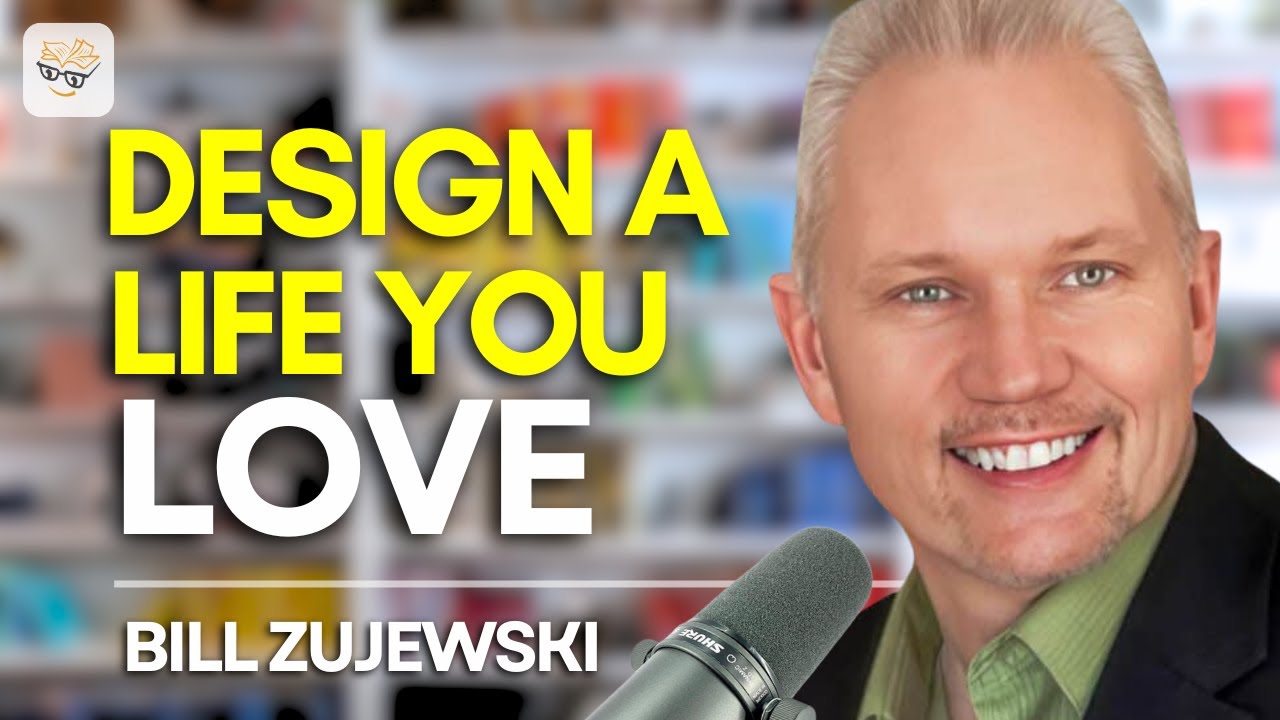
Bill Zujewski developed the Life Score framework and Good Life app to help people measure eight life domains using the HELP GROW mnemonic: Health, Environment, Leisure, Purpose, Growth, Relationships, Occupation, and Wealth. He started by scoring his own life in a spreadsheet, then expanded it to his children and built a digital tool. The Zen Score assessment helps individuals and coaches design balanced, fulfilling lives by tracking progress across these areas.
Chapters
one of the secrets to happiness is progress, you know, and, and progress based on what your vision is or what your goals are. And it's as simple as a daily goal, like get this done today. I feel like at the end of the day when I go to bed and like I wasted a day and made no progress towards anything, like I'm miserable, right? But if I, if I knocked off a couple of important things towards both my, you know, short-term goals and long-term goals and vision, I just feel better that You know, I'm growing and making progress. So a little life hack, you know, set those goals, and when you're making progress, you just— you'll feel better about yourself. You really will.
Bill, welcome to the Book Thinkers Life-Changing Books Podcast. I'm excited to chat with you today, and my first question is this: about 10 years ago, you started a group text called Life Lessons with your 4 kids to share tips and advice. Tell us what happened next.
Yeah, no, it started with 1 or 2 tips, and then I ended up renaming the group text, just my kids, to Life Lessons. And then it became like clockwork for me, and, and they liked it. And then, and then part of that, um, I started sharing this Life Score process I have, because a lot of the tips were about balance in life and designing your life and creating the right relationships and friendships. And what I did for myself, like 20 years ago, I had a little spreadsheet where I scored myself and all that. So, I started to share my little spreadsheet score and kind of a balanced life scorecard with them. And they liked it. And next thing you know, I'm writing a book, building an app.
That's awesome.
You know, around all that.
Do you remember what some of those first pieces of advice in the group chat were?
Yeah, yeah. I think, I think the, the one of the first ones was that people reciprocate, that you have to invest in friendships in order to create real strong relationships. So, so that, that was, that was one of the, one of the first ones I think I shared with them. I then— my boys started getting into investing. So then I shared. They were doing the same mistakes that I was making, which is when stocks were down, they wanted to double down because the stock was on sale. And I told them, you know, don't catch a falling knife. And to this day, that was 10 years ago, they still throw that at me sometimes when the market has a down day.
Yeah.
And, and I'm like, are you buying? No, Dad, don't catch a falling knife. Right? So, yeah, little things like that.
Yeah, that's funny. So that group chat is still active today?
Still active. Yeah, still active. Partially also because I made them partial owners in my Good Life LLC. So I got my own kind of version of succession happening. So they are my— they're all in their 20s now, by the way. You said kids. They're, they're my oldest— I mean, my youngest just graduated from UConn, uh, 22, 20, and my other boys are 25 and 27, and my daughter's 29. And so they're also my Gen Z study group as well.
Yeah, yeah. Oh, that's great to have. Yeah. So, you know, do your kids recognize that— that I say kids— did, uh, your young adult children— and by the way, I, I think of myself as a kid all the time too. I'm 31 years old. So, uh, They're kids to me. Did they recognize, like, how different that is? I mean, most parents aren't talking about tips and advice, you know, different areas of life. And if you were to die tomorrow, would you be happy with the life that you've lived so far? Like, those kind of questions don't really get brought up, I think, in the standard American household very often.
No, no, I know. But it's, it's worked. It's worked out well. It's actually Some of the investment stuff has spilled over into their circles of friends. I'm now followed on X for my— and Twitter for my top 10 holdings of the month. So I've really enjoyed it. They don't mind at all, although I am starting to try to get my personal brand built and using Good Life— I mean, using the Instagram channel and LinkedIn. So You know, so far they mostly like, so they're not embarrassed by me so far. So, so far so good.
Oh, that's— I love to hear it.
Yeah.
Um, in your book, you kick off with that question, if you died tomorrow, would you feel proud of the life you lived? Now, I'd encourage everyone that's listening or watching today to maybe pause this conversation and think about that a little bit. Think about if you died tomorrow, would you be proud of the life you lived? And I think most people would probably answer no. And so, why did you decide to include that in the introduction of your book?
Yeah, because I'm, you know, I am at this point in my 50s trying to give back, leave a legacy, and looking back at what I've done so far with my life. Like, what is, what is a good life? That's the name of my company, you know. What is the definition of a good life? And I don't think wealth is a great metric, although it's probably the most popular one here in the United States. But other countries around the world look at your family. Well, how did you do raising your, your family? And, you know, I'm super proud of that aspect of my life. Uh, I think the, the best, the best KPI for a good life that that I love quoting is Warren Buffett. A couple of years ago, I was listening to him said, best indicator of a good life is in the end, how many people love you. I'm like, oh my God, that's so simple, right? You know, but it's, it's a good indicator of what you did with your life and, and how you gave back and who you shared it with, right? How many people love you in the end, right? So I thought that was kind of cool and simple.
And you referenced the book in here, but The Top 5 Regrets of the Dying by Bronnie Ware is one of my all-time favorite books because at the end of life, Most people end up regretting not having lived a life that's more fulfilling to them and less based on other people. And, and I think that the earlier you can get that message into your head, the better. And so one of the reasons that I think wealth is the first thing people talk about when they talk about success is because it is so easily quantified.
Mm-hmm.
And some of these other areas of our life are difficult to score. And so that's where you sort of step in and help us out a little bit. So for those in the audience that are like, okay, I get it, I get it. These other areas of life, like family, for instance, those are important, but how do I quantify them? What's the solution?
Yeah, well, Laird, thank you for teaming me up, right? So, um, I'll connect it back to what I— what we started off with. I had this, and I bet you a lot of people do this, right? December, end of the year, how'd my year go? What am I going to start doing for next year? What are my New Year's resolutions? Well, the engineer And me kind of really got anal around— let's, you know, I literally have kept a spreadsheet with like 12 rows of how did I do with my net worth, how did I do with my career, did I hit the pay I wanted, um, how did I do with my, my wife, how did I do with my circle of friends, you know, what did I do for my leisure, did I, did I go to at least 2 places and all that. So I would, I would score myself.
Wow.
0 to 10 in all those areas and less about the number in the end, but more forcing you to self-reflect on did you actually invest in all areas of your life? Most people think balanced life is work and non-work. And in my scorecard, it's not. It's really a slice of the pie. It's your— and I got a mnemonic, HELP GROW. Uh, H is for health, E is for your environment, home environment, L for your leisure time, P for purpose, G for growth, R for your relationships, O for your occupation, and W for your wealth, right? So those are the 8 slices of, you know, the wheel of life, so to speak. And you need to really invest in all those areas. I find— I think that's the right formula for kind of a Healthy, fulfilling, happy, all those things, you know, kind of add up to this, you know, balanced, good life.
But Bill, for the person in the audience, it's like, I just feel so overwhelmed by that. Like what you just said, all these different categories, I'm not happy with any of them. Where does somebody start? Like, how do you, how do you start making progress against the different categories?
Yeah, yeah. Well, my Zen Score, so that's the marketing name for this little 11-question assessment. It actually, it's in the book. It's like chapter 4. You can take a look at it. What's your life score? And then there's a mobile app. There's a mobile app as well and a website, goodlife.com. Takes about 2 minutes and it's how you feel about your life. How do you feel about your body fitness and where you are with that? How do you feel about your, the next question, home? Are you relaxed, able to entertain? Do you feel safe at home? It, like, it gives you a little of a hint of where you should be and then asks you to score yourself 0 to 10. You go through that and you end up getting a score between 0 and 100. It's almost like a grade, you know. You're in the 60s, you probably got a D in terms of happiness about how you feel about all those areas, you know. 78, you get to 80s, you know, your Zen score in the 80s is probably, yeah, you're doing pretty well in most of those areas. But maybe you have a 3 in leisure because you took no vacations last year and you missed it. Like, you know, your Zen Score will like be right in your face and say, oh my God, I got a 3 here and a 3 here. I got 10s here. It kind of says, okay, I got to maybe adjust some of my plans for the next 6 to 12 months based on that Zen Score.
So for anybody in the audience that's interested, we'll put the link in today's show description. You can do the Zen Score for free on goodlifeii.com. So, check out that link in today's show description, go do the Zen Score, and then continue with this episode. Awesome.
Thank you for that.
You know, one of the, one of the thoughts in your book that I really enjoyed kind of early on, and I think this would be helpful for anybody that's stuck, is you say start by dreaming. Like, imagine your ideal life. And you'll start to reconnect with that vision that energizes you. And energy is such an important piece of this. If you don't, if you're not excited about life, it's really difficult to think about, okay, well, I need to add more leisure, or I need to add more purpose, or I need to focus more on my vision and goals. Like, if you're not excited about your future, I think it's difficult to get there. So tell us a little bit more about dreaming. Why is it important from your perspective?
Yeah, no, it's definitely one of the lessons learned that I shared with my kids, which is think of what you want your life to look at— look like in like 5 years, 10 years, 20 years. And like, get specific. Are you living in the burbs? Are you— do you have a family? Are you— what part of the country are you in? Um, are you hiking on the weekends? What's going to be your hobbies? Like, picture it, uh, all those things. And It's amazing. Your subconscious will start to manifest, you know, kind of these things. I think, I think was it Earl? I know you read tons of self-help books. Earl Nightingale, kind of you are what you think, right? So you, if you start to have that vision subconsciously or consciously, a lot of the day-to-day, week-to-week, you know, decisions, you know, happen, you know, automatically. And by the way, Um, that life lesson, let me go circle back on that, is that one of the secrets to happiness is progress, you know, and, and progress based on what your vision is or what your goals are. And it's as simple as a daily goal, like get this done today. I feel like at the end of the day when I go to bed and like I wasted a day and made no progress towards anything, like I'm miserable, right? But if I, if I knocked off a couple of important things towards both my you know, short-term goals and long-term goals and vision. I just feel better that, you know, I'm growing and making progress. So, a little life hack, you know, set those goals, and when you're making progress, you just— you'll feel better about yourself. You really will.
Yeah, that's the whole idea behind make your bed in the morning. It's just get a little quick win.
Yeah, no, cut the grass. I love— I love getting the yard work done because it's one of those black and white things. There it is. I've definitely got something done. Because sometimes life, you're not sure if you actually put in a good day's work in the office or what you got done. You know, sometimes you need those little wins.
Yeah. One of, uh, one of our clients at BookThinkers, his name is Ken Rusk. He calls that a stand back moment. And he's really into the blue collar type of work, work with your hands, get your hands dirty a little bit. Because when you're done with whatever the project is, whether it's mowing the lawn, or it's replanting a tree, whatever it is.
Yeah.
You get to stand back and you get a visual indicator of how things are going. That's also what's really important about what you're offering, which is score your life. Like, get, get the ability to stand back and look at this quantifiable thing that gives you the ability to start making progress. And Peter Drucker, the legendary management guru, he says, what's not being measured can't be managed. It's hard to improve something where if you don't know where you currently stand.
Yes, and I use that one. I love that quote. And so let me, let me also say that the Zen Score is, is great for self-reflection, but the book takes you one step further. I've been studying, you know, life, happiness, fulfillment since I was in my 20s. You remind me a lot of myself trying to consume as much as I can on the secrets of life. And I think I've created a pretty good playbook of like, I have documented 100+ things, right? I actually— the list is up to 119 of what people who are good in their wealth area or relationships area do. It's like best practices for life. Like, like take wealth, the W, and help grow. You know, do you save 10% of your paycheck every week? Right. Do you have a 6-month rainy day fund? Is your mortgage less than 1/3 of your monthly income? Right. Because if it's more than that, You probably overextended yourself. You're introducing stress in your life, right? Do you have a retirement fund? If you have family, do you have a 529? Do you know what a 401 and a mutual fund— are you literate, right? So these things are not how you feel about your wealth. Now we're getting down to answering 12 questions around what are you doing about getting your finances in order. One of the questions I'm looking at my spreadsheet here is, do you pay off your your credit card every month, like a no-brainer, right? So these are people who have their finances in order, do these 14 things. And when you go through the Life Score assessment and assess whether you're doing them, you know, it spits out like a credit rating for life. And it'll be evident that, holy smokes, I'm only doing like 2 or 3 of these 14 things. You know, here's kind of a guide of how to get that part of my life in order.
Based on the data you've collected so far, what are the areas of life that people seem to neglect the most?
Yeah, for sure. And it's unfortunate is no one really understands their purpose. No one really stops and thinks about that. And, you know, most people associate it with some kind of religion or something, but your purpose will change from, from phases in your life. When you're in your 20s, it's fine to have career be your purpose. You've got to start making money to do the things you need to do to raise a family, right? And then you get older and you have kids, the family becomes your purpose, you know. And then, and then starting to save for retirement, and then giving back, and then, you know, helping people with cancer in the local community and all, you know. But most, most people, when they fill out the Zen Score, give themselves like a 1 or 2 in purpose because they really haven't figured out You know what their role in the big picture of things is. So that's, that's definitely, definitely a low score. I would say occupation is kind of low only because they're not happy with their job. Like, they've been doing the same thing for 5 years, or then their manager, and, and change is hard. It's hard when you're making some money. It's pretty good. You know, you're kind of afraid to leave that position or do something new. So, there is a lot of unhappiness in people's careers and occupations when I look at the Zen scores as well.
Well, I'm happy that you've differentiated the two because I think a lot of people think of their purpose as their occupation, but they're definitely separate. And on the purpose side of things, you know, I've read a lot of books on purpose. I read a lot of philosophy, just like you mentioned. out here trying to consume as much information as possible. And I think the most actionable book that I've read on purpose so far is Built to Serve by Evan Carmichael. And in that book, he actually says what you said, which is that for most people, progress equals happiness.
Mm-hmm.
And the fastest way to start feeling good is to start checking boxes. And, you know, those stand back moments are important. Um, but the occupation piece, yeah, that gets really tough too. Because the longer you're, you're in a career that doesn't fuel you, the more sunk cost bias you have. And, and I think probably the more resistance you have to change. So what advice, Bill, do you have for people that they score low on occupation, but they have a family to feed and they have a skillset they've, that they've developed around that specific occupation? Like, what do you do? How do you shake things up?
Yeah, no, and it's, it's tricky. when you're, you're young, it's, it's easier as you start to build your nest egg to start, you know, taking on a little risk. So take me, for example. I did get a little grumpy, you know, call it what you want, in a rut, burnt out. You know, I did corporate marketing, head of marketing for big corporations. I was at Oracle for a while, and I just felt like Yeah, I really need more freedom. It really came down to like I wanted to do what I wanted to do and get away from some of the bureaucracy and grind. Like, you know, my company, GoodLife, it's Monday through Thursday. Guess what? All my employees have Friday off. We only work 4 weeks, you know, or 4 days a week. So I would say this, and this is, as you know, that's pretty a hot trend. Everyone's trying to create some passive income. That makes sense. Like, you know, moonlight, right? Start like dabbling in things you want to do that might become, you know, either a consulting gig for you or a newsletter subscription or a community membership. And when you feel like you can step away because you have something, you know, start taking— that's when you start taking the risk, right? I mean, I wouldn't advocate just Like, with no plan, just quitting because you're fed up, you know, interview while you still have a job if you're not happy where you are, looking for the next perfect job, all those things. But do something. Don't, don't stay in the rut. Um, that's where the stress comes from.
I, I—
someone said, I forget who, that stress is, is not about overwork, right? And working too hard. It's actually having some problems. and not doing anything about them. That's what causes stress. Like when you feel like no progress, like I got these issues and I'm just letting them, you know, stew and I'm doing nothing about them. That's where— that's what will cause stress. Like not, not, you know, ignoring the need for change will cause a lot of anxiety and stress.
Yeah, I've, I've, uh, I've spent a lot of time optimizing my life. to where I'm only focused on activities that I enjoy, and I've automated, delegated, or eliminated anything that doesn't bring me energy. The one thing though, Bill, that still gets me, and I recognize it, that still creates anxiety and a feeling of ugh, is when my emails pile up. And I know there's something that I could do about it, which is I sit down and, you know, it always takes me less time to work through my email backlog than I think it's going to.
Yeah.
But that task, it just builds up in my head and I'll be on a walk or it'll be the weekend. And I know I could be tackling it a little bit, but I just let it build and build. And it's that act of not making progress that I think creates the anxiety in my life.
Yeah, no, I know. And my kids laugh at me when I open up my, you know, emails, you know, in front of them and they'll see like 17,000 unread messages. I'm like, what are you doing? Like, they're down to a few, you know, 10 or 100 and they feel like, oh, I gotta get, I don't get to everyone. I look at— I start with what I need to get done that day, that week, that month, and email doesn't really dictate that. As I moved up kind of the management chain, you know, I sometimes I would just wait for a second or third email or text or a call to know what's really important. And if it's important, it'll bubble up.
Yeah.
Right. And so you just can't, you know, I, and you start actually not sharing your email with people as well. So.
Yeah, I keep this, uh, this was a suggestion, uh, from a former guest on the podcast, Aaron Clifford. Keep a red no button on your desk. Just say no to things. Don't, don't let the tasks pile up. Don't hand out your email. And I think you're right. If people really need you, they'll reach out a second or a third time.
Yeah, agreed, agreed. Um, and protect your email, obviously. You know, I do have, I do have multiple email accounts. Um, I got one for family, I got one for some of my consulting per diem ad hoc work, and then I got my, you know, good life. So, you know, depending on the situation, I'll share a different email.
So Bill, now that you've developed, uh, these assessments, it seems like it'd be the perfect tool for a coach to use with their clients. So talk to us a little bit about that.
Yeah, no, and this is where the entrepreneurship hat— you never know where a good idea on a cool app will take you. So my first out of the gate, I launched a company about a year ago thinking I would actually disintermediate, not to use a fancy word, or replace life coaches. Like, the people who actually need coaching, a lot of times they can't afford life coaching. So I'm like, let me give them a tool that they could use themselves to assess themselves, come up with goals. But, but what— 2 things, um, happen. One is people are terrible at disciplining themselves, and, and, and so they kind of almost need the coach. So, so I, I realized that There was definitely some churn after people loving the score, you know, stopped using it after a while. But the second thing, I had some coaches starting to use it, so I reached out to them and they're using it as their engagement tool. Hey, before we kick off our project, let's assess how you feel about these areas, what you're doing. And we said money's a bad metric. A lot of life coaches, it's kind of touchy-feely, like, you know, and so this gives them like, hey, you're at a 68 right now. Let's get you to an 82 by, you know, in the end of 3 months. So, now, they're using it to be very specific about what they're going to work on around the score. So, the score, it's almost like, you know, companies have KPIs and a dashboard for how sales is going and marketing and product. I mean, why not have a dashboard for your life? And track how that's going month to month, quarter to quarter. So that's, that's how coaches are using it. And I'm psyched. I'm now actually building some features where a client and a coach could share goals, share plans, share gratitude entries. And now there's a collaborative feature where a coach and a client, you know, can kind of work on their scores together.
Yeah, I think that's great. I shared with you way back when, when the two of us first met, that For a long time, my friends and I maintained an activity tracker together where we were trying to score the different goals that we had, I think, in each area of our life throughout the week.
Mm-hmm.
And we kept them in a shared Google Sheet. So, each person had their own tab, and then we would meet once a week and talk about them. And I knew that I would work a little bit harder to achieve my goals if I was meeting with them on Friday.
Right.
It was that external accountability. It was the expectation that not only did I set this goal for myself, but I have somebody else who's holding me accountable to achieving it. And so, you're right in that discipline starts to wither out a little bit if you're only— you can make excuses if it's only you holding yourself accountable. But if there's another person there, you're right. I think the coaching piece is very important. And so, having the ability to set those goals within the app, And then having somebody else have visibility to it and be able to communicate back and forth and hold you accountable. I think that's really smart.
Yeah, no, it's no different from a lot of areas like fitness training, right? Most of us know what we need to do to get in better shape, but yet we just can't do it. And, and, you know, spending that money on a fitness coach makes it a high priority in your life and gives you someone to hold you accountable. It's the same thing with life. Like, you know, hey, you still haven't paid off your credit cards. We're going on, you know, 3 months here. We raised this 3— like, it's black. Your scores are black and white, you know. And so you can start to actually get specific. You said it, um, a few minutes ago, like, what, you know, what gets, you know, measured gets done, right? And that's what that Life Score, you know, tells you what gets done in life.
Yeah, I have a running coach and it's because I don't like running, but I'm participating in all of these events, whether it's Spartan races or triathlons, and I wanna beat my friends.
Exactly.
And some of them are very competitive runners. And so, I hired a running coach. Now, I'm running somewhere around 5 to 6 times as much per month, so like in total mileage, as I was a year ago. But I feel better, I'm healthier, and it's just because I know if I don't follow the plan he laid out for me, he's going to fire me as a client.
Yeah.
And so, I see the need for it. And you think about professional athletes, they all have coaches.
They all have coaches. Yeah, yeah, yeah. No, I mean, I mean, it's silly if you let your ego get in the way of hiring a coach, whether it's your career, whether it's a financial advisor. They're like a coach, right? I mean, the people who are 10, 20 years older than you that have kind of been where you want to get, it's crazy for you not to take advantage of that wisdom and expertise that I have. Um, so I definitely encourage people to, you know, I mean, seek out a mentor obviously, but also even if you have to make it more formal, find that coach to work on that area in your life that you want to improve in.
Yeah, 100%. 100%. As we start to wrap up, time flies when you're having fun. We're almost 30 minutes into our conversation. There's another concept from your book that I wanted to bring up, which is that balance is not about investing in every area of your life evenly, which I think a lot of people think it is, but it's about investing in the areas that matter the most to you right now.
Yeah.
So you talked a little bit about how purpose can change. I think that balance changes over time as well. So could you talk with us a little bit about that?
Yeah, no, for sure. I mean, obviously if you're retired, your priorities, your leisure goals are, you know, is going to be a bigger slice of the pie. But if you're in your 20s, you know, that's the time to establish your career. There's nothing wrong with working a little extra hard Um, that's not the time to coast in life and work 30 hours. I'm just telling you, right? You— that, that is where you still don't have a wife or maybe, you know, kids. And, you know, you should focus on, one, your occupation, and, and two, your, your wealth, right? And, and then as you get it and get married and have that, you know, uh, first set of kids, you— that's when you shift. I took a sabbatical in the middle of my career and took a year off to coach my kids in AAU baseball and AAU basketball because at the time I thought that was my highest priority, to help launch these kids into the world. And I wanted to spend as much time with them. And I probably walked away from some big pay packages and big opportunities in my career, but that wasn't, you know, when I was in my 40s, that was less of a priority than when, you know, when I was in my 20s. So you're absolutely right, there's no like exact playbook for every— you know, you're going to adjust as you grow, your life situation changes. And, you know, purpose right now, it's fine to have your job as a purpose. So I'll give you one little thing. I had a discussion with someone who worked for me last year in marketing, feel— felt like, you know, all I'm doing is working, you know. I'm like, actually, if we get— if we hit our numbers on leads, because I was running marketing, and our revenue goals and new logos, then— and we grow 50%, then we can hire 50 more people. We created 50 more jobs and we don't have to lay anyone off. So just keeping our company, you know, functional and growing is actually paying, allowing people to actually, you know, you know, make money in their lives. So even that, helping a company succeed is a worthy purpose, to be honest with you.
Yeah, I think so too. I was watching a TV show recently where 2 men later in life were sitting there smoking cigars, having a drink, talking to each other, and they were talking about, you know, did they live a good life? And somebody brought that up. They're like, I've employed thousands of people. Those people provided for their families. Those families were able to do things as a result of their employment. Like, that's a purpose. That's a really big— that's a really big moment for a lot of people. Bill, as we wrap up, again, I just want to congratulate you on a life well lived, on a life well designed, I should say.
Yes.
You talk in the book, not in a boastful way, but your life ended up in many ways exactly how you designed it. And I— not too many people can say that. And it's the result of Measuring it.
Yeah.
And then managing it. So, uh, for people that want to get a copy of your book, What's Your Life Score, or they'd like to go through the assessments one more time, where should people go? What should they do?
Sure, sure. Well, if you could remember how to spell my last name, Zajewski, then it's easy. There's only like 30 of us in the whole world. So, if you go to Amazon, you can either, uh, take— get the book. It's on Kindle. You know, What's Your Life Score? A Playbook for Designing Your Best Life. Search on What's Your Life Score? my name. I'm on LinkedIn, so feel free to reach out to me on LinkedIn. And then if you want to check out the app, go to goodlifeii.com with 2 I's, goodlifeii.com. And there's the free version, there's a professional version, enterprise version. Start on the free version and start assessing yourself and reflecting on, you know, where are you? See if you're happy with your life score.
I love it. We'll make sure those notes are, uh, or those links are in the show notes. Here's, uh, 2 more final questions for you, rapid fire. Number one is, if the book was deleted but you could leave the world with just one message from it, what would that be?
Um, probably relationships are the most important thing in life, and the having the right partner, friends, family around you is going to be the number one indicator of whether you're living a healthy, happy life, right? So, so start there.
I think that's amazing advice. I don't think in general people take enough time to analyze their relationships before they get into them or before they choose to maintain them. So I think that's great advice. Final question for you. Who has been your greatest mentor along this entire journey? Is it somebody that you read? Is it a family member? Who's been your biggest mentor so far?
Yeah, well, I've had different ones along the way. You know, I hate to say it because people will laugh. You know, when I was in my 20s, I loved Tony Robbins. Like, he was my motivator. Um, but I would say recently, over the last like 20 years, it's been the CEOs. I've been lucky to have CEOs Kevin Lercy at eDocs and Bob Burke at ATG. These CEOs were really nice people and I didn't realize you can be like a strong executive leader and still be really nice, right? And I appreciate that. I think those are some of my best people I look up to.
Oh, it's amazing. By the way, I'm a fan of Tony Robbins, so no laughs over here.
You're still going, by the way. Oh my gosh. Yeah.
Tony, uh, yeah, he is still going. His son, Jerrick Robbins, has been on this podcast before, and his writing partner for one of his books, Peter Mallouk, he's been on the podcast before. So you're sharing the digital stage with his circle a little bit.
Yeah, yeah. No, so that's great.
That's great.
That's fun.
Well, good to chat with you, Bill. Thank you so much for the conversation.
Thanks, thanks. It was a pleasure. Hopefully there was at least a couple nuggets there, maybe a couple lessons learned that I shared. And, uh, check out, you know, go see what your Zen Score is.
More from Nick

Napoleon Hill’s “Think and Grow Rich” is a timeless classic #selfhelp #personaldevelopment

4 Books to Help You Get Better at Decision Making #selfhelpbooks #bookrecs #nonfictionbooks


Have you read this book yet? 📖: The 5AM Club by Robin Sharma #selfhelpbooks #robinsharma

Dan Sullivan on Listening to Your Customers Instead of Watching Your Competitors

5 Books That Will Boost Your Financial Intelligence #financialfreedom #nonfictionbooks

The People That Preach the Loudest About Virtue are Usually the Most Power Hungry



Books are the greatest mentors you can find #selfhelpbooks #businessbooks #successmindset

Let’s fight this toxic instant gratification culture together 📖 #selfhelpbooks #jimkwik