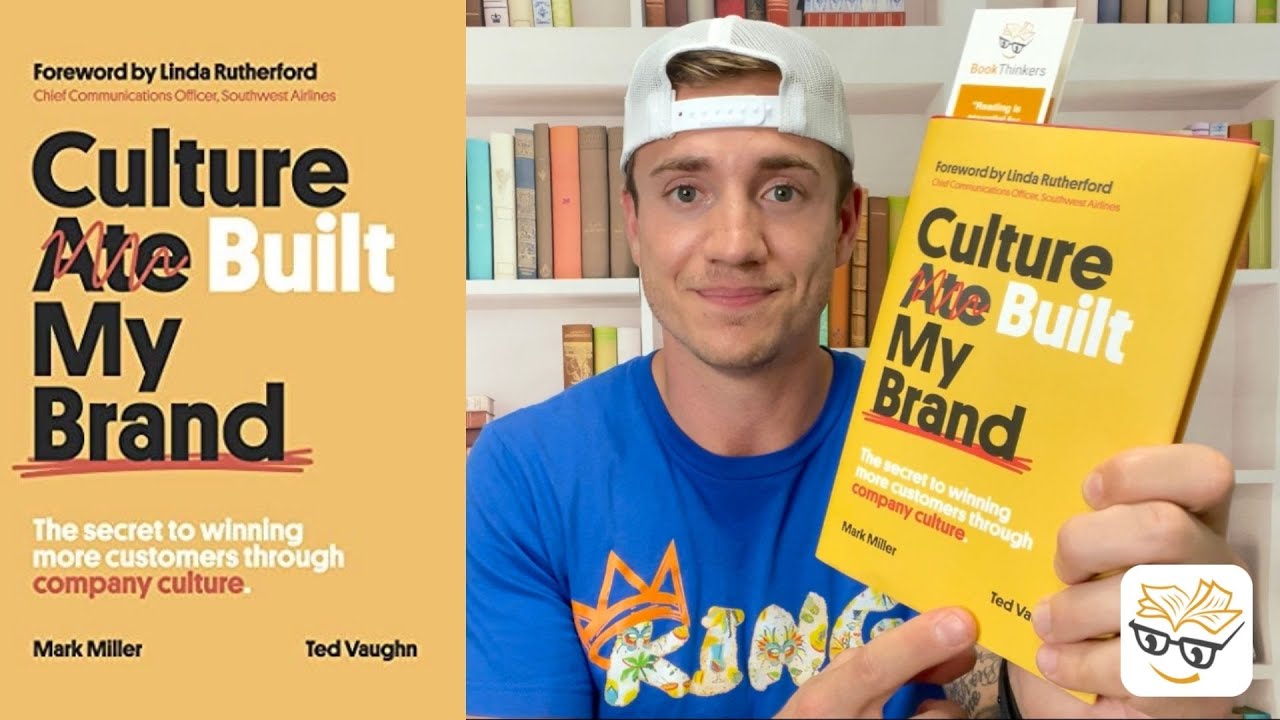
In this solo YouTube review, Nick Hutchison introduces Mark Miller and Ted Vaughn's book Culture Built My Brand, emphasizing that culture is the most critical of five brand characteristics (culture, story, service/product, experience, identity). He outlines the authors' Marquee Culture Method, which integrates culture into all brand facets to attract customers, differentiate the business, and improve employee satisfaction. Hutchinson highlights Chapter 7 on vocabulary, using two concrete examples: the ambiguous term “hustle,” which must be defined to avoid toxic interpretations, and Ray Dalio’s Bridgewater principle that “pain + reflection = progress,” illustrating how reframing language shapes culture. He recommends practical steps such as forming culture committees, establishing rituals, and leveraging the book’s data‑driven case studies. The review concludes with calls to action for both employees seeking to drive change and leaders aiming to rebrand, directing viewers to additional resources and encouraging engagement.
Chapters
Culture eats strategy for breakfast. I love that line by the organizational management guru Peter Drucker, and I wanted to kick off today's review with that quote to catch everybody's attention, but also because I just finished reading this book and it's now my favorite book on company culture and branding, which are extremely important in 2021. You cannot ignore them at any level of business. So Book Thinkers family, today I'm going to review my biggest takeaways from Culture Built My Brand by authors Mark Miller and Ted Vaughn, and the subtitle reads, The Secret to Winning More Customers Through Company Culture. Whether you are an employee looking to drive organizational change up throughout your company, or you're a business leader looking down at everybody and saying, geez, this is a mess, we need to rebrand, or we need to improve our culture, this book is for you. And I understand exactly what these two are doing because about a year ago, I was part of a company that was acquired into a larger company, and I was on the culture committee. It was my responsibility to integrate the culture of the company that was just acquired into a broader culture and kind of redefine things. And so we went through the normal stuff, the core values, the mission statements, the value statements, the vision statements, all of that kind of stuff, the company swag. And if I had had this book in my hands at the time, it would have made things a lot easier. There was a lot of trial and error, A lot of sort of A/B testing, and this book was very clean, very easy to implement and understand. It was very actionable. It was based on a lot of data and case studies. And by the way, Mark and Ted are the real deal. They are the leaders of Historic Agency, which is a company dedicated to consulting other businesses as they go through those kind of company changes, whether it's marketing and branding or culture related. They're all sort of tied into the same thing, and they are experts in that. So like I said, it would have been very valuable to me, and they say that there are 5 characteristics of a brand, and each one of these is detailed throughout the book, and they talk about the different variables that influences them, but at the end of the day, out of the 5, culture is the most important. So I'm gonna read them briefly to you. Culture, which is who you are, the convictions driving your mission, the values that your organization holds, you know, the behaviors defining your brand, etc. Story, which is what you say, the marketing narrative, communicating who you are to your audience, etc. Service and product, which is simply put like the products that you provide or the services that you offer. The experience, which is how you feel, the physical or digital touch points that your business or brand offers. And then identity, which is how you look, like the aesthetic qualities of your brand that your audience sees first. Culture seeps into all of those, meaning it is the most important but it's also the most delicate and probably the most misunderstood, which is why they've written this book to help businesses improve every one of those categories. And they do so through helping you create your own marquee culture. It's the method that sits as the backbone of this book, and they improve each one of these areas of your business. And what's the result? Well, you can drive more customers into your business, you can differentiate yourself more effectively, everybody in your organization is happier. It's a healthier ecosystem for everybody involved. That's what the Marquee Culture Method teaches you. That's what each one of these variables is important for. And today, because I'm trying to keep my video reviews a little bit shorter, I want to talk a little bit about chapter 7, vocabulary, because this is one that I think oftentimes people overlook. There were 2 examples in the book that I thought were brilliant in terms of vocabulary and how sometimes people don't pay enough attention to it. Number one is that Mark and Ted both value hustle. They love the word hustle, but left undefined, that can end up being a toxic thing for a business. It can mean you want people to work harder instead of working smarter, which is probably what they meant by the word hustle, right? It can become toxic. There's that whole hustle culture thing that's developed recently, and so if you use a word like that in your branding statements or your core values where you talk to your customers about hustle, You need to provide a little bit of additional context. You need to define words like that. It's very important. Otherwise, people in your organization start to get misaligned. They might see you acting in a different way than what you're saying, and you never want that to happen. So instead, you turn words like that into principles. You define them, you act them out, you give examples into your company culture, and things start to change in a positive way. And another example that I liked came from Bridgewater Associates, Ray Dalio. I hope everybody's read Principles. It was an amazing book. And in that book, Ray, or sort of in their company culture, they talk about how pain is a positive thing. So left unsaid, pain is probably a negative thing for most people, but pain plus reflection equals progress. That's what they say. And so their company culture highlights pain. They allow people to put things out in the open on the table. They look for help. They use failures as opportunities to grow. And so pain is plastered all over Bridgewater. And looked at as a positive thing. So remember the importance of vocabulary on your brand. These things have a really big impact. And like I said, this book touches on so many other things, but I've been super conscious of my time on these video reviews. Go check out our picture post where we talk a little bit more about what you can get out of this book. Please DM us if you have any questions. Check out the comment section for other people that have read the book. Follow Marc or Ted or Historic Agency. You're gonna get even more information about this. And seriously, if you're either an employee trying to drive change up the ladder, or you're a leader trying to make an impact on the rest of your business, consider this book. Consider forming a culture committee and implementing many of the rituals and routines and stuff that you're gonna learn about in here. The strategies are very valuable. So with that, I'll end my review. Go read something. Let me know if you have any questions, and I hope you have an amazing day. Bye.