Don't DIE before you WATCH THIS | Martin O'Toole
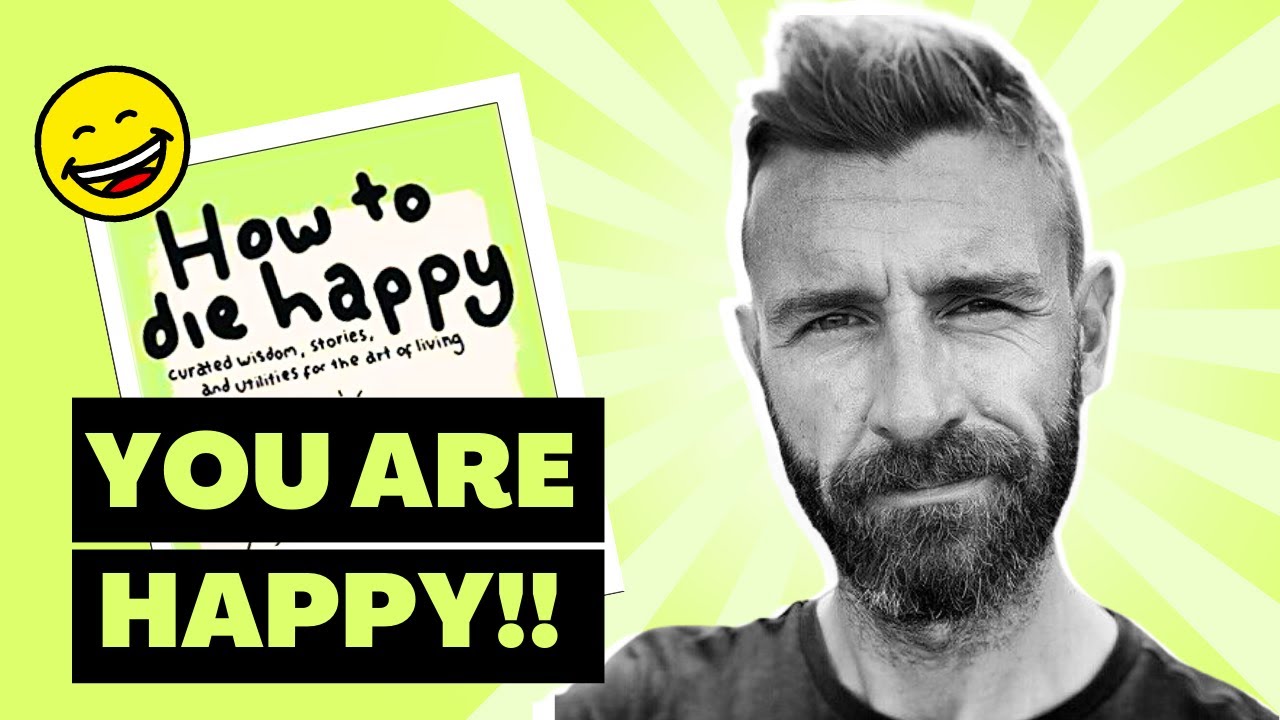
Martin O'Toole survived a near-suicide and now teaches how confronting death sharpens what it means to live. He built the "Anatomy of Happy" on four pillars: awareness, presence, gratitude, acceptance. His tools include breathwork, gratitude journaling, and a deathbed regret list to cut through what actually matters.
Chapters
Martin, welcome to the Book Thinkers Life-Changing Books Podcast. How are you feeling today?
I am absolutely brilliant. Thanks. Good to see you guys. How are you doing?
Yeah, we're doing well. Share with everybody what you just completed to get energized for today's episode.
Ah, yes. Well, I'm calling from the island of Bali in Indonesia, so it's 4 o'clock in the morning for me, so I had to get up at 3 and do a Kundalini yoga, uh, set of kriyas and some breathwork just to make sure I was on point to, uh, to field your questions.
Well, I love it. Why don't we kick off today's episode with a little introduction? Why don't you share with everybody who you are, where you come from, and why you decided to write this book, How to Die Happy?
Thank you. Well, my name is Martin O'Toole. I'm originally from Yorkshire in England. And I've had a, uh, a curious path to find myself, uh, living a mindful life in, in Bali and a curious path, some of which is covered in the book, uh, albeit anecdotally, but essentially, um, wow. What had me write the book? I would say having hit rock bottom with a, a loaded shotgun pointed to my face, uh, a few years back and, uh, came very close to ending my life. Uh, thankfully didn't. I was talked out of it by my beagle, which is also mentioned in the book. Um, I think that chapter's called Last Night a Beagle Saved My Life, isn't it?
Mm-hmm.
Um, and, uh, that began a, a very, um, long journey of, uh, of self-realization, self-discovery, uh, ultimately working with, uh, Far Eastern and ancient philosophies Psychedelics. And, uh, and here I am today, grateful to be alive.
To provide even more context, there's a little quote that I'd like to read from the beginning of the book. It says, quote, it took over 4 decades, 2 divorces, 3 mental breakdowns, countless physical injuries, and 1 near suicide, which you just highlighted, to question whether this was living. And so, it's a great way to set the stage for who we're talking to today because I think parts of that, what that that quote that I just read are going to be very relatable to today's audience. So, what do you mean by that? What do you mean by it took all of that to question whether this was living? What do you mean living?
Yeah. Well, that's a great question. Well, I neglected to mention I was a high-functioning alcoholic and addict. It's a funny thing because some of us in the recovery community wear that like a badge, like an identity, but I don't really because I don't I don't use the language in recovery. I am fully recovered, and that is quite controversial. And I respect anybody in the 12 steps program who's, who's, who, who has an alternate truth, of course. Um, but thanks to, um, my life's journey, um, I have a different perspective. So yeah, what is living? Well, I, I spent all of that time trying to work out what living was and what happiness was. I, I have been in pursuit of happiness, having been having grown up in an alcoholic family. So my mum was an alcoholic from day dot, and that came with all of the usual drama that you might expect, and 3 dysfunctional children, all boys, a very unhappy childhood primarily. So I was desperate to find happiness, and I looked for it everywhere. And as Rumi, the 12th century mystic and poet, said, maybe you're searching among the branches for what may only be found in the roots. And boy, oh boy, did I check out those branches. So it was, I was looking in status, in possessions, in satiation. I was looking everywhere for happiness, but never really truly understood what happiness was. So I suppose that's what I mean by living. I was actually doing stuff, consuming and being consumed, and of course, self-harming the whole way. Not that I realized I was self-harming at the time.
How do you, you know, we talk about happiness. How do you describe happiness? And what does that mean to you?
That's a really good question. Of course, I've stuffed it all into 354 pages of a book.
Right.
Now we need it summarized in one line.
Simplify, summarize. Good luck. Yeah.
I mean, this book is an exploration of my journey of understanding what happiness is and is not. If I could, okay, well, I suppose the best way to explain it is I've outlined, I stumbled upon a process called the Anatomy of Happy. You have to go through that process and do the work, do the work. You know, we call this self-help business that work for a reason. And I think now more than ever, I'm— there are hacks everywhere, right? And all due respect to many authors out there, there are hacks in hacks for hacks, and there are books for these things. And my realization is there is no hack for happiness. It's not a short-term fix. It's not, you know, yeah, you can get— you can do what I just did, a 45-minute, uh, Kundalini yoga session. I'm absolutely on top of the world. I'm energized. So the The dopamine, the energy, the cheese up. But is that happiness? No. What I realized actually that the happiness was once you've gone through all of that process so you can then have a daily practice. Happiness is working in this balance of what I jokingly call the Zen Ven. And this is the convergence of 4 circles really, 4 territories, awareness, presence, gratitude and acceptance. And that's a place to play during the day. And if I might just add, obviously you asked me to do it in one line. I've definitely not done that. Um, but if you can conceive awareness, acceptance, presence, and gratitude as being those 4 fundamental pillars that we've always to have our eye on every day in the present moment, then we can truly achieve happiness. However, there's one thing we must, must, must get our heads around, and, and this is the, uh, the Buddhist concept of anicca, which means impermanence, which is connected very closely to dukkha, which means suffering. Um, the idea being that the two have a very close relationship. So the Buddha used to say that attachment is the root to all suffering. So we only suffer because we cling And we cling to everything. I cling to this Mac M1, this MacBook M1 that I'm talking to you on. I cling to this Audio-Technica mic because it's a nice mic. I cling to this hand because I need it. I cling to these eyes, right? I cling to this body. However, everything I just mentioned is subject to the universal law of impermanence. And this is a Nietzsche impermanence. So until we can grasp impermanence on a, on an absolutely subatomic intrinsic level, we can't be truly happy. So what I mean to say is actually happiness is also subject to the laws of impermanence, which means you're not always going to be happy, but in knowing that, you are. And there's the paradox.
Yeah, there is. I love that. Sorry, I just was going to say I love that. I love that answer. And, um, you did excellent at condensing all of that into a succinct way. So thank you, I appreciate it.
I'm still practicing that.
Absolutely. And I think it is like, it's such a complicated subject for so many people because I've suffered with depression and anxiety and all sorts of mental disorders over my life. And I feel like there was a good period of time that I was just like, I am unhappy more than I even feel this happiness thing. I don't even know what I'm supposed to feel like. I don't even know what happiness is. So it's nice to see people like you Doing, doing the work. I don't know, doing a lot of the work for us and showing us that, hey, it's not this, this simple. You're gonna feel happy and you're gonna be happy all the time, and that's it. We're all done. It's like you reach it and then, then you're there. And I just, I just think we don't, we don't think of happiness that way. We think of it as this state that we're gonna reach, and then we just continue to stay there. But obviously that leads us down all kinds of dark paths, right? And to follow up with that, like, Do you think that— are we, are we supposed to be happy on this planet? Like, do you think that's something that we should chase and we should go after?
A great question. I, I think— I believe that, uh, at our essence, we are happy. We, we are fundamentally naturally happy. But what we— we have a, we have a strange existence here. I call our existence Earth School. I call this place Earth School. I, I call this an Earth rover because, uh, I, I'm— I believe that I am consciousness utilizing a meat suit to get around, uh, planet Earth. Okay, so just so, just so everybody understands the premise. Um, and but I, I also truly intrinsically understand that, um, you know, we're born happy, but then what happens is this thing called life, uh, or, or what psychiatrists or psychologists would call conditioning. So, you know, year by year, moment by moment, year by year, layer by layer, this egoic layer cake is thrown onto us. And the irony being, actually, it's our friends and family who are accidentally vomiting this stuff at us. When I say stuff, I mean beliefs, thoughts. Think about it, you know, you're born into a country, into a part of a country, into a religion, maybe into a neighborhood, into a color of skin. So from the day you're born, you're already provided with a series of illusory identities for which you will fight for a good lump of your life. Is that you? No, it's not you at all. They're just part, they're just aspects or facets, if you like, of ego. So I believe we are intrinsically happy, but I also believe we live in a time where everything is either by design, depending on whose perspective you, you, you listen to, or just coincidentally designed to, to cause us unhappiness. Now, don't get me wrong, there's this thing called free will, right? Choice. The whole book, the book is about choice. I must say choice several million times. You know, we all have a choice, but we don't realize we have a choice. So, you know, when we get up in the morning and we, we take the cereal from the shelf and we put it in the bowl, Did you look at the ingredients? You know, when we, when we drive off to— oh, and then we, when we use one of 72 toxic household products, did we look at the ingredients there? I've got a point here, so bear with me. The point is that through the entire day, we are subjected to energy and to things that we put in our body, things that we are, things that are going on around our body. Things that we watch, things that we listen to, the music we take on board. So we're subjecting our body and our psyche to so, so much, uh, toxification. And that could be, you know, that's, that is physical, physiological, and mental and spiritual. So all of these things intrinsically make us unhappy. Uh, our interactions with people make us unhappy. Um, but we don't, we just tolerate them. And I write this, I write about this in the book. I write about, um, Eric Berne's Transactional Analysis.
Mm-hmm.
Stephen Karpman's drama triangle, the beauty of boundaries, you know, the, the, the power of the word no, you know, all of these things that I, I think for whatever reason we've just, we've become very, very complacent and we, and apathetic. And it's not our fault, you know, it's just this place we live in, Earth School, that's actually systematically bringing us down. And unless we choose to start observing all of that stuff, and then step into our sovereignty, and that's essentially what I'm inviting people to do is to— nobody's going to rescue us. You know, nobody. I had, I had help. I had a great therapist at one point. And I had a couple of friends who helped. But in the main, I didn't tell anybody about my depression. I don't know about you. Most of us don't. You know, we carry depression and suicidal thoughts. And actually, the worse those thoughts are, the more Ashamed we feel, so the less likely we are going to discuss this stuff. And of course, then we become our own therapist, which is the worst thing that could happen because we're not really qualified. Oh yeah, and we're depressed. Don't take his advice.
Why?
Because he's not in a good mood. Okay, yeah, right. But of course, we don't have that inner dialogue, do we? We just have this, I'm depressed, I know, I'm depressed, I know, it's shit, it's shit. Sorry, can I swear on your podcast?
Yes, yes.
I apologize. So anyway, I'm rambling away, but, um, you know, the point is we have a choice, but we must, must, must make that conscious choice to start looking at this, the things around us. What am I eating? What am I listening to? What am I watching? Who am I hanging out with? Where do I go? You know, what all of these questions that we just don't do all that often. Although I must say, I think we are also in an exciting age when we are doing that. And, you know, your podcast is a, uh, and, um, and And the whole concept is a wonderful example of that, of how so many books and authors and thought leaders are coming out to say, hey, hang on a minute, check this. Have you thought about this? It's called self-help. It's called self-care. I call it self-love. And it's one of the stages of the Anatomy of Happy.
And it's work. And that's why I love awareness as part of your Zen Ven. And it reminds me of a concept I read about in Beyond Order by Jordan Peterson, where he talked about choice and he said, everybody today, and I'm speaking to the audience right now, everybody, every one of us has millions, billions, an infinite number of future versions of ourselves. And we get there through a series of choices. So, if I shut my laptop off right now, that leads to a different version of me in the future because we don't get to finish this conversation.
Yeah.
And it might lead to a different version of the people around me because they don't get to listen to this conversation. And, you know, there's another version of me that asks a different question that leads to a different series of dialogue. And that's a different version of me in the future. And that happens when you take the cereal out of the cabinet. That happens with every single decision that we make. And so once you become aware of choice, you can start to make decisions that lead you through that Anatomy of Happy process that you talk about. But anyway, now I'm rambling a little bit. Your rambles, Martin, are a little bit more valuable than my rambles, I think.
I'm not sure about that.
So, I wanted to back up a little bit. The first section of this book is about dying. I'm fascinated by death. And as you address in the book, that's not necessarily a bad thing. In life, we choose to ignore this truth of death. And you have a great question that you ask podcast guests and that you ask the reader kind of to do in the book, which is imagine you're going to die in 5 minutes. Write a list of your top 10 regrets and see what's on that list. Why do you encourage people to do that?
That's a great question. And it's the reason why I ask people, I invite people to, uh, to consider their top 10 deathbed regrets. And I, and I do it in the book as well, uh, early, early on, is because what I'm inviting people to do is take a look at themselves without judgment, without mitigation. Now, my mom died in 2014, January 2— January 6th, 2014. We had a, a pretty terrible relationship. you know, she was an alcoholic and I was an angry young man who wound up very much resenting her for all of the problems that we had. Now, I saw her on Christmas Day of 2013, thankfully, and we had a nice day. And I write about this in the book, actually. We had a nice day together and I gave her a kiss on the cheek, which was actually a real rare thing for us, that sort of intimacy. So then when I found out she died, of course, We, we, we go through the 5 stages of grieving, which people will know of. Elisabeth Kübler-Ross wrote all about that. Check it out. Um, but I had so much that I hadn't said to her, and not all good stuff either, right? You know, actually, I wish I, I wish I had expressed in a, in an, in a mature and calm way some, some of the things I was feeling. So this is one of the reasons why I'm inviting people to do this, because Either somebody you know is gonna die very soon, or you are gonna die. You know, 'cause the whole point is, newsflash, we're all gonna die. And there's, there are 2 chapters in the book. One's called Everyone You Know Is Gonna Die Part 1, and the other one's called Everyone You Know Is Gonna Die Part 2. I make this point very, very clear, uh, regularly at the, at the beginning of the book, not to be morbid. And, you know, this is the Western response, isn't it? Oh, you are so morbid. And of course, the dictionary definition of the word is an unhealthy fascination with death. My question, and I ask the question in the book, is who gets to define what's unhealthy and healthy? Because as far as I'm concerned, when we push death to the back of the queue, which we very often do in the West, right? We don't want to talk about it. We don't want to think about it. We don't want the kids to think about it. Although it's okay if they watch all of that stuff on the TV with death, of course, or play those computer games. We do all that other sort of paradoxical stuff we do to do with death. When we, when we push it away like that, is that healthy? Or is it healthy when somebody dies and we haven't done any of that work whatsoever? And then suddenly we're faced with this, this void. There's a guy called Jamie Anderson who I quote in the book who said grief is just love with nowhere to go, which is—
I circled that one a couple times.
such a beautiful quote. And, you know, kudos to him for, for such magical words. But that really resonated with me. You know, when my mum died, I had this anger, but I also had a lot of— I had this love, and there was nowhere to send it, nowhere physical, right? And there are all these words and things that I, that I couldn't say to her. And it occurred to me, actually, that was a beautiful lesson for me. Uh, it was a painful lesson. And unfortunately, I, you know, I took the hard took the hard road through that lesson because I was, I was, I just drank more and snorted more, um, and, uh, and self-harmed more and harmed others more, emotionally speaking. So the invitation is, is to say, look guys, everybody's going to die. You can't pretend otherwise because everything in this plane is subject to the laws of impermanence. It's just a matter of velocity.
You ask the question in the book, at what point does our fear of death Obstruct our ability to live. That's something that we talked with Robert Greene a little bit about on our podcast with him a while back. Yeah, death is pushed to the corners of our society. We ignore it. We pretend it doesn't exist. And as a result, we actually limit our own capabilities. We're living a smaller version of what life has to offer. So, what are some of the benefits? Like, you call it an emotional service to think about death. What are some of the benefits to understanding that 178,000 people die every single day, and it's not that weird. It happens, right?
Well, I, there, I think for me there are myriad benefits. Excuse me. Once you truly embrace the fact that you may well get hit by a bus when you walk out the door, or mom, dad, you know, the dog, the wife, the husband, whoever those people are, or creatures, sentient creatures are that are close to you, are, are going to die, you can then start to reevaluate your relationship. And first and foremost, you've got to reevaluate your relationship with yourself, right? Because stating the obvious, and I'm talking to, to guys who work in the self-help industry, if we don't do that work first, then how can we possibly, uh, reap the benefits, uh, of it with, with other people? Right? So, so fundamentally, it's about readdressing our relationship with ourself. But then we, of course, we can readdress our relationship with everybody else. Now, in my experience, what that, what that became was this, this whole new idea that, wow, you know, right now I'm talking to these 2 incredible guys who are doing this incredible job spreading the word of, uh, of, of all these incredible authors. So, so I'm, I'm truly, truly present in this moment. And therefore I'm, I'm enjoying it, uh, I would say from a higher seat of consciousness. I'm observing it, so I'm truly aware of it. Actually, I'm aware that I'm aware of it as well. So, you know, get your head around that.
I'm aware that you're aware that you're aware of it.
What about you, buddy?
All very aware.
But in that awareness, I mean, you know, maybe that was a micro example, but maybe you, you've feel it, you know, in that being aware that you are aware, there's a wonderful sense of being alive, you know, truly being alive. And, and so, so this is why presence is very much, uh, one of those 4 components of, of the, the, the ongoing, the Zen Ven, you know, the anatomy of happy. Because once we truly accept death in that way, we can see life for what it actually is. an absolute unequivocal gift. Um, and it took me a long time to work that out. And as I said, you know, for 4 decades, um, divorces and suicide and all that sort of stuff. But, uh, you know, I've, I've had what, what people would call, I suppose, um, a rebirth, you know. And I don't want to come across like an evangelist here, but I'm now experiencing a life within a life.
Excuse me.
And I couldn't be more grateful. And I suppose part and parcel of what How to Die Happy tries to do is invite other people to do that, you know, to search for that. But don't search hard because I also talk about Taoism and the Wu Wei and surrender. And actually, you know, this stuff just is, it just happens. Actually, you don't really have to work for this stuff if you follow a process. I'm rambling again.
I love your rambles. I could listen to you, listen to you all day. Um, lots of wisdom. I'm, I'm so curious, like, how does someone— you know, we live in the, the Western world in America, and there's just— it's chaos all around us. Like, we're constantly busy and doing stuff, and there's, there's always something else. We're always thinking about the future. We have anxiety, we have depression, all these different things, and How do we cultivate just in our day-to-day lives? How do we cultivate or how can we start to cultivate presence?
A wonderful question. I have a chapter in the book called Weapons of Mass Tranquilification. Now, you guys are readers, so you'll know that I made that word up.
It's a great word.
For which I made an apology. I love the word tranquilify. I'd like to introduce it to the dictionary. Fundamentally, we have to start where we are, right? And I think this is part and parcel of perhaps one of the challenges we have in the self-help space is that it's all well and good, this guy here, you know, with his tan living in Bali, radiant, having a great time, enjoying life, grateful, blah, blah, blah. But he had to ride through some serious you know, like he did an Andy Dufresne and swam through 3 miles of shit in a tunnel to get here. So when you're, when you're in it, when you're the, the far end of that spectrum, it can seem impossible, I think. And it certainly, I remember it seeming impossible. I remember wondering how, how on earth could you possibly get to a point where you don't want to kill yourself? Because I used to have suicidal thoughts every day. Um, In reality, the first place and the simplest place to start is with breath. And so I talk about breath and meditation all the time in this book. And I'm aware that I'm obviously talking to listeners who might be, yeah, okay, I've heard about meditation, but I'm too busy for meditation. I haven't got time, yada yada. So I'm aware that I might be banging the same old drum, but trust me, breath is a game changer. Breath is actually everything. Uh, and actually, the more research I did, and I, I had a foreword, the foreword for the book was written by the wonderful Lee Holden, who is a, a bit of a legend. Um, uh, he was widely responsible for bringing qigong to the West. In fact, he used to do qigong on PBS every morning in, in your part of the world to 55 million people. Um, excuse me. And, uh, Lee, uh, did a documentary series where they, they traveled all around the world meeting what they called superhumans. And what they discovered was that all of these yogis and masters from all walks of life, from all corners of the Earth and different eras, right? Because obviously, you know, some of these, they didn't all, didn't all happen on Earth at the same time. They all had one thing in practice, and it was, it was a type of breathwork. So it's interesting to me, and it's been interesting for some time now that breathwork has been at the, you know, one of the seeds of our mindfulness practice. Yet nobody tells us about it. I don't know about you, but nobody told me that I was, that I wasn't consciously breathing. Nobody told me about belly breathing versus chest breathing. So it turned out I spent 40-odd years basically doing fight or flight breathing, apart from maybe when I was asleep. And as I recall, some, a lot of those nights were fairly anxious. And of course, a lot of those nights were also turbo-powered with cocaine. So there was no sleep. So I would say breath, really, really just tune into your breath. So, and you've got to start with, with each moment. So the more anxious you are, the only thing you can do is just start with this moment right now, just check into your presence. And it's just ride that breath. Eckhart Tolle said, one conscious breath is a meditation.
Hmm.
What wisdom. You know?
Yeah. Yeah. As you're, as you're saying, focus on your breath. I'm doing that right now. It just like, it just brings you into the— it does. It brings you into the present. So thank you, Nick. Did you, did you have something to say?
No, I started focusing on breath maybe 7 years ago now. And yeah, it's, it's totally changed everything. I don't think I had ever consciously breathed for the first 21, 22 years of my life. I mean, I never even thought about my weight in a chair or, you know, my weight against the back of a chair, anything like that. I was, you know, I was there, but I wasn't conscious. And Martin, I think you say something similar in the book, like you live this entire life unconsciously until a certain point.
Yeah. Yeah. It's fight or flight, isn't it? It's, it's, it's, it's not, you're aware, we're, we're aware that we have to, trudge on through Earth school, you know, and there's a, I quote a poem in the, in the book Invictus by William Ernest Henley, which is a beautiful poem that, but essentially it's got a wonderful line that says, I am the master of my fate. I'm the captain of my soul. But it's, it's really about the bludgeonings of life, you know, of soldiering on. You won't be able to see this very well, but this, the origin of this tattoo was just the 2 crosses. Right? So the two crosses on top of each other, which is the Greek sign Ingus, which means where there's a will, there's a way. Now I've transmuted that tattoo. This is actually a hand dot tattoo done by the Mentawai tribe in Indonesia because I wanted to transmute it because I realized actually I spent like my whole adult life saying where there's a will, there's a way. You know, fight it, fight it, hustle and grind, hustle and grind. No, turns out that wasn't the way. Turns out all I was doing there was just, just fighting to stay alive and, and not, and consuming at the same time. And, you know, doing all of this, this stuff that I guess a lot of us just believe we're here to do. But at no point was I really sitting with my body in a different way, you know, feeling my spirit. my energy. And I was an agnostic and an atheist, by the way. This book does dive into deeply metaphysical concepts, um, uh, and of course I talk about, uh, philosophies and, and what people might misconstrue as religions. But I was an atheist and agnostic for a long time, so this whole thing sort of came as a surprise to me, this spirituality business.
Oh yeah. You know, you mentioned, um, every day being a fight. And even now though, I've, I've come a long way, but I don't think I'm— I'm definitely not where you are yet. I still wake up in the morning and feel like I have to, I have to fight. And it's like another day I have to, okay, I have to fight through this and I have to fight through that. How do you— man, I, I, I realize like there's a lot in your book about this, which is great, but like, is there anything that somebody, somebody listening today, is there any practice or anything that they can do just to I know, start with the breath, but is there anything that they can do to let go of that whole idea of this is a fight and I, I have to keep punching my way through or I'm not going to make it?
No, that's a beautiful question. Uh, yeah, there are— of course there are many, many practices you can do. I, I always suggest to anyone who's sort of lost in the dream spell a little bit, the dream spell being the Matrix and our immediate need as soon as we wake up to plug back into it. You know, unfortunately it starts with, for a lot of people, literally they roll out of bed and, and pick this up. So I mean, that's a, that's, that's a game changer right there. Don't have that by the bed. Switch it off. Get an alarm clock.
Remember them?
Get an alarm clock to wake you up. Do not use— That's, that's, that actually says present aware and aware on it. FYI, that's illustrated by Josh Kindall, the guy that did my, uh, my book illustrations. So keep the phone away from the bed as soon as you wake up and do a gratitude practice. That would be my best advice. If you want to remind yourself, because I think how we operate, we're right back into, right, well, today's going to be a fight. What have I got to do to stay alive? Yada, yada. We're often thinking about what do I need to do? What do I need to accrue? You know, what do I need to get? Obviously, I need to make money. I need to acquire this, do that. And so I often suggest to people to start with a gratitude practice. Actually, let's just be— let's just check in and what we actually have. I talk about this in the book because ultimately, again, I'm trying to talk to people at different levels of their journey, because you should be able to check into this book wherever you are on your spiritual path or whatever you want to call it, or in the self-realization journey. So it might be that you're grateful for, you know, the house you have or the roof you have over your head. It might be grateful for the beautiful person you wake up next to. But if we're really drilling it down and you haven't got anything to be grateful for, then I suggest that you get grateful for the air in your lungs and the fact that you've got a homeostatic system that just allows that to happen. I don't know if anybody's had a breathing problem in their life. I did. Randomly, uh, through this process, I, I did— I had some sort of a lung issue, and I don't know if it was— I suspect it was probably a somatic issue like blocked trauma that I still had to clear, but I was struggling to breathe on a daily basis. I tell you, when you get to the point where you can't just naturally breathe and then you can breathe again, you become very, very grateful with, uh, with the most simple of things, you know. So I would say a gratitude practice first and foremost. As you say, there are lots of other things in the book.
Gratitude is a big theme on this podcast. It's been a big theme in Luke's life, my life. We actually have a gratitude Slack channel where each member of the Book Thinkers team writes 3 things that we're grateful for every single day. And we can also see each other's gratitude, which just helps to reinforce the importance. And that's been amazing.
I suggest that utility in the book. There's a chapter in the book called Your number one superpower and it's all about gratitude. Yeah, I mean, I'm a huge, huge, huge fan of being grateful. I suppose when you find yourself staring down the barrel of a gun, yeah, you can't help but be grateful. So I'm super grateful for the smallest of things. And for me, actually, another easy utility is just go out, sit down, You know, take your shoes off, take your socks and shoes off and ground and just sit down on the earth and just listen to the birds, check out the sitarism of the wind through the trees, you know, just that simple stuff that, and start there and then build up, you know?
Yes.
But when we do that, what are we not doing? Well, I, I'm not thinking about life in the matrix, which is fundamentally the point. Yeah.
No, it is the point. I, I wanted to touch on something as we're Getting into the last third of our show today, Martin. You mentioned you used to be an atheist. In the book, you talk about omnism, the idea that no one religion is the truth, but there is truth in all religions. And so I'd like to have you talk a little bit about that because Luke and I have talked about this extensively in the past. And I think this word omnism, it'll bring a lot of light to some people.
Yeah, it's an incredible idea, isn't it? I, again, like all of these things, I stumbled across it on my, on my self-prescribed journey. I was, I was born into a Catholic family. And for anyone born into a Catholic family, especially in England in the— I was born in 1975. Can you believe it? So there is an element of how do we say this, you know, fairly dogmatic, uh, very strict doctrine. Excuse me. A lot of shouting from the priests, uh, when I was a kid anyway, you know, when they deliver their sermons and stuff. And, you know, there's generally an idea that if you're not good, then, you know, you're gonna go to hell or purgatory, or, and, you know, you might get smited by a vengeful God. I'm not mocking um, these religions, incidentally. So, uh, if anybody is triggered by that, well, observe your triggering. That would be the, the obvious response to that. But, um, the point is, I, I was— I had religion stuffed down my throat for years, and as a result, I ran as far as I could. And I, I refer to myself as a recovering, uh, Catholic, actually, as, as many do, uh, tongue-in-cheek. So, but all the while, I was having these little, um, these strange metaphysical experiences through my life. You know, people are going to either believe this or not, think I'm a crackpot or not, and I respect your truth, but also, you know, it's just the truth. So, um, you know, maybe experiences with ghosts, for example. We lived in a haunted house when I was a child. Um, I was able to astral travel, you know, uh, as a child. So I don't know if you guys are familiar with astral traveling at all, but that's a pretty cool thing to be able to do. Um, but I just, I blocked all of this, all of this out, these ideas out, um, and then went headlong into a career as, as an ad man and a high-functioning alcoholic and addict. So, so I, I lost all sense of, of, uh, of God, for want of a better word, and religion and spirituality. Um, and then when I got sober, when I cleaned my body and mind I started to feel things that I'd never felt before. I started to feel a newfound connection to, to people, newfound connection to nature, uh, an incredible connection to me, um, which was, you know, kind of a beautiful thing. So then I started to explore these, these different theosophies and philosophies, and I, I happened upon omnism. And as you say, omnism respects all religions, um, for, for their own truths, but essentially, uh, argues— it's not even an argument— that, uh, you couldn't possibly say that one religion is the absolute, but they all share these, these wonderful commonalities. And newsflash, what's the, what's the, the common denominator in, in all religion? It's love, isn't it? Well, most. You know, I suppose Satanists might argue with you on that, but, um, uh, so it is love. And, um, that was where I, I realized I could start to cherry-pick from these other— from these religions and these philosophies. I don't, um, I, I'm not really one for dogma. Uh, I, I don't believe that you have to have a certain amount of people together saying certain words for for divinity to be present or for, for spirit to be, um, uh, in the neighborhood. I think spirit's in, in all of us. I think spirit's in the trees and in the birds and in the insects. So, so I think we are surrounded by this energy which actually the Taoists would call the Tao. And this is how I happened upon these Eastern philosophies that actually made a lot more sense to me than Western religions. Because the more you dive into Taoism, Buddhism, Confucianism, you see that actually they've got a lot in common with modern-day psychology and modern-day mental illness, right? These neuroses that we have, which incidentally, I, I also, I do respectfully put this forward in the book, I believe we're all mentally ill. It's just different levels. Um, because I, I believe that ego which I call Monkey, fun, uh, in a, in a fun-loving way, uh, can't help but create a little bit of, uh, mental illness for us all because Monkey's still fixated on keeping us safe and alive. So yeah, it was— I, I don't know if you come across Alan Watts or Ram Dass, uh, Timothy Leary, you know, some of these great philosophers from the '50s and '60s and onwards, of of course, who made great strides to talk about these— the same religions— oh, sorry, the same philosophies. And of course, these guys were working with LSD, uh, quite frequently as well, which was, which was putting them in altered states of consciousness. Um, and it's actually thanks to podcasts, this, this huge, uh, exponential growth we've had in podcasts now, that, that got me back into, you know, to listening regularly to Alan Watts and Ram Dass and going, wow, hang on a minute, This guy's making a lot of sense because, and of course, uh, Ram Dass or Dick Alpert was a psychiatrist. So you've got someone who understands the human psyche. Here we go. He's got what, he's got a good one. I can see. Beautiful.
Yeah.
I mean, just everything the man said and wrote was just magical, right? I mean, I, I like to think that I'm a wordsmith, but Ram Dass.
You are a wordsmith. But yeah, Ram Dass has some great stuff in there too.
Next level. So anyway, so that— I, I suppose the point is, the invitation in the book is let's look, let's have another conversation about the word spirituality. Let's have another conversation about religion. Let's reevaluate these ancient, uh, teachings that have been around for thousands of years that sadly are disappearing. You've had Ryan Holiday on the show, incredible author. I've got a lot of respect for the man and he's of course done a phenomenal job in resurrecting Stoicism to the point where, you know, there's even in Bali now down the road from me, there's a little Stoic society, these fairly young people, you know, young people are meeting up and discussing philosophy, discussing Stoicism. What a wonderful thing. So similar to to what Ryan's done with with Stoicism, I'm incredibly keen to say let's not forget the the Chinese sages. Let's not Laozi, Confucius, Zhuangzi. Some of these the the Dao De Qing and many many many other teachings. It can all be applied to living today, and it is in a way you know it's it's a it rides the wave. between spirituality and psychology, I think, in a way that's fascinating, and I invite people to reevaluate it.
Yeah, I do too. Uh, I know Luke's got a question to wrap things up, but I did want to comment, Martin, that I've got quite a few tattoos, uh, that remind me of concepts I originally learned in Stoicism, uh, including a memento mori tattoo on my chest that I may have showed you during our first call that reminds me I am mortal and I am going to die every single day. And it's a beautiful tattoo reminder, just as the one that you shared with us. Got a number of others as well. But Luke, you want to—
You've got one on the inside of your wrist that I've seen on your photos. What's that? Because I see it sometimes.
I do. I have tattoos on both wrists. On this one, I have ataraxia, which is an ancient Greek word meaning stillness. which I discovered in Ryan's book, Stillness Is the Key. And that's a reminder to slow down and be more present for sure. And then I have the numbers 1, 2, and 3. Every day I journaled 3 things that I was grateful for, and it had such a profound impact on my life that I wanted to either consciously or subconsciously default to gratitude thousands of times per day. And so, I got it tattooed on my wrist. On the back side of this wrist, I have a Spanish word, agradecido, which means gratitude as well. So it's just another reminder. Doesn't matter which side of my wrist is facing my eyes subconsciously, it's always there.
Yeah. You know what a what a wonderful thing to do for us to get tattoos to remind us stuff. I know you're going to ask me another question, but that's that's the Guru Rinpoche mantra. Which means Om Ah Hung Benza Guru Pema Siddhi Hung, which is a bit of a mouthful, but it's, uh, it's kind of like the Swiss Army mantra. It's, it's the mantra for everything— protection, for, um, for love, uh, to call in the power of all the Buddhas. But it's a, it's an incredibly powerful mantra. And I'm the same, I've got these mantras, uh, all lined up to, to be tattooed all over my body just to remain. Yeah.
Yeah, me too. I'm with you. All right, Luke, you want to bring us home?
Yeah, well, man, we just scratched the surface. I wanna— there's—
I wanna—
I wanna ask you about, um, psychedelics. I want to talk to you about LSD and all those things.
Well, let's, let's just have them back.
Yeah, for sure. Come back.
I'd love to come back for sure. And I'm gonna write another book about psychedelics soon. I'm gonna go to— I've got a— we're making a documentary and doing some cool stuff, so I'd love to talk to you about Yes, please do.
Um, because there's so many things that I'd— like I said, I want to dive into, but unfortunately we don't, we don't have the time today. We didn't really, uh, I don't— we talked a little bit about it, but I think actually that may have been before we hit record, which is the shadow work, which I wanted to talk about. But again, we're gonna have to, we're gonna have to have you back on to talk about that stuff as well. I guess to, to bring it home, um, one last question. I like to, I like to ask all of our guests this, and that's If you die and you— all your work, all everything is gone, everything that you've put out, all your books, all the work that you've done is gone, but you can leave behind one short piece of advice, what would it be?
Oh, learn to love.
Yeah. Yeah. Mic drop.
It's on a, it's on an app. Yeah. Learn to love, learn, learn to love in the realm of separation where, where loving is so hard, you know? And, uh, and that separation starts inside, inside us. We are, we have all of this inner conflict and this separation that keeps us from loving ourselves. So if we can learn to love ourselves first, truly and healthily, obviously I'm not referring to narcissistic practices presently.
Mm-hmm.
Um, then we can, we can share that love with other people in a, in a way that is an absolute game changer. And speaking from personal experience, from someone who spent his life in service to self and who now will spend the rest of his life in service to others, which is why, mm-hmm, which is why I wrote this book. To, to give, give other people the opportunity to, to find something that I've invested a great deal of time, energy, money, pain, blood, shit, and tears into finding. It's called happiness. It turns out it was, it was always right here. How crazy is that?
It's amazing. Well, I appreciate you. Your energy has been— this has been amazing. I cannot believe how quickly the time has flown by. I'm just like sitting here, just, man, just taking it all in because you have so many good things to say. So, for anybody looking for you and looking for your book, where can they go? What can they do to find you?
Oh, that's a good question. Well, there's a website for the book, so it's howtodiehappybook.com. As Nick alluded, we also have a podcast. My partner, Jules, she's a yogi. We have a podcast together. It's called How to Die Happy. So, that's howtodiehappypodcast.com. You can find me on Instagram, Martin O'Toole, or you can find the podcast, How to Die Happy underscore podcast. Yeah, thanks guys. I'm, I am so, so grateful for what you're doing. I think it's a beautiful thing, uh, for someone who loves to learn, who never did used to love learning incidentally, but now these days that's all I do. And the more I learn, the more I realize I know nothing. Uh, so thanks for, for, for being bastions Uh, for people to learn about more about themselves and the world. And thanks for having me. I've really appreciated it.
More from Nick

Napoleon Hill’s “Think and Grow Rich” is a timeless classic #selfhelp #personaldevelopment

4 Books to Help You Get Better at Decision Making #selfhelpbooks #bookrecs #nonfictionbooks


Have you read this book yet? 📖: The 5AM Club by Robin Sharma #selfhelpbooks #robinsharma

Dan Sullivan on Listening to Your Customers Instead of Watching Your Competitors

5 Books That Will Boost Your Financial Intelligence #financialfreedom #nonfictionbooks

The People That Preach the Loudest About Virtue are Usually the Most Power Hungry



Books are the greatest mentors you can find #selfhelpbooks #businessbooks #successmindset

Let’s fight this toxic instant gratification culture together 📖 #selfhelpbooks #jimkwik