Enter the Creator Economy (Without Quitting Your Day Job) — With Chelsea Clarke
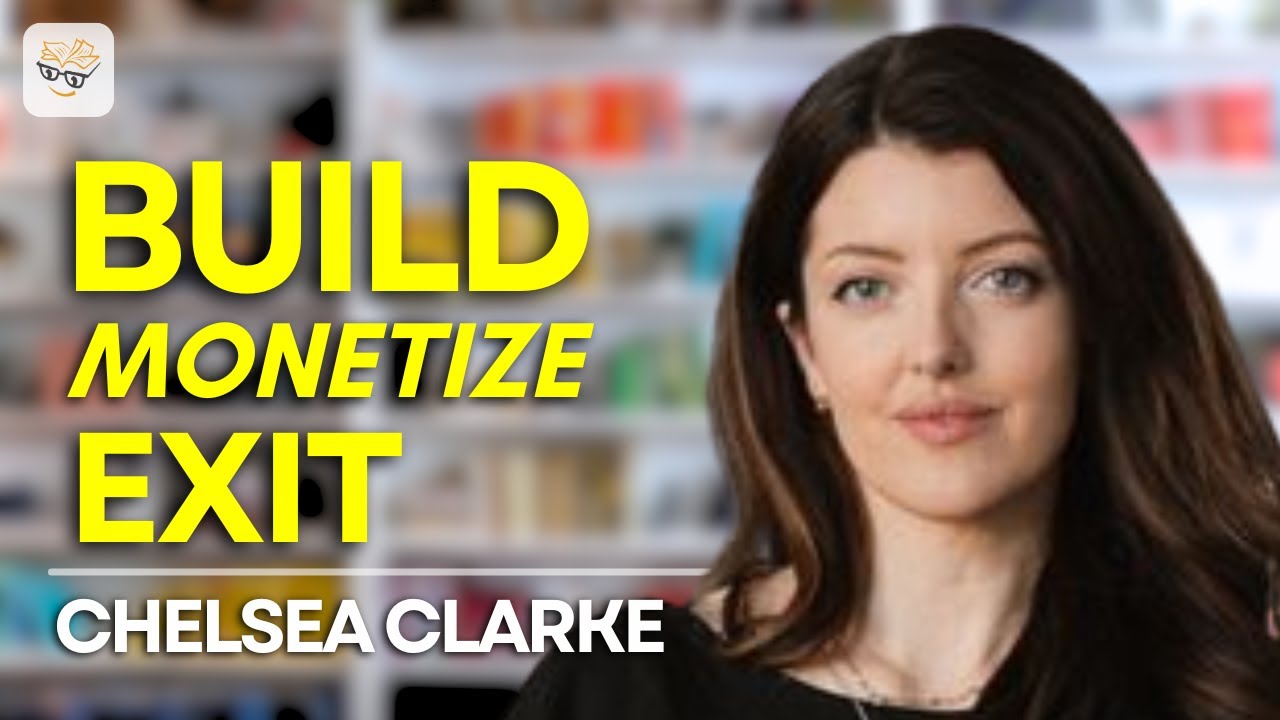
In this podcast episode, host Nick Hutchison interviews entrepreneur and author Chelsea Clarke about her new book Glow Up Yourself: The Reinvention Playbook for Rebellious Women. Chelsea shares the story of a failed half‑million‑dollar business sale that forced her to reassess her goals, and how that pivot led her into the creator economy. She discusses her personal‑development journey—micro‑habits, gratitude, and practical manifestation—rooted in books like Jen Sincero’s You Are a Badass. Chelsea defines the ideal reader as anyone ready to change habits and mindset to earn online, especially women seeking wealth, confidence, and freedom. The conversation unpacks the meaning of the title, the difference between being indecisive and indifferent, and offers concrete advice on entering the creator economy: choosing a lane (podcast, YouTube, newsletter, digital products), building an ecosystem, and leveraging Pinterest SEO after Google algorithm shifts. She also shares a playful definition of entrepreneur from a SpongeBob episode and stresses that entrepreneurship is simply selling something that helps people. Throughout, Chelsea emphasizes taking the first step without waiting for the “right time,” using small actions to overcome overwhelm. The episode ends with promotion details (herpaperroute.com, Instagram @herpaperroute) and a final empowering message: you are your own rescue mission and don’t need anyone’s permission.
Chapters
There isn't a right time. It's really just when you decide you're going to try because things happen when you start moving. We can, all of us, get so caught up in our heads with all of the things we might want to do one day if this were different or if we didn't have our kid at home every morning. If we had our mornings to ourselves, then we could write our book or work on starting a YouTube channel or whatever the dream is. But you just have to make that decision to start one thing. If it's just to write a list of ideal guests you would want on your show, or just an outline for what your book might cover, that is the first step. And then the next day, then maybe you're going to go a little bit farther into that outline. It's so important not to look at the grand scheme, giant picture, 10 steps ahead before you've even started the first step. step. Because if you're like me, you can easily get overwhelmed by thinking about the bigger picture. The bigger picture does not exist. You have to just focus on the thing in front of you, the first step to get toward— to get things moving.
Chelsea, welcome to The Book Thinkers Life-Changing Books Podcast. I'm excited to chat with you about your brand new book, Glow Up And my first question is this. A little while ago, you were standing in a Tim Hortons and you got a message that totally rocked your world. What was that message and what transpired next?
Oh my goodness. Yes. And thank you so much for having me here, Nick. Happy to be here. So I had just got a message from a potential buyer, someone that I was thinking I was about to sell my business to for over half a million dollars. And they sent a message saying, you know what? We're actually going to go a different way. Sorry. And without any way for me to talk, negotiate, figure out what was going on, to try to work it out, it was just end of sale. It felt like that amount of money, which you shouldn't. Okay, you should never just expect that a deal is done before it's really done. That's a good lesson. But it's hard not to imagine that being in your life when you have a deal on the table of that kind of a crazy amount of money. And then it was just like, Gone. And that set me on a big journey of being like, okay, I need to figure out, do I even really want this? Because that was very, very hard for me. But also, maybe I don't actually want to sell my business because something really good was around the corner that wouldn't have happened if I had ended up selling to those people.
Yeah, we all face different versions of that. at some point in our lives where we hoped something went one way, but we didn't realize that, yeah, you might go 2 steps backwards, but there's another opportunity that presents itself to drive forward at 1,000 miles an hour or kilometers per hour. Uh, back in that moment, how long prior to getting that text were you expecting it to go through?
We had been dealing with, um, that potential buyer for a couple of months at that point. So we had agreements signed, we had certain things, we'd gone through due diligence, we'd had so many Zoom calls. I was starting to kind of coach the new owners and, you know, explaining what they would be doing when they take it over. And there was so much time and emotional effort that put in that it felt even a lot longer than those couple of months.
And then you get hit with the text message. I mean, how? What happens in that moment? How do you respond? Like, what's the next couple of hours look like after you get that text?
How I wanted to respond was to be like, what? And like, you know, call them out for just kind of dropping it like that. But that's not the way to do it. So yeah, I just took some time to be quiet and reflect and chill out. And then when I was in a better headspace, I was able to just respond with, yeah, no problem. You know, It's fine. It wasn't meant to be and wish them well. Um, but even though that nice email went out, I still wasn't feeling super nice for a little while.
And now you said moving forward, you know, the saying that I'm familiar with is don't count your chickens before they hatch. Mm-hmm. And it's just this idea that you don't have the deal until you have the deal, until paperwork's been signed and money's in the bank. And then you wait another 30 days. Now you have the deal, right? So what, what other ways has that experience kind of informed how you think about business moving forward?
Well, it's a very good place to come from, not putting your emotion into a deal, certainly not before you have things all checked off and money in the bank and escrow. But even so, at any stage in that process, a deal can change. Buyers can back out, you can back out. You know, there's so many things that can quote unquote go wrong, but you just have to be prepared and deal with it in a way that we're not putting emotion into it. It's business. It's going to work or it's not going to work. If it doesn't work with them, it's going to work in some other regard. And moving forward in other deals I've done now, I really just kind of come at when I'm selling one of my own sites, I'm just like, yeah, this is cool. This is what it's about. I can walk you through these steps, what we do in the business. If it's right for you, cool. I'm coming from more of an education Standpoint as a seller rather than expecting it to work out. And that really comes back to when we're talking about manifestation too. If you're trying to force the energy of wanting something so bad, that repels it most of the time from actually coming true. If you actually just take it on like, yes, like this is probably gonna work out. I can feel how good it will feel if it does work out, but if it doesn't, that's okay. There's always gonna be something else.
So talking about subjects like manifestation and accepting, you know, basically submitting to life's process and just allowing it to work out, like, where was your education in these subjects coming from? Were you really into personal development books? Were you reading? Were you watching YouTube videos? Were you attending in-person events? How did you get into this space?
I got into this space only about 10 years ago. Because the 10 years before that, I was just a hot mess with no mentors, wasn't reading anything good, wasn't watching anything good. The media that I consumed wasn't good. The food I was eating wasn't good. I was drinking alcohol. All of these kind of bad things were adding up and that was my world. And I had to make a conscious decision that I didn't want my life to go in the path that it was headed towards. And so it was 10 years ago when I decided to change things up, start eating better, Start waking up early, not going out, not drinking, all of these kind of things, these little micro habits that added up over time. And then yeah, I was reading self-help books. I think one was— this one was probably mentioned a lot, but Jen Sincero with You Are a Badass and You Are a Badass at Making Money books. That was such a— it came out at such a great time for me because that was right at that moment where I was like, I got to change things up. And that book landed in my life and it was just— It opened my world up to being able to understand that the universe actually can work with you if you'll let it. And I'm not super woo-woo. I'm really more practical, but I do love the elements of manifestation and things and trying to work it into a practical practice because I'm very much about habits now, routine, and setting yourself up for a good day just by how you set up what what you do in your mornings. If you're getting some fresh air, drink that water, have that lemon water. You know, you don't have to go for a huge jog or, you know, write a manifesto every morning, but just finding the little habits in your day that light you up. And gratitude. Gratitude's a huge one too, being so focused on what you really are grateful for, all of the little things. It's like, oh, my dog is cuddled up beside me. I'm so grateful for that. And then it just starts this snowball effect of, yeah, everything actually is pretty good and wonderful. And when things aren't, and of course in business you're going to have days where maybe it's a tough client or a tough deal you're trying to work through, there's going to be challenges. And when you start your day with a higher frequency, you're going to manage those challenges so much better. And I know, Nick, you're a pro at this with all your self-development, personal development stuff that you do. So, um, yeah, that, that's what I'd say to that.
I love it. I love it. Well, Jen has been on this podcast before, so you two have now shared the digital stage with each other. And, and I love how her books just kind of fell in your lap at the right time. Now, with your book, Glow Up Yourself, who's the right kind of person that this book is written for? Like, if it was to fall on somebody's lap, whose lap should that be, basically, is my question.
I think a great ideal reader for this would be someone who is at a place in their life where they want to make a change. Ideally, if they want to make more money online, enter the creator economy, but just someone who knows that they need to change up their habits, their mindset in order to get to where they want to go. So if you're at a place where you've made some mistakes, haven't we all, but you don't want to keep making the same mistakes anymore. but without feeling any sort of, you know, you're not hating yourself for those mistakes. You're not trying to bury that side of yourself, but you're just trying to improve. I think that this book would be really enjoyed by someone in that space. I write in a way how I talk, so I don't come at you with, you know, a big stuffy— it's not a stuffy business book. I'm not bossing anyone around telling them what they have to do. It's really about the journey of what feels right to you and the way that I write is I'm just taking you along with my journey because I made a whole heck of a lot of mistakes. I've been there. I still make mistakes and it's okay. Those mistakes are things that we learn from and what personal development and growth is all about.
I think so too. One of my mentors, Rory Vaden, he has a famous line where he says, you are most powerfully positioned to serve the person you once were. And so it sounds like this book is for the younger version of Chelsea who hadn't fully developed this picture of who you're going to be just yet. You're still kind of navigating it. It was the 10, 10 years ago, right? When you're done with this lifestyle and I want something different. So, uh, Book Thinkers audience, if you're listening, if you know somebody in your life that's kind of in that position, the holidays are coming up. It sounds like Glow Up Yourself would be a good gift.
I would definitely agree. And it's a fun read. It's, um, It's lots of stories from building a business from the ground up when I was secretly living in an office building trying to start a startup and trying to get ahead and having different challenges. You know, like we all have so many crazy things going on in our lives and making the conscious decision to stand up for yourself, to not expect anyone to come in and save you or pave your way or anything like that, to really just take that self-reliance.
Yeah.
To take yourself to where you want to go.
Yes, 100%. Now, where did the title come from? Tell us about the title. What does Glow Up Yourself mean? And I have a highlight that I'm looking at about how you describe it in the book, but what does it mean and, and what should it mean to the reader when they're done reading the book too?
Okay, I love that. So, uh, I think we have all heard of the term go beep yourself, and I wanted to put a positive spin spin on that. So it's glow up yourself. And that to me just really encompasses a feeling of, yeah, you've made mistakes. Yeah, maybe you've been a little messy, maybe a little rough around the edges, but you can change, you can improve. And it doesn't really matter if you are still a little rough around the edges. That's cool too. That could be your superpower, um, on your journey. Yeah. So that's what it means to me. And, uh, Nick, I'd love to hear what you— how you interpreted it.
Yeah, well, I interpreted it in a very similar way. I mean, I read the book, so I feel like I understand your, your story really well. Uh, I like how you said beep. You know, I— people can swear on this podcast. I don't swear in my normal day-to-day language. Uh, but yeah, finding a positive spin on that term that we all know. So part of, part of leveraging your uniqueness as a superpower, I think Stands out to me in the message. You, you mentioned that you talk or you write in the same way that you talk, and I appreciate that because not every author does, and it makes the book more approachable. And I think about the younger version of Nick who also got into this space about 10 years ago, and I wanted nothing to do with personal development or self-help or thought leadership or business books. I didn't think they were cool. And I didn't see anybody like me who loved fitness and who loved, you know, family and who loved tattoos and who loved whatever in the personal development space. And so those things that are a little bit rough around the edges, I think for some of the more traditional people in the space today, are my superpower.
Yeah.
That's what makes me unique. That's what makes people pay attention because I'm approachable. You know, I'm like you.
Yeah.
I, I'm not the most articulate human being on the planet. I try not to swear, but I also don't use perfect academic language all the time.
Yeah. Nor do I. Yeah.
So that's, that's kind of what it means to me. And I also believe in human potential, just like I know you do after reading the book. I believe anybody at any stage in their life has the chance to build something that they truly love. And your subtitle of the book is The Reinvention Playbook for Rebellious Women: Building Wealth, Habits, and Confidence in Life and Business. And those things are all accessible to us with some small changes. And that's what I really enjoyed about it.
Absolutely. Oh, that's beautifully said. Thank you, Nick. And yeah, that's, that's totally it because we all walk these crazy different walks that we have in our lives. And so many people have these challenges. You just don't know what is going on under the surface yet. face on like everything's okay. And especially if we are in some sort of position of work where it could be career, it could be online business, where once the camera is recording, you know, I've got my makeup done, I've got my hair done, and I present in a certain way. But the truth is, of course, it's not every day is sunshine and lollipops, right? There's so much going on in everyone's life. And I think being able to lean into that. Being able to accept our flaws and then use that in our story to actually connect with our community, the people, our audience, our newsletter subscribers, to tell our story and connect with the people that end up loving our content. And I mean that for everyone that's listening here that has an online business or not. Being able to use your truth in your story and how you share it with the world, that's what people are going to fall in love with. And it's not the perfect, Shiny Instagram that people are gonna love. It's the real stuff.
Mm-hmm. Yeah, Gary Vaynerchuk just put out another video the other day talking about how organic social media attention is its own currency.
Mm-hmm.
And the value of that currency is continuing to skyrocket. And the way that I think about this, for anybody in the audience that's thinking about getting into the creator economy, is that yes, AI is here and AI is going to continue to automate so much of what used to be done manually. And whether some form of universal basic income gets rolled out or we just spend even more time than we already do on our phones, that attention has to go somewhere. And money goes where energy and attention flows. And so get in front of your target customer, the person you once were, try to provide value. And we're all— we all have something to teach that younger version of ourselves, which is why I think it's a really good lens to look at this through. So Chelsea, my next question for you is, for somebody who says, okay, great, Nick, Chelsea, you've inspired me, I'd like to get into the creator economy. Can you define what that even means for people and how they should start thinking about it?
Definitely. So the creator economy can be so many different things. I would say if you can pick a lane, a platform, that could be a podcast, it could be a YouTube channel. It could be a newsletter. Newsletters and blogging is my focus. It could be starting a digital products business, anything like that where you are creating something online. And it could be media like podcasting. It could be selling a product like digital products. It could be using your podcast to sell your digital products. You create this ecosystem for your business. And you can do this on the side of your 9 to 5. You could do it with the purpose of being able to replace your 9 to 5 and quit your job and actually do that full-time. The creator economy is just a way that you are making money online and you get to choose the lane, the products you sell, the platform you sell it on, where you show up. There's no one telling you what you have to do. So that sort of freedom for me was really exciting. And, and I got started just by selling clothing online. I was doing dropshipping. I was drop servicing where I would, uh, this is way back in the day, I would offer an online service and then I would book clients and then I would have someone on Fiverr do the service. And it was like kind of like dropshipping clothing, but having a person do a service. Um, and then as I learned more and I, you know, educated myself and I really figured out what I wanted to do in the creator economy, for me it was blogging and I launched my website as a business. So instead of just being on Tumblr and just sharing random memes, I was actually creating content with the intention that it was going to solve someone's problem, answer someone's question. So if they were searching, how do I set up a website? And they were putting that into Google, my website hopefully would show up and walk them through the steps of A, B, C, D. This is how you set up a website. So that's really how I actually turned my interests in online media and website development creation, turned it into a business, and it just grew from there. So the long, the long and short of it is you can enter the creator economy in any way that you actually find an interest in, but you should be able to have some sort of skill set or interest in that niche, and that can change over time.
Yeah. And, and just to share another example, my audience has heard me talk about this a few times, and Chelsea, you've heard a little bit about this before too, but I read a couple of great books. They helped me become a better salesperson at the time. And so I started sharing the books I was reading on social media because I was hoping that my friends and family would read some of the same books that were helping me. And to my surprise, I started to reach a bunch of strangers.
Yeah.
And I would get comments on my social media book reviews saying things like, hey Nick, I read this book 3 months ago that you recommended and it solved this problem for me. Thank you. And I, I loved that feeling. And so I started doing more of it and more of it and more of it. And eventually I had authors knocking on my door in the DMs asking me, hey Nick, how much does it cost for you to talk about my book? And I remember the very first person that I did a deal with. I think they paid me $35 for me to read their book, but I thought it was the coolest thing ever way back when because I was getting paid to learn. And so that was my interest. That's how I found my way into the creator economy and then built Book Thinkers on the back end of it. And so there's no right or wrong way, but if you can align a preexisting interest with an opportunity to provide value and make money, Yeah. There's so much opportunity for people.
Oh, absolutely. And also, congratulations to all your success with Book Thinkers. It's pretty awesome what you've been doing, and it's, it's very cool to get to watch it from my perspective.
Well, thank you, and, and congratulations back to you as well. Now, when people think about the word entrepreneur, there's some positives to it, there's some negatives to it. You had kind of a funny, kind of a funny example in the book where you talked about SpongeBob, actually. And how we define entrepreneurs. Do you recall that example?
Yes. So I was, when I was starting up my digital marketplace, so I launched a website selling platform called Niche Investor. And when I was figuring out what I wanted to do with it, my son was, I think, like 1 year old and we were watching SpongeBob. And there was an episode where SpongeBob asks Squidward, what is an entrepreneur? And Squidward says, an entrepreneur sells things to people. Period. That was it. And that was such a great moment for me to be like, oh yeah, like I'm trying to overthink sales pages and deliverables and fonts, colors and sizes and all of these things. Literally all you have to do to be an entrepreneur is sell something. And hopefully that thing helps someone. You want to be able to actually solve problems for people, but just selling something makes you an entrepreneur. And a lot of times we as creators add on a lot of muck to that. Like, oh, I can't be an entrepreneur because I work By myself as a solopreneur on my couch. I'm not an entrepreneur. Or, I can't be an entrepreneur because I've only sold one thing for $5. Nope, you're an entrepreneur even before you had that sale, just because you created it and you put it up and available for someone to buy in the world. So we can just let a lot of that gunk go. And if anyone's listening that's like, hey, I want to be an entrepreneur, but I feel icky about that word, just claim it. You're an entrepreneur now.
Yes, yes you are. Yeah, I had an experience way back in the day with Patrick Bet-David, who's, uh, an American author and, and content creator, and he, he helps people overcome the difficulty that they have with that word entrepreneur. And I like your definition. You know, I, I think my audience has probably caught me saying the minute that $1 goes from someone else's bank account into yours, you're an entrepreneur. But I like that you say it kind of starts before that because Simply making something available is 95% of the battle.
Oh yeah.
And once it's available, then people can purchase it, but it needs to become available. And that's the action that you need to put into the funnel. So I think that's great. Yeah.
Get it out of your head and out into the world cuz it's not helping anyone when it's just spinning around in your head and all of these ideas that you might have for a business one day, just put it out there and see what you think about it once you see it on a webpage in front of you.
And to show the audience of potential readers what it looks like when you implement everything in your book, tell us what's the creator economy marketplace for you look like today? What, what is the spectrum of what you provide to people?
Well, we've seen big changes in the last couple of years in the niche website industry. So in the last couple years, I was really focused on building content sites and selling them and representing the sale of other people's websites on our platform. And then there was a big algorithm change 2, 2.5 years ago that wiped out a lot of websites from the front page of Google. And I wrote about this in my book. The thing that really helped me to get through that was to not focus on Google traffic and really just focus on Pinterest. That's really been the thing that, well, maybe some sites weren't able to recover from that. The ones that focused on Pinterest SEO and getting new clients and traffic from Pinterest were actually able to recover and are still thriving now, a lot of them. So that's what my focus is now in the creator economy is I'm still building sites, but I don't really worry too much about what Google thinks of them. I know the old SEO guys will be like, hey, you're bad to say that. But that's really what I think is working. It is working for me in my own business and for the clients that I help as well. So that just means creating content on Pinterest that is searchable. It is following trends on Pinterest. So things that are trending seasonally, things that viewers on Pinterest are really actively searching for right now and in the season ahead, and just proactively creating content around those topics. And then that is how I'm driving traffic to my sites and it's working right now, but I'll knock on wood because things could change at any time.
And they always will. That's one of the greatest lessons that I've learned from interviewing amazing people like you and reading all of the books that you can see behind me is that things change and if you expect them not to, you will be disappointed. But if you expect change, if you realize that it's part of the process and it's not so scary, Then it will not disrupt you so much. You know, you'll keep your train on the tracks. Yeah, maybe you'll have a little disruption here or there, but you'll clear it out and you'll keep moving.
Mm-hmm.
And, uh, you know, success and failure, usually they're the same road. It's just that those that become successful continue to persevere a little bit longer, overcome a few more obstacles here or there. And so if you decide, audience, to buy a copy of this book and give it a shot to get into the creator economy. That's another great lesson to think about is just expect a little bit of failure and you won't be so surprised by it.
I love that. Yes. Be willing to pivot because failure will happen and we'll learn from it.
Yeah. Book Thinkers is a wildly different business today than it was almost 10 years ago when I started it. And I think the, you know, if you've been paying attention to me, audience, for a while, then You've probably seen that. There was a— Chelsea, there's a small note in your book, and sometimes it's these little paragraphs that you probably didn't think too much about when you were writing it that have a really big impact on some readers. That's what's so cool about books is that you never know what's going to resonate. And you talked about the difference between being indecisive and being indifferent. And that gave language to something that I've been experiencing forever in certain parts of my life, really for the first time. So Could you describe to the audience the difference between those 2 words?
Definitely. And I can use the example from the book when I was writing about, I was on a, an ice cream date in high school with someone from my high school, and he was getting really impatient that I wasn't able to just decide on an ice cream flavor, which just seemed so stupid to me, but he was really like being a jerk about it. And he just kind of gave up like, ugh, you're so indecisive. And then me at 14 or 15. I really thought about that, like, oh, am I indecisive? Is that what I am? And you, the things that people say to you, you really internalize that, especially as kids. And so as I was growing up, I was thinking, oh, maybe I am an indecisive person. I can't make a decision. Um, you know, decisions are too overwhelming. And then I was hanging out with my friend a couple years later and she was telling me about, I'm sorry if my dog's barking, if you could hear him, her. She was telling me that she was having a conversation with someone at work. That was saying, uh, sort of talking about indecision as well. And she said, I'm not indecisive, I'm indifferent. The decisions don't matter. Either one is fine. And that was a light bulb moment for me to realize I'm not indecisive. If a decision actually matters, of course I can make a decision. I don't get stuck in paralysis there. It is. that the 2 options really don't matter. And that was, yeah, that was my light bulb moment. But thank you for bringing that up. I'm glad that that was helpful for you too, Nick.
Yeah, it definitely was. I, I, I'm not indecisive at all. I mean, I make a lot of decisions every single day, but there are certain things, especially my relationship with my wife. Like I think back to my wedding a number of years ago and none of the decisions mattered to me, like what tablecloths we used or what the back of the chairs looked like. And I was actually given some advice from a mentor of mine who said, choose at least 2 things to care about. Even if you don't care, pretend like you do. It'll make the wedding experience better. And I did. And, but they mattered a lot to my wife and, and she wanted my input. She wanted me to care. I didn't care. And had I known this, I could have explained why I didn't care.
Mm-hmm.
I think with a little bit more definition and it probably would've gone over better, but Yeah, that was very hard.
But you're still married, so it worked out.
Yes, still married. It did work out. Uh, for— okay, we're getting towards the end of the podcast already. Time flies when you're having fun. And if somebody is kind of on the fence, if they're thinking, yeah, I'm not happy doing what I'm doing today, my life is kind of a hot mess, Chelsea seems like she's really got it figured out and that book would help me, but I'm just not sure if it's the right time to chase my dreams? What's your advice on that?
Well, there's never no— there isn't a right time. It's really just when you decide you're gonna try, because things happen when you start moving. We can, all of us, get so caught up in our heads with all of the things we might want to do one day if this were different, or if we didn't have, you know, our kid at home every morning. If we had our mornings to ourselves, then we could write our book or work on Starting a YouTube channel or whatever the dream is, but you just have to make that decision to start one thing. If it's just to write a list of ideal guests you would want on your show or just an outline for what your book might cover, that is the first step. And then the next day, then maybe you're going to go a little bit farther into that outline. It's so important not to look at the grand scheme, giant picture, 10 steps ahead before you've even started the first step. Because if you're like me, you can easily get overwhelmed by thinking about the bigger picture. The bigger picture does not exist. You have to just focus on the thing in front of you, the first step to get toward— to get things moving. So for those listening who want to follow their dreams, their goals, start a new habit, but they're thinking it's not the right time, I would just encourage you to take that little thought out of your head.
Boop.
Take it, throw it away, and just do it anyway. Just start the first step anyway and not worry about what the outcome might be.
It's very good advice. And so now that we've warmed up the audience, for those that would like to go ahead and buy a copy of your book or learn more about you, follow along on social media, where should people go? How do they stay in touch?
Awesome. Well, thank you so much for having me. And anyone who does want to stay in touch, you can find me at herpaperroute.com or Instagram @herpaperroute. And if you would like to get sneak preview of my book and read the first 10 pages for free, you can do so at herpaperroute.com/glow, so G-L-O-W, and you'll be able to read the first couple pages and see if you like it first before you, you know, make that decision.
Great. Yeah, if you, if you feel indecisive, you can—
There you go.
You're not— the book matters to you enough, uh, to read those first 10 pages. Well, great. And my very last— so we'll have all those in the show notes below. My very last question for you today, Chelsea. If Glow Up Yourself was unfortunately deleted and totally vanished from the internet, but you could leave the world with just one message from this book, what would that be?
You are on your own rescue mission. You don't have to wait for anyone's permission. You don't need a sugar daddy, a tradwife, a rich benefactor, or anyone to tell you that you can do what you wanna do. You are in charge and you can change That opinion and that choice at any time.
Yes, fact. You don't need a sugar daddy. That might be the title of the episode.
All right, be your own sugar daddy.
More from Nick

Napoleon Hill’s “Think and Grow Rich” is a timeless classic #selfhelp #personaldevelopment

4 Books to Help You Get Better at Decision Making #selfhelpbooks #bookrecs #nonfictionbooks


Have you read this book yet? 📖: The 5AM Club by Robin Sharma #selfhelpbooks #robinsharma

Dan Sullivan on Listening to Your Customers Instead of Watching Your Competitors

5 Books That Will Boost Your Financial Intelligence #financialfreedom #nonfictionbooks

The People That Preach the Loudest About Virtue are Usually the Most Power Hungry



Books are the greatest mentors you can find #selfhelpbooks #businessbooks #successmindset

Let’s fight this toxic instant gratification culture together 📖 #selfhelpbooks #jimkwik