How to Build a Brand with Meaning in the age of A.I. with Siew Ting Foo
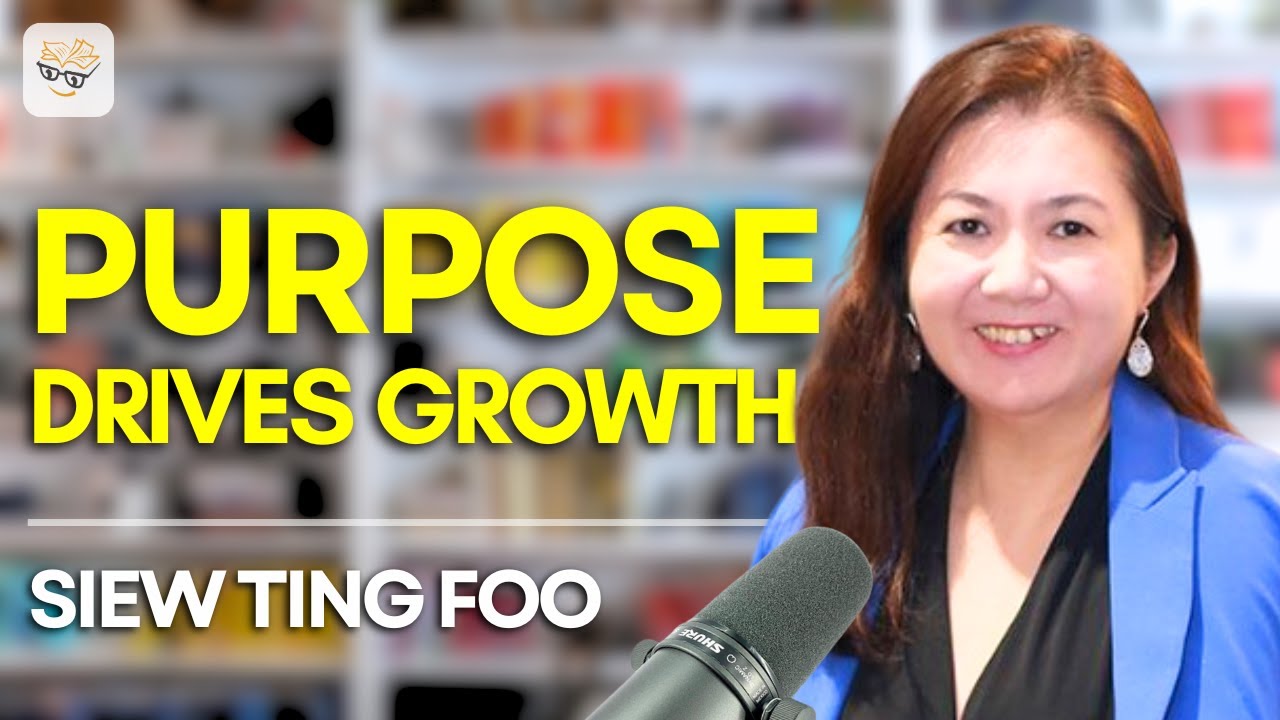
Branding expert Siew Ting Foo outlines five principles that give a brand soul: purpose anchored in universal truth, reinvention, longevity, coherent visual identity, and internal ignition. She argues that as AI saturates marketing, human-centric strategy becomes the real differentiator, and shares how the failed Sour Skittles launch in Thailand taught her the cost of cultural misstep.
Chapters
But if you look at it from a more technical perspective, I sum it up in 5 principles within the book. A brand with soul has to be— has to have a great purpose or a great positioning that is anchored on a universal human truth. Second, it has to keep reinventing because there are great brands, but then they don't keep reinventing. They don't stay Relevant, and it ends up in a while they can't stand the testament of time. So the third pillar is really standing the testament of time. And then the fourth one is what I talk about, you know, a coherent visual identity that sums up, you know, the brand wherever it goes and it's very consistent. And the last one, which in my perspective most important, is that— Siew Ting, welcome to the show.
Welcome to the Book Thinkers Life-Changing Books Podcast. I am excited to chat with you about your book, Building Brands with Soul. And my first question today comes from the opening of your book where you have an Annie Dillard quote that says, and I'm going to read this, anything you do not give freely and abundantly becomes lost to you. You open your safe and find ashes. So tell me a little bit about why you decided to kick off the book with that quote and what it means to you.
Well, I'm a firm believer of the law of abundance and the law of reciprocity. And I believe that, you know, the more you give, the more you actually get back and the more you learn. I wanted to open the book with this purely because, you know, the main intent of writing the book is really to, you know, for me to pay back to the marketing society community and to inspire the next generation of marketeers and the marketing leaders. So that's why I opened the book with that quote.
Yeah, one thing that's very clear about your early days in marketing is that you had some amazing mentors. It sounds like everywhere that you worked, you had people teaching you different philosophies on leadership and marketing. And so who were some of those mentors? I'd love to hear a little bit more about them.
Yeah, I was just, you know, my first 2 decades of my marketing career, I just have been absolutely fortunate to have, you know, great mentors. So, you know, how I fumbled into this profession, marketing, was really because when I was in the university in Singapore, you know, like in the second year, they send you for an internship somewhere. And I happened to be sent to Scott Paper, which is, you know, the previous— the company that was acquired by Kimberly-Clark. You know, they, uh, which really sells tissue papers, you know, which is the brand Kleenex, uh, essentially. And during that time, I actually met 3 ex-Unilever marketeers, um, and they came out with an extremely, you know, great module of marketing. Um, and that was where I picked up, you know, what marketing is all about, what brand management is all about. And because of that, when I graduated, I decided to become a marketeer. And I was very determined, so I went to apply for the 2 biggest schools of marketing, Unilever and Procter& Gamble, and I got into Unilever. And as my career moved on, everywhere I go I actually have, you know, a great mentor, but I think there are a couple that I want to mention. In fact, a few of them actually wrote the reviews for me. I think one of them is an entrepreneur, a founder, that worked with Mars Inc. He was the founder of a confectionery, sweet confectionery brand that Mars acquired, and I happened to work with him and understudy him, and that was when I picked up, you know, entrepreneurship, commercial acumen. And then in Diageo, I had many amazing bosses. You know, I worked for the best CMO, I worked for the best CEO, And also even, you know, work for an amazing chief creative officer who came from the likes of, you know, Nike. So yeah, I think the advice you want to give to your audience is, you know, seek out mentors. Don't be shy.
Do you have any advice for the audience on how to approach a potential mentor and also how to make sure— you mentioned the law of reciprocity— how to make sure that you're giving back into those relationships as well?
Yeah, I think there's a couple of criteria I have in my mind. First is it must be someone that has certain qualities that I want to learn from at that juncture of my career or my life. Second, there must be some chemistry essentially, but you need to make the effort, right? You need to go in and really have a goal itself. You need to go in with with questions prepared. Yeah, and I think now that over the past 6, 7 years being a leader myself, I realized that mentoring people also benefits you quite a fair bit because it's through the conversation and the stories and mentoring other people that you actually learn more things.
Yeah, I think so too. Whenever I read a book like yours, I'm always thinking about how can I teach these concepts to my community? And how can I teach these concepts to the people that work for my company? And that way I'm forced to simplify the concepts. It also helps me retain the information better when I'm able to teach it. Therefore, we're both benefiting. So I think that's a great statement that you made.
Yeah, fantastic. And I mean, I think you are the best example of, you know, reading so many books and actually, you know, telling the story back in the podcast to your audience.
Well, thank you very much. And I think that you can be mentored by people in person like you were. You could have these great mentors at the companies you work for, but you can also find great mentors in books because books like this, I mean, you've condensed decades of your greatest branding lessons into a book that somebody can read in a couple of hours. And that's, that's pretty special. You did reference one book that had a big impact on your life, but I didn't catch the title. So you talked about a time that you were given a book on meditation and you credit that book for starting your journey on becoming more of an intentional human-centric leader. So what book was that? Do you remember?
To be frank, I couldn't remember the book title. It was like way, way long ago, but it was, it was really a book from my mentor, the entrepreneur that teaches me, um, you know, how to be present, what are the techniques to be uh, to, to, on meditation. Um, and, and that stayed with me quite a fair bit. Yeah.
Yeah. I think sometimes it's the lessons in the book that we remember a little bit more than the title or the author's name. And so I think that's a, I think that's a totally fair statement. Are there any other books that do come to mind, books that had a big impact on you as you built your successful career?
I think I mentioned quite a few in the, in, in, in the book, but I would say that The one that I remember even till now, and even some of the principles still apply, and obviously that book keeps reinventing itself through different titles or the author, is really the book Good to Great by Jim Collins. I think those principles of how he talks about good company becoming great, what kind of leader profile, servant leadership, what kind of companies' traits I think subconsciously, I read that when I was really early age. I was an individual contributor. But I start applying it and start forming my leadership brand, which is a combination of book, practical experience, mentors, sponsors, and failures and successes. So, I think that book really stuck with me even till now.
Yeah. I mean, what a great book to have such a big impact. And yeah, I remember in here, you do reference that book. And I was also reading, like, you talked about Big Harry goals and some of the other concepts that I've also learned from Jim Collins, which is great. So transitioning, uh, a little bit back to your book, one of the concepts that I want to make sure we tackle early in this show is the concept of a soul in branding. Now, I could read some of the items that I highlighted, but I'd love to just kick it over to you instead and have you tell us, what does it mean to have a soul in your business and in your brand?
Yeah, I talk about 5 principles that I summarize, and those were just because I've managed, you know, great iconic brands for about 2 decades. But I would really sum up a brand with soul, it's almost a summation of, you know, the stories and the passion of the people who work for the brand. You know, people who work for the brand, And many of the brands I worked for were really founded on, you know, the founders standing on the shoulders of the giants, right, themselves. And it's really their passion, they put more into it, you know, they had such great belief. And great brands with soul actually, you know, sums up all these stories. And it's almost something that you can feel it. It's intangible, but yet, you know, you can feel it, you can sense it, you can feel that passion and what the brand stands for. You know, like, great examples I quote in the book is like Starbucks. You walk into Starbucks, you smell the coffee, you are engaged with the pretty consistent people, and then you see the green colors. So it's this whole notion of a very consistent look, feel, visual identity. You can feel the passion of the employees. But if you look at it from a more technical perspective, I sum it up in 5 principles within the book. A brand with soul has to be— has to have a great purpose or a great positioning that is anchored on a universal human truth. Second, it has to keep reinventing, because there are great brands, but then they don't keep reinventing, they don't stay relevant, and in a while they can't stand the testament of time. So the third pillar is really standing the testament of time. And then the fourth one is what I talk about, you know, a coherent visual identity that sums up, you know, the brand wherever it goes and it's very consistent. And the last one, which in my perspective most important, is that it comes from within. So it's ignited by the people working for the brand, you know, it has to come from within. So that means that marketeers like myself and/or marketing leaders or CMOs or young brand managers, you have to ignite the passion within the organization first before you go out and tell your brand story.
Which one of those 5 pillars do you think that most businesses are violating?
Maybe the last one. And I, because the last one is the hardest.
Yeah. So the idea that like, you really need to feel it within, that every single person in the organization needs to understand it at that intangible level, like feel it, therefore they can go out and project it outwards.
Yeah. Yeah. Because it's, and also because it really takes hard work from the, from a marketeer. Yeah.
Yeah, and this leads me into another concept that you mentioned briefly in the beginning of the book, which is that the art, the heart, and the soul side of marketing is getting lost amid the current AI-cluttered world. So not only do you have employees that are more distracted and maybe less involved from a heart-centered place in the brand, but also companies are using AI to do their branding for them instead. And it's Probably pretty hard to get the soul into the AI to accurately represent the business, right?
Yes. But actually, I feel that in the era of AI and when AI gets more prevalent, and the truth is it will get more prevalent, the arts and the human centricity of marketing becomes even more critical because that's where you can differentiate. versus, you know, the multiple, you know, the multiple similar copies and the creators, you know, and that you get because of AI.
Yeah, I received a book a few months ago, maybe a little bit more, 6 months ago in the mail. And on the COVID of the book, it had a sticker instead of a bestseller sticker. It had a human-made sticker, which I thought was really interesting because I think that— yeah, I think you're right in that like it becomes even more important to differentiate with the human side of your brand.
The interesting thing about it is more like your attitude towards AI and what you use at applied AI. I think our craft in marketing, it will be disrupted by AI. I think the truth is more like how marketing leaders advise and actually help their teams focus on the right things, which is, you know, the art side of marketing, but also really understand the human inside, because that can't be replaced by AI.
Yeah, I agree. And so what recommendations do you have for people in the audience today who want to inject more of that 5th pillar? Like, how do you indoctrinate your team more into the soul of your business?
How does that happen from a Yeah, and that really sums up from my journey of leadership in that perspective. I sum it up in the ripple effect, which is really on the book, the circle, the 4 concentric circles, the ripple. And I believe that in order for you to ignite belief, you have to start with yourself. So you have to start with, you know, you knowing yourself, you knowing your— find time to develop your purpose, you continuously being very self-aware and be a learner. And then in the book, you know, there's a chapter that I dedicate to, you know, really talking about how do I, you know, especially in the early days of leading a team, how do I actually, you know, align the company's purpose with the brand purpose, and individual's purpose in order to align a common goal. I think that part of any new brand's launch or new transformation journey is very critical because, you know, people have to give their heart and soul, or they have to be self-aware, self-motivated before they actually start changing, or they start doing something exciting, or they aim for a really big goal. It has to come from here. So that's what I meant by the heart, you know, and art of building a brand with soul.
Yeah, I learned that lesson a couple of years ago from a mentor of mine who said, hey, if you want to change somebody's behaviors, you have to start with their beliefs. You can't just address the behavior. You have to address the underlying belief that's causing the behavior. The behavior is oftentimes, or the way that somebody acts in business is oftentimes just a symptom, not a root cause. And so I think that what you're highlighting there is really important. You know, if you want to change the way that somebody acts within your organization and what they represent and how they feel and how that radiates outwards, right, you have to start earlier with the beliefs in their heart and everything like that.
Yeah, absolutely.
Yeah. Um, one, one great thing about your book is that, yes, you highlight all of the accolades and about how your career kind of took off and all the responsibility and the things that you learned along the But you also highlighted some difficult moments. The one that I wanted to bring up was the unsuccessful launch of Skittles Sour into Thailand. So could you tell us a little bit about what happened? And then also, what are some of the things that you learned through failure as well?
Well, I think, I think for that, for that experience, it was, it was very memorable. Purely, it was actually my first big— biggest launch, um, you know, I was working for Mars and, um, at that time the business was run by, you know, one of the generation of the Mars family. Um, he was running the region, um, and he entrusted me with a big, big, big, hairy, audacious goal, which is really to set up the, you know, the, the Southeast Asia sweets business and really starting with Thailand. I guess what happened was, which is the fifth pillar, I didn't do enough due diligence. I actually delegated the entire product innovation and R&D to the R&D department. And the R&D department is new, which is environment in Thailand and Southeast Asia and ASEAN is very different. So the Western world and the US, formula doesn't work in, in, in, in Thailand. So within 2 weeks of launch, the product starts melting. And I remember we have to recall all the products, um, and going around, you know, mom-and-pop stores and supermarkets to really recall those, uh, products. So, uh, it hit me really hard, um, and I think it taught me the lesson that, um, you, you, you can delegate to people, but you have to be very thorough. in terms of key stuff that is important in the journey of developing a new brand or a new product. So with that, that actually stayed with me for a very long time. Yeah.
And obviously, you rebounded from that situation. How did the leader of Mars in that region react? I mean, was there constructive feedback given? Like, were there any leadership lessons that you learned from that person?
I mean, to be really frank, because the company works like a founder's mindset, it's very entrepreneurial. I think the main thing was the speed that I rebounded, like how I actually took the lessons and actually had a relaunch plan and actually acknowledging the failure, accepting the failure and acknowledging it. Actually, that's a great step that the leaders um, you know, recognize, which means that I'm learning. I'm learning through mistake, uh, and I'm willing to, you know, accept the failure. So with that, they gave me, you know, another opportunity to relaunch the brand and, and, and, and, and launch the product and was very successful then.
Yeah. Good. And, and it's funny, as a reader of a book like this, you learn so many things that you don't intend to learn sometimes. And, uh, the, the Sour Skittles were my favorite candy when I was growing up. So when I was reading about how Yeah, there's a different formula when you release it in different parts of the world, and there's— there are different temperatures that you have to worry about. And in Thailand, I imagine it's hot and humid, and, and so they're melting, and now you got to recall all the product. And these are things that the average person or consumer might not be thinking about. So it was just— I also just found it interesting, you know, all the research and development that has to go into products like that.
Yeah, yeah. Absolutely. But then the other lesson is cultural differences and market conditions, which also became very important lessons to me as I went to global roles, right? Knowing when to really flex and know the culture and the market conditions and the nuances that are different is really critical. Yeah.
Yeah. I didn't write it down as a question, but I do remember in the book, you were talking about these global brands, but maybe like a local presence, like a local feel. And so if you use Starbucks as an example, no matter where you go on the planet, the Starbucks is generally the same. Maybe they have a few different drink options, but what's cool is they have local mugs. So like in Boston, the mug will say Boston and, and you can collect them all over the planet wherever you go.
Yes.
Or in McDonald's, which is the example you give in here, the menu is pretty much the same all over the planet, but each, each city or country Has a slightly modified or different menu item to appeal to the local audience. So it's a global brand, but with like a a local feel, and I had never thought about it like that before.
Yeah, I think it's absolutely important because you know now now now the world is has moved with so much globalization. Global brands are really important, but then that then needs to be local tastes are different, right? So I think that the magic is how brands. And companies know where they want to keep consistent and where they want to, you know, allow freedom to experiment for the local market.
Yeah, it's— and in the world of AI and digital communication, you know, it becomes even more important, I would imagine, for online brands to do that too.
Yes, yes. I mean, especially with the fact that with social media, whatever is happening in the US can actually happen You can actually see it in China. Well, maybe not China, Asia, in within within a few hours. Yeah.
Yeah. Interesting. How is Singapore reacting to the United States banning TikTok in a couple of days over here?
Well, I think it's it's I I don't think there's a lot of talk. There's a lot of talk on on the news and a lot of you know. On LinkedIn, essentially. You know, so I think empathy goes to the American consumers on what you're going to do now. But, you know, I can imagine that for us in Asia, that would be a big deal because we are so savvy with using social media and TikTok. And it's part and parcel of our life and some of our— even our own purchase journey. So I can imagine the repercussions there to be quite huge. Yeah. How is it like for you guys? What's your perspective?
Yeah, I mean, I guess my perspective is that I don't use that platform specifically. I know a lot of people do. There are a lot of mixed reactions. You know, for me, it won't impact me or my business in any way, shape, or form. So there is a philosophical discussion to be had about the freedom to choose which platforms you're going to use if you're properly educated on the ups and the downs of them. Uh, yeah, it doesn't impact us much. I mean, most of our following is on US-based platforms like Instagram and Facebook and LinkedIn and platforms like that.
Right. I guess the biggest impact will be on the creators.
Yes. Yeah, on the creators. And, and, and I think a lot of those people will have to move to, to other platforms. It's, uh, yeah, I can imagine that's a difficult thing. And listen, Book Thinkers is a creator, right? We promote and market books. It's just that's a platform that we never really took off on.
Right, right. Interesting.
Yeah, I think that, um, you know, with our business, it's more over here, we view TikTok as a little bit more of an immature platform. And so it's still an opportunity to reach a lot of people and to, to have an impact, but nonfiction business and personal development type material is typically reserved for a slightly more mature audience. And so For us, we find that on Instagram and LinkedIn for the most part.
Yeah.
Yeah. Another subject that I wanted to talk to you about was the concept of ikigai, and that's a Japanese concept right around purpose. So tell us how you were introduced to that subject and maybe how it's been important for you to understand your purpose.
I think I was introduced to it 15 years ago, not from that book. I discovered the book much later when I was actually working with Diageo. I was one of the top 200 leaders globally. They are firm believers of purpose. Their brands are really great. They have lots of brands with huge purpose. And they believe that as part of the leadership principle is you need to know your purpose first before you can become a great leader. So they gave me a coach. then, and a coach went through a journey with me to help me discover my purpose. So 15 years ago, I came across the concept of purpose. I went through a journey of discovering my own purpose, and my purpose evolved as you go through different life stages. And if you look at the book, and the book summed it really well, the Ikigai book summed it really well, I think what is a purpose? A purpose is like your North Star. You know, it's actually the intersection of where, you know, your passion and your skills, um, you know, really come together, um, and then into your vocation that you do and what you really want to stand for and impact, you know, the community, uh, itself. It's just really the intersection, uh, and actually for everyone, everyone is, is really, uh, really different. So because of that experience really young and I was starting to becoming a, a leader and leading teams, it then helped me guide me in terms of how I lead teams. And I actually utilize this concept of purpose to drive alignment, you know, to build team's purpose. And I practice this many times in many roles over the course of the last few years. And I find that actually it works. It brings out the best in people. It allows people to be at their best. And actually, most importantly, it helps unleash their potential. My purpose, not to bore you, but my purpose is—
That was actually my next question was, I know it evolves, but what is your purpose today?
Yeah, my current purpose is really about unleashing people's potential to build brands, teams that impact the society.
Yeah, I love the clarity. I think that You know, what I've realized in my life is that the better you can articulate the purpose, the easier it is to work with you. So, I understand what motivates you. What is your North Star? And I think that as a leader, if you can understand the purpose of each person on your team as well as your brand's purpose, like you said, if you can drive some alignment between all of that, you understand what motivates people.
Yes.
And, uh, that's really useful.
Very, very useful. I find that absolutely useful. Yeah.
Yeah. Well, before we wrap up, I'll bring up one more subject from the book just to give everybody a little preview for what they might be able to learn. I thought it was interesting when you said the craft of marketing is the sum of art, which is creativity, and science, which is data. And I think a lot of people, they view those 2 subjects, art and science, as contradictory. But what you're talking about is sort of the blending of both worlds. Is that right?
Yes, correct.
Yeah. So how do those two work together?
Yeah, and I guess because I grew up in pure brand management organizations like Unilever, and very, very young age, we were taught to understand numbers, understand data, understand the P&L, right, on what your marketing decisions or marketing ideas have an impact on financial outcome. So for me, the science part of it is really that, right, whatever you do has to drive impact on, you know, short-term and long-term, and being able to draw insights and tell story from data is really important. But having said that, the art is very important in the craft of marketing, which requires that, which is, for example, you know, digging out the human inside, finding a human truth. That's an art, you know, coming out with a creative campaign, you know, that really touches, you know, and understand the human psychology, and actually create products and ideas around that. So for me, it's been very natural, because there's sometimes a lot of debates from marketers to say, oh, I'm a science marketer, Oh, I'm an art marketer. Actually, you can't. You need to have both. It's just at what moment you use what muscle.
You mentioned when you were younger, you wanted to be an artist. I think I read that in the book. What type of artist did you want to be?
No, I just like to draw. Then my favorite artist is Van Gogh, so maybe oil painting. I don't know. Yeah. And for a moment I wanted to be a doctor too.
Yeah, yeah, I saw that. Yeah, I saw that sort of the blend of both of those. Well, listen, it's, uh, it's been a great conversation today. I think we've given the audience a good preview for some of the subjects that they could learn about if they choose to buy a copy of Building Brands with Soul. Uh, before I let you go, a couple other quick questions. The first is this: for those that want to buy a copy of the book or learn more about you, Where should they go? What should they do?
Yeah, they can check out my website, www.soulforprofit.org. And you know where they can buy the book, you know, overseas out of Singapore, it's actually on Amazon. And in Singapore, besides Amazon, it's also available in Kinokuniya and popular bookstores.
Okay, amazing. My next question is, If this book was deleted, but you could leave the world with just one message from it, what would that message be?
Oh, that's a tough question.
I know, I should have given you some time to think about it.
I believe that impact and leadership and everything starts from oneself. So it starts from understanding your own soul. Only when you know your own soul and what drives you and what motivates you, then you can actually contribute to the community, to the earth, to the society, to the people around you better.
Yeah, I think everybody could benefit from a little bit more self-awareness from time to time. I agree with you. And here's my final question. If somebody has made it this far into the show and they're still not sure if the book is a good fit for them, what's your final, what's your final little sales push for everybody?
Oh, you miss out the most authentic, the most authentic and the most honest, vulnerable sharing of, you know, what it makes, what it takes to become a CMO, what it takes to become a leader. and how to actually build iconic brands with soul around the world.
Yeah, nobody wants to miss out on that. So grab your copies, everybody. A link to the book will be in the bio.
All right. Thank you.
More from Nick

Napoleon Hill’s “Think and Grow Rich” is a timeless classic #selfhelp #personaldevelopment

4 Books to Help You Get Better at Decision Making #selfhelpbooks #bookrecs #nonfictionbooks


Have you read this book yet? 📖: The 5AM Club by Robin Sharma #selfhelpbooks #robinsharma

Dan Sullivan on Listening to Your Customers Instead of Watching Your Competitors

5 Books That Will Boost Your Financial Intelligence #financialfreedom #nonfictionbooks

The People That Preach the Loudest About Virtue are Usually the Most Power Hungry



Books are the greatest mentors you can find #selfhelpbooks #businessbooks #successmindset

Let’s fight this toxic instant gratification culture together 📖 #selfhelpbooks #jimkwik