How to Build a Company People Want to Work For with Aaron Young
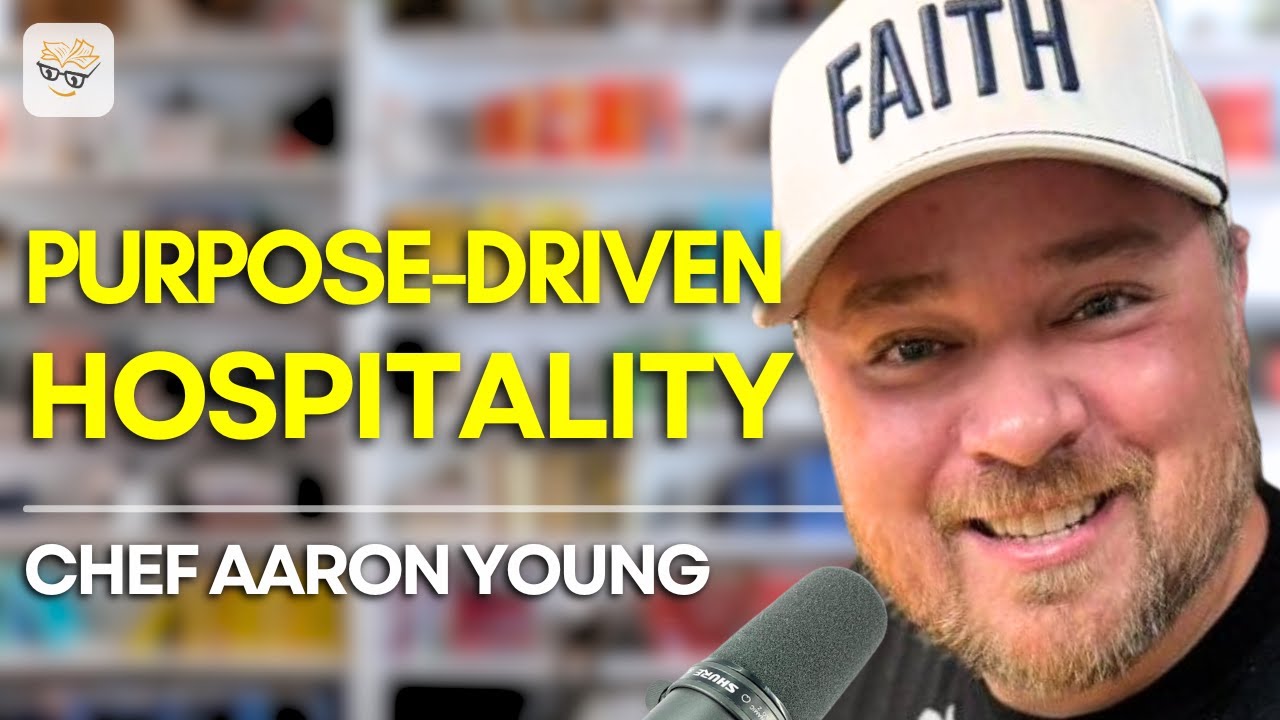
In this episode of the Book Thinkers Life‑Changing Books Podcast, host Nick Hutchison interviews Aaron Young, founder of Chef au Chef, about his journey from chef to entrepreneur and the principles that shape his company. Aaron explains how the made‑up name Chef au Chef was chosen for its uniqueness and its literal meaning “chef to chef,” reflecting a peer‑to‑peer mentorship mindset. He shares his family background, the work ethic instilled by his parents, and early hustles that led to his first role as a house chef for a sorority, which sparked the idea of catering Greek houses. The conversation tracks the rapid growth of Chef au Chef—from a one‑person operation serving sororities to a multi‑employee catering business handling weddings, corporate events, and a new product line called Wham Bam Meal in a Pan. Core values such as “fun” (inherited from his father’s humor) and empathy are explored, with concrete examples of how anticipatory service and “unreasonable hospitality” differentiate the brand. Aaron discusses the implementation of the EOS (Entrepreneurial Operating System) and the role of a business coach and a fractional integrator in creating structure, documenting processes, and scaling. He also reflects on personal loss—the recent passing of his father—and how that experience reinforced his faith and the importance of family. The interview closes with recommendations for further reading, mentorship influences, and a final message centered on love for God and neighbor.
Chapters
That's what people care about because like, I don't know, you take the same product and everyone, you know, what makes the different sushi places different? Everyone has, you know, they use a lot of the same vendors. The rice is seasoned a little differently, but you go for the service like that. Everyone says like, if the food's great and the service stinks, like most likely you won't be back. But if the service is great and the food stinks, you'll be back because the service is what sells it.
Hey, welcome to the Book Thinkers Life-Changing Books Podcast. We're going to dive right into it. Tell us the backstory behind the name Chef au Chef.
Oh man, that's a great question. And what the heck does Chef au Chef mean? It's a made-up word. First of all, I was Googling names back in 2010, trying to think of a business name, and I put the words together, Chef au Chef, and nothing came up on Google. And like, how many times do we Google something and nothing comes up? And so I was like, I want that. I need that. And it's great because I can make any username Chef Au Chef and I never get denied. Like it's even my Fortnite name on my Xbox Live or gaming. So it's just, it's great. But if you break it apart, Chef Au Chef, it literally translates from French to chef to chef or head to head or cook to cook.
And so the metaphor there is you're giving advice cook to cook, chef to chef, that kind of thing.
Absolutely. Because everybody either likes to cook or doesn't like to cook, but everybody loves to eat. And so that's one great thing about the food service world is I can find common ground with anybody. And I just love the idea of chefs collaborating, chefs competing. We have a lot of different events here in Lincoln, Nebraska, where chefs volunteer their time and food to help raise money for nonprofits. And then they usually give a prize for like the fan favorite. And so just those kind of things is when we get together and help out the community. I just, I love that aspect of it. And obviously, you know, with different TV shows, it's always fun, the bragging rights if you win and things like that.
So, you know, you, you just reminded me of something I've never told on this podcast in 300+ episodes, which is that when I started Book Thinkers, I was looking for a name and I started by looking for a domain that was available. This was back in 2016, 2017, and I had a friend who was also on GoDaddy at the same time typing in domains that were related to books and thinking. And he found Book Thinkers first and he said, I'm going to buy it, I'm going to buy it. So I ran back to my computer and I bought the domain bookthinkers.com. And of course at the time that meant it was also available on every social media platform. So it's funny that as an entrepreneur you look to name your business, your brand, something that is available and different. And I think there's probably a lesson in and of itself right there.
Absolutely. We want to be original. You want to stand out, and that's a, that's a, that's a great starting point.
Yeah, absolutely. So, uh, in your book, you go back in time a little bit and you talk about growing up. Your parents instilled a very strong work ethic in you, and at the time, you played a lot of sports, extracurriculars. You played football and wrestling, among some other things, and so did I. So maybe we could talk about that in a minute, but First, tell me a little bit about your parents.
Oh man. So this is kind of a fun story. My dad's originally from Iowa, moved to Lincoln, Nebraska in the early '80s, finished school here, went to UNL, and then he got his first real big boy job down in Albuquerque, New Mexico. Been there for a few months, you know, didn't really know anybody except for his work people. And they encouraged him to put an ad in the paper, you know, man seeking woman kind of a thing. And changed his life because he met my mom that way. And fast forward, I actually met my wife through Match.com. And so it's just kind of one of those full circles, like they always say, like you kind of repeat what your parents do. And not just in that aspect, but in working. My parents were middle-class hard workers. Mom kind of secretary, working any kind of cleaning job. Gas stations, just anything she can find work. She loves people, so anywhere she can be connected with people, uh, she always fit in. So just that aspect of connecting with people. My dad was a claims adjuster for many years working with— I, I love the days when it was, uh, take your daughter to work day and he would take me. And, uh, I just love that, just seeing him work and just— I know, like, you see your parents at home and then you see them in their profession, it's just a totally different light. And so my dad was just always really good about being overly cautious because he'd seen the worst of everything growing up being a claims adjuster. I mean, he didn't like me riding my bike because he had so many claims with bike bicyclists getting hit or, you know, hitting something else. And so he was kind of a little overcautious, but again, just a hard worker. He, and then he always tried to do those kind of get rich quick schemes. Like I remember him in, we lived in Texas buying perfume or cologne dispensers that you could put in bars and things like that, and little candy machines and vending machines. And he just, he always wanted to be an entrepreneur, but he was always scared to do it. You know, his, my grandpa, my Baba, he was a claims adjuster. My uncle's a claims adjuster, and my dad was a claims adjuster. They just did what they knew. And like, I guess even our parents' generation was, you go to school, you get a 4-year degree, you go work for a company, and then you do that for 40 years and then you retire. Like, that was just the game plan that they did. And for some reason that just never sat well with me. But like, they supported me when I told them I wanted to go to culinary school and it was just a 2-year degree. They're like, well, what are you going to get for your 4-year degree? And I'm just like, I don't know if I'm going to do that. Like, I really have this vision and this dream to start a business. And, you know, they'd seen it from 10 years old. They encouraged me to pick up dog poop for neighbors, you know, for money, painted addresses on curbs, lemonade stands. And then I have Really random talents. I can yo-yo, I can do magic. So I was doing kids' birthday parties in our neighborhoods. Teachers were hiring me from high school to do their kids' birthday parties. So I just always had this hustle and also the desire to kind of make my own money, and they always supported me in that.
Do you think it was their stability that allowed your flexibility? Meaning, yes, your dad may have sacrificed his entrepreneurial dreams a little bit, but at the same time, he provided a stable foundation for you to be a little bit more flexible from?
Absolutely. And I think that was— that's kind of the biggest thing with the corporate world is you have that 9 to 5. And as a chef and a caterer, I don't necessarily get that. You know, I usually work when everybody else is playing. And so, you know, looking back at my life growing up, like, that was— the stability was huge that they could allow me to do all the things that they had me do. And my mom always said it's because I was full of energy, she had to keep me busy, otherwise she'd go crazy. And, but the fact that they could drive me to all my practices and they could, you know, take me to different events and they were always there too. So no, absolutely. Like that's, that's the one nice thing about the 9 to 5 world is you Monday through Friday, you can turn it off and then you have the weekends, you have the nights, whereas an entrepreneur, it's pretty much impossible to turn it off. Like it just really is.
I do want to go into your entrepreneurial kind of early days in just a couple of minutes. But first, you did share with me before we pressed record that your dad just passed away. And you said to me that it was so nice to have him read your book, uh, before he did. So talk to us a little bit about that experience. What did it mean to have your dad read the content and how are you feeling today?
Um, absolutely. So, uh, it's really cool because back in 2003, my dad wrote a book for claims adjusters on how to file your own claim or what to do when you're in an accident, because that was a common question he would get. And so it's kind of cool following in his footsteps. uh, to be able to write my own book. But, uh, after he wrote— I gave him the, um, oh, the draft or the, uh, the manuscript before it was printed. And I said, hey, read this through, let me know what you think. And my dad was a big movie quote guy, and he sent me back a caption from, uh, the movie Peyton. He's like, it's brilliant, you stirred— you know, just like, just, he was very, uh, usually he would send me silly stuff, but like that one was, it hit at home. And so, um, Yeah, 2 weeks ago today, he ended up passing away from a medical episode. We're not 100% sure, but we're thinking it was a heart attack. 63 years old. But yeah, he was really proud. Every coffee and breakfast he went to, he was taking the book, showing it to all of his friends, and just like, you guys got to get this. And so I think a lot of my sales are because of my dad. So I just lost my number one sales rep. But because of my My faith and our faith. I know he's in a better place. I know he's not suffering. I know I'll see him again because of Jesus Christ. Like I just I know that, and so I'm very thankful. I miss him like crazy. It was my birthday on the 21st, so five days after he passed, and it was the first time I he wasn't at my birthday.
But oh.
I knew this was going to happen, but hey, it's all good.
Yeah, thank you for the vulnerability and being willing to share that, man. My dad is 63 years old and I'm a new dad. My son Levi is almost 9 months old and gives you a lot of perspective. Um, you know, I'm also a man of faith, and so I also have that same belief that he's in a better place and you will get to see him again.
Um, amen.
Yeah. Does it, does it change how you think you're going to live your life moving forward?
Um, not necessarily change. It just, it's a, it's a different kind of— so, uh, that Wednesday after he passed, we got featured in our local newspaper for our new building and stuff that I talk about in the book. And, um, it's one of those things where I would have texted my dad and said, hey, if you need more toilet paper, go to the local gas station and pick up some more newspaper because, uh, you know, there's, there's, there's a good, there's a good supply there and I'd love you to see it. And, you know, it's just one of those things he would have been so proud. So I got to text all of his friends instead. But, uh, you know, it's— he got to see so much and I'm just a little sad because we have so many other things planned, um, that he won't get to see. But, um, I think the motivation more now is this is, you know, everyone was texting me asking me like What can we do for you? I said, honestly, if your dad's still alive, give him a call, spend time with them. Like, just, you never know, you never know when the last time it is. And so luckily it was the day after Father's Day, so I got to see him, my kids got to see him. And that was the hardest thing for our kids. We got 3 kids, Kayla, Bethany, and Eve. They're, uh, 10, 8, and 5. And they were at— he was at their piano recital on Sunday. And so then having to tell him the next day that No, Grandpa passed away. That was hard because I joked a lot with him. I said, you were a much better grandpa than you were dad. And he agrees. Um, but being a grandpa is way easier because, you know, you can get the kids all wild up and excited and have fun, and then you send them back to us. And so, um, I love seeing him be a grandpa. I actually have his hat in my car and it says Proud Grandpa on it.
So yeah, I think what's, what's different about our generation versus that generation is, you know, that generation did spend a lot of time working and, and there's sort of a joke like, you know, they finally get to parent and be present once you have your kids. And I will give my dad a call once we hang up. I think that's a beautiful reminder and a reminder for everybody in the audience today too.
Awesome. Yeah, I had one friend reach out. She goes, I actually called off work Friday and spent the whole day with my dad. And I'm like, that's the best gift you can give me.
Yeah, I spent, I spent yesterday at my dad's house. They have a nice pool. They live about half an hour away. And so get to bring my son over there and we get to hang out and be present. And man, you know, I'm so sorry to hear that you're going through that. But what an amazing What an amazing butterfly effect that you're going to have, you know, having people reach out to their dads and spend time with their dads and, you know, talk about this with your kids. What lessons did he instill in you outside of hard work ethic that you're looking to instill in your kids?
Comedy, man. Our first core value is fun. And I think that's 100% my dad. He can control He was an amazing musician, self-taught, sang a lot of folk songs. My favorite song he sang was A Boy Named Sue by Johnny Cash. Like, he just could sing that song really well. But anytime we were at a dinner table or in a group, he just could control the group with comedy, with laughter, and he could— and that's something that I picked up. And so I said, his— if my humor is from him, I mean, we grew up watching Roseanne. Home Improvement, um, Seinfeld, like just those '90s sitcoms were like what we grew up watching. And so, uh, with my kids just joking and stuff like that and different movie quotes, and you know, they're starting to say stuff like that. And just, you know, life is, is joyful. And like just sharing that and having fun and, you know, taking it back all to the faith and like just, you know, giving them a strong foundation in Christ. That's kind of what my dad instilled in me, and that it's the only thing that truly matters that I'm trying to instill in my kids while having fun too. So, and laughing, and it's okay to cry. It is.
Yeah, of course it is. Um, I was going to ask about the core value of fun a little bit later because I think that the rest of your core values seem like typical core values, and then fun has popped in there. So it's really fun. It's really cool to hear that that's inspired originally from your dad and the way that he interacted with you when you were growing up. Talk to us about what that's done for your business.
Um, so it's one of those things where, like, I never thought of it till we did this last revision with my business coach. And I just naturally, like I said, I love having a good time. I love laughing. I love making other people laugh. I love just that aspect of it. That's something that when we come in here, you come into the business, that's what we try to do. And it wasn't something that was written down. It's just something that would naturally happen. And that's what my business coach pointed out. She manages other companies, and she was having a really bad day, and she just showed up unexpectedly. And we're like, what are you doing here? And she goes, I just had a really bad day, and you guys are just so fun that I just— I needed something to kind of turn it around. And that's what kind of got me thinking. And I'm like, can that be a core value? She's like, absolutely, that can be a core value. I mean, it's— the core values should be ones you don't have to think about. They just— they happen naturally. And so that's why it's our number 1, because we, we don't want to have to think about it. We don't want to force it, but we just want it to be natural. We want it to be that the environment is so welcoming or just so comfortable that you can have fun, don't have to be uptight. And then I talked about, like, it's our— all right, you can see it, but the chef shirt, like, it's, it's something I've had since day— probably year 2 or 3, because I just, I hated wearing the chef's jacket everywhere. We're catering, we're running around. And so it kind of starts with our shirts. So we get a lot of compliments on that. People like, oh, I love your shirt, that's so fun. And I go, that's our number one core value. They're like, what do you mean? I go, it's fun. Like, we're just trying to be different and we're just trying to have fun. And so people like that, they catch on to that, and it's contagious. I mean, if you— hearing somebody laugh is one of the funniest things, like, especially because everyone has a different laugh. And like, how many times someone will be telling a story and they're cracking up and the story's not even that funny But they're laughing, so you're laughing, and it's just, it's contagious.
Yeah, it is contagious. Uh, I think that's, that's beautiful. Um, we— so for anybody that's just listening to the podcast today and can't see, uh, AY on the screen, he's got a black t-shirt on, but it has a chef coat printed on it, like laminate white, you know, so it looks— it's kind of like a tuxedo shirt but a chef shirt.
Yeah, it's just like we love, we love to party, but we also like to cook, so we try to combine the two.
Yeah. And so that's what it looks like if you show up and you're catering an event. Everybody's wearing that instead of the boring, stuffy, hot chef coats. I think that's— I think that is a lot of fun. You're right. So, uh, going back into your entrepreneurial journey a little bit, I was reading in your book that when you first started, you were actually a house chef at a sorority house. Is that right? Yeah, what was that experience like? You're 22 and you're around a bunch of college girls all the time cooking food. I mean, is that what the environment was like?
So everyone thinks, oh cool, sorority girls. Yeah, I, I saw them at their worst and I saw them at their best. I mean, uh, they would come down after a Thursday night for breakfast and just hair a mess, makeup running, just baggy clothes. But then Monday night was the formal Greek night where they had an all-house meeting and they're wearing all white, they're all done up nice. Um, but what I loved about the kitchen, and I think this is what caught on with a lot of other people, is the, the kitchen and the dining room was a safe space.
Mm-hmm.
Um, if somebody came down and had— was having a rough day, I could be like, what sounds good to eat? Like, what's gonna comfort you right now? A fried peanut butter and jelly? On it. You want, um, hot beef sandwich? Well, let me see what I can do. I can put it on the menu for Thursday. Or you just need a sandwich, you just need a nice salad, like, It was just, it was, they could come and they, they were always consistent with a nice meal. And that would just get them through a rough day, whether it was a tough test, tough class, breakup, you know, arguing with the boyfriend, just, it was a safe space. And so, um, that caught on. And so they'd bring their friends down. And, uh, yeah, I never thought of it as a business. It was just an opportunity that popped up because, you know, even in culinary school, I had no idea that was even an option to be a personal chef for a sorority, a fraternity house. I didn't know that was a thing until I got that call from my program chair after graduating. And, um, yeah, it just— it was really cool. And so I kind of built the business around essentially catering for sorority and fraternity houses without— it was one of those pivotal moments where it's just like, I never thought about this, but this could be— this is an opportunity.
When you're talking, I think one of the characteristics that bleeds through, and I'm filtering for it because you wrote about it in your book, but it's empathy. It's putting yourself in somebody else's shoes. It could be on their worst night after a break up and they need some comfort food, or maybe they're hungover and, uh, you know, and they need something to wake them up. And, and you're just— you seem really present and aware. And so when you took your strengths assessment test, empathy was number one, but your coach makes a joke and hates the word empathetic. So talk to me a little bit about your business coach and maybe why you get along and you two complement each other.
Well, it's so great because, like, I mean, she's like— she's the type of person like, this needs to get done, doesn't matter what's happening. Just get it done. Like, that's her attitude. That's her, that's her strengths. Like, that's what she's good at. Um, the business is struggling. We need to fix it. This is what needs to be done. Do it. And so she, she isn't empathetic in the fact like, oh, you had— you didn't have enough sleep last night? Too bad. You need— you committed to this. You need to do it. Um, and that's not a bad thing because again, it balances us out. Empathy is literally her last, her 34th strength. Mine's number 1. So we balance each other out. She can see things from things that I can't see, that I'm blinded by, and I can see things that she's blinded by. And that's what makes a really really good team. And, um, like I said, I joke about it with her because like, oh, we should be empathetic right now. And she's like, I'm not agreeing, but I'm not disagreeing, you know. So, um, it just makes for good because she is very dry, but she's also very serious, and she's very, um, just she's, she's good at what she does. And that's why I appreciate her. And, um, you know, every week, if we all have the same strengths, it I think life would be too boring, right? And so they say opposites attract, and I think in the business world that also applies with different leadership teams. Like, you got to have people that have other strengths than you, you got to have other strengths than them, and that's how things get done.
Yeah, I think so too. I'll put this on the screen and I'll, I'll talk through it for anybody again who's just listening today. But here's my Clifton 34, and you'll see with me, I'm just like your coach. Empathy is number 32 out of 34 for me. And you know what's funny is that I had my whole team do their strengths assessments, and then we did a matrix to compare them. Every single person on my team other than myself has empathy in their top 5. And so what my coach told me is that subconsciously, I mean, you weren't aware of this, Nick, but because you are low on empathy, you surrounded yourself with people that were high on empathy to even out the scales a little bit. And I just think empathy is such an important skill set. to develop over time. I believe it's a skill you can work on it. You can improve it a little bit. Talk to us just a little bit more about how empathy has worked its way into your company today.
Um, how empathy's worked into my company is, I mean, we're hospitality, we're food service, and especially at, you know, everywhere we go is offsite. Like we are not at our location. So we have to constantly be aware of what's going on. We have to know what venues have what. And, you know, guests again are going to different venues. They're not familiar with the location. So I'm just constantly with my team saying, hey, you need to be aware that there are a lot of different people going to be at this event. There's a little bit of chaos. So just be aware, looking for situations where we can help people. People constantly are forgetting their silverware utensils from the buffet, even though it's right in front. We've tried different things. We tried it in front. We tried it in the back of the line. People still forget it. So just waiting there, seeing somebody come back looking like they're looking for silverware, if you can just pop that fork up to them real quick, they're just kind of blown away like, how'd you know I need that? And it's like, we know things, you know, we just, we see it, we're paying attention. One of my favorite things to do is when I'm doing a carving station, I love cutting up the meat for the kids, for the parents, because it's just one less thing they have to do. Like I say in the book, one less thing they have to manage. And again, it's just that little bit of You know, being a parent, going to events, and it's like, okay, you have your kid's plate, you got to cut that up, and then you have your food, you got to cut that up. It's just, it's one less thing they have to do, and you're just giving them a little gift of time and freedom. And that's what I live for in this business, just those little, little moments of making a difference. And the food's really good, so the kids are eating it, and that's a huge win.
That is a huge win. Yeah, I, um, I wish we lived closer to each other. I'd have you come cater some events locally for me. I, as you'll see when we post— I mean, by the time this interview goes out, I suppose anybody that's listening or watching can go watch me fumble my way through some of the recipes in your book in the video review that we'll be posting soon. But I— there's a quote in your book that comes from Unreasonable Hospitality, and I think Will Guidara is a genius. I think that book's amazing, just like your book is amazing. And he talks about how service is black and white, but hospitality is color. And that gives a lot of room for non-intangibles like empathy to be infused into what your company delivers. So you've just done such a great job, it sounds like, of building that in.
Thank you. I mean, and it's one of those things, again, it was just natural. Like, it just was part of who I am that I— and that's the foundation or the core of how we've grown and been able to— that's what people care about. Because like, I don't know, you take the same product and everyone You know what makes the different sushi places different? Everyone has, you know, they use a lot of the same vendors. The rice is seasoned a little differently, but you go for the service like that. Everyone says like, if the food's great and the service stinks, like most likely you won't be back. But if the service is great and the food stinks, you'll be back because the service is what sells it. And that's what Will Guidara really talks about. He is like, we were working with some of the best chefs in the world, but how do we make ourselves even better? It's the guest experience. It's knowing what they need before they even need it. And I loved in his book, one of my favorite takeaways was how they would ask, you want still or do you want sparkling water? And they were able to sign behind their back so that as soon as they leave, they have a server coming and just already knowing who gets what. Like, that to me is just, I love that. Like, it's magical. Like, again, like my background in magic, like, I just, I love that.
Have you, did you end up watching that TV show, The Bear?
Oh, I haven't seen the 3rd or 4th season, but the 2nd season, episode 7 is one of my absolute favorite episodes where the cousin goes to the number one restaurant and he finds his purpose, or he finds his ikigai essentially in that aspect of someone wanted Chicago pizza and they're leaving. So what does he do? He goes and gets it. The chef plates it up super cool and they get to have Chicago pizza before they leave. Like, That to me, that, that's hospitality. That's what people remember.
Yes. Yeah. It's, it's based on in Unreasonable Hospitality when Will hears or somebody on his staff hears, oh, they're leaving New York, but they didn't get to try a hot dog or whatever. Oh no, New York pizza, I think it was. So yeah, they run out to a vendor, grab the pizza, cut it all up nice and present it. I'm like, what a— it's just, you know, we read that as a team internally at Book Thinkers and everybody had ideas of how we could implement it by anticipating needs like you're talking about and going the extra mile. And there's so many great lessons like that.
Uh, the family from Spain one also stood out where he took them sledding.
Yes. Yes.
No, before, and just like that had nothing to do with food. It had everything to do with the experience and like, oh, I wish we could go sledding. And then boom, they made it happen. Like that to me is the magic of, you know, just having a, a, an ear that's listening and a heart that's caring.
Yeah, I think so too. And those lessons are reflected in your book. I mean, there really are. And so for anybody in the audience, we're not just talking about food, we're talking about hospitality. And hospitality extends to every single service, and I would argue every single product on the planet.
Absolutely.
And, uh, you know, you can get a lot of those lessons in your book. So bridge the gap. How'd you go from chef at a sorority house to starting your own catering company? And then also continue that story just for the sake of time into where you are today.
So yeah, no, thanks. This is 2010 and I'm at the sorority house and, you know, get through the first year and then the school year in 2011, you know, noticing there's a lot more kids coming over and friends, boyfriends, and they're like, hey, can you do this at our house? And so that's what got me thinking like, hey, can I start a hospital, you know, a food service company that caters to the Greek houses that, you know, serves them in essentially the way that I do it? So kind of franchising myself and my service. I presented to the house that I was at and they said, no, we just want you as our house chef. I got— they're like, well, make us an actual business proposal, you know, put together a business and all that. So I started an LLC, put together a business plan. We went back and forth for just like 3 or 4 months. And then like a month before school got out, they're like, yeah, we just want to keep you as our house chef. And I'm like, I want to be more than just a house chef. So I ended up resigning at the end of the year. I got an executive chef job at a local restaurant in Lincoln that was going through ownership changes at the time. And then literally like a month on the job, I get a call from a fraternity house who's— one of the sisters at the sorority house I was at, her brother was at the fraternity house and they just released their food service company and they knew I was available. So they interviewed me and they hired me. So in the fall of 2012, I got my first contract as Chef Au Chef LLC. with this fraternity house, and it was just me. I think I had like 2 corporate caterings on the books and I had 1 wedding. And then 2013, I started getting more weddings on the books. So then I had to like get my permitting and everything. So I had to like piggyback off of another business in town so that I could use their commercial kitchen to be legal and legit. And then I started thinking in 2014, it's like, I need to have my own spot. Like, I need to get out of the fraternity houses because those were growing. I I went from 1 house in 2012, and then in 2013 we had 5 houses. Like, that's how fast it grew. Like, it was just crazy. I went from 1 employee in the fall of 2012 to having 13 employees by the end of— beginning of 2013. It just was this rapid growth. 2014, I found a location. I had a little cafe and we were doing caterings. And in that year alone, I think we did 32 weddings roughly. And so just from there, like we were scaling up the sorority and fraternity houses and we were building, you know, more corporate clients. We were building more repu— we were very reputable with weddings because people were coming to us going, you know, our average plate back then, I was literally selling like a chicken, the herb chicken breast, the recipes in the cookbook, our mashed potatoes, steamed green beans with roasted red peppers, a balsamic tossed salad. And then a dinner roll. I was selling that for $650 a person back in like 2013, 2014. And I was getting weddings for anywhere from 300 to 500 people. We were making money off of volume because, I mean, when you get that many people, that adds up really quick. So that was just kind of the base of it, you know, just having really good food and really, really good pricing. And now, you know, 2014, we average about 80 weddings a year. We have over You know, 16 corporate clients. We do over 1,000 caterings a week. We still manage about 5 fraternity houses and 1 sorority house. I really cut back on those because some of the house moms can be a little crazy. And so we—I cut back in 2017. I called. I trimmed the meat. I got rid of a lot of the parts that were just too, too much, and like too much hassle, too much. work for the little money that we were getting, and it was stealing my time. My family was growing at that point, had 2 kids and a wife, and I'd seen chefs go through divorces because they just dedicate so much time to work that, you know, they're never home, and you can't have a positive family life when you're gone all the time. And so it's like I needed to cut back. So in 2018, my big theme— 2017, 2018 was, um, uh, Oh, What was the theme? It was, um, it was simplify, I think, was the theme for those 2 years. And then 2018 is when we launched Wham Bam Meal in a Pan because I wanted to bridge the gap between— because I'd have people that have us for these events, these weddings, and like, I just, I love your food, I just don't know when I'm gonna get it again. So I was like, that's a problem, how do I solve this? And so I brought some leftovers home one, one, uh, evening, and my wife was like, what's for dinner? And I threw the pan on the table and it had a chicken, potatoes, and green beans in it. And she goes, Wham bam, dinner's done! And I'm like, ooh, I kind of like that. So then we came up with Wham Bam Meal in a Pan. It's a fully prepared pan of food. It's got a protein, starch, and a veggie in it, and it's ready to eat. I can't say hot and ready because that's Little Caesars, but it's, it's fully cooked and it's ready to eat. So you don't have to heat it up, you don't have to cook it. Either have it delivered or come pick it up. And, um, this year we're going full-blown with it because I really love the whole core value or the whole purpose or mission behind Wham Bam Meal in a Pan is to have family meals again because so much of my life, my parents were very strict about, you know, always family dinners. No matter how busy we are, we're gonna have family dinner first and then we're gonna go do our activities. And, you know, that's one of those core memories or values that was just instilled in me and I didn't think much of it. But then a lot of our friends and a lot of our family, they just go, go, go, go, go between baseball practice, football practice, soccer practice. It's just they're not getting that family aspect. And we even have some cool contracts coming up this fall where we're partnering with high schools. And as soon as the athletes get done with practice, we're going to meet them at the school, give them a pan of food, take it home, and then they can have a family meal. And it's just so many things happen around the dinner table that we take for granted, and we really want to help bring that back.
Yeah, you're highlighting something that one of my mentors, Rory Vaden, calls natural momentum. So as you seek to grow a business, obviously you're there to fulfill a need. But where are people asking you for something that you're not currently delivering? So you're catering these events, people love the food, and then they say, hey, chef, when am I going to get this again? This is so good. But are you catering that wedding I'm going to next month? Like, that's a lot of discovery to find out how they can eat your food. So you solve that problem and then you look for opportunities. You know, where, where are— why aren't those family meals taking place? Well, kids are at sports. So when they get out of sports, Now they have a hot meal that they can bring home and sit down with their family. So I think that's so cool. That's your natural momentum. And, uh, you know, you talked about like great food at great prices, but then in the book you also talk about the importance of minding your profit margin a little bit. And it sounds like you're running on EOS, is that right?
Correct.
Yeah. So that's something that I'm considering right now at Book Thinker. So talk to us about EOS. Talk to us about, as a business owner, a responsible business owner, you need to understand your numbers and your KPIs and your annual quarterly goals. Like, talk to us about the unsexy part of running the business.
Absolutely. The processes and behind the scenes. The, uh, so Gino Wickman, brilliant man. Um, but, and you featured this book too, and the author, but it all stems from The Entrepreneurship Myth. Like Good to Great, um, Traction, all of that. Like it's all based on really the Entrepreneurship myth, especially the. And so the big thing is, is as you grow, everybody knows this, and one of my mentors told me this: for every 30% growth you see, you have to have a new structure inside. Like you just need a new support system. And when you know when I grew from 2012 to 2013, we had over 500% growth, and I had no structure. And so it was it was chaotic. It was. It was miserable, honestly. And I don't know, as an entrepreneur, you kind of feel like, oh, I could do this on my own. I know what I'm doing. And it's like, that's your attitude. It's like, no, you got to change that. You need people. Again, it all goes back to you need to surround yourself with people that know more than you about things that you don't know about. And it's like, as the entrepreneur, you know what you know. You know how to read books. You know how to promote it. You know how to talk about it or summarize it. For me, I know how to cook. I know how to feed people. I know what they They love. I know what they need, but the process, the documentation side of it, I don't do that. And so EOS helps you. That's a big part of their process is documenting from A to Z, from the whole structure of the business. And so on top of that, using a business coach who's familiar with that and who's done it before is worth every penny. It's not a cost, it's an investment. And as we grow, I'm anticipating we're going to have another 5 times percent growth once we get into our new building. So we're gonna be able to double our capacity. The neighborhood that we're gonna be in is much more designed for that type of thing than where we're at now. Because where I'm at now, it's— we're off the beaten path. It was meant just for catering. It's not a great spot for the wham bam meal in a pan to pick up. But where we're going, we're gonna have a drive-through. So it's like, I need to take the initiative now to get things in place when we're open in 7, 8 months. And so EOS, I've kind of, I love the level 10 meeting structure of it. We're meeting with my leadership team once a week for 90 minutes. And then IDS, identify, discuss, solve, because every business has issues, problems, and this is the very essence of identifying those, discussing them, and solving them. That's been, that's probably my favorite part of the whole EOS system, honestly. But all the backend stuff, like we're having to redo all of our handbooks. I hadn't updated them for 10 years, so we're having to get that done. Um, you know, we're looking at, uh, you know, the hiring process. Okay, where do we post? How do we post? When do we post? What do we post? And then how many people do we call in? How many do we hire? Like, all of those things, all the stuff that you don't want to think about is the stuff that you have to think about. And that's what EOS helps with. But again, you can't do it alone. It is meant to be a team effort. Um, and so I, I just love it. It's one of those things where People talked about it that I surrounded myself with and they loved it. And so it's one of those things like, I'm finally going to do it. And now it's kind of cool because you can talk about rocks and people are like, what is that? And it's like, those are our goals. And so it kind of creates a little bit of a niche and just different talking points. And it is really cool when you meet another business owner who is doing traction, you're like, oh, you're doing traction? Cool. Where are you at right now? Or like, what are your quarterly rocks? Or what's your personal rocks right now? Again, it creates more talking and more conversation and fellowship, and it's just, it's really cool.
Yeah. I joined a program called Strategic Coach about a year ago, and I walked into the room and in my cohort, there are about 40 other entrepreneurs, and I'd say 50, 60% of the room is running on EOS. Now, I had read Traction 5 years ago and I tried to self-implement unsuccessfully. So I love your point that You need to hire somebody to come in and coach you. And, uh, so I'm in the— I actually have a call, it's 2 weeks from now or something like that, with, uh, an EOS coach because I'd like to get my business running on that system. And it sounds like you've had an amazing experience with it so far. So that's a great testimonial.
And what's really cool about Jennifer too is she's a fractional integrator because integrators are very expensive. And so you can, um, if you want, you can also find a fractional integrator to help you with that. And they'll charge you just a, a fraction of what it typically costs. Because they say a good fractional integrator is like $120,000 a year. So, um, not a lot of small businesses can afford that right off the bat. But as you grow, you should be able— you will be able to— not should, you will be able to if you do this correctly. It's just you gotta, you gotta do it.
Yeah. I'm happy to hear about all of your growth, man. I, I really am. I have a couple more quick questions that I'll hit you with. But before I ask those, where can people go to learn more about your book? Chef Ah Chef, if they'd like to get a copy?
Oh, absolutely. Amazon's gonna be the best place because if you buy it, you can review it there. Um, everywhere we have it posted right now, it takes you right to the Amazon and makes it legit. And the big thing is it's Chef Ah Chef. It's one word. I say it's a made-up word with endless possibilities, but people try to break it up. Chef Ah Chef. Um, just one word. But Amazon's a big one. We also are on Audible now. Uh, my Audible book came out last Last week, and my wife does the foreword. I read the majority of it and my business coach does the, uh, afterwards. So a lot of different ways to listen to it and read it.
Okay, good. We will have a link to your book on Amazon in the show notes. Okay. Couple of rapid-fire questions. Yeah. We've talked about some books so far. You mentioned Good to Great. We talked about The E-Myth Revisited. You just talked about Traction. In the book, you talk about The 7 Habits of Highly Effective People. So let me ask you this. What is— and there's no wrong answer— what is the best business book that you've read in the last couple of years?
Oh man, Jesse Cole's Fans First. That is one of my— and I just read that one, so it's super fresh in my mind.
Is he the Savannah Banana guy?
Yeah. Okay, I haven't read that book.
Fans First?
Fans First. I just, I love everything about what he's doing and what they stand for, but that's a great one. Otherwise, Unoffendable by Brant Hansen. Um, he's got another one, but biz— I mean, like, everything can be applied. I talk about it in the book. Um, everything can be applied to business. Parenting books can be paired to leadership. Leadership books can be applied to parenting. It's just how you implement it, right? It's just taking that information and— but oh yeah, best business book. Yeah, that Fans First, man, because the Savannah Bananas are the hottest thing right now, and it's really cool to see what he's done.
Yeah, I will have to check that out. Thank you for the recommendation. Um, who's, who's been your greatest mentor that's a non-author? So maybe Somebody outside of the book world that you've learned from?
Yep. So I joked, you know, obviously Rich Dad Poor Dad. My dad was unfortunately the poor dad, but then my rich dad was Kent Thompson. He was a commercial investor, real estate, and he was actually the guy that owned the building before he sold it to LPS that gave me, or that leased me my spot. But he's just been an unvaluable, just a super valuable mentor. His son's my best friend and he has a business down in St. Louis, but Just having somebody who's been in the business world, very well connected, and just takes time to have coffee with me, go on bike rides, and just be there when I have questions through text or email or phone call.
Yeah, that's amazing. That really is like the Rich Dad Poor Dad story. Your best friend's dad becoming the rich dad. That's cool. If your book was deleted, Chef, Ah Chef's gone, it's off the internet, but you could leave the world with just One message from it, what would that message be?
Uh, it's gonna be the greatest commandment of all time: love your God with all your heart, soul, and mind. And just as great, love your neighbor as yourself.
That's, that's a great way to wrap up the podcast today. Thank you so much.
Thank you. This was awesome.
Yeah, I'm happy that you enjoyed the experience. And, uh, again, one more time for the audience, if you've made it this far, thank you so much for listening or watching. And grab a copy of the book either for yourself or for a friend by clicking in the show notes below.
Absolutely.
Thank you.
More from Nick

Napoleon Hill’s “Think and Grow Rich” is a timeless classic #selfhelp #personaldevelopment

4 Books to Help You Get Better at Decision Making #selfhelpbooks #bookrecs #nonfictionbooks


Have you read this book yet? 📖: The 5AM Club by Robin Sharma #selfhelpbooks #robinsharma

Dan Sullivan on Listening to Your Customers Instead of Watching Your Competitors

5 Books That Will Boost Your Financial Intelligence #financialfreedom #nonfictionbooks

The People That Preach the Loudest About Virtue are Usually the Most Power Hungry



Books are the greatest mentors you can find #selfhelpbooks #businessbooks #successmindset

Let’s fight this toxic instant gratification culture together 📖 #selfhelpbooks #jimkwik