How to Build Wealth in the Age of AI — With John Lee
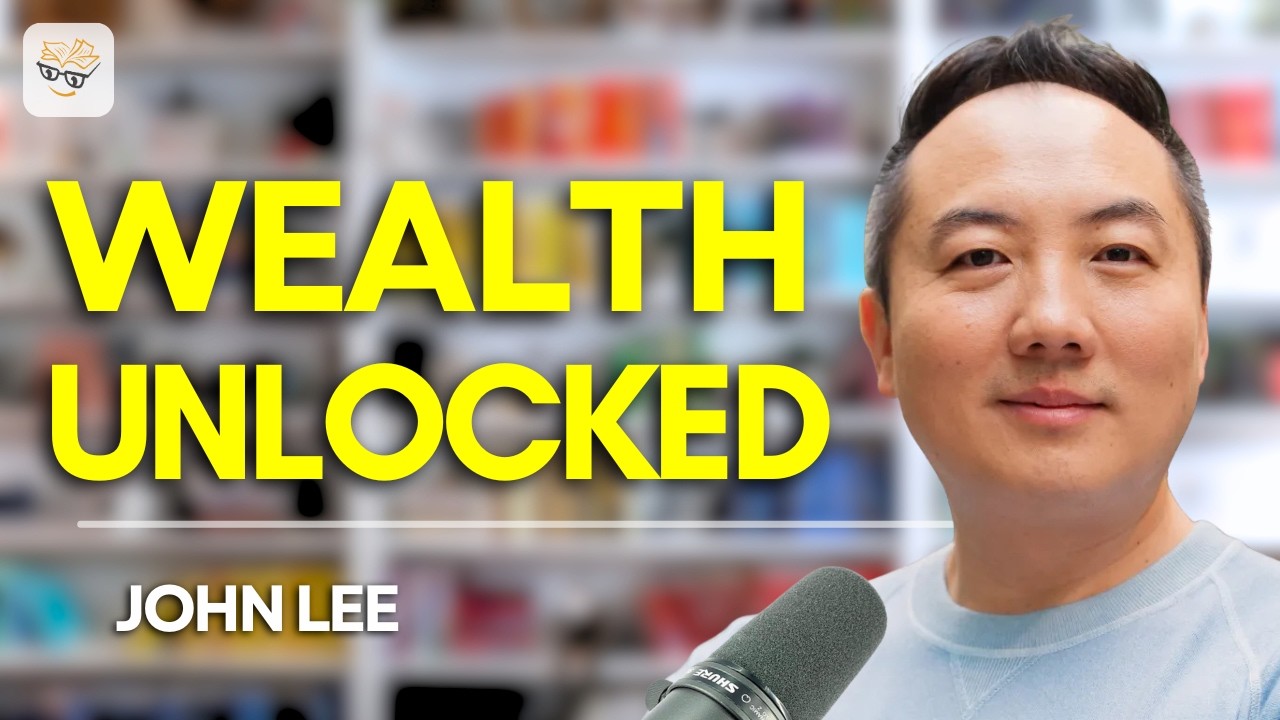
In this podcast episode, host Nick Hutchison interviews entrepreneur and author John Lee about his new book Money Unlocked. The conversation weaves through Lee’s upbringing in a family Chinese take‑out, the hustle lessons it taught him, and his desire to avoid the endless grind his parents endured. Lee explains his core wealth‑mapping framework, including the 30‑30‑30‑10 strategy, the concept of a "triple threat" skill set, and the importance of aligning wealth creation with personal identity and purpose. He contrasts creation versus consumption, illustrating how he teaches his seven‑year‑old daughter to build and monetize her own AI‑generated apps, turning play into profit. Lee positions his book as mentorship at scale, describing a $5,000‑per‑hour consulting rate, bonus codes hidden in the pages, and a suite of online trainings (7‑Figure Blueprint, business accelerator, Instagram strategies). The interview delves into the evolving "creator age," where AI agents handle execution, leaving humans to orchestrate, verify, and humanize. Lee outlines the five levels of AI, tokenomics, and the shift toward digital credits and loyalty points. He shares practical AI‑driven personal branding tactics—building AI clones, automated outreach for speaking gigs, and leveraging social media reach. Finally, he promotes upcoming events like BookThinkers Live 2026 and explains how readers can claim bonuses via moneyunlocked.com, reinforcing the book’s role as a practical, actionable roadmap to financial freedom.
Chapters
A friend of mine told me, they said, Jon, do you want to be a billionaire or not? And when he said that to me, I was like, what do you mean like billionaire? He said, no, I don't mean money. I said, what do you mean then? He said, the concept of a true billionaire or millionaire is not someone who has a million or billion dollars in the bank. It's the lives that you have touched in the time you've been on this planet. And I thought, okay, if I even have a mentor and I have thousands of clients, right? But that's only, that's not even like 0.0001%. of the world. And by having a book, like, you know, my goal is if a billion people can read this book and it fundamentally changes their life financially for the better, then my job is done.
Jon, welcome to The Book Thinker's Life-Changing Books Podcast. I'm excited to chat with you about your brand new book, Money Unlocked. And I'd like to go all the way back to age 7. I'd like to start there. You grew up in a family business chopping mushrooms and onions on the weekend in your family's Chinese takeout shop. So, what was that experience like?
You know, it's like child labor. No, it was, you know, it really taught me the power of Hustle, working hard. Like, it is— you don't know how hard it is to peel 500 prawns, right? I'm not talking about just peeling a prawn. I'm talking about imagine they've come out of the freezer freezing. You got to get it out of the ice, and then you got to pick up the shell, and you have to chop it. Like, it was a lot of work. It was a lot of work. But what it taught me was, you know, persist through the pain. Persist through the hassle, and the light is— there is a light at the end of the tunnel. So I guess at an early age as a kid, it really taught me about, you know, just doing things that we don't like in order to get stuff done.
Which is important. Sometimes you have to fall in love with the monotonous stuff, right? It's not all rainbows and unicorns every day while you're building wealth. But there's another lesson too, which is kind of a backhanded lesson, but it's that you saw your parents work so incredibly hard, 7 days a week, basically. You know, you said they were leaving at 5 in the morning and they were getting home past midnight and they weren't creating wealth. So did you draw any lessons about like, that's not what I want to do with my time in the future?
So typically Chinese parents, they come from Hong Kong, or my parents came from Hong Kong. And a lot of the families that did that were supposed to start their own business, which was a Chinese takeaway or a restaurant. Now, of course, the kids are supposed to take over the family business. But I remember, and Nick, I'll never forget this. My uncle had a child. I walked into the restaurant and he was basically in the storeroom sat on rice. I'm like, this is no way to bring up a child. And there was a baby just sitting in the storeroom. I'm like, this is crazy. And so I saw them work hard. They had their own business, but They didn't realize that it was worse than a job because from 9 till 5, at least in a job, you can clock off. In a business run that way, it's like you can't just clock off. You have to, okay, people are going to come in, you have to go in and prepare. And I very rarely saw my parents. And this was one of the big motivators of me going, when I have my child, I want them to have the lifestyle. I want to be able to have choices. I don't want to be forced. And You know, in the Chinese tradition, the only day you got off was a Tuesday. That's it. It was Tuesday. You know, it wasn't even a weekend. It was like a Tuesday.
Now contrast that to your daughter, right? What is— what is— what kind of money lessons is she learning from watching her parents?
So it's funny because we were just recently in the Maldives. And you know, we're sitting there and you know she's you know she's spending a lot of time on you know on screen time. And I'm like, honey, you know we should really go swimming and we should you know ride some bikes. And and she's she's addicted. She's like, Daddy, I'm so addicted to this app. I said, what is it? And she showed me it's basically a coloring app. And I said, you know what, honey? Why don't we do this? Why why don't we create our own app? She's like, what do you mean? I said, come here. Tell me what you want the app to do. And she told me. Tell me what colors you want in this. She told me. So basically, I was turning on my vibe coding app, and she was just talking to it. And then I basically turned it into an app for her in half an hour and said, honey, if you're going to use your app, use your own app, and then you can sell it to other kids and get them to— So now she's starting to learn these money lessons. We were in the Bahamas, and at the time, there was— I don't know if you're Stranger Things fans, A little bit, a little bit.
Yeah.
I love the show. And so, you know, they were always promoting these Stranger Things everywhere. And I said, honey, why don't we create our own monster? Right? So what it means, because, you know, she's my daughter's naughty. So then she's like, okay. So it's like, draw me a monster. And so she did. And then basically what I did is I put into AI, created the monster. And now what we can do, we can turn that into a cartoon, put that onto YouTube, and then just run loads of like AdSense, you know, income from that. And then so that Then she said, okay, can we order a, um, a 3D printer? Like, sure, right? And so why? Because she now wants to take that toy, turn into a 3D design, turn it into a toy, run the traffic, and then sell the toys. I'm like, wow, you're 7 years old. Like, so I think some of these lessons are starting to rub off.
Oh yeah, I'm sure they are. Yeah, she's very fortunate to have you as her father. And you're highlighting something that I love to talk about, which is the distinction between Creation and consumption. So many people are just consuming. They're consuming content on social media. They're consuming AI outputs and apps from other people. But what you're teaching your daughter is the importance of creating something and owning the process. I mean, you went from kind of your childhood experience to millionaire at 27, and I don't want to glaze over that because there are some things that happened in between that I want to unpack. But it wasn't until you decided to take ownership of your money really, and your time and start creating value through real estate. I mean, do I have that right?
Yeah, absolutely.
Yeah. So that's a really big difference, right? If you're just sitting back consuming other people's creations, you're making them money. And so what we want to do for the audience today, John, and with your book is we want to put ownership back in the hands of those people that want to go out there and get it. And they want to achieve that wealthy status that you talk about.
Yeah. Yeah. I mean, one thing that I want to talk about is, I don't know if you guys can see this, but in chapter 8, it talks about wealth mapping, right? So what is wealth mapping? Wealth mapping is, first of all, understanding what your identity— you can't achieve more unless you see yourself achieving more. It's kind of like when Bannister broke that 4-minute mile, everyone started doing it. Or when people would do these product launches and do $1 million in a day, and then everyone started doing it. And so wealth mapping is, first of all, understanding who do I want to be, what do I want, and how do I want to impact? And when we understand what our wealth profile— because everyone's got a different profile, like some people are spenders, some people, you know, are investors, some people are hoarders, some people are kind of like in between. So there's all these different profiles of the type of ways that people spend money. So when we map wealth onto ourself, what is it that we want to do? For example, if you're an introvert but you want to do real estate, that may not be a good fit, right? And if you're like ADHD but you want to be a trader, that may not be a good fit. So there's all these different wealth maps and personalities that If you just kind of like compound skills together, like I'll give an example. Let's pretend you're an incredible speaker, right? You're really good at sales and you're a VC, right? These 3 skills combined together makes you what I call the triple threat. So when you're a triple threat in entertainment, if you can act, if you can sing and you can dance, you are a triple threat. Entrepreneurship, if you can market and you can sell and you can communicate, triple threat, right? So, so when we're wealth mapping, what skills are lacking that allow us to propel ourselves to acquire that wealth?
Yeah, it's, uh, you have the Abraham Lincoln quote, or at least it's attributed to him inside of the book, and it's, hey, if you're given 6 hours to cut down a tree, spend the first 4 sharpening the the axe or the saw. And I think that metaphor relates to what you're talking about. So many people are working really hard at games that are not aligned with their inherent skill set and biology and what they enjoy. And they're working really hard at these things. They're chipping away, but they're like the fly banging into the window, even though the open door is right there. Just change your direction. Like, slow down, do a little bit of the work to analyze where you are in life and make a better choice. On where to apply your effort. And so reading your book does that for people. Why did you decide to write it? Like, who's the target customer for this thing?
So a friend of mine gave me a book some 20 years ago, and I think you and I, before recording this podcast, we mentioned it. And, and, you know, Nick, I'm dyslexic, right? So I, I actually hate reading. I don't like reading because I get headache. Like, I can't read. I can't, you know, my writing, my grammar is Horrible. But when my friend gave me this book, I tell you, I read it cover to cover, and it unveiled something that was never taught to me in school. I never knew that you could actually have money work hard for you. Like, like we've been taught to, okay, I can work for money, but no one ever taught me that money can work for you. I thought this was a profound aha moment for me. And you know, the moment I started reading that, I started going to people like, hey, did you know you can? And people were like, I was shocked. I had this revelation and people were like, yeah, yeah, okay, yeah. And they just carried on doing the same thing. I was like, you don't understand. You don't have to work anymore if you don't want to. Yeah, yeah, yeah. And they just carry on doing the same thing. So I wonder why is it that people, even though there's this great thing in front of them, they still don't see it or value it. And it comes down to I don't know if you heard of the story of— I forget his name— Joshua Bell, I think his name was. He was a very famous violinist. And what he does is he goes— I mean, the same night he's playing in the equivalent of Madison Square Garden where people have paid thousands of dollars—
I've heard of this, yeah.
He plays in the subway, no one stops to listen. The same night he's playing in something of the equivalent of Madison Square Garden and a full sold-out auditorium, right? So what's the difference? The difference is the value wasn't appreciated, right?
Mm-hmm.
Why? Because the pain wasn't suffering enough. So why I appreciated the book, and you asked me why I wrote the book, because there were some elements missing in the book. The book that I read was incredible because it taught me the process. It taught me the what but not the how. Right? It's like, yeah, but how do you buy real estate? Yeah, but how do you do that? But like, and it was great because it was kind of like it opened Pandora's box for me. And so why I wrote the book is because I wanted to, first of all, test all the processes that work. And there are lots of different ways to do it. And then I wanted to see the pros and benefits and how easy it was to do. And also, could I replicate it? Could I teach this to people around the world? And after 20 years, I have something— I got a guy who came to one of my keynotes, and this guy was on the verge of bankruptcy. 10 years later, he's about to take his company public that's going to be valued at $100 million based on a few things that I said. But what I realized is, and I love your t-shirt where it says, read less, apply more, right? I love that because a lot of people, it's the 80/20 rule. They spend like 80% of the time learning and 20% of the time executing. It should be the other way around.
Mm-hmm.
We should be spending 80% of the time executing and 20% of the time learning. And so I wrote the book because I wanted to distill all the things that I've learned in 20 years, put it into very— because I'm dyslexic, when you read the book, it's very easy to understand. I have a formula called the 30-30-30-10 strategy, right? And if people follow the strategy, they'll never have to worry about money again. Problem is, when people make money, what is the first thing they do? They spend it, right? It's like business. All the money comes in, a lot goes to expenses. What's left you keep. It should be the other way around. You should be keeping what you have, and what's left you should be using as operating costs, right? So people just don't understand money, and it's not their fault, by the way, because they've just never been taught this process. And so I thought, why don't I put into layman's terms? I'm not a very intelligent guy. When people spill jargon at me, I'm like, well, what does that mean? And I've got to really simplify into very simplistic words that people can understand so I can understand it. And actually, a big part of writing this book is also to remind me of things that I've forgotten about that actually are very powerful because we seem to have this shiny object syndrome and we tend to go to it, but actually stick to the fundamentals. And so what I found was there's a lot of people who are very wealthy. And when I asked them, teach me to do what you can do. And they're like, yeah, I just make money through property. Yeah, but how? Yeah, I just make money through shipping. Yeah, but how? Like, what is it that you do? How do you do it? And so what I realized is the wealth mapping is You can only get it from somebody who knows how to break it down and then to transfer it to somebody else. And that's why I wrote it. I wrote the book. So I want everybody to be able to have that freedom, what I call the purpose triangle. What are you trying to do, achieve in life? There's 3 things. One, you got to be— so something's got to bring you joy. 2, you got to be something that you're gifted at, not good at. 3, it has to solve a problem. If it doesn't solve a problem, it won't transact. And so I really wanted to distill this, Nick, into something that people could read, that's very easy to read, and that they could also apply. And I've put it in a step-by-step format with backed examples in there as well of things that people can do to really get started fast.
Well, that's a great answer, and I resonate with everything, and I have a bunch of follow-up questions. But first, you had something in the beginning of the book which was kind of a qualifier for if this book is a good fit or not. You ask the reader, If you had a billion dollars in the bank account, would you be doing what you're doing today? And obviously for the vast majority of us, when we read that line, we go, no. And you go, great, this book is for you. And I think that's for the audience today. If you're not happy with where you are in life, if you want more money, more freedom, more, you know, control over the choices that you get to make every day, this book is for you. And here's another thing that I love about what you did with this book. You condensed, as you said, decades and decades and decades of your great knowledge and learnings from other people, the events that you've paid to go to, the mentoring that you've paid for, into a book that people can buy for less than $30 and read in a couple hours of their time and literally change the trajectory of their life. And that's powerful. That's mentorship at scale. So I'm just curious, if somebody said to you, hey, John, I've got an unlimited budget, I want one-on-one mentoring with you, like, how much do you typically charge for that?
So, I mean, I've, I have a massive waiting list of people right now. They're like, we charge $5,000 an hour, right?
Yeah.
People just pay all day long. Right?
Okay. So $5,000 an hour, or you can buy a copy of this book and get access to probably an even better and more concise version of what you would teach.
I mean, you know, I think you hit the nail on the head then. It is mentorship at scale. I mean, I love mentoring. I really do. But the You know, a friend of mine, you know, told me, they said, John, like, you want to be a billionaire or not? And when he said that to me, I was like, what do you mean, like billionaire? He said, no, I don't mean money. I said, what do you mean then? He said, the concept of a true billionaire or millionaire is not someone who has a million or billion dollars in the bank. It's the lives that you have touched in the time you've been on this planet. And I thought, okay, if I've got a mentor and I have thousands of clients, right? But if— but that's only— it's not even like 0.0001% of the world. And by having a book, like, you know, my goal is if, if a billion people can read this book and it fundamentally changes their life financially for the better, then my job is done.
And that's leverage, right? You did the work one time and you can impact people at scale, which is one of the things that you talk about in your book. And Unfortunately for your parents at the restaurant, like, that's not leverage. They have to show up every day and do the work. Whereas you buy a piece of real estate one time and it can pay you forever while it appreciates, which is just such a cool concept to wrap your head around. And you're right, like, they don't teach that in the public education system anywhere on the planet today. What's the reason that nobody teaches financial literacy? I'm curious what your opinion is there.
Well, you know, Henry Ford was like, hey, you know, we want to create a school not to create entrepreneurs and thinkers, but to create workers. So here's where the distinction of how the world is moving now. So we've now gone from the, what I call, you know, in the old days, the industrial age, right? That's the, you know, your Henry Ford time. Then we kind of evolved to the information age where information is there. We have the internet, we have social media. But now we're evolving to the creator age, right? And and and now creators—I mean, you look at what AI is doing right now. The jobs that it's replacing are white collar jobs, right? Not not blue collar, white collar jobs. So what's happening? The white collar jobs like oh okay, so all our jobs are being replaced. You know what? I'm going to become a creator, right? So they become creators, and then they have their own startups. And now you know you have the one person company that's now valued at a billion dollars with one person with. all AI doing the work for them. So that's really what's evolving and that's where the world is moving to. So you have to unlock money means you need to understand where money is going. What is the trend? Right? What is— and there's one question I ask in the book, actually, you should all read this question. When you answer this question, it will immediately unlock wealth for you. And I'll share it with your readers club because you do incredible work and I want them to really understand this. So what do you know to be true that other people don't know yet? What do you know to be true that other people don't know yet? And when you answer that question, you unlock money.
Yeah, it's a special question. What, what do you know today, John, to be true that other people don't know yet?
So, um, okay, let's put it in the— let's put it around— let's wrap it around some context. I mean, I could, you know, I— we could speak— I tell you, if we had this podcast, we— I, I could go for another 3 or 4 hours. I won't even talk about tokenomics and fiat yet because that's coming and it's there to stay, right? But let me tell you in the context of what's happening right now. So if you look at a normal tea, I want to draw something out for you, okay? When we learn things at school, right? We tend to have this T. So we go deep on a subject and then we very narrow at the top. But what's happening now is this is now shortening. So now it's like, it looks more like this. Now it's like wide and thin.
Okay.
So I draw those 2 images for your community because What's happening now is complete reverse. We don't— you've heard the saying, oh, I'm a jack of all trades, but I'm a master of none, right? But now we have to be the master of all trades. It's not about being a specialist anymore. It's about being a generalist, right? And that's why if people have ADHD, if they're dyslexic, right, they will do much better in today's world in AI than Anybody else. Why? I mean, how many times have you, like, when you're using Claude or ChatGPT, you've got like a million tabs open and you're having like a million different conversations? That's how people ADHD and dyslexic think. They'll have a conversation with you, they'll continue conversations, they'll come back after 5 minutes and just start off where they left off, and then they'll go back. You say, well, that's a bit random, but that's how our brain works. So what I know to be true is this, people won't be doing stuff anymore. AI does it for you. There's 5 levels of AI. You've got the LLMs, you've got the agents, the agentics, AGI, and superintelligence. So when we get to AGI, general intelligence, and superintelligence, basically it's game over. Right? We don't— we won't have to do any works anymore. So that means execution becomes obsolete because I can literally say, hey, no. So I've— I think you've See, my assistant Nova, say, hey Nova, go and build me a website and then take my clone and then clone me on social media and then run a retargeting campaign, find the one that works the most, run an ad campaign behind it, have a budget of $1,000, create a sales page. When someone opts in, call them with my voice, qualify them, and then when they're really qualified, put them through to a real human. And it would just do the whole thing for me.
Yeah, mind-blowing.
So that's what we call orchestration, right? We are no longer doing tasks or execution or taking action anymore. What we're doing is we are orchestrating our 3 goals. And this is what people are gonna be doing. This is what I know to be true. The only 3 things that we humans will be doing in the next 12 to 18 months is we are gonna be orchestrating, we're gonna be verifying, And we're going to be humanizing.
Mm-hmm.
IRL now is coming back, in real life. Events are back in the game, right? Everyone's Zoomed out. People want connection. In the world that we're so connected, everyone's so disconnected, right? So that's what I know to be true. And now I'm going to tinker on the tokenomics part. What does all AI run off? Credits and tokens, right? So that means your AI is going to be talking to my AI, which means it's going to be using credits, which effectively becomes points. So if you look at fiat now, fiat is like dollars and cash. If you go to the bank and say, I want to— if everyone tries to withdraw all the money, the bank would collapse. Only 30% of it is actually cash. So that means when you open your bank account, you see all your money there, you're like, well, it's not real, it's digital. So then what's the difference between that and a token? It's digital, right? That means at some point people are going to start to have to create community, to create loyalty, to create points. Points then get traded for goods. That's where the world is moving to that I can see, and I've seen it, and you're already starting to see it shifting to there. Why do you think everything's going digital, right? Why do you think Starbucks don't accept cash anymore? Right? All these little things that are coming, these are the things that people have to look out for and adapt for it.
Well, John, there's a quote early in your book that I'm gonna read to the audience because I think everybody's probably sitting back going, wow, uh, what did he just say? He's incredibly intelligent. And here's why. Here's the quote. Your quote says, your mind is your container. If you're operating with a tiny espresso cup mindset, you can't hold a big cappuccino-sized opportunity. It'll spill over. You'll lose them. Want to hold more wealth? You need to grow that container. Your container is massive. You've got like a triple grande, extra large, like size of a swimming pool coffee going on here because you're just thinking so many steps ahead of other people. But how do you escape what that author way back in the day that wrote the book that we're both referencing talks about, which is like, how do you escape the poor money mindset at home? You have to bypass the traditional education system. You have to go learn from people like you. Otherwise, you're never going to escape the rat race. And so, yeah, I'm just fascinated by the size of your coffee cup here. I think everybody could use a bigger container. And part of that is reading and implementing your book.
I mean, that's what I put a lot of things in. What I also want to put together, because people are like, okay, when they read it, okay, how do they go deeper? So what I actually want to do, Nick, as well is when people go and buy the book, so if they go to Amazon, they can preorder the book. Um, and then once they've ordered the book, just go to moneyunlock.com. And then if they get the invoice number from Amazon or where they've ordered it from, just put it into, um, the— in fact, if I go into the page, I'll show people where to get it because I wanted people to really, um, kind of go deeper. So we have a lot of events that we run. So, you know, we've got access to training. So once you've ordered your book, come over here, click pre-order now. Right, so that goes over there. Um, and then once you've done that, you can then claim your bonuses. So we have a 7-Figure Blueprint training. So this is why we put a training together to show you how to get 7 figures. We also have a business accelerator for people who are looking to do that. And also we have, you know, one of the best ways to get exposure is to use Instagram. So we have a lot of these different strategies. So once you've done that, you can unlock your bonus here. So click on that. put your details in, put the order number there, and then you, you'll get access to the bonuses. And there's one thing that I'm gonna do as well. So I don't know if I should announce this yet. I don't, I've not talked about it yet. So, you know, like there's, um, there's actually a code in this book, right?
Like a little Easter egg.
And it's on, and, and, and, and it's on page— well, I'm not— should I announce it now or should I not?
Okay. Basically, yeah, go for it. Go for it.
So, so in here there are different codes in here, right? On, on, on different pages. So for example, we're gonna be having a lot, like we're gonna be giving away thousands and thousands of dollars worth of courses, training, you know, um, apps and things like that. But obviously you'll need to have the book because the book is your roadmap. So there'll be certain pages that you need to go to. There are certain words that you need to go to. And that becomes your coupon code to get stuff for free.
Oh, that's super fun. What a great idea. I love that.
Just unlock it, right?
Yeah. That's super fun. Yeah, I haven't seen anybody do that before with a book. Where did that idea come from?
So a friend of mine owns a big casino in London. And we were doing these like— he had this thing where members would come in and there'd be this safe and they have to punch a code. And I was like, hmm. if I could put a code into there and I could put like a, like a cash prize, and then they could go to all these, all these bookshops, and then they can just enter a code in, and the person enters a code and it's correct wins what's inside the safe. And I thought, well, that might be a little bit logistical nightmare because all the bookshops will be rammed. So I'm like, why don't we just do this more of a virtual style so the whole world can participate?
Oh, that's amazing. Yeah, that's really cool. Well, and you'll be at BookThinkers Live 2026 in a couple of months teaching a lot of these similar subjects and also talking about AI, which is going to be a ton of fun.
Oh, I can't wait for that. Like, if I show you, okay, I'm okay to show your audience the one AI avatar that I built. Check this out.
Yeah, go ahead.
So again, I'll be sharing some more of this at your event. Check this out. This is not me. We knew this day was coming as AI is killing off the very food source that sustains it. The question remains, how do you get people to actually make the content when it's never being viewed? AI does— That's not me.
Yeah, that's crazy.
And so we post content and I thought to myself, oh my God, if I can clone myself, you know what people were saying to me? Yeah, but John, it's okay for you because you're already famous. People don't know who you are. You already got— so I thought, you know what? Let me prove to people that it's not about just my name, right? So I decided to create an AI clone of myself. a fake person. It's not real. And check this out, you're not going to believe this. This is a brand new account. This guy's got 44,000 followers. His name's David Chen. And look at that, look at that post. 39,000 likes, 3,000 comments. Look at this. This guy's outperforming my real content, right? It's not a real person, right? Wow. And this guy's reached millions of people in less than 30 days. So one thing I want to talk about at Book Thinkers is how do we as authors, number one, how do we sell thousands of copies of our book? Number two, how do we use social media to build a brand to be able to charge? Because you asked me how much my keynote fee currently is, $100,000, right? So that's why I fly around the world and speak on big stages around the world. So how do we get a lot more gigs? How do we use AI? I'll give you another example. I was flying to Nashville. And then I saw this ad on this AI conference. I thought, oh my God, I should be speaking there. So you know what I said on the flight? Nova, here's the website for the conference. Analyze all the speakers. Tell me what's missing and tell me how I can fill the gap. Once you've done that, find the owner's email who's running this, draft an email and send it to them. By the time I'd landed, I got a reply saying, unfortunately, our speaker slot is full, but we'll love to have you on the next one. So that's how authors can use AI, grow a brand. Because what I find is one of the best ways to get on stages is if you have a big audience, then you can tell people about it and then a lot of your audience go to those events. And so, yeah, I mean, I'll talk a lot more about that, Nick, there. I'll go into a lot of detail strategies and, and yeah, it's gonna be amazing.
Yeah, you have one of the, the biggest time blocks at the whole event because you have so much to share and that's why you have it, man. I'm so excited for that. Uh, one more time, will it— where can people go to get a copy of the book? We'll make sure it's in the show notes.
Oh yeah. So you can go to Amazon, just type in Money Unlocked on Amazon by John Lee, and then you'll see it. Or Penguin, K-House, Barnes& Noble, Waterstones if they're in the UK. Um, but yeah, grab it there. Once you've got it, go to moneyunlocked.com to claim your bonuses as well.
Amazing conversation today, and just the beginning. I'm, I'm really excited to get to know you now and spend some more time with you and just like absorb some of this giant swimming pool-sized coffee brain that you've got going on.
Hey, we should create some mugs with like, you know, it's, you know, read less, apply more, and then we can add a little thing to it.
Yeah, we could put a Jim Kwik brain in there somewhere on it too. Yeah.
Yeah.
More from Nick

Napoleon Hill’s “Think and Grow Rich” is a timeless classic #selfhelp #personaldevelopment

4 Books to Help You Get Better at Decision Making #selfhelpbooks #bookrecs #nonfictionbooks


Have you read this book yet? 📖: The 5AM Club by Robin Sharma #selfhelpbooks #robinsharma

Dan Sullivan on Listening to Your Customers Instead of Watching Your Competitors

5 Books That Will Boost Your Financial Intelligence #financialfreedom #nonfictionbooks

The People That Preach the Loudest About Virtue are Usually the Most Power Hungry



Books are the greatest mentors you can find #selfhelpbooks #businessbooks #successmindset

Let’s fight this toxic instant gratification culture together 📖 #selfhelpbooks #jimkwik