How to Get Through the MOST Difficult Times with Robby Fakhouri
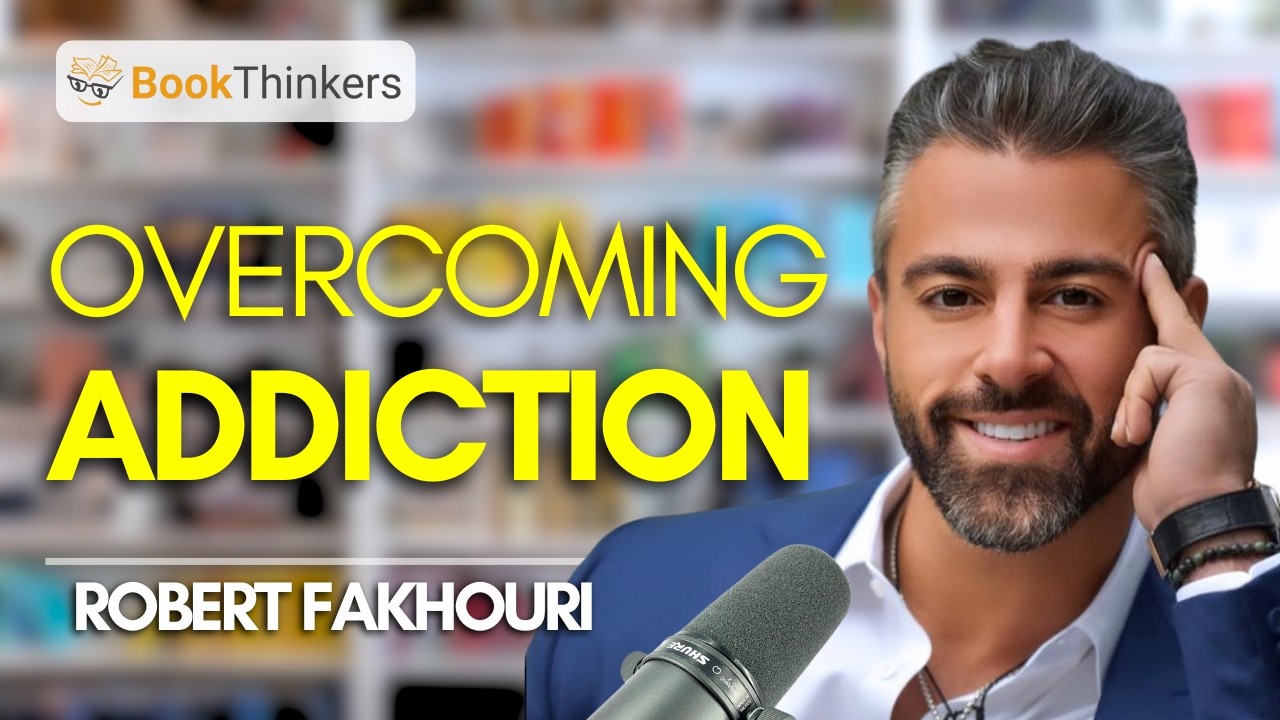
Robby Fakhouri survived a 2018 overdose and prescription-drug addiction to build a recovery centered on discipline: making the bed, consistent workouts, fasting, and therapy. He argues people self-sabotage seeking control, and that genuine agency comes from daily routines and mentorship, not willpower alone.
Chapters
You have to have faith before you let your mind go dark that all of those days, the weeks, the months, the years, if you're striving for something that you've been putting forth the effort for, are enough and they will be enough because you've been putting in the effort relentlessly, consistent, you know, consistently and with discipline.
Robbie, welcome to the Book Thinkers Life-Changing Books Podcast, man. I'm excited to ask you a few things today. I know we have a lot of similar interests, but I want to start the podcast with a quote from your book. It's one of the best quotes I've read in a long time. It says, quote, that battle with yourself, self-awareness, self-defeat, all of it, it's about you. The reason we self-sabotage is that it allows us to predict what is going to happen. It gives us the illusion of self-control. Gives me chills, man. It really does. So, Elaborate on this subject for us. Why do so many people fall victim to the idea of this fake control?
Sure. So first of all, let me just say thank you for having me on. Thank you for featuring Life Lies and Second Chances. Uh, such an important story for me to tell, uh, given my past experiences and the things that I've gone through— substance abuse, suicidal ideation, overcoming all of that by the blessing of God. So, uh, super grateful to be here and to, to talk to you about it. And what I can tell you is, over the time that has passed, you know, since My overdose in 2018, when I did try to take my own life, I've realized a lot. There's been a lot of light bulbs that just kept going off and going off. And one of the most important ones was self-awareness and the way that we manifest our realities with our thoughts. And, you know, that's where I got into this idea of self-sabotage. When you're always thinking a disaster is going to happen or that something wrong is going to occur, It's because it's easier than thinking that you can make it. It's easier than thinking, yes, you can accomplish it. It's easier than thinking that you are equipped with the capacity to endure. And for me, that was such an important part of this story and telling my journey because I had to shift my perspective. And I think that's a really important part of, of one life and growth and making yourself better, but especially for those who are looking for a second chance at life, those that have gone through something difficult or are going through something difficult, especially for those that are going through something difficult, man. I have to highlight that because the shifting of the mindset, the sooner you do it, the better, the faster you do it, the better. But it's easier said than done. And there's a lot of tools that I talk about in the book that kind of make the ability to think that way, to shift your mindset, to have that change in perspective possible.
Well, let's talk a little bit about some of those tools because I can imagine that the Robbie in the middle of all of the chaos, given a copy of this book, says, self-awareness? I don't have a problem. Like, I don't want to deal with that, right? So, how do you get this message across to the younger version of yourself that you probably wrote the book for?
You know what, Nick? Nobody's asked me that question, and I love that you've asked that question because that's a really, really good point. And looking back on that, I wonder how I would have responded. I don't think I would have responded the way I should respond or the way I'm responding now. And I love that you—I really do love that you asked that question. The only way to get that awareness. Is by implementing a daily discipline, um, and a consistent regimen into your life so that you can acknowledge your small wins. You can acknowledge the betterment of yourself through putting your body through stressors. And, you know, most importantly, you build discipline. And discipline teaches you beyond just, you know, the physicality of physical fitness, you know, discipline in physical fitness. It gives you more than just physicality. It gives you mental strength. And it gives you an ability to think more clearly. And all of that will then kind of transcend into other areas of life. And, you know, including your professional, personal, and social aspects of your life. And that just helps to make you a better person. And so I don't believe— I think you're absolutely spot on. You hit the bullseye. I don't think I would have responded to my lessons in this book well without first saying, all right, let me just try one of these things this guy's talking about. And one of these things this guy's talking about is a slow implementation into a daily physical activity routine. Now, don't get me wrong, I created a mess for myself. I destroyed myself. I mean, Um, when I came out of rehab and after my overdose, I had to move back into my parents' house at 28 years old. Um, I didn't have a dollar in my pocket. And so much of what I was forced to do in terms of, um, getting myself up in the morning without a pill anymore, going to bed without a prescription medication anymore, all of that was in the initial stages was Probably the hardest part, and you know my addiction was to Adderall and Xanax. And you know I remember going into rehab; I was probably 162 pounds wet. Within three months, I blew up to like 235 pounds, and I'm not a tall guy. I'm five ten with good shoes on. So you know it's it is that's a lot of weight. That's super heavy. And the one thing I said to myself is you got to get your. You gotta, you gotta move your ass. Okay? You gotta move your body. And I started off slowly. I started off cycling initially. And then, you know, in time that cycling became, you know, different forms of studio fitness just because it was easier for me to have it in my calendar. And, and there was group fitness and it just, you know, community helped me stay encouraged, you know? And now I'm fully autonomous and I'm going to the gym by myself and I'm getting those workouts in sometimes more than You know, one or two in a day, just because the stress in life is a little high and I just need a mental break. So you got to be easy on yourself. And you know, to the young Robbie who was going through this, I would say, just trust me. You need to see the light because if you don't soon, the light's gone and you're out. And and I think that's such an important message. For anyone that's struggling, you know, the temporary fix of escaping your reality can end with ending your reality.
That's a mic drop line right there. I'll, I'll give you another perspective too that I think could be useful. I think a lot of people who are self-sabotaging and they're down on their luck and they're trying to escape reality, they end up on social media. And you actually provide a pretty inspirational social media platform for people. I mean, you've kind of got the idealized look and fitness routine and life setup right now. Um, and, and I think when people look at that, they go, oh, I could never get there, until they discover your book and they realize that, oh, wait a second, like, you weren't gifted all of this. You had a lot of struggle, and people can relate to the struggle They can see where you ended up and they go, wait, that— he's not a Superman. He's a normal guy and he figured it out through self-discipline and these other modalities. And I can too. So I think you actually, you show both ends of the spectrum really well. You're like, I'm fully transparent. Here's where I was, here's what I went through, but this is where I've ended up and what I'm sustaining and continuing to build is pretty cool. I mean, do you think about it that way at all? I'm sitting here today with Ken Rusk, who has done hundreds of millions of dollars in business. He's also sold tens of thousands of books and changed countless lives. We're sitting here today because he is sponsoring today's episode. So Ken, tell everybody about your course.
Well, thank you. I built a course called The Path to a Successful Life. It's designed around trying to get somebody unstuck. You know, sometimes you're feeling like you're kind of stuck in where you are. You're not really sure what you want your life to look like or how to go about getting it. Well, for the cost of about dinner and a movie and maybe the time you spend on a weekend, you can exactly what you want your future to look like and how to go about getting it.
You know the power of vision. That's why you watch podcasts like this. So click the link below, get signed up, and let me know what your experience is like.
You know, I actually think about it in, in a way that I still talk about my current struggles on my Instagram. You know, sometimes we have these Instagram platforms and we think that they're just there to, to put out this perspective of we all live this perfect life, and that's bullshit. Um, and I try my best to To show all my vulnerabilities and insecurities and the things that I still cope and manage with, because I think that's so important. I mean, just four days ago or five days ago, I went on and I did a video on stress, and I talked about how I took a break from social media for about two and a half weeks. Part of it was because I was on trial in a big case, you know, against City of Chicago. But I was also under a shit ton of stress, and I was like, "I gotta get off this platform right now. I just need to break it." I can't tell you how many messages. I had being like, dude, are you okay? I hope everything's okay with you. And, you know, things weren't okay. Um, and I felt so grateful to have that community come back because I have so openly discussed mental health, depression, suicidal ideation, um, you know, anxiety, you name it. You know, I've— I, I touch on it, and I try to touch on it even when I am better than I was the day before. Because I'm a work in progress. I need to hear myself say it. And I hope that if there's someone listening, they can take that little bit of light and say, I'll be okay too.
Yeah. Well, I like that. And before we press record today, you said, you know, one thing that you wanted to talk about today was coping with stress. So what can you share with somebody in the audience that might be in one of those low moments, having a hard time dealing with what's on their plate? And looking for something to give them a little bit of relief or maybe like better management?
Have to have faith in the effort you put in before the stress became all-consuming. To me, that is such an important part of getting through difficult times. And that's where this daily discipline comes in, right? When you start implementing a daily discipline in any area of your life, right? If you wake up every single morning and say, I'm gonna make my bed. You don't realize by every morning making your bed, you're creating less clutter in your sanctuary, in your bedroom, in your environment. That actually gives you far more positive benefits than you would probably imagine and look at, oh, you know, I'm not making my bed this morning. No, make your bed. Get your clutter out of the way. You're releasing clutter from your mind. And those little disciplines, just like I say in the gym, just like I, you know, you could say about making up your bed. Will come with work ethic too. You just naturally start building a discipline in other areas. You'll say to yourself, I need to get two hours in doing this task. Even if I don't finish this task, I put in two hours of solid time. Tomorrow I'm going to put in another two. The next day I'm going to put in one, and then I'm going to take a break. And things might not work out right, or things might not be perfect, or the stress might hit a point where you're like, I can't do shit today. You have to have faith before you let your mind go dark that all of those days, the weeks, the months, the years, if you're striving for something that you've been putting forth the effort for, are enough. And they will be enough because you've been putting in the effort relentlessly, consistent, you know, consistently and with discipline. And, you know, that's what got me through this last little battle that I had in, in February and March, and I had a light bulb click when it ended up turning out the way I needed it to turn out. I sat back and I said, you have come so far for you to allow yourself to go so dark and get so stressed. And be, you know, for me, when stress hits me, it's like a physical manifestation of pain that becomes paralyzing. It reminds me of the times when I was taking medication and it's, it's like PTSD. It's really, really awful. I don't mean to be dramatic, but for me, truly it is. And I, I sat there and I was like, it turned out okay. Why are you doing this? And the lesson that I just said of have faith in the effort that you've been putting forth in the days, the weeks, the months, the years that came before, what you thought was this all-consuming stress made, you know, made me get through. And that for me was just something I, I had to go on to Instagram and talk about and share with everyone. Because they're like, why'd you disappear? And I'm like, hey, I disappeared because of this. Um, but here's what I learned. Here's how I learned it. Um, I hope this helps you. That's what I'd like to do.
Yeah, it's important to continue to be as vulnerable as possible and not just show the highlights. I'm, I'm with you 1,000%. In your reality today, given you've, you've come a long way and you've learned a lot, what triggers this stress for you right now? Like, what's the primary stressor for you?
You know, I'm a business owner, right? And as in running a law firm and having other businesses that I manage and operate, it's not easy. It's a lot. I also just went through a first-time home buying experience, which was also, you know, a lot. And of course, the stress of being a lawyer is a lot. But that really was, was it for me. And I'll tell you what I did wrong. What I did wrong in those 2 weeks when I was getting myself ready for trial is I was so zoned in and so focused that I stopped working out because I just became— I was beat and I was exhausted, even though I know I could have done 20 minutes. So I'm not perfect. I, you know, I probably should have grabbed this beforehand. You know, I, I know the lessons I give in this book. I put a 5-day workout plan in here. I put a nutrition plan in here. I did a— you get a free 22-minute webinar in this thing, and I talk about all of the daily disciplines that I myself faltered on. And that's okay because I'm human too. And all I gotta do is Bounce right back, and I gotta say in the last two two and a half weeks I have been on my game like I I was on my game when you know I'm on a severe cut you know for summer or something so and I feel great and I feel absolutely great for it I feel clear I feel level headed I feel balanced and you know I breathe heavy when I say that because it's like a weight is lifted. When you just follow your protocol and make sure that no matter what external pressures or internal thoughts you have, I say that so often. That's like my go-to line in the book: external pressures, internal thoughts. No matter what that might be, you can face that like a gladiator in an arena, you know, with a shield. And it won't knock you down. And guess what? If it does knock you down, you're not dead. Get up. You'll be all right. You'll get through it. Put your big girl, big boy pants on and keep walking. It'll be okay.
Do you draw inspiration from anybody who gives you confidence that you'll get through it? You know, like, for instance, Jordan Peterson talks a lot about how in a lot of ways life is suffering, but if you endure the suffering, there's something positive on the other side of that. So it was this— are these lessons things that you discovered yourself, or do you study a lot of other material? Where does that come from?
You know, I met, uh, an individual by the name of Ben Newman, um, in December of 2022. His name's Continued Fight on Instagram. He actually— he wrote the foreword for my book, um, and I owe him a ton. I owe him a lot, um, including the lessons of, you know, these inner thoughts and external pressures. And, and, you know, his is standard over feelings. Create a standard over allowing your feelings to dictate your course of conduct. And that's almost— it's the same, right? It's the same lesson in, you know, the way that I describe it, the way that I detail it, the way that I go into it is through my own personal experience of almost losing my life and bouncing back from that. And everybody has their story and everybody has a story, but how you choose to respond, that's That's yours to make. That's your decision. Nobody's saving your ass. Nobody's coming. There's no superhero. There's no click of the fingers and things are different. That's a false reality. It's your effort. It's your persistence. It's your consistency. And a lot of that came from that influence that I had from Ben. I mean, I remember the, the first time that I met him, and I've said this a few times on other podcasts, so I'll make this really, really short, but When I first met him, I didn't know who he was, and I was standing around a group of people and I said I didn't know who he was, and I got called out for it. And then I realized who he was, so I sent him a message on Instagram kind of apologizing and then asking him if he wanted to get a workout in in the morning. And we woke up at 5:00 AM and this guy wanted to get a workout in Atlanta in December, 40-degree weather, if not colder, even though I'm from Chicago. I hate the cold. And we did. And a lot of the workout was, you know, still movements of just body movements. And we talked and I told him my story and he's like, what the hell's going on? That's, you know, you gotta tell this story. You know, so I owe so much to him for me even sitting here today having this conversation with you because, you know, without him, I may not have had the courage to tell this story. And that's, you know, I do that at the intro of my book. I said courage. It's a big word with big responsibilities, and I learned that through that relationship. So, I owe him a lot.
Yeah, Ben's an amazing guy. And I, you listen, I think that with your story and the amount of vulnerability and transparency that you give, you can become that Ben Newman for other Robbies, which is really cool. And when you have a positive, net positive impact on the world, By sharing and, and being transparent. Like, it's just such a great way to live. So, I appreciate you doing that, and I'm happy that you shared the story with Ben.
Thank you, man. Thank you, Nick.
Yeah, you're very welcome. In your book, you talk a little bit about how lies are the basis of denial. Lies. People lie. And I've always had a tough time with this one because I've always thought, man, it's so much easier to live one version of reality, the truth. Getting caught up in lies is complex. You end up stepping on your toes, shooting yourself in the foot. Just seems like a crazy way to live. So why do you think people end up lying in bad situations so often?
You know, the, the, the lies that I really talk about in this book started with the lies to myself, and that's how I fell into the disaster, right? I was lying to myself about my use of the prescription medication in a way that literally almost took my life. I began lying to the people around me to avoid the, you know, being caught with this prescription medication. I was lying to myself that there was some sort of acceptability or acceptance, excuse me, or normalcy in going to pharmacy at Walgreens or your CVS to pick up your drug rather than going on a street corner and, you know, picking up you know, a more illicit drug. It's all the same shit. If you're, if you're addicted, if you have an addictive personality— forgive my language, I speak kind of frankly, but— Oh, go ahead. I, you know, I say that with such passion because I think it's so dangerous. And we have to do something about this. We have to have more care, concern. You know, I remember I was lying to myself so bad about my use of prescription medication that within probably a 3-mile radius, I had hit every single pharmacy of where I lived. That on the day of my overdose, I had to go so far out of the city to this pharmacy in order, you know, in order to make sure it didn't register with the other pharmacies when I was trying to get a refill early. And that was the day I was trying to take my own life. And You know, I say it in that way because when you're lost in it and you're lying to yourself about so much, you really need support from people around you in any way that you can. And I know it's so hard. I mean, for me, it came from my assistant finding me with my head busted open in my apartment because I didn't return back to the office and She had them do a wellness check, and there I was, you know, head busted open, bleeding on the floor, and on, you know, out, lights out. So that's really what I mean by those those lies in terms of what you do to yourself, how you do that to yourself, because then it just just like you said, it creates a spider web, and then you just start the lies just start compounding themselves in every single area of your life. That you lose all control. And you're absolutely right. The one version story of the truth is far easier. Um, it, it, it, at least it's supposed to be, right? Um, sometimes the truth hits harder. Sometimes the truth requires us to put way more effort in, and that's okay too, because that's still the better path.
Well, I think so far in our conversation, we've I think we've given a lot of reasons for a young Robbie to pay attention to your message and to read this book. But what about somebody who is around somebody else that's, that's self-destructive, self-sabotaging, kind of in the chaos? Like, what ways can a more cons— you know, somebody who's in a more normalized state, what ways can we support somebody that's around us that's dealing with this type of stuff?
That's, that's a great question. I'll tell you You know, one thing that friends and family should always be aware of when somebody is in need of help is to be— you must be vulnerable. You know, so often we think when we talk to people that we understand, or excuse me, they understand what we mean to say. And so often we don't understand what people mean to say. We only hear what they say. And if I can give any advice to those that are trying to help or support someone, is you have to be really careful with your words. And you have to be very careful because sometimes people don't know what you mean to say. They only know what you say. And when someone is struggling and they're an addict, their triggers, their ability to shut down can so quickly occur that you just, you have to be the vulnerable one. Even if you're not wrong, even if you've done nothing wrong, open your heart to open their mind. And for me, that's the best lesson I can give.
Can you give an example of a message that Is supportive, not trigger— I understand everybody's triggers are going to be different, but can you give an example of like what, uh, what you mean by transparency? Like what message is not going to trigger somebody? Like just—
You know, here, I'll give you one with my parents. I remember, um, because they're rock stars, amazing, great support system. I'm so blessed, I'm so lucky. Um, even to this day when they get worried And they'll show up at my door because they're afraid because of the things that I put them through, even though I am where I am now. And, you know, I had my dad do it just a few weeks ago, just showed up here and he was crying and he was worried. You know, I can get emotional thinking about it. And I was almost put back. And he just turned to me and said, it's not— it's not you, it's me. I would die if anything happens to you. That I get worried when you shut down because of what we went through. And, you know, I was so open to hearing that because I also had to acknowledge my prior behavior and how that affected others. And I remember during the time of my addiction and when they told me to come home, my father was not one who I would have ever envisioned in a million years to say anything other than you're a loser. Get out of my house. Figure it out on your own. You know, this guy was the one who was like, when I was like, I can't stay in rehab, I was dry heaving over the toilet at my parents' house, and he came and put a cold towel on my back and said, everything's gonna be okay. A lot of the conversation came from them saying, we're here. I'm here. Whatever you need, I'm here. And I just think that's so important because when you struggle, when you're going through something really, really tough, even if you don't want to say it, you want the help. You want to be saved. You want to get out of it. I mean, I even know as I say this to you, Nick, I breathe with this release every time I think about this because it takes me back in a way that it's just, you just You know you're not strong enough, and you know you need someone there. You just don't want someone judging you for being there. And I think that's so important because usually people are not going to come out of it if they don't think they have a support system there. And look, doesn't work every time. Some people go back. Some people revert back. Stay supportive. Um, because addiction is a disease, and, and I know a lot of people have opinions on that, but that is a fact.
Well, thank you for sharing that. I think that that gave a little bit more clarity and maybe like an action, you know. I like this idea of you've got to be supportive and let that person know you're there without maybe stating it like that sometimes. Um, That's, that's, that's cool.
And by the way, being supportive doesn't mean enabling, right? That's really, really important. You know, a mother's love for their child holds no bounds, as they say, right? You can never beat a mother's love. And I will say there were times when my mother was there being supportive that she didn't know she was enabling, and that's not her fault, not, not even close. But you got to be careful if you're enabling Because you think you're being supportive. You can't let it go on. Being supportive doesn't mean you're going to be there for them while they're still using or abusing. Um, that's got— that, that it has to stop. Hard stop.
I, I almost didn't want to ask this question, but I just feel kind of called to ask it. Like, do you— and feel free, we could skip this if you want to Do you ever worry about falling back into those behaviors?
Don't skip that question. Of course I do. Of course I do. I have an addictive personality, you know. Um, I don't think I would be where I'm at phys— you know, physically, if I didn't— again, perspective, right? Switching that perspective. If I didn't channel that energy, that addictive behavior towards physical fitness. I am who I am. This is a character trait, and it's hard to break character traits. What it's not hard to do is channel that character trait to something that is productive, successful for your well-being, healthy. And that's what I did. And, you know, that's really important because, you know, don't lie to yourself and act like you don't have desires. Or when things get stressful, you don't think about it. Of course, I am no saint. I am not all powerful. But I've also implemented certain things to ensure that doesn't happen. And that's something like I do an hour of talk therapy every single week. And, you know, prior to getting into talk therapy, I said I'd never step foot into a doctor's office again. Because I never wanted to have the opportunity of getting that prescription again, getting Xanax again, getting Adderall again. You know, of course I'm going to have to go to a doctor's office. Of course I'm going to need prescriptions for things that might happen throughout my life. But to have those 2 medications be a part of my life again, I was so afraid that I didn't want to do a therapist again. And, you know, I finally built the courage to do so and built the strength to do so. And it's been so helpful, and it remains to be helpful today.
I really do commend you for the transparency and the vulnerability and the self-awareness that you've achieved. I mean, it's, it's, uh, it's inspirational in a lot of ways. And that lesson is, is interesting, kind of reframing it. Addiction can obviously be very negative, but addiction can also be very positive if you choose to channel that inherent characteristic into something like exercise. And it made me think a little bit about my situation. Like, I'm not— I don't have an addictive personality. It's not a character trait of mine. But what I do have that can become very unhealthy is a desire for competition. I rank very high on competition. I can turn this podcast conversation into a competition if you let me. And that can be very negative. I mean, it definitely represented itself at the expense of everybody around me for a long time in my teens and early 20s. But Now I choose to apply that desire for competition in healthy ways. So yeah, just that was it. I've never connected it like that before, but that was a really cool thing that you made me think of.
Yeah, I mean, look, I've learned to compete with myself. I want the best for every single person around me. I hope everybody crushes it in life. I almost lost mine, so I value life in a very unique way. Um, and I want to lift everybody up around me. Uh, truly, I mean that from my core. And, um, I use my Instagram and I use, you know, this book was a reason for this. And a part of this is let me give that light to someone. I hope just one person.
Yeah. Well, amazing conversation today. I've only got 2 questions left. Um, first question for people that want to grab a copy of the book, where should they go? What should they do?
So, www.lifeliesandsecondchances.com. You can purchase the book. Uh, it gives you the 3 freebies that I talked about. You'll get a 5-day workout plan, the same workout plan that I follow. You'll get a nutrition plan, and we'll talk about fasting, which is something I implement daily.
Oh yeah, I forgot to ask about fasting. Okay, I've got 2 more questions. Okay, fasting. Like I shared this morning, I just ended a 72-hour fast. Talk to us about fasting. Why do you fast? What are the main benefits from your perspective?
Firm believer in putting your body through stress makes you stronger. Your life is not linear. We're always going to have stress. And going through stress, including fasting, which is a stress inducer into your body, Allows your body to recover. It allows your body to rid itself of certain toxins. You go through autophagy. You go through ridding these dead cells that are you know potentially cancerous in the future because they're just storing toxins. That's what really really got me into it. I've gone my furthest I've done so far is a 96-hour fast. That was tough, but it was incredibly rejuvenating. Now I'll tend to do a 24-hour once a week or 36-hour once a week. And then I'll do the you know standard intermittent fasting throughout throughout my daily routine. Yeah, you and I are very similar.
Yeah, I do a I do a sixteen eight every day have for three or four years now, and I do some periodic longer fasting. I'm going to try a ninety six next month, so I'm excited for that.
You I'm here to support you, brother.
Yeah, appreciate you, dude. Okay, last question. Normally I have a co-host. Right now he's traveling, so he wasn't able to jump on. But this is this is his question. I hope I don't. butcher it too much. He basically says, imagine that you get deleted. Your book is gone, your social media is gone, your law firm's— all of it's gone. But you can leave the world with one message, maybe throw it on a billboard, make it short. What is that message for you if you were able to condense everything into one message?
You are not a single moment. You are what you do every day.
Yes, I love that. Reminds me a little bit of James Clear says every action you take is a vote for the person you're becoming. And I think that's a big— that's a truth. Totally. Yeah, I love it, man. Well, hey, Robbie, thank you so much. Any final message before we let you go today?
Thank you, man. I totally appreciate it. I appreciate you showcasing the book. It's such an important message. I hope your listeners take an opportunity to grab it. And of course, you know, follow me on Instagram. It's @robbyy_esquire and you'll be able to see my daily messages.
All right, perfect. And I'll throw one more call to action for everybody. Even if Robbie's book and story doesn't resonate with you, you can probably think of somebody in your life who's struggling with some of the things that he highlighted. And when you buy a book for somebody like that, typically they attribute the value to you as the buyer of the book, not the author. So it's a way to help everybody around you, lift them up, And, um, listen, man, thank you again for coming on the show. Thank you for writing the book.
Thank you. Thank you. Great message, Nick. Thank you so much.
More from Nick

Napoleon Hill’s “Think and Grow Rich” is a timeless classic #selfhelp #personaldevelopment

4 Books to Help You Get Better at Decision Making #selfhelpbooks #bookrecs #nonfictionbooks


Have you read this book yet? 📖: The 5AM Club by Robin Sharma #selfhelpbooks #robinsharma

Dan Sullivan on Listening to Your Customers Instead of Watching Your Competitors

5 Books That Will Boost Your Financial Intelligence #financialfreedom #nonfictionbooks

The People That Preach the Loudest About Virtue are Usually the Most Power Hungry



Books are the greatest mentors you can find #selfhelpbooks #businessbooks #successmindset

Let’s fight this toxic instant gratification culture together 📖 #selfhelpbooks #jimkwik