How to Talk With People You Disagree With — Emily Mendenhall
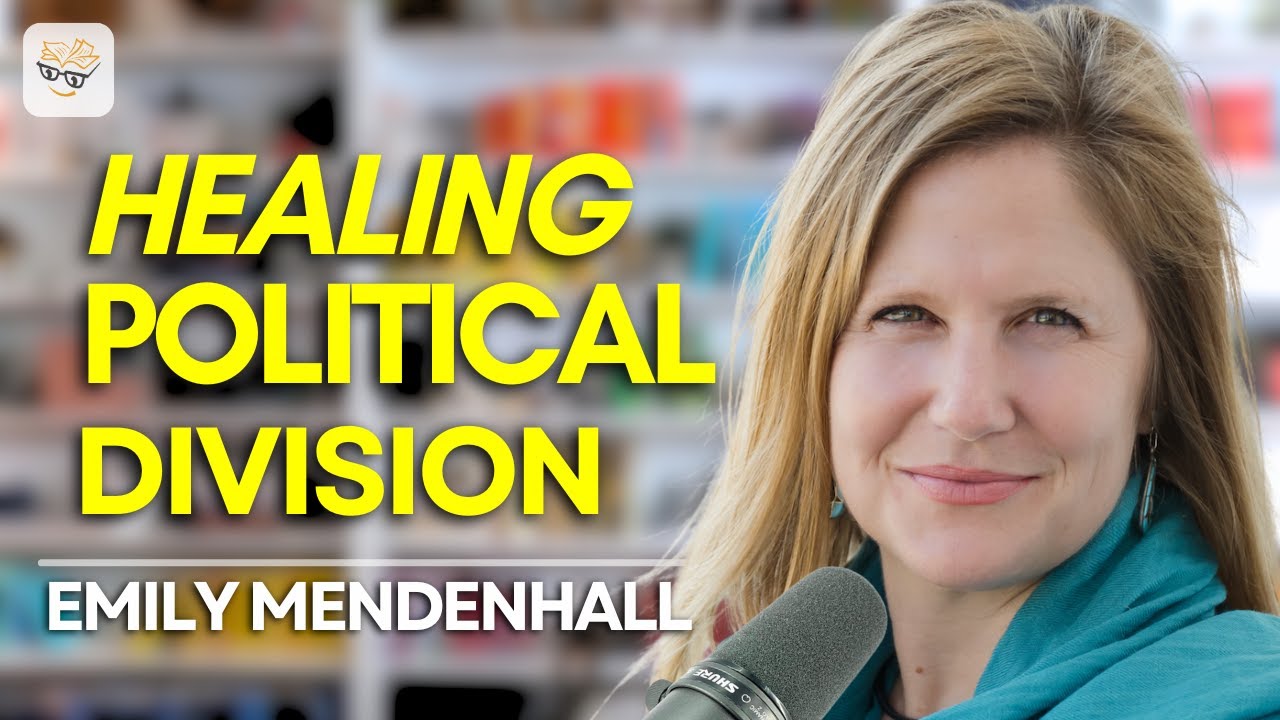
Anthropologist Emily Mendenhall spent the early pandemic in her Iowa hometown interviewing hundreds of people about mask-wearing, shame, and the rifts between health and economics. She found that sharing meals with people who disagree and stepping back from social media helped bridge divides that local politics had deepened.
Chapters
I think there is something to say, you know, that, you know, life isn't— I mean, politics is profoundly impactful on our lives, especially those who are, you know, marginalized or suffering in lots of ways, which we all have our own identities and experiences that introduce those. But so is, you know, going to the county fair and having an ice cream cone and hearing your child laugh. And playing with your dogs and loving your grandmother and, you know, picking tomatoes for your neighbor, or, you know, sharing a meal. So, you know, what we are as Americans and as people, especially in a multicultural and multiethnic democracy, really matters. So I think, like, having dinner with people you disagree with And maybe for a while you can avoid politics and foster the love that we have for our neighbors. Because I think actually, at the end of the day, we have a lot more in common than not.
Emily, welcome to the Book Thinkers Life-Changing Books Today we're going to talk about your book Unmasked, and this is going to be a little bit of a different conversation. Book Thinkers doesn't typically cover books like yours, but I have really enjoyed my experience with Unmasked so far. You've challenged a lot of my beliefs and helped me rethink a lot of things in a deeper and more meaningful way. And so my first question for you is, what is Anthropology, and how did you get into it?
Anthropology is the study of being human. It's answering the big questions of who we are in the world and what we're doing here. I didn't mean to become an anthropologist. I thought I was going to be a doctor because in my family you can only be a doctor or a farmer. That's all I thought I was allowed to do. But I stumbled into it in studying public health, and I found it as an opportunity and way of thinking about how we live in the world and how we live healthy lives in a very deep way that I didn't know about before. And so I ended up falling down that rabbit hole.
When I was in college, I took an anthropology class actually, and we spent a lot of time in the deep past, I would say, or I guess a little bit in the recent past, but not so much in the present. And so you study, you know, at this intersection of like public health and anthropology, events like COVID, which happened only a couple of years ago. And so where did the idea for the book come from?
I did not ever mean to write this book. At the time, a lot of my work— I had, you know, just kind of published this book called Rethinking Diabetes, which was a culmination of, you know, a decade and a half of research and Chicago and Delhi and Nairobi and Johannesburg, where I'd lived and spent a lot of time doing research. And it was looking at how people experience chronic illness in really profoundly different ways based on context, ways of thinking, and also poverty and health systems. So, you know, so much of my work has looked at how social and health conditions interact and travel together in populations and bodies, you know, all this, all the squishy gray areas. of how we live in the world. And I was kind of starting, actually launching, or had launched the study in Soweto, South Africa, where I was and where I've been an honorary faculty member for about a decade when COVID struck. But, you know, we had to kind of halt everything, and, you know, everything was up in the air. And I had 2 very small children at the time, 4 and 6, during that first year. And so we, after being in DC where everything was really closed down and, you know, pretty close quartered, even we'd gone to a gas station or no, sorry, a grocery store on our way back from a hike. And there were policemen outside policing if you were masking. And, you know, it was just, you know, it was kind of what we knew of what the pandemic was. And so we felt pretty isolated. So we wanted to be with family. So we packed up our kids and drove and know, 20 straight hours west to Iowa to be with my family. So I fell in. I came home to my hometown. We've been in Iowa and Okoboji for 5 generations. And I arrived in the middle of an outbreak and my brother-in-law was leading the COVID response. And I was like, what is happening in this small town? So I ended up just rolling up my sleeves and I was like, let me talk to all my friends and figure out if I can get a, you know, a beat on what's going on. And that's how it started.
Yeah, I think you, you said in the book the term was like deep hanging out or something like that. What is the term when you fully immerse yourself in a culture?
Well, as anthropologists, we call it ethnography. We like to joke that it's kind of like deep hanging out because often people are like, what is ethnography? And it's like really understanding the methods and rhythms of everyday life and how you come to know what you know and how you live and how you are. Um, and so yeah, deep hanging out is a good way to say it.
So you arrive in Okoboji right as the pandemic is really kicking off and you decide to start interviewing people. I think you said you sent Facebook messages and you started questioning like friends that you grew up with or local business people. And then like you said, your brother-in-law was really kind of leading the response. And so you spent a lot of time talking with him. What surprised you about the difference between D.C. and how things were handled in D.C., which is mostly a liberal area politically versus Okoboji? And I think you said it was about two-thirds conservative.
Yeah, well, it's not just that D.C. is a liberal area. It's that like one of my best friends at work, like, led the founding of the global health security movement in the government and teaches global security and diplomacy. In my school, in my program, because I teach in a school of international affairs, the School of Foreign Service at Georgetown University. And I teach global health politics. So this is really my, my everyday life. So, you know, when, when the pandemic struck, I was just thinking about all of the international pandemic treaties and how people have responded to pandemics in the past and my understanding of what would happen. Like, actually, the quarantines were not surprising. The masking was not surprising. We've been doing these things for, you know, over a century. Certainly happened in the first— in the great influenza pandemic of 1918. And in fact, they had a countywide quarantine in Okoboji during that time. So, yeah, so that way of thinking and how I came to think of it and how I was thinking about it with my colleagues and my students was just really different when I got to my hometown. And I think I was shocked at first, in part because since the pandemic had started, the seriousness of it was never really questioned in my sphere. I knew it was happening broadly, but then it came into my immediate sphere when I got to my hometown, to my family, in just a way that was very interesting. I'm an anthropologist. I wasn't angry or judgmental. I was just like, what is happening? What are people thinking?
Why?
Who's it? Who's making these decisions? You know, because a lot of people who are very conservative were very concerned, you know, in staying home. So I didn't really think about it, although there was performative politics. I wasn't thinking about it as a profoundly political issue in people's everyday lives because it's so easy to say this is political. But, you know, really, I found that people were very much dealing with their own personal stories and struggles. In very real ways. So that was interesting.
Yeah, you're right. And I asked a question that I think was overly simple. And what I found— and one of the things that I loved about Unmasked, am loving about Unmasked, is that this event, this pandemic experience, is infinitely complex. There are so many layers to this. I mean, you talk about public policy and local business and the certain rules that were being broken and, you know, the, the fine line. There were so many different feelings that people had to balance at the same time. You had this desire to— this desire for individuality and to break rules and rebel against the government sometimes and policy. And then you're balancing that against shame at the same time. And so it is infinitely complex. It's not just that the left wore masks and the right didn't.
Yeah.
It's— there's 1,000 different variables. And by fully immersing yourself into a community that I think was split in a lot of ways, you know, there were a lot of battles going on. It seems like you were able to capture a really interesting perspective. Yeah.
Yeah. And, you know, we have talked a little bit together about this concept of shame, which if you think about in public health or in medicine or in really anything that is regulated, right, there are, you know, government restrictions and rules in all things, in many things. But there's also ways in which societies have through time managed each other's behavior through shame, right? You, you, um, present a certain way, you, you make families a certain way because some people think one thing is acceptable or another. You, um, uh, you know, you eat a certain way, um, because it's normative and expected. And one of the ways in which humans have for a really long time managed those behaviors and those expectations and ideas of right and wrong are the concept of shame. And, you know, in this case, I think it was pretty profound to see how people especially were kind of policing each other. And this was not in one place or another. It was everywhere. So, I mean, I write in the book about how in Okoboji, I was shamed for wearing a mask, or actually when I was in a restaurant in rural Montana. with my kids. My husband's family is from Montana, and I was shamed for masking. And then when I was running on a trail, I was in DC, I was shamed for not masking. And that just really struck a chord for me. People just feel so vulnerable and so out of control and frustrated that they need to police others. And that, you know, that says something just more about our cultural tension and moment. I think than anything, you know. Yeah.
And I mean, I guess I'll share as a preface for what I'm about to say, and I don't mind looking silly today, that a lot of— we're 350 episodes into this podcast, and most of the authors that I have the chance to interview have written about some type of business or personal development subject of which I consider myself a subject matter expert, and I can have pretty confident opinions or rebuttals or statements, facts. But on this subject, anthropology and specifically COVID, the world of politics, social issues, I am not an expert. And so I'm going to sound a little funny maybe with some of my questions. And, and also, I don't mind that. But like, my immediate response on the shame thing is I think of human evolution and when humans used to operate in small little tribes.
Yeah, totally.
And if you acted a certain way and you got kicked out of the tribe, Well, now you can't protect yourself. It's much harder to get access to food or water or shelter, and so you really risk dying. And I think that over time, that probably conditions a fear of shame. You don't want to experience shame because it's so closely related to death, like biologically. I mean, is that something that— is that true? Is that untrue? Tell me.
I think you're right. And, you know, unfortunately, at this moment, I think we've cultivated these political tribes, um, that we use shame and fear, right, to divide, which I think is just really scary as a society. Um, and, you know, one of the things I wanted to do with Unmasked is look at these gray areas where we all— the humanity that we were all struggling, right, left, old, young, you know, well, um, someone, you know, suffering from disability or illness, you know. We all were struggling with our own contentions and complicated feelings. And I think we as a society need a little bit more understanding, deeper understanding and love for each other, you know, through that. And that was really an objective of mine. And, you know, I work a lot in sub-Saharan Africa, mostly in South Africa and Kenya. And a lot of my colleagues there were like, Emily, what is happening? What's going on, especially with these white folks in Iowa where you're from? Because there were these photos, you know, and I had published a pretty widely circulated piece on the early work on this with some, you know, generative photos. And I was like, you know what, I have a story to tell. I think it's okay. It's, you know, people aren't just one way or another way. People have complex lives and dynamics.
So yeah, during the early days of the pandemic, I'm from Massachusetts. I live in Massachusetts. Massachusetts is very similar to DC as far as Mm-hmm. I think how the pandemic was responded to, and generally speaking, and my wife and I, prior to the pandemic, girlfriend at the time, we would spend every winter away from Massachusetts. And so in that first year, as we got into months like September, October, we started to think about where can we drive that is warmer? Again, we do this every single year. And that year we had decided on Texas. And the difference between Massachusetts and Texas was very similar between the difference between DC and Iowa, you know, very, very, very different. And so we showed up and a lot of places where you don't see a mask ever. And it just showed the contrast between different areas of the same country, never mind different countries and how different countries responded to things.
Yeah.
Yeah, absolutely.
Yeah. I talk about in the book how we drove to Iowa and, you know, every state or like every rest stop farther left or farther west, you know, was just a little bit less locked down, you know, a little bit more open. And then when we went to a rest stop not far from Okoboji, my husband went in to buy some, I think, like beef jerky and Gatorade from the gas station. And the guys were like, where are you going? And he's like, oh, I'm going to Okoboji. And they're like, oh, you going to the party there, bro? And he was like, what? Like, everything's locked down, you know, except Okoboji. And it was interesting because actually we were driving through Minnesota off I-90. If anyone's made that drive from Chicago to Sioux Falls, it's right along I-90 in southern Minnesota. And everything in Minnesota at the time was shut down. So all of the travelers or the, you know, people who wanted a holiday or wanted to escape in Minneapolis or Minnesota were going to Iowa. So anyway, so yeah, it was very interesting.
I think what, what shocked me a little bit about listening to your book was the cultural perspective that I was viewing the pandemic through, because you highlight a different story than the one I experienced. And this is when— this is where I get to be a little bit vulnerable and say that I think you helped me see things from a different perspective, which is why you wrote the book. And, you know, I, I live in this world of business, business, business, business. You know, every business is its own entity, and business continuity is a really big subject. How do you keep a business alive? How do you keep that business having a positive impact on its community? And so when I think about the pandemic and a lot of the choices that I made during the pandemic. Now I run a virtual business, so there's not, there's no big deal about keeping something open, but a lot of the stories that are, that were fed to me through podcasts and through social media were about businesses that were dying as a result of not being able to stay open.
Right.
And then consuming your content, I'm challenged with, Well, what's more important, a human life or the life of a business? And obviously a human life is more important. And I didn't think about it that way before. You know, when my wife and I were in Texas and nobody's wearing masks and we're separated from our family and we're not knowingly interacting with anybody that could have a comorbidity or that was older or at risk, like It wasn't even a thought. Like, it really wasn't even a thought of ours at the time that we were being irresponsible if we were out in public without a mask. And I think you helped me see things through a different lens, really.
That means so much to me. Yeah, I think, and that's something I argue at, you know, people might say that, you know, actually in Okoboji, because very few people wanted to close down, and the businesses really worked to keep things open, that people weren't thinking about the collective. But it really depends on how you thought about the collective. And so I think your comment is so apt. Like, the idea in Okoboji was the 100 days of summer. People kept saying, but we just have the 100 days of summer, and people don't eat if they don't have the— if they don't work during the 100 days of summer, which is a real extraordinary challenge.
Right, right.
And it was really scary for a lot of people. And so they perceived that they were committed to the collective. And by prioritizing the finance, the financial livelihoods was a collective move. And of course, if you think about it through a health lens, especially because of the long-term consequences of infection during that year, you know, people see it through a different way, that it wasn't a collective move because you weren't protecting the most vulnerable. And public— I mean, the bread and butter of public health itself is about protecting the collective. I mean, that's the whole idea of government is protecting the vulnerable. So, you know, I do think that's one of the reasons why public health has become under attack is because people think about protecting the collective in very, very different ways and give it different meaning. And I honestly just think we need a bigger conversation about what that is and who we are.
Yeah. And I think, and this is where you're talking about the gray area, like both can exist at the same time. Those 3 months, those 100 days of summer determine the financial livelihood of so many families in the area for the rest of the year. And for them, you know, in our own little individual worlds, that's everything, especially a family business.
Yeah.
that's been operating for multi-generations, and now you could lose everything.
Yeah.
If you choose not to stay open. And at the same time, you're risking, uh, like a permanent illness or killing somebody. And both of those can exist at the same time. And we live in a country where, you know, sometimes you get to make that choice. And I think that depending on the cultural lens through which you're viewing it, you know, you might make a choice that you end up regretting later, or nod. And, and I just— it's imperfect and it's complex, and I think you did a really good job in the book at balancing the different perspectives.
Thank you so much. I mean, there's always middle ground, and I think more middle ground could have been found during that time, but I do feel people really dug in their heels because of fear. I mean, fear is a huge— plays a fundamental role, I feel, in, in, in, in community suffering or, or illness itself. Because people want to protect those they love. And that's a huge— a huge part of, I think, businesses moving to stay open too, is because they thought they were protecting those people they needed to. So.
Yeah, you said something in the book which I would agree with, and that's that unfortunately, a lot of times the most radical voices are the ones that are heard the most, and that there are a lot of people sitting in that middle ground trying to find middle ground. And that's the common logical approach to the situation, but it doesn't have— sometimes it doesn't have as much emotional pizzazz or wow. And so, I mean, we see it with politics, which is a big piece of what happened, and we could talk about public policy and health policy related to politics. But, uh, you know, we're hearing on the news and on social media from people that have the most extreme opinions on both ends of the spectrum. And like you said, they're deploying shame. Not only to keep those on their side with them, but to keep others feeling guilty for their takes. And it's just, uh, I mean, social media— what does an anthropologist think about social media and how it plays a role in dividing people?
Well, you know what I found with Unmasked, and, um, I have other— I know I have other friends and colleagues who do this much more intelligently and spend a lot more time thinking about the kind of cultures we create and the meaning that social media drives. But I found it so interesting when I really— because I was actually going to deactivate my Facebook account because I was like, I don't really use it that much. Maybe to stay in touch with some people. And so that's kind of why I kept it. But then during the pandemic, I was like, oh, there's a whole subculture here in Okoboji, you know, in the whole area where people were like having discussions that there'd be like subplots of conversations that were actually referring to things that happened online in the community. That was just like part of, part of it. So I feel like in, especially in small communities, maybe in, you know, small neighborhoods in cities, but definitely in rural areas where, you know, the kind of cohesion and social norms and experiences in small towns are different, right? We know that. That's, and that's, it's very interesting and meaningful for sure. But I also find these Facebook communities, or maybe like social dimensions or undercurrents to be fascinating, you know, sometimes good, sometimes not so good. But, you know, there are ways in which people defended their neighbors or shamed their neighbors or supported each other or got them the medical care they need. I know, now this isn't Okoboji, but when there was that really big wave of infections in India, I know a ton of my friends, especially my friends who are Indian or Indian American and have family there, I mean, dropped everything and spent, you know, months trying to get care for their beloveds. And I think that is, you know, that is the utility of social media, is it's connecting us. And sometimes there's harm for sure. And sometimes it can be really useful. So. Hmm.
Yeah, you, you, uh, in the book, I remember, I, I think, let's see, I'll try to recall it, but it was something like the local town resources were getting calls from all sorts of people with dramatic opinions, like, oh, I saw Karen cough on my tomato or something. Maybe that was an example that was being used. Um, yeah, you know, people The people that cared and wanted to maintain health for their loved ones, I think, you know, it's, it's important to take action sometimes. And a lot of that's detailed inside of the book. And I think you took a lot of action as well. So as you started to observe a lot of this happening, outside of starting to share some of these stories online, what actions did you take that you saw were important in your local community?
In Okoboji or in my community?
In Okoboji.
In Okoboji. Yeah. So, I mean, so what I started doing when it started, when I arrived in the middle of an outbreak, I just started interviewing everyone. So I was texting all my friends from high school. I think a lot of my friends from high school. And I, you know, at the time, I'm 43. So at the time, I was in my late 30s. And so all of my friends had these more prominent different positions in the community. Like one person ran a child's nursery, another, you know, had a realty business. Someone was on the school board. Someone was, you know, in the Board of Commerce. So, you know, there were just people all over. There was a police person who— someone was a security guard. You know, I just had people from all swaths of life just connected, and I just reached out to them because I had a pretty good relationship with most people in my class because you grow up with them. from kindergarten through high school. And I felt that maybe it was because of my age too and where all of my friends were or classmates were that really opened up the opportunity to speak to a very diverse group of people in the community, at least thinking of class and gender. And yeah, so I just started finding, texting, or messaging everyone I knew And most people talked to me. It was amazing. And then, you know, we like to call in anthropology, we call this type of research a snowball sampling. So when you talk to someone and you're like, hey, do you have any friends or anyone else who would be interested in talking to me about their experience? And then they introduce you to someone else, and they introduce you to someone else. And that kind of opens up a lot of doors. I mean, I interviewed hundreds of people informally in over 100 interviews. So it was, it was remarkable. And honestly, at the beginning, I just wanted to understand what was happening and help Zach, my brother-in-law, help the community. And then, and then I just couldn't stop thinking about it and had to write a book about it. But it was just so fascinating.
What happens when you're in an interview and somebody is sharing an opinion that you just flat out disagree with or you think is wrong or They're quoting stats that are made up and they heard on a podcast. Like, how do you handle those types of situations?
Well, I mean, this isn't my first rodeo, so I've done a lot of sensitive interviewing in my, in my career. And I've spent a lot of time listening to people with really severe stories of trauma, from rape and domestic violence to, you know, losing limbs to, you know, really terrible things. And I think that I've developed a sensitivity to just respect people's story and their perspective in a deep way, and to honor where they're coming from without judgment. You know, having a conversation with someone is, is a, is an honor, you know, and a privilege. So really hearing someone and not disagreeing with them, because that's not my role. My role is to understand their perspective. So I feel pretty comfortable doing that. I actually really love it. It's so interesting, you know? And my favorite response is, oh, I always tell my students, you know, the best follow-up is, oh, tell me more. Or can you tell me a little more about that? Or, or just the silent—
Well, I'd like, I'd like to go deeper on that subject because although this isn't a conversation about healing the divide in the United States, I think that I'm, I'm uniquely interested in people who operate from a place of curiosity and want to understand others because we live in a culture today where I— there's no stat to back this up, but it just feels like most people are not willing to have open conversations with those that disagree with them.
Yeah.
And It feels like that divide politically is getting wider. And it feels like you just can't sit down and have a conversation with somebody else where you ask them, hey, Emily, how did you get to that opinion? Because I don't share the same belief system that you do, but I want to understand how you came to yours. It just—
Yeah.
I mean, it sounds like you've developed that skill set. Was that something you already, already had? Was it something you always had, or did it develop over time?
Well, I've been doing research for a really long time, but I'm also a professor. So, like, my job is to literally teach and learn and help students develop a deeper understanding of politics, of who they are in the world, of how the world works, how people have changed, and how societies work. So I feel like that is just kind of my everyday, possibly. But yeah, I just— I'm also just very interested I've always been— I like to joke that I'm a great anthropologist because I'm incredibly nosy. I'm like, what? Why do you think that? Tell me more. You know, I've always just wanted to know, you know, you know, what's going on and why people think why they think.
Uh, are there— I just, I guess I'm wondering, is there a way to make that more practical for the audience today? Because it would be nice if we could, you know, if neighbors didn't have to hate each other because they had different presidential candidate signs on their front lawn, you know what I mean? Is there, is there anything that might be actionable for the audience today to go out and have a conversation with somebody that they might disagree with?
You know, I actually think they do it pretty well in the Midwest. You know, Koboji, for example, my book is actually banned here. No one can sell it, apparently, because no one will sell it and or talk about it. But people treat me very— like, I've actually been really interested in how I would be received after this book. And people just go like, oh, the book, and then they move on. And they're actually very kind to me. So I think there is something to say, you know, that, you know, life isn't— I mean, politics is profoundly impactful on our lives, especially, those who are, you know, marginalized or suffering in lots of ways, which we all have our own identities and experiences that introduce those. But so is, you know, going to the county fair and having an ice cream cone and hearing your child laugh and playing with your dogs and loving your grandmother and, you know, picking tomatoes for your neighbor. Or, you know, sharing a meal. So, you know, what we are as Americans and as people, especially in a multicultural and multiethnic democracy, really matters. So I think, like, having dinner with people you disagree with, and maybe for a while you can avoid politics and foster the love that we have for our neighbors, because I think actually at the end of the day, we have a lot more in common than not. And that our social media, the television tries to divide us in ways that are making us sick. They're really harming our minds and our bodies and our communities. So, you know, really looking beyond that and resewing the fabric of what makes America and Americans great is— Truly essential.
So, yeah, there's a funny quote that gets tossed around sometimes that says the average Republican and the average Democrat have more in common with each other than they do the people that represent them. And you're maybe a little more closely related to the people that represent us than I am. I don't get to interact with policymakers or people in the political world very often, so that probably isn't true. I do think it's okay to have an opinion. I think you have an opinion. I'm, you know, I haven't, like, fully immersed myself in politics in a long time. And I would say I'm like somewhere right in the middle, whatever that means. I think I, I have a lot of beliefs that you would call liberal, and I think I have a lot of beliefs that you would call conservative. And I'm somewhere like there's this mixed bag, and usually that's not considered okay. But thankfully, I interact with a lot of people that— come from a place of curiosity and don't say, hey, you have to be everything on this side or everything on that side. But you're right, just whether it's having a conversation with somebody at the dinner table and, and, uh, you know, avoiding it, or maybe starting to talk about it a little bit and operate from a place of curiosity, like, that's how that divide starts to heal a little bit. Maybe a little bit less social media for everybody too.
Yeah, take a little, you know, you know how people do Dry January? Maybe it should be alcohol and social media, you know, take a break.
Yeah, or have some alcohol to open up the conversations but get rid of the social media so they're not so emotionally driven.
Yeah.
Um, talk to us a little bit about the long-term effects of what happened in Okoboji. You know, I, I haven't made it to the final third of the book yet, but you talk a little bit about the school board and some decisions that were made. So could you talk us through what happened?
Yeah. So my brother-in-law was meant to speak to the school board because there was a discussion of would they have students mask in school just that first year going back in August of 2020. And he was really worried. The numbers of cases had increased and the hospital was pretty maxed out. And there was some dissonance in the community. So he went to speak and he asked to speak. And so I went to support him. And, you know, I don't know if it's just the researcher in me, but I was like, can I record this? And apparently the rules in Iowa are if you— if one other person publicly says you can record in a public hearing or space, you can. So I just recorded the meetings and it was much more interesting than I thought. I mean, it was just so interesting because public school boards around the country reveal so much about where we are as a nation because they're the deliberations, the deep deliberations of the people, right? They're fascinating and meaningful conversations. So I was just struck by some of the language used and the way people communicated. And it just so happened that I was writing a piece for Vox at the same moment. And so I wrote a little bit about the school board meeting. And then my piece for Vox came out. So the meeting was Monday. My piece came out Saturday morning. And Then they voted if they would mask, use, you know, require masks just for some parts of the day in certain spaces. And it was pretty clear after that Monday meeting that they would not vote positively for masking. And then after the article came out, there was a huge kind of response. In fact, it's the most retweeted or distributed piece I've ever written. Which I think is because my friend David Thorson, an incredible photographer, had some pretty impressive photos. That's why I think it was shared so much. But, you know, they actually voted for masks. And I argue that I think it's because people felt ashamed, possibly. So I think that was like pretty profound to see that the school board itself actually, I I do think that there are some kind of extreme views in the community. They were— they actually voted to arm 10 teachers or 10 school staff about— I don't know if it was 6 months ago or a year ago. And then they ended up not moving forward with that because of some insurance situations. So I think that sometimes leadership— like, there's 2 schools in this community. One has kind of a right-wing leader and one has a very much more moderate kind of middle of the ground, middle ground leader. And the one on the right is kind of pushing some agendas that I find to be a little extreme. And so that's been just very interesting to see. And I'm curious, where are these ideas coming from? And, and, you know, people feel very divided and it's cultivating more division in the community. So I feel sad and worried about that actually for my community. But, you know, it is very interesting to see 2 different cases with different types of leadership. So that was very, just very, very interesting to observe. And I think that some of those politics are continuing to play out. So we don't, you know, I think some of these feelings and these kind of sentiments and frames are still going on. So.
Do you think there will be an Unmasked Part 2?
No.
Deeper dive later on, you know, 5 years later, anything like that?
No, I think maybe I've exhausted my family's openness for me to write about my community. I think if I— yeah, I don't think so. But, um, I do have another book coming out. It's called Invisible Illness: A History from Hysteria to Long COVID, and it's coming out in January. And it's, um, it was just like this wonderfully rejuvenating experience. I got a Guggenheim Fellowship, and I was able to spend a year I actually did a lot of pottery and yoga and hanging out with my kids. And I spoke with a lot of incredible people, from policymakers to people who'd been living with a complex chronic condition, including long COVID or many other conditions I talk about in the book for decades. So I learned so much from these incredible people. And it's a really important reminder that, you know, actually for some people, They're still quite debilitated from, from the first 2 years of the pandemic. So it's a, it's still a serious matter. And, and also memory.
Yeah, yeah. The decisions that you make in the present moment might impact you or the people around you for the rest of your life. And I, I do think that's an important reminder.
Yeah, for sure. Yeah. And, you know, it was, it was a really hard time thinking back, you know, for a lot of us for different reasons. And You know, also thinking about parenting during that time, you know, having such small children and just worrying about their little hearts and minds all the time. Like, even thinking back, like, I think our school stayed closed for too long. My sister's school in Okoboji was open. Spirit Lake School is where they were. They opened up and, you know, they had these maskless protocols in place, and I think their kids had a lot better experience than the kids in the DC area that were you know, out of school for another year. I think it really affected them, and, and including, you know, kids' ability to progress. So I, I think that was a— that was something that was really frustrating. I think at least by November, December, everyone was like, why are they not opening the schools? We can do this. So, um, you know.
Yeah, I was going to ask you about that. You know, what were the primary arguments against, uh, masking at that, you know, during that school board hearing? And I've seen, and, and I haven't done a deep dive on any of these subjects, so this is probably just clickbait, but like, I, you know, I have seen, I, I think, a lot of content around developmental delays and how students are testing poorly in a lot of like the social communication type skills because of masks and, and virtual learning, not having the opportunity to interact with other people. And so that's an unfortunate byproduct maybe of some of those things, like you said, keeping schools closed a little bit too long.
Yeah. Well, I haven't actually read that that's associated with masking, but I would agree that having kids home was really, really hard. And it was hard for parents, it was hard for children. And, you know, a lot of kids, especially kids in families maybe doing shift work, frontline workers, and lower-income families, the kids were taking care of their siblings. They weren't even able to focus on school. So it wasn't just like not having the technology, but it was really the labor that they needed to care for each other and get through it. So, and, you know, I think so much about just about hunger. I mean, they— what the schools were doing were trying to feed kids who, you know, really needed the food, needed reliable lunches. You know, that's one of the reasons why school is so important for so many kids around the country. Um, just to ensure they get 2 reliable meals a day. So that was a, a really tough time. Yeah.
Yeah. I, I have a, a brother and, uh, a sister-in-law. They are both teachers. And so it was really interesting to hear through their experience, you know, each week when we had a family dinner, for instance, what, what they were going through, especially during the period of time when everything was virtual. I, I guess last, Last series of questions before we wrap this up today, Emily. I'm curious, one of my questions coming into today was, have any of your opinions changed as you reflect on this experience or as you read back through your own book? Opinions might be the wrong word. Perspectives. Has anything updated? I'd love to hear what you think of the book now that it's an artifact in time.
I was a little surprised because very few anthropologists have written about that time. And I think most people would say that this is not a traditional ethnography. It's more of a heart-mind dump, you know, a story of what happened. And that's, you know, ever since I became a full professor, I feel like I can write in an accessible way and do whatever I think and what I want in my writing. I have a little more freedom. So writing in this way was really helpful. But I do think that the story matters in an important way. But it is a social artifact, and it is a memory, and it was a moment in time. I, I do, I do wish there could have been more dialogue around the book in my community. There's been a ton of dialogue in the country, and for some reason the Asian market for my book is really hot. I think everyone's like, what is happening? You know? So that's been kind of interesting. Yeah. So I wish that would have been open. But, you know, would I do things differently? I don't think so. But I think the main thing that changed was, and I was feeling this during the time, was really just kind of about keeping schools open. But I think that it's really the most kind of challenging or disappointing thing at the current moment is how Public health itself is becoming weaponized, and it makes me really sad because the whole idea of public health is really caring for each other. And I think that in one way or another, it's just lost its its depth and meaning in in in this cultural moment. So I'm just very curious and a little bit worried about what's going to happen with this you know very crucial element and. and role in our society of protecting people.
When— and this is coming from a place of ignorance— but when you say public health, it's things like pandemic prevention and protocols and— okay. Because I do feel—
Not only, not only, like also child well visits is public health, you know, vaccinations, which have become very, very contentious, is public health. When you weigh a baby and you, you know, and you, and you make sure the child is following their, their growth progression and identifying malnutrition, that is, that is public health. When you ensure that kids have food in their bellies, that is public health. Ensuring kids are getting to school on time and have a safe place to live, that is public health. These things that are so crucial to our society, you know, and making sure people feel safe in their homes, in their neighborhoods, in their communities, that is public health. And I feel like the idea of, you know, a quarantine is being linked with public health. Sure, that is public health, and that has become very political. But so much of what public health is, is protecting the most vulnerable children, you know, fighting, you know, standing up against domestic violence, ensuring that women feel safe, ensuring there's care for also mothers after giving birth. You know, all of these things are part of What makes the public healthy. So, you know, so many things I feel are being misconstrued, and it's just a tough moment for the field.
Hmm. Yeah, there— yeah, that's it. We can, we can go really deep into that conversation maybe next time we have you back on the podcast, because that's a whole can of worms. And I have a bunch of questions related to those subjects. I have a 9-month-old baby. And so I just went through a lot of those experiences. And I have a friend who just had a baby a couple of months early. My brother just had a baby a month, uh, like last week, a month early. And so, you know, getting to see all of the programs that are in place in a state like Massachusetts that may not be in place in other places, it's, uh, like I said, it's, it's helping me view things from a different perspective. And now as a parent, that's a whole different level of caring for other people and empathy.
Yeah.
And I just want maybe one more reflection on your book from me. Which is that long-form content is an important method or modality for understanding a subject. Because when you just see a 60-second video on Instagram Reels or TikTok and it's inflammatory and it's on your feed because it is polarizing and you just get this tiny little snippet into maybe a longer-form interview, Or just a clickbaity article or video that somebody made that's intentionally divisive, it's hard to understand a subject like this. But when you consume an audiobook or a physical book and it's hours and hours and hours and hours and different perspectives, and it happens over time, I think it allows you to change, you know, a perspective in a meaningful way. So I'm happy that you decided to write this, and I'm happy that I decided to go through it. And although it's a little bit different than the conversations we normally have, I really do want to thank you for your time today. And, and it's had a good impact on me.
Oh, thanks so much, Nick. It's been a joy. I love— had a great time.
Where can people go to get a copy of the book if they'd like to?
Oh, most major booksellers. It's on Amazon. You can go to Vanderbilt University Press, or you can go to their trade arm, or you can go to Barnes& Noble or wherever.
Just don't go to Okoboji and look in any bookshops, right?
Just in my mom's little library.
Or maybe the University of Okoboji Bookshop, right? Yeah.
Yeah. With the Fighting Phantoms. Sure.
Yep.
All right.
Thank you so much.
Thanks, Nick. Bye.
More from Nick

Napoleon Hill’s “Think and Grow Rich” is a timeless classic #selfhelp #personaldevelopment

4 Books to Help You Get Better at Decision Making #selfhelpbooks #bookrecs #nonfictionbooks


Have you read this book yet? 📖: The 5AM Club by Robin Sharma #selfhelpbooks #robinsharma

Dan Sullivan on Listening to Your Customers Instead of Watching Your Competitors

5 Books That Will Boost Your Financial Intelligence #financialfreedom #nonfictionbooks

The People That Preach the Loudest About Virtue are Usually the Most Power Hungry



Books are the greatest mentors you can find #selfhelpbooks #businessbooks #successmindset

Let’s fight this toxic instant gratification culture together 📖 #selfhelpbooks #jimkwik