How to Turn Viewers Into Clients — With Aleric Heck
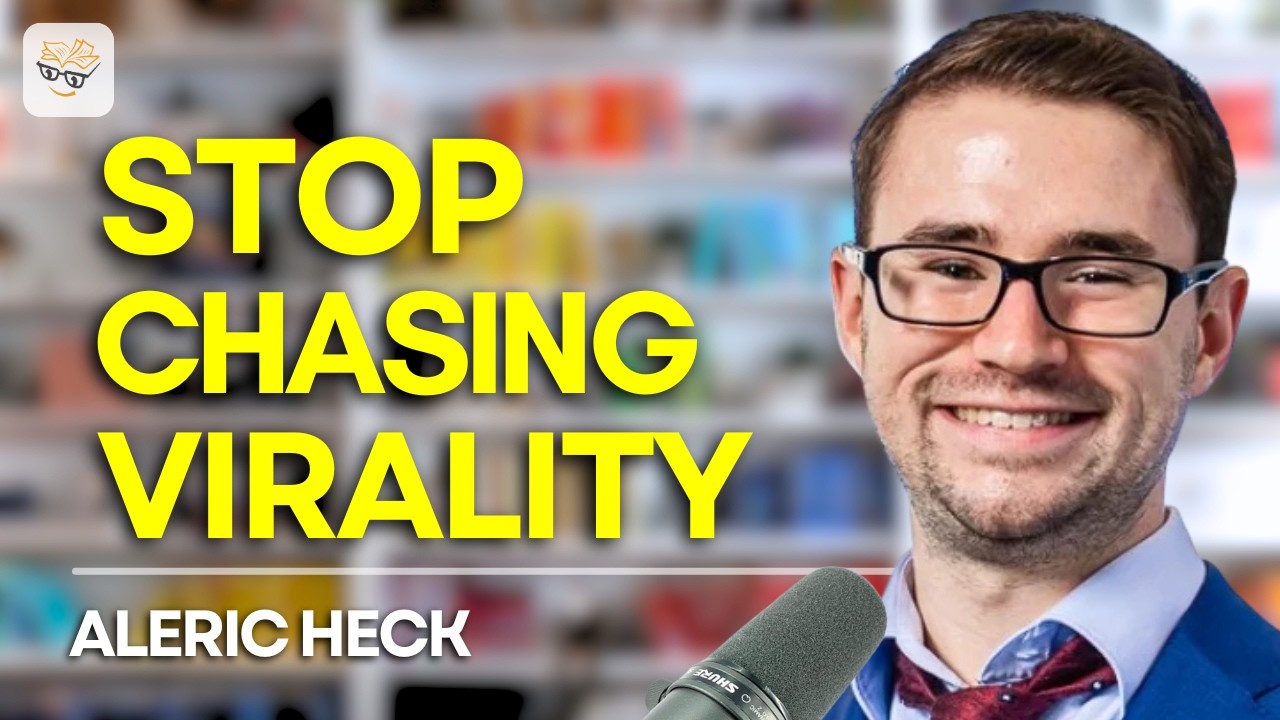
Aleric Heck built an 8-figure video-ads agency and ranked #60 on the Inc. 5000 list. He shares his formula for converting viewers to clients: Hook, Story, Educate, Summary, Call-to-Action for organic content. His core insight: reframe failure as not starting, giving up, or not learning.
Chapters
failure actually helps you learn and grow. And so if you can reframe your definition of failure, you can really set yourself up for long-term success even when you face temporary setbacks or failures. And so what I've seen is a lot of people think failure is when things don't go their way or things go wrong, but really that's oftentimes a mistake or it's an obstacle. And so instead of considering that a failure, I recommend people redefine what a true failure is. And what I've seen is that there are ultimately 3 true failures. There's the failure to ultimately like give up, right? So the failure to keep going, that's the biggest failure. That's the ultimate failure, right? As long as you're alive and breathing, right? The failure to decide, okay, I'm not gonna continue to pursue this goal or this thing I'm looking to do. That's, you know, an ultimate failure. And you get to decide, right? Do you give up or not? There's also the failure to start. Not actually starting something that you know that you want to do, and that gets a lot of people because it's a negative. It's hard to prove that. Like people, you know, it's like you are the only one that knows. Did I start the thing I wanted to start or not? Right, and so the failure to start. So giving up and start, and then the most insidious one though is the failure to learn. And this causes people to fail with one of the others because if you don't learn from your mistakes, you repeat. You're destined to repeat the same. mistake over and over again, which makes you more likely to actually give up, right? So the failure to learn. So really it's a failure to continue, the failure to start, and the failure to learn. Those are true failures.
Alaric Heck, welcome to the Book Thinkers Life-Changing Books Podcast. I'm excited to chat about your book, Video Authority. The Art and Science of Converting Viewers into Clients. And my first question has to do with a Christmas gift that you received when you were about 7 years old. Bring me back to those days. What was it like being young Aleric?
Well, thank you so much, Nick. I'm excited to be here. And yeah, when I was, you know, 7 years old, I got a Christmas gift of a video camera for the first time. And it was one of those old, you know, kind of cassette, you know, Sony, you know, cameras. Camcorders, and I just remember being so excited to film videos with my friends, to film videos, you know, around with my brother, and just being excited about the possibilities that you could make because I remember watching different movies and, you know, TV shows and always just being just so amazed that you can record something and create something that other people will go and watch and Uh, just the power of video. And so even from a young age, I was excited to pick up a camera for the first time.
Yeah, that's amazing. And then fast forward until your sophomore year of high school, it was when you ended up making more money that year than your teacher did from YouTube. I mean, how did that feel as a high school student making more money than your teacher?
I know it was such a funny story because I had my YouTube channel going and I was showing a friend because I was producing videos on the best mobile apps and then iPhone tutorials. I had some of the, as you know, top-rated videos for the term iPhone tutorial. And so I was showing a friend some of the stats on the channel and it showed that I had, you know, made in the last 12 months, you know, over $60,000. And that was just from the channel. The funny thing is I also had some sponsorships and I was showing my friend that and the teacher came over and he looked at that and he's like, what's this? I said, oh, this is, my YouTube channel, this is where I can see like the stats. And he's like, oh, that can't be right. I'm like, what do you mean? He's like, that says you made, you know, $60,000. And I'm like, yeah, yeah, see, it's the ad revenue. And I showed him and then his face went white and he's like, oh, that's more than I make. And that's when I realized for the first time, well, first of all, obviously teachers are underpaid. I think we need to, you know, support our teachers more. But separate from that, what I realized was, wait a second, the power of video. Like I am posting videos on YouTube. Now, people are benefiting from it. People are watching it. They're learning how to use their phone, you know, tech tutorials. But at the same time, I could actually make a really good living with that too and make some significant money from YouTube.
So, in that moment, were you thinking more of, wow, I can get paid for views, or were you thinking there's a future business that I can build around this helping other people? Which one was it?
Yeah, I think that in that moment, that's a great question. I think really I loved the idea of building, you know, a business that helps people. And also, you know, because that was something, and I'm still proud of this, like with that original. And of course, you know, since then we'll talk about some of the things that, that I've done since then around the ad side. But, you know, I'm still proud of the fact that I taught millions of people how to use their iPhone for the first time. And just to get those comments of people saying, thank you so much, I didn't know how to use this, like Some of those videos have millions of views, you know, teaching people how to use their iPhone or phones. And so, that was something that just felt really good to be able to do that. And also, at the same time, to be able to make an income and, you know, actually earn money from doing something that helped people. I got to see a win-win-win because then I had sponsors and I would promote their, you know, their apps or their products. And so, they won and my YouTube channel was growing and supporting people, so they won. And then I was also building a, you you know, a sizable income for myself, especially as, you know, a high school student. So, uh, yeah, it was, uh, it was, it was a great all-around experience.
I wonder how much money MrBeast was making back in the day at that same time. Can you claim that you were making more money than MrBeast was on YouTube at one point?
So at that time, so it's actually hilarious. So MrBeast has a video, the Hi Me in 10 Years video, and it just came out and he had published that 10 years ago. And at the time he had, don't quote me on this, but it was like a few thousand subscribers. And then of course now he's got 400 million. He's got, you know, the biggest, biggest channel. But at the time he had a few thousand subscribers. At that time I looked it up, I had over 100,000 subscribers, which is kind of hilarious. So, you know, but obviously massive, massive testament to what he has built. It's truly amazing. And regardless of whether or not his content, like anybody's watching this or listening to this, Regardless of whether or not his content is your cup of tea, you can learn a lot from what MrBeast is doing, how he's crafting the channel and building things out. So, there's definitely, yeah, a lot of respect for what he's built, but it is kind of funny to look back and say, wow, at one point, I had a bigger channel than MrBeast at that point in time.
That's funny. That's a great claim to fame. I would use that as often as possible. Maybe that'll be the thumbnail for this video. Bigger YouTuber Than MrBeast Shares Video Secrets.
That'll get some attention.
Yes, yes. No, I, I love what you're talking about so far because it shows the power of creating content once that's useful for other people and sharing it on a platform where it can reach a lot of other people. Now, a book is a very similar thing. You do the work one time, and then anytime somebody wants to learn from this book, they'll buy it and Amazon will print a copy ship it to them. And I just think that that's so special, you know, with the power of video. You said it early in the book, I remember it sticks out. You said a picture is worth a thousand words, a video is worth a million or something like that.
Yeah.
And it's, it's just so true. I mean, as a creator, you spend time creating something one time and then this digital virtual version of you is out there teaching people all over the world while you sleep. That's the definition of leverage, isn't it?
Exactly. And I really see it as second only to, you know, meeting people in person, having that direct face-to-face conversation or speaking at an event, you know, because you really feel the energy there. You can see them, you can hear them, and there you can interact with them. They're in person. But video is a lot more scalable than going in person. So, I know you and I both love like in-person events. We both speak at different events and I know you host different events, and that's phenomenal, but there's only so many people that can be in that room. And so what I think is with video, there is a power in building that know, like, and trust and connection. Now, of course, there's a power in books as well. And what I've realized is the words in a book are refined. So you might have millions of words you start with, and you refine it down to the 50,000, 100,000, whatever words there are, you know, in a book. But at the same time, what I love with video is you can actually feel, you have to see, You know, you can hear the person on the other side of it and you can actually get pulled into their world. And especially for business owners, you can really build a know, like, and trust that people need to have to be able to trust you and your brand and what you're looking to do.
Yeah, there's a lot of data coming out that shows people buy from people, not brands. And so if you have a strong personal brand that supports your business brand, I think that's how you convert online attention into actual business behind the scenes, which is something that will definitely dive into in a little bit more detail. But I want to stay early in your journey as my audience gets to know you a little bit more. We have something in common, Alaric, which is that The 4-Hour Workweek by Tim Ferriss was a pivotal book for you, and it was a pivotal book for me. It's really the book that kicked off my personal development journey. But I'd like to have you talk a little bit about how that book made an impact on you early in your business.
Yeah, so that's great. It made a really big impact. And that was when I was in college. So fast forward, so I had my YouTube channel, I'd grown it to 100,000 subscribers, I was making, you know, a full income on it, which was great. I was also using that to help, you know, pay for college. And I was starting to reinvest it into my business a little bit. But when I was in college—
Actually, can I pause you there? Why did you decide to stay in college while you were making so much money?
Yeah, so that's a good— a lot of people ask me that. I think that the big thing that I saw was I saw almost college like an incubator where I could grow my business and I could kind of, you know, and obviously I love, my parents raised me incredibly well. And, you know, that being said, like, I think I could kind of like, all right, appease that side. Let me go in and like, I'm gonna go to college, but I knew I wanted to, you know, build and grow my business. But I was kind of at that spot where, If I did not have that, I might not have been able to make the pivot that I ended up making. And so initially, I jumped into that. I had an opportunity, I think, I know I put in the book where a company, a Silicon Valley company, wanted me to drop out of college. I'll actually share that story in a second because it's relevant to the pivot that happened, but I can actually loop it back. So I had originally decided to go to college. I actually picked going to, and I know you're from the Massachusetts area, that's where I was originally from, now here in Austin, Texas. originally picked UMass Amherst, even though I had gotten into some other business schools in the area. I picked that because they had a strong entrepreneurship program, but also some of the other schools— I'm not going to say which ones, but there are some like top business schools that I talked with them and, and I told them about my business, like, oh, that's great to get you in, but now you're going to learn how to actually, you know, do business, and it's more about the coursework. Versus at UMass Amherst, it was the only place And I remember meeting with who became like one of my entrepreneurial advisors, Professor Burton Cowden at the time. I remember meeting with him and he said, oh, we'd love to champion your business here at UMass Amherst and actually help you grow. And they had a whole entrepreneurship ecosystem. And so that's actually one of the reasons, you know, and I decided to go there versus maybe one of the other you know, business schools that might have a really big name. But the feeling I got is if I got in there, it was going to be in like— it was going to be in a system, right? And they were producing, you know, more executives, you know, than actual entrepreneurship and business. And so essentially, I got there and I had my YouTube channel, but I also had full coursework. And so I found the 4-Hour Workweek book to loop back. I read the book. And I realized, wait a second, I can automate some of these systems. I can, you know, actually hire people to support me with this. And, um, in my version of that, um, it didn't start out with different— later on I got VAs and different things, but it started with other college students. I was able to hire other college students to script my videos, to edit my videos, to respond to my emails and do business development. Um, you know, there were other roles that I, I put in there as well, like email newsletter, things like that. And so I had them start to do these different roles, and I realized I was able to systematize, just like The 4-Hour Workweek. I was able to systematize my business literally down to a 4-hour workweek where I wasn't even writing my own scripts anymore. I had somebody who was doing this, and this is obviously before, you know, all the AI and all that stuff. But, but basically I had somebody writing the script, somebody doing all the research, you know, editing the videos. I basically just had to get in front of the camera and record. And so because I was able to do that, it gave me free time. Now, instead of deciding to sit on a beach, what I decided to do is, you know what? I am going to, as crazy as it sounds, start another business. And where that came from, which kind of speaks to your other question about why not drop out. So what ended up happening was I had a business that was sponsoring my videos. I would do a video for their apps and they would get a bunch of downloads. Well, one day, one of the apps that they were representing, 'cause it was a performance marketing agency, it's like an influencer marketing agency, and they had paid me to do a video about one of their apps. I did a video about that app and it got a bunch of downloads. They said, all right, can you post that video again the next week? And I had to tell 'em, well, it doesn't really work like that. You can't necessarily just like post the exact same video to the same channel the next week and expect to double your results. And I said, well, what if we just take that same money that they were going to pay me to put it into YouTube ads? And so I did. It was like $500, put it into YouTube ads. They ended up getting thousands of downloads for their app. They now were blown away. They're like, all right, well, let's keep running it. So we kept running that promotion, but then they had another app that they were representing that was an even bigger application that ended up actually becoming a unicorn company. But this other application that they were representing, they said, okay, what would it take for you to run the ads for that app? And I just threw out what I thought was a crazy number as like an hourly rate. And they said, yes, done, let's go. And I realized, wait a second, this is crazy. I thought we were gonna negotiate. And so I then was doing YouTube ads. The second set of YouTube ads I ever did for a client was like a $1,000 a day budget. And that campaign did so well And this was, again, over a decade ago. That campaign did so well that they called me up and they said, Aleric, we want you to drop out of college, fly to Silicon Valley, join our team. You know, they had like a vested equity schedule stuff. They're like, you can even keep your YouTube channel. They gave what they thought was an irresistible offer. And it was very tempting, but I ended up turning it down. And the reason for that is I played out both scenarios, right? If I go over there, Then I'm essentially going and I'm gonna be the knight in somebody else's castle. And I actually wanted to be the king of my own castle, even if I had to build it brick by brick. I'm sure I know you can resonate with that. I'm sure a lot of people watching or listening who are entrepreneurs can resonate with that desire, even if it starts smaller, to build it up. And that's what I decided to do. And I almost treated college like an incubator to build the foundation of my business so it could really take off after that.
And I also think you exercised something that a lot of business owners struggle with, which is delayed gratification.
Mm-hmm.
So many of us want a viral video tomorrow, so we sacrifice our niche for generalized content that might reach people but not convert on the backend because it feels better today to get that influx of vanity attention. You know, so many business owners, they struggle to think, What is it going to look like 10 years from now? When I wake up 10 years from now, will I be happier if I did this or that? And so kudos to you. And it, you know, you already gave a shout out to your parents. You know, being able to develop an awareness of delayed gratification and what's going to serve your future self is not something that's easily accessible today for a lot of people.
Yeah, which I absolutely love. And I know, yeah, like, I know we talked a little bit about this, but I also mentioned in the book, I was really raised with that. And my mom even wrote a children's book, you know, Enough: A Best Self Adventure, about being the best version of yourself and all of that. So, I appreciate you picking up a copy of that as well. And yeah, that's awesome. And so, you know, really, that's like the lessons that I was raised with. And that's exactly what, you know, I wanna aspire to be each day. And part of that is that delayed gratification, looking at like, okay, what am I gonna be proud of having done? Same thing with the book, right? This took way longer than I thought it would. I started the process 3 years ago before I ended up, you know, publishing it. And, but I am so glad that I did and took that path of delayed gratification. Because I was able to make something that I'm really proud of.
We'll move on to the book in just a moment. And I guess this is a good segue. I found it really interesting that you loved personal development classics, Napoleon Hill, Earl Nightingale, Bob Proctor. You worked with Bob. And it just, those are a lot of the same books that really hooked me into this industry. Did you consider any of them as you were writing your book? Did you think about what made those books successful and did you implement any of that into this?
Yes. So I did. And I also have a chapter that I'm sure you realize, wait a second, that's pulling from that. Because there's 2 things that I really pulled from those classics that have really inspired me. And at some point, I actually do think, and you'll get the scoop here, because I don't think I've ever mentioned this on a podcast, but at some point, years in the future, and who knows exactly when it'll be, and I think it may even be decades in the future, at some point when I've accumulated more wisdom, I want to write a timeless classic like that. I don't think I'm at the stage in my career and life where I'm ready to write something like that yet, but I would love to, to do something like that that truly is timeless. With this book, the 2 things I took— one, I wanted to put a chapter about mindset and personal development into inside of the book, and that's chapter 3, The Entrepreneur's Mindset, and really distill what I have taken away from all the personal development that I have learned. And I've really found a lot of it comes down to a win-or-learn mindset. And so you're either seeing success in the things you're doing or you're learning and growing, and then that can compound to create success. And that's the same mindset you need to have when you're marketing too. If you're testing new videos, whether they're organic videos or video ads, you need to test and see what works or doesn't work. And if you are afraid to start, well, you'll never learn. And if you're, you know, you do something and maybe it doesn't work the way you want it to and you give up, well, you don't, get the lesson in that. There's a lesson in if you launch a few different campaigns and some of them don't work, okay, well, you learned what didn't work and now you see a glimpse of what does, or at least what not to do, and you try it differently next time. And then when you have something that works, you scale it up and you avoid the things that didn't. And that's a principle that is just so, I see as like the through line that I see. And I think the interesting thing with personal development books, everybody has different lenses and takeaways and some of these key principles, but that's one I've personally really latched onto. that I wanted to explain a little bit more. And then I also pull quotes, like you're saying, from Napoleon Hill, right? 3 Feet from Gold, right? The story of Uncle Darby, you know, huge, you know, motivator for me to always keep pushing and seeing, okay, you know, where can I— where am I stopping just before I strike gold? How can I, you know, keep doing that? You know, and then pulling from Earl Nightingale, right? Talking about ships setting out at sea and ultimately getting to their destination if you know where you want to go. Yeah. So all these different things I wanted to instill it into a chapter. And whether people have already read a lot of personal development books, it's a refresher, or if they haven't, it could be a good opportunity for people to open their eyes and then take a look at that. So that's one piece. The other piece is I actually rewrote the entire book. That's why it took me a little bit longer to do, because when I wrote the first manuscript, it was very much almost like a how-to manual. I wasn't trying to do it that way, and it still has elements of that, but it was too much focused on the tactical and what works right now. One big thing I love from those other books is that they're timeless and they're principle-based. Now, I had to find a balance because like I said, in the future, I'd love to write a truly timeless principle-based book, but I also needed to balance tactics and strategies that help convert viewers into clients. That's the promise of the book. And so what I wanted to do was strike a balance between, and this was the hardest part, it was like threading a needle, Strike a balance between timeless principles, like I talk about, that includes what we can get into, wherever you wanna go from there. But like, as an example, crafting a video ad, hook, educate, call to action, that's not going away. There's a principle that I've found and then how to apply that and combine those principles with some of the tactics of what we're seeing. All right, this is what we're seeing right now working on YouTube. That being said, the platforms may change, but these timeless principles are going to stay in effect. And so, I wanted to include both pieces so that people have a good mix of what's timeless and also what's working now. And that was my big focus and something that I pulled from those other books. So, I rewrote it to make it more timeless, more principle-driven, while also still having exercises that are more practical that people can implement.
Well, I think you did a great job at striking that balance.
Thank you.
And the final piece of credibility for you that I'd like to mention, and then we can move on to some of the tactics and examples from the book because that's what I know a lot of people are here for, is that you built your company to Inc. 5000 fastest growing companies in America 2 years in a row. And so there we go. We've checked the credibility box. We know a little bit about who Alaric was when he was younger. We know some of your early influences, the pivots that you've made. Now let's talk a little bit more about this book, Video Authority. Again, the subtitle is The Art and Science of Converting Viewers into Clients. Who is your target customer for this book and why? Did you decide to write it?
Yeah, great question. So the target audience for the book are people who are looking to attract more high-value clients for their business, or even just ultimately grow their expertise online and their ability to have people see them as an expert that will allow you to convert viewers into clients. What this book is not is it's not a book about going viral, right? One of the things that I talk about, right, is you know, going viral, you're not going to necessarily reach all of the people that you want, right? And so there's, there's, there are books out there that talk about, you know, going viral, that talk about building great businesses. So maybe you've read some of them, right? Like, you know, you have, you know, Derral Eves has his book, you know, around a YouTube formula. There's incredible books out there, but those books are focused a lot on building a MrBeast-style channel. He literally consulted MrBeast. So true expert. And instead of that, what I wanted to do, what I did not see, is a book out there that talked about how to actually build video content and video ads that convert viewers into clients. Because if you're a business, right, views, you know, they don't pay the bills unless you have a way to actually convert them into clients. You can't take likes to the bank and say, okay, let's deposit all these likes. What you need to do instead is actually attract clients People who are trying to go viral as a business, right, are essentially betting their business on a lottery ticket because it's not guaranteed you'll go viral. And then it's not even a lottery you want to win. Let's say you do go viral. Usually it's not your ideal audience that you're going viral for. So now you have all these people, and if they do end up submitting leads, you might have a lot of unqualified leads. So instead, what we focus on is actually speaking to your target audience, whether that be through a video ad that you can target in front of them. That speaks to their pain points or challenges, their goals and desires, or that's organic video content again that solves problems or speaks to their desires and actually reaches your ideal audience and then has a mechanism for converting those viewers into clients. So instead of just building as big as possible for the sake of building it big, as big as possible, it's more focused around, all right, how can you actually build your audience of loyal subscribers, people who are interested to actually convert and become clients, both on the organic side And then on the ad side, how can you create content that actually speaks to your ideal audience, targeted in front of them, and actually earn a return on those ads?
We are, we are speaking the same language because I'm, I'm constantly reminding our clients at Book Thinkers that a smaller audience of raving fans that is obsessed with what you do and every single piece of content you put out is well positioned to serve them and strengthen that relationship. will always convert to more backend higher ticket clients than a larger audience of diluted people who barely even know who you are. And, you know, people want virality, they want reach, but what we really should be teaching in the thought leadership and business space is to go for resonance, to create emotional resonance, to go really deep with that client and sacrifice the views. And I, I think there's a shift happening, Aleric. I'd love your opinion on this where People are starting to see this a little bit more. They're starting to go, okay, I don't need to be viral. That's nothing more than a vanity metric. It doesn't pay the bills. And they need a voice like yours or like mine to give them that permission. Because unless you're told it's okay to sacrifice views for money and help them reframe this, the default setting is nobody's watching my content. I'm not famous, therefore I stink. And, but by helping them reframe resonance matters more than reach and money matters more than views, it's almost like they feel like, okay, finally I realized that for the first time. I don't need to set— I need— I don't need to set such high expectations. I don't need to set such high expectations. And it's like the weight disappears. What do you think about that?
I completely agree. And it's also not just that the weight disappears, it actually makes your content more fun because oftentimes what we found working with clients, I'm sure you see a similar thing, right, with the authors, you know, that you're working with as well, is, you know, people have an expertise that they love talking about and the problem is when they go and they start learning about how to go viral, they start to feel like they have to talk about other things that are not their expertise, that is not their true passion. and they feel like they have to do this and then it feels more stiff. It doesn't like actually like they can't have as much fun with it. Content feels like a grind instead of a fun conversation. And then, you know, because of all of that, odds are their videos ironically will actually get less viewership than the content that they actually wanna create because they have it, they're trying to get a shot at going viral. But unless you, you know, are doing it right and there's ways to do it, but if you're not truly passionate about it or focused on Okay, the goal is to go viral. You know, you not only might miss that mark, but you might not even— and I've seen this happen time and time again. This is what causes people to like give up and say, oh, I tried that. They try to produce the content everybody else does, trying to go viral. That's not their content that they're not a true expert at, that maybe, you know, ChatGPT gave them some ideas about. And instead, you know, what we found is instead of trying to do that, actually create the content that you're passionate about, you're excited about. That you could talk all day about, you probably do, as an expert, and share that expertise, share that knowledge, package it in a way, because the thing is, I don't— what I don't want people to take away from this is just, oh, do whatever you want, because there is a strategy, and we talk about in the book, behind actually how to formulate these videos to convert viewers into clients. That's the other problem people make. So we just covered one problem. The other problem is people hear that and they say, okay, great, I'm just going to record whatever video I want, whatever style I want, and, you know, that doesn't matter. It's like, actually, there's a duality to this. You need to learn the principles of how to create a high-value video, but then inject into it what your expertise is, what your passion is, and the ideal audience you're looking to attract.
So, yeah, let's touch on both of those and give the audience a little flavor for what's in the book. Let's talk about the formula first. And now, as a reminder for the audience, we're going to cover this at a high level right now, but go ahead and buy a copy of the book if you'd like to do the proper deep dive and actually implement this into your business. So hook, educate, call to action. That's the language that you use for your framework. Talk to us about each piece of that framework and why it works.
Excellent. And that's the framework for the ads. And then there's 2 extra pieces for organic content, which I'll get to in a second. And so for the ads, the hook is designed to attract people and draw them in. So when people are watching an ad— now, I particularly love YouTube ads, but as we've grown as a business, we help clients with YouTube ads and Meta ads. So there's different benefits to different platforms and all of that. And there's also other ad platforms too, you know, TikTok and LinkedIn. But let's just use YouTube ads as an example. The hook is really important Because people have 5 seconds before they can skip the ad. And so you have essentially the attention span of a goldfish, right? Notoriously like 6 seconds long, right? You have that attention span to capture their attention and get them to pay attention to your video. Now, people get the hook wrong because they think the hook should be selling them on ultimately what your service is, but you're not at that spot yet. You just need to sell them on why they should watch the rest of your ad and the rest of your video. And so what I love is curiosity hooks, starting with what-if hooks or challenge or problem hooks, right? So, you know, ad costs are going through the roof if you don't know the right strategies, et cetera, et cetera. Or what if you could ethically hijack your competitor's traffic and send it into your own funnel? Those are real hooks that I've used. Those hooks really capture attention. And I'll give another example that I talk about in the book was a nutritionist client that we had. This is very visual of a hook. And he had a cup measure of oil. So he had this cup measure of oil and he holds the cup measure up in front of the camera and he says, this is 2,000 calories of oil. If a calorie's a calorie, why can't I just drink this every day and be healthy? Well, now that we've established that this calorie isn't the same as other calories, why do you think 2,000 calories of pizza is the same as 2,000 calories of salad? You see, there's something more going on here. There's actual nutrients and macronutrients that your body needs. And that's why, you know, et cetera, et cetera. And then, but you see that hook, even hearing this, you might even be like, wow, I need to learn more. So it's one of those things that that hook pulls people in, it breaks a common belief or misconception, and then it gets them into educate. So the second part is educate, right? So in my example, I talked about ethically hijacking competitors' traffic. What I can do is back that up by saying, well, on YouTube you can use something called a URL affinity audience to target people who have gone to your competitors' websites or other websites. And then I show how that works. So now I'm actually backing that up. I'm educating. They probably don't know that. With the nutritionist example, they can talk about, okay, here are the different, you know, here's how these macronutrients actually affect you and, you know, and why you haven't— you've been struggling to lose weight just counting calories. There's something more to it because, et cetera. And so you can get into that. And then you finally have the call to action. I'll give a quick recap in a second. The call to action is designed to get people to convert. And so this is where you make it really simple. That's where you want to simplify. So usually it's sending people to a training because people are already on video, they're watching videos. Now of course people can send to a book, right? So, you know, we're talking about books here. I'm actually about to launch some of my new ads for the book, right? And so you can send to different call to actions— books, webinars, booking a call. But our favorite is to go to what we call a video conversion training. It's our version of a video sales letter. So it's sending people into a video where they can learn more, maybe a 15-30 minute training provides even more value, educates them, and then invites them to take the next step. For us, it's booking a call. Again, a lot of the people that are learning here are trying to get clients, but these strategies also work if you're selling products, you know, or whatever happens to be. But essentially what we're doing is hook, educate, call to action. The call to action makes it very simple where to go to learn more. So for instance, for me, It could be, if you're looking to learn how to leverage the power of video ads, click the link right here on the screen and you can sign up for my free 30-minute training. We'll show you step-by-step how it works. And so very simple to get people there. So hook, educate, call to action. For the organic side, there's 2 extra pieces added in, which is a story and a summary. So it's hook, story, educate, summary, call to action. The hook, Pulls people in similarly. Now it's also a little less aggressive than an ad hook. An ad hook, you really wanna capture people's attention right away. The hook in the video of an organic video, you want it to pull people in, but it doesn't have to be as such a high-energy style. Like with ads, you almost have to dial up the energy a little bit just to stand out. With organic content, you actually want it to feel more natural but still exciting. So you have a hook, then you tell a story. Because we have a little bit more time, we can add a story in here. And this is either a story about yourself, story that could relate. By the way, if you notice, even this podcast interview is actually following this, this process. Before we dove into this educate, which is the section here, you know, you, you asked about my story and the story connects on a human level, right? And so you kind of had the hook at the beginning to pull people in. We then talked about my story. We're now educating. This is that. And then we're probably going to at some point have a summary and a call to action. And so That's the formula for these types of videos. It's actually really, really great to see this as an example. And so then you educate, you provide value, you summarize. Because it's a longer video, this is a key element. You're also showing them what they got from the video already, which is, oh, this is a high-value video. Then from there, you have a call to action. You wanna learn more? I've got a free training, or I've got a book, et cetera.
I love that. I mean, so much, so much value in here already. What do you think about adding credibility? So is that, is that part of your hook? Is that part of the story? Is that part of the education piece? You know, when you create a piece of content, at what point do you say Inc. 5000 2 years in a row?
Yeah, great question. So that's actually a segue between the hook and the educate. And then also it can be weaved into the story. You know, in terms of the framework, what I have found is that these different elements are the key elements that every video needs to have. Credibility, we wanna have in a lot of videos, and also we wanna weave it in, but usually what I'll say is you want to, in the way you're delivering this, showcase your character and your credibility, connect with your audience as well. And so essentially what you're doing is you're essentially As you're connecting with them and you're showcasing your credibility, that's coming through throughout the video. But the place that I like the most is actually in the transition from the hook to the educate. So that's exactly right. So what I'll do is if I have a hook that is, you know, that is pulling people in, so whatever that hook happens to be. So for instance, actually one of the hooks that we're doing recently is about the viral side of things. So You don't want to go viral. What you want is to actually get clients, and that's why you need a method of turning viewers into clients. I'm Alec Heck, founder and CEO of Ad Outreach. I've scaled my business to over 8 figures, landing number 60 on the Inc. 5000 list of the fastest growing companies in America. And in this video, I'm going to show you exactly how you can scale and grow your business by reaching your ideal clients using the power of video, not just hoping you go viral. And so you can see here, that's like— and that's an actual hook. I just recently filmed those basically exact ads. And so that formula, that's the key. And so you can see actually I have the bridge is the credibility section. So that's exactly right. You want to weave that in as well.
So for audience members that are like, okay, I got the formula, but the minute the camera goes on, I feel awkward. I get you say be authentic and film the content that I want, but like, I can't do that, Aleric. So you had some great recommendations early in the book. One of the ones that I want to kick off with is talking to the camera like it's a friend. And something that I, I actually encourage a lot of people to do is name the camera your target customer.
Yeah.
And so oftentimes when I'm looking at the camera, I'm looking at the younger version of Nick and I'm teaching him. That helps me get into the tone that I'd like to deliver advice with. But what— how do you feel about that? What are some of the other pieces of advice that you have for somebody who's just camera shy and not really sure what to do?
Yeah, so that's a— that's great. And, and I love that exactly, naming, naming the camera and speaking as if you're talking to a friend. The thing that I always love saying, and I know it's going to sound like, well, of course, but sometimes people need to be reminded, is that some people say, oh, I'm not confident on video. It's like, well, wait a second, you're actually on video all the time. You're on video on Zoom, you're FaceTiming, you know, friends and family, you know, you're on video like a lot of the time without realizing it, mostly Zoom and FaceTiming friends and family, right? So it's one of those things where you actually are able to be confident on video. You just think because when you start hit record, you're like, oh, a lot of people could see this and it starts getting you a little bit nervous. The other thing is you are in control, nobody else, even if you do have somebody, you know, recording that video, but also we found more natural produced videos where, you know, even if you're picking up your iPhone, it's a great place to start, right, recording on iPhone, you get a little tool like a gimbal that stabilizes the phone, makes it look a little bit smoother, but let's say you're recording a video there, you are in complete control even if you have somebody else. If you're paying somebody else to do a video, you're still in control. They're not gonna post it without your permission, so you have all the control to be able to decide, do I wanna publish this or not? So you can speak, you're on video all the time already, you're in control, And the last piece is that your authenticity actually is key. Now, some people look at me and they say, all right, Aleric, this is easy for you to say. You clearly love getting on camera talking to people. But I actually wasn't always confident on camera, even having the YouTube channel. And I know you know this from reading the book, but like one of the things that I shared, and I actually wasn't sure if I wanted to share this because it's a little bit, you know, kind of vulnerable here. But, you know, I had my original YouTube channel and you could hear my voice. and you could see my hands because I was showing how to use like different phones. But I actually, I was one of the YouTubers that I didn't share my face. I was kind of almost afraid of sharing my face. I was kind of embarrassed. First it was I was younger, I was like a kid. And so like I kind of got away with it. All right, just see, you know, like the stuff, not thinking people would realize from my voice, but whatever. And then later it was in college because I was doing all these different things. Not because, because that's an excuse, but, you know, I was focused on a lot of other areas. So I gained a bunch of weight. I was 50 pounds heavier than I am today. And I remember just not feeling confident. And this was just me. Again, this is not saying, speaking to any, you know, about anybody else, but this was me. I didn't feel confident with how I looked. And I remember recording one of the first ads that I was doing for myself because now I had to practice what I preach. So I had my YouTube channel. It was kind of a faceless channel. I'd built that up. Then I was doing YouTube ads for other people as, you know, people start off, right? It's kind of like at that point, like agency style. And then from there, I realized, wait a second, it's time for me to use ads because I had exhausted my network. I wanted to practice what I preach, do my own ads about 8 years ago now. And I'm like, all right, well, I need to be on camera. And I remember recording it. I watched it. I just didn't really like the way I looked, even though I knew I was saying the right things. And so I published it anyways. And I'm so glad that I did because that was the first video to make me over $1 million in my business. That video. And the lesson I took away from that, it doesn't matter who you are, what you look like, what you sound like. It's just to be authentic and be yourself because you're going to have people that resonate with you. That's the power of video is you're going to resonate with people and, and they're going to be drawn for your uniqueness, not trying to be somebody else.
I can relate to all of this so much. I mean, you'll, you'll get a chuckle out of this. When I first started sharing book reviews on Facebook, Instagram, and YouTube back in 2018, maybe I didn't know how to edit video content. So I would shoot it on my phone and in a 5 or 6 minute long book review, sometimes 8 to 10 minute long book review, if I messed something up in minute 8, I would get frustrated and then I would film the entire video over again. So there were times where I would be reviewing a book And it would take me 3 or 4 hours to get a take that I liked because I would continue to mess up, stumble over my words, lose my train of thought, and I didn't know how to edit video content. I had this weird block about learning, so instead I would just redo the content, redo the content. Now when I go back and I look at those long-form book reviews from way back in the day, I mean, they're embarrassing, but I leave them up to remind myself that You don't get to video 1,000, which feels clean and polished without the first 999.
Yeah.
You actually had a lot of great lessons again early in the book about reframing failure as a necessary part of the process, but also kind of as a positive thing. So as we get towards the end of the podcast today, I think we gave a great preview for some of the great content inside of your book. Talk to us one more time about the importance of failure.
Yeah, I appreciate that. And I think that's the thing is failure actually helps you learn and grow. And so, if you can reframe your definition of failure, you can really set yourself up for long-term success even when you face temporary setbacks or failures. And so, what I've seen is a lot of people think failure is when things don't go their way or things go wrong. But really, that's oftentimes a mistake or it's an obstacle. And so instead of considering that a failure, I recommend people redefine what a true failure is. And what I've seen is that there are ultimately 3 true failures. There's the failure to ultimately like give up, right? So the failure to keep going, that's the biggest failure. That's the ultimate failure, right? As long as you're alive and breathing, right? The failure to decide, okay, I'm not going to continue to pursue this goal or this thing I'm looking to do. That's, you know, an ultimate failure. And you get to decide, right? Do you give up or not? There's also the failure to start, not actually starting something that you know that you want to do. And that gets a lot of people because it's a negative. It's hard to prove that. Like, people, you know, it's like you are the only one that knows, did I start the thing I wanted to start or not, right? And so the failure to start. So giving up and start. And then the most insidious one though is the failure to learn. And this causes people to fail with one of the others. Because if you don't learn from your mistakes, you're destined to repeat the same mistake over and over again, which makes you more likely to actually give up. So the failure to learn. So really, it's a failure to continue, the failure to start, and the failure to learn. Those are true failures versus when you have a mistake or an obstacle or a setback, then you're faced with a choice. Are you going to give up? Are you going to not start the next thing? Are you not going to learn from it? Right? Those are failure. So then yes, it would be a failure. Or are you going to learn? And I would argue that that's actually a win. That's a success because now you're learning this thing that I did here, it caused this outcome. That's what not to do. And it's a building block that you can use towards success. And not everything is going to go that direction. So you're going to have things that win that you say, okay, Let me keep doing more of that and learn from that too, 'cause some people don't learn from their successes, but more people are trained to learn from successes, right? Or they get the wrong lesson from failure. They think that it's giving up when in fact maybe you're just 3 feet from gold. You just need to dig a little bit deeper or maybe dig a slightly different direction, right? And so that's what I really recommend is people see there's 2 true successes, which is to win or to learn, you avoid the true failures. And if you're winning and learning, then the learning creates a foundation for more winning. And so ultimately you'll, you'll reach, reach the goals and destination you're looking to achieve.
Spoken like the successful business owner and content creator you are, and author. We've got to add that. Well, listen, it's been a great conversation. I think in summary, to talk about the formula, we covered why everybody should be creating video content, what that formula looks like, how you evolved. to become the business owner that you are today, some little tips and tricks and tactics that people can use to get started. What else will people learn if they decide to purchase this book, and where can they go to get a copy?
Yeah, excellent. Well, thank you. And so I wanted to make this book really a holistic book to help support you in all things video marketing. That's why it's, you know, Video Authority, to position yourself as a video authority And it is designed for business owners and entrepreneurs who are looking to position themselves and turn viewers into clients. That being said, regardless of where you're at, whether, you know, you're an entrepreneur or not, you are going to learn really valuable principles on how to craft high-value videos and also video ads. So one thing we didn't touch on as much, we did talk about the formula of an ad, but it's also the video ad side of things. So that's also where I didn't see a lot of books that talked about the ad side of things. Now, this was really tricky because ads are changing all the time, but that, that's one of the things I'm the most proud of is I really took time to distill these principles down into these different strategies. So for instance, there's a 3-dimensional targeting strategy. We get more into it in the book, but it's about reaching the right person at the right time with the right message, which is your video. And if you get all 3 of those things, that really is distilling how to actually succeed with advertising. And then we actually talk about, okay, what does it mean to do that? How can you make sure you're reaching the right people at the right time? What does it mean to do the right message? All of that. And so we're gonna dive into all those different pieces, but also talk about how video is part of a lot of what you do, especially in today's digital age. Video sales calls. I even break down, here's the formula of a consultative video sales call. Because let's say once you have somebody see your video ads, your organic videos, how do you actually convert them into clients? Well, we talk about a video conversion training. So that's a bridge video between your ads and your content that warms them up, gets them to book a call or to purchase a course or whatever it is, and then that leads people to then a sales call, a video sales call. And we talk about how it's a consultative sale. It's not, you know, one of those like kind of, I don't know, salesy kind of things. No, it's like understanding, okay, where are you at? What are the challenges? What are you looking to do? And then map that out. And so we actually cover all those different principles. We've got exercises each step of the way. If you actually implement these exercises, you will see the growth with what you're doing with video marketing, and then we kinda tie it all up together to give an action plan. And so, you asked where people can find it. It's available on Amazon, and you can also go to videoauthoritybook.com, but that will bring you to Amazon. You can just search Amazon for Video Authority. It's the art and science of converting viewers into clients, and you can go ahead and grab the book. And then of course, what would a video book be without an accompanying video training? So you're also able to scan the QR code inside of the book. You get an additional video training and also some other goodies that we send via email as well.
Well, you are, you are practicing what you preach, that's for sure. And I learned a lot of great— I learned a lot in this book. The ad side is something I didn't bring up much during our conversation today, Aleric, because it's still something that's so new to me. But of course, That's something that I'd love to continue to learn more about and implement. If— here's my final question for you before we wrap up today. And of course, all of the links will be in the show notes. Everybody go grab a copy of Video Authority: The Art and Science of Converting Viewers into Clients. Here's my final question. If the book was deleted, wiped off the face of the earth, but you could leave the world with just one simple message from the book, maybe it fits on a billboard. What would that message be?
Oh, that's a great one. I think it's the, if a picture's worth 1,000 words, a video is worth a million. I would really encourage people to start creating video. And I think I've just seen how much of an impact it has when people start creating video content inside of their business, both in their advertising and also organically. And you could start with either one. Of course, I would just really encourage people to start video and to see the power of that.
More from Nick

Napoleon Hill’s “Think and Grow Rich” is a timeless classic #selfhelp #personaldevelopment

4 Books to Help You Get Better at Decision Making #selfhelpbooks #bookrecs #nonfictionbooks


Have you read this book yet? 📖: The 5AM Club by Robin Sharma #selfhelpbooks #robinsharma

Dan Sullivan on Listening to Your Customers Instead of Watching Your Competitors

5 Books That Will Boost Your Financial Intelligence #financialfreedom #nonfictionbooks

The People That Preach the Loudest About Virtue are Usually the Most Power Hungry



Books are the greatest mentors you can find #selfhelpbooks #businessbooks #successmindset

Let’s fight this toxic instant gratification culture together 📖 #selfhelpbooks #jimkwik