How WE can all be SUCCESSFUL | Kyle Mcdowell
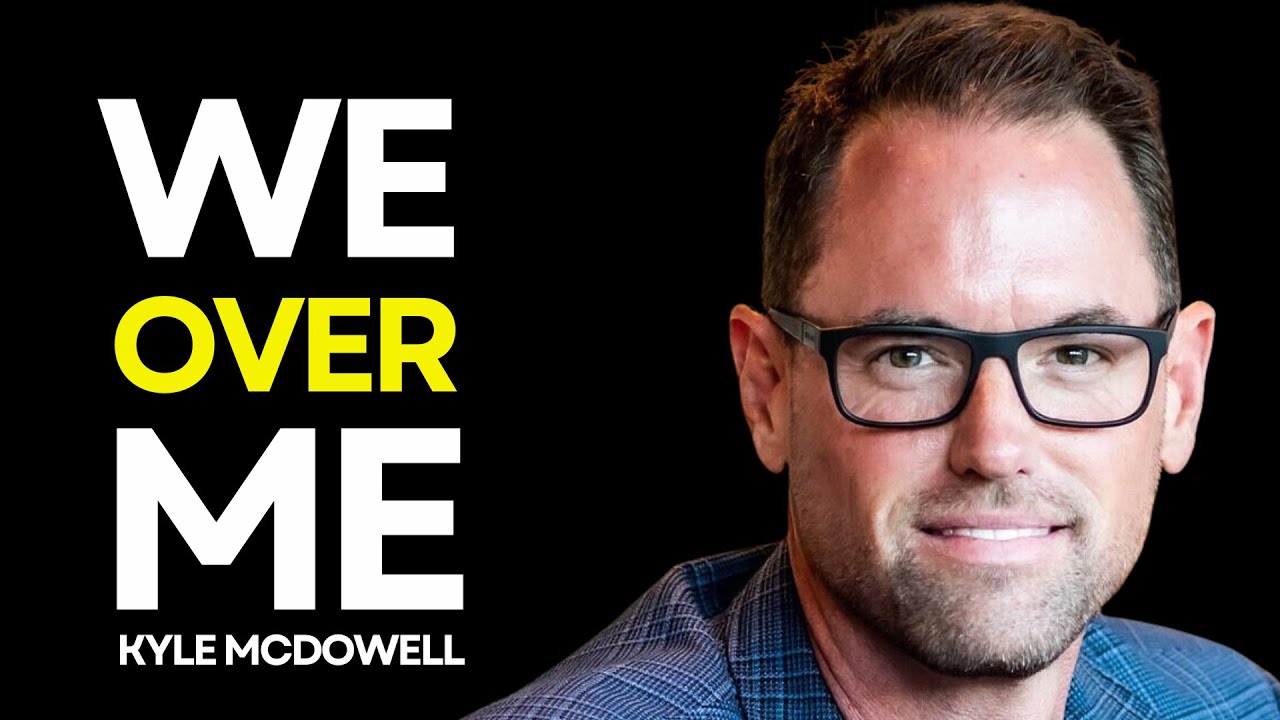
Kyle McDowell left a 30-year Fortune-10 career overseeing 15,000 employees and a $2 billion budget to teach principle-based leadership. His 10 "We" principles replace me-centric workplace culture with shared values, public accountability, and continuous iteration.
Chapters
There's a better way to not just exist and survive inside of the corporate world, but also thrive and, and have a sense of fulfillment and passion.
Yeah.
When I called it a day, I had more than 15,000 employees. I had an operating budget of north of $2 billion. What are the things that you stand for? What are your non-negotiables? How do you wanna be known externally? What do you want your leadership legacy to be? Now, I think it's for anyone, uh, who wants to level up their, their existence, have a greater impact, ideally in their personal lives, but also in their professional lives as well. Those experiences in up in the culmination of me writing a book, which ultimately became a USA Today and Wall Street Journal bestseller. The book is Begin with We. It's really about the concept of we and being less I and me focused and the benefits that come when we consider everything and everyone around us as we live and operate day to day.
Kyle McDowell, welcome to the Book Thinkers Life-Changing Books Podcast. How are you feeling today?
Hey, man, I'm doing well. Doing really well. Thanks for having me, Nick. Great to be here.
Yeah, we are excited for today's conversation. For those in the audience that are not familiar with you, I'd love to have you introduce yourself. Tell everybody a little bit about who you are, how you came to be on this podcast, a little bit about your book. Let's start there.
Yeah. So, I recently wrapped up a nearly 30-year journey inside of big, big corporate America. Really proud of the results that I was able to deliver. By most accounts, I was wildly successful. For some context, when I called it a day, I had more than 15,000 employees. I had an operating budget of north of $2 billion, and I was really always kind of a student of corporate culture. But that journey, although wildly successful, as I mentioned, also was filled with bits and pieces and months at a time where I just was not a very happy person. The corporate life, just like so many of your listeners and viewers, I'm sure, would agree. That it just kind of sucked the energy out of me. Well, when I had the opportunity to step away in 2020, I was committed to spreading the word that there's a better way. There's a better way to not just exist and survive inside of the corporate world, but also thrive and have a sense of fulfillment and passion that I think so many of us entered the workforce with. But over time, we lose it. And I think there's a variety of reasons for that. But I was very fortunate the last handful of years of my career. to stumble across something that I now know to be principle-based leadership. It compelled me to create my own guiding and leadership principles that I led massive organizations with really, really big, big success and lots of cultural transformation was a theme throughout that last handful of years. And all of that exercise and those experiences ended up in the culmination of me writing a book, which ultimately became a USA Today and Wall Street Journal bestseller. The book is Begin with WE. And I've been a fan of yours and your podcast for a while. So, I'm just— it's a great moment for me to be here. I'm excited.
Yeah. Well, we're excited to have you. I'll ask one more kind of intro question and then we'll get into it. So, who is the target reader for this book and what's the expected outcome that somebody might be able to receive if they choose to read it?
Yeah. You know, it's interesting. If you had asked me that question before the book was released, I'd give you a different answer than I'm giving now because I've learned a lot since the book was released and the feedback that I'm getting has kind of opened my eyes to a wider So, the prototype consumer of my book is someone that is really interested in being a better leader. They want to resonate more strongly and have a greater impact on those around them. They want to reinstate the passion and fulfillment and purpose that they had probably many, many years ago. But what I've learned since the book came out was the principles, the 10 We's that are the foundation of the book, they also serve as life principles. So, I've heard time and time again since the book came out. That living the principles in the workplace wasn't enough for most. It also translates— those principles also translated to their personal lives. And I've even had strangers reach out to me to say it's changed how they raise their families and treat their loved ones. So, initially, it was just for leaders inside the corporate space, but now I think it's for anyone who wants to level up their existence, have a greater impact, ideally in their personal lives, but also in their professional lives as well. But literally, the entire theme is really about the concept of we and being less I and me focused and the benefits that come when we consider everything and everyone around us as we live and operate day to day.
Could you explain a little bit to our listeners about how this me-orientated, like this paradigm in America that's going on right now, that's very me-focused, is negatively impacting our culture on the whole? Sure.
Yeah. You know, I think there's no way to have this conversation without touching on the impact that social media has had. You know, for the last handful of years, if not decade plus, people have been given platforms to express anything really. So those things that are negative, those things that are whatever that's in their thought or in their brain for that day, there's now these platforms exist to share that message a lot wider than ever before. And that subliminally told consumers of these products, those on these platforms, that their voice It needed to be heard and it was an obligation of them to have their voice out there, their opinions be heard. Well, that is great. And I think that creates all kinds of opportunity for creativity and new opportunities as far as the eye can see. But what was not prepared or who was not prepared for this was the corporate world. So, you know, so many times we're encouraged to be creative and be unique and be ourselves outside of the workplace. But the moment we step inside the workplace, most organizations do not embrace that type of diversity, the uniqueness that makes you, you. So, as a result, that me orientation that has flourished so dramatically outside of the workforce has slowly permeated into the workforce, making all of us so kind of maniacally focused on me and my results, my next raise, my next promotion, sometimes at the behest of those around me. There's this concept in the book I talk about a lot. It's like there's no one— there's no rule that says someone must lose for others to win. And I think so many people now enter the workforce with that I focus, and they focus solely on their success and their accomplishments. But what they're really missing out is on the connections that you make with those around you. And the results come so much more easily when you're connected with those that you work with.
Yeah, I find it so interesting because You know, I've been in the corporate world before and did not work out for me very well because I think that's the paradigm I had such a hard time with, which was everyone seemed to be so focused on themselves. And I was trying to say, look, there's a bigger picture here. There's more people involved than just you. And I think it's so sad that we've gotten to this point where everyone is so me-focused. But like you've already talked about, if you Just switch it up just a little bit and start focusing on other people, big things open up. So, how can someone that's in the corporate world start to focus on others when others aren't focused on them?
That's a great question. So, look, I'll be the first to admit, the first 20, 23 years of my career, I was really focused on Kyle. I was focused on the next promotion, the bigger job, more people on my team. Obviously, greater and greater compensation. That was always the focus. But it wasn't until I had an opportunity to lead an organization and had almost complete autonomy in setting the temperature. Another way of saying that is establishing the culture within the organization. And the way I did it, and this kind of the— it was the seeds of what ultimately became to be the book, is declaring the principles loud and clear for everyone around. So, the night before I was to meet with the first or the top 50 or 60 leaders of my organization, I think it might have been than 40 or 50, actually. The night before, I was in my hotel room working on a PowerPoint to kind of try to communicate to that team what it is that they could expect from me because I felt very strongly that if I was going to lead in a way that I had never been led and lead an organization in a way that I had never seen it be led, again, taking on 15,000 people in a $7 billion program, I needed to be really overt. So, I crafted these statements and with no planning, After about 2 hours of work in the hotel room that night, I had 10 sentences in front of me. They each began with the word we. And I'm not super creative, so I had the 10 we's. And the beauty wasn't necessarily in the principles. The beauty in principle-based leadership and the success that I've found and the way I would encourage anyone to begin their journey in a similar fashion is to document those principles. What are the things that you stand for? What are your non-negotiables? How do you want to be known? externally? What do you want your leadership legacy to be? And when I say leadership, it doesn't necessarily mean that I have a big team of direct reports or that I run some huge company. There are a lot of leaders in the world with no fancy titles and they have huge followership. So, the point here is determine what it is that you want to be known for and how you want to operate your non-negotiables. Share them wide, share them loud, and be very conspicuous about them. And what I found to happen is when you do that and you get buy-in from people, especially when the principles are easy to get behind, and I think the 10 We's are incredibly easy to get behind, when you create this momentum, you also create this magnetism and others will follow because no one wants to be accused of not following a series of principles that are all designed to make us all better. Because look, man, Luke, at the end of the day, by definition, a principle is a fundamental truth. It's something that we hold to be true or our system of beliefs. And once you get a team of people, I don't care if it's sports, I don't care if it's the corporate world, I don't care if it's a chess club. If once you get a team aligned around these principles very, very conspicuously, it's much easier in the day-to-day. It's easier when you face difficult times. It's much more easier and more fun when you face the good times because everyone's aligned around the same approach and there's no ambiguity where we stand.
So you said you came up with these 10 principles in a hotel room. Was like, what led up to like, what were you thinking at the time? Was it just all the years of work in corporate America that got you to this point where you're like, okay, these are the 10 principles and this is it? Because I feel like, you know, reading through them, they just seem so obvious, right? They seem after reading through them, it's like, oh yeah, oh yeah, oh yeah, that makes sense. That makes sense. But how did you get it down to 10? Like, what was the whole thought process? Was it just like a muse and— Just that you channeled or what was it?
Man, I should be so lucky. It was nothing that sexy, actually. As I mentioned, the first 20-ish years of my career, I was in enormous organizations. I led thousands of people inside of multiple Fortune 10 organizations. And I noticed over time that the very people I looked up to and held in a high regard were some of the most duplicitous and toxic people. that you could be around. You'd be in one meeting and hear a story, and you'd be in another meeting later the same day, and that same person would be telling the opposite side of that story. And it grew to a point where I became really apathetic towards the environments that I was actually helping create. So, when I made the move to this organization where I ultimately created the 10 Whys, it was very clear to me. It was shared early on that there were There were cultural challenges. I think toxic might be a little bit of a strong word, but it wasn't super healthy. And it was clear to me that there needed to be some change. But I also knew that if I wanted the same old results that I had always seen, I should lead the same exact way. And that's kind of the definition of insanity. I wanted different results and I wanted to create a legitimate, authentic team that would be its very best, better than they even thought they could be themselves. So, when I had this meeting pulled together with those top 40 or 50 leaders that night before, I knew I had to communicate a message that would resonate. You know, I wish I could tell you there was some grand vision and I would come out with something that would ultimately fuel a book, but that's not what it was. It was just 10 sentences in about 2 hours. The next morning, I gave that presentation. It was entirely in black and white because, Luke, what you point out is so obvious. It's so obvious that people miss it, I think, is when you establish principles, they don't have to be rocket science. It doesn't have to be some type of really complex algebra. They just need to be clear and concise, and they have to be kind of crafted in a way that members of the team find them irrefutable, right? So if you have a series of principles that people cannot relate to, it's going to be hard to live those every day. It's going to be hard to hold someone accountable. And I think the other thing that made this so powerful for this group early on and then for so many other for several years after is I was open about changing them. I was open about creating more or taking some away. But what I was not open about was that we were not going to operate by a series of guiding principles to which we all agreed. So being really conspicuous about it, I think, played a huge role. Now, ultimately, The principles came to be much more important to me in my personal life than I ever expected because they created this kind of series of rules that I knew I had to hold myself accountable to inside the workforce. But then I realized when I'm home or out with friends and I didn't live by any one of these principles, I felt like a hypocrite, which I think has led to some of the transition, some of the words that I've heard from strangers now who are applying the same principles to their personal lives. It's been a journey and it's something that I'm really, really proud of, the results that we've been able to deliver since I created them. And now, they're just fuel. They fuel me every day now.
So, Kyle, you mentioned to us that you are a speaker, and I'm curious, when you're working with companies to talk to their executive teams or the entire workforce about these principles, is this something that you find big companies are already aware they have an issue with, or are you having to sell them the fact that their culture is broken?
Oh, wow. So, they're a great question, Nick. There are 2 camps that typically reach out to me. There's the camp that recognizes that they have a problem and are genuinely focused on fixing the problem or addressing it. I like to say addressing versus fixing because it's never fixed. You know, cultural transformations and leading a culture of excellence is an ongoing project. There's always something to be done. We can always get better. The second camp is the group of leaders or executives that recognize they have a problem and they want to check the box, hire a speaker with the bestseller, come in, give a speech, rah-rah, everybody's excited, and then you return to the same old, same old the following day. And that's the group that I typically try to avoid. I've turned down speaking opportunities with those types of folks because the last thing I want to be is connected to a series of words on a wall that no one can recite. It reminds me of a mission statement. So, I do this test in a lot of my talks. By a show of hands, who in the room can recite your company's mission statement? Very, very senior people at very big organizations cannot recite their own company's mission statement. They're worthless. They're great for external constituents. They're not good for me. They're not good for anyone inside the company. They don't compel someone to behave any differently. So those are the 2 camps that I find myself interacting with the most. Obviously, the first of the 2, much more exciting, and I get much more energized to do business with them. But what the biggest challenge is out of all of this is, you know, you can have somebody come in and talk the talk, but someone has to live it thereafter, right? The leaders of the organization have to carry that message forward. And I'm always very clear to share, you don't have to use the 10 Whys. You don't have to use my principles, but you really should think long and hard about what your principles are, the rules of the road, and how you would like each other to be treated internally, and then how you treat those externally, those you serve. But you got to align it around something. that ambiguity of who we are, what we stand for, it's just, it's the recipe for mediocrity.
Luke unmuted himself for a second, which is our sign that he's up. But I have one follow-up question first. I'm hogging the mic. Kyle, I'm gonna toot your horn a little bit here. You're obviously very well-spoken. You are a public speaker. You get paid a lot of money to speak to big companies. So I'm curious, how have you improved your ability to articulate yourself and how have you minimized Any fear or anxiety that you might feel when you step on stage? Because that's something that I've dealt with for a long time, and I know part of it's repetition, but I have an event coming up soon, as you know, and I'm going to be up on stage a little bit. So, I'd love any tips that you might have.
Yeah. So, for me, it's a constant battle. I'm not going to lie to you, Nick. There are times where I'm terrified before I go on stage. There are times where it just flows like water. It just comes like breathing to me. And I found the way that I kind of get around those nerves and put myself in a position to be my very best is I go deep inside on the content because the content for me, it's not manufactured, not playing a part. This is not academic or theoretical or even hypothetical. These are the principles that have changed my life and they've changed the lives of other people. And that's not me just saying it. They tell me so. So, I feel like when you're really connected to the message and you're being true to yourself, True to what you're communicating, the reason why you're doing it, it becomes less about public speaking and more about, man, I have something I need to tell you guys. I have something you should probably know. I think we'll both benefit if you know what I'm about to share. So, I think being connected to the message and authentic about the message is what really— it kind of calms my nerves in some of those more tense scenarios.
I love that. All right. The first part of my question too, because I asked a 2-part question. Which confuses me sometimes. But I'm curious also, like, what have you done to improve your ability to articulate yourself? Is it just study the content, or what do you do to remove verbal pauses and articulate with confidence? I mean, any tips there for us?
You know, I try not to take the approach that I am on stage. I take the approach as if I'm in someone's living room or maybe a restaurant. I'm surrounded by people that I care about and they care about me, which makes me be a lot more natural. It allows me to be me. And as I mentioned earlier in the conversation, the one word that I never want to be associated with is hypocrisy. I don't want to be viewed as someone that walks a certain way but talks a different way. So whether I'm in a personal setting, a private setting, on stage giving a speech, it's easier for me just to talk about something I'm passionate about and something that I care about. But also reading the room matters a lot too, right? I gave a talk recently in California for a school district. And I have to tell you, the first 30 minutes or so, I didn't think it was going very well. As a matter of fact, as I got towards the end of the presentation, which was about 60, 65 minutes, I thought it might have been my first bomb. I thought I might have really stumbled, so much so that I was concerned because I always put this clause in my contracts that if your team is not entirely moved by this presentation and by the conversation, I will give you 100% of the fees back. I do that every time, and I've never had anybody take me up on it. But this was the one time I thought, I might be in trouble. It just turns out that I read the room wrong, and I didn't know it until I got into Q&A. So there were no— I didn't have any awkward pauses. I felt like my delivery was solid. I just felt like the message wasn't resonating. I got to Q&A, and I learned that the group that I was speaking with had been dealing with some tremendous toxicity. They were afraid to even talk about the things that were driving the toxicity because they knew the other leaders in the room would be kind of put on stage or put on blast, for lack of a better expression. So, they sat on their hands and they appeared emotionless while I was presenting, although they were deeply touched. And I know that because I do this. It's a practice I do after every talk is the 1 or 2 or 3 people that typically were involved in hiring me and bringing me up to the event or to their company. I get one-on-one time with them afterwards and I say, just tell me, how'd it go? You think it resonated with your team? What could I have done differently? Because I always want to get better. What would you have liked to have seen that you didn't see? Did I go too far on this topic? So I'm just very open and transparent about that feedback because I think the moment that I realize or think that I've got this whole thing licked, including the principles that I evangelize so strongly, I'm going to get lapped. I'm going to get passed. And I didn't get to the position I'm in today by being passive. So I've got to— I got to continue to get better. And I take that feedback seriously.
How can someone who is in a position like that to where they can't— they feel like they can't even speak up about their leadership team, like how can they start to make changes in their environment without causing trouble or without causing them to lose their job?
Yeah, that's the big question, man. And there's really no easy answer for that because if the toxicity is so ingrained in the organization or the dysfunction is so ingrained, even the most senior leaders will have a hard time changing that trajectory. And unfortunately, and ultimately, I would encourage any of your listeners or your viewers that if they're in that scenario, they've got to look themselves in the mirror and ask, is the paycheck I'm getting worth what I'm giving up? And that giving up could be any number of things. It could be time with your family. It could be your mental health. It could be your sense of well-being. It could be your shrinking sense of contribution to the organization. If the money is good enough or it's such that it compels you to continue doing that and these things take a backseat, You know, I can't blame someone for staying in that scenario, but I think what's the ultimate decision that we have to ask and make— be very clear about, rather, is what else can I do? What am I not doing that I could take somewhere else and be better, have a greater impact, be better for myself, be better for my family and those around? So, Luke, that's a long way of saying it's very personal for the individual. It's personal for the organization. I would not be naive enough to try to tell anybody that they can change years or undo years of toxicity inside of an organization, you have to make that personal decision. Is this something that I'm willing to put up with, maybe make a little bit of change over time? Because momentum can be a very big thing on these— on this topic. Or am I better off taking my talent somewhere else where I can have an impact much, much more easily? Because those organizations do exist. There are leaders that do value the input of their employees. There are leaders that recognize they must have a strong team around them to be successful. There are leaders that want people to be better than they were yesterday. The challenge is to find that group of leaders, those types of organizations, and kind of connect yourself in that manner.
Or possibly, you know, get you hired and you can start speaking about it so they don't have to speak about it and then change can happen.
Yeah, yeah. That's very kind of you to say. But I will add this though. You know, there's this— I talk about this a lot actually on stage and I mentioned it in the book. In most organizations, especially in the bigger ones, there's this faction of people that they sit in a special corner of the building. Sometimes they're in their own building on their own, and it's the group that everyone waits for when they're trying to make a big decision, or it's the group that everyone waits for when they're looking for permission to do something. And this nameless, faceless group that we're talking about is called leadership. It's called management. And they wait for leadership to make a decision or they wait for management to drive the next big change. And the encouragement I like to pass along is if you're waiting for either of those groups, they may never come. So, if you're waiting for change to take place, don't count on it coming from some group that you can't even put a real first name to. So, you have an opportunity to— at that point, you must resign yourself to the way it is will always be the way that it is, or you might be able to start change. You could be the one that creates a new environment, a new energy, A new vibe inside of your team. And I'll tell you, man, if you're inside of a team of 10 people and you've got, let's say you're an organization of 1,000 or even several hundred. But if you're inside of a team of 10 people and that team starts to become incredibly high functioning, delivers great results, they have each other's back, that is not unnoticed by the rest of the organization. And what's really not unnoticed is the leader of that team. So, you'll have other leaders in different pockets of the company go, man, What's going on in Luke's group? Luke's attrition is down to nothing. He's got people dying to join that team. What is Luke doing? And you'll start to see momentum gather and it's like a snowball, man. And at some point, ultimately, you'll be the toxic leader, the one who doesn't subscribe to the principles that we've evangelized within the company. That toxic leader is now an outcast. That person will have to either get on board or get out, but it must start with somebody. Just don't wait for leadership or management to be that somebody.
Kyle, what it sounds like you're talking about right now is we number 4, we take action.
Yes, sir.
And I've been working on my personal brand to steal the spotlight for a second, and I'm realizing that my special sauce is taking action. It's reading these books and translating what I've read into actual real-life results by taking action. And so, I'd love to have you talk a little bit more about Taking action because I do feel like a lot of people listening today are either part of a leadership group or they're an employee that wants to lead up the chain. And it sounds like action is probably the solution.
Would you agree?
Absolutely, Nick. I mean, inaction is like a plague inside of an organization. And what I mean by that is there are things inside of almost every company that everyone knows is broken. Or we hear from a consumer who had a really bad experience because one of our behind-the-scenes processes is broken. Those are rampant in almost every organization. But what is lacking is someone saying, no more. I know that problem in the corner over there. I know it's been there a long, long time, but I'm not going to turn my cheek to it. I'm not going to say, not my job. I'm going to be the one to fix that. And you can take that approach for any number of reasons. But I think the strongest reason or most compelling reason is if you take that task on and you fix that, And the employee experience is improved because of the effort that you made. I mean, look, I always say the leader's job really boils down to 2 things. One is identifying and removing as many barriers that stand in the way of your team being excellent. That's number one. And then number 2 is to inspire the team to deliver in spite of the barriers you weren't able to remove because you can't take everything out of the system. There's always going to be challenges, right? So, taking action says, Basically, the cliché of see something, do something. Man, I remember many, many years ago, I was inside of a call center, and this story has been replayed over and over again. I lived it multiple times. I always made it a habit to get to connect with the frontline people of my organization. And when you're dealing with or leading an organization of 15,000, 14,000 people, you know, you have a lot of ground to cover. So, every single month, I would go to a different location, and I would make it a point to sit with all layers. of the organization, because deeper down in the organization, those on the front line, those that typically interact with the consumers, they have the best solutions, they have the best suggestions. So that's where you have to go to mine, mine the gold. And nearly every time I would sit with— this is in a call center environment— every time I would sit with a call center rep, an entry-level call center rep, they'd be flying through their screens trying to solve the problem of whoever was calling. And invariably, they would, they would bounce from one screen to the next and they would move so quickly. And I would just ask, why did you do this? Why did you go here? Why did you go there? And almost every time, Nick, the person would say, in some shape or form would say, well, I mean, they tell us to do it this way, but I actually have found doing it this way is so much faster, right? That is a recipe for improvement that must be seized. But the problem is, is we get so mired in the way we've always done it. You know, the worst thing anyone could ever say, this is the way we've always done it, and we overlook those opportunities to get better. And that's why taking action is so important in us improving our progress. Otherwise, we're going to get lapped by those that come around. I mean, there's disruptors in every industry, but when they recognize what you're not doing, they will do that and then they'll replace you.
I love that. It's so much easier said than done, but just do it.
Just do it. Just do it.
Yeah.
Man, we get lost a lot of times in those thoughts, you know, the thinking about it, thinking about it, and then we just refuse to take action. But sorry, didn't mean to interrupt.
Well, no, not at all. I was just going to add, Luke, and that's the reason why the next we is what it is. So, right after we take action is we own our mistakes. And I think, as you say, easy to say, tough to do. And the reason for that is in most organizations or a lot of environments, when you raise your hand to point out something's broken or you stick your neck out to fix something that's broken or something that could be optimized and you stumble and it doesn't go well, you get your wrist slapped and worse, you get fired, right? So in most organizations, there's very little incentive to raise my hand, take on something that's You know, typically the status quo, because there's more downside than upside. So it was important that the very next we be, we own our mistakes. Because when I— if I want my team to take action, I have to be okay and be ready to accept mistakes. And then I've got to ask the team to own them. Because again, if you stick your neck out to try to fix something and you stumble, but you don't share it with anybody, you don't ask for help, you don't call in reinforcements, What have we learned? We're no better. You might be a little bit better because you learned what not to do, but the team is not any better. So the key here is to create an environment where people are open to being vulnerable about the mistakes that they've made. They raise their hand, they ask for help, they get the help, we get better as a result, and we move forward.
I know we're kind of running a little bit short on time here. So, Nick, do you have any other questions? I have 2 more I can ask.
Well, I wanted to ask if people are interested in having you speak at their next event or to their corporate team? What does that process look like? Who can reach out? Where should they reach out?
Yeah. So I'm on every social channel with the same handle, @KyleMcDowellInc. My website is Kyle McDowell Inc. And you can put an inquiry through the website or through any social channel. My team will take a look. We'd love to hear from you. I mean, this is truly where I get my energy and I think it's where the most impact I can make. You know, I've taken this, the task on to write the book. And ultimately, this has become my purpose. I've given speeches for groups of 10, a group of 10 up to over 400 and everywhere in between. So, I would love to hear from anyone who thinks that they have an opportunity to lead better or they want to get nothing else other than more fulfillment out of what they do.
Kyle, do you have any upsells related to that? Do you— have you developed a workshop that you can bring people through that takes multiple days or an online course or anything like that?
Yeah. So nothing online yet. So we're— that's in development. We're working on that. But I do have a 4-hour Begin with We workshop. So it takes the principles that are outlined in the book and we go much deeper into each of the principles, talking about the benefits of adopting them, some of the pitfalls that you might encounter when you're deploying them or trying to, to, to kind of infuse them into your organization. That's a very powerful workshop. It's for anyone who has a team of direct reports or higher. I've done it for managers all the way up to C-suite.
Wow.
So, that's the follow-on and I'm happy to engage in those. I think typically where I've found the most benefit is I'll come in, deliver a speech, the energy is high and folks, the message resonates with them. And then we very quickly follow up with the 4-hour workshop thereafter.
Yeah. Oh, it sounds great. No, I appreciate you highlighting that because like I said, I feel like there are plenty of people in today's audience that are like, man, my management team could use this guy. Yeah.
And that's kind of the thing I've tried to live is be the leader that I never had. Or be the leader that I've always wanted. And I think that starts with a choice. And for me, it was a very profound choice in my leadership journey.
Yeah, we definitely, we can see that through and through. You know, we had the privilege to work with you a little bit. And let me tell you something. My privilege. You literally, you're living these principles out every day and we can see it. So, doing great.
The greatest compliment I could hear, Luke. Thank you for that. It's been a blast getting to know you guys and doing some work with you. Look forward to doing some more in the future as well.
Alright. I have one more question that I'm gonna ask you. I always end the podcast with this one, and that is, if you pass away and all the information that you have put out there, your books, your courses, podcast episodes, everything that you put out disappears, but you can leave the world with one single piece of advice, what would it be?
Be you. Be authentically you. And I think that's kind of discouraged in a lot of environments, especially the higher you get inside the corporate world, is they try to filter who you are. They want you to be something you're not. They want you to speak a certain way, dress a certain way. And I think all of that suppresses who we really are. We lose our individuality. We lose the diverse perspectives that we bring to the table when we water down who we truly are. So be authentically you. Embrace what comes with that. You'll have opportunities to behave differently. You might get some criticism here and there, but be you, because no matter what, you can always lean back on that. I wasn't fake. Wasn't duplicitous. I was the guy that I always portrayed and the guy that I always wanted to be portrayed as was the same.
All right, Kyle, thanks so much for being on our podcast today. Where can people go to find out more about you and learn about what you do?
So all social media platforms, you can find me @KyleMcDowellInc. Also, my website is KyleMcDowellInc.com. And I have to tell you, Luke, I love hearing from my followers. If you want to hit me with any questions or maybe, maybe current situations that you're dealing with, maybe you have a toxic leader of your own or you're trying to get over counseling someone on your team that's, that's a toxic contributor or lack thereof. Man, I promise I respond to every single direct message. I would love to hear from you and how these principles have had an impact on your life.
Perfect. Thank you so much. Appreciate it.
Yep, you bet.
More from Nick

Napoleon Hill’s “Think and Grow Rich” is a timeless classic #selfhelp #personaldevelopment

4 Books to Help You Get Better at Decision Making #selfhelpbooks #bookrecs #nonfictionbooks


Have you read this book yet? 📖: The 5AM Club by Robin Sharma #selfhelpbooks #robinsharma

Dan Sullivan on Listening to Your Customers Instead of Watching Your Competitors

5 Books That Will Boost Your Financial Intelligence #financialfreedom #nonfictionbooks

The People That Preach the Loudest About Virtue are Usually the Most Power Hungry



Books are the greatest mentors you can find #selfhelpbooks #businessbooks #successmindset

Let’s fight this toxic instant gratification culture together 📖 #selfhelpbooks #jimkwik