Hustle Culture is over. VALUE Culture is in with Maha Abouelenein
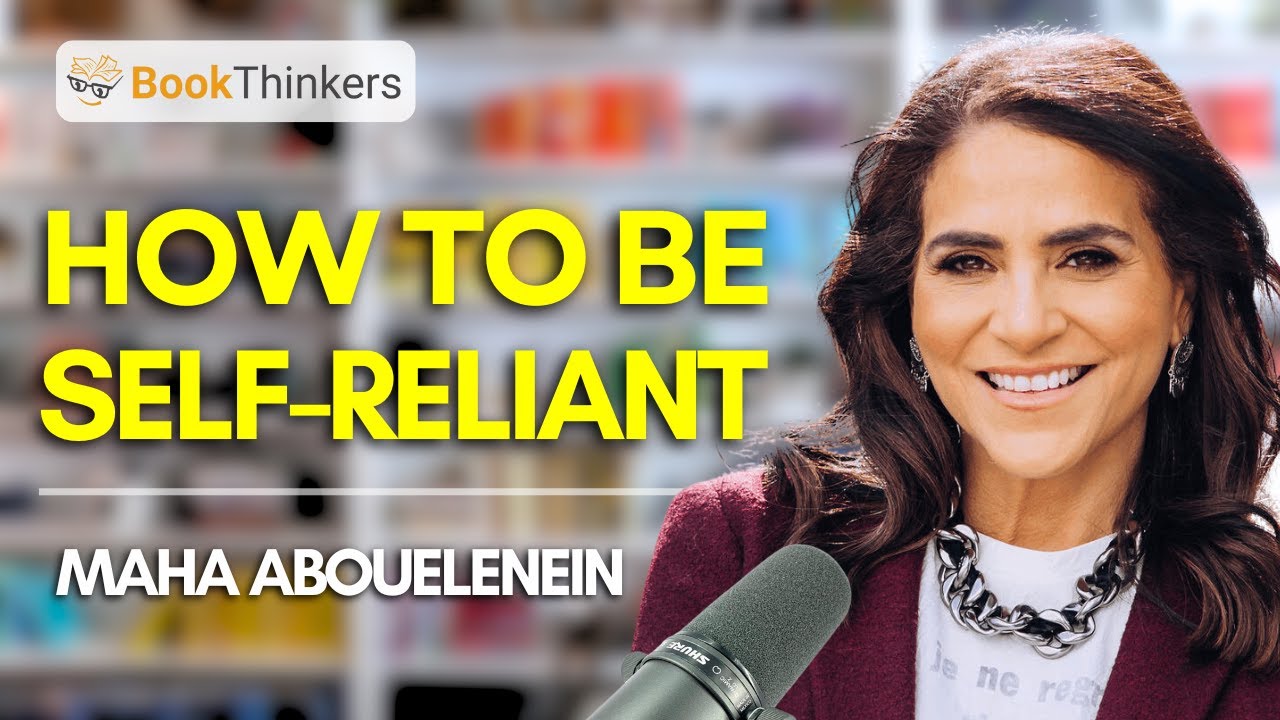
In this episode of the Book Thinkers Life‑Changing Books Podcast, host Nick Hutchison interviews Maha Abouelenein about her new book 7 Rules of Self‑Reliance. The conversation weaves through Maha’s personal journey—from discovering Gary Vaynerchuk’s Crush It! in a Barnes & Noble, to working with top brands like Google, Netflix, Coca‑Cola and the ruler of Dubai—illustrating how a single book can pivot a career. Maha reframes the concept of a personal brand as a reputation that functions like currency, emphasizing that reputation drives talent acquisition, investment, and career advancement. She outlines the book’s core principles: creating value for others, being a long‑term player, building authentic networks across social platforms, shifting from hustle‑culture’s burnout‑prone sprint to a sustainable value‑culture, and taking deliberate first steps through authenticity, purpose, and self‑trust. The interview delves into cultural contrasts between transactional U.S. business and relationship‑focused Middle‑East practices, practical daily routines (early wake‑up, exercise, “no‑meeting Wednesdays”), mindfulness habits, and the importance of reading and continuous learning. Maha shares concrete book‑marketing tactics—co‑hosting community workshops that require pre‑order purchases—and highlights additional resources that shape her mindset (Essentialism, Limitless, Burn the Boats). The episode closes with a personal narrative about her parents’ illnesses, the power of storytelling, and a call‑to‑action for listeners to buy the book on Amazon, join her Instagram community, and participate in free masterclasses.
Chapters
And I frame it in a way of think of your reputation as a currency. So, a lot of people think personal brand. I'm not a social media influencer, Maha. I'm not a company. I don't need to be a brand. Take out the word personal brand and replace it with the word reputation. Don't you want to care about your reputation? Don't you want to think about your reputation? What's its worth? What's its value? How can you increase it? So, treat it like a currency. And when you think about your reputation, it's how you show up in the world. If you are an entrepreneur, you have to have a good reputation if you want to acquire the right talent, if you want to get an investor, if you want to get the best suppliers and partners to work for you. And if you work at a company, your reputation is even more important. Otherwise, you won't get that project. You won't get that promotion. You know, are you a problem solver? Are you a team player? Are you a builder? Are you a listener? Are you resourceful? All of that makes up your reputation. And in today's day and age, You can't go around life without thinking about what's my reputation because it is your currency.
Aha. Welcome to the Book Thinkers Life-Changing Books Podcast. We are here to talk about your brand new book. But first, I'd actually like to hold up a different book and I'd like to have you react to it. This is one of the first books that I ever read. And I know it's had an impact on you as well. So, tell us a story. How did you end up reading this book, Crush It! by Gary Vaynerchuk?
Yeah. The reason— by reading that book, that's how I met Gary and how I have been working with him for about 8 years now. So, I was living in Dubai. It's 2016, 2017. I've been living in Dubai for a while. And I come home to Minnesota every single summer. So, I'm born and raised in Minnesota. I spend my summers here religiously. Like, I've been living overseas for 23 years, but every summer I come home to Minnesota. And I was at the Barnes& Noble next to my house and my friend texted me from Dubai. And I said, she's like, what are you doing? I'm like, I'm actually at the bookstore looking for a book to read. What do you think I should get? And she's like, you should get this book by Gary Vee called Crush It. And I'm like, Gary Vaynerchuk? I've never heard of him before. And she's like, get this book. And it's a very small book. It's a quick read. And it's all about if you're passionate about something, build your personal brand around that. And everybody should think of themselves as a personal brand because they have unique skills and talents to share with the world. And after I read that book, I was like, hmm, I am a personal brand. I work for Google. I work for Netflix. I worked in the office of the ruler of Dubai. I worked for these incredible companies, Coca-Cola, MasterCard, P&G. Maybe I should start to share with people my playbook of what did I learn working for all these companies. And I was the communications counselor for them. What can— what did I teach Google that may be applicable to other people to learn from? And so, that's kind of how I got started. I started following Gary. Months after starting following him, I found a way to meet him. And that's where the story unfolds from there. We— I spent about a year and a half getting to know each other and I've been working with him ever since.
You know what that highlights for me? It shows me that the right book at the right time can permanently change somebody's life. It can expose you to different perspectives. It can introduce you to people. It could change your career trajectory in a lot of ways. And so, what do you hope that your brand new book is going to do for people? Do you think it could have a similar impact?
Well, first of all, I hope so. The, the book 7 Rules of Self-Reliance is not about what I do in communications. It's about how I do it. It's about how anyone listening to this podcast can do this. How to create value for other people. How to be a long-term player. How to build your own network so you have your own contacts and relationships. How do you do networking through social media, through DMs, through Instagram, through LinkedIn, through Zooms? How do you build your personal brand and show up in the world and build your reputation? How do you become a lifelong learner and how can you learn in today's environment? And how can you go from being a waiter to being a creator instead of expecting people to do things for you or bring opportunities to you? You can go out and knock on their doors and get those yourself.
Yeah, I read in the introduction to your book, you said Goldman Sachs estimates the creator economy will reach $480 billion by 2027. And so I think Gary would agree that today there's no excuse. If you have a preexisting passion and you want to build a brand around it and yourself, there is so much opportunity for people to go out and do that. But there's also a lot of self-doubt, right? People aren't necessarily born self-reliant. So what will your book do for them? Will it change their perspective? Will it give them actions? What's, what's sort of your perspective there?
So I've given some advanced copies to some people, some to read, and I can tell you what they told me this book has already done for them. One is it's giving them the confidence to trust themselves, right? Nobody's going to put you at the top of your priority list but you. So what are the things that you should be doing to make better decisions for yourself? How can you trust yourself more? How can you think about the things that you want to achieve in your life. And a lot of times, we're waiting for the manager that's going to give us the project that makes us a rock star, or we're waiting for an opportunity to come in our way. This book teaches you in these 7 rules, what are the skills in the playbook you need in today's world to operate and to advance and to be successful, not just at work, but your personal life too.
How do you— now, this question might be a little off topic because I don't think it's addressed directly in the book, but I'm curious. There are so many people out here listening to the show. They're interested in the world of nonfiction, personal development, business. They've heard, okay, personal branding, I need to go out there and align my passion and my purpose with my business. But they just have a tough time getting started. Like, how do you get off the couch? How do you take the first step? What advice do you have for that type of person?
So, the first step is always the hardest, but mostly, it's us getting in our own way, right? We are kind of overthinking it in our head. Nobody's judging ourselves as much. Nobody's judging you as much as you're judging yourself. Yourself. So, the first step you should take is think about what are you curious about? What are you curious about learning? Or if you want to build your personal brand, how is one way you can do that? So, I always talk about 3 things when I talk about personal brand. You have to think about how you can be authentic. You want to be yourself. You don't want to have to fake it till you make it because you need to be able to be consistent. What can you do consistently? Do you like to write? Then, you maybe should be a blogger. Do you like to do audio? Do you like podcasts? Do you want to Go meet people in person. It doesn't have to be online. So, what can you do consistently that you can show up and do on a regular basis? And then, the third thing is what's your purpose? Like trying to figure out what is it that I want to be known for? What is it that I'm currently known for? And you know what, Nick? The easiest way to find out is to ask people. Just ask your friends. Ask your family. Maybe put up a story on socials like, hey, what kind of things would you like to learn from me or see from me? Is it even in my case, is it Like entrepreneurship content? Is it leadership content? Is it comms training? Is it personal brand content? So the easiest way to find out what your audience wants is to just simply ask them.
Yeah, I think that's amazing advice. Funny enough, last night I was playing basketball, same group of guys every week for the last few years, and one of them was telling me about this side hustle that he's starting to build where he, he builds these sort of intricate shelving systems for garages, and he's super passionate about it. It's like Woodworking plus utility. And he was saying he's having a really tough time getting that process started. And so, I think that what you just said, I'll clip it, I'll send it to him, I'll buy him a copy of the book because it's great advice. Like, you just need to get that process rolling and collect feedback and step into your purpose. And we're all capable. Today with Ken Rusk, who has done hundreds of millions of dollars in business. He's also sold tens of thousands of books and changed countless lives. We're sitting here today because he is sponsoring today's episode. So Ken, tell everybody about your course. Well, thank you. I built a course called The Path to a Successful Life. It's designed around trying to get somebody unstuck. You know, sometimes you're feeling like you're kind of stuck in where you are and you're not really sure what you want your life to look like or how to go about getting it. Well, for the cost of about dinner and a movie and maybe the time you'd spend on a weekend, you can know exactly what you want your future to look like and how to go about getting it. You know the power of vision. That's why you watch podcasts like this. So So, click the link below, get signed up, and let me know what your experience is like.
So, the largest chapter in the book is the book— the chapter that talks about how to build your personal brand. And I frame it in a way of think of your reputation as a currency. So, a lot of people think personal brand, I'm not a social media influencer, haha. I'm not a company. I don't need to be a brand. Take out the word personal brand and replace it with the word reputation. Don't you want to care about your reputation? Don't you want to think about your reputation? What's its worth? What's its value? How can you increase it? So, treat it like a currency. And when you think about your reputation, it's how you show up in the world. If you are an entrepreneur, you have to have a good reputation if you want to acquire the right talent, if you want to get an investor, if you want to get the best suppliers and partners to work for you. And if you work at a company, your reputation is even more important. Otherwise, you won't get that project. You won't get that promotion. Are you a problem solver? Are you a team player? Are you a builder? Are you a listener? Are you resourceful? All of that makes up your reputation. And in today's day and age, you can't go around life without thinking about what's my reputation, because it is your currency. And I think the book gives you a detailed playbook on how to build your personal brand, not just online, but offline as well. Like, how do you treat your barista, your colleagues, your friends, your family? All of that matters in today's world.
Yeah, I think it does too. And one of the really fun— one of the really fun perspectives that you share is the difference between how business is traditionally done in the US versus Egypt or the UAE, for instance.
Yes, such a great—
so you talk about like transactional versus relationship-based. Could you highlight that a little bit?
Yeah, I mean, I'm born and raised from in Minnesota. I grew up here, lived here my whole life, and then I spent time living in Egypt and working in Dubai as well. And, and, and when I first moved there, I made a lot of mistakes. Like, I didn't understand the culture, I didn't understand the business way that they did things. You know, here in the US, it's about results and getting things done and you get down to business. And when I went overseas, somebody was kind enough to tap me on the shoulder and said, that's not how we do things around here. All business is personal. You have to build a relationship. You don't just get down into business. You have not just small talk, but you really have to build, cultivate a relationship with them and know the person behind the business card and how they work and how they operate. And it was a tremendous learning opportunity for me. And that's when I learned the value of building your own networks and relationships. So, one of the ways that you can be more self-reliant reliant— and there's a whole chapter on this in the book— is to build your own relationships and networks. So Nick, if I need something for my company or my business but I don't have that relationship and I have to rely on your network to do it, I'm not putting myself on the front foot, right? So I need to make sure— how do you build a network? How do you network with someone through LinkedIn? How do you master the art of a DM through Instagram so you can take that conversation off DM and into a business meeting? How do you network through Zoom calls or group organizations? I give the playbook on how to do it. But I also feel it's a skill we're going to need to know how to master for time to come because we will continue to work in remote working environments. We will continue to be online and offline. And so, the time is now to build this muscle and to learn how to build a powerful network because relationships are the bread and butter for everything. We never do anything or succeed alone.
Yeah, years ago, I remember somebody telling me, Nick, you know, what would you rather have, a million followers or a million dollars? Because they're totally different goals. You know, having a large, flashy social media presence that's not actually representative of who you are behind the scenes might hinder your ability to convert that attention into actual business and value behind the scenes. Whereas if you opt around— if you optimize around providing value, which is one of the core messages in your book, Then it doesn't really matter how many followers you have. That's sort of a vanity metric. What really matters is how much value you can provide to every single person that ends up doing business with you. So I think that's a really important lesson.
It's so important. So when I, again, I talk about the— I'm teaching people the how in the book. One of the things I learned very early on in my professional life and in my personal life was if you create value for others, you can become valuable and indispensable to others. So in order for me to be valuable for other people, I have to know things. I have to be valuable myself. I have to have skills. I have to have experiences. I have to have relationships, and I have to bring those to the table. So a big part about what I have been successful in my career working for Google and Netflix and the ruler of Dubai and Coca-Cola and Gary Vee and Deepak Chopra and Jim Kwik and all these people is I learned very early on that you need to be creating value for other people, and you need to have good intentions that you're not doing something to get something in So if you continue to make deposits in other people's trust banks, and you're consistent about I'm going to come and create value, I'm going to create value, you won't believe how this can reap benefits and rewards for you. And when you create value, Nick, for other people, you ultimately create value for yourself because you get the experience, you get the relationships, you get the satisfaction of putting points on the board, and just by your own efforts, in your own skills, in your own knowledge. I can't tell you how rewarding it is and how much. It's been sort of my core DNA of my— of me, my business, and even my team members in my company. We're always talking about in our staff meetings, how are we creating value for our clients? What did we do to create value this week? It's that important.
Yeah. You reminded me of something and I just spent a minute looking it up as you were talking. I'd like to read a quote from your book that I think everybody will appreciate. You say, it sounds counterintuitive. But the most financially lucrative business deals I've ever made have been the direct result of doing work for free. And then you go on to say, but what many people don't understand is that if you have confidence in the value you're able to provide, and you should, the best way to maximize your opportunity in the long run is to demonstrate what you can do, even if it costs you upfront. So could you give everybody, you know, maybe an example of how that's worked in your life?
I mean, I tell the story in the book. I've done that countless times. for very important people because I knew there was a— some opportunities in life give you an opportunity to learn or an opportunity to earn. So I worked for free for Gary Vee for about a year and a half because I wanted the opportunity to get to know him. I understood because he told me and other people told me that he likes to operate through like osmosis, spending time with people, seeing how they operate in different environments, seeing how they operate with his team before he goes into business with someone. So I knew that was important to him and it was something he valued. So I delivered that. I put in a time and investment. I showed him my intentions. I showed him what unique skills and talents I could potentially bring to the table. And I did it with good intention. I knew that I was investing in a relationship with him that might turn out to turn us into business partners. It might not turn out to be business partners. But what you can learn by being close to someone like him is extraordinary. And so I really wanted to to put that in the book because I feel like there's going to be times in your lives when you're going to get a great opportunity to meet or work or do a project for someone where you're probably not going to get the money you probably want. But that's okay. Make a calculated risk because you might get a good experience. You might— that might open a door for relationships for you. That might reap benefits not next week, next month, or next year. But maybe if you think long-term, it could be beyond that. And so, that's just a good example. Another one is Matt Higgins, who I know about Burn the Boats. And I had met Matt like at a Super Bowl party years ago. And then he texted me something about something I, you know, Matt does business around the world. Maybe we should think about learning about Dubai in the Middle East. And so I'm like, I quickly read his book so I can get up to speed on who he is. How does he operate? What does he think? What's his story? I didn't know it. And once I read the book, I was like, I have to meet this gentleman immediately. And so I'm like, Matt, can we have lunch? I'm coming to New York. And we did. And then I said, okay, well, let's plan to go to, you know, the Middle East. And I knew it was something I was well-versed in. I know a lot about the region, so how can I bring value to him? He also has unlimited resources, teams, access, knowledge, the things. So, I have to think, what's the one thing I can bring value in? And then, you must deliver. It's one thing to say, I can bring you value, but you need to be able to execute as well.
Yeah. I've learned a lot from working with Matt, and he's become a good buddy over the last year or so. You mentioned another name. I'll just give you an example of how this same principle has worked for me. Jim Quick. So, Jim was maybe the 2nd or 3rd person I had ever interviewed on this podcast. And I did a lot of free book promotion for the original launch of Limitless, as well as this updated version that he just had come out. And Jim has promoted our content. He's always engaging with it online. He's been super supportive behind the scenes. And when I put out a book last year, I reached out to him, hey, I'd love to send you a copy. He's like, already bought a ton of them for my team. And it's It's that investment upfront in the relationship without any expectation of return, but it's great when it happens behind the scenes. So yeah, you provide value to good people who are well-connected and supporting, and you'll definitely receive it over time.
Yeah, I feel like this— we live in an environment, Nick, where everyone is like, wants everything quickly, right? We want to tap to pay and get out. We want to download the whole season now. We don't want to wait for it to come out every week. We want to We don't want to wait 3 seconds for a video to load. We live in a very real-time world. And one of the rules in the book talks about being a long-term player. And what does that mean? And how does it work? And how has it worked for me? Like every rule in this book is a tested rule that has worked and has been successful. And that's why I put it in the book and framed it this way. And every chapter is organized where there's reflection exercises and a playbook where you can put it to work for you. But I think so much about the power of being a long-term player is not being transactional. And I really, it just works.
Yeah. No, it really does. And on page 47, and by the way, I love highlighting things from the book to give our audience a preview of sort of your language and how you might write. So, on page 47, you write, don't be in a hurry. Good things come over time by making small steps of progress and doing them consistently. And so, that little phrase, it just stuck out to me. Don't be in a hurry. I think, like you've highlighted, so many people, especially young professionals, we want things yesterday and we're not willing to put in the work. And one of my favorite examples of a human who delayed gratification is an author that we've worked with quite a bit, Steven Pressfield. Now, he's the author of a few books, including The War of Art and Gates of Fire. They've sold millions of copies. But he wrote for over 30 years straight without making a single dollar from his writing. And so I asked him, like, what's your advice for people my age, late 20s, early 30s? And he just said, you need to do work and you need to invest in building, kind of going from like amateur to professional, just investing in the work because you love it. And over time, eventually you'll get paid. So I'm happy to see that you give similar advice. Just don't be in a hurry. Invest in relationships.
Yeah, it really matters. And, I think when you get in a hole or you get stuck or you need help with somebody, you're going to have to have your own relationships. And, I feel like it's the strength in those numbers. Even when I'm coming to sell this book and talk to people about it, I have a lot of relationships that I can tap into advice and experience. And, I think that matters. It matters. Oh, it definitely does. And, you should be investing in those over the long term. Your network is not there for to serve you. You are there to serve your network. And if you do such a good job, they will bring you into their network and connect you to people that they work with. I think one of the things, Nick, that I faced a lot in my career, and I didn't get it at first, and I was very holding on to my relationships and networks because they were mine. And then when I would learn the power of opening them up and connecting A to B and being a super connector, I, I didn't have to be insecure about like, what if they do business without me? What if they do something and I introduced A to B and they created this enormous value and left me out in the cold? I don't worry about that anymore because I know the value I'm creating for them, it will come back to me in many other ways that will be beneficial for me, for my business, for them. And I feel like if you give with good intention, you will also receive with good intention.
Yeah, it's definitely reciprocal. The more you give, the more you receive. The more you receive, the more you have to give. And that—
The abundance. It's like about this abundance. Yeah, 100%.
Absolutely. And, uh, one of the things that I, I caught in the first half of the book was you talked a little bit about meditation, mindfulness, journaling, kind of your morning routine. So, I'm curious, what does your morning routine look like today in the midst of a chaotic book launch?
How do you slow things down? Today is not normal, but like, um, yeah, I mean, these days before the book comes out, it's a lot of, I mean, Waking up very early, more than I normally wake up. Like, I usually wake up at 6, but now I'm getting up like at 4:30 or 5 just so I can like take time to work out, take time to get a walk in. And then I start my day. I have a dog, so I take the dogs for a walk, that type of thing. That's very important to me to like always put my health first, prioritize it. So do something for myself to move in the morning, do that. And then I like that quiet time before I have to get on calls to get stuff. I always block my calendar every single morning. the first 2 hours so that I can take time to do whatever I need to either catch up from the day before or set myself up for the day for success. And I find also, Nick, like a lot of people who think about like their calendars and their times, it's such a good barometer on how you prioritize things in your life. One of the chapters in the book is called Stay Low, Keep Moving. And stay low is not about being low profile. It's about staying low and focusing on your goals. Keep your head down. There's so many distractions in the world.
Yeah.
Social media, other business priorities, everybody bombarding you with things that are important to them. And so, you don't have time to like focus on the things that you care about. So, stay low means put your head down, put in the hard work. Nothing— no such thing as overnight success. You have to put in the effort and then keep moving because you're going to have obstacles. You're going to have challenges. You're going to get fired. You're going to lose that job. There's going to be economic downturn. Everybody who's self-reliant knows that they need to Stay focused on their goals and keep moving right through them. And just to answer your question on routine in the day, so one of the things I do to stay low and stay focused is I have on Wednesdays no meeting Wednesdays. We're like, that's my day to think, to plan, to maybe talk to my team internally. So I just want to make sure I'm organizing my schedule and my day based on the priorities of my life.
Yeah, we actually have a lot in common. First, I kick off every morning with a long walk with my dog. It's sort of a walking meditation. It gets the blood flowing, a little bit of sunlight. It's like a Like I said, a walking meditation. Um, that's incredibly important. And I also don't do meetings on Wednesdays. Uh, so same kind of thing. Yeah, yeah. And I love mindfulness, meditation, journaling, all of the stuff that helps you stay grounded and operate from a place of logic and less emotion. What kind of dogs do you have?
I have one dog. I have a Shih Tzu. But when I'm house sitting for my sister, she has 2 dogs. She has, uh, Cavachons. She has 2. So, I have 3 dogs at one point.
Yeah. Oh, that's awesome. Yeah, it's such a good way to kick off every day. And over time, you know, just like for me, I'm sure your meditation practices have changed, but what has that done for you? You know, how has that helped you slow things down?
I'm actually not as good at it as I used to be, but like, I like to do it while walking. But like, I love to just sit in stillness. And sometimes, I do it when I'm on an airplane. Like, what can I do on a plane to just like, Just in— I do this a lot actually on airplanes. I don't like watch anything. I don't read anything. I don't listen. I just sit and stare forward. And I think sometimes they're like, what is she doing? I'm like, I'm just being. Like, doing nothing takes effort.
It does. Yeah, it takes a lot more effort than most people realize.
Yeah, because we're programmed to be scheduled and always doing something, but rest is so, so, so important.
Yeah. So, to go back to what you were highlighting before I brought us off on that little tangent, Gary has talked about this in the past. He calls it the clouds and the dirt. Like, you need to have the macro understanding. And I think that you can get a lot of things like relationships matter more than transactions, right? That's a macro understanding. It's a foundational principle. But on the day-to-day, you need the dirt, you need your head down, you need to grind, you need to work really hard. And so, yeah, you say the hustle culture is kind of fading and value culture is starting to take shape. And there is a place for both, right? You can work hard and provide value at the same time. Yeah. Yeah.
I mean, I did— there is a part of the book where I say hustle culture is out, value culture is in. I think hustle is associated with burning yourself to the ground and just working until like you can't see your knuckles anymore. That's not what I'm saying. I'm like, try to, you know, bring value to people. Like, it doesn't matter the quantity that you're doing. It's the quality of the work that you're bringing value to the other person. So that's when I think about like Reframe your mindset. Like, do I need to do all of these things, or I need to do one or two things and do them well? And so thinking about that burnout takes a toll on you, that that lack of sleep takes a toll on you. Making sure you prioritize your sleep and prioritize. Are you overextending yourself? Are you trying to do too much? Are you boiling the ocean? Try to just take a step back. And I feel like I in the beginning of my career, I have owned my business for twenty years. You know, in the beginning, I was hustling, and I was like, I wasn't happy. I was Well, overweight. I wasn't a good leader. I wasn't a good manager. I wasn't a pleasure to be around. It wasn't easy. I was stressed all the time. And now, I've changed the way that I do things, and it's a completely different result. And I'm much happier, much healthier. I care a lot about my team and the culture I'm creating and the relationships that we're building. And so, I think that's just, if you're self-reliant, you have that mindset, you know how to do that.
Yeah. Well, you're a good role model for it. And I know that investing in yourself is a huge piece of what you teach with self-reliance. So, we already talked about one book, which was Crush It! by Gary Vee. What other resources have been helpful for you over time continuing to kind of sharpen the saw, which I know you've highlighted that in there?
I love that word too. Yeah. So, a couple of things. One is one of my favorite books is Essentialism by Greg McKeown. And it talks about kind of the stay-low-moving mentality, but like just focusing on the things that really matter, like what's actually essential in your life that you should be doing. I love Jim Kwik's book Limitless.
Yeah.
I made it a practice with my team to practice reading 7 minutes a day. I feel like reading— readers are leaders. Some of the best brightest minds in the world are readers. And, reading a book is good for you. It's the time. It's actually reading to your brain is what working out is to your body. I did not know it's something so simple, but it's something so, so, so effective to prevent Alzheimer's. And, to prevent Parkinson's and other kind of neurological diseases. So, I think that's another book that has highly impacted me. And, of course, Gary's book, which we talked about. And, I love Burn the Boats. Love.
Yeah. Matt's awesome. Essentialism is one of my favorite books too. Greg's been on the show before. So, you're in good company on here with all of kind of your peers and people that you look up to. I hope so.
I'd love to meet Greg. I heard he has a new book coming out.
Yeah. Well, you know what? He just released a 10th anniversary edition of Essentialism.
Oh, that's what it is. That's what it is. Yeah.
And, uh, such a good book. It sold millions of copies for good reason. And, and Matt and Burn the Boats, like, I love, you know, one of the things that Matt taught me is that hesitation kills more dreams than speed ever will. And so what I learned from Matt is just like you said, you know, stay low and keep moving. Like, that's where a lot of the progress is made. It's those small steps in the right direction.
Yeah. And I think the longer you wait, the harder the decision becomes, the harder the the, the ability to fix it or to change it becomes. So this whole concept— there's a rule in the book called Don't Be a Waiter, because someone came to me and said, Maha, you're waiting for Mr. Right, you're waiting for opportunities, and I feel like you need to figure out what— instead of waiting for everything— I was just waiting for things to come to me. I was waiting for opportunities to present themselves. And when I learned that I could create those opportunities myself if I just had the right skills, experience, relationships, It was a game changer for me. And I feel like so many people will be inspired to take action to do things that they know they want to do them, they know they're capable of doing them, they just don't take that first step. And it's that gap between how hard are you willing to work between what you want to do and what you need to achieve. It's filling that gap, even if it's one day at a time, one year at a time to get it done. It matters.
And that's one of the reasons I love that you have exercises in the back of each chapter because that's what will encourage people. Listen, sometimes we think, hey, it's obvious you should take action on this. But once you go through the exercise, you journal, you think about things, you take action, that's where the change happens.
It is. And it's such a good feeling. This book will inspire a lot of people, but also give them that practical tools that they need.
Well, Maha, you're so well organized in everything that you do. And obviously, you know, you've got a big PR agency and everything that goes with that. So, what's been the most effective book marketing strategy that you've leveraged so far? I'm sure you've got a lot of different irons in the fire.
Actually, I did. I mean, first of all, I've never done this before. But the one thing that I did do, which was super, super effective, I just made it up, is I asked my audience if they would co-host an event with me. And I basically said, would you be my co-host? I will do a workshop for you. All you have to do is get together your friends and those friends need to buy a copy of the book and I'll come do a workshop. And I did it for Hundreds of people, and I'm like, oh, that was so much fun. We just kind of came up with it—a co-host—and I had like Boston and Houston and the UK and Minnesota, and all these people said, "We'll host you. Come in and bring value to our audience. Teach them a workshop," and they have to just buy a book to attend because I charge for this these workshops. And it was such a successful partnership with the community, and I've done about half of them. I still have some there. We're still we plan for the future, but. But they've been wildly successful and I thought that was a fun book marketing thing to do.
Yeah, that's incredible. How far out from your launch did you start them?
I think I launched it like in May or June. And I've been doing some remotely and they would preorder and I'm doing some during, for like next week and the week after. It's the best marketing tool, I think, because I got to meet my community and learn what they really care about. And I got to do different topics. People bought 50 books, 100 books, 200 books. I mean, it was a great way for me to engage with the community.
Did you have a minimum number of people or books sold in order to do a workshop?
No, but I was like, at least it has to be like 25 people because a lot of these times, some people would want me to go do it in person. So, I just used my free miles to go to them. But depending on what the audience and how far it was.
Yeah. That's so cool. And if not, I would do it remotely.
Yeah, it was fun.
Plus, you probably get everybody on there screenshotting that they're on with you, sharing it on socials.
Like, I bet that created a lot of kind of compounded awareness and momentum. Yeah.
Yeah. Well, good for you. That's amazing. Um, before we wrap up, I've got a couple other final questions. The first is this: if somebody's made it this far into the show, we're 30, 31 minutes in, and they're still on the fence, they're not sure if 7 Rules of Self-Reliance is a good fit, what is kind of your final message to them?
I feel like sometimes books can move us and change our lives in ways that we didn't think possible. And my story is not just about, like I said, the what, the how, but there's also a very personal story in this book where I talk about my mother had MS and my dad had ALS. And I ended up moving to Egypt, would not speak the language, and I had all the cards against me. I have been in your shoes. I didn't have anything handed to me. I didn't wake up knowing Gary Vee and Deepak Chopra and working for Google. I didn't wake up. I had to earn it. And I started from nothing and I built something. And it's because I learned how to be self-reliant. And that's the message in this book, that it's something that nobody's born with. You can learn to master it. You can change other people's lives. But the most important thing is you can change your life. And when we talk about storytelling and building a narrative, I will leave you with this last message: that the most important story is the story you tell yourself.
I think it's an incredible message. Where should people go to learn more about you and the book and everything in your universe?
So the book is available on Amazon. You can go buy it on Amazon today, and then join my. They can obviously see me on Instagram, Maha Gaber, Maha Boulane. And then, if they go to my website, that basically tells you if you want to see any events, come to any workshops. But you, if you go to my website, you give us your email, you can join my Facebook group. I do live free masterclasses and trainings all the time for free. And I'd love you guys to join that community and tell me what rule worked for you. And we're going to have a book club and there's an e-workbook where you can get more bonus content. And so, I'd love to connect with the community. I grew up loving books. I own a bookshelf, like this isn't where I am right now, that has lots of books. Like, books change lives and books matter and physical hard copy books. Like, I still am very old school and nobody can ever borrow my books because I outline and underline them. And like, one of my friends works at Target and I gave her an advanced copy and she's like, this is the playbook of my future. And she was very moved by it, but it was also thought it was very practical.
So, yeah, well, listen, it's been a pleasure. Thank you so much for coming on and sharing. We'll have all of that in the show notes. And, uh, until next time.
Thank you, Nick.
All right, I'll stop it there.
Let it upload.
Yeah. Well, hey, listen, obviously you do a lot of podcasts, but fantastic. And there's so much value in here. And there will be some book reviews across our socials going live soon. So, I know our community will be really into it.
Thank you. Thank you, Nick. Is there anything I can do for you? Just reach out to me. I know you have Jackie's contacts, you have mine, you know. Finish the book and let me know what rule you like the most.
Oh, I will. Yeah, by the time it goes live, I will. And also, I'd love to send you a copy of my book. It's called Rise of the Reader, and you'll love the subtitle: Strategies for Mastering Your Reading Habits and Applying What You Learn. So that's my niche, you know, serving—
I love it. And let me share— send it to me. And Jackie was getting my email, but— or my address. I'll post about it too. I'm gonna help you.
Yeah, thank you so much. Yeah, it's— when did it come out? Right. Oh no, it came out at the end of last year, but it's right up your alley. It's, it's all about how do you take information from books like this and get the most out of it. Since you're such a big reader, you'll love it.
I love it. Thank you, Nick, so much. I appreciate you so much. We'll talk soon.
More from Nick

Napoleon Hill’s “Think and Grow Rich” is a timeless classic #selfhelp #personaldevelopment

4 Books to Help You Get Better at Decision Making #selfhelpbooks #bookrecs #nonfictionbooks


Have you read this book yet? 📖: The 5AM Club by Robin Sharma #selfhelpbooks #robinsharma

Dan Sullivan on Listening to Your Customers Instead of Watching Your Competitors

5 Books That Will Boost Your Financial Intelligence #financialfreedom #nonfictionbooks

The People That Preach the Loudest About Virtue are Usually the Most Power Hungry



Books are the greatest mentors you can find #selfhelpbooks #businessbooks #successmindset

Let’s fight this toxic instant gratification culture together 📖 #selfhelpbooks #jimkwik