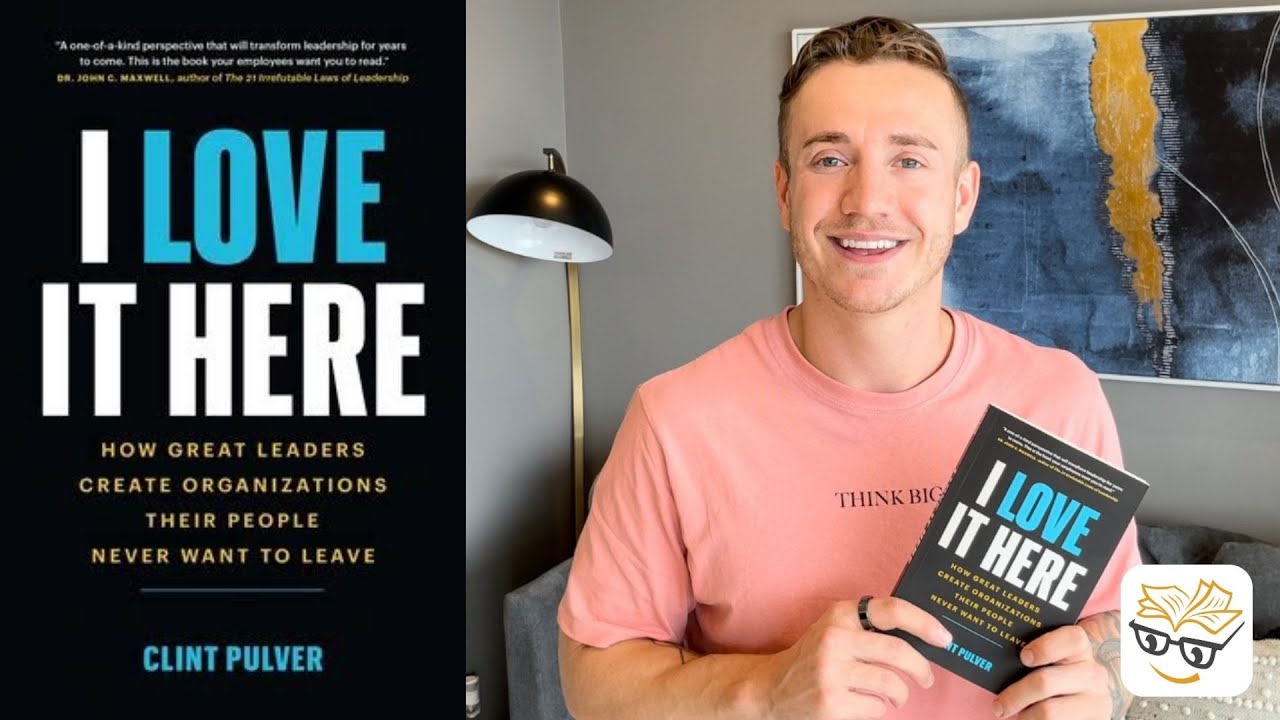
In this solo YouTube book‑review, Nick Hutchison introduces Clint Pulver’s book I Love It Here and the Undercover Millennial business model, which sends a disguised millennial into retail or service locations to conduct informal, candid employee interviews. Hutchison explains that the most powerful signal of a healthy workplace is an employee’s spontaneous declaration, “I love it here,” and that such engagement drives higher sales, lower overtime, and positive word‑of‑mouth. He highlights startling turnover data uncovered by Pulver’s research: roughly 60 % of employees are already looking to leave, and replacing an entry‑level worker costs about 50 % of that employee’s annual salary, with higher costs for senior staff. The review then outlines Pulver’s four hiring principles for building a “dream team”: (1) hire the right person, not the convenient one; (2) promote internally when possible; (3) hire for attitude, behavior, and character (the ABCs); and (4) let employees focus on their strengths while outsourcing gaps. Hutchison concludes by urging business owners to read the book to avoid costly turnover and to cultivate workplaces where staff genuinely love their jobs.
Chapters
I'm about to tell you about one of the coolest business models I think I've ever read about because Book Thinkers family, today we are reviewing I Love It Here by author and Emmy Award-winning speaker Clint Pulver. And the subtitle of this book reads, How Great Leaders Create Organizations Their People Never Want to Leave. So what is this cool business model? Well, Clint started a business called Undercover Millennial that helps bridge the gap between an employer and an employee, and he does it by going into a retail space, or there's other service-based businesses too, but he goes into a space and he interviews employees, but he does it as an undercover millennial. See, Clint's a young guy, he's a good-looking guy. He'll throw on a backwards cap, some fresh clothes, and he'll walk into a space, let's call it a sporting goods shop, and maybe there'll be a dozen employees on the floor, and he'll go up to each one of them and he'll interview them, but informally. He'll say something like, hey guys, my name is Clint and I'm thinking about working here. What do you think about leadership? What's your day-to-day like? Do you like your pay? Are you thinking about leaving? And he'll go through this list of interview questions. And so, what a cool business model because it's informal and you get real, honest, unfiltered feedback. Not what maybe a manager is telling the employer about like, hey, everything's great, we all love it here, when really there's a grudge and they hate the management style or whatever, right? Yeah. You're getting real, honest, unfiltered feedback. That's very valuable to an employer. And so there's 4 things, 4 different bookmarks I'm going to go through over the next few minutes. By the end of this, you'll know whether or not this is going to be a good resource for you and your business. I know there are a lot of young professional entrepreneurs in the audience today. So here's number 1, Why I Love It Here. Why is that the title of the book and why is that important to this concept? Clint says that amidst all of the questions and answers, the most significant moments in our research occur when an employee passionately responds, I love it here. This powerful declaration is always followed with incredible stories that reflect universal principles that their leaders have implemented and simple yet consistent actions and attitudes that help people feel seen, heard, and understood. So through years of hearing those stories from employees, Clint and his team at Undercover Millennial know exactly what a recipe is that'll work, that creates engaged employees, that create people who love their jobs. And right, an employee that loves their job is going to cost less overtime, they're going to create more revenue, they're going to sell more, they'll create more word of mouth. There's so many benefits to having an employee that says, I love it here. So what a great thing to try to strive for at Book Thinkers as we continue to grow and try to hire people. Now, if you're not getting answers Like, I love it here, what's gonna happen? Maybe there will be employee turnover. And so this next thing that I'd like to talk about is a statistic that sort of blew my mind. I didn't realize this. And if you're a business owner, this is the case for why you should invest in this book. This subtitle is titled, The Trouble with Turnover. Since implementing the Undercover Millennial program in various organizations and corporations, we have found that roughly 60% of the employees we interview are looking for new employment. 60%! 60%! On average, over half of your workforce is already ready to bounce the moment something better comes along. That's terrible! 60%! And it costs a lot of money to replace an employee. On the next page, Clint says that the cost of turning over an entry-level employee is about 50% of their annual salary. Why? Because you have to spend the time Recruiting and interviewing and training somebody to get back to where that other employee that just left was. Now, that's an entry-level employee. It costs even more for a mid-level employee or a higher-up level employee. So it is very expensive to lose an employee, but like Clint says, on average, 60% of employees are already ready to leave. If 50% of your workforce left tomorrow, that would have a serious hit on a low-margin, cash-intensive business. which a lot of these service-based retail businesses are. So you want to keep your employees. And then a couple more pages, there's— this is one of my favorite quotes in the entire book. What will happen if you don't invest in your people? They'll leave anyway, or worse, they'll mentally quit and stay. Imagine only getting 50% from your existing employee, right? If people aren't engaged at work, but they're sticking around because they're just kind of comfortable, they're checked out, it's too easy for them, They've just worked their way into a place where they could cheat the system. You're losing out, they're losing out, it's terrible. So, I'm just really driving home that point that if half of your employees are ready to leave and they're not happy in their job, you're just missing out on so much. The opportunity cost to keeping them around or not fixing your leadership style is massive. So, what's the next kind of question that you ask? How do you build a dream team? Well, Clint has a recipe for that in the book. Again, all of this is based on 10,000 interviews that he's done, in a lot of conversations with leadership teams. So here we go. This is the last thing that I'll talk about in today's video. The 4 principles of hiring for a dream team. Number 1, hire the right person, not the convenient person. As somebody who's done plenty of hiring in my past, I know that it's very easy when you have a need to fill that need with the first thing that comes along, but you really need to spend the time to evaluate, right? It's actually lazy to hire the first person that comes along. It's a little bit more intense, but you've got to go through the wringer. You've got to find the right person for the role. That person will stay longer, meaning they will cost you less over time, even if you need to spend a little bit more money for them. Number 2, hire internally when possible. We talked earlier in today's video about how expensive it can be to interview, hire, and train somebody. So if you can take an employee that already fits your company culture and you can promote them internally, you can hire internally, Then it costs less. They already understand your business model. The training time is going to be a lot quicker, and then you can sort of backfill that position having somebody that passionately elevated in your company instead of angrily left your company. So you could fill that spot easier. Number 3, hire for the ABCs: attitude, behavior, and character. I've always loved books that talk about this subject because core values matter a lot. Somebody who fits your ABCs— your attitude, behavior, and character— matters a lot more than the skill set, or maybe that they fit your budget, right? If their attitude, behavior, and character are on point, they're going to work in your business. It's kind of like the book— what is the book? Good to Great by Jim Collins, where he says, listen, get the right person on the bus and then find their seat after. Don't try to book the seat immediately. Like, hire for that attitude, that behavior, and that character, And then find the right kind of place on the bus for them, find the right position in your business. That's how you get an effective business that grows and has a very positive company culture. And then number 4, let your employees focus on what they do best. So that's the whole bus analogy. Get them in the door and then allow them to work where they're comfortable, allow them to sit where they're comfortable. See, we all have so many gaps. So do we want to spend the time kind of polishing the things we're bad at, or do we want to double down on the things we're good at? And then outsource the rest, kind of fill in the gaps with other people, with outsourced labor, with people that specifically identify with the things that you're not good at and they like those things. So those are some of the recipes for hiring your dream team. I Love It Here by Clint Pulver, fantastic book. It comes out very soon. If you're a business owner, you do not want to lose half of your employees, so check out this book. This is today's book recommendation. I hope you found some value. Go read something. Bye.