Learning Finances is FUN | Ty Allan Jackson
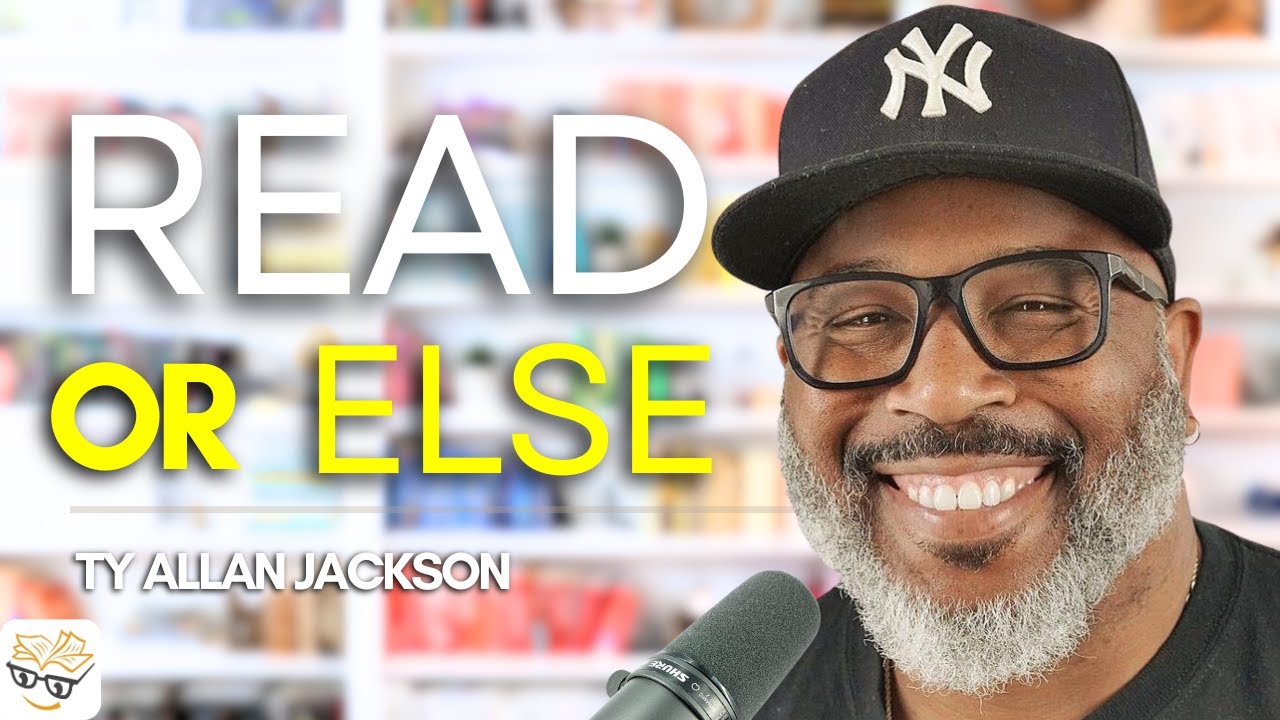
In this episode of the Book Thinkers Life‑Changing Books Podcast, author Ty Allan Jackson shares his journey from a low‑income Bronx upbringing to becoming a champion of financial literacy for children. He recounts how his mother’s love of reading sparked his imagination, how early exposure to hip‑hop culture fostered resilience, and how a simple lemonade‑stand experiment with his son inspired the creation of the Danny Dollar series—children’s books featuring a Black protagonist that teach money management, entrepreneurship, and perseverance. After facing 147 agent rejections, Jackson self‑published the first title, "Danny Dollar Millionaire Extraordinaire: The Lemonade Escapade," which has sold roughly 150,000 copies. He describes his visual, comic‑book‑influenced storytelling style, his novice‑to‑confident stance on personal finance, and the broader ecosystem he built: the Danny Dollar Entrepreneur Fair, Danny Dollar Academy, and the "Read or Else" t‑shirt campaign that donates books to underserved schools. Throughout, he emphasizes a philosophy of self‑catalysis—no one will rescue you, so you must be the captain of your own ship—while critiquing systemic exploitation that hampers financial education. The conversation concludes with practical advice for listeners and directions to his online platforms.
Chapters
The idea of writing a story never, ever occurred to me, not until that magical day where I decided that I wanted to become a children's book author. But then it also can empower you and say, well, I can be in the back and complain about it, or I can figure out how to change the narrative and help empower people so that the playing field becomes more level. Well, how much of a lack of financial literacy there is in this country, And so, so this book, I think for many, is the conversation that many parents wish they could have with their kids to teach them about finance and entrepreneurship and also resiliency, because there is a lot of life lessons as well in this story. And it literally is a blueprint to teach kids how to make their own money. I'm the catalyst for my success. I am the captain to navigate my ship, and how I decide to navigate it will be how I am viewed in the world. And so it's on you. Be the best and be the most amazing, beautiful, incredible you that you can be. There's never been another one like you. There will never be another one like you.
Ty, welcome to the Book Thinkers Life-Changing Books Podcast. We are so excited to get to know more about you and your book, Danny Dollar and Make Your Own Money. But first, I want to start with 5-year-old Ty. You're on your way home from the library. You bring a big stack of books, as many as you can carry. And once you get home, you spread it across your mom's bed, and your mom starts reading each one. Now, what I'm curious about is why your mom was such a huge advocate for reading, and how did that impact you as a child?
You know, it's a great question because my mom is absolutely the foundation of who I am as not just a person, but also as a writer and a reader because my mother, despite having me at a really young age, was always an avid reader. I don't know what her origin story was because she had me at 15 years old, which is really, really young, especially in 1967 when I was born. So I don't know why books were so prominent within our home. I just knew that they were. I mean, every room from the bedroom to the kitchen to the bathroom, books were everywhere. And I know that's one of the things that gravitated me towards the power of books and reading because you just couldn't escape them. They were everywhere. So I've got to talk to her. So I'm glad you posed that question because I'm like, hey, Mom, why were you such a reader, especially at such a young age? So I don't know the answer to that question, but I do know that her instilling the joy and power of reading within me and demonstrating it by spreading them across her bed, after going to the library was so powerful for me. Just that it was almost my first introduction to storytelling as opposed to movies or television. Just having her read aloud these books, it was just, it was so theatrical that I know that that's where the foundation of my imagination stems from.
Well, I love that. And yeah, you're going to have to ask your mom like where she got the book bug from.
I'm on it. I'm still on it.
I know that we all have it here at Book Thinkers. So I'm always just so curious about that. And, you know, you had a really unique upbringing too because you grew up in the Bronx where a lot of poverty. And I'm just so— I'm also so curious about how that affected you and like what your thoughts on money were at the time.
Well, there were no thoughts about money because we didn't have any. And we were on welfare for a good part of my childhood. And so money was never anything that we talked about. We didn't travel. There were no trips to take or dinners to go out to. It just isn't something that we did. With that being said, I wouldn't trade my childhood for anyone's. We— there was such energy in the environment that I grew up in. There was such a great sense of community. And I was also born in the late '70s, which exposed me in the late '60s. So in the '70s and '80s, I got to actually witness the growth of hip-hop music. I mean, I actually watched it conceived and born right in front of me. And to see a genre created by kids that looked, act, and sound like me, who previously were pretty much voiceless and powerless, now they on their own create this huge entity which ends up being one, if not the most powerful, uh, genre for our marketing and just for, you know, uh, the way our society runs today. That in itself was such a powerful thing because it helped me establish my own voice so that I was able to navigate myself in the world in a way that was much more assertive.
Who were some of your favorite artists that were growing and evolving right in front of you? And what are some of the lessons that you learned from them?
Boy, such a great question. I mean, from Run-DMC to the Treacherous Three, the Cold Crush Brothers, These guys are probably out of your age range, you millennial guys, but they were a huge influence because it was really pure. You know, they weren't tainted yet by the fame and the money, and that they were really doing it out of the pure joy of creating music and promoting our culture. And so having Kurtis Blow, Grandmaster Flash, Like, like they were literally just exposing our world to the world. It wasn't about bling. It wasn't about cars. It was just about the love of being an urban kid. And, and so that really, really resonated and still resonates with me.
Yeah, you're talking to a couple of 29-year-old kids over here. But I will say that I grew up in a household where my dad always worked for Adidas. And so he was in footwear and apparel sales. And as a result of that, my shoe of choice when I was growing up was a new pair of shell-toe Adidas every year. And so with Run-DMC, my Adidas, you know, and the whole 9 yards, like I was totally connected, at least in a little way.
I love it. That's awesome. Yeah, there's fewer things more classic in the world of hip-hop than shell-toe Adidas.
As a young kid, um, was entrepreneurship on your mind? Did you think about your future? Like, were you thinking, oh, I'm gonna be an author one day? Like, what was your thoughts as a kid navigating that, that whole world? Did you want to be a hip-hop artist? Like, what was your, your experience there?
Yeah, I think, I think every kid in the Bronx wanted to be a hip-hop artist. Whether you were good at it or not was a completely different story, which I was not, obviously. Uh, but yeah, I actually played. We had a little group, just a few friends of mine. Obviously it went nowhere, but, um, but no, The thought of being an author never, never occurred to me despite the fact that I was a ferocious reader. I mean, I was reading Truman Capote at 8. I was reading Dickens at 9. I was like, I was just reading way above my grade level and definitely my cultural level. Because while my friends were literally playing ball and listening to hip-hop, I'm reading Melville on the park bench, you know. So it was— so reading has always been a part of my life. Writing, not so much. Like the the the the the idea of of writing a story never ever occurred to me, not until that magical day where I decided that I wanted to to become a children's book author.
So what's the number 147 mean to you then?
147.
Yeah. Well, I saw 147 agents in total rejected your book.
Oh, okay. I was rejected. I wasn't sure if you were talking about. That number, you know what, I'm grateful for that number. That is the number of rejections that I received from agents, from publishers when I had my idea for a book and tried to submit it to get published. And those 147, and I remember when I hit my 147th and I said, I'm not going to reach out to these people anymore. Like, this isn't a formula that is— this isn't something that's going to work for me. And but I'm also not going to let 147 strangers dictate my success because I knew that this book mattered. So that 147 actually really means a tremendous amount because it was it was my benchmark for saying I'm going to rely on the one person I know I can count on, and that's me. And so that's that's where I I went to Google and I typed in how do you self-publish a book? And and I'm grateful for those 147 rejections because. Because of them, I now have the skill set to publish my own works and get them out into the world. And so far, I've done a pretty decent job of that.
Yeah, for sure. I'm just so excited. I was telling you before we hit record that we just ordered all your books and I'm gonna start reading them with my kids and just, yeah, can't wait. Can't wait. So I'm glad you figured it out and worked through those rejections. That resilience that you have, is that something that you grew up with? Is it innate? Did you learn it? Like, what's— How did you become so resilient and trustworthy of yourself?
I think, again, it's a testament to growing up in the Bronx. There's a sense of toughness and resiliency and self-reliance that you have when you are a New Yorker, and specifically from the Bronx, that I don't think you get in most places around the world. And it's not that the Bronx has— I know it has this stigma of being this kind of downtrodden ghetto place. It's really— are there pockets of that? Yes. But that's not really the narrative. Most people from the Bronx will tell you there's a strength of honor, of pride, of resiliency. And that is definitely the byproduct of growing up in the Bronx, single mom, on welfare, no silver spoons here. Everything you got, you earned. And you just had to work a little harder and grittier than everybody else because you kind of were working with, you know, 2 steps behind. of kids and people in many other parts of the country. So, and plus, I think I've always, I've always had a sense of resiliency, in part because I've, I've always lived a what's the worst case scenario type of life. Like, you know, like I wasn't afraid to become an entrepreneur, to, to reach out and try something different in a realm that I knew nothing about, because I knew there was no worst case scenario. I'm not going to be homeless. I built up enough social equity that I think I could live with relatives or friends or something like that until I got back on my feet. So what's— there's, there's no worst-case scenario. So why not jump? Why not? Why not take a big jump, take a big risk, and dream a big dream? There's— to me, there was— I had nothing to lose and everything to gain. And, uh, and fortunately it's worked out.
I'd love to understand, like, Why, like, I know we can get to why you wrote the book exactly, but before that, I want to understand, like, what, what was your dreams? Like, I know you had a sales role and then you had a few different jobs in between, but like, what was your dream for yourself back, you know, in your 20s and 30s?
Yeah, I, um, I first wanted to be a marine biologist because I saw Jaws and I thought how fascinating it was to like discover, oh, you know, the world of, of the sea. And then I, my mother took me to the beach one day and I got saltwater Punched me in the face, and that was the end of that dream. And then I wanted to be a doctor. I was and am still fascinated by the human body, and I think it's so amazing all that it is that we can do. I don't take anything for granted to see, to hear, to taste. I just think our bodies are just such incredible machines. I wanted to be a doctor, but once I went to school, I went, and I've never been to college, but once I graduated from high school, I really didn't know what path. I wanted to go. And so I just figured I'd work jobs for a couple of years until I figured it out. Never quite figured it out. So I just worked a few jobs here and there, all that I loved and learned a lot from, but nothing that was— that really spoke to me or that was my purpose.
So what was the original inspiration for this book that ended up selling so many copies, that was rejected so many times? I mean, why do you think it's been so successful? I'd love to just hear a little bit more of that story, and maybe you could tell the audience a little bit about the book in case they're interested in what we've been kind of talking about but not really addressing.
Right.
So, so that book is, uh, is titled, uh, Danny Dollar Millionaire Extraordinaire: The Lemonade Escapade. And, um, it really— it was conceived, uh, when my son was 8 years old. He asked if he could open up a lemonade stand. He made $50 selling lemonade. Mind you, this was in Western Massachusetts, not the Bronx, because you don't sell lemonade in the Bronx. It just, it just kind of doesn't work that way. But, but we lived in Western Massachusetts at the time, and my son made $50 selling lemonade, which totally blew my mind. So I'm thinking, you know, we'll make $5, $6, go get some ice cream and call it a day. But after he made the $50 and said, Dad, what am I going to do with all this money? I, I said, I don't know. So I went to my local bookstore to try to find a book. to teach my son about what to do with his $50. And I noticed, one, there were so few books teaching kids about money, and two, there were so few books featuring a young Black protagonist in a fun, cool, contemporary, modern way. There was plenty of, you know, me and Jackie Robinson and Underground Railroads and stuff like that featuring kids, but there was no cool Diary of a Wimpy Kid or Captain Underpants or something like that with a Black kid on the COVID So— At first, I thought I could find somebody to write a children's book teaching kids about money with a young Black protagonist. But then I thought about the quote from Gandhi, to be the change you wish to see in the world. So if you want to see something to exist in the world, the person to do that is you. The name Danny Dollar just popped into my head right at the Barnes& Noble. I went home and started writing. It took me a year to write the story and then another year to publish it after being rejected. 147 times, and this book I've sold about 150,000 copies up to this point. And one of the reasons why it's been as successful as it is is because one, I think it's powerful having the narrative of a young Black kid who wants to be successful. With that being said, this story is not about a Black kid. It may feature, it may happen to have a young Black kid as the protagonist, and unfortunately that's not commonplace in today's literature, but I think that the novelty, for lack of a better term, of having that is intriguing. And then the fact that it isn't a narrative about a young Black kid, it's just a kid, resonates with all kids, Black, white, male, female, you know, rich, poor, it doesn't matter. Kids resonate with this character because he's just a young ambitious kid who wants to be successful. And it's wrapped around a really fun and engaging story. And it promotes financial literacy. I mean, I think if we've learned anything, especially through the COVID eras, is how little we know about finance. When we— when you're depleted from your work or you're having to go through your bank account and your savings because you're not able to work, it really exposed how— well, how much of a lack of financial literacy there is in this country. And so this book, I think, for many is the conversation that many parents wish they could have with their kids to teach them about finance and entrepreneurship and also resiliency, because there is a lot of life lessons as well in this story.
I just want to make 2 quick comments and then I'll kick it to Luke. One is that this entire business and podcast that we've started, BookThinkers, started because of financial literacy. So I read Rich Dad Poor Dad when I was 21. I had never had any of these conversations before. And here's the result, an entire business that serves hundreds of authors a year and promotes books. So I wanted to make that note. And then number 2, I wanted to highlight something in your Amazon description for Danny Dollar Millionaire Extraordinaire: The Lemonade Escapade that I wanted. I think this is really unique. So you have in all caps, you say, warning, this book may result in loud laughter and crazy talk about becoming a millionaire. And I don't think there's anything better for a young kid than to laugh out loud as well as talk about becoming a millionaire, because I think what we put out into the universe ultimately comes back to us. And so what a great concept. And so I'm happy that we've touched on it today.
Well, thank you. I think promoting financial literacy, especially to young people, let's get— call it what it is. It's mundane. It's hard to do. It's hard to inspire adults who know how valuable it is. Much less to inspire kids. So to have a character that mirrors the way that our kids engage and talk today and simultaneously makes you laugh while learning about finance and entrepreneurship, I think is a winning recipe. And so that's one of the reasons why this indie author who has no business, like, you know, having, you know, cracked the code on how to sell a quarter of a million copies of books, I'm just grateful. I'm grateful that I have this book and that I found my purpose within becoming an author. And the fact that it simultaneously empowers especially our young people to be the best versions of themselves is more than I could ever ask.
So good. I have several follow-ups, but I want to talk a little bit about writing. Like you said, you weren't a writer. You didn't want to be a writer. You didn't start writing until you were 40 years old. So How did that come about? You know, you have this story in your head. Like, how did you learn to write? What was the process that you went through?
You know, I very often, I try my best not to tout myself as a writer. I think writing is an incredible art and craft, and I am in the infancy stages of learning to be a writer. I like to consider myself a storyteller, and a storyteller allows me to expand the way that I, tell my story. If you— and when you read my stories, you'll see my books are written very visually. And what I mean by that is that it almost feels like you're watching a movie because movies were such a huge part of my growing up and my upbringing as well as book— as well as reading. But movies in particular and especially superhero movies, the way that they showcase their characters and they tell these origin stories and how those origin stories weave within society and builds relationships and conflict. And it's really unique how specifically comic books, which were my first love growing up, they're still my love. I still buy comic books to this day. That type of storytelling really is how I learned to write. And so I write very visually. And I think anyone who reads my books will tell you it feels as much like a script or as it does a story. So I just kind of followed that format, you know, of an origin story aligned with connecting with, you know, characters and creating antagonists and creating conflict and resolving said conflict and having a happy ending at the end. Like, you know, that's every— that's superhero 101. You know, and so, uh, so all of my books kind of had that type of theme, and it was the, it was the template that I used to learn how to become a better storyteller/writer.
That's amazing. I mean, at the end of the day, the best books are, are written well and they tell a good story, you know. So I, I appreciate that. I, I am also curious, I know you specifically wrote about finances because, you know, of your son, but I'm also curious as to like what your relationship was with money at the time, like personally. Like what were you, what were your thoughts on money? Did you know a lot about money going into it, or like, had you had that figured out, or was it like, okay, now I really need to learn about this stuff now that my son is asking me?
Yeah, you know, I'm borderline ashamed to say that first of all, I didn't get the idea to write Danny until I was 40. And even in my 40s, I was very much a novice in the world of finance. I mean, I had a little bit of investment, you know, I had a savings and checking and just very basic and simplistic stuff. I didn't have a tremendous amount, a huge portfolio. So honestly, I was, I was kind of a novice slash in the middle of the road when it came to that. I knew just enough to get by. I knew just enough to save for my future and just enough, but, but it was never— I, I never saved for growth. I saved for sustainability. And, um, and it really— and having little kids at that time, I, I knew that I would have to eventually pay for college, have to eventually you know, pay for retirement and things like that. So I, I discovered this idea of financial literacy right at the time where I kind of needed to know. Like, you know, if it would have went on a little bit longer, I could really put myself in jeopardy for not only not being able to create a business, but not being able to save for retirement or for, for their college. So, so I, I knew just enough, and, uh, and I'm okay with saying that, although it's kind of shameful. in a way. But what it did though is that it made— it forced me to learn more. It forced me to, like, if I'm going to have this book that is actually promoting financial literacy to kids, I've got to know enough, you know. I've got to know a little bit more to just kind of be able to be confident in having these discussions. So I'm fortunate that I wrote this book because it held up a mirror to me at saying, You, if you're going to preach this, then you need to know it better.
I think that's amazing, and I don't think it's shameful at all. In fact, like, when I, when I think about that, I'm like, there's so many others out there that know finances, know how to deal with their money, and don't share anything about it. So the fact that you realize that, you were like, hey, you know what, I may not be the best at this, but I see the need, and I understand that children need to know this stuff. Like, we need to live in a world where we know this stuff. And that brings me to a quote that I have from you that I thought about that I gotta pull it up real quick. But you said, we are not built on a nation of information. We are built on a nation of exploitation. And when I heard you say that on another podcast, I was like just blown away. I was like, that is just, it felt so true. So could you talk a little bit about that quote and that whole notion that you had?
Well, first of all, you guys really did your homework. I mean, that's impressive to pull that quote out. I know exactly where that quote came from. So nice job out of you guys. You know, growing up as a disenfranchised kid in the Bronx and not being exposed to— I'll tell this in a— try to tell it within a quick story. When I was a kid going to elementary school, I noticed that all of the kids looked like me. They were Black and brown. And for the most part, we lived in the projects.
Yeah.
And we were poor. The majority of people were poor. The teachers, though, on the other hand, were all white. They all had cars. And you could overhear them talking about their home in the Hamptons or their pools or their vacations. And these were things that were outside of my world. Like a home, we all lived in apartments. A car, nobody had a car. Like, you know, like— So here was right in the same building with this contrast, this contrast of these poor urban kids and these well-to-do— I don't want to say necessarily affluent, but well enough to do that you can see and hear things that you are unfamiliar with. And then even television itself had this great contrast of— there was a show called Good Times in the '70s and '80s that depicted this this Black family that lived in the projects. Well, that was me. And then, and then there was The Brady Bunch that depicted this white family with— who was an architect and had a maid and a car and a pool and a yard. And that was them. And, and that, that contrast made me realize something's off here. Like, why do the people who look like this predominantly seem to live this way and the people who look like this predominantly live that way? And it made me look at the way the world works. And when I started learning about redlining, when I started learning about laws that were created literally to suppress people of color and to exalt people who weren't, it, um, it really opened my eyes about that exploitation component and how, um, let's say for example also schools. Schools are funded by property taxes. Well, There's no property tax if you live in the hood because nobody owns property. So the schools are downtrodden as opposed to in suburban areas where there's plenty of homeowners and plenty of taxes to pay for the schools to have pools and record studios and all these resources that the other people don't have. So when you see those things exist, it, one, is hurtful because it seems like the government is actually against you and conspiring against you. But then it also can empower you and say, well, I can be in the back and complain about it, or I can figure out how to change the narrative and help empower people so that the playing field becomes more level. And so that's, that's in part of what I was talking about during, during that conversation.
I love that you're giving a voice to some of these things. And even my experience with the traditional U.S. public education system has been bad. And I'm probably caught bashing it from time to time on this podcast because subjects like financial literacy weren't taught, and I don't fit a lot of the items that you just talked about, but I still was a victim of the lack of financial literacy and things like that. I know we're going to wrap up soon, so there's a couple of things that we want to highlight. First, I bought one of your Read or Else shirts today, and I wanted you to talk a little bit about that. You know, I also saw for every t-shirt that's purchased, you're donating a copy of the book. So do you want to give just like a 1-minute highlight on that real quick?
Yeah, when I became an author, I, one, discovered a lot of kids didn't like to read, which blows my mind because I love to read. And it forced me to kind of learn a lot about illiteracy and, and what happens when you don't read. And that sped me on to doing some programs with correctional facilities. which are often the byproduct of illiteracy in this country, as well as many other things. But I thought a way to showcase illiteracy and why it really impacts directly or indirectly every single American, I created this shirt. And the shirt says, read or else. The or else part is so many things, from poverty to incarceration to unemployment to higher taxes. You name it, that's the or else. I put it on a t-shirt and with every shirt we find either a shelter or a Title I school somewhere in the country and we send books to them for every garment sold. And I'm really, really proud of that program. I should be wearing one right now, but you know.
I'm excited to rock one for some content that we do on Book Thinkers. Okay, final question for me and then Luke, you may have multiple questions, I'm not sure, but you recently helped with a business fair where 500 students Got to talk about business ideas instead of science fair style ideas. So maybe you could talk a little bit about that becoming a part of your focus and what you hope it becomes in the future.
So, first of all, thank you for bringing that up. So my book, Dandy Dollar Millionaire Extraordinaire, spun off into my most recent book titled Make Your Own Money. And it literally is a blueprint to teach kids how to make their own money. That has spun off into what I'm calling the Danny Dollar Entrepreneur Fair. Exact same premise as a science fair, but instead of kids demonstrating how a light bulb works or a volcano erupts, they're showcasing their ideas for businesses. We launched it earlier this year, in June of this year, in Western Massachusetts with about 500 students, and it was unlike anything I've ever seen before. It really made me realize that all my work is leading up to this project, and I am excited to promote this to the ends of the earth with the objective of putting the Entrepreneur— the Daniela Entrepreneur Fair in every elementary school in the country to teach our kids about finance, entrepreneurship, and, uh, and, and, and to have an entrepreneurial mindset. Not necessarily for kids to become an entrepreneur, but for them to develop an entrepreneurial mindset.
Yeah, I'll tell you what, it's so important for our children to learn that, especially in the, the changing landscape of the world, you know. Like, it's not It used to be build people to work in factories and those workers, you know, put it on the widget, but it's changing and I feel like our education system just hasn't kept up with that. So I'm so grateful that 40-year-old you went and decided to write this book and have all these awesome things from it. I'm actually from Kentucky and I know that you've said that you have the Danny Dollar Academy. Danny Dollar Academy is what it's called. Yes, in northern Kentucky that you started, which is amazing. So There's a lot of things I wanted to bring up, but for sake of time, I won't today. I appreciate your time and I'll end it with this last question, which I ask all of our guests. That is this, all the courses, everything that you've put out, your books, the courses, the speaking events, everything goes away, but you're allowed to leave the world with one single piece of advice. What would it be?
This is gonna sound harsh, but I think it's the byproduct of being a kid from the Bronx. And that is, no one is coming to save you. Like, it's a tough lesson to learn. But you can, you can coast along in life and think that you're entitled or owed, but you're not. And no one's coming to rescue you. No one's coming to bring you a check. No one's giving you $1 million. No one's saying— no one. Your life and what value you bring to the world is totally predicated upon you and the energy that you put forward, discovering your purpose, being as great a citizen as you can be. And that's it. And while, again, that it may sound a little harsh, I think it also gives you— it removes the minutia. It removes the excuses. It lets you look at you and say, I'm the catalyst for my success. I am the captain to navigate my ship. And how I decide to navigate it will be how I am viewed in the world. And so it's on you. Be the best and and be the most amazing, beautiful, incredible you that you can be. There's never been another one like you. There will never be another one like you. Achieve, believe, and read.
And or else. Or else.
Oh man! Well, that's that's beautiful. It is it is a little harsh, but it's the it's the truth. I tell my kids that every single day. It's like. At the end of the day, as much as I'm going to give everything I can to help them, but they're going to have to help themselves when it comes down to it. And it's a tough lesson to learn, but the sooner you can learn that, the better you are. So for our audience that is looking to learn more about you, where can they go and what can they do?
Okay, you can go to my website, which is tyalanjackson.com. You can go on my Instagram page, which is how you guys found me, and it's kind of my speakeasy to the world. And— or just Google search. I'm on every social media platform that you can think of. Or just, you know, get on my website and contact me and holla at me. Like, you know, I'm happy to talk to people about their path and assisting them. I do consultations on helping other people become authors. Or just reach out and let me know how I can be of service. And I think that's the mindset we have to have. We are here to serve. And so I am here to serve you and people that follow you. So— Hit me up.
Well, I appreciate you so much. Thanks for your time. Thanks for your wisdom. This has been a great, great podcast getting to know you a little bit. Thank you.
Thank you, guys. You guys have a rocking platform. Thank you for the opportunity.
More from Nick

Napoleon Hill’s “Think and Grow Rich” is a timeless classic #selfhelp #personaldevelopment

4 Books to Help You Get Better at Decision Making #selfhelpbooks #bookrecs #nonfictionbooks


Have you read this book yet? 📖: The 5AM Club by Robin Sharma #selfhelpbooks #robinsharma

Dan Sullivan on Listening to Your Customers Instead of Watching Your Competitors

5 Books That Will Boost Your Financial Intelligence #financialfreedom #nonfictionbooks

The People That Preach the Loudest About Virtue are Usually the Most Power Hungry



Books are the greatest mentors you can find #selfhelpbooks #businessbooks #successmindset

Let’s fight this toxic instant gratification culture together 📖 #selfhelpbooks #jimkwik