Life-Changing Books Podcast Episode 21. Robert Greene: Author of The 48 Laws of Power
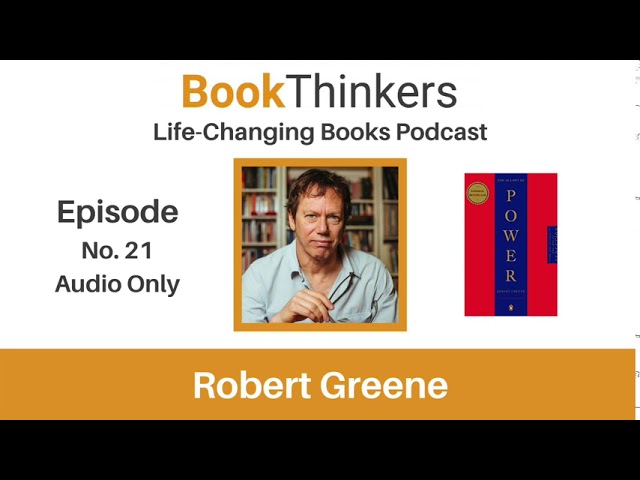
In this episode of the Book Thinkers Life‑Changing Books podcast, host Nick Hutchison interviews bestselling author Robert Greene, discussing his body of work—including The 48 Laws of Power, The Art of Seduction, The 33 Strategies of War, The 50th Law, Mastery, and The Laws of Human Nature. Greene explains the origins of his interest in power, how manipulation is a natural human trait, and why modern social media amplifies but does not create it. He critiques the cultural taboo around discussing power, describing how his books expose uncomfortable truths. The conversation moves to personal branding, revealing how Greene applied several of his own laws—court attention, create spectacles, be mysterious—to market The 48 Laws. Greene shares insights on observing non‑verbal behavior, the erosion of social skills in the digital age, and the importance of mastering social intelligence. He reflects on confronting mortality after suffering a severe stroke, linking it to the themes of his latest book, The Laws of Human Nature. The interview also covers recommended classic works on human nature, potential collaborations, advice on how to read the 48 Laws, his view on karma as a social phenomenon, and the most commonly violated law—never outshine the master. The episode concludes with promotional plugs for Greene’s website and the Book Thinkers app.
Chapters
Hello, Book Thinkers family.
Woo!
Do we have a special episode for you today. Today is episode number 21 of the brand new podcast Book Thinkers Life-Changing Books. And during each episode, I interview one of the world's top authors. As a listener, you can expect to discover new books, new mentors, and new resources that you can use to achieve more and to live better. In this episode, I have the pleasure to interview the legendary author Robert Greene. Robert is the author of 6 New York Times bestsellers that deal with the nature of power itself. His writings have become law for those seeking power and influence. His work has been referenced in songs by artists such as Jay-Z, Kanye West, and Drake, just to name a few. And not shockingly, his most famous book, The 48 Laws of Power— that's also the book that I just finished reading— it's one of the most frequently requested books in the U.S. prison system and and also one of the most frequently banned books in the U.S. prison system. These are not just books that you read. These are books that you study, and they absolutely deal with the darker side of mankind. He is one of the most requested guests for this podcast and someone that I've wanted to speak to for a very, very long time. Our conversation today pivots back and forth between his oldest book, The 48 Laws of Power, and his newest book, The Laws of Human Nature. And for the first time, I've also included some fan questions in the second half of the interview. And so without further ado, please enjoy this amazing conversation with Robert Greene. Mr. Robert Greene, thank you so much for joining the Book Thinkers Life-Changing Books Podcast. For those in the audience, and there probably aren't that many, but for those in the audience that don't know who you are, can you briefly introduce yourself to them?
I'm the author of 6 books. My first book, which came out in 1998, you see right there, The 48 Laws of Power. Wrote a book called The Art of Seduction, then The 33 Strategies of War. Then I did a book with 50 Cent called The 50th Law. And then my 5th book was Mastery, and my last book, The Laws of Human Nature, which came out 2 years ago. And basically, I have a certain kind of format that I follow that if you know my books, You know that I always use a lot of history and stories from history to sort of illustrate my ideas. And I'm kind of interested in certain particular subjects such as power, the nature of power, how it works, the dark side of power, being strategic in a very dangerous world, and then how we achieve ultimate levels of success and mastery and creativity in our fields. And my last book is sort of a synthesis of all of my work so that I can make you understand why the people around you can be so weird and so difficult to deal with at times. So those, that's really who I am. I'm just basically a writer.
You're an iconic writer to say the least. You often write that your writing process comes from a place of anger. And so you've talked about the fact that The 48 Laws of Power was based on the fact that people weren't being honest about how manipulative they are. And so relating, that to today, here we are 22 years later. Do you think that social media has compounded that problem, that we're hiding behind manipulation more than we ever have? Or do you think that it's sort of opening that up and we're being more vulnerable and transparent about it?
Well, people have always been manipulative. I talk about it, why they are, in all of my books. I think it goes back to childhood. There's something wired in our nature. And also, if you study primates, you study chimpanzees, for instance, You know that they're nicknamed the Machiavellian animal. They can be incredibly manipulative. So it's something wired into our nature. It would take hours to discuss why that is. So social media, it doesn't necessarily make us more manipulative than we already are. It just makes it easier to disguise. So, for instance, I talk a lot in my last book about the dark side of human nature, what I call the shadow. So you get a lot of people who have kind of trollish behavior. On the internet. We've all dealt with them, and they kind of come in with these sort of nasty comments designed to get under your skin. But because they're not there, because they're not in front of your face, they can kind of get away with it. They can pretend that there's some— that they're a tough guy or a tough woman, and they don't have to take any consequences for it. So you're able to kind of discuss behind the screen, behind the anonymity of the internet. You're able to get away with more of the kind of nasty behavior. that a lot of humans are prone to. So in that case, what it does really make worse though are things like our propensity for feeling envy, which I talk a lot about in my last book. And it also helps us channel our aggression. So, you know, we live in a social world where everyone has to be so incredibly politically correct, right? And so a lot of people have a lot of kind of frustrated anger and aggression that they can't get out. But on social media, with nobody seeing who we are, with this incredible mask that we can wear, we can get out all of that aggressive impulses that we feel. So it kind of accelerates sort of some of the dark qualities in our nature and maybe it makes us a little more manipulative. I don't know. That's an interesting question.
Hmm. Yeah. Well, that's an interesting answer. And I know that the manipulative side of things, which is what the 48 Laws of Power and a lot of your writing is about, as you just mentioned. It's considered dark. It's considered taboo. We don't love to talk about it. Why is that? You know, why do we like to talk about the flowery things in life and we try to hide some of the more manipulative things?
Well, we like to think of ourselves— I talk about this in the introduction to The 48 Laws— we like to think of ourselves as these highly civilized, sophisticated, very modern— we live in a world of such technology. We're also woke. We're also socially aware and everything like that. This has been going on for, for decades. It's not just 2020. And so we will admit many things. We will admit our sexual proclivities and all those kinds of other things that used to be so hidden. But we never ever like to admit that we're interested in power. It's like a dirty little word. Because that reveals that maybe we're not so woke, we're not so politically correct as we pretend to be. We wear this mask in society where we're all so caring and interesting and forgiving and loving. And there are people like that, and those are good qualities. I don't denigrate them. But the reality of these other impulses that we all feel and these other actions that we all take in life— we all have a manipulative side to our nature. And if you ever watch children, you see how early on in life a 3-year-old begins to become manipulative. But we don't want to reveal that, you know. So political figures are the most Machiavellian, power-hungry people of them all, though business people certainly are as well. But they want to present this veneer of what they really care about is their constituents, is helping the world. It's like they're not interested in power. That would be to admit, you know, as if you liked that, like you were into bestiality or something. It's of that nature. Right. And so something like the word ambition is like a dirty little word. You know, you don't want to admit that you're an ambitious person because that means you're only thinking of yourself. And we have to— we're bred now to always think that we're always thinking about other people, which is a lot of bullshit. 'Cause 98% of the time we're thinking about ourselves. Even when we're being woke and acting like that, it's to impress people, it's to get people to like us. So even our politically correct behavior is to kind of garner likes and all that other stuff. It is selfish. We can't get out of so much of our selfish behavior. And so I get really angry because I get sick of the hypocrisy. I want people to realize, to come to terms with who they are as a human animal. They are an animal that has certain qualities and traits. They also have a higher part of their nature that many of us can work to overcome, and that's a good thing. But I want us to realize that we have this side to ourselves, that we're obsessed with power and that we're obsessed with our status in society. And what inspired The 48 Laws of Power was I worked prior to writing books in Hollywood, and the hypocrisy in Hollywood It was so thick you could, you could cut it with a knife because everyone there has to be incredibly liberal in favor of the best causes. It's all about the art. It's all about promoting humanity. But you work in that world and you see how executives and directors and producers are, and they're just so goddamn power hungry. Really what they want is power, but they disguise it with this veneer of being so liberal and so caring and all that stuff. And it got me really angry. And I've been— I've had 80 different jobs in my life. I've cataloged this, discussed it with my girlfriend. We kind of wrote them all down. And it's not just Hollywood. I've seen it when I worked in New York in journalism. I've worked in many different fields. You know, I worked in hotels, I did construction work, I taught English, I worked in a detective agency. And all of that manipulative behavior, it's everywhere. So I just wanted to show people what really goes on in the world of business, politics, or wherever.
I know you're a very sought-after consultant for a lot of celebrities and politicians and things like that. And so to have the ability to ask you some personal questions about power is, you know, I'm very grateful for that opportunity. And it's also why I wanted to bring in a lot of fan questions for today. One question that I have about power in your own personal branding— recognizing manipulation as part of our human nature, you know, in your individual life is obviously something that we should embrace, and I'm a big fan of that. You write about it. But should we make that part of our persona? Do you think that it's beneficial to brand yourself and to make—
you know, no? Okay. Absolutely not. Absolutely not. All the— most of the laws of power are about playing the game of appearances. So I talk about how you disguise all of these maneuvers. You have to appear incredibly democratic. You have to appear incredibly caring and politically correct. Otherwise, you're going to suffer for it. You'll never get far in this world. So you do what Napoleon advised. You put your iron fist inside of a velvet glove. So people feel the velvet glove, but there's iron behind it, right? So they only see your soft side, your caring side, your loving side. But behind the scenes, you know that you have to be sometimes tough and hard. And one misconception people have about The 48 Laws of Power is that I'm advocating all of these laws, which I'm not. A lot of it is I'm showing you what goes on in the world. So that you can play proper defense, right? So I have a law in there, always get other people to do the work but take the credit for it. And really what the law is about, that other people are going to do that to you, which is sort of how Hollywood operates or journalism operates. Other people do all the hard work, but the director's name, the writer's name goes on, on the credits, right? And so, you know, crush your enemy totally. I'm not telling you to go out and crush your enemy totally. But you look at any business today, and the business dynamic, particularly for larger businesses, for instance, in the tech world, is if there's any competitors, you have to crush them out of existence. You have to buy them out. You have to get rid of them. And when I wrote the book, the kind of paradigm of that at the time in '98 was how Microsoft dealt with Netscape. They didn't sort of just kind of say, okay, let's work together, blah, blah, blah. Let's all be nice and fair. No, they bought— they crushed Netscape so it never existed anymore. They bought it out, et cetera. So a lot of the laws of power aren't just about what you need to go out and do in the world. It's making you more aware so you're not so naive. Because I know for me, I'm not really born with that kind of hardcore DNA. I'm not really a completely Machiavellian character. I have a soft side. Which I'll admit, and I suffered for it, I was very naive. So law number 1 is never outshine the master. And it's— and the idea is that your boss, your master, the person above you has an ego. You don't think so because they're powerful. They have an ego. And if they feel threatened by you, if they feel that you're more popular than they are, you're going to suffer for it. And I personally suffered for it 3 times, and it was very painful. So a lot of the book is to help you prevent you from making mistakes and to be more aware of what the sharks out there are doing.
As a lover of nonfiction, that misconception that you just highlighted is something that I found in a lot of the comments and the proposed questions, but I didn't see myself like— I looked at this object in front of me as a tool to understand the world, not as a tool to go take advantage of the world. And in some parts it is. But that's a very interesting misconception that a lot of people have. And so when you were writing the book, as part of the marketing and branding when it was first published, did you highlight that misconception as an opportunity? Or was it something that you sort of realized after the book was out that people might start to characterize you as this power-hungry person when that's not—
I knew that was going to happen because of the nature of the book. I'm not stupid. I knew that it's kind of hard. The book is harsh. It's got a hard side to it. And I knew it was going to shock people and that people were going to think that I was that character. And I didn't mind. And I still don't mind people thinking that I am that way. That's great. It makes people a little bit intimidated when they meet me, which they shouldn't be because I'm not really a threatening person. But, you know, I didn't mind the fact that people would have that I tell people, if you want to make a book that's successful or make a movie or anything, you have to be controversial. Controversy gets attention. So, um, my book— the book is sincere. I meant it. The laws are there. They're real. And if I kind of accentuate that kind of dark side of human nature with my stories, etc., it's because I know that's going to get attention. And so if that's— some of that attention comes to me personally, I'm tough enough. I've got a thick enough skin that I can take it. Yeah.
Yeah, I was fascinated to read through that lens, actually. I mean, I read with a couple different shifting perspectives throughout the book. I, at one point I was reading, okay, how can I apply some of this to my own personal life? How can I apply it to my business? But then at certain times, I caught myself thinking, wow, you know, Robert used this law to make this book more popular, which is very fascinating to me.
Yeah.
What was— now I'm curious, and this was also a fan question a couple times, like what What laws helped you market and sell the book and make such a big impact? Like, what were some of the laws that as you were writing the book, you thought, wow, I'm going to apply this to the book itself?
Well, court attention at all costs is the obvious one. So the idea comes from P.T. Barnum, who's one of the icons of the 48 Laws of Power. And P.T. Barnum said there's no such thing as bad publicity, right? So he courted all kinds of controversy. He courted people hating him and thinking he was a fake because he knew any kind of tension, his name in the news was something— was a good marketing tool. He was the first kind of genius of that. So I, you know, wrote the book knowing that I needed to court attention at all costs with the titles of the chapters, with the way the book was designed. And I worked with a very great designer who packaged the book But we had that idea in mind about courting attention with the way the COVID worked and the way the inside looked to get people talking about it. Because the best way in the modern world to publicize your business or a book or anything is word of mouth. People are so cynical now that ads and publicity have very little effect. But if other people are like, wow, there's this book out there, it's really like crush your enemy totally, blah, blah, blah. Well, it's going to get attention, you know. So that was one law. Interaction with boldness. You know, don't go halfway. Don't kind of make the titles be sort of accurate but not exciting. Be bold. Be bold with how far you go. Take it as far as you can. If I'm discussing con artists, which are a major component of The 48 Laws— excuse me— because I think con artists are kind of a modern icon of power figures we find everywhere. You know, I want to make the stories kind of— you don't know whether I'm advocating to be a con artist or not. Well, that's being bold and that's courting attention. Then, you know, create compelling spectacles. The look of the book, if you open the book up, you've never seen a book that looks like that on the inside. And you can hate it for that. I mean, I'm not touting myself. but it's unique. It's got the stories on the margin in different colors. It has very nice layout, and then it has these kind of word poems that are very weird in shapes, etc. So it's very striking on the inside. So create compelling spectacles, that kind of thing. You know, I could go on and on, but those are some of the laws of power I have. And then also, for me personally, you know, There's chapters in there about kind of being mysterious and absent and not being— letting people not know who you are so they talk about you. And initially I was very careful about that. I didn't want people to know who I was or who was this person who wrote the book so that there was this air of mystery around me. I mean, those are some of the laws. Yeah, I could go on and on, but we don't have much time.
I'm sure you could. And I love everything that you just said. And in the future, when I write a book, this will be the Bible that, that I sort of use by my side.
Okay.
As far as developing a marketing and branding strategy, it really is brilliant. I mean, I even have a friend who hates reading. Now I'm the nonfiction book guy, but I have a friend that hates reading. He only owns one book. And it's The 48 Laws of Power. And he's done some YouTube videos, and he's listened to some content. But he has it because it means something. It is a status symbol to him. When somebody comes in the house and they see the book, it sets the tone. And that is his bold move. And I really thought that was fascinating, you know, in preparation for this interview. Oh, go ahead.
Yeah. Joe Rogan, I was on his show once. Joe Rogan said that's the only book he's ever read. He's the same way. So that's coming from— that's quite a compliment coming from him. So yeah.
He is the number one content guy on the planet right now, huh? So that is quite a compliment coming from him. Yeah, that's fascinating. To transition briefly to the subject of human nature, and then we can go back to The 48 Laws. I saw in an interview you said that the celebrities and politicians and powerful people that you consult with, the number one issue that they have is the inability to understand the people around them.
Right.
That, you know, you said narcissism and things like that, focusing on sort of maybe your single talent and just excluding everything else that is growing and growing and growing. And so here we are in 2020. Why do you think that humans continue to struggle with these skills and why are we getting farther and farther away from our human nature?
Well, we can never get far away from our human nature. It's like trying to run away from your own shadow. It just follows you everywhere. So it's there. You can't get rid of it. The more you try and deny it and repress it, the more it comes out in some other way. So there's no running away from your nature. The only thing you can do is deny it.
Hmm.
But if you think about it very simply, we're a social animal, right? That is the source of our power. Because as animals, we're actually physically weak when you compare ourselves to like a tiger or a leopard or animals that were much faster and stronger than we were. Our only power— this is a social animal working together in groups, and that's who we are, and that's our nature, and it's wired into how our brains are designed. But if you look at the past, you only have to go back 100 years, maybe even less sometimes. People did not have the internet. They did not have television. If you go far back, they didn't even have radio, or they didn't even have the telephone. The only entertainment, the only source of pleasure, in their life was being around people. So they had— they were constantly interacting. They were constantly going to parties, to dances, to soirees, to clubs. They were continually interacting with people. And like anything, being social is a skill. So if you're alone, if you've ever noticed in your life that you spend a couple months alone, and then you suddenly go into, into a meeting or something, You're a little bit awkward. It takes you some time to adjust, right? You get too used to being alone. You're not used to being around people a lot. It develops a kind of a silent skill where you develop a sensitivity to them. You don't have to say it in words. You pick up their moods, their emotions. You understand what envy is because you see it in their eyes. You understand who's aggressive because you have a feel for it. On and on and on and on. And we have divorced ourselves more and more and more and more and more from this. So it's been going on for decades, but social media, the internet, our smartphones have accelerated this to a tremendous degree. And I've given this story before, but sometimes pre-lockdown, you would go into a restaurant and you would see a couple there sitting at a table. They were both in their phones. And then occasionally they would look up and talk to each other. They were just mostly interacting on their phones. Then they would share a story. Oh, look at this, this is funny. That eye contact, that sense, that fine-grained attention to other people, we're losing it because we're not spending enough time around people. We're losing that skill. And so people are increasingly naive. And so in my consulting work, I'm dealing with people who— some people who are very powerful, very successful in sports, entertainment, in business and politics, and they have a sense of the technical aspect of their work. They know, you know, how to run a business, they know how to make money, but they never learned how to deal with people. And so the number one problem I deal with in my consulting is, for instance, an example would be I have a business partner that I brought into the company. I thought he or she was really smart and really into the company and had this kind of character that would go with— mesh well with me, that they were all for the team. And then I discover that they're not. They're a shark, and they're trying to take power away from me, and they're taking the company away from me. Robert, what do I do? And it's because you didn't notice the signs that people give off. People are very good at charming you. So if you're dealing with a shark, someone who's very aggressive, They don't wear horns on their head. They don't come saying, look, I'm an aggressive person, beware. They've learned to disguise it. And you're charmed by them. And then you become a partner with them. And then lo and behold, the horn— the mask comes off and you see the horns. Well, you have to be better at judging people. And it's not just everyday people, but our business leaders, etc., are becoming weaker and weaker and weaker at this very basic skill. So that's what my book is designed to help you get over this kind of weakness and strengthen your social instinct, your social knowledge and skill.
As I was going through this book and then doing preparation for this interview and I started to learn a little bit more about that book, The Laws of Human Nature, the more I started to understand why you wrote it and how it's the culmination of all of your life's work pretty much. I'm definitely going to read the book and I'm very excited because I've noticed in my personal life and business That the more I can stop and pause and reflect and observe, the more I can advance. And so it's counterintuitive. We live in a world that's fast, fast, hustle, hustle, but you need to learn to observe. And I know that you teach that sort of framework in the book. So I'm excited to dive into that. Yeah.
It's also the subject of my book Mastery, or one of the subjects. So that book is about how to become— to master your field. and have the highest degree of success, right? So it's not about money, it's about being so great at your field that the money will eventually come. Okay, and I look at masters in all different fields, but I have a chapter in there on social intelligence. And the reason I put that in there is you can know everything about business or music or the arts or podcasting, whatever your field is, But if you don't understand people, you're going to have a miserable life full of drama, full of conflict, full of all sorts of other problems. So this is a— and the number one thing that you need to do is to develop your powers of observation, as you say. It's a skill like learning how to play the guitar or anything. And I have a chapter in my new book about empathy as the upholder opposite of narcissism. And I also have a chapter about nonverbal behavior because 95% of human communication is nonverbal through our body language, through our tone of our voice. You're missing all of these signs because you're not observing people. And I teach you very, very strong, very detailed fashion in The Laws of Human Nature how to make yourself a superior observer of people. And that once you develop that skill, It will go with you wherever you go. So if you're in a job interview or you're interviewing someone for a job, you suddenly have the ability to see through their mask and understand them. Or you're having a personal relationship. We've all had the problem, had the tragedy of misjudging someone's character in an intimate relationship, and boy do we pay for that years later with all kinds of emotional drama, etc. How to see through the masks that people present to you. And how to judge people's character. So observing people is an incredibly critical skill.
And you actually, you say that we used to be much better at observing nonverbal communication, right? Like human beings used to sort of communicate in much more efficient ways without language.
Well, it's not that we were better at communicating it, it's that we observed it better. So I'm trying to tell you, if you go tomorrow in your office, or wherever you're in an office now, which you might not be, whomever you're interacting with, you can start learning the language. Nonverbal behavior is like a second language, and there are all sorts of signs of it. You're just not paying attention. So people are constantly oozing out all of their secrets, all of their desires. When you— I teach you how to distinguish between the fake smile, which you see almost every day, you know, the kind of tight smile. It's not real, it's fake. In fact, it very well might just be disguising the opposite. It might be, I really don't like your idea, but I'm smiling anyway. And then what a real smile is, it light— I can't fake a real smile because it has to happen, but the whole face lights up, the eyes light up, the cheeks raise, You see it, you sense it, that there's something real and authentic. It's almost impossible to fake. It'd take an incredibly trained actor to fake a real smile. Well, this is going on every day around you. And to know that just that one piece of information, that the person is not really smiling because they like me, they're smiling just to pretend, sort of, you know, kind of smooth things over. That's a very important piece of information. Or to know by people's body language when they come up to you, whether that's signaling they want to interact with you, or they're actually edging their body away from you because they want to get away, very subtly, the way their feet are positioned, you know. Or the look on someone's face when you suddenly come up to them. They have this word in nonverbal communication called microexpressions. And what that means is People have a flash on their face for a micro— for not even a second, for a quarter of a second— that reveals their real emotion. They really— so they might, you know, I mean, that's a very terrible example, don't do it, but a flash of distaste or scorn, and then they quickly disguise it. And if you come up to someone really quickly and surprise them, you'll either see that they're delighted to see you in which case it's very real, or you'll see something else that they tried to hide their irritation and they'd fake it. These are things that you can start learning tomorrow and they can revolutionize your ability to understand people, to figure out how people— what people really think about you, for instance.
Hmm, that's fascinating. It's fascinating. And do you think that the newest book, Human Nature, pairs well and complements The 48 Laws well? Are those 2 books, do you believe, the 2 that people should read if they can only read 2 of your 6? Or does that book pair with something else better?
You know, it's kind of my ultimate book. The 48 Laws of Power is the book to begin with if you're dealing with a lot of power games. If you're in an environment, let's say you're in the music industry, which is considered the most Machiavellian business on the planet. You know, 50 Cent told me that, but I've heard it from others. Well, that book, you better read it or you're going to be in a lot of trouble, you know. Or if you're, if you're an athlete, believe it or not, sports is an incredibly Machiavellian environment with owners and how they treat you. I've dealt with a lot of athletes and they're always shocked how they're treated like a piece of meat in the end. They weren't expecting it. So if you're dealing with a lot of power issues, a world where people are very manipulative, you're going to want to start with that. But if you know, if you're not in an environment like that and you notice that you're having some issues with people, you don't feel like you interact with them well enough, that it's kind of something that's limiting you.
Hmm.
It's a more general book, but this is a book that's going to ground you very much so in human psychology. So if that were the book, if that's the issue, if you're not in an extremely shark-infested environment, I would begin with The Laws of Human Nature because it'll ground you in all of the concepts. So one of the laws of power I call Never Appear Too Perfect. It's Law 46. And the idea is if you seem too great, too wonderful, too good at everything you do, you're going to stir up envy. And envy is very dangerous in the world, and it can lead to all kinds of problems. Okay, and I explain that. The Laws of Human Nature, I have a chapter just on envy, and I go very deeply into why we're envious and the signs of why people might be envious around you. And so the two go together, but The Laws of Human Nature goes kind of more deeply into the psychology. So it really depends on your circumstances.
That's great. And that'll be great for everybody in my community to sort of understand the difference between the two books. I'll definitely be putting that little clip clip up on Instagram for everybody. Last question before we go into the fan questions of mine. I'd love to hear your thoughts on confronting mortality as a subject. I've heard you talk a lot about it and it's a very popular subject, I think, within my sphere of influence right now. And I've been talking a lot about death with people. So I'd love to have you expand on that a little bit.
Wow. Why is it so popular? Because of the coronavirus?
Well, for me, I got into Stoicism and one of the principles or aphorisms that, that really hit home me was memento mori, and I actually got it tattooed. And I have a poster on my wall that says, my life in weeks, and every— each week you fill in a little circle. And the idea is not morbid, it's beautiful. It's to prioritize your time, to be reminded of your own mortality often. That's why I love Ryan's work so much.
Yeah.
And so that's why it's a big subject of discussion for me. Hey, Book Thinkers family, it is time for a quick word about our brand new mobile application, Book Thinkers Smart Retention. Now, we built this application because after polling our audience, we found that an astounding 94% of readers want to retain and implement more information from the books they love. Simply stated, many people are reading amazing books but are often failing to remember their biggest takeaways. It's a problem that I used to face, and our technology helps to bridge that gap. BookThinker's Smart Retention is one location that consolidates all of your biggest takeaways from the physical books, digital books, and audiobooks that you're reading. You could even throw your biggest takeaways from this podcast episode if you wanted to retain them. Once your information is in the app, you can access that information whenever you see fit. And for amazing books like the one that we're discussing today, you can actually turn on systematic reminders. And this is where it gets cool. Reminders reintroduce key information at specific time intervals that will help you maximize your retention of that information. This is called spaced repetition, and it's a technique that's used by the world's most effective learners. BookThinker Smart Retention is available today on both Android and iOS for $5 a month or $45 per year. We are committed to helping you retain and implement more information from the books you love. And so to find more information about the app, simply search it on the App Store or Google Play Store, or you can go to www.bookthinkers.com and you'll see our mobile app tab. We display a ton of cool information there. Now back to the episode.
Okay. It's the last chapter in The Laws of Human Nature, Confront Your Mortality. And I go very deeply into this subject, sort of touching upon some of your own ideas. Basically, the idea that it's your greatest fear in life, obviously, and we live in a world that very much represses the thought of death. So if you go back, once again, to do this thought experiment a couple hundred years ago, you would— you could not fail to see people die in front of you, literally, physically, several times during your life. You might see it on the streets in a town or a city. You'll see it. People died in their houses, right? If you lived, you know, if you— most people had to kill their own food. They had to kill a chicken. You saw animals being slaughtered in front of your eyes for their food. Death had a presence. It was constantly there. And so it was— people were thinking about all the time, and they had religion to kind of help them soothe the idea of their own mortality. But death was very present. And we live in this world where it's the complete opposite. We have to repress the thought of it. We can't see it anywhere. It's put into hospitals where it's sanitized, where it happens behind closed doors. You know, nobody ever talks about it. Nobody tells you this is probably the most important life skill that you could have, to know how to deal with that fear. Nobody teaches it. Your parents don't talk about it. Your girlfriend or boyfriend, they don't talk about it. Nobody. It's a dirty little secret. Right, but it's the only reality we have. We're all going to die. Okay. So if you're in denial of it, if you're repressing it, which most people are, and then don't tell me that, oh well, in movies people are dying all the time. That's kind of a cartoon version of death. There's no kind of emotion attached to it. When you see 18 people being gunned down with a machine gun, there's no kind of empathy or feeling. That is even making the thought of death even more repressed. When you repress it, it comes out in secret ways. It makes you anxious in your daily life because you're not dealing with the one most important thing. You don't realize it, but it's infecting you on your day-to-day decisions, how you interact with people. So you need to get over it. You need to confront it. And the idea is simple: you could die tomorrow, right? It happens. You have no control over this. You could be young. You can be 24. People die young all the time. So be aware of that and understand that what that means is your time is limited. You don't have these vast decades of life in front of you, and— but you have dreams and aspirations and things you want to accomplish. Well, this gives you a sense of urgency. It makes you also appreciate everything around you that you see. It makes life more vivid and intense by understanding that any day now it could be ripped away from you. And of course, I personally had this brought home to me like a slap in the face. 2 months after I finished The Laws of Human Nature, I suffered a stroke, a rather severe stroke, in which I was— I'm very lucky to be here, very lucky to be alive. I'm very lucky not to have suffered brain damage. I can write another book. You know, it was just a matter of a couple minutes and it was over. I was in a coma. And then I woke from that and my whole left side of my body is gone, was gone, paralyzed basically. It's coming back slowly. But anyway, I had to confront that right in my face, like just after I wrote the book. And what I wrote about in the book is true. So now if I'm sitting there going out in the world in any way and I look around me, I go, you know, because like A couple of days ago, I had the second-year anniversary of my stroke. And I think this could have been the second anniversary of my death very easily. People would be talking about, wow, Robert died 2 years ago today. Wow. You know, so I'm looking at the world. I'm seeing, you know, I'm suffering because I can't— like, I still can't walk very well. But look at everything that I see. Look at everything that I have. It makes everything more intense. The colors are more intense. The sounds are more intense. The feeling of being connected to other people is more intense because now I'm aware not just of my own mortality, but that the people I'm with— my girlfriend, she could be gone tomorrow, my mother who's 93, she could be gone tomorrow— I have to appreciate them on a higher level. I have to understand that everybody has this in them. And knowing that you, Nicholas, are also facing it is a way for me to connect to you. It's a way to deepen my empathy and understand you on a very deep, basic, primal human level. I could go on and on and on. It's sort of the subject of my next book. The essential powers that confronting your mortality will give you— I call it the sublime, which I introduce in The Laws of Human Nature. But it also opens up this idea of how amazing the world is that we live around us, that we take so much for granted. Because we just think that we're going to live forever. So it's an incredibly important concept to me. And it's also very personal in the sense that I came this close to dying myself.
Well, thank you for taking the time to go through that. I selfishly, I need more context from people like yourself so that I can articulate that very important lesson of intentionally confronting fear and why everybody should be confronting fear because of what it's done for me. But sometimes I can't articulate it as well as somebody like you can. So I'm definitely excited to read that book. And I've read like On the Shortness of Life by Seneca and Meditations by Marcus. Books like that have been very important in helping me to understand those concepts.
Another, another writer who I think you should read is Montaigne. Okay. The 16th century French philosopher writes some of the most powerful stuff. about confronting your mortality. And then, not to toot my own horn, but the book I did with 50 Cent, The 50th Law— excuse me— is all about the power of being fearless in life. And the last chapter in that also deals with confronting your death because 50 himself was shot 9 times there and he came this close to dying as well.
So with 50, I just bought a copy of his new book, so I'm excited to read that. And I'll have to get this.
It's a really good book. Yeah.
Oh, good. Yeah, I haven't, I haven't had the chance to dive into it yet, but I'm fascinated by 50. I grew up and I watched that movie that he did about his early life and—
Get Rich or Die Tryin'. Yeah. Yeah.
I listened to a lot of 50 growing up. Let's transition over to some of the Book Thinkers family questions. And so I tried to pick some of the more interesting questions and maybe some that are related directly to the 48 Laws. And also some of the more popular questions. So one to start right up front, would you be interested in somebody relating all 48 laws to modern-day observations? You observe the laws in history and you, you use very popular examples or some non-popular examples of famous historical figures, but would you be interested in somebody doing that?
Another writer?
Another writer or collaborating with another writer?
Well, I don't know. I don't— as we were discussing, life is short. I don't know how much time I have left and how many more books are in me. So I don't know. I'm not a great collaborator because I'm also a control freak. I don't like— I like to be able to control something 100%. It's one of my own flaws. So, but the problem with doing modern people, and it's very interesting, I particularly like doing it with business people. I'm always doing it in my podcasts or in some of my blogs that I used to do, is that it gets very controversial and people get really kind of irritated and political and tribal about it. So for instance, I discuss Donald Trump and the 48 Laws of Power because some people think he used a lot of the powers, the laws, to get where he is. And I tell people, well, no, he's not somebody who reads books. So I doubt he read the book. He's good at a couple of laws, and I say which ones. But I also think he's terrible at many of the laws. People get all upset and whiny, or if they really like him, others don't. Oh, come on. You're just being political here. So you get into all these kinds of issues. But when you're dealing with dead people, they're dead. They're buried. They've been gone for 50, 100 years. No one's going to sit there and go, well, Napoleon really blah, blah, blah, blah, because I knew Napoleon and I really love him. No. So, and then also time gives us a greater perspective on who they were. So to judge, for instance, whether Donald Trump is truly a person of power, we will not see until 50 years from now when people are looking back and say, man, he really messed up our democracy, or he was the greatest. History will be the judge. So that would be the only obstacle to that. But it's a fascinating subject. If there's somebody who wants to write it, they can always send me their ideas and I'll, I'll tell them what I think about it. Yeah.
It's a— when I read that question or somebody had submitted it, when I read it, I started to think of what would the framework for that book look like? And it, it was an exciting thing to think about. And I was just curious if people talk to you about that all the time or not. And maybe what you could do is collaborate with 48 different powerful people who want to be Exposed on both sides of the law, you know, who in the same story, like 50, would say, okay, law number 1, here's how I took advantage of it, but here's how I was also taken advantage of. And yeah, something like that. But that, that's really interesting.
That's a good idea. I'll think about it.
You don't need to put me in your acknowledgments. It's okay.
Okay.
Question number 2. This is sort of a 3-part question, and I'll do my best to ask it one at a time. But books— now, people ask me my favorite books all the time. It's an impossible question to answer. It depends on what you're recommending it for and what phase of life you're in. But right now, what are some books that stick out to you as far as just general books that people should be reading to understand the laws of human nature more outside of your own books?
Well, I'm a big reader of history, and I like— the older the book is, the more I like it. So I'm not going to be talking about books that just came out the last couple years. I'm sorry. Although there's some great writers out there now. So one of my favorites that I reread all the time is by an ancient Greek historian named Thucydides. He wrote a book called The History of the Peloponnesian War, one of the greatest books ever written. It is so fascinating. It is so perceptive when it comes to people and human nature. But as you're reading stories, about the decline and the destruction of Athens as an empire, you go, wow, these are people I see around me all the time. This is what's going on in the United States. It's very powerful. I also like, similarly, is the Latin writer Tacitus, who wrote books about the history of Rome. It's also very similar, but he's not as great a writer as Thucydides. I mentioned Montaigne, who's a great philosopher. In times like this where we're all kind of suffering and afraid and worried, I love people like Schopenhauer, the great 19th century German philosopher. Because if you think that I'm kind of hard and I'm kind of perhaps cynical or whatever, wait till you read Schopenhauer. He has a really, really wicked look at people. I forget the title of his book, but if you look in the bibliography of Power, And some of my other books, you'll find it. It's— I can look at it for a second. But he wrote a book about people, about the art of living and how to judge people. It's really powerful, really strong. I also, in The 48 Laws of Power, have a writer called Baltasar Gracián, who I love, 17th century Spanish writer who is very perceptive about people. And then my favorite is Friedrich Nietzsche. He's been my favorite writer since I was 16 years old. There isn't a single book of his that I would not recommend anybody out there to read. He's just endlessly fascinating, and he's also a very keen observer of human nature. I read— for one of my books, I researched 300. For my 6 books, I've read probably 3,000 books. So you're asking me, it's like poking your finger in a river and saying, where is that? Where's the river? I mean, I can't figure out which my favorite book. Oh, and Machiavelli. I'm sorry. Machiavelli's The Prince, but also Machiavelli's The Discourses, which is a very perceptive book, not read as much as The Prince, is probably my favorite book of his.
Well, I've only read a few hundred books. You know, I'm in the 350, 400 range or something like that.
You're young. You're a lot younger than me.
That is true. But I was— what I was going to say is that I have such a tough time answering that question. So I can only imagine after reading 3,000 books in preparation for your read, you know, your writing, it's a very difficult question to answer. But I also like to watch you sort of how you answered the question was pretty interesting to me. You know, going back through and relating to books that are timeless, history adds context. And I actually listened to Ryan Holiday and Tim Ferriss discussed this subject recently. They said when you look at— when you embrace mortality and you realize that we all are going to die, there's only so much time to read great books. And that's why they don't read any books from writers of 2020, 2019. They look at books that have stood the test of time. And that's sort of how they apply.
It's a very, very good point. Yeah, life is short. I also forgot to mention Sun Tzu, The Art of War, which is one of my favorite books. I use my third book, which I highly recommend— I'm sorry if I do that— it's 33 Strategies of War. It's the ultimate book on how to be strategic in life, and Sun Tzu was sort of the main influence for that book.
I have a friend of mine who just defined— sort of, we've been reading books about how to identify yourself so that you can clearly represent your brand, and he just identified as strategy. So I'll gift him a copy of that book.
Okay.
And my follow-up questions were about how many books have you, have you sort of read all time and what's the next book coming out. So you sort of answered some of those questions. I did read about a TV show series. Is that still happening?
Well, it is. It's with Drake's company and we signed a deal with Quibi, which is kind of a sort of a slight disaster. The company launched in April. It's not doing very well. So it's in what we call in Hollywood developmental hell, development hell, which means it may never get out of hell and enter purgatory or ever even get to heaven. It's probably just going to be— I don't know if it'll ever happen. I've been dealing with people wanting to do the 48 Laws of Power for television for 15, 16 years. I've heard everybody tout every kind of proposal. It still hasn't happened. I was on the phone with 50 Cent 2 days ago. He was talking about how he wants to do it. And if this deal with Drake doesn't work, I have plenty of other people who maybe will happen. Eventually, I think it will. It just— I may not be alive when it happens.
I hope you are. And in that TV show series, maybe they could, maybe they could use some modern-day examples or like we were talking about before. So that would be a good sort of combination of both. And maybe my friend who won't read the book but has it on his coffee table, maybe he'll watch the shows. I know you said you don't have that much more time to write that many more books, but are there any people that you wish you collaborated with? Are there any more 50s out there that you're pursuing or that You wish you didn't say no to when they proposed a book idea?
Maybe Kobe Bryant.
Yeah.
I'm a basketball fan, a freak. Los Angeles Lakers are my team. I'm not a young man, so I can remember, and my Laker love goes back to the 1960s, believe it or not. Very deep. And so I loved Kobe because he He epitomized a lot of what I like. Insane work ethic, incredibly competitive, incredibly ambitious. But he was also a very charming, warm person in many ways and very smart, really smart guy. I would have loved to have been able to kind of delve into his story and write a book with him about his competitive edge and kind of the laws of power that he epitomizes. It'd probably be more athletes than anybody because I don't really respect entertainers that much, or politicians, even maybe business people. But athletes, they're on another level because there's no bullshit involved. You're great because of something inside. You haven't had to deceive people about it. You're not playing tricky little games to become a great you know, point guard or shooting guard as Kobe was. So, you know, that would probably be it. And there'd be other athletes, you know, Michael Jordan, somebody like that. I'm sure if I thought about it, there'd be other people, but that's who comes to mind right away.
That's awesome. This was another popular question. Where does somebody start with The 48 Laws? Do you recommend reading the full book one time through without stopping, or do you recommend jumping around based on current interests or problems that somebody might be facing?
It depends on who you are and what you're facing. So, you know, the best thing would be to read the whole book all the way through. You know, you don't have to read it in one sitting. You can take your time, take as many days or weeks or months as you want. But if you're dealing with a particular problem where, you know, somebody is playing all kinds of weird games, where they're not— they're disappearing from you, that they're not answering your emails or something. There's specific laws about the games people play as far as not committing to you or using their absence to make you want them more. You'll hone in on those laws when you— in the front of the book, you'll see a description of each chapter. So if you're dealing with a particular problem like that, there's a chapter on keep people in suspended terror. You know, use an air of unpredictability. I've known a lot of people who've had bosses like that, where they're very unpredictable as a power game to kind of keep people on their edge, on their toes. Like, you never know if they're going to yell at you or praise you. It's a very powerful manipulative technique.
Yeah.
If that's what you're dealing with now and it's driving you crazy and it's making you miserable, read that chapter right away. Just depends on who you are, but the best thing would be to read the whole book. And then go back to specific chapters as, as they come up in your life.
Great answer. This is one that a few people asked in different ways, and I think there's a deeper way to ask it that I'm not smart enough to formulate, but do you believe in karma? And I think the reason a lot of people ask this question is because they look at the laws and they think of them as deceptive, which a lot of them are. And they say, okay, if you execute on these, then you might be creating bad karma in the world. So it's going to come back and bite you, not in the form of business dealings, but in the form of something else worldly up and above. It's going to come back and bite you in the butt. Do you believe in that?
Well, I don't believe in the, uh, I don't want to say totally, I'm kind of agnostic about the mystical concept of karma. as it comes through Buddhism. But there is a kind of karma that exists as a social animal, and I do believe in it. So that— and I talk about it in The 48 Laws. People think that the book is all about manipulating ugliness. It's not. There's all sorts of books about seducing, about pleasing people, about knowing how to get them on your side.
Right.
There's one chapter called Win the Hearts and Minds of Others. That means if you're in any position of power, if you offend too many people, it's going to come back and bite you. Karma will bite you. You need as many allies in this world as possible. Nobody ever— and I'm getting sick of it— nobody ever points to that chapter and says, wow, you know, that's great. They always point to crush your enemy totally. That's because people want to hone in on the controversy. But there are plenty of laws about that. And then I have a chapter about being generous. Called Despise the Free Lunch. Being cheap with money is a sign— is a very unpowerful thing. Being generous with your time, being generous with your energy and your money, it's actually a sign of power and will bring more power. So your actions towards people, as far as trying to win them over and be their ally, eventually will redound to your favor and will help you in your success. But if you're a shark, who's alienated so many people over the years, there will be a karmic effect of it eventually. You'll have no allies left. It's going to limit how far you can go. And I see it again and again with people even in business, where they've alienated so many people in their rise to the top that there's nobody left to defend them. And what happens a lot is if you make one wrong move in this world— I talk about it in The Laws of Human Nature, and I give examples— You know, I have a chapter on authority and what makes a person have an air of authority. And if you've made so many people upset over time, one wrong step on your part and all the knives will come out and people will turn against you on a dime and you'll be through. So in that sense, I definitely do believe in karma. It's a very real kind of social phenomenon. Yeah.
As I've been reading the book and discussing it with the people in my circle, I've been highlighting a lot of those positive characteristics from the book. And the line that, that really sticks out to me is become a source of pleasure for other people.
Right.
And I've been talking about that a lot because there is so much inherent good in becoming a source of pleasure for other people, especially naive people. You know, if, if they walk away from you and it's a symbiotic relationship, they get to feel really good. You help them feel good. You help them accomplish something, but it's also increasing your power. Then that's a beautiful relationship.
Well, that's the subject of my second book. Sorry to be doing this all the time. No, it's perfect. The Art of Seduction, which is just about only about that. And the famous quote and one of the great seducers in history, a social seducer, not a sexual seducer. was the 19th century English Prime Minister Benjamin Disraeli. And his great rival was this man named Gladstone, who was like the polar opposite. And this woman once had a very famous quote. She said, sitting next to Mr. Gladstone at dinner, I thought he was the most brilliant man in the world. But after sitting next to Benjamin Disraeli at dinner, I thought that I was the most brilliant woman in the world. That is the effect of a great seducer. versus someone who's all about themselves. And the power that you have when you make other people feel like they're the great actor, that they're in the limelight, that you're interested in their story— and it's not fake, you are interested in their story— is incredibly powerful, very credible, powerful effect on people. Because if you look at it, we go through life and hardly anybody ever pays attention to us as individuals. Everybody sort of wants to use us. to help themselves in their life. Very few people are actually really listening to our stories, are actually really listening to who we are and what we want and what makes us different, what makes us an individual. If you're able to do that to another person, to make them feel like you're interested in what makes them an individual, what their tastes are, what their spirit is, what they like, who they are, what's in their interest, you have the secret to unlocking whatever you want from them. It's a great feeling on both sides.
Yeah, they say you should, you should listen, uh, not to respond, but to understand first. And yeah, oh, my reading list is getting longer and longer with your books as well as some of the external recommendations that you have. And I know we've got to jump off soon, so we'll do one more question. Here's an interesting one. Which law do you think people fall victim to most often in day-to-day life? Which law are people most naive to in day-to-day life?
Well, it's a good question. The first chapter, the first law is probably what comes immediately to mind. Never outshine the master. Because I hear the story all the time from other people in my consulting, people writing me, and in my own life. And the idea is, we touched on it earlier, is in your office, in your work, well, wherever you are, there's always somebody above you. I don't care whoever, whoever that is. And if you're the President of the United States, there's the public that's above you because they're going to eventually fire you or not. So you always have somebody above you. And then a naive person assumes that because that person is in a position of power, They are very strong inwardly, right? They, they not only radiate power, they also inwardly feel strong and powerful. You're a little bit intimidated by them, okay? But you assume that they are strong. What you don't realize is that the more powerful a person becomes, the more insecure they become. And the more insecure they become about whether people like them, So if you get to the very top, you have insecurities about, am I good enough? Do I really deserve it? But you're also very insecure. Do people like me? Because maybe you had to step on some toes to get there. Maybe you haven't been the sweetest person. And so you're very touchy about whether people like me. So if you go around and you inadvertently and mistakenly make them feel that maybe they're not as smart as they thought they were, Or you maybe inadvertently make them feel that they're not as powerful, I mean, as liked as they are, that people maybe don't feel so warm to them as they think that people are, you're in a heap of trouble because you're going to stir up those, you're going to trigger those insecurities. When those insecurities are triggered, you are in so much danger you have no idea. What will happen is you will be fired in a week or two, you'll be demoted, and you'll never know why. They'll come up with an excuse. I worked in a company as a researcher on a television show. I won't name the show. I was the best researcher there was. Of all— if, if they had 50 stories in a year, 40 of them came from me, and we had a team of 10 researchers. But I made the person who was like my producer above me, making her feel that maybe the person above her liked me more than her, and that maybe I would be hired. And I inadvertently made her feel insecure. And within a month, I had to quit because she was making my life miserable. You know, and I have a story in there about King Louis XIV and a finance minister who wanted to impress Louis so that he could get a higher position in the government. He threw him a party in his honor. The party was the most magnificent party ever in history, and I describe it in the book. Everybody thought it was so wonderful. And then the next day, he was thrown into prison and spent the rest of his life in prison. He never knew why. There were trumped-up charges as if he was embezzling money. But the truth was, the party was so successful that it made the king feel that the people liked the man who gave the party more than the king. So you have to think of your boss as somebody who's inherently insecure, and your game is not to make you, you look so great that you give him or her insecurity and trigger them, but to make them look great. Like I said earlier with Disraeli, if you make them feel that they're smarter, that they're more liked, that everyone loves them more than the reality, then your position is incredibly secure. So people are very naive. They don't realize— this isn't just with your boss, but in your everyday life— that everybody has an ego. And I talk a lot about it in my last book, about people's self-opinion. If you make them feel insecure about their self-opinion, about their ego, you're going to pay a price for it down the road. And your job is to always be aware of people's insecurities and never inadvertently feed them. And make them feel more secure about who they are. So that would be the law that I would point out the most.
I know that I've broken that law quite a few times, or I haven't been conscious of it with the people in my circle, especially professionally. It's a very clear way to look at it. Well, Robert, thank you so much for joining the podcast today. This was an amazing conversation, and you're obviously very good at what you do. For people who are listening to this and they're excited about one of your books, Or learning more about you, where should they go? What should they do?
Well, you can get all my books on Amazon. I have a website that goes back to my first, the very earliest ages of the internet called powerseductionandwar.com. The and is spelled out, powerseductionandwar.com. And there you'll find links to my first 3 books. as well as to The 50th Law, Mastery, The Laws of Human Nature. You also find links to my blog posts, to my Instagram, Twitter, Facebook accounts, and even an email address where you can reach me if you want to. So that would be where I would go.
Brilliant. Well, one more time, thank you so much for coming on the show.
My pleasure, Nicholas. I really enjoyed it. Thank you.
That is a wrap. Thank you so much for taking the time to listen to this week's episode of Book Thinkers Life-Changing Books. To discover more books, more mentors, and more resources that you can use to achieve more and live better, make sure you check out our website at www.bookthinkers.com. There you'll find links to our mobile application, more podcast episodes, our shop so you can get some Book Thinkers swag, and our socials. With that, I'm signing off, and I'll see you for next week's episode of Book Thinkers Life-Changing Books.
More from Nick

Napoleon Hill’s “Think and Grow Rich” is a timeless classic #selfhelp #personaldevelopment

4 Books to Help You Get Better at Decision Making #selfhelpbooks #bookrecs #nonfictionbooks


Have you read this book yet? 📖: The 5AM Club by Robin Sharma #selfhelpbooks #robinsharma

Dan Sullivan on Listening to Your Customers Instead of Watching Your Competitors

5 Books That Will Boost Your Financial Intelligence #financialfreedom #nonfictionbooks

The People That Preach the Loudest About Virtue are Usually the Most Power Hungry



Books are the greatest mentors you can find #selfhelpbooks #businessbooks #successmindset

Let’s fight this toxic instant gratification culture together 📖 #selfhelpbooks #jimkwik