Life-Changing Books Podcast Episode 37. Dave Hollis: Author of Get Out of Your Own Way
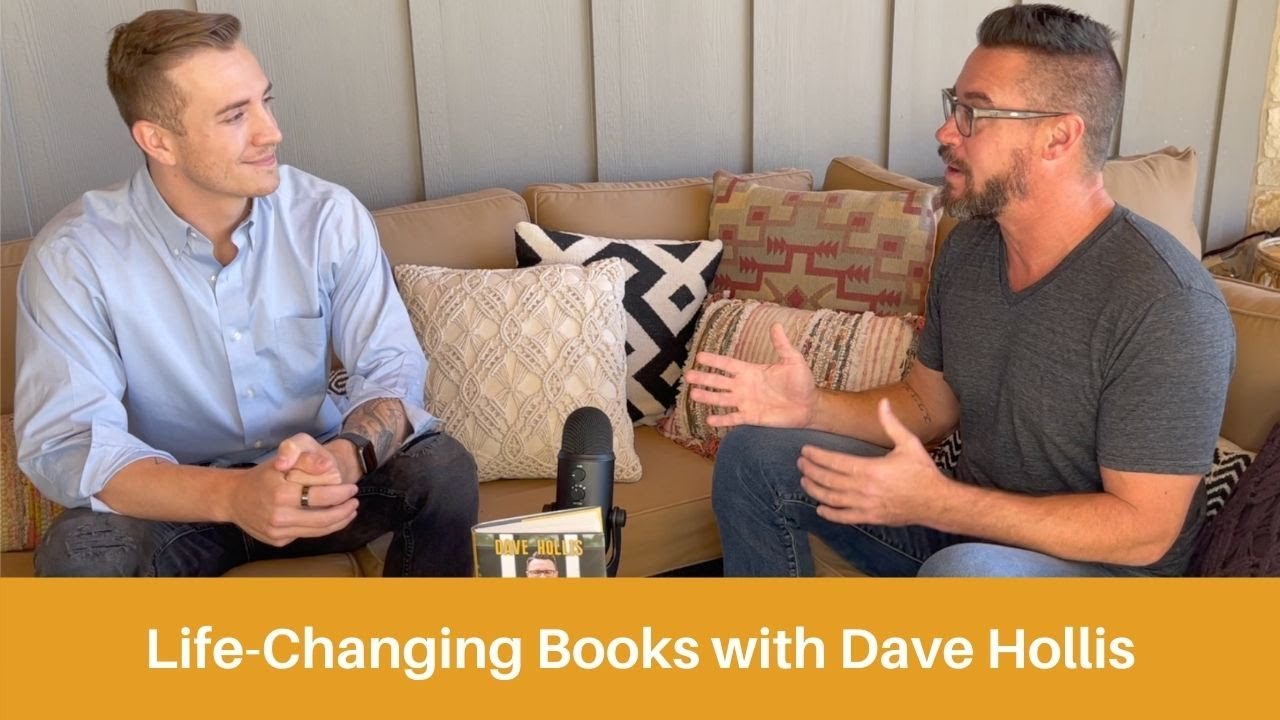
In this episode of the Life‑Changing Books Podcast, host Nick Hutchison interviews personal‑development author and former Disney executive Dave Hollis about his debut book Get Out of Your Own Way. Hollis explains the book’s premise – a skeptical guide to growth and fulfillment – and shares his personal journey from a 17‑year corporate career at Disney to entrepreneurship in the self‑help space. He discusses the fixed‑versus‑growth mindset, the role of skepticism, and how embracing discomfort fuels transformation. Hollis details his struggle with coping mechanisms, notably drinking, and how he replaced it with running, using habit science from Charles Duhigg’s The Power of Habit. He outlines his goal‑setting framework across five health domains and describes training for a marathon and an Ironman as deliberate physical challenges that reinforce mental resilience, especially during a personal divorce. The conversation delves into the vulnerability of writing the book, the cathartic impact of sharing personal stories, and the importance of accountability partners and surrounding oneself with growth‑oriented people. Hollis also talks about his meaningful tattoos, each symbolizing a personal mantra about becoming better, stronger, and embracing the ship‑in‑harbor metaphor. He recommends several influential books (Mindset, The Power of Habit, The Untethered Soul, The Power of Now) and announces a free “Goal Getter Club” program launching in January, offering daily coaching sessions tied to the book’s chapters. The episode concludes with Hollis directing listeners to his social media for further engagement.
Chapters
All right, Mr. Dave Hollis, thank you so much for joining the Book Thinkers Life-Changing Books Podcast. How are you doing today?
I'm well, Nick. Thanks for having me, bud.
Yeah, well, this is our second time recording your introduction because I just messed up on the first one and I didn't press record. So we're sitting here in your backyard in beautiful Austin, Texas. You're really enjoying the transition over here. But for those in the audience that don't know who you are, can you introduce yourself to everybody?
I can. My name is Dave Hollis. I work as an author. A speaker, a personal development coach. I am the father to 4 kids, which is like 1,000 kids. I, as you say, live now in Austin, Texas, though I previously lived for my entire life in Southern California. I've been working inside of this strange and amazing personal development space for the last couple of years, but prior to that, spent about 25 years inside of corporate, primarily inside of the entertainment sector where I worked at places like Disney and Fox. And have, in the transition of the last couple of years, been swimming in the deep end as I've tried to understand identity, chasing how to fully unleash the impact that I'd hope to have inside of this world in a totally unconventional and different way than I did before.
Well, you have an awesome background. It's very diverse and colorful. There's a lot of good stuff to dig into and unpack today, and we both have it in common that we've only been in this industry for a few years. I read my first personal development book right around 5 years ago. We started Book Thinkers right around 3 years ago, and the podcast is only 6 months old. And so we're both really new into this industry. And right in the introduction, you say something that I thought was very interesting. You say— well, it's actually a question— is self-help for broken people? And so why did you choose to start off this book with that question?
Well, it was something I believed for years and years. As much as I have become a person who fully embraces and believes in the tools like the ones that I am creating in real time, the subheader of the book is A Skeptic's Guide to Growth and Fulfillment. I was someone who was super skeptical of the tools that existed, in part because I just hadn't, one, really immersed myself inside the space to understand the kind of benefit that could come from someone using the tools.
Yeah.
But also, There's a little bit of skepticism that just runs in my blood. And so until I was able to actually spend time with books, at conferences, listening to podcasts, and reframe what for me had been a lifetime of fixed mindset, someone who just didn't totally appreciate the value or benefit, it's changed everything. Oh, look, Jeffrey is coming and trying to ruin our conversation.
I love Jeffrey. As I mentioned, my parents have mini schnauzers, so they'll appreciate the little cameo in the video. You just mentioned growth mindset. It's something that you touch on a lot in the book. We all know the Carol Dweck kind of famous fixed versus growth mindset. What is the difference between the two? And maybe what are some areas that you think the common person has a fixed mindset in that personal development can help with?
Yeah, I mean, by the way, Mindset by Carol Dweck, one of the first books I read in my indoctrination into personal development. a great gateway if you have not yourself started a journey inside of personal development because that difference between fixed, as in we are each born with a set of skills that are finite, that— I mean, Jeffrey, spilling my drink. You know, we are born in a fixed mindset kind of world with a fixed set of skills that are the limits to which we can actually achieve our our good, our light, our life. Whereas a growth mindset believes that is— that it's just this ever-changing journey, that you are perpetually becoming something bigger and different because of the way that you immerse yourself in tools, read books, listen to podcasts, all of those things. And I think because I was born with a certain set of skills, I did pretty well in school, I was an achiever by trade, my want for being loved by people I craved love from came often in achievement that I was able to achieve, had me believing that, hey, I was just born with some gifts and these gifts are the thing that are going to get me through. And I dismissed the possibility that you could in fact be reaching for something bigger through growth because in some ways I felt like not already being grown was an indictment on you as a person not being good enough or or worthy or whatever it might be. And so, my aversion to growth mindset truly came out of some strange frames that I was raised inside of that dictated a little bit of how I went about trying to find love from the people I wanted it from the most. And of course, there is a real connection between growth and fulfillment. You can't actually feel the thing that you'd hope to if you aren't in a perpetual state of growing. But it required rewiring and reframing a lot of what I was taught as I was growing up.
I was going to ask you about those 2 sort of pillars, growth and fulfillment, since you say in the book that those are really your 2 biggest takeaways from this new genre of lifestyle. And you do mention in the book a lot about the difference between the world you grew up in and sort of the things that you've come to accept now as both a parent and as an adult and as a professional. And so, I'd like to dive into a couple of those. What do you think are some of the biggest differences between the world you grew up in and the world that you have now? Because you have such a clear perspective on who you want to be and some of the things that you touch on in this book.
Well, for me, I had a big epiphany. Some people might even call it a midlife crisis in the midst of actually having achieved a lot of the things that I had set out for goals-wise but not feeling the sense of fulfillment that you ought to feel when you have the job with a certain title or have a certain amount of money in a bank account or have established your, you know, your house and your life for your family in a certain way. And I started asking some of these bigger questions around my 40th birthday about 5 years ago. Why am I here? And why does being here in the way that I am here not producing something that feels better than it should?
Hmm.
And all of the answers ended up coming back to not putting myself into places where I was being challenged or pushed outside of my comfort zone for the benefit that growth shows up inside of those spaces. And so the decision to leave a job at Disney for the entrepreneurial self-development or personal development world that I live in now was truly about leaving the safety and security, the certainty of a harbor that I had assigned so much value and weight to for the possibility of becoming something bigger and different, even though it would challenge my identity, even though it would require facing my fears, even though I wasn't going to be good at it when I first started. And in a way, with this book, leaning into something in vulnerably telling stories that might expose me as the work in progress that I am, for the hope that it created something of an empathy bridge with the reader who might also, in their humanity, be working on themselves as well. And so it's, you know, it's— life is short. And if you find yourself feeling stuck, it may be that you have decided to stay inside of some of the struggle or some of the discomfort that you are familiar with than the pursuing something that sits on the other side of your fear or outside of your comfort zone. Because that existing struggle is familiar. And for me, as much as, man, the last few years have been super hard in becoming this better and different version of myself, the pursuit of doing something that is disconnected from so much of what I previously valued and held as important is where the growth has come from.
Who do you think your target reader is? Like, when you were writing the book, in your head, who is the ideal person that was going to pick this up and benefit?
Well, I mean, I was writing it through the lens of what book would I have needed to read 5 years ago when I was skeptical of tools like a self-help book in the first place, when I was living into all of these limiting beliefs that were keeping me from fully unlocking the potential I had on this planet. If I had been given this book, might it have challenged a little bit of my thinking? and pushed me away from that fixed mindset and opened me up to the possibility of questioning who told me these stories that I have just created capital-T Truths around.
Mm-hmm.
And are there ways to question the validity, validity of those stories, the credibility of those storytellers? And so if anyone who's listening in any way is themselves still somewhat skeptical of what benefit might come from reaching for a tool like a book or a conference or a podcast, My hope is that some of the stories that I tell and how some of the work that was done in the storytelling could afford you the same opportunity to get out of your own way or stay out of your own way, open up the possibility for more fully unleashing the potential that you've been given by our Creator. Fantastic, because that's, you know, that's the hope. Now, if you're already fully immersed in and love personal development, you've read every single book, I still think there's something great in it. But definitely this was a— there's a market for sure in personal development that's going after the people that have opted in already to the genre.
Mm-hmm.
And this book was not necessarily written for that audience. This was for the 95% of the rest of people who themselves, like I was, may have, you know, something taboo around self-help being for people who have a problem or are broken. No, self-help is for people that are whole and healed, that are good and ready to take the next step towards whoever they're going to become.
Well, I'll tell you that I have read hundreds of these books in the last 5 years, and I found a lot of value in the book. So I think that even if— because you have sort of a refreshing way that you tell stories, you open up in a way that I think a lot of more traditional nonfiction or personal development writers don't. And so it's a very interesting brand of writing, and I love the storytelling. And you just mentioned in my previous question embracing discomfort intentionally. One way that you do it consistently is sort of like vice checking, to look yourself in the mirror, say, I can improve this way, I want control over this area of my life, let's try it out. And so what are some of the vices that you've had to deal with, and in what ways have you sort of checked them at the door and stood up tall against them? Yeah.
Well, I mean, the question I think I find myself asking most often is, how do I feel about myself when I'm by myself?
Right.
Big question. But the answer to that question ends up being how I know I would have to show up today to take a step closer to the version of who I believe I'm becoming tomorrow, whether it's 6 months or 2 years or 5 years from now. So, casting the vision for who I'd hope to become and then understanding the conditions inside of which I would have to show up today on the only day that I can actually control. Can't control anything that's happened in the past, have zero control over the what-if or how long of what might happen in the future, but I can control how I show up today.
Mm-hmm.
And so, the idea of vice checking truly came down to, okay, is there a way for me to understand the ways that I have enabled or indulged in coping mechanisms that when I get triggered keep me from living into that best version of who I'd have to be today to get a step closer to who I want to be tomorrow? And the answer, of course, because I am human like all humans, yes, there were things, right? So, I have a chapter in the book I write about drinking, right? Drinking for me was something that when things started to feel overwhelming, when my identity crisis or pushing into fear or even writing vulnerably in the chapters of this book were something that made me feel a bit uncomfortable, I would reach for a drink to try and smooth out the rough edges of a hard day. But it turns out drinking, like any negative coping mechanism, is not a local anesthetic.
Yeah.
You cannot only take care of the anxiety or the fear that you have, you also eliminate the opportunity for joy or for that feeling that you're hoping for in fulfillment And so I had to ask a better set of questions around why I was being triggered, what reward I was trying to ultimately afford myself by picking up a drink, and if there was something else I could do to actually still get to that reward without doing damage to who I'm hoping to become. For me, running has become a really fantastic alternative to drinking. have run a lot. I mean, I've run 2,000 miles this year.
Wow.
So, it's not to say that when you choose a healthier coping mechanism that the stress goes away. You're just finding a better way to process that stress. And so, for me, you know, Charles Duhigg's book, Power of Habit, fantastic book. Second book in my indoctrination into development. Understanding the science behind habits, the habit loop, that there is a trigger, there's There's some kind of activity that takes place that produces a reward. I now can be on the lookout in my day for when I anticipate that I might be triggered. And if I know a trigger is coming, all right, put on those shoes, brother. It's time to get out and move that body so that you can reframe how you process the things that you're feeling. And so drinking is a single negative coping mechanism. There are plenty of negative coping mechanisms. I think every one of us have them, but being willing to create the self-awareness to understand what they are, why they exist, and when they show up gives you that fighting chance to actually get in front of it and preempt them from happening before they do so that you can finish your day having created integrity between who you'd hope to have shown up as on this day to become that version of who you're becoming. At the end of the day, If you can create that integrity, right, there is no delta between who you should have shown up as and who you did. But if there is space, right, if you didn't make the best choices, if you didn't show up as well for yourself as you could have, this is where shame, regret, underfulfilled potential, feeling like you could have but didn't.
Mm-hmm.
And that's the kind of stuff that really drags us down. And so, the The more again that you can create that integrity by preempting those negative coping mechanisms, the better you're going to set yourself up for success.
I watched a video of yours the other day where you were discussing the upcoming Ironman that you're training for. So since you mentioned running, I figured I'd bring this up. In the video, you talked about goal setting in this space that you got into. Maybe it was while you were on a mountain bike or road bike where you just You couldn't get your mind around finishing and it was a struggle and you were in this moment where you're like, I don't know if I can exert myself this much. So, could you walk us through that? Because I thought it was a pretty interesting level of awareness that you had while you were in that experience.
Yeah. I mean, one of the things that I do for goal setting in real time is asking the question, what do I need in this season to help me become this version of who I'm hoping to become? Against the 5 different components of health: physical, mental, emotional, spiritual, and relational health. I try to make a goal or 2, maybe 3, for each of those things any given time. And so for me, physical health is such a keystone habit in how it has a knock-on effect for every other part of the day.
Yeah.
So one of my big goals on the physical health side of things is to always be pushing myself into a physical challenge that is bigger than something I've previously accomplished so that I can, in doing something physically that's hard, reframe the way my brain processes my ability to do hard things.
Mhm.
And so running a marathon earlier this year, hadn't previously run a marathon, set that as a goal, did the training, finished the 26 miles. I've now reframed what I believe I am capable of in terms of How far I can run. As soon as I finished that race, I signed up immediately for the Ironman.
Yeah.
Because I'm a terrible swimmer, I've never been on a road bike, and the idea of having something like an Ironman to shoot for felt like the kind of thing that would satisfy this goal I have. Do something hard that goes beyond your perceived capabilities. And the hope is that by pushing yourself physically in these spaces, That you are, because of the mental fortitude that's required, the physical strength and stamina that's built, able to transfer some of that experience on the physical side into anything that you're experiencing in real time in your life.
Mm-hmm.
And so, hey, as it turns out, 2020 has been one of these upside-down years for all of us. We're experiencing so much that we never could have imagined. I also happen to be going through divorce in real time. That's a hard thing. And the great news is the physical challenges of training for that marathon or training for this Ironman are now transferable knowledge skills that are being applied in real time to this conceit, this belief that I can do hard things because of my real-time practice of pushing myself into something that is bigger than I believe that I have capacity for. I'm reframing what I believe I'm capable of. And I would encourage anyone, you can do that inside the physical space, And have it be something that works for mental or emotional health. You can do that inside the physical space and find that there's some kind of connection inside of spiritual health with a power that's bigger than you helping you do something you didn't think you were capable of.
Now you have to do your marathon.
Do that marathon. Or Ironman.
Or— That's another step down that road. Yeah, that's great. Something that we were actually talking about on the ride over here was that Writing a book like this is probably one of the most uncomfortable things you could ever do. And it's probably one of the best growth opportunities for probably anybody because of the levels of awareness that you achieve going through this process. And so, I know that you mentioned it was a difficult process to put the vulnerabilities on paper. But what other thing— what are some of the other benefits of writing a book like this?
Oh, I mean, this is the most cathartic experience that you can possibly go through. It was, as you say, super triggering. I mean, I was in on this, the conceit of doing a book in this format and style. I thought it would be powerful and be something that could connect to the audience because of wanting to be as honest and transparent about the experience of my struggle and the way that I've attempted to overcome things that were hard in my life. And also, it's soul-baring, you know.
Yeah.
And so There were plenty of times where in the midst of writing, I'd find myself feeling like I just finished a long therapy session. Which, man, I'm a wild advocate for therapy.
Mm-hmm.
But there were certainly times where I was like, oh my goodness, is this, is this too much? Am I sharing too many things? Am I going to be okay? Even the press leading up to the release of the book, you know, every question ends up being questions about super personal things.
Yeah.
And you just have to, you know, kind of acknowledge and decide that, hey, part of how the impact that the book was intended to have is going to come through vulnerably sharing the things that you've experienced. And that's okay. It's not a bad thing. Uh, you know, I've talked quite a bit in the aftermath of the book coming out that struggle really thrives in the dark. And so in a beautiful way, there is freedom in being able to really honestly acknowledge the things that I've worked through because everyone knows. And in everyone knowing, there's nothing now that could be weaponized against me because, hey, I've already told you just about every single thing that's happened in my life. But also in having raised my hand and represented, hey, here are some things that I've had to try and work through to become a better version of myself, it's afforded me in that empathy bridge an opportunity to connect with people who've already actually figured out a tool, a hack, a thing that worked for them, that by being willing to raise my hand and say, hey, I've struggled with this thing, has afforded me some anecdotes, some salves, some books, some, again, podcasts that was recommended because of someone seeing a story, reading something that triggered, oh hey, you know what, I also went through this. And I can see in some kind of a solidarity for the appreciation of your experience, that you might benefit from this thing. So if you as a listener are struggling, one, don't keep it in the dark. That is where struggle thrives. If you are able to represent what you're going through, you'll realize that there are a lot of people probably experiencing the exact same thing that you are experiencing, and that'll just make you feel less alone. But also, it might afford you an opportunity to find a tool, a trick, a hack That will inevitably allow you to address the thing that you're trying to work through.
Well, there was one story in particular that both of us identified with in a big way, and that was leaving big traditional business and moving into entrepreneurship, taking a defined skill set that you knew you were already successful with and kind of leaving it at the door to try something new. And so could you tell everybody a little bit about what that experience and transition was like for you, and maybe what are some of the benefits of entrepreneurship since we have a lot of young professionals in the audience.
Yeah, so my previous job was working at the Walt Disney Company. I had a 17-year run there, the last 7 of which where I was the head of sales for the movie studio. So I was putting the Marvel, Lucas, Pixar, Disney Animation films into movie theaters. It was a dream job. And as much as, man, I have so many amazing memories and worked with so many incredible people, Part of the decision to leave was selling Star Wars and Avengers movies to theaters wasn't the most challenging thing every single day. But I also had the benefit of the greatest team, the greatest leadership, the best company, the biggest brands as a part of my identity and a part of my professional success that the decision to leave that to go do something that I did not yet have proof would work, that I did not know how transferable or not my set of skills would actually be, was exciting and terrifying. And what I learned very early on was that many of the things that I had leaned on inside of the biggest media conglomerate in the world with the strength of these brands didn't actually have the kind of transferable application inside of a small startup kind of environment.
Yeah.
And so the way that I was leading the teams when I first transitioned into the Hollis Company, the way that I, uh, was approaching problem solving or even feeling triggered by problems coming up was surprising and in its unexpectedness at times super triggering. Uh, you know, at Disney, if there was a problem, likely because of the breadth of experience that people had, somebody had seen that problem before, had a way to diagnose a solution for it pretty quickly, the set of skills to actually make it go away before it became big. And inside of the small business entrepreneur life, we were having problems 3 or 4 times an hour and had not yet built the institutional knowledge to know how to address those problems. And so at the beginning, I think as a leader inside of this small organization, I took very personally that problems were happening. And what it required was for us to spend time with other people who were working inside of the entrepreneurial space to normalize that the price of entry for being an entrepreneur is problem-solving on a 3-times-an-hour basis. That, that's not a sign necessarily of you not having the right set of skills. It's just what it takes and what comes with trying to run a small business or scale a small business. The way that I was having to roll my sleeves up, get my nails dirty, and be more engaged and involved with the problem solving of the things that were coming up was also a big difference. And in my past, I would depend on and afford autonomy to someone who'd run the business for a long time, a lot of times longer than I even had. And here we were having a problem, and the mistake I made at the beginning was saying, "All right, you go figure it out. Come back to me with your solution or your set of." solutions as a recommendation, and we'll make a choice on what we ought to do based on your recommendation. But the team— and they were great people— had not yet had enough experience to really make the best kind of recommendations. And it was a mistake of mine to have afforded them as much runway, because small problems became bigger problems and could have probably been addressed in a different way if at the beginning I'd have been a little bit more involved. So it required a pivot, and, and, and like finding a way to really dig in. But it also was humbling because, man, I'd had unprecedented success, record-breaking success in the exploits of what I'd done inside of the movie studio, part of my career journey.
Mm-hmm.
And coming into this, as much as there was success, it was born and, and delivered through a completely different mechanism that was hard and, and was On the days when it felt like, man, is this a me problem? It required really just like, again, humbling myself and becoming self-aware with how to lead in a completely different way by spending time with other people who were already inside the space.
Was it worth it? Are you happy?
Oh yeah. I mean, here's the thing. Like, I am so grateful for every experience that I've had. I am, man, so grateful for the learning that came out of having having made the big leap that I did 2 and a half, 3 years ago, and as much as I'm not sure that everything has gone exactly how I would have thought it was, I am so grateful that I find myself right where I am today because all of the learnings and all of the experience, the discomfort of being outside of my comfort zone has created all the opportunity that sits ahead, right? I'm, as much as yes, we're talking about this book, I've been writing on what will inevitably be the next book in real time. And it's based on this tattoo on my arm, a ship in harbor is safe, but that's not what ships are built for. And the idea of the book is that's not what ships are built for, pushing yourself into these uncomfortable spaces and dealing with the promise of uncertainty when you go into those uncertain spaces, especially coming out of a year like 2020. I I started writing it before pandemic happened, and it feels like— I mean, I hope I haven't manifest any of the things that have happened inside of this year, but man, it's been amazing fuel to be writing about pursuing uncertainty inside of a window of my life where uncertainty has come at just an unprecedented clip.
Yeah, I'm sure a lot of people are feeling a very similar way because of 2020. Your tattoos, you talk about them in the book a little bit. People ask me all the time on the podcast and on Instagram about my tattoos because I'm covered in them. And so what role have these tattoos played in your life, and can you talk about them?
Yeah, so, uh, the first tattoo I got was this one here, the word ally. Just a recognition of the privilege that exists, uh, as a part of me being who I am and the responsibility that comes in that privilege to show up well for people who are not maybe afforded as much access, as loud a megaphone, as much time on a stage. So just trying to be as much an advocate and ally to, frankly, anyone in the work that I do and the impact I'd hope to have. I got these 2 tattoos after a profound experience climbing a mountain. One arm says better, the other says stronger. I had this amazing experience last year in doing this event called 29029. What is that? Which is the attempt to vertically climb the equivalent of Mount Everest. And so, uh, at altitude, steep pitch, 13 climbs up and down a mountain over a 36-hour time window. I again had bitten off something that was way bigger than I thought I could chew physically and mentally. And as the evening was turning into morning on the second day, I found myself with my ski poles just for maybe 5 or 6 hours up that hill at the very end when I was just gassed, didn't know if I could make it. Inhale, better. Exhale, stronger. And it was just this, this declaration that with every step into an unknown space that went beyond what I believed I was capable of, I was with that step becoming a better version of myself, with that next step becoming becoming a stronger version of myself. And now as I hold my kids, as I think about what I eat, as I am running, I get to look down and have this reminder that no guarantees of any of this being easy, but that with each step into this unknown, I am with that next step becoming a better version of myself, and with that next step becoming a stronger version of myself. You know, and like the other tattoos, this is a reminder to my kids kids, that I want them to push into the uncomfortable experiences that are going to produce growth in their life as well. So, if they get the opportunity to run for office or try out to be the pitcher or whatever it might end up being, I want them to also believe that they're going to be this version of who they'd hope to become or who God's put them on this planet to be because of deciding in the face of adversity in the face of it maybe being conventionally not a popular thing to do, that that's the thing they got to go do because they'll become better and stronger as a result. And this last one is the tattoo I got here: a ship in harbor is safe, but that's not what ships were built for. I got that, one, as just a reminder to myself truly that I could have very easily decided to stay at a job that was creating a comfortable lifestyle but not necessarily fulfilling me.
Mm-hmm.
But I, I want the reminder when I look in the mirror that I am a ship that is destined to be out on these choppy waters. That is why I was built. It's what I am made for. But there are plenty of days where I question if I have what it takes to actually successfully navigate those seas. And so the reminder that that's what ships were built for is the reminder to me that, Dave, this is what you were built for. You were built to be out inside of this choppy, uncomfortable space, even if it's scary. Maybe because it's scary, because in, you know, chasing things that make you uncomfortable, you're going to fail. Failure is good. It's rich data. Process that rich data, learn from that rich data, and grow. And so, you know, playing it safe, that's one way to go through life, but playing it safe is probably not going to be something that necessarily has you waking up at the end of your life feeling like you fully stretched yourself or fully found a way to unlock and unleash the potential that was put inside you.
We both view tattoos in a very similar way, and I have a lot of similar stories, so I love that. 2 more things. Number one, in the book you talk a little bit about accountability. And for me, that was one of the kind of pivot points or inflection points in my life, was adopting a group of accountability partners who could hold me accountable to some of the goals that I was setting and always push me a little bit farther than I initially thought I could go. And so what role have accountability partners played in your life?
Well, I mean, I think everyone has probably heard— if you're listening to this, you're, I'm going to imagine, already immersed somewhat into personal development— but that you are a reflection of the 5 people you spend the most time with, attributed to 100 different personal development people, right? But, you know, if you are the most ambitious person in your circle, you need a new circle. If you're the most, you know, fill in the blank. If you're the person who is interested in growth the most, if you are the person who is reading the most, if you're the person who— whatever it ends up being. Then you need a new circle because you will gravitate to the kind of people, their energy, whether they're more positive or negative, whether they're more growth mindset or fixed mindset oriented. And so really being conscientious of who you're surrounding yourself with and who you spend most of your time with is critically important so that you have the right kind of influences in your life helping you appreciate how to reach for the best version of you and not settle for something that undermines who you could have otherwise been. So, you know, you are what you consume. That's as much about people as it is media and the way that you're immersing yourself in social media. Are the people that you're following positive? Are they making you feel the way that you'd hope to or not? That goes as much for news, right? Like, there's been so much crazy in what's happening in the world in this last year's worth of time, and as much as, yep, staying informed is important, if the way you feel after you finished consuming ends up being less than more— less energy, less optimistic, less hopeful— then you got to think about how you reorient that. But finding people, right, inside of my physical, you know, goals, I've got people that I'm training with. For whether it's a marathon or whether it's an Ironman. When it comes to my emotional or mental goals, like, I've got someone in— a therapist who is helping me process the things that I'm thinking about. When it comes to the books I read, I'm inside of groups that are recommending, hey, here's the most recent thing that I've read, you should read this. As I've become someone who's read something new, I'm doing the same thing advocacy-wise to try and be an encouraging accountability partner to the people that I care about in my life as well.
Hey, even for the skeptics among us about personal development and self-help, I think that that statement, you are the average of the 5 people that you spend the most time with, is something somewhat universal. It's accepted, I think, generally, and it's a good bridge to get somebody interested in this world. Last question that I have. So you mentioned a couple books. You mentioned Mindset, you mentioned The Power of Habit. What are some of the other books that have had a big impact on your life?
Well, I mean, 2 books that have been really important for me in the last 6 months' worth of time— The Untethered Soul by Michael Stringer— I want to say it's Michael Stringer— has been amazing because in the midst of processing what you think or how you feel, especially when things are not going exactly how you would have hoped, has been life-giving because I have come to appreciate that I am not my thoughts. I am the observer to my thoughts. I am not my emotions. I am the observer to my emotions. And the book is all about, you know, creating a relationship with the things that you're thinking or the feelings that you're having so that you can ask, why are they here? Right. And so If anxiety, as a for example, anxiety is a thing that plagues a whole bunch of us. But when anxiety shows up, if you are able to make a relationship with it, ask what role it hopes to play by having come into your life.
Mm-hmm.
Now maybe you can, in a way that doesn't demonize it existing, turns into a little bit of a trail of breadcrumbs, right? So for me, anxiety showing up has become something where I Oh, I have not yet fully developed a plan for a part of my life, right? And in the ambiguity of not having fully and clearly gotten to the bottom of all of what needs to be gotten to the bottom of, I have anxiety. Well, thank you, anxiety, for having directed my attention to this thing in my life that now, if I was able to actually put a little more specificity around, would alleviate your responsibility for thinking you need to be present and create clarity for someplace that I'm actually going.
Mm-hmm.
Right? You can do the same exercise with fear or with anger or with any emotion, any of the thoughts that end up coming up. So that's one. 2, The Power of Now by Eckhart Tolle. I mean, it's unbelievable just in the appreciation of we are here. And in a world where there can be a tendency humanity-wise to bemoan, regret, feel shame, a whole host of things for anything that's happened in the past. Overwhelm, anxiety, fear for anything that might happen in the future. Just coming back to and appreciating that we are here, can control this, and the more that we can stay connected to it, there's freedom from having to worry about the control that we do not already have. For anything that's happened in the past or anything that's going to happen in the future. I think one of the biggest gifts of 2020 truly has been the reminder that control never existed. You know, I think that we as, again, as humans, we trick ourselves into believing that we have a power to control the things that are happening in our world, and then pandemic happens. A whole host of things end up happening that come and remind us, nope, you have no control. So It's actually only today and the way that you show up for yourself today that you can control.
I really love The Power of Now as well.
Yeah.
It's a great book. And then before I have you wrap up and tell everybody where they can find you, you have a program coming out that starts on January 4th?
I do.
Okay, so what's that all about?
So we're doing a book club of sorts to kick off the new year. It's called Goal Getter Club. It's through a partnership with my friends at the publisher HarperCollins. It is 100% free every single day for those first couple of weeks in January. You get a 20-minute or so coaching conversation around a chapter in the book. We then will have a live that day to answer any questions that may have come up as we dove into— the whole hope is, hey, if we can address the things that may inevitably show up to get in our way in 2021, Could we preemptively create a plan that would afford us the agility to, knowing that they will happen, actually navigate around them ahead of time, build the kind of plan that sets us up for success, and eliminate the negative coping mechanism problem, eliminate the limiting beliefs problem, eliminate the comparison issue, or the what if people are thinking about me thing that may in fact hold you back? Let's just inoculate ourselves from the stuff that could get in our way to start the year off. And I would love to have as many people as possible jump in, 100% free, doing it for a couple weeks every single day. I'm gonna have a 15-minute coaching session giveaway where I'll jump into someone's Zoom. If you're in a book club, if you end up buying 15 books, I'm jumping into your book club to hang out and have a fun time too.
Awesome. So we will put a link in the show notes to go sign up for that for the first couple of weeks until it starts. And for those that want to learn a little bit more about you or your book, where should they go? What should they do?
Well, I live on social quite a bit. So you can follow me @MrDaveHollis on Instagram, Dave Hollis on Facebook. And those are the places where I connect with the community the most. So head over there.
Amazing. Well, thank you so much for the conversation. I want to shake your hand.
So good.
Yeah. And this will be out soon?
Awesome. Thanks, bud.
More from Nick

Napoleon Hill’s “Think and Grow Rich” is a timeless classic #selfhelp #personaldevelopment

4 Books to Help You Get Better at Decision Making #selfhelpbooks #bookrecs #nonfictionbooks


Have you read this book yet? 📖: The 5AM Club by Robin Sharma #selfhelpbooks #robinsharma

Dan Sullivan on Listening to Your Customers Instead of Watching Your Competitors

5 Books That Will Boost Your Financial Intelligence #financialfreedom #nonfictionbooks

The People That Preach the Loudest About Virtue are Usually the Most Power Hungry



Books are the greatest mentors you can find #selfhelpbooks #businessbooks #successmindset

Let’s fight this toxic instant gratification culture together 📖 #selfhelpbooks #jimkwik