Life-Changing Books Podcast Episode 50. Guy Raz: Author of How I Built This
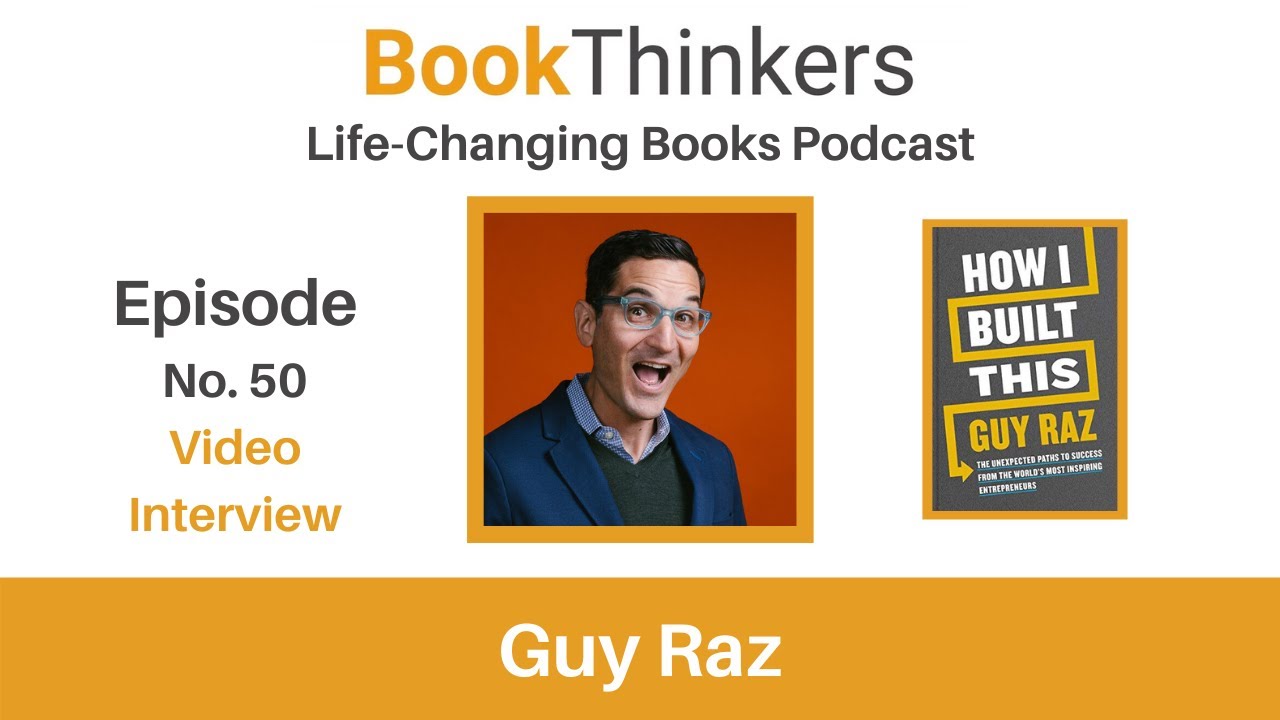
In this episode of the Life‑Changing Books podcast, host Nick Hutchison interviews broadcaster, podcaster, and author Guy Raz. Raz recounts his career from foreign‑correspondent and NPR reporter to creator of the hit podcasts How I Built This and Wow in the World, explaining how a Harvard Business School case‑study class sparked the idea to tell entrepreneurs’ stories as a public‑service. He describes structuring the How I Built This book around Joseph Campbell’s hero’s journey, using it to frame founders’ arcs of risk, failure, and resilience. Raz details the rigorous research, fact‑checking, and editing workflow that leaves roughly 65 % of recorded material in the final episode, and emphasizes making guests feel comfortable enough to be vulnerable. The conversation surfaces recurring entrepreneurial themes: risk mitigation through side‑hustles, embracing rejection, maintaining optimism, and leveraging “side‑door” or “third‑door” entry strategies, illustrated with stories of Daymond John (FUBU), RXBAR’s Peter Rahal, and Raz’s own early reporting career. They discuss the importance of reading—both nonfiction and novels—to broaden perspective, citing books like Atonement and Darkness at Noon as influential. Finally, Raz explains the purpose of the How I Built This book as a curated collection of founders’ mistakes, intended to help aspiring entrepreneurs avoid common pitfalls, and shares where listeners can find the book and follow his work.
Chapters
Guy, thank you so much for joining the Book Thinkers Life-Changing Books Podcast. How are you doing today?
I'm doing great. Thanks, Nicholas.
I'm very excited for our conversation and we have a lot of mutual fans that listen to this podcast. So I took a lot of guest questions. I polled our audience a couple of different times and we've pulled some creative questions. But for those in the audience that aren't familiar with who you are, I'd love to have you give an introduction. Tell everybody a little bit about yourself.
Sure. So my name is Guy Raz and I am a longtime broadcaster, probably better known as a today. And I'm the creator of several podcasts and probably best known for my show called How I Built This, which is a show about entrepreneurs and founders of incredible brands and how they built them. And also another show that, that is kind of well known is called Wow in the World. It's a kids podcast. It's a science show, and it's a journey through the amazing world of science. So that's me. I'm also an entrepreneur. I run 2 production companies. But mostly I love just talking about ideas and about people who inspire me.
Well, in the spirit of How I Built This, I'd love to take you back to the early days of starting this production with NPR. I'd love to learn how it came to be and sort of what your early expectations were for the show.
For most of my early career, I was in the news business, right? I was a reporter. I started out as a reporter. really just writing about anything that I could to get published. So initially I wrote about the arts, and then eventually I started writing news and then lived overseas for 7 years earlier in my career where I covered conflicts. And I was in Iraq and I was in Afghanistan and in Israel and Palestine and all over the Middle East. And so had incredible experiences, covered the military. About 10 years ago, I left the news world to start a show, a show that NPR was collaborating with TED, the TED Talks people on, and it's called the TED Radio Hour. It's still around. It's a great show. And that really kind of was my entree into the world of podcasting, right? For most of my career, I thought of myself as a radio broadcaster. And when I went into what is called podcasting, it was like going into exile. I was like leaving. I had the show, the last radio show I hosted called All Things Considered. I hosted the weekend version of it. We were on 800 stations, it still is, with an audience of 4 million people a week, right? And I was leaving that behind to go to this obscure little thing called podcasting. And much to my surprise, podcasting just exploded in a way that I don't think I anticipated or many others did. And about, about 5 and a half years ago, I, I started to think about an idea that was lodged in my brain for some time. And it came to me back in 2008 when I had the opportunity to take a year off of being a journalist and do a fellowship, a journalism fellowship at Harvard, actually. And they have a fellowship for journalists. And I took a class at the Harvard Business School called 'Cause it was a— as a fellow, I was able to take classes anywhere I wanted to at the university. It was the first time I took a business class and I was introduced to the case study method. And that kind of blew my mind because I hadn't known that that's how business schools taught business through stories, which is what I'd been doing my whole career. I remember one of the first case studies we read was the story about Howard Schultz and Starbucks. And it was so dramatic. I didn't know, how close it got to just collapse and crisis. And I didn't know all those things about Starbucks. I just knew Starbucks is this like 800-pound gorilla. And in the back of my mind, I thought one day there's a way to tell these stories in a way that wouldn't require a $100,000 tuition fee to a business school. So about 5 and a half years ago, I was hosting TED Radio Hour and it was going great. And I had this urge to, pursue this idea because I believed that through the platform that I had already, I already had a big audience on TED Radio Hour, that we could create really a public service. Because I really, I try to think of what I do, and I think you think of what you do as a public service, which is I have a job that enables me to learn a lot about things and also to bring on influential people and and interesting people onto my platform and then deliver that information to people who can use that and improve, maybe improve their lives or be inspired in some way. And that was the genesis of how I built this. I wanted to use my platform to get the biggest and best-known entrepreneurs in the world to tell their stories, but in a really meaningful personal way, not in a polished PR way. in a way that— where they were vulnerable, where they were open, where they surprised you, and when most importantly, where they didn't come across as superheroes but as normal people who somehow found the courage to take a risk. Because I wanted a show that was relatable to people who were at the edge of the diving board but not quite ready to jump, you know, looking down at the water and thinking, oh, this is really high up. But I wanted a show that would kind of give them the push they needed. And that was the genesis. That's how it started. And I went to NPR and proposed the show. And eventually we came to an agreement to make it. Here we are almost 5 years later now. I never ever Nicholas anticipated the show would take off the way it did. And I honestly didn't. And this is not false humility. I really, I thought it would find a niche and it would find an audience of entrepreneurs. But today I would say the vast majority of people who listen to How I Built This are not, they're not necessarily entrepreneurs in the traditional way, which is great. They're entrepreneurs in a very different way because all of us are entrepreneurs. We're all architecting our lives. We're all making— strategic and creative choices for the way we live our lives. So we are all entrepreneurs in a sense. That is who my audience is today. It's not just people who are running businesses, it's people— and people who want to start businesses, but it's people who are looking for inspiration in just thinking about the world in a more creative way. They're thinking about people who can ignite the creative architecture in their brains. And that's, that's what I'm trying to do with the show. And that's— That's really why I wanted to put it out there, never thinking it would become this giant show, but it did. And eventually I had to decide to leave the TED Radio Hour to focus more of my attention on how I built this. And that's where we are today.
Sure. Well, there are a few different things I'd like to unpack there. First, I'd like to note something that I noticed, which is that your jump from traditional broadcasting into the podcasting world prior to the podcasting world becoming popular is very similar to a lot of the stories that you hear from the entrepreneurs that you're interviewing, they took this dive before there was this archetype of the Stoic entrepreneur standing against all odds, hustle, hustle, hustle, it's the coolest thing to do. A lot of their stories started before it was popular and before there was a lot of momentum. So although it takes a lot of courage to jump into entrepreneurship now, there are a lot more resources than there used to be. And that's really important. And the hero's journey, I mean, that's something that you must have learned a lot about in the traditional broadcasting world before you jumped into the storytelling of business. And so was that an important piece of your pitch to NPR when you went to them with this show?
You know, it's interesting, it wasn't. I mean, I think you're referencing the hero's journey because in the book, I based the book around this concept, I structured the book around this concept of the hero's journey. And I think a lot of your readers who are super literate know about the hero's journey and Joseph Campbell, who really kind of created this, this kind of archetype for— he recognized that great epic stories follow similar patterns, right? There's a hero with a crazy idea, and the hero has to leave the village and eventually has to go seek out their, their, their fame and fortune on their own, finds a mentor. mentor dies, encounters a dragon, the dragon almost slays the hero. You know, it's Star Wars, it's Harry Potter, it's all these— it's Gilgamesh, it's Noah, it's all the great epics. And Joseph Campbell wrote about this in the '60s and '70s. And I think like many people who've read his work, I was inspired by that. And in these stories, I recognized those elements too. Now, you know, not every founder has a near-death experience or falls into an abyss and slays a dragon, but there are parallels to to things they go through, you know, near collapse of their businesses, putting it all on the line, putting their capital on the line or their reputations or their time and energy into something that could very well fail, you know, facing doubters, sometimes ridicule, going through years, sometimes decades of failure and crisis only to, you know, just emerge from it, um, with a lot of scars. And so in those stories, I really began to see that, that arc of, of a hero's journey. Um, and, you know, it was definitely something that I began to see more clearly over time, the more people I interviewed, because there are some stories that are just, are truly harrowing, you know, that, that where people weren't only dealing with tragedies in their business, but personal tragedies. There's a story that I tell in the book and, and was on the podcast, and it's a story of a business called Chicken Salad Chick, which is a very fast-growing, fast-casual chicken salad restaurant, mainly in the South in the United States. And the founder of that business, Stacy Brown, one day found herself divorced, a young mother with 3 children. no income, and she hadn't worked because she raised the kids, and she hadn't worked for income. And she started selling chicken salad door-to-door, and today it's a $100 million business. Now, that story is full of crisis, tragic loss, personal loss, an emotional toll, but an amazing, amazing hero's journey. And a story that I think almost anybody can be inspired by when they hear it.
There's a lot of natural curiosity as a listener of your show and as a reader of your book in these stories, because so many times you're not sure how that product got to the shelf in Target or Walmart or something like that. You're not sure why these products are in your home or where they started from, what the original needs were that they were serving and how they evolved over time. As an aspiring entrepreneur or young professional in general who is interested in the general world of business, there's so many digestible lessons that can be learned in a fun and entertaining way through the storytelling that you go through with each one of these entrepreneurs. So I'm very happy that you've decided to write this book. And Adam Grant actually calls it the mother of all entrepreneurship memoirs because it really is. And that's actually how I got into reading I wanted to learn a little bit more about some of these people at the time, Steve Jobs and Bill Gates and icons of industry. And a couple of them had memoirs that had been written about them. And so your show is like a mini memoir for each one of these entrepreneurs. It's a lot of fun to listen to.
Yeah, I mean, it's designed to be an oral history, you know, and oral history is both incredibly powerful and also you have to Consider oral history within a context, because look, on How I Built This, I'm interviewing generally one person about their story from their perspective. And so it's going to be a perspective. Now, what I will say is, what I do, what me and my team— and we're a small team— We spend a lot of time on each episode. So when I prepare for an interview, I mean, generally we do about 45 episodes a year, main episodes of the show, because that's all the capacity we have to do. And each episode, you know, for each episode we probably get about 1,000 pitches from publicists and communications and PR. And generally we can't, we don't, you know, We just don't have the capacity to go through them all, but we spend a lot of time researching potential guests for the show. And once we kind of land on a potential guest and we do some research, I will then have a phone conversation with them ahead of time. By the time they get to the studio and we do the interview, I usually will have read 7 to 10 hours of material about them. We'll do the interview and then That interview will go through a very deep fact check to the point where if there is a factual error, we'll call the person up and re-record it, or we will cut it out. We're really careful about trying to be as accurate as possible, hopefully 100% accurate. And it goes through several edits, you know, every episode goes through several edits before it's ready to go out into the world. So we, we take it really seriously and, and, and, you know, That's, that's how we kind of do the show. And then, of course, with the book, it's the same process. You know, it's designed not just to be the lessons in the book about whether it's, you know, you're learning about how Method soap was created by 2 guys in their apartment in San Francisco, or how Andy Dunn of Bonobos dealt with a leadership crisis, you know, or how— How Jen Rubio really kind of cracked marketing in launching the suitcase brand Away, which eventually was valued at over $1 billion. You know, they're all true stories. They're not sugarcoated, and they're not designed to be PR lessons. They're designed to be real-life lessons about what these people went through. Because here's the thing, Nicholas, you mentioned Steve Jobs and Bill Gates, and they're extraordinary people, right, in many ways. I think Steve Jobs, probably quite a complex person because, you know, you read about him and he wasn't always very nice. He wasn't always very kind. Bill Gates, I think, is a kinder person just naturally, but also, you know, tough business person, right? The thing is, is that I really believe that, you know, we are better off not just entrepreneurs, but all of us are better off when we demystify founders. You know, when we don't put them on a pedestal and venerate them. I'm, you know, and I see that with some entrepreneurs, particularly somebody like Elon Musk, who is brilliant, you know, probably a genius. I think his products are world-changing, but I'm also concerned that we put him on a pedestal. I think all entrepreneurs, it's important to remember that they are— we are like them, they are like us. Now, of course, everybody has their own quirks and advantages, and— but what I'm trying to do with Hybiltus is to say that this is achievable. You don't have to be a genius to create something of meaning. And by the way, You don't have to be Elon Musk or Steve Jobs or Bill Gates to create something that changes a part of the world. You know, you can do it in your own way with as much meaning and as much depth and power. And so what I try to do with How I Built This is to show that the people who come onto the show are not superheroes, that the only difference between them and you is that they found a phone booth in which to put on a cape, and then they walked out and they had a cape on. They're like, I guess I can fly, right? So that's, that's the essence of what, what I want this book to do and, and what I hope the show does.
I think it's a very valuable mission. And again, as a, as an active listener and consumer of this information that you're putting out, this oral history, it does give me more confidence because it does make it seem more realistic. There's a great example in the book. I haven't listened to the interview, but in the book, you talk about the story of Daymond John and working at Red Lobster. And he's not a superhero, he's a Clark Kent. So I'd love to have you just give a brief synopsis of that story so that everybody can hear a little bit about his early days with FUBU.
I mean, it's an amazing story because I think what makes it amazing is how unremarkable and relatable it is.
Yeah.
Damon John needed money. He was a young guy and he was working at Red Lobster for tips to make money so he could pay his rent. Um, he was living with his mom and he lived in a part of Queens where hip-hop was really exploding onto the scene and hip-hop culture was really exploding and He noticed that a lot of folks in the hip-hop world were wearing this type of like cap that had like a scrunchie thing on top. And anyway, there were these cloth caps that were really popular, particularly among men, and they were expensive. They were like $40, $50. And he looked at this piece of cloth and he thought, I could probably make those and sell them, you know, for less. And that really began his journey into the world of apparel. So he and his mom sewed like 40 of them. He stood out in front of a shopping mall one afternoon and sold them out for like $15. He made $800 in cash and he was like, whoa, this is insane. That led to the creation of a line of sweatshirts. He was literally buying Champion sweatshirts, cutting out the label, putting his own label in them, FUBU, and then putting the logo FUBU on his sweatshirts. FUBU, For Us By Us, because Daymond felt like that Adidas and these big apparel makers were not addressing the desires and the needs of his community of Black folks who loved hip-hop, that those brands actually were not making products for, for, you know, for folks who, who were wearing their products. So he wanted to make something that, that was specifically designed for his community, for us, by us. And it became a huge success, you know, but he was, he was working at Red Lobster, you know, for 2, 3 years into this project while he was, he was building it up. And eventually he would, he would sell FUBU, the apparel line. And today, of course, we know Daymond John as a Shark on Shark Tank and an investor. But really somebody who began by selling t-shirts out of the back of his car. And it's an incredible story. And you see a version of that story really in so many entrepreneurs.
In one of Daymond John's books, I think it was Rise and Grind, he says something along the lines of, the only difference between these mega famous billionaire entrepreneurs and you is just a couple of decisions. It's a little bit of confidence in that scenario. It's a little bit of luck in this scenario. We all have 24 hours in a day. So use your time wisely, make a couple bit of, you know, research a little bit, make some different decisions, and things will be a little bit different for you.
Yeah.
So it does humanize it for you. And my journey is similar to that as well. I didn't jump off the cliff and try to build the parachute on the way down. I built Book Thinkers as a side hustle while I maintained a full-time job that taught me skills that could translate into this space. And that's very important. And more people, I think, would be As you're doing, more people become comfortable starting up side hustle businesses with a full-time job. And in the book, you call it the fallback plan. So that's— it's great that you're writing about it.
Yeah, and it's actually my number one piece of advice for people who are thinking of starting a business, which is people— I think many of us assume that entrepreneurs are these wild risk-takers, that they're the kinds of people who jump out of an airplane without a parachute. The reality is that almost no entrepreneur I've ever interviewed is like that, like virtually none. Virtually all of them mitigate their risks. Yes, they take risks. It's, it's risky to put an idea out into the world. It's risky to start a business because it might fail, right? But so what? What I found with virtually every entrepreneur I interview is they mitigate their risks. And one great way to do that is to keep your day job. Like Daymond John did. He kept his day job at Red Lobster, or his night job. Mark Cuban was a bartender. You keep your job and you've got some income coming in while you really focus on the other thing. You know, Nancy Twine, who started Briogeo, which is an incredible line of natural hair care products— Nancy was a, you know, she had a job in finance in New York and she was making shampoos at night. Melissa Butler, who founded The Lip Bar, She was working finance during the day and focusing on making lipstick in her apartment in New York City at night. And then eventually you watch as your day job might— the income from the day job or the potential might be here and your side hustle might be here, but over time it starts to reverse and you start to see the potential and the growth potential in the side hustle, and that's when you leap and that's when you can take the risk.
People often ask you, hey Guy, you've interviewed countless entrepreneurs, they're all uber successful. What are some of the commonalities that you see between them? And you respond with, well, they've all acquired learned skills. So you just mentioned one of them, mitigating risk. What are some of the other learned skills that you see as common traits amongst some of these uber successful people?
You know, I think the, the reality, Nicholas, is that all entrepreneurs have to have a certain level of optimism and an unshakable belief in their ability to execute. That's really hard. Almost no one is born with that confidence. Some people are, and they're very lucky. I'm not one of those people. I don't think you're one of those people. I think most successful entrepreneurs develop that confidence over time.
Mm-hmm.
And, and it comes— it's hard won, and it comes from the single most important thing that every entrepreneur must have, must develop, and it is the ability to hear the words no and to keep moving on, to keep moving forward, to hear somebody say not interested, no, to reject your idea, to tell you your idea won't work, to tell you they're not interested, to tell you no soliciting, whatever it might be. And for you to be able to hear that and to keep moving forward and not get stopped in your tracks. We are naturally, as humans, we are naturally resistant to exposing ourselves to rejection. We are afraid of it. Nobody likes it. Nobody wants to hear somebody tell us our idea is bad. We are naturally wired to want to put out an idea and for people to say, amazing, I love it. But That doesn't happen most of the time. Most of the time people say, well, if it's so good, why hasn't it been done before? Or are you sure you're the person who can do it? And what you need to develop is the ability to hear that and to keep moving forward. It's very hard, but it requires you to expose yourself to that kind of rejection over and over again. And it's why many of the entrepreneurs who have— who I've interviewed on How I Built This and who built successful brands started out in sales, going door-to-door selling things. Sara Blakely, who founded Spanx, sold fax machines for 7 years. She was getting people for 7 years telling her to leave the premises, please, not interested, no soliciting, security, you know. So by the time she had to start, you know, Spanx, which meant that she had to find somebody to make a prototype, She could hear no 50 times and know that she will eventually— she would eventually land on a yes. So exposing yourself to rejection, understanding that it's part of the process, that you have to go through rejection in order to find success, knowing that ahead of time, that's the key. And that's the single most important skill you need. To start a business.
I love that. I had some basic level of awareness that I wasn't a very good communicator when I was in college, and I actually saw a flyer in one of those common rooms about running your own house painting business, and I think it listed sales skills or something like that in the description. And so I took that job, and I actually went door-to-door selling house painting for 2 summers. And the difference between when I started doing that and when I ended doing that, I was a completely different person. I was able to communicate with more confidence. I was able to articulate in a more efficient way. And I mean, I wouldn't have this podcast without that experience. So people underestimate the rejection piece a lot. And then what's interesting is— sorry, go ahead.
Yeah. And I was saying they underestimate those kinds of experiences. They're so valuable.
Yeah. Yeah, I'll never forget, I rehearsed this script over and over and over again, what would happen once I knocked on a door and somebody would open it. And the first time that I went through that experience, I forgot the entire script. So I ended up just saying something like, hi, my name is Nick, would you like an estimate? They're like, an estimate on what? I'm like, oh, I'm running a house painting business to help pay for college. Let me restart. And she just closed the door. But it taught me that the rejection is necessary and that sometimes You need to go in through the side door. And so that's another concept in the book that I'd love to have you expand on a little bit. What does it mean if you're rejected at the first door, but you still want to find a way in? And maybe what's one business example of an entrepreneur that did that?
This is one of my favorite examples because it actually is my own story too, which is throughout my career, I always found more success coming in through a side door. rather than going through the main door that everybody else was going through. When you go through the door that everyone else is going through, you are competing against many other people and it's harder to stand out. There are usually protocols and, you know, whether you're going to work in finance or let's say you're going just to work at a sales job and you want to advance, trying to advance in the traditional way is really challenging. And it's not always clear who goes, who gets ahead and who doesn't. And I have found in my career that when I go through the side door, which is to find another entry point in to eventually get to where I want to go, it's been really, really useful. So for me, early in my career, I really wanted to be a reporter on the radio, but I couldn't get in. I didn't know how to do it, and it was very hard. There were editors, there were gatekeepers, there were so many obstacles that made it almost impossible. And usually the question was, what's your experience? Well, when you're 21, 22 years old, you have no experience. And it's a chicken and egg problem. If you have no experience, you can't get on the air, but you can't get on the air— if you have no experience, they won't put you on the air, and you can't get experience if you can't get on the air. So the way I was able to do it was by starting really small. I went to a local alternative weekly newspaper, and I started writing articles about the arts because that's what they needed. And then they gave me more responsibility, and I was getting bigger and bigger articles. And then eventually, the people on the radio— in the radio world, I would bring them these articles and say, look, I have experience. And once they saw that I had this body of work, they, they felt comfortable to let me start doing radio stories. And then it grew like that. One of the, one of the great examples of this in the consumer world is energy bars. Energy bars, this is a saturated market. There are thousands of energy bars out there, right? And in 2012, a new brand emerged called RXBAR. It was created by a guy named Peter Rahal. Now, how do you take a new energy bar? He was young, he was like 25. How does a 25-year-old start to sell his energy bar to Whole Foods and to Target and all these big box stores when, A, he's young with no experience or track record, and B, there's thousands of energy bars? How are you going to differentiate? Well, he knew, Peter knew that he could not compete head-on with Clif Bar or Larabar, whatever was out there, you know, because he had no— he was a nobody. But what he did know was there was a market that was vastly underserved in the energy bar category, and that was a market of people who were CrossFitters. Why? Because CrossFitters tend to follow a paleo diet, which means they don't eat grains, they don't eat sugar, they don't eat beans or tofu, they don't eat refined oils. It's a very limited diet. It's an amazing diet. I actually am on it right now. But it means that you have to be really mindful of your— of how you eat, and usually it takes time. Well, if you go to the gym and you exercise, you know, for a lot of people, the easy thing to do is to grab a protein bar and eat it after, but those are full of whey and soy and other things that paleo people don't eat— sugar. There was no energy bar out there full of protein that was paleo-friendly. So Peter developed a bar that was made of nuts, egg powder, dates, you know, things like that, uh, cacao, which is unsweetened chocolate. And he created RX Bars, and he originally just brought them to the CrossFit gym where he went, and people loved them. And that's how it grew. It grew organically because this community of passionate people were like, oh my God, there's an energy bar for us. It's got 12 grams of protein. I can go work out and just chomp one down. Go to my job, and then I'm good until lunch, but I've put 12 grams of protein on my body after the workout. That was a game changer. You know, he, 6, I think 7 years later or 6 years later, sold his business for $700 million to Kellogg's. You know, it's an amazing story and it really began by going in through the side door.
Have you ever read the book The Third Door by Alex Banayan?
No, I know the book. Tell me, what struck you about that book?
Well, the metaphor is very similar. So he says, if you can picture a nightclub, there's always 3 different ways to get in. The first is the general entrance. That's where 99% of people stand. Sometimes the line wraps around the corner and you don't ever end up getting in. So that's what kind of happens if you're the average person. He says the second door, that's for the VIPs and the celebrities. If you know somebody, maybe you can get in that entrance. It's very unlikely. You have to kind of be the uncommon amongst the uncommon. But he says, there's always the third door. And the third door might mean sneaking in through the kitchen window and running through the kitchen and sneaking around and finding your way into the club through the back. There's always a third door. And so in that book, he details the story of how he interviewed people like Bill Gates and Lady Gaga and a couple of icons of, I guess, world change and impact and things like that. And he always used the third door. And so as a salesperson who also runs a podcast, I don't get 1,000 submissions for each show. You know, most of the time I'm outbound prospecting. And so I've leveraged a lot of that kind of third door in order to gain access to people like you so that I can report on your success stories and provide them back down to my audience.
Totally. Yeah.
So that's why I wanted to ask you about that. Yeah. So I was curious, And I'm sure people ask you about your interviews all the time, but when you were first starting out, was there specific guests or a specific number of guests who you said, if I can land them, I've kind of made it? And did you end up getting them?
You mean for How I Built This?
Yes, for How I Built This.
I mean, look, no. And the answer— and the reason why I say that is because, you know, I have been in broadcasting for 25 years, right? So by the time I came to how— and, and that my career was sort of hard-won and grew slowly over time. So by the time I launched How I Built This, I was lucky enough to already have a track record and have some name recognition because of TED Radio Hour. And I was, I was on the radio for 15 years already. I was a reporter on CNN before. But all of those accumulated experiences made it possible for me to get to a place where I could reach out to people and say, hey, and listen, not everybody said yes initially, you know, some, some people who said yes after the first few months when they, when they saw that the show really got a lot of attention. But, you know, I'm often asked, you know, how do you get good at interviewing somebody, or how do you know which questions to ask? And it's a hard question to answer because it's a little bit like, you know, asking a songwriter, how do you get good at writing music? Or how do you write music? Or how do you know what to say? And a lot of it is, in my case, just practice. It's just doing it for so long. I've done— I've interviewed thousands of people and I have done it for 20-plus years that over time it's like selling something. You get better at it and it becomes more intuitive. The other thing I would say is exposing yourself to experiences, whatever, and whatever you do will make you better. So for example, I was very fortunate early in my career to be a foreign correspondent. So I lived in 5 countries, but I covered stories from 50 countries. That exposed me to all kinds of cultures, ideas, things that constantly— I'm constantly using in my interviews today, knowledge that I gained just passively. But even now, I really— like you, I try to read widely. I try to expose myself to a wide range of ideas and topics, even topics that I'm not naturally comfortable around, that are not my strengths. And that helps me be a better interviewer, because when you can find common, you know, common interests with a person you're interviewing, it always makes it easier to have a meaningful conversation. So I'll give you a small example. I just think about this now because she was on The Tonight Show with Jimmy Fallon a couple days ago. Rita Ora, she's a pop singer, and I interviewed Rita Ora. I did a show with Spotify a few years ago called The Rewind, and I interviewed Rita Ora to tell her life story. And Rita Ora grew up— was born in London, or she was born in Kosovo but brought to London as a small girl. And I had reported from Kosovo as a reporter. So my first 10 minutes of the conversation, I was asking her about her cultural background, Kosovo. Now, what she said to me in that interview was, I don't think anyone has ever asked me about Kosovo in my life. Because she, she was mostly interviewed by music journalists who were asking her other questions, or maybe gossipy questions like, tell me about your relationship with Calvin Harris, or whatever it might be. But I was really interested in her life and her culture as a Kosovar because I know that culture, and that really opened her up in a way that I think enabled her to feel comfortable telling me more about her life story. It's just a small example of how that exposure gave me the ability to, you know, to connect with somebody 25 years later, you know. And so those are things that just accumulate with time. I am never— when it comes to interviews, I'm never going for like a laurel. I'm not like, I have to get this person, otherwise my show is going to be a failure. I, I, it's not that important for me to have high-profile guests on every episode. It's just not that important. What's most important is that every single episode leaves you with valuable advice and information that makes you better at what you do. And that's how I approach the show and the book. I don't want to waste anyone's time. I can't and would never have written a book that I felt was just like mindless drivel. You know, I don't— I want— if people read this book and buy this book and feel like, you know what, it was a waste of my time, like, send me a note and I will send you a check for the book because I— it's more painful for me to think that I would waste someone's time if they're going to give me their time. And that's what I focus on. I focus on making the time you give me valuable for you because I'm asking you to give me your time. And that's a big ask.
Well, I'm happy that you just addressed all of that because in the fan questions we had a lot of people asking sort of that broader question, what makes a good interviewer? What makes a good podcaster? And so you were able to touch on some of that, but I— your answer is really interesting to me because, as you know, most people would default to a specific technique or a book that they had read or something like that, but you're just saying experience. Get in the game, play the game, and you'll learn. how to navigate and create sort of your own style. So it's pretty special. At what point did you decide to turn this into a book, and what was that origin story like? The How I Built This podcast?
Yeah, I think probably about 2 years into the show, it was clear that there were so many valuable lessons that we were mining, you know, from the people on the show. I mean, just the other day we had an episode about the founding of Seventh Generation. the organic, the natural, eco-friendly, like toilet paper and toilet tissue. And early on in that company's lifecycle, they had a tradition where every Friday the whole team would gather around and they would talk about their mistakes that they made that week. And the person with the biggest mistake would be handed a gift certificate for dinner at a local restaurant. They celebrated that. And the reason why was because They wanted everybody to admit to their mistakes so they wouldn't be repeated. They didn't want people to hide their mistakes. What an incredible lesson, right, for a business to take. And I wanted to create a repository of mistakes and experiences that people could read and could go back to and also be inspired by.
Yeah.
You know, a lot of people say, oh, you're has kept me going. You know, I'm in the middle of starting a business. I've lost hope sometimes, and I'll turn on your show and it's like a boost. It's like an energy boost, and thank you. And I wanted this book to be something that people could put next to their bedside and open up in the middle of the night when they're full of anxiety and read it and say, okay, I got this, right? Every single mistake on planet Earth has been made thousands of times. There is no new mistake that happens any— on any given day. They've all been made by somebody. There is no phone book with an index for mistakes. So this book, in a sense, was trying to be a version of that, to say—
Mm-hmm.
And I say this in the book, the only— there are no shortcuts to starting a business. It's hard work. It is grueling. There are days where you just want to give up. It is, it is pushing a boulder up a hill and watching it roll, roll down and flatten you by the end of the day. The only shortcut in business is knowing about the mistakes that other people made who tried this before you so you don't repeat them. And that's really what I'm trying to do with this book.
Again, that's a, that's a fantastic mission, and I love that you're trying to highlight these mistakes. The reason that I got into this industry, and the first book that I read was Rich Dad Poor Dad by Robert Kiyosaki, and And the most interesting thing for me was that I was able, although it's fiction, I was able to condense decades of information, decades of experience through overcoming obstacles and apply them directly into my life. So that should I come up to that nail in the wall in the future, I can pull out a hammer and I know exactly how to solve it. And so it's really important to highlight those mistakes. And you referenced Sara Blakely earlier in the episode. If I'm not mistaken, when she was younger, she would sit at the dinner table and her family would say, what did you fail at today? What didn't you get right today at school? And it cultivated that mindset that it was okay to talk about failures so that you could sort of, as a community, brainstorm solutions to them. And it's really important to wear them on your sleeve sometimes. So that's great.
Yeah, I mean, 100%. And I think that we are, as a culture in the United States, I think even overseas, the idea of failure is becoming much more not just acceptable, but people realize it's vital. You have to fail. I have never interviewed an entrepreneur who's fleeted from success to success to success. It doesn't exist.
Yeah, fail fast and fail hard. That's what they say. It's the quickest way to grow your business. I like that. There were a couple questions specifically about your research process for each podcast, which you started to touch on. I'd love to know how much gets cut out of each episode and how much you leave in there. Do you have a rough percentage? Like, are these interviews 2 times longer than they are when they actually air, or do you leave most of it in there?
I would say they're probably about— probably about 65% remains and about 35% is cut. Something like that.
Yeah. Yeah, it's an interesting ratio. Are the conversations that you're having with these people mostly conversational, or do you kind of reset, check the questions, and then edit it after to make it seem a little bit more conversational?
No, they're entirely conversational. You know, my approach and method is to make people feel very comfortable and also comfortable in a sense that they are willing to be vulnerable. and to show vulnerability. So, you know, one of the tricks that I learned early on as a reporter was when you're holding a microphone in someone's face, you're already creating an unnatural experience. It's like being a, you know, having a camera focused on you while you're doing an interview. Like, this is an unnatural thing. If we were talking at my kitchen table, it'd be different. But the trick is to get your— interviewee to forget about the microphone, to forget about the camera. And it's subtle, and there's no— it's a subtle trick. It's not a trick, it's a subtle way of being. But really, it's about making them comfortable and making them feel like they are, you know, in a place where they can talk about anything.
Yeah, well, I'm still learning that process. Obviously, the Book Thinkers podcast is relatively new, and just a few years ago, I had a lot of difficulty I'm pretty salty with conversation, never mind putting myself behind a computer screen or a microphone or a camera or whatever the case may be. And so pieces of advice like that are really important. And as you said, I just need to expose myself to it constantly. What makes a good guest? Are there any similarities between the people who do become the most vulnerable and who do share, I guess, sort of the most valuable information?
I mean, a great guest is somebody who fully surrenders to the process and doesn't try and control everything they say. Generally, we work really hard to filter out potential guests who won't do this, so we focus on people who are willing to be vulnerable. You know, I think people who are overly prepared by PR reps or communications experts are usually not good guests. Because they're focused on a message. And so we tend to avoid that as best we can. It's people who are coming to the table and, and who trust us. And that's very hard because there are certainly journalists or programs out there or interviewers who may not be trustworthy. And so people— and some people have been burned in the past and they're nervous. But, you know, we have to rely on our reputation for being fair and, and straight shooters. And, you know, I've been, as I said, I've been in this business a long time. I don't think I would be able to keep doing what I do if I had a reputation for being a shark or unfair or— yeah.
No, certainly understood. It's, it's interesting when somebody is able to open the door because it closes the gap between the haves and the have-nots. It gives us access to the secrets and the tips and the tricks the thought processes that went into creating these amazing businesses. And that's really important because I think you go back a dozen years or more and a lot of these stories were private and they were hidden and—
Yeah.
You didn't have access to these people. And so that gap was difficult to close, I think, for the average person. So you're doing something special there. We talked about reading before we jumped on. You said you try to read for half an hour or so before you go to bed. When did that reading habit start? Have you been reading for a long time? And if so, sort of what got you started with reading?
Yeah, I mean, I've been reading, well, since I was a kid, right? And, you know, I'm a very slow reader. I take a long time to read things, but I really do absorb them. I love reading things that, that teach me new things. I, I think my, my sort of big gaping hole in the last few years is novels. I have really, I have really sort of suffered from the lack of novels in my life, in part because I have— there's so much I have to read for work, and there's so many amazing nonfiction books out there that I try and keep up with. But because I'm a slow reader, I'm not able to blaze through, you know, 1,000 books a year like Bill Gates or some of these people. I'm just in awe of how they read so many books. I, you know, I try and devote as much time as I can every day to reading, but because of my workload, it's usually sort of a half hour, 45 minutes before bed. And I'm reading right now like 3 or 4 books, 3 books right now at the same time. And all of them are, I think, culturally relevant books that are really eye-opening for me. I've learned a lot from those books. And it's, it's kind of fun, you know. I'll pick a different one every night and read a part of it and then go to the next one like a carousel, and eventually, you know, I'll have all 3 of them fully read.
Yeah, that's, that's great. When you think back to all of the books that you've read since you were a child, are there any books that stick out as the books that have had the largest impact on your life and and the success that you're currently experiencing?
You know, I have really, it's funny 'cause I say, I just mentioned how there's been a lack of novels in my life and fiction in my life in the last 2 years because the books that have really, you know, stuck with me and are so memorable are books like Atonement by Ian McEwan. One of the, I think one of the best modern novels you know, out there, full stop. Just a beautiful, beautifully written book, and, and it really does take you on a journey. Um, I recently reread a book that I had read when I was younger, um, called Darkness at Noon by Arthur Koestler. It's fiction, but it's loosely based on, on the Soviet trials in Stalinist Russia, and it's, it's a book about totalitarianism. People think that it's an indictment of communism, but it's actually an indictment of authoritarian rule. It's not about, you know, it's not about ideology. It's about the evil of human behavior.
Mm-hmm.
And that book is a really important book and has helped me think about the world around us and the very real dangers of falling into some of the traps that humans fell into in the '30s. You know, I thankfully, I don't think we're close to that world, but we're, you know, we are humans. We are very vulnerable to manipulation. We are very vulnerable to ideas that are false. You know, if you look at, if you read the stories of Germany in the 1930s, you know, most Germans did not elect Adolf Hitler. chancellor and the Nazi Party. It was about 35% of the German electorate. But over time, with the right amount of propaganda and reeducation, you know, the Nazis were able to convince a significant portion of the Germans that Jews were evil, that, you know, that, you know, that there were enemies in their midst. I mean, just crazy conspiracy ideas that took hold. And you begin to see that we as humans are vulnerable to crazy ideas, which is why it's even more important now to double down on, on sources of information that are real and legitimate and fact-checked. You know, I— it's a little bit of a tangent here, but I sometimes talk to people about newspapers that I love. I love the New York Times. Some people hate it because they think it's biased or whatever. The reality is the New York Times has a robust fact-checking operation and accountability. You know, there— it's an organization that is accountable to its readers and to the public in a way that almost no news organization around the world is. And that's an important source of news. You know, I read the New York Times and I get a lot out of it. So, Darkness at Noon, Highly recommended. A really, really, really great book about, um, what happens when we stop, when we stop accepting that there are things that are true and that we should, we should draw upon common, uh, common sources of information that are real and true.
Well, it's an amazing way to end the show. I, I loved hearing that your team rigorously fact-checks everything that's said by the guests that you have on the show, and I suppose the questions that you're asking, and you go back and you re-record or you eliminate things that you can't verify. That's really important, and I'm sure it's not done very often in the podcasting world. I know that we don't do that at Book Thinkers yet, I suppose, and I wasn't even aware. But I think the traditional broadcasting background you have kind of carried over into this world, which is fantastic. And what you just said is very important. There's a lot of fake information out there, so make sure that you're getting it from credible sources. So where can people go to find the book? Where can people go to find more information about you?
You can find How I Built This wherever books are sold. So it's available online, it's available at bookstores. You're right there on your bookshelf. You can go to Nick's house.
Come over to my house and we can make it happen.
Yeah, it's available. And then if you want to find out more about me, you can just— it's easy, Google me. and find out anything you probably want to know. And I'm on social media. I'm on Twitter and Instagram and often on Clubhouse, so where I've been doing more and more events.
Fantastic. Well, thank you so much for coming on the Book Thinkers Life-Changing Books podcast.
Thanks so much. Thank you. Thanks for having me.
More from Nick

Napoleon Hill’s “Think and Grow Rich” is a timeless classic #selfhelp #personaldevelopment

4 Books to Help You Get Better at Decision Making #selfhelpbooks #bookrecs #nonfictionbooks


Have you read this book yet? 📖: The 5AM Club by Robin Sharma #selfhelpbooks #robinsharma

Dan Sullivan on Listening to Your Customers Instead of Watching Your Competitors

5 Books That Will Boost Your Financial Intelligence #financialfreedom #nonfictionbooks

The People That Preach the Loudest About Virtue are Usually the Most Power Hungry



Books are the greatest mentors you can find #selfhelpbooks #businessbooks #successmindset

Let’s fight this toxic instant gratification culture together 📖 #selfhelpbooks #jimkwik