Life-Changing Books Podcast Episode 63. Eric Jorgenson: Author of The Almanack of Naval Ravikant
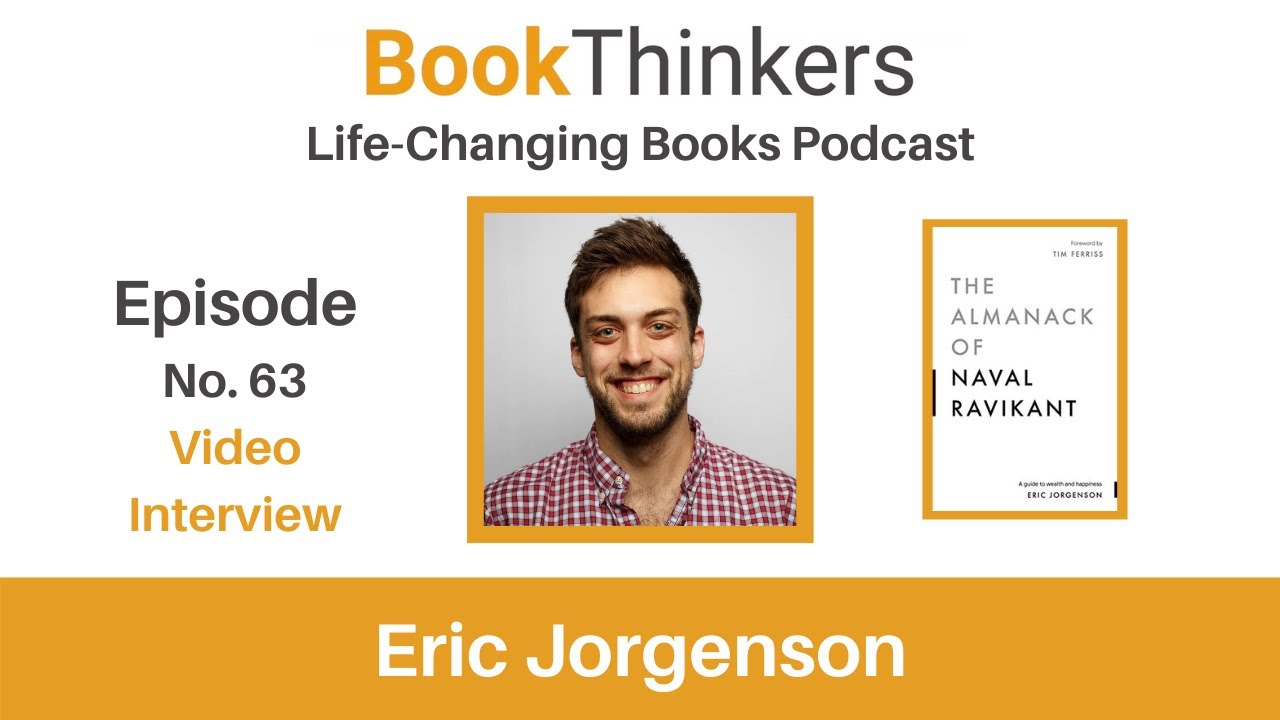
In this episode of the Life‑Changing Books podcast, host Nick Hutchison interviews Eric Jorgensen, author of The Almanac of Naval Ravikant. The conversation traces Eric’s entrepreneurial upbringing, his early “Evergreen” newsletter that curated weekly deep‑dives into topics like low‑cost competitive advantage, and how that practice led to the idea of compiling Naval Ravikant’s dispersed wisdom into an evergreen, internet‑native book. Eric explains the book’s genesis: a tweet from him about a Naval‑focused project was retweeted by Naval, instantly validating the concept and prompting a three‑year, iterative editing process that distilled over a million words of source material into a concise two‑part structure—wealth and happiness. Key ideas from the book are explored, including Naval’s definition of wealth (assets that earn while you sleep), the distinction between wealth, money, and status, and the three (later expanded to four) forms of leverage (tools, products, people, capital, with platforms as a fifth bundle). Eric discusses practical frameworks such as assigning a high hourly rate to one’s time, the Leverage course he is launching, and how digital content (videos, podcasts, blogs) serves as low‑cost, scalable leverage. The discussion also covers the happiness section, drawing on Stoic philosophy, meditation, yoga, and the notion that happiness is a skill that can be trained. Tim Ferriss wrote the foreword, and the book is self‑published and freely available in digital formats. Throughout, both hosts share personal experiments with leverage, content creation, and productivity, and they contemplate future “Almanac” projects and ways to repurpose podcast content into condensed books.
Chapters
Well, Eric, welcome to the Book Thinkers Life-Changing Books Podcast. How are you doing today?
I'm amazing. Thanks for having me.
Yeah, I'm excited for our conversation. As I was sharing with you before I pressed record, I had to expand my top 10 after finishing The Almanac of Naval Ravikant, which you happen to write. So I'd love to have you introduce yourself to everybody and we'll start there.
Cool. Yeah, I'm honored to be atop any number. I'll take it. My name is Eric Jorgensen. The Almanac of Naval Ravikant was published maybe 9 months ago, at least as we're talking here. I've been kind of like writing and curating and doing side projects like pretty much my whole life, kind of alongside like a day job in the tech world. So yeah, it's been— it's a good like outlet for me and a way to learn and a way to meet amazing people and have great conversations like this.
Yeah, I've read or listened to you tell people that you sort of grew up in an entrepreneurial family, so it wasn't so strange for you to be obsessed with this kind of stuff from a young age. And I'd love to learn a little bit more about that. So it sounds like your dad was in small business and some uncles and things like that.
Yeah, yeah, my grandfather actually like started a business, um, that my dad ended up buying from him and running, and it was just kind of, uh, I feel very lucky that entrepreneur or business owner was just like a normal job to me growing up. It was a career path that didn't seem like this impossibility or like this crazy kind of maverick thing to go do. It was just like what my family had done. And so I was like selling candy out of my locker and getting paid to give kids rides to school and practice and stuff like that. So yeah, it kind of appealed to me from a young age. And it, you know, it's— there's no doubt that it's hard, but it's still like a, um, it felt accessible, you know, it felt normal.
Sure. Yeah, well, we're sort of cut from the same cloth in that respect. When I was younger, I used to draw pictures and try to sell them to my aunts and uncles and friends' parents, or my parents' friends and stuff growing up, so I could get a couple quarters and go play at the arcade. And anything that I could do to make a couple of bucks. And, and I see that in you as well. And then it sounds like you started to exercise some of this entrepreneurial curiosity in the form of a blog before writing the book. So tell us about the blog.
Yeah, the blog was called Evergreen and it kind of, it was around 2014, '15. I was kind of in my like mid-20s and I was like, found myself in this super fast-paced tech world. I was working at a startup in San Francisco and I was just like pretty dismayed with like how well prepared I had been by college for that, which should be no surprise, right? Like I knew as it was happening kind of what was going on there. But I was like trying to learn all of this stuff as well as I could, as fast as I could. And so I developed this blog called Evergreen, and it started really small. It was like 10 or 15 friends on a mailing list, and I would just pick one topic every week and send it out to the list and say, hey guys, I'm trying to learn everything I can about low-cost competitive advantage this week. And so people would send me like any resource they could find about it— podcasts, videos, Harvard Business School case studies. books, blogs, podcasts, all this stuff. And I would like try to synthesize, like read it all in a week and synthesize it. And on Sunday night, I would publish maybe a 10-minute like overview of the biggest ideas that kind of came up and link back to the original material. So people could read this one post, get an overview of this idea, or spend like hours kind of going through the best resources that I had curated out of this huge like pile of stuff that people had sent me. And it was an amazing like self-administered MBA. Like, I learned so much. I met great people. I had this kind of like proof of work that I had published every week for, for years. And, um, it was a, it was a truly wonderful way to— for me to learn and try to solve this problem that I saw on the internet, which was, you know, everything is so timely and recency-based. Everything we see on Twitter and stuff is like a new, a new podcast, a new blog, a new whatever. But some of the best resources, as I'm sure you know, are like, they'll oldest resources. They're the ones that have stood the test of time. They're the ones that have been around forever and helped many people. And so in a lot of cases, like, people were sending me older things that I had never seen before, but were super, super valuable and contained answers and valuable.
Cool, man. So I, I see a lot of similarities between our stories. Again, I referenced cut from the same cloth before, but I was 20 or 21 years old. I took an internship with a software company, and I was expressing to one of my bosses at the time that I just felt my academic experience was too slow. I would sit in a classroom and over the course of a couple of months, we'd learn a very basic concept. And that was really my only takeaway. And I had never read any personal development books or nonfiction. And he told me, hey, why don't you try out some of these books? He gave me a couple of recommendations. And he said, these books condense decades of information into days of application. So you can install new software and then see life from a new paradigm. Or a new lens. And I thought that was the coolest thing ever. So I had that natural curiosity to understand the world in a more efficient way as well. And, uh, then it sounds like with the blog, you probably were writing about Naval, and that's how this Naval Ravikant thing started. Could you tell us a little bit about how did you end up deciding to write a book about Naval?
Yeah, so the blog— I mean, I'd been following Naval for a long time. The blog It was just kind of like, it happened naturally. Like, it didn't even— I don't think it had much to do with Naval, although he had an amazing blog at the same time called Venture Hacks that I had been reading. And that was kind of my introduction to him back in like, I mean, 2010, maybe.
Wow.
Like, he was just running a small venture fund. He and Nivi were blogging and writing about like the game theory behind venture capital and helping startup founders kind of find their way through these term sheets and these deals with venture capitalists who were doing dozens of these deals a year, and sometimes taking advantage of that information asymmetry. So I had learned a lot from Naval over the years following him on Twitter and blog posts and reading the things he was publishing. And the book really came about a few years ago. Naval did an interview on the Knowledge Project podcast with Shane Parrish, which I don't know if you listen to, it's an amazing podcast. And this interview was so kind of dense and full of what I thought was like life-changing value. I probably listened to it 2 or 3 times. And I love podcasts. I'm a big podcast guy, but I realized that it's still kind of a subculture and that there's so much value that's like locked up in this kind of inaccessible medium. And the same thing is true of Twitter, and that Naval had been just like pouring value into these sort of ephemeral mediums for so long. And I just kind of had this flash of inspiration to turn this into a more evergreen thing. Like if you see the themes coming through, this desire to like preserve and create resources that endure the test of time and provide a ton of value for anybody who comes across them.
That's a great form of leverage. And speaking of people who have taken information spoken in podcasts and then translated it into evergreen content, your foreword is written by Tim Ferriss. And Tim is my guy. He's my spirit animal, spirit animal, I like to tell people. So Tim wrote Tools of Titans and Trap of Mentors, 2 books that take a lot of information out of those podcasts and bring it to life in a different way. So was there any inspiration originally from Tim with this idea? And if not, how the heck did you get Tim to write the foreword of the book?
I can tell, I can tell Tim is a big influence on you because you were surrounded literally by his books. I can like pick them out on the shelves behind you. Yeah, I think I felt Tim was like the best possible person to write this foreword. And I know that this is not part of his deal. And like, he has never really written them before. I can't take a lot of credit for that. Like, I think it is his friendship with Naval and their relationship that kind of got this done. And he's in— it says in the foreword, like, I don't write forewords. But I've wanted this book to exist for a long time. And so like, and it's also, I should say and make it very clear for everybody, like, this is not like just a kind of a normal, like, traditional publisher book. Like, I self-published this thing. It is available for free in all digital formats online. The audiobook is available for free on my podcast.
We'll drop it in the show notes for anybody.
Yeah, it's a little bit of like an internet-native book, which was important to Naval and to Tim, and just like makes this a little bit of a, kind of a wild card project that I think, like, you know, helped get him excited about that.
Sure. Yeah, no, it's, it's super cool. And he has had a big impact on my life. I mean, I've, I've implemented dozens of separate items from The 4-Hour Workweek into my life, and it's created a lot of true fulfillment. And, and so I owe a lot to Tim for that. But now back to the book itself. So you wrote The Almanac of Naval Ravikant. This book is broken up really into 2 parts. Part 1 is about wealth It's all about building wealth and building judgment. Part 2 is about happiness, learning happiness, saving yourself, and there's some philosophy in there too. Um, how long did the book take you to write?
Uh, it was about a 3-year project. Um, and it was a— it was kind of a weird process because like write isn't really the verb, right? It kind of felt like it's like a lot of editing, a lot of— it felt like a giant jigsaw puzzle, right? I'm just like reading and rereading these things and like trying to fit stuff together so that it reads like one continuous thread of ideas. And so the reader's kind of like As questions emerge, they're getting answered. And as, you know, proposals get proposed, they're kind of like supported by the right story. But like, one of them came from a podcast in 2017, and one came from a blog post in 2014. And it just takes so much like time to understand where all those puzzle pieces are and put them together, you know, at the right like sentence level and the right chapter level and the right section level and just like have it all flow. So when people tell me like, I sat down, I read the whole thing in one day, like it was just such an easy flow, like that feels good. That feels like we nailed that single thread and like pulled people through, never made it like nothing too repetitive, nothing too slow, and like kept people hooked on what the next idea was that was coming. And that's exactly what I was trying to, you know, sand out every edge and every corner. So I love, love hearing stuff like that.
Yeah, no, I think you did a great job with that. I read it in 2 sittings, I think, maybe 3 sittings, but I was, I was in the middle of traveling, so the time didn't allow. But it, it was fast-paced. You could accelerate your way through, and I think you just described it in a great way. Now, I'm still missing though, at what point did you approach Naval? How did you connect with Naval? And at what point did, did he give his blessing to this book?
Yeah, it's such a weird story. Like, it is like a cosmic accident. So I just I was kind of between side projects, and I had like this kernel of an idea to just like throw together a few transcripts. And I tweeted this idea and went to bed and like woke up to find that Naval had retweeted it, and 5,000 people were like, oh my God, yes, we want this, please do it. And in that— so in that same like this instant I had the idea, within 12 hours, it was like, one, validated, two, Naval had retweeted and replied and said like, happy to provide anything you need. And so this went from like, oh, I don't know, like one of a few things I might work on if there's interest, to like, Oh, like, holy shit, I gotta do this immediately, um, and like start right now. And, um, it was just like instant scope creep. I thought it was gonna be like a 3-month project, and I was like, no, like, if we're doing this, and especially doing it with Naval's blessing, I'm gonna do it right. And so I went like full Poor Charlie's Almanac mode, and I assembled like almost 100 resources. It's well over a million words of source material. I kind of like laid it all out on this table. Oh my God, like, this is— it's great material. The thing that I was excited about all of it. He talks about cryptocurrencies and talks about education and futurism and predictions and all this stuff. And I got jazzed about all of it. And my first version was like 600 pages of everything interesting that he had ever said, like all categorized, covered the story of AngelList and how he got started as a founder and investing in startup companies. And I gave it to early peer readers. They're like, this is, this is a little bit of a beast. Like, I'm not sure I'm gonna make it through this thing. Um, and everybody's kind of interested in a different 60%, but everybody kind of was drawn to those, those initial, like, wealth and happiness sections and building judgment and, you know, some of the meaning of life. Like, just problems that everyone has thought about, uh, or challenges that everyone has had, kind of in every culture even around the world. So that— those were the things that kind of held true as we trimmed and trimmed and trimmed and trimmed away to get to, like, this final, like, really tight version that we Yeah.
Well, one thing that Twitter forces you to do is condense your thoughts. And Naval talks a little bit about that in various places. And you talk about it in the book too, but it came together really well and you condensed his whole timeline into that first page. Here's his biography. Now let's move on to the concepts of wealth and happiness and things like that. Pretty cool. Yeah.
I think it's helpful to establish that context for people. Even some of my friends who read it, they're like, not sure who Naval was, you know, if you're not like into the Twitter world, um, or necessarily like in the startup world, you know, he's well known in those 2 worlds and kind of certainly well followed in Silicon Valley as an investor. But outside that, like, you know, plenty of people in New York or LA or whatever, it's like, I don't, I don't, I don't know. Um, so I had to get a little bit of an intro, kind of, um, establish that story. And it's a really interesting— he's got an interesting story. He's like a young immigrant, like Just, I mean, true kind of American dream.
Yeah, I've actually had his brother on the podcast. So Kamal's been on the podcast to talk about his book, Love Yourself Like Your Life Depends on It. And I reached out to Kamal originally because I read about him in one of those books, Tools of Titans maybe, and I knew that he was close with Tim. And so I reached out and we had a really cool conversation. Naval wasn't on my radar at all. I had read about him a little bit, but I didn't immediately attach to his message at first. I hadn't listened to any podcast interviews. I had seen some clips on Instagram, but again, Twitter's his world and I'm not on Twitter. So once I was able to dive into your content though, I totally fell in love with a lot of what he has to offer to the world. And now I'm definitely going to get in there and follow him. You kick off the wealth part of the book with a tweet storm. So tell everybody what a tweet storm is for those that are Instagram only, sort of like me.
Yeah, for the, for the non-tweeters, so I mean, a normal tweet's only like 280 characters now, right? But people have started writing tweetstorms, which is like this thread of tweets. So they like reply to the first one with the second one. It's like you're building out a blog post, but you're doing it on Twitter. So each idea, each tweet is kind of its own. It's a standalone idea, but when you thread them together, you're kind of like building a case and building one sort of narrative or set of ideas that all go together. And Naval shared this tweet storm called How to Get Rich Without Getting Lucky. Actually, I was already building the book and he shared it while I was working on it. And it absolutely exploded. I don't know what the numbers are now, but I think it's certainly thousands of retweets, if not tens of thousands, maybe more, probably tens of millions of impressions now. It's just on Twitter, but people treat it like this sacred blog post. It's a great— if you're not a Twitter person or not, you don't know who Naval is, it gives you a great introduction to his ideas. But a lot of— there's not a lot of meat on it, right? It's like very tight kernels of ideas. But he has talked about expanding a lot of those ideas in, you know, some of his podcasts and some of his blog posts and some of his interviews. So the book takes that, starts with that tweet thread, tweet storm, and like expands it into kind of each chapter is an idea and tries to walk you through in more detail so you can kind of close that gap between like, I think I get this idea, but like, oh, here's some supporting examples, here's some more detail, like that's how I might apply it, um, some of that kind of stuff. But that's exactly— I wanted this book to be the perfect introduction to Naval for people who maybe weren't Twitter people necessarily, um, because he talks about all kinds of crazy stuff. He's like a scientist and an entrepreneur and just goes into strange rabbit holes that are really interesting. And so if that's your introduction to it, that's the first thing you see, you're like, I don't know if this is for me. I totally get that as a first reaction. And that's what I hope this book is like. There's something in it for everybody, and it will pull you down the right rabbit holes for you as you go along.
Well, wealth is something that fascinates everybody, and it's a great introduction and way to kick off the book. We all are forced to play the game of money. And I think inherently, especially in the personal development world, we all know that we want to be better at managing money and creating wealth. So let's go into some of those subjects real quick and give people sort of a preview as to what they can learn. In that tweet storm, I circled, I think, 15 different items as items that I wanted to go back and journal and reflect on and think about. And I really like number 1, which is seek wealth, not money or status. What is wealth? How does Naval define wealth and how have you started to reframe the way that you think about it?
Yeah. Naval defines wealth as having assets that earn while you sleep. And so there's a lot to kind of unpack there. And if you want to, you can nitpick a definition, but what he's trying to get at is the sense that you're never going to get rich renting out your time and that you have to play this game of building or buying usually equity in a business as that asset and building leverage so that your time and your income are disconnected, and you can have these really nonlinear, surprising extreme outcomes, whether that's through investing or through starting a business or using capital leverage to get bigger results from the efforts that you're taking. But a lot of people confuse high earnings with getting rich, but having those assets that can eventually outearn you is actually the game that you want to be playing. And a lot of people, I think, especially in our world of social media, that we're just digital people right now. So like, I get it, we're playing the game too. People confuse status with wealth. And they think that by like tearing others down, or just like becoming inherently famous, that they're going to become wealthy. And like, those are very different games. And sometimes people playing status games, like, you know, journalists or whatever, make their living by attacking people who are playing wealth games. And that, that's a different game with different rules and different outcomes. And just understanding what people are trying to optimize for and being sure that you're playing the game for the— playing the right game for the prize that you want to win.
Yeah, it's a great lesson and it helps you reprioritize and start to shed off some of those haters, right? People who are just attacking you in order to gain status. It doesn't matter. They're playing a game that's not as big of a game as what you're trying to play, which is a wealth game. And you mentioned that— well, you mentioned some different forms of leverage there. I'd like you to talk about that because that was one of my biggest takeaways from this entire book, that there are really 3 forms of leverage. And I'd like to hand the mic back over to you so that you could talk a little bit about them.
Yeah, that was actually one of my biggest takeaways too. And I think it's the biggest idea in the book that is the least explored. Yeah, I do too. There could absolutely be a whole book on leverage. And in this book, there's really a chapter. And it labels the door and it kind of shows you the beginning. But the work that I've taken on even after this book is kind of trying to continue to understand that and build out these frameworks and figure out more about the what and the how and the why. It eventually led to this course on leverage that I'm building in this community that we're putting together. So actually one of the first things is I took those 3 categories, types of leverage that Naval identifies, and I tried to reexamine that. And I ended up with 4 buckets that are only slightly different, but I believe that the 4 main ones are tools, product, people, and capital. And I think there's like a secret number 5 where like vendors and platforms and stuff are like bundles of all of those 4 that you can access, kind of already pre-made for you. But yeah, like establishing those 4 and kind of learning to use each of those types and build leverage around yourself so that over time, all your effort is getting more results every incremental month or year that you work.
I also think that it's the subject in the book that should be explored the most. So I'm happy that you're building a course on that. We'll talk a little bit more about it in a minute. There's a line in the book that says, if you can't code, write books and blogs, record videos and podcasts. And that was great because that type of leverage The products with no cost of replication kind of leverage. It's really important. I mean, you've got to get out there, create unique content, put it out to the world, and that's your unique differentiator. And it works while you sleep. People can watch a YouTube video while you're sleeping. People can read a book while you're sleeping. People can do, you know, all sorts of things while you're sleeping if you create a technology that can assist them. And that's very different from hiring a human being or using your own money to make money.
Yeah, it's really— it's easy to underestimate, I think, um, especially because it starts small. And like, I feel like if you made a YouTube video and put it up there and you got 100 people to view it, you'd kind of be disappointed. Like, that's a tiny little miracle that just happened. Like, while you were asleep or at the gym or whatever you were doing, like, 100 people were like experiencing this tiny digital clone of you and you didn't even know what was happening. Like, that's incredible. That's absolutely incredible. And you're not feeling it tangibly. And so it doesn't quite have the same feedback loop, but the leverage that comes from having many of those little digital clones working for you, as you know well, having done all these podcasts and posts and the following that you built, that's an incredible asset. And the work that you do just makes that lever longer and longer every day so that every new episode that you do has a little more impact than the one before, and every new product that you launch has a little longer reach than the one before. And that's how, you know, it starts small, it starts maybe feeling trivial at first, but if you commit to that and you keep making those levers longer and longer and longer, it's like compounding. You've told me one of your favorite books before we— I think we started recording, it was, um, somewhere in that top 10 are, are like The Joys of Compounding or some of those.
The Compound Effect.
Yeah, The Compound Effect. Okay. Um, yeah, a lot of good books about compounding. Um, But it's kind of the same thing where it feels trivial for so long until the outcomes look absolutely impossible. And when you see some of those, you see the math and you're like, no way. And then you see someone who's 50 years into a career built on compounding and you're kind of like, holy shit, I want those results. That's incredible. But it came from many, many years of doing the work of slowly lengthening that capital lever or reinvesting those compounded returns until you get to that seemingly impossible outcome.
Yeah, there was a reframe that I experienced, I don't know, maybe a year or two ago, where somebody said— I was— when Book Thinkers first started, yeah, you get a little bit discouraged because you see people with thousands of views or millions of views or anywhere in between, and you go, you know, I want to be like that, but nobody's watched my video content. And, and maybe I was getting 100, 200, 300 views per video back in the day, and somebody said to me, imagine organizing a group of 200 or 300 human beings in a room every single day and then you giving a book review to them. Like, that's a huge audience. And I thought, you know what? It is a huge audience. And I'd probably be terrified to speak in front of them if they were really here, you know? And now I have all of those videos out there and Book Thinkers does a million impressions a week. That's a million people that are consuming digital clones of me every single week. Crazy to think about that kind of leverage.
Yeah.
And so if that's not enough to get you to go out there and start creating content, then I don't know what would be. And on The Compound Effect, real quick, there's an example in that book called the magic penny. And he proposes 2 questions, Darren Hardy, the author of The Compound Effect. He says, would you rather take $1 million today or a magic penny that doubles in value every day for 30 days? People are like, penny? Yeah, I'll take a million bucks. But the penny, as it doubles in value for 30 days straight, it's worth $5.5 million. And on that 31st day, it's worth $11 million or whatever the math ends up being.
Crazy.
But once you start to go, you know, on day 15, you're only at $7,000, not looking like a winning proposition. On day 25, still not looking like a winning proposition. All of a sudden you are wealthy. And I'm putting all my eggs in that basket for sure.
Seems like the— it seems like it's working. It seems like the eggs or the basket are hatching, whatever metaphor, however you want this metaphor to show up well for you, it's working.
Well, good. I will reconstruct your words to make it be whatever we need it to be. But it's— no, it's a great way to think about life. Now, how are you implementing that? You said you're putting a course out there. Is that sort of the main implementation of this leverage lesson for you so far?
I'm just enjoying— I'm really enjoying exploring this idea. Like, as I've continued to kind of reframe it and figure out frameworks to kind of apply it for myself and to like help others close this gap, like, you have no idea how many times I've heard people people email or call or on a podcast and say, hey, my main takeaway was leverage is the most important idea in this book, and I do not know what to do about that fact.
Yeah.
Is there a book on leverage? How can I dig deeper on this concept? And I kind of was in the same place. I'm like, I don't know where to send you, but I know that I am curious too, and I can dig in and I mean, pull stories and pull books and start collecting case studies and building frameworks and bringing together a community of people who really want to learn and apply these things too. And so, you know, this— we only launched the course maybe last month, and it's really— the early energy is so exciting because it's like attracting these people who are all like really seeking out this idea aggressively, and they're bringing these really unique skills to it. And so we're all kind of sharing— like developers are sharing their skills with investors with readers and writers, and everyone is kind of piling their talents into the middle to help each other accomplish these things and shore up each other's blind spots. And the course really just like provides a common language and set of frameworks for all these people to like relate and help each other and a structure for that kind of accountability and social group to emerge. So it's been really exciting to see. And yeah, I think there's tremendous leverage to it and how we've constructed the course. I think I'm trying to build in examples of leverage in that too without sacrificing quality.
Well, that's amazing. I'm excited to check it out maybe this weekend when I can jump off and get some time because leverage has been really important. My business partner at Book Thinkers and I have been talking a lot about leverage since we both read the book last month. And yeah, it sounds like this marketplace for leverage is going to be pretty cool. I'm excited for that. There's one other takeaway from this tweet storm in the wealth section of the book that I wanted to touch on with you, which is the idea of assigning an hourly rate, a very high hourly rate to your own time. How have you applied that? Do you have an hourly rate? Did you pick a number?
I do. And I— this is maybe the most recent exercise we actually added to the course is I like tried to build this out and actually like Naval says just like pick a really high one, right? And that's like kind of hard to get to. Um, and then you have to kind of justify it. And if it's— if you truly just like conjure it out of thin air, just like pick an absurdly high number, it's really hard to use it as a benchmark for decision-making. And so the approach we take in the course is to, you know, start with your average pay, um, and then think about what the highest value creation activities you do are and you're ready to pay at that hour. And then add on some of these things like multipliers for what it could be worth in a few years, or multipliers for what you are worth at your very best solving your very best problem when you are at your happiest. And then version— like, so we have this kind of like process by which we incrementally push it from where you are to where you could be and help you see all this, the opportunity cost of that, of almost your future time, right? So if you're not protecting your time now, you're sacrificing the work that you could be doing to produce results for yourself in the future.
Sure.
And we separate it into working time and leisure time, right? So that there are people with very different feelings about, like, you know, if you've got a young family and you're working full-time, like one of the people in the course actually is a full-time medical professional. I don't want to do too many details, but he's a doctor and on the side he's building a platform for, like, he's applying leverage to build a platform for patients to self-educate on their conditions so that he can better leverage his time in the clinic as a doctor, right?
Wow, inception.
So he's only got, like, he's trying to build a tech platform. He's only got, like, a few hours a week to do it. And so he's kind of like, you know, I got 4 hours a week and X budget, like, how do I build a tech company? Like, that is an incredibly, like, interesting, super high leverage situation. You can only do 1 or 2 things a week and they must be the most important things.
So these frameworks kind of applied to that.
And, you know, taking his aspirational hourly rate is crazy. And just, you know, you can't do everything yourself. You got to figure out how to put balls in motion and get tools and people and products to work on your behalf. And I don't know, they're just, they're very, very interesting puzzles like this. But yeah, it's really fun to have those conversations too. Like, we've done that like live on a podcast before with Lewis and Kyle, actually, that's who connected us. I think we, we like triaged that live on their podcast. It was a lot of fun.
Oh, that's super cool. You know, BookThinkers has taken a couple attempts at becoming a technology company in the past. They've been failed attempts, but we've learned a lot. And what I— when I look back in hindsight at some of the attempts that we took, what we were really aiming for was the ultimate form of leverage. We're trying to help nonfiction book readers retain and implement more information from the books they were reading using this online bookshelf that helped organize notes in a specific way and then set into motion systematic reminders that were working without us touching it. And so after I read the book and I was thinking about leverage and time, I was telling my business partner Ryan, you know, Ryan, what we were trying to build was a piece of technology that would assist somebody in the same way that we would in retaining information, but while we were sleeping. How cool is that? We could assist thousands of people at the same time. as if we were really there, but we would automate the process so that they wouldn't have to deal with us rambling about random subjects at the same time. And it was just a really cool takeaway. And Lewis from the Lewis and Kyle Show has actually been helping us with that in the background a little bit too. So the whole ecosystem is kind of together.
That's awesome. Yeah, I think that's a common thing is that the like high margin scaled software business is often the ultimate destination. So I don't know if you know or follow Nathan Barry, but he's like an amazing example of this over his career over the last 10 years. He's the founder of ConvertKit, which got this fantastic— Which we use. Oh, great. Yeah. It's like Mailchimp for creators especially. And he like started because he was frustrated with Mailchimp, but he started selling ebooks basically like 10 years ago and you know, has sold courses and communities and just kind of progressively has a great blog post called The Ladders of Wealth Creation that is like you're adding skills and increasing your, usually your product value and the value that you're adding and the size of your audience while you're leveling up skills. And it is a perfect example of going from like, you know, bootstrapped book author to like software platform founder. And now I think it's a $100 million business now. This is an absolutely incredible journey, and he's a very thoughtful writer. He has a great blog.
I think that BookThinkers as a business tried to skip a few steps, and I think we worked our way back to the foundation, and we're building up that ladder right now, and we're working our way back in that direction. And books like this help reframe that, and conversations like this do too. So like I said, super, super excited to check out the Leverage course because Both my business partner and I found a lot of value in that section of the book. Now, before I let you go, I want to make sure we talk a little bit about happiness because that was the second section of this book. And it's also something that I think is learned and it's more applicable than the average person realizes. Before I hand over the mic one more time, I want to read a quote because this quote was really impactful for me. It says, the 3 big ones in life are wealth, health, and happiness. We pursue them in that order, but their importance is reversed. It's been big for me, super big for me.
Yeah, I like that one a lot. And I think Naval does us a favor by relating all those things. And I think that's an interesting kind of story around the book. There's not a lot of books that try to teach you how to get rich and how to be happy, and that allow those 2 concepts to coexist and relate in some ways, and talk about the trade-offs of them and things like that. I love Naval's take on happiness. I'm glad we're talking about it because I feel like most people spend 90% of the time on the wealth section and 10% of the time on happiness. And we actually did a book club after the book came out. That was like a one-time session and we had like 100 people register. And I think like 80 showed up for that wealth section and like 35 showed up for the happiness section. I just found it like kind of hilarious. And the same ratio shows up in the conversations. Naval has this really practical sort of take on becoming happy. The foundation of the insight, I think, is like, it's a skill, it's learned, you have to train yourself to do it, but that it's achievable. You're not born with an innate level of happiness. And in the same way that you can train your body or train your mind or meditate, You can learn to reflexively interpret things positively. You can change your environment so that you have more things that make you happy and less things that make you unhappy. And you can do this kind of systematically and intentionally. He's very practical about it. And he's very practical about the fact that he's like, I thought I would get rich and famous and that would make me happy. And then I got rich and famous and didn't make me happy. And then I had to figure out how to be happy. I wanted to be happy, and so I went and learned. Um, again, sent him down this like road of philosophers, and so he's like kind of pulling some of this ancient wisdom and applying it very practically like to where we are today and the technology and challenges of like our society, and hopefully, uh, you know, helping us get the best of both worlds.
Yeah, I love that, that the book touches on both subjects as well. And earlier you mentioned that sort of the older the book is, the more valuable it might be if it's still in circulation today because that information has stood the test of time. And going back 2,000, 2,500 years to Stoic philosophy, a lot of that concept— there's a, there's a Stoic aphorism called amor fati, which is the love of one's fate. And it's essentially the same thing that Naval is saying, which is that reality is neutral. There's nothing inherently good or bad about what's happening. And so it's our judgment of the input that determines whether or not it's going to make us happy or upset, frustrated, angry, sad, depressed, anxious, all of the bad stuff that those inputs typically do. And we also live in a society now today in 2021 where we receive more inputs than we ever have. And a lot of them are designed to distract us and seek attention, to create rage or anger and divisiveness. So it's pretty calming when you start to think about the fact that reality is neutral.
It is. Yeah. Like working on the book was such an interesting experience because I would like dive deep on the wealth section and I would like start working frantically and like working harder. And then I'd like be working on the health section and I'd just get all, or the happiness section, I'd get all kind of like blissed out and be like, that's fine, like, whatever, whatever works. Like, maybe I won't even finish this book. I'm just kind of happy with the way things are. Like, this is, this is great. Um, I think it's good to like take that medicine in, in, you know, one dose. And yeah, it is, it is tough sometimes to remember that it's all in your head and, and to remember that the voice in your head is malleable, right?
Yeah.
Like, we tend to think that we can't change or that it's too hard to change, but Those are, um, those routes are available to us. And, uh, have you read The Courage to Be Disliked?
No, but I have a copy.
It's a good one. And it, like, it really, uh, explores— it's just a dialogue. It's a very basic dialogue. And it explores sort of this idea that you can change at any moment whenever you choose to. Um, it's Adlerian psychology. but you barely know that it's really just a simple dialogue in accessible terms. And, you know, if you hear you can change whenever you want to and you're like, that's bullshit, like just pick up that book and give it a shot and like see if maybe the combination of these can help you get where you want to be.
Yeah, sure. And Carol Dweck wrote a book called Mindset, and it talks a lot about the difference between fixed versus growth mindsets. And society in a lot of ways pushes us into this world of thinking where we think we have a fixed mindset. We think that neuroplasticity is just a rumor and that you can't actually rewire your brain. But once you start to remove those limiting beliefs and you can start to believe, yeah, I can work my brain in the same way that a computer works, I can install new software and believe new things, magic starts to happen. Naval says that meditation is intermittent fasting for the mind. I've been meditating for the last 6 or 7 years on and off. Is that something that you've experimented with?
A little bit. I kind of, um, I tend to take it when I need it, uh, rather than have like— I don't have a disciplined practice around it, um, but I, I have learned to like use it as a tool when I feel like I need it. Sure. Um, and I've also learned I had a hard time just like sitting still in the middle of my living room Um, but I have learned that there are activities that are meditative for me. And so like, you know, take a long walk, take a sauna, like some of that, those kind of things are— that is the function, the role that that plays for me.
Um, yeah, I've got a lot of those too. Yeah, yeah, that's cool. What about yoga? He says that, uh, 1 month of consistent yoga made him feel 10 years younger. Did you, did you dive in and get out the yoga mat and start stretching?
I've been doing yoga for, for years, like pretty intermittently. Um, but yeah, no, it helps a ton. Like, especially if you sit at a desk all day, like some yoga feels real good. If you're lifting a lot, you start to lose mobility, yoga feels really good. Just injury prevention. Oh, I'm, I'm a big fan.
Yeah, me too. Uh, I did it a few years ago and then I totally stopped. I just transitioned to a standing desk and I just bought a yoga mat. And I've been doing these workouts every morning for 20 minutes, these yoga workouts. So, and that was again inspired by this book. So look at, you've influenced me, not Naval, you did, because you wrote the book to start doing yoga every day.
I just chose to leave it in there. That's, that's all. Um, but yeah, like yoga is another perfect example of the Lindy Effect, right? Like there's a reason that's so, that has stood the test of time and some of these basic movements are so important. Uh, and when you see some of these, like, I've done some random like physical therapy rehab programs and stuff like that for various injuries, and you find that they are like just using small versions of yoga movements, and you're like, of course yoga had this right, you know, 2,000 years ago, and like we're just still figuring it out.
Yeah, I hit a movement today actually where I was shocked at the difference in mobility between my left shoulder and my right shoulder. I was shocked. I mean, like, I'll just give you a brief example. I can go here and I can grab my hands, but then on this side, I'm not even close. And, uh, anyway, so I'm excited to continue my yoga, my yoga and my flexibility.
I'm the same way.
Yeah, I don't know why that is. I, I'm a righty and I, I can do it on the right side, but I, yeah, I don't know.
I don't know. I gotta go do some yoga or something. This— we gotta resolve this immediately.
Well, before we wrap up, I'll touch on one more thing, uh, which is the bonus section. So you, you put in the book Naval's recommended reading. I was curious, what percentage of that have you read?
Oh, I haven't run the tally. Um, not much of the like philosophy, spirituality stuff. Um, I've read a decent amount of the nonfiction, I think. Uh, like Poor Charlie's Almanac is like a found— foundational book for me. I also love Feynman, which he recommended a few of. There's, there's a number of the sci-fi, like, novels that I love too, but the ones that I hadn't read before, I am like, I'm going through and reading now. And I love a lot of the short stories, like the Ted Chiang stuff that he shared. But I'm into the, like, Black Mirror sci-fi world. So I know that's a little bit of an acquired taste for some people.
Now, Black Mirror is an amazing show. I mean, fiction, especially science fiction, is really the only place that puts us that far in the future on a consistent basis. And it also is the only place where the impossible can become possible simply by opening a book or turning on a TV show. So I'm not a huge Netflix guy, but I'll tell you what, Black Mirror is a fantastic show and it really gets your brain spinning.
Yeah, yeah, it's a— it'll, uh, it'll put you into a little bit of a weird spot in a good Probably way. Like, it's dark, but it's really interesting. It'll make you— it'll make you think new thoughts. That's what— that's what I'll say.
Yeah. Have you checked out the new Amazon Prime series that just came out called Solos? I think it's 7 or 9 episodes, but it— it has a Black Mirror feel to it, and each episode is a solo performance by a world-class actor or actress. And— but— but it's all future black world vibes, so check it out. You'll like it.
Cool. Okay.
Yeah. And then what's next? So are you going to write the Almanac of anybody else?
I cannot currently say who, but I am working on another Almanac.
That's cool. There are certain people who have disappeared from certain mediums of the internet that I'm interested in learning more about. So I hope it's one of them.
That is I believe we may be speaking the same language. If not this time, then maybe the next time. I'm super excited about this as a medium. I think it's so cool to transform something that's been created pretty seamlessly at low friction from podcasts and Twitter and stuff and transform it into something globally accessible and hopefully very evergreen and very permanent and very high information density for people. So I'm super excited to kind of keep exploring this. I think this is going to be a really interesting, like, process and medium and product to do for hopefully many people.
Yeah, that's, that's great. There will be a whole series one day on my bookshelf. There will be like 20 Eric Jorgensen Almanacs.
I'll have one of those whole, like, dividers. Yeah.
Yeah. Yes, you will. Well, I'll share one idea. I know we're still recording. I'll probably leave this in, which is that Book Thinkers as a business, we're thinking about condensing the biggest takeaways from each one of our podcast episodes and maybe doing a series of books. Every 20 episodes will turn into one book so that— and we'll make it available for free online, sort of like you did, so that people who aren't interested in consuming information this way still have the ability to go read that information in a condensed form. So it's given us some light as well.
Yeah, I think it's a great idea. I mean, Tim Ferriss has been doing it. Ted Sidis has a great book built from some of his podcast guests. I mean, I think a lot of books have been like a series of interviews that the author has done that they've kind of stitched together into a narrative form. So I think there's a ton of value there and it feels new and kind of ancient and honored all at once.
It does. Well, I'm happy that we touched on the wealth, the happiness, and of all, we touched on you, today. I think we could have done more on happiness. Now I feel bad because that's my favorite subject, by the way. It's my favorite subject. I'm the happiest guy on this planet because I've implemented dozens of things from dozens of books. And the end result is fulfillment and peace, like Naval would say. But we've got to end today's conversation. So for people who want to learn a little bit more about you, where should they go? What should they do?
So my personal website is ejorgensen.com. There's Leverage stuff there. There's blog posts there. There's all kinds of stuff. Um, and I'm on Twitter if you want to come hang out with me on Twitter. I spend almost all my time there, @ericjorgensen.
Perfect. Book Thinkers needs to get involved in Twitter. We have somebody on our team who does it very passively, maybe for 2 minutes a day, so we'll have to apply some more effort there.
I kind of think stick with your platform. Like, if it's working for you, like, work it. I don't, I don't do much on Instagram, um, but, uh, you know, I think the focus is good.
Yeah, no, I appreciate that. And looking at the 4 years of compounding, it's an intimidating thing to restart, that's for sure.
Yeah, for sure. But it'll go, you know, it'll work. You make those deposits and build that ladder, it'll be there for you when you need it.
All right, thanks, Eric. Appreciate your time today, man.
Thanks, Nick. Talk soon. Later.
More from Nick

Napoleon Hill’s “Think and Grow Rich” is a timeless classic #selfhelp #personaldevelopment

4 Books to Help You Get Better at Decision Making #selfhelpbooks #bookrecs #nonfictionbooks


Have you read this book yet? 📖: The 5AM Club by Robin Sharma #selfhelpbooks #robinsharma

Dan Sullivan on Listening to Your Customers Instead of Watching Your Competitors

5 Books That Will Boost Your Financial Intelligence #financialfreedom #nonfictionbooks

The People That Preach the Loudest About Virtue are Usually the Most Power Hungry



Books are the greatest mentors you can find #selfhelpbooks #businessbooks #successmindset

Let’s fight this toxic instant gratification culture together 📖 #selfhelpbooks #jimkwik