Life-Changing Books Podcast Episode 68. Cynthia Caughie: Author of YOU Can Do Hard Things
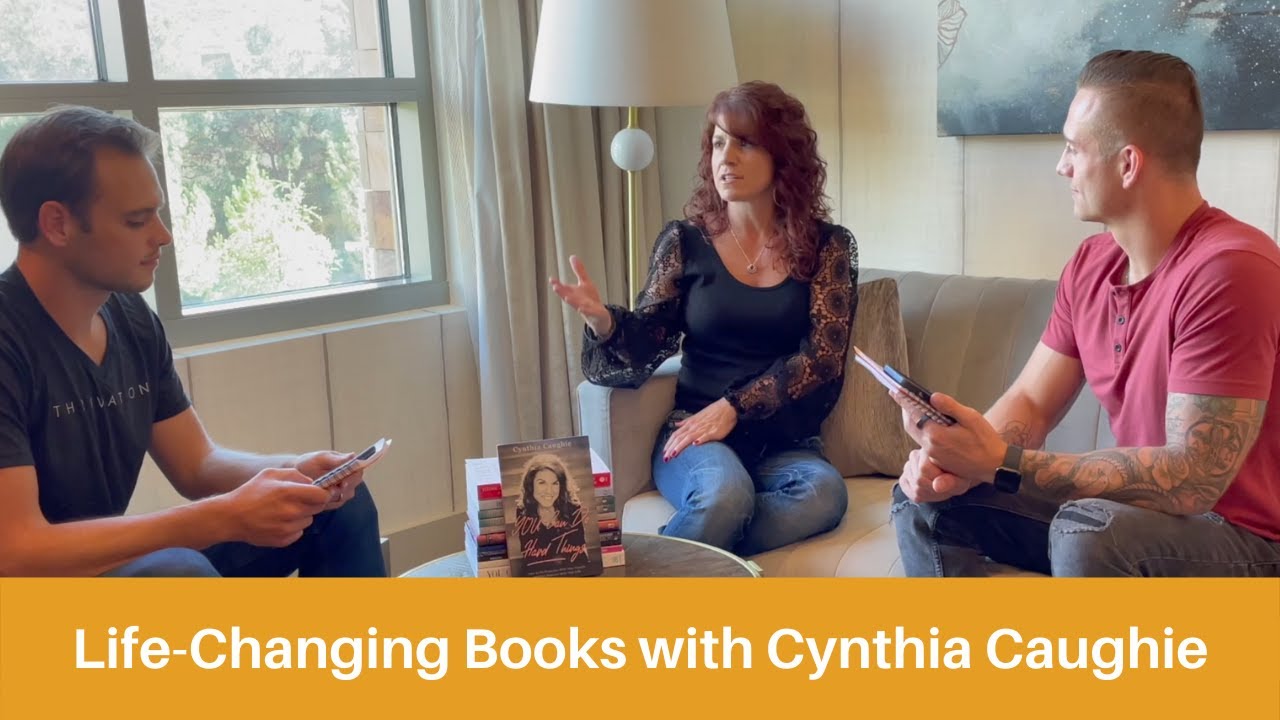
In this episode of the Life‑Changing Books Podcast, host Nick Hutchison interviews author, restaurateur, and entrepreneur Cynthia Caughie. Cynthia shares the personal‑development journey that led her to write the book You Can Do Hard Things. She explains how a Jim Rohn quote sparked her quest for “more,” how exposure to Grant Cardone’s 10X Rule and a supportive community reshaped her mindset, and how she applied those principles to her restaurant, Home Run Pizza, and other ventures. The conversation covers her strategies for building courage, commitment, and effective communication, the role of morning routines and visualization, the importance of intentionality and positive reinforcement, and practical tools such as worksheets and affirmations. Cynthia also discusses her big dreams—franchising her restaurant, creating a knuckleball pizza product, and living bicoastally—while emphasizing the value of relationships formed at the Secret Knock conference. Throughout, she offers actionable advice for listeners on starting personal‑development work, leveraging community, and overcoming limiting beliefs about video content and reading.
Chapters
Well, Cynthia, welcome to the Book Thinkers Life-Changing Books Podcast. How are you doing today?
Thank you. I am doing well. I am doing really, really well. I'm super excited, you guys.
We are filming this podcast at Secret Knock, which is one of Greg Reid's events, and we had the opportunity to attend the show for the last 3 days. We figured we would do an in-person podcast. So Cynthia, for those that are not familiar with you or your work, Could you please introduce yourself to everybody?
Okay, well, my name is Cynthia Kahy, and I am an author. I am a restaurateur, an entrepreneur, and I do real estate. I am a mom of 3 beautiful ladies, and I have written this book to share with everybody who wants to be proactive in their growth and not reactive with their life.
I love it. So I just read the book again on the plane ride over here, and I wrote down a bunch of questions. There's a quote that you start the book off with, and I'd like to read it from my phone here. It says, you can have more than you've got because you can become more than you are, by Jim Rohn. So why did you decide to kick off the book with that quote?
So in my self-development journey, I wanted more. And I tell the story in the book where I just kept searching and searching and searching. And somebody gave me this, um, podcast— it was a YouTube video— and he said that, and it just really got me to think. Because I was thinking of more, I was like, I can become more, I can have more, I can become more. How do I do it? So that was the, that was the main, um, reason and the intention behind it, because I learned also during my journey that intention is huge.
So if it's okay if I interrupt, I'd like to ask a question, kind of a follow-up to that. What is more? When you say more, what is more to you?
Well, that was part of the question because at the time when I started my journey, mom of 3, I had already bought the restaurant. I had done real estate for like 8 years and I just, I just, there was something pulling at me. It was like, this isn't it. This isn't it. There's more. There's more. And I kept saying to myself, what is it? You know? So you go on this quest, you go on this search. And so that's what started it for me. I just, it was, it's interesting because I'm not very spiritual. But I think it was spiritual. And on this journey, I have found, um, I was never baptized. Um, my family's Catholic and I never really practiced any religion, but it's interesting how comforting it is to me. And when I felt that and that pull for more, I think that's what it was. I think it was God speaking to me.
Well, bring us back to that moment. So you're recommended this video. It's a Jim Rohn quote. You, you listen to it. You start to become aware that you want more in your life. And so did it happen in an instant? Did you say, I am now on this personal development journey, or did you start to read more books and you started to watch more YouTube videos? Like, what did that look like?
Definitely. Um, my first thing was the ticket I bought to the Real Estate Expo, and that was for me. As a mom, you need something, you know, to give you that reason. Why do I want to do it? Well, it had to do with real estate. I've always wanted to see Anthony Robbins, and it was perfect. I was like, Oh my gosh, this is it. This was like, I was going to get my answer right here. I was going to get my answer. And, um, Grant Cardone came on before him and this is when I said, or I heard him say, he said, shit, this ain't rocket science. I can do it. And I was like, oh my gosh, I can do it. And it just gave me that hope because in my circle I wasn't getting that push from anybody.
Yeah.
I wasn't getting that little bit extra. And so I kept searching for it and searching for it and he came out first. And he came out with a bang. I mean, he had the lights, he had the entourage, he came out.
Typical Grant.
Yeah, and I don't even know what the song was, but I still have the video in my phone.
Yeah.
I still have the video in my phone when I first was— when I first saw him and I was like, man! And that was like my spark. I felt the spark. I felt it. So that was my very first introduction. And I read The 10X Rule because he had offered some— a webinar. He had offered a webinar and it was for free. And he was giving away a ticket to GrowthCon.
Wow.
A totally new experience for me, you know, being in the room with all of these people who thought like I was starting to think. I had never thought of it like that before. So that was part of my kick to get me into self-development. I didn't even know the word, to be honest with you. I really didn't.
So you get into Grant's community. There's a lot of support there. You start learning about the 10X Rule. A lot of the Book Thinkers family, we're very familiar with Grant and his work. We're excited when we hear his name, as I was in the beginning of the book when I saw This is kind of how your journey started. So what have you been applying the 10X rule to? Your restaurant business? What does that look like? Yourself? Everything?
Honestly, everything. I really, really did. Uh, the first thing was my restaurant. I was a brand new restaurant owner. I had worked in it for a year. I worked in it like open to close nonstop. I wanted to know everything about my business. And then I got to a point where I was like, okay, I don't know anymore. Like, I've done everything I can do, but because I read the book, I was like, there can be more. There's more levels. 10x everything. My home life, my business. I was like, I can do this, but I didn't know how. And so that's when I hired a coach.
And so how has the community supported you, right? Like, you are the average of the 5 people that you spend the most time with. You're inserting all of these new high-energy Grant Cardone types into your life. You hire a coach. How has that elevated your circle?
It's an amazing experience. Even the last 3 days, right?
Yeah.
We've got in this community where it's like, wow, this person wants to help me and this person wants to help me. In the community at home, and I say this, and it's not in a bad way, but it's the fact that people aren't getting out there and getting the exposure, so they don't even know it's there. When I first started to talk about 10X, everybody was like, What is that? Somebody literally asked me if it was a cult.
I'm not kidding.
Somebody literally asked me that and I was like, yeah, no, it's a business community. It's people who are like-minded. And so what I did was I applied a lot of the business rules. Grant has Cardone Ventures. Cardone Ventures is an amazing group that is really small business, not necessarily small business, but business oriented. They give you the structure that you need that I didn't know about. Whether— and then they also give you something that I use in the restaurant, which is amazing: personal, professional, financial goals. And then I get to use that as a leader for my business and all of the young adults that I get to touch with, you know, my experiences, right? I just keep sharing. And so it's really elevated the way I think, and even in my communication, it's been huge.
Yeah, in the introduction to the book, you mentioned that communication is one of the most important skills That somebody can begin to develop. I'll just share with you briefly that when I was younger, middle school, high school age, I had very severe social anxiety. I couldn't string together 4 words without 17 verbal pauses in between, and I would normally just get all red and shy away. And so by choosing to develop my communication skills, doors are just swinging open in every area of my life. We're having this conversation. So what have you done to improve your communication skills, and how has it impacted your life and your business?
So I didn't write this in the book because I actually learned it a little bit later for communication style, but everything comes from you and what's inside of you, right?
Mm-hmm.
So if I didn't know that positive reinforcement and encouragement was such a huge incentive for somebody, not just— maybe incentive isn't the right word, maybe it's more— it's encouragement, it's support, right? As a kid, mom or dad always just say, don't do this, don't do that, don't touch this, don't go over there, be cautious over here. And so it becomes a mindset, right? And so in the journey, I've learned that even your mindset and how you think of things will change your speak and your communication style.
Sure.
So when I learned that, I really took a step back. I even verbally communicated it to my staff. I was like, I'm not the same person I was Wow. You know, and I really truly— I'm approachable. Come to me when you need something. I've learned how to ask questions instead of giving them the answers, and they're young, so they're just looking for answers, you know what I mean?
Sure.
So the interaction with the communication is to ask the question and then just wait, and it's a really cool trick. It's a really cool trick.
Yeah, so, um, Nick mentioned the introduction to your book, and I wanted to ask, there was a great story in the beginning of your book, and I believe it was in the intro, that you talked about you set the intention to get up at 3:30 in the morning.
Yeah.
And you woke up late at 4:58, and it resonated with me because a lot of times when I wake up late, that's it. Like, my whole day is ruined, and I can't— like, that just— that's it. It ruins the day. What I want to ask is, how did you get the mindset to a point where you're like, oh, I set the intention to wake up at 3:30 AM, but I'm actually okay. I woke up at 4:58 and that's alright. How did you get to that point in your mind, in your life, that you were like, I can be okay with that? Or is that something that you've always been okay at?
No, definitely not always been okay with that. I have 3 girls, so learning to be flexible with situations like that— you can't control everything. And so in that particular scenario, it's pretty funny because literally this is the time where I'm starting to learn how, how, how forceful your brain is, how important, how impactful the things that you put into it, you know what I mean? Then you actually visualize it and it's happening. So I stopped myself right before I went to bed, right, in the story. Well, in the actual instance, and And it was too late. But I told myself this. So this is the part when I got up, I was like, I can do this. I can still make it happen. If I would have went to the negative and said, oh my gosh, I messed up. I can't believe I did that. You know, I threw a fit. It would have changed my whole day. It would have changed the whole experience. And I kept the vision of what am I doing? Where am I going? What is this for? So again, that does have to do with intention, but it also goes to mindset because If you constantly go back to the negative, right, that's what you'll always do. You literally have to stop and say, nope, I'm in today. This is where I'm going. This is what I'm doing. And I'm happy about it. No makeup at all.
It sounds like a hard thing. Now, before we go on with more concepts from the book, I'd like to have you tell everybody a little bit about the book. Why did you write it? And how did you choose the title? I see it on your wrist as well. I like that you're repping the book.
And who's a good fit for the book?
Why did you write it for?
Um, we've talked a lot about this in, uh, recent, um, just efforts because I want to share. So one of my affirmations in the book is, I share very well. At one point in my life, I didn't share very well. I didn't communicate well, and I wanted to share with everybody that yes, you can, because all your life you're, you're told, like I said, You can't do this, don't touch this, be careful of this, and all of that. Well, there's actually somebody telling you, yes, you can. Grant Cardone came out and said, if I can do it, you can do it too. And I was like, well, shoot, if I can do it, then you can do it too. I mean, I'm not Grant Cardone, but I'm telling you, I wrote a book and it gives you the steps and the tips and the tricks that I have learned during the process. And the thing that I really cannot stress enough is that your mind is so powerful, and because of what we tell it And because of how we tell it things, it actually puts in our path what we tell it. So if we tell it what we don't want, that's what comes in our path. If we tell it what we do want, then that's what we get in our path. And it comes up in different ways, and it's so amazing to me, and it's really kind of shocking. And part of the, part of the, um, the, uh, the speakers this time were affirming for me exactly everything that I had learned. And I was like, this person seems to speak my language. I was like, yes! And so the more you talk about it, the more you practice it, right, the more you get it.
Yeah, it's one of my favorite reasons for attending conferences like this. Over the last 3 days, we've seen dozens of great speakers, and although I've read some of their books already and I understand the concepts or have seen them before at other Gregg Reid events, It helps to cement that neural default pathway to whatever they're teaching. So be courageous, think bigger, whatever the lesson is. You can do hard things. It's important to be in this environment, to have the people around you affirming what you're trying to teach yourself. Yeah, so it's been really big. Now in chapter 3, you talk a lot about courage. It's one of my favorite subjects. I just read a book by Ryan Holiday that just came out, Courage Is Calling. So what does courage mean to you?
It's really that 2 seconds where you have the choice to say, yes, I can, or no, I can't. And really, I heard in one movie I had just watched recently, and he said, you only need 5 seconds of courage. And I thought to myself, you're right. And I had already written the book, but for me it took courage. But part of the courage is the confidence.
Yeah.
And so I talk about confidence a lot as well. But courage, yes. If anybody told me several times that I would not write a book, if I didn't have the confidence in myself and to believe in myself that I could do hard things, then I wouldn't have written the book. And even several times during the book, I had said, who am I to write a book? You know, I'm like, I'm just Cynthia Kahy. But the fact that I want to share something with somebody and I want to say that you can do it too. You can do hard things. That's the courageous part. And the next step of my courage, right? Because it's a constant evolution of who you are and who you're becoming. And so it took courage for me just to come to Secret Knock, I'll tell you that. So, but you'll never know what you get out of it if you don't have the courage to do it, just in that one instance, to take that leap. It could change your whole trajectory.
Yeah, you need to be in the room in order for things to happen, and you need to be willing to run at the, at the fear full speed in order to see what's on the other side. Yeah. So, Luke?
Yeah, absolutely. I just kind of want to piggyback off of Nick's question. Um, something that I've been sharing lately as big wins is getting out of my comfort zone, which is something that I've continued to struggle with, but I'm getting better and better at it. And coming to Secret Knock was also Getting out of my comfort zone. I always labeled myself as an introvert over the years, and I don't know if that was out of fear or out of truth, but I was never this extroverted person, and I've become that more. And it's crazy to see how much we can we can change over the course of years when we just change the stuff in our minds. So what I'm wondering though is how did you get the courage? Like what was it just those moments at the Grand Cardone? conferences that you decided that this is where I'm gonna get the courage, or is it a daily thing that you have to do? How do you— how did you come up with it to begin with?
You really, really have to be intentional. I've always had a lot of confidence, and honestly, I've thought about it a lot. I've thought about it a lot. I think it's the small wins. Even though I just found out that it's win stacking, And that's how you build your momentum. But I think just along my process, I can always remember not doing it for somebody else, which I think is huge to do it for yourself. I'm the middle child, so I have an—
Me too.
I have 2 sisters. I have 2 sisters. And, um, I don't know, I always felt like I was the different one for whatever reason, not good or bad. I just always felt that I was different. So that gave me confidence cuz I did things on my own. And sometimes I think that that helped me with the courage just to do the little things because honestly, I mean, you can't really care too much about what other people think. Sometimes you need a push, you know, some— that's what the community is for. That's what the like-minded people are for. But I think Steve Sims was saying it today. He's like, who cares what everybody else thinks? You're the one who's gonna do it. I'm the one who has to live with myself, with my decisions, with my courage or without my courage, right? So I say, why not?
Yeah, Steve Sims says they're all going to work for you anyway since you're the courageous one.
Which I loved, which I loved.
Well, one of those small things that can help build courage when stacking is morning routines. And in chapter 4, you talk a lot about the importance of morning routines in your life. So tell everybody a little bit about what your morning routine looks like.
Well, it's huge. I mean, it really, really is. Um, and I find just as myself, I don't get to do it every single day. Like, um, you know, during the conference I didn't work out.
Mm-hmm.
Well, let me tell you, I can't wait to work out. I was actually thinking about doing it next. Um, but so I do, um, I learned from Coach Burt, mind, body, heart, and spirit. And so each one of those things fills me and it gives me that internal joy that'll push me through the rest of the day. And it really sets up my mindset for the day. So I like to do it in the quiet. I know we talked a little bit about morning routine. I do want to just say also, I say morning routine, but you can have the routine anytime.
Mm-hmm.
It's the me time that you get to talk to yourself, to do the affirmations, to fill your cup. And that's the part that I think is important because a lot of people have commented and they're like, I don't want to get up at 4:00 AM. I don't want to get up at 5:00 AM. Well, you don't necessarily have to. You can do it whenever, you can make it your own, and that is something that we do in the book. I ask 3 or 4 things that you want to do. But for me, I like to do a devotional in the morning. I move my body at least 20 to 30 minutes. I've signed up for F45. I don't know if you boys know what F45 is, but it's flippin' great.
Yeah, I know.
It's called Functional 45, functional fitness for 45 minutes, and they do your whole thing. But it's, it's super high intensity and it's great and it really gets you going. I think movement is huge. So no matter what you do, that's— I think that's huge. And then, um, spirit— spiritually, I do the devotional. And then my heart, I like to do gratitude. I have a gratitude journal. I can't tell you enough how important gratitude is. Even on the days like here, sometimes you get a little overwhelmed, you know, all the new people you're meeting, everything that's happening. I kind of just come back to it, and it's kind of like my center, the gratitude. So those are the things that I do in the morning.
I love that. So with the morning routine, you talk a lot about commitment in chapter 2, and I have a question here that I'm just going to read off so I don't mess it up. But what do you think the key to committing to something is? And how does someone come to the point where they can believe in themselves enough to make that commitment?
It's a great question. Well, commitment is huge, and I give the example in the book. Somebody will say, oh yeah, I'm committed to this challenge, I'll do this XYZ, and they don't do it. Just because you say the words doesn't mean you're truly committed, right? Just because you say the words. Um, so being committed means you have to give something up. It's just the way it works. And I even say this in the book because I thought about it 10 ways from Sunday. Nobody wants to give something up. Nobody wants to feel like they're giving something up, right?
Yeah.
But what you get in return is so much more than what you have given up. So the commitment is deciding that you want to have whatever you're committing to.
Mm-hmm.
Right? So for me, um, let's just say committing to write the book. I mean, I committed to, you know, half an hour a day. I had deadlines. But I had to give things up, the fun things. I hate to say it, but I had to, I had to give up some time at work, so I had to have the manager do some things. People were like, when did you have time to write a book? I was like, people, I mean, you just, you, if you make a commitment, right, you gotta get it done. So that's the little things for me. I mean, it's really setting my mindset and saying I'm committed. And even though I say it, it's the practice in between Right? It's the doing the things that you didn't want to do or giving up the things that you really want to do because you're going to get something in the end. You're going to get the end result.
So in part of Grant's books, he talks about that 2 steps back sometimes in order to take 3 steps forward. Grant was 29, he was in and out of the rehab, and he said, you know what, I need to move positions. I need— it's going to be a step back in income, but then years later he's out earning. And so what areas have you taken a step back in order to learn? Like, you just talked about it a little bit with writing the book. You're out of the restaurant, but then at the same time you learn how to delegate more effectively so you can come here. Are there other areas of your life that you've had to take big steps back and kind of like fix things at the ground level in order to move forward?
Yeah, for the restaurant, um, you know, you think you're doing a good job, you think you know what you're doing. I was in it all day, every day for a full year just everything. So to hire a business coach, whether it was a coach or even a mentor, because Cardone Ventures does a lot as well, they give me the tools that I need. But you— it's an ego thing, right? You have to, you have to say, okay, well, I did that wrong. It all comes back to you in leadership. It all comes back to you. It's either because you didn't communicate right or you just didn't know. And so for me, when I had to take that step back Back, I really had to say it's not about me because, you know, the ego comes in and you're like, oh my gosh, I can't believe I've been doing that wrong, or I didn't do that wrong, you know. So for me, the really taking a step back and wanting to be ahead, take those 3 steps ahead, I had to say, okay, I'm committed. I'm just going to take everything that I was doing and kind of move it to the side and say, just gonna give me the information. And I promise I'm going to use it, you know? And that has helped me push through COVID. I can't even tell you how much it's helped me push through COVID because of the restaurant and what I didn't know and how I'm on social media now. And the— and that was something that was kind of crazy too, you know, just putting the camera in front. I'm live, people. Here I am.
And we're doing it right now.
I know. I love that.
I'm actually wearing a chain here that says ego is the enemy because that was a really important thing that I had to deconstruct and rebuild in In order to take the steps forward. So we share that in common.
Yeah, well, it's crazy because a lot of people don't even see it, you know.
They just— I didn't for a long time.
Yeah, and I— yeah, and I didn't. It's just part of, you know, what we're ingrained with. Ego can help sometimes, but for the most part, you really got to put it to the side.
Well, to wrap up the morning routine part, if you had one recommendation for somebody who's listening or watching and they say, you know what, the morning routine sounds great, it's going to help me start stacking small wins.
Yeah.
What's one thing that you think people should start with?
Just carving out the time, because I mean, everybody says they don't have time. I'm busy. Yeah, I want to get up. I've got kids. You know, there's always a reason why not to do it, but if you want to make a change, you have to change.
Yeah.
So if it's not working, you got to change it. And to have the morning routine And even like I said, even if it's not in the morning, just to take the time to carve it out to really do it for you, you just, you have to in order to make a change. So you just have to commit. And it could be at lunchtime. Maybe you're at work, right? You don't have the kids, you don't have anybody else, you have your hour. Set aside your hour and do 2 or 3 things that's just for you that helps fill your cup. And then when you come back from lunch, you'll be like, damn.
Hey, we're gonna go hit the gym post-podcast. Yeah, see?
I love it.
So moving on a little bit, in chapter 4 you talk about this concept of living in your imagination instead of out of memory. I would love to know a little bit more about what that means and if you can explain to our audience like what that's about and how you've implemented that in your life.
Yeah, it's funny because it's really— so the imagination You have to see it first, right? That's what they say. You have to see it first. So I never wrote down my goals before I started this journey. I didn't even know what kind of goals that I could possibly have. So I took that and I was like, I just, I really thought about it, right? And to be in your own space and to really just say, what do I want? What goals do I have? So the dreaming process right there, if you, if you could, if when you wake up in the morning and you could dream just for 15 minutes and say, what do I really want? want and just to visualize it. I mean, even that elevates your vibration, right? And it gets you to that point where you're smiling and you're thinking about things and what you want. And so for me, that dreaming process, anytime my subconscious comes back and it says, you can't write a book, I'm like, hmm, yes I can, because I can see it.
Mm-hmm.
You know, I put, I wrote on my goals every day. I, and I didn't know the, um, the title of the book for a while. I did polls on Instagram. I was like, what should it be? And everybody's like, you know what it should be. Because one day I had said in one of my lives, I said, you can do hard things. Because everybody says, oh my gosh, it's too hard.
Mm-hmm.
It's not too hard. It's all in the way we think about it. So when you say you can do hard things, then it doesn't seem so hard.
Yeah.
Right? So the dreaming process, the affirmation is, Today, I choose to live out of my imagination and not my memory. That actually came from the book, which is Coach Burt's, and that is the Say No Practice Life. So it was really important. It was actually kind of a turning point, you know, to think of those things and really dream on them. If you could have a dream session every morning, I mean, just think of how it would change how you looked at things. If you're constantly in that vision, then that's the part that you'll always be pointing to. That's the positive mindset.
Well, part of that vision statement process, we get a lot of questions at Book Thinkers about creating video content and being on camera. A lot of people tell us, hey, I'm not good on camera, or I could never create videos. But I've noticed you're very good on video. And so despite sometimes what some people might think, like you're out there doing Instagram Lives, like I would say you're in the top couple percent points compared to the general population, right? You're doing the lives, you're on the social media, you're doing a podcast with us right now. So how can people get started if they have a limiting belief around video content?
Okay, listen, first of all, everything that comes out of your mouth is powerful. Don't say you're not good on video. Don't say, oh my gosh, I'm never doing an Instagram Live. Yes, I started my— I called them walk talks at first because I was taking walks around my, um, my neighborhood. And I said, I'm just gonna do it. I said, I don't care. It was dark. I beat the sun up sometimes. I'd stand under a light under on the street. I'm not kidding.
Yeah.
And I was like, I'm just gonna go with it. I was sharing. I just told myself I was sharing. And as soon as you flip it, I'm telling you, as soon as you tell yourself you can do it, as soon as you tell yourself, I'm just gonna try this, it's okay. I'm not perfect. Nobody cares. You can do it. You can do hard things. I promise you really can. I love it. It's just what you tell yourself.
It is. It's very true. And you are good on video.
Thank you.
So another concept that I love talking about is books. And back in chapter 1, you mentioned that early in your journey you read a book called Meant for Me. So what does that book mean to you? And in general, what do books mean to you?
Great question, because honestly, I hadn't picked up a book in years. Mm-hmm. I just didn't have the time for it. That's what I always told myself. I just didn't have the time for it. I don't have time. I'm a mom of 3 kids. I don't have time to sit down and write a book or read a book. And, um, this— that book popped up probably on my Instagram feed, I think is where I found it. And I was wanting more. I was just searching for it. And it's funny because they say that it listens to you, right? Well, the book title is Meant for More.
Mm-hmm.
So in that book was really when I found out about the subconscious and the conscious and really— and it's funny because it was so simple to me. It can be complicated, but once you just have that general concept, it opens up this whole new world. So once I read that book, I was like, wow. Then I read Grant's book, 10X. Then I read Coach Burt's book, and then it just started going, and I was like, oh my gosh, there's so much. I, I don't even watch TV anymore. I have one TV show that I really love, but otherwise I read. I always read. And people ask me, I can read 3 books at a time. I can read. I Audible, um, Sharon's was one that I actually read in my hand because I highlighted things and stuff like that. But, um, yeah, I love to read. There's so much value in reading. You don't know what you don't know, and the exposure is huge. It's just amazing. I love books.
I do too. I do too, Book Thinkers family. And recently I posted about this question that you can ask people when they tell you that they don't have enough time to read books. You could say, if I give you $10,000 to read a book by the end of next week, do you think you could do it? And everybody goes, well, yeah, of course. And you go, so it sounds like you can read a book, you're just not prioritizing it. You don't see the value. You think $10,000 is worth more Then what you were going to get from that book. And so that's why I spend a lot of time with people on book recommendations talking about, hey, if you read The 10X Rule, you can 10x your thinking and your action. Imagine what that would do for your life. Now are you interested in reading? You know what I mean?
Yeah. Well, I just want to say one more thing because in the book my mantra is when you think at a different level, you move at a different level, and then you expect at a different different level. And that actually came from my first business coach, and his name is Ken. And, um, when you read, right, and you're opening up to these new ideas, it changes your thinking. And when you change your thinking, then you take more action. And when you take more action, then you're expecting new things. And it all kind of just goes along with pace. So read.
I love it.
Read, people. Everybody read.
Yeah.
So, um, With that, when you wrote your book, you had a lot of worksheets in it, which I really liked. I always like exercises in books. I think it's fun. It's a way to be— to make the book a little more interactive.
Yeah.
I wanted to ask, are those practices that you do daily, and how did you come up with those exercises and worksheets to put in the book? What was your thought process for that?
The exercises itself I don't do daily, but you would be surprised on how many people I ask, Did you do the work? They read the book.
I read your book.
Oh, that's great. Did you like it? Yeah, it was great. Did you do the work?
Mm-hmm.
And so most of the time they say no. But for me, the reason why I did it that way is because I want you to get the value out of it. I want you to make the changes. And this was my way of saying, let me help you. I'm not there with you, but if you do the things in the book, I promise you it will give you value. What you know.
Yeah. Action beats all.
Did you do the exercises?
I did not.
50/50 split. 50/50 split.
You know what's funny though is that I, I normally do, but it was just chaos this week and I, that's totally my bad. No, I didn't do it.
I didn't, I didn't mean to put you on the spot. I just thought it was interesting because some people, and you know, some people are more advanced and they've already done some things that are similar.
Mm-hmm.
But that very first question, Do you know what you want?
Yeah, it's funny because I, um, in here you'll see like I do highlight things and I bracket them off, and then I got to at the end of the first chapter and I didn't do it. So now we can show everybody.
But it's a big question. It's a really big question, and I really think that— and I, I did it on purpose. I had a woman who came in and she says, I bought your book, and she says, I thought it was going to be an easy read. It is an easy read, but people don't want to do the work, you know? It's like, you can do hard things, I promise you can. And I'm not saying just because you didn't do the work—
Oh, no, no, no.
I'm just saying it's, it's partly the mindset.
Yeah.
It's partly the mindset of, oh, I'm okay with what I'm doing. And I said, to really make a change, you have to do things differently. So if you're not asking yourself the questions really being intentional, then you're not going to get the benefit. But it might be just the introduction you need to start the next steps. So that's my hope, is that somebody can take one thing out of the book and know that to make that change, they can be better for it. They can change it.
Absolutely. Uh, I have one more question, and in chapter 3 you talk about big dreams. I would love to know, like, what are your big dreams? Number one, for your life, and then number two, you own Home Run Pizza.
Yeah.
Which is awesome. I need to get there one day. I'm excited to try one of the knuckleballs.
Yes.
That's what they're called, knuckleballs. Yes. Um, one day I gotta try them soon. Uh, so what also, what are your big dreams for the restaurant?
Well, big dreams for the restaurant, um, I would like to franchise. It is a process. Yes, I'm working through that. Cardone Ventures is giving me great tips and tricks, real everyday process and procedure that I can implement. And once I get there, then I can have, you know, the franchise model.
The knuckleball—
I don't know if I want to share this, but hopefully everybody will be able to try a knuckleball. It is good to just voice it. It is good to voice it. So my big dream is that the Knuckleball will be in stores. It will be in freezer sections at Safeway, Trader Joe's. A really, really big, big, big, big dream is in stadiums. It's a knuckleball. It should be in San Francisco. It should be, you know, in all the major baseball stadiums because they're ball.
Well, if there's anybody in the audience that's watching or listening and you have any sort of way that you can help, reach Why not? Right, right, right. Yes, one of the things that we learned at this event over the last 3 days is to state what you need help with. You can't be afraid to ask for help. And so if there's anybody out there that can help—
Yep, manufacturing, that's my big thing right now, is because I don't know anything about it. It's brand new for me, but that's my dream. I did talk to a couple of people, so let's see what happens.
I love it.
Yeah, one other one, just so you know, is I'd like to be— big dream— I would like to be bicoastal. I would like to have a house on the East Coast and a house on the West Coast because West Coast is where my family is. But I love to travel. I love, love to travel. So we do too. Yeah.
Yes, we do.
We do.
Well, I'll ask one final question. So it seems like you've really embraced this world of personal development.
Yes.
Books, coaches, seminars, communities, online classes and webinars. So For, again, for people in the audience that say, wow, look at how much she's doing, where should you start? Should you start with a couple of books? Should you sign up for a group? Do you recommend any of the ones that you're a part of? What should people do?
Definitely, definitely. Community is huge. Um, first, first steps, I would say get around somebody who thinks bigger than you because you're in this community of, well, should I do this or should I do this? So books are great. You can start with mine. Um, it just gives you, it just gives you the simple basics, right? They say that it's the foundation.
Mm-hmm.
So get your foundation strong. Community is huge. Positive mindset. How to do that? I do have a Facebook group. It's called You Affirmations and Positive Mindset. Um, I go live in there often. I just went live today because I wanted to share some things about, you know, how you can do absolutely anything. You just have to really, really know that you can. And sometimes that's the biggest obstacle for people is they just think that they can't.
Mm-hmm.
And that, that's part of the reason why you can do hard things. But the other thing is too, it's the momentum. You see what other people are doing in your community, you wanna do more. And so that really, really opens up your dreams and your mindset and your vision to do more. So that it's really, really, really impactful to have those communities to do that. So get involved, get involved with something new. That's what I would say.
Before I ask where people can get in contact with you, what's the first thing that comes to mind when I ask, what did you get out of this Secret Knock Conference?
Hmm, I would say relationships, definitely relationships. It is invaluable who you will meet, who is sitting at your table. How many times did they go around and say, "You don't know it, but so and so sitting here." One of my favorite stories is Sharon Lecter. Sharon Lecter and I have a very cool relationship, and it just happened on a whim. It was exposure, and then just being in the room, and now our circles just keep colliding. They just keep coming into each other. So it's amazing. So the relationship.
Relationships are huge. Yes.
Really huge.
Yes, they are. And for people that are interested in buying your book or following you on social media, where should they go? What should they do?
I made it really simple.
That's a good thing.
I made it really simple. I have a website, it's my name, CynthiaCahill.com. Um, everything is Cynthia Cahill— LinkedIn, TikTok, Instagram, Facebook— it's all Cynthia Cahill. So if you want to find me, and if you buy the book, it is on Amazon.
All right, perfect. Well, thank you so much for coming on the show today.
Thank you so much, you guys. I had so much fun. Thank you, thank you, thank you. I appreciate it.
You too.
More from Nick

Napoleon Hill’s “Think and Grow Rich” is a timeless classic #selfhelp #personaldevelopment

4 Books to Help You Get Better at Decision Making #selfhelpbooks #bookrecs #nonfictionbooks


Have you read this book yet? 📖: The 5AM Club by Robin Sharma #selfhelpbooks #robinsharma

Dan Sullivan on Listening to Your Customers Instead of Watching Your Competitors

5 Books That Will Boost Your Financial Intelligence #financialfreedom #nonfictionbooks

The People That Preach the Loudest About Virtue are Usually the Most Power Hungry



Books are the greatest mentors you can find #selfhelpbooks #businessbooks #successmindset

Let’s fight this toxic instant gratification culture together 📖 #selfhelpbooks #jimkwik