Life-Changing Books Podcast Episode 75. Anthony Joseph: Author of Take Charge
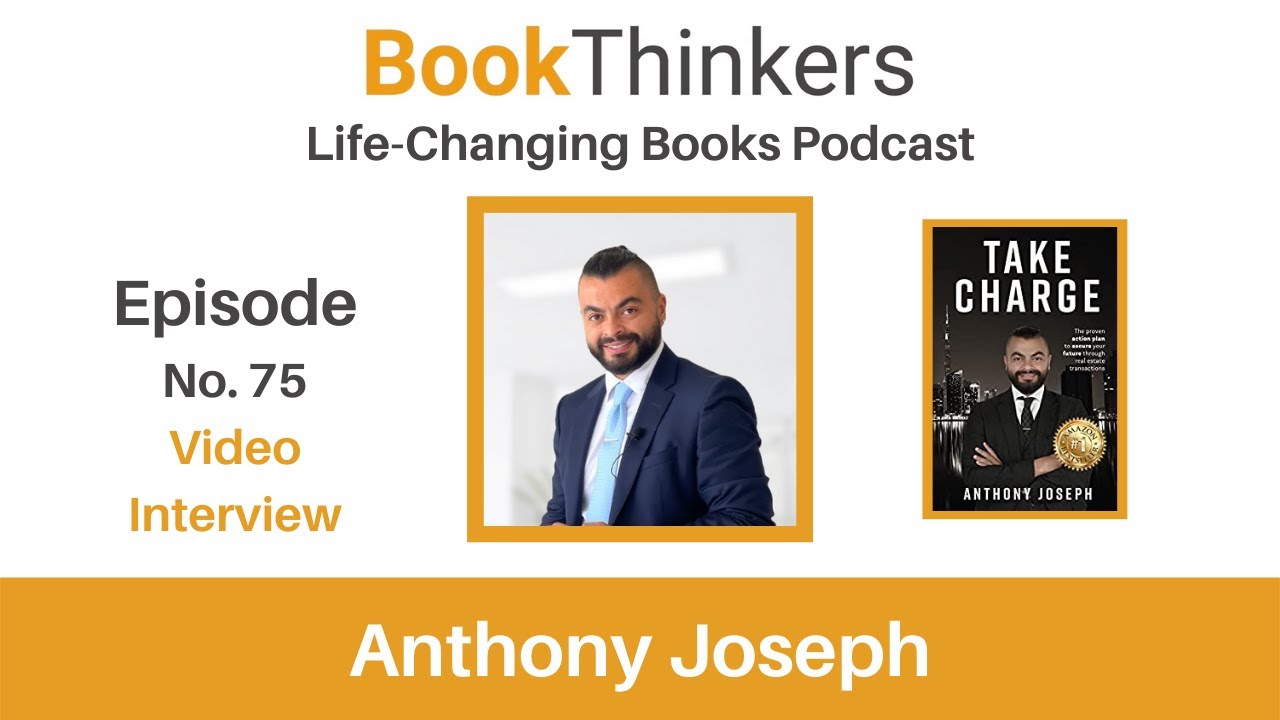
In this episode of the Life‑Changing Books Podcast, host Nick Hutchison interviews Anthony Joseph, a Dubai‑based entrepreneur, real‑estate mogul, and author of the self‑help book Take Charge. The conversation traces Anthony’s journey from a war‑torn childhood in Lebanon, through a double‑major degree in advertising/marketing and a brief corporate stint, to his move to Dubai with almost nothing. He recounts his first, disorienting job at Provident Real Estate, the moment he considered resigning, and the breakthrough strategy that led him to secure exclusive rights to hotel‑apartment inventories, eventually managing over 1,500 units. Anthony explains why he wrote Take Charge during the pandemic, who the book is for, and outlines three “misconceptions” he debunks: luck isn’t the driver of success, money isn’t required to make money, and living day‑by‑day won’t get you far. He shares concrete habits—daily planning, nutrition, exercise, and relentless prospecting—along with a vivid anecdote about attending a networking event that produced a top investor. The discussion also touches on Dubai’s multicultural environment, Anthony’s current pivot from sales to property development, his self‑mentoring approach, and the influence of Grant Cardone. The episode ends with practical advice for young professionals (ages 18‑34) and details on how listeners can purchase the book or connect with Anthony via Amazon, Instagram, LinkedIn, his online academy, and his podcast Dubai Stars.
Chapters
Anthony, what's going on, man? Welcome to the Book Thinkers Life-Changing Books Podcast. How are you doing today?
I'm good, man. How are you?
I'm doing well. I'm doing well. So for those in the audience that are not familiar with you or your book, could you introduce yourself to everybody? Tell them a little bit about who you are.
Uh, yeah, so basically I'm an entrepreneur based in Dubai. Uh, I have a few— I have founded a few companies related to real estate and real estate services. I do have, um, a real estate online academy I have a podcast myself, it's called Dubai Stars. Recently I have published, uh, Take Charge, which you are aware of, and you've been kind enough to give me a nice review for it. And that's about it. Yeah.
Well, the focus of today's conversation is going to be Take Charge. This podcast is really built for helping my audience discover new books and new authors to learn from, and I think you're a really cool guy, but let's Let's take things back to your younger years, right? You were born in US and then moved to Lebanon, sort of grew up in Lebanon and then ended up in Dubai. So what was life like for you when you were younger? Were you an entrepreneurial kid? Did you play sports? What was the situation?
Basically, I've always been a salesperson, you know, I've always got my way into sales. I sold my parents, I think they were my first clients, you know, I wanted a bicycle, I wanted this and that. The— how I was brought up, it was a bit— it wasn't like the ideal way because it was like the civil war. So it wasn't really ideal. We didn't have lots of resources or we couldn't go out much just because of that until ceasefire happened. But after that, my parents got to a divorce, so I kind of like transformed to a rebel. from a very young age, and I just wanted to explore life to all what it has to serve. Then let's say in the age between 13 to 17, 18, that's where it really shaped me. And then moving forward, I went to university, graduated from double major, which is advertising and marketing, minor psychology. After that, I tried the corporate life. It wasn't for me, and 9 to 6 wasn't for me at all. Rules and regulation weren't for me at all. So that's why I kind of like started to try to find my purpose, you know, I couldn't find it back at home in Lebanon. So that's why I decided to start exploring. And I came to Dubai.
And so you came to Dubai with almost nothing, right? It was sort of like a rags to riches type story. So I know that, well, let's, let's take a step back with the book Take Charge. Why did you decide to write it? And who is the target reader? And then we'll get into Dubai story, because I think that's where a lot of the good lessons are going to be learned.
To be very honest with you, I hadn't— I, I couldn't even think that a day will come that I will write a book. Basically, everything started, it was, and, uh, and the pandemic, during the lockdown, you know, I was just staying home. I was, you know, I'm a very active person, as I told you. I'm like, I run 6 companies, not to mention my own personal stuff. So just to put me at home, uh, doing literally nothing was a bit like nerve-wracking for me. So I felt like I'm losing it. I have lots of power, lots of energy in it, in me. So I wanted to let that go out, and suddenly I just found myself like start writing chapter after chapter after chapter after chapter, and then it became a reality and became a book.
Yeah, and who's the target reader for the book? So when you were writing it, You probably had some sort of like ideal reader, right? Maybe a certain age, certain profession, real estate. Like, who's the ideal reader for the book?
You know, like in that period, mostly like I was getting texts left and right on Instagram, on LinkedIn, on Facebook, everywhere. It's like, yeah, hey Anthony, hey AJ, we want to join the real estate industry. We don't know where to start from, you know, like, uh, or I have joined the industry, but I don't know how to make it. Helped me to make it big, you know. So all of this, like, kind of way it was like it pushed me to just like— for anyone who just want to join the industry, want to succeed, want to make it proper, this book is for them. It doesn't have to follow any age or any criteria or any race or anything, as long as you just have a mindset and and you want to make it in the city, this book is for you.
Yeah, that's what fired me up when I opened it up, because you're like, listen, if you just want more in life, then I'm your guy because I figured it out. And I'm— now I want to teach you what I couldn't learn in school, what I couldn't learn anywhere else. It's in this— it's in this $15, $20 book, and, uh, you can make the money back pretty fast. It's an easy read too. So you moved to Dubai, you didn't have much going on, you're out of your comfort zone, and you get hired at Provident Real Estate. So what was that experience like? In the book, you say you totally broke down with that first job.
Yeah, because, you know, like, as I told you, I had no plans. I was just like, uh, I was chasing companies and, uh, kind of way like I was forcing myself to get a job, you know what I mean, in a totally strange country, a city where I don't know anyone. It was very weird. The corporate life here is weird, man. Like, everything is weird. It's not like in the States at all, you know. So yeah, once I got the job, I was like, yay, you know what I mean. Just like this, uh, this moment where you feel like, yeah, finally I made it, I got the job, you know. But But it wasn't all like gloomy and beautiful. You got the job, but eventually if you don't know what to do in the job, you're gonna get fired very soon. So it was just like one step closer, like, yeah, I got the job, now I need to discover how to make it in the job, which was the hardest part.
Yeah, you said like 2 weeks or a couple weeks later you wanted to resign, right?
Yeah, I did actually resign. Yeah.
So how did you decide on real estate? I mean, you came to a city that you weren't super familiar with. You had the marketing and advertising and psychology sort of under your belt. Why was it real estate?
You know, like, once you come to Dubai, there is no way, uh, that you will not find these skyscrapers. Like, you will see these massive buildings and you feel like it's based on real estate, you know what I mean? Like, it has beautiful weather to offer, it has nice infrastructure, but eventually the money here is in real estate. So just to get your head rounded up about how to get the inventory, how to get the listing, how to get the stock, how to start calling people, what's the difference between square footage, the meters, and then to get to know all of the rules and the regulation. So that took a while, and in here, it's always— I always tell people, like, as an average, you need 90 days to close your first deal, so you need to survive. Unfortunately, in this industry, there is no salaries, there is nothing. You just will be getting maybe a SIM card from the company, a laptop if you're lucky, and that's it. Go make money. So yeah, it's very tough, and to be very honest with you, once I started, I had Okay, we had some kind of trainings, but no one, uh, taught us how to start, how to get your, your stuff. So when I made this book, it's like I'm just summarizing all of the methods that I have tried and I failed in it. I'm like, don't try all of those, just try this one, you will make it. Yeah.
Yeah, no, I always like to say, listen, personal experience is a great teacher, but want to know what's better than that? Other people's experiences. Because if I'm a real estate agent and I want to enter the Dubai market I don't want to learn the same way that you learned it. I mean, listen, you did it in a very fast and accelerated way, but a lot of people go down those roads, they try these strategies, they don't end up working, and they quit the industry. So, uh, now 2 years later, you take over 1,500 properties exclusively. So what happened between those 2 years? The book doesn't really talk too much about that period of time, but I wanted to dive into it for a few minutes. So You get this job, you want to resign, the CEO says no, 2 years later you're living the dream. What happened?
It wasn't even 2 years, it was actually several months later. The way it was, I was just really obsessed on it, you know, I was just like, okay, Anthony, listen, this is not your country, you have no one you can count on, you left everything to be in here, make sure you smash the hell out of it. You know, so I was just like, I wasn't traveling, I wasn't doing anything. I was like you, whenever I feel like I want to travel or do something, I was immersing myself in books, I was reading. Whenever I wasn't reading books, I was just like watching YouTube videos, seeing other entrepreneurs, the big names, what they are doing. So what happened is just like, I really got obsessed, and I was just like trying to do a comparison about all of the other agents, what they are doing. They're just calling people, asking them if they want to sell their property, or if they want to rent their property, or if they want to buy a property. That's it. So it was, you know, very limited. And I'm like, there must be something else into it. And then I got to find out there's something here called the hotel apartments that they come fully furnished and serviced. And no one was touching this stuff. So I went to a massive, huge company, which is one of the biggest in the country, and I approached them. I told them I want to work with them, and I want to get all of their stock exclusive. Of course, they kicked me out. They were like, come back with a proposal. So I did the proposal when the second time rejected, third time rejected, fourth time rejected, until I was like, okay, if I'm gonna get 1,000 proposals, I'm gonna be rejected. I need to make something else. So the way what I was doing, I was going to the security guards, not bribing them, but just like offering them food, getting to know what's the vacant units and the surrounding building next to it, bringing people, showing them those vacant units, and making sure to always pass next to the sales director of that company. So he was always seeing me with clients, and then he was like, oh, this guy is legit, he actually do have clients. So they called me, we made the first deal, it was 160 units, and then after that I did really well by managing these properties, and we started growing project by project until we ended up to be having 1,500 units in total all over the country.
Yeah, you've just got that, that hustler sales mentality that, uh, you know, because the average person isn't thinking, oh, I've got to befriend the security guards, bring them food. Like, were you outside of your comfort zone, or did that just feel good to you?
No, of course. I mean, everything was outside of my comfort zone. Imagine, like I'm telling you, I'm living day to day. All what I had under my name was $100 that I divided into 30 days, which is $3 as my daily allowance, out of which I'm spending $1 a cheese sandwich and $2 for the metro station. That's my transportation. So there, there was no comfort in all of that stuff, you know what I mean? It was scary as fuck. Uh, yeah, but it passed. And even though after getting the 1,500 units, okay, it was some kind of accomplishment for a few months, but then I'm like, okay, now what's next? I need to grow more. I need to get into where the actual money is, which was in the off-plan sales. So I left all of this, went to a totally different— it's not industry, but totally different real estate. So also, I had to start again. I wasn't really productive. So my income dropped almost like 60-70% until the second year where I really started smashing it again and getting all of these trophies and awards.
Yeah, one of the best, one of the best real estate agents in Dubai. Uh, most of my listeners are from the US, and the only experience that most people have with Dubai, including myself because I haven't been there yet, is just maybe what you see in some movies every once in a while. So what's Dubai like? What, what's the primary language? Are most people speaking Arabic or is it English? Like, how are you navigating that?
Everyone speaks English in here. We have in the city 200 nationalities living in Dubai. It's one rule, one law, everyone follows the law. It's such an easy life. Weather here is always amazing, it's always like on the beach, beautiful infrastructure in the country, like the best clubs, the best nightlife, like whatever you want to do from the city you want to get. If you're here just to be spending time in the desert, whether whatever you want to do, you can do it. If you're here just to live the glamorous life, as let's say, let's say it's, it's a replica of Miami but into a better version.
Probably a little bit cleaner. Yeah, yeah, yeah, I like Miami, but yeah, it's, uh, it's a crazy place. So in my video review of your book, I talk about a section of the book that you call Abandoning Misconceptions. And so I figured what we could do just for a couple of minutes is I can bring up each one of these. If you could just talk about it for a minute because these are important. Like my audience is primarily 18 to 34. They're young professionals looking to use these books and use people like you to make it big in life just like you did with all those books and podcasts and videos. So the first one is, I need to be lucky to make it big. Why is that wrong?
Yeah, because like that's what we are brought up to, to listening to, is like, oh, this guy, oh, he got his break in life, he's lucky he met someone, or I don't know, he stumbled to something and he made it, as if you hit the lottery. No, that's ultimate bullshit. Actually, you— what you need to make in life, you need to be organized, you need to plan, and you need to execute. That's it. So, and also definitely something I say Before jumping on this one, I don't know if you really focused on that chapter 1, which I speak about the Trinity of Success, which is like what we feed our souls, our body, and our minds. So, in order for you to become a very successful person, you need to change everything that you've been doing in the past. You cannot be eating junk and accept, you know, like body will serve you for 15 hours a day. No, you will crash after lunch, you will feel sleepy, you will say, screw it, I cannot work anymore. You cannot be let's say partying all night or hanging out around, like, let's say the wrong people, and then suddenly this bright idea will come to you and you're gonna execute it to a business. So you need to transform to a different person, and that's it. And then you need to write down whatever plan that you have. You just need to write it down, see it every day, prepare for it, and do the execution. And that's how you will make it. There is nothing here being lucky. Of course, luck might Play a very minimalistic role by just accelerating the time for you. Maybe you can do it in a year instead of waiting five years, but all of the rest you have to do it yourself.
Were you were you always paying attention to what you were eating, or did that really just like?
Absolutely. The first phases I didn't really have a choice. I told you I lived six months off a cheese sandwich. Yeah. This was what could afford. But yeah, later on I discovered that whenever I'm eating. green, healthy, plant-based, I can always, you know, work. But if I'm eating burgers, pizzas, fries, milkshakes, that's it, I'm gone. And the day that I don't work out early morning, I cannot work. I have to work out in the morning to keep, uh, at least to stay awake until 9, 10, 11 PM.
Yeah, no, I feel the same way. I, I think one of my favorite genres is health and wellness and fitness and biohacking. I'm I'm always paying attention to that kind of stuff and trying things out to maximize the opportunity for my brain to work and to do what I want it to do. So that's a big one.
Absolutely.
All right, the second one is that I need money to make money. So why is that not true? Because I hear that one a lot.
You need courage, man. You need courage. That's it. You need to pick up that phone. You need to dial, you know, like, that's it. You need courage to make money.
Yeah, I like at the end of the book, that's, that's kind of how you end things is talking about courage. You say, listen, it's not $100, it's like 100 courageous dollars, you know, or it's like 100 courageous phone calls or whatever. And yeah, it's, it's a good mindset.
It's just like every phone call is an opportunity to make money. Maybe you're gonna get 20, 50 nos, you know, but there will be that one phone call and that yes, it will be worth every other call that you have made. You know, so you just have to be out there. You have to be persistent. You have to make sure that people know that you exist and what you do. And you never know even when your referral is gonna come from. It might be from a friend, it can be from a stranger, but eventually the more you do it, the more the odds will be in your favor that you're gonna actually do it. So it's not about money. Maybe you need money and the stock market to make more money because you're investing. But in our industry, you just need to be courageous by keep calling, keep calling no matter what. That's it.
You say in the book, the more hands you shake, the more money you make. And, uh, I mean, that's how we made— that's how we met, right? Like, it wasn't a phone call, but it was a DM. I was prospecting. So can you tell everyone that story that you say in the book about prospecting where, like, your friends wanted you to go to this event, you were like, nah, I don't want to, and how it paid off?
Yeah, I wasn't in the mood at all, because in that time in my life, nothing was right, you know what I mean? So for you to go to an event just to prospect, you actually need to be at least in a good mood for you to talk to so many people. So I was like, yeah, no, man, I'm not in it. He was like, come on, let's go, better than staying at home. So he was kind of pushy. So I'm like, okay, fine, let's do it. I went there, I just had my business cards, you know, and once we stepped in, I just heard my mother language in the back. Some guy, so I was like, yeah, familiar face. Hey, I was going. He's from my city. You know, I haven't seen him for like maybe ten years. Then we started talking and stuff. Handed him my business card. What do you do? I'm in real estate. How about yourself? And I'm engineer. Blah blah blah. And that's it. And it was just an event which in my mind it was all an absolute waste of two three hours. You know, now I'm going back home. And then suddenly a month later, I got a phone call by a guy saying, "I got your number from this guy.
I wish to meet." And I met this guy.
And he turned out to be on my top 3 biggest investors to date. So if I didn't go there, this opportunity would have slipped me. I wouldn't even see it. I wouldn't even be here now to tell you about it, like, see how, how it works, you know?
Yeah, it only connects in hindsight, right? So like, in the moment, you're like, I don't really want to go to this event. You never know what could happen. So roll the dice. Like, like you said, you need to call, put your hat in the game. Like, otherwise it's not going to happen for you.
Correct. You never know who you're gonna meet. You never know what you're gonna stumble into. Sometimes it's like, there is even in books, you know, sometimes you read the book and you feel it's such a boring book. Like, seriously, why did I even buy this book? And then suddenly you flip a page and you read one sentence and it gives you a massive aha, you know, just like, oh, Wow, you know, and even the book is like useless, but that one sentence can change your life or give you a new perspective. So it's the same in here. No matter what the event is, whether it's corporate, it's family reunion, whatever it is, be out there, have your business card with you, make sure people know who you are, what do you do, and it will come to you.
Yeah, that's an important one too because You'd be shocked how many times I'm talking with an author and I'm like, so tell me a little bit about your book. And they're like, well, it's kind of complicated to explain. And they just, they don't have a very clear, articulate way to describe what they're doing. And the more clear you are, the more other people can resonate with you and then tell their friends about it. Yeah, it's a good one. All right. So the 3rd misconception is that I need to live day by day and hope for the best. I mean, we already kind of talked about some of these subjects, but do you have anything else to add on that one?
Listen, I always say you need to find your purpose in order for you to know where you're heading. So basically, whenever I have someone and they were like, we want to join the industry, I'm like, okay, great. Why you want to be in real estate? I have the most common answer, which is because I want to make money. I'm like, amazing, but you can make money selling ice cream. You can make money in way easier job. Like, why you want to go through this suffering? And they were like, okay, we, uh, we want to make lots of money. I'm like, amazing. Forget this one. Write me down the reasons. When you say I want to make money, what do you want to make? Everyone's like, uh— I'm like, okay, some— what do you want? $10 million? $100 million? Whatever that is, write it down on a piece of paper. There is something I truly believe in, which is the subconscious, how it works with us when we write something down on a piece of paper. it and put it somewhere where you see it the first thing in the morning, whether it's on the wall, whether it's on your closet. Because once we wake up, it's not like every day we're gonna be waking up in this amazing mood, like, yay, another day I'm going to work. Sometimes you wake up feeling terrible, you don't want to talk to anyone, correct? But once you see the purpose, like why I'm leaving bed, why I'm gonna jump to a shower, why I'm gonna drive another 30, 45 minutes now, be stuck in traffic to reach my office, Once you see this one, it's always a booster for you to keep working and calling and trying to meet people no matter what will go through your way. So once you have the purpose, everything else is easier.
I love it, man. Yeah, I've even taken that to the next level. My tattoos, they're all positive, they're forward-thinking, they remind me of who I want to be in life, and I program my subconscious mind because I see them all the time. All the time, and that sub talk is always positive, which has been very useful for me.
Which which I'm certain you're gonna reach whatever you're aiming for, and no matter something very quickly, you know, and then you're gonna be needing maybe new tattoos. I don't know if you still have a place for new tattoos. I do.
We'll get some when I come to Dubai. All right, cool. So I see on IG that you're always hanging out in cool spots. You're working with great guys like Grant. Cardone when he comes to town. You're driving nice cars. So what's life like for you now? What are you working on? What are you paying attention to?
Now I'm doing the move in my life, which is, I think it's something major. It's a new challenge for me. I have no experience in it. I'm learning it bit by bit, and I'm hoping I can crack it in the next 6 months, which is moving from selling properties into developing properties. So I'm looking into contracting, I'm looking how stuff works, how to get all of the legalities, all of the paperwork, how to get all of the permissions in order for you to become a developer, a contractor, how to build, how to do the marketing, how to recruit agencies, something madness. I've been almost 2 months trying to get myself into it. Let's say I'm 25% knowledgeable about it right now, and hoping by by this summer, June, July, I will figure it out and jump into it and start becoming a developer myself.
Good for you, man. What's your purpose? What's your sticky note on the wall say today?
It's just like leaving a legacy, you know, like leaving a legacy and doing an impact while leaving the legacy. Like down the road, like first of all, you're just so eager to make it, you want to take all of the money in the world, but you will find that there is something more interesting from that which is giving back. It has a fulfillment more than taking. Like, before you have to take, but then later on, once you feel like, yeah, I'm doing an impact, I just changed this person's life without even me knowing it, or even if I knew it, I'm changing life, it has some kind of nobility into it, and it gives me like a massive fulfillment. So I'm gonna do my best while creating my legacy, making an impact.
Yeah, no, I love it, man. I'm, uh, I'm sort of— I'm balancing both of those, right? Like, I'm always taking, taking, taking. I'm definitely in that, in that headspace, but I'm also trying to give at the same time. And so, yeah, it's a hard balance to have, but no stress, no stress.
It will hit you at a certain age, you know. Don't stress yourself about it.
Yeah, but see, you're a young guy. Tell everybody how old you are.
I'm, I'm 36.
Yeah, you're a young guy.
I'm not that young guy. I'm okay.
Uh, so I told you that, uh, the average age of my audience is like 18 to 34. So I, like I say, I always call them young professionals. Um, what's one thing that you wish you knew when you were a little bit younger? And I'm talking like 18, 20, like in that ballpark. What's one thing that you would go back and tell your former self? Like, hey, listen, this, this is what you need to focus on.
Maybe I would have told myself just to live a bit healthier because down the line you might regret it. Like, once you're in 18 and your 20s, your body is like a rock, you don't care what you do. But this stuff does to you once you pass your 30 or 35, maybe it goes downhill from there. So this is something. Something else I would have told myself, just enjoy every moment, don't overthink the future because There is something planned for you and when it's your time you're gonna take it. So don't overstress the future. Don't try to become a millionaire when maybe it's your age just to be living life and experiencing it to the fullest, you know what I mean? In that age we always try to overthink and especially in this generation right now, because I see lots of them and I get lots of DMs from, from kids, let's put it this way, telling me, Oh man, I wish I was born like you. millionaire. I'm like, buddy, I wasn't born a millionaire. Like, 5 years ago I couldn't afford food, you know what I mean? It's not like that, you know. Like, if you are now in a level 1 or 5, don't compare your life to someone at level 25. It's, it's not fair to yourself, you know. Just like, live life. If my life or any other person's life you feel it's beautiful, take it as a motivation. write it down somewhere, try to envision it yourself that this is what I want to be when I grow up and work for it rather than you see it as a threat or it's being unfair to you and make it demotivating you or making you get to a depression. So just like embrace it and say, I want to have this life, even a better one, because you deserve it.
Yeah, I love that. Did you have a specific mentor, like a person in your life who was helping guide you on this path, or was it just you were thrown in the lion's den and you had to figure out how to get out by yourself?
This, this might sound like, uh, I am my own mentor. Every growth I'm having every year is like, in a way, I'm mentoring myself, you know, because like I'm trying multiple ways and then I'm always, no matter what I'm jumping into, I'm always cracking that code and making it big. So I find I'm mentoring my own self. However, if I was influenced by someone which I found me and him, we click a lot, it was Grant Cardone. So I remember when I was started looking at YouTube and seeing the videos, I saw lots of people. They're all good, don't get me wrong, but Grant has something else in him, you know. He had this aggressiveness, straight to the point, wouldn't take anyone's bullshit, will call you out the way it is. So I felt that's kind of me, you know. So I was influenced by him, yeah, a lot.
Funny enough, I tell people all the time, like, out of all the in-person experiences that I've had, Grant has this energy. It's kind of hard to describe, but when he walks in the room, you know he's in the room. All eyes are on Grant. He doesn't even have to say anything, but he's just like— he's got this energy, this confidence, this assertiveness like you were talking about. This conf— I mean, it's It's off the charts. So yeah, anybody that can replicate that is going to have success.
And most of the time he talks shit. It's not like he's spitting golden nuggets, but even when he's talking shit, he does it perfectly, you know? Like, he's the best in marketing. The guy knows his stuff. And with all due respect, like, hitting his own age— I don't know, he's 63, 64— being that fit and just like getting all of his stuff the way it is, like, respect, man. You cannot fake that. Come on, you cannot fake it.
Yeah, you can't fake it. You can't fake it. Well, dude, we had a really good conversation today. Is there anything else that you want to touch on before we wrap things up?
Uh, first of all, thanks a lot for having me. It's such a pleasure to be on your show. Um, it's, uh, it's, it's always what I always have this message for listeners, for young people coming in, saying again, like, life has something for you. Everything has to go through a stage. Nowadays we are blessed to be living in this era where everyone is connected, we are all one step away. 10, 15 years back this didn't exist, people had to travel to meet each other. Imagine the disappointment when you're going to see someone and it turns out to be totally not like what you have in mind. So everyone is connected, the information is out there through YouTube, Instagram or any other medium for all of this young generation. Live it day by day. Plan yourself. Plan your future. Try to be as healthy as possible. You know, try to put yourself in some kind of an entourage where this entourage really pushes you to be discussing ideas and events. Don't discuss other people. No one cares who breaks up with who, who does what. No one cares. this doesn't matter. Uh, try to, yeah, come up with some nice ideas from a young age, execute it, and definitely you're gonna make it in life. This is my best advice. I'm gonna give it to, uh, audience like yourself.
I love it, man. No, it's great advice, and, and I wish that, that I had access to information like that just years ago. And so I'm in this role now where I get to be personally mentored and ask questions of people like you. And I know we're gonna hang out soon. We're— I'm gonna come to Dubai. We'll do something fun together. We'll do another podcast. But, uh, for people that want to find more about you, they want to learn more about your book, they want to buy a copy, where should they go? What should they do?
Uh, the book can be found on Amazon. I can be reached out directly on my Instagram. You can put my credentials, LinkedIn, YouTube. Uh, also, if I have an online academy, uh, called the Tech Charge Online Academy Real Estate. I have my own podcast which is called Dubai Stars. I'm gonna send you all of the links if you wanna tag it somewhere here. And yeah, absolutely, that's where people can reach out directly, and that would be amazing.
Awesome, man. Well, thank you one more time for coming on today. It was a great conversation, and thanks a lot. You are a Dubai star.
Thanks, man. I appreciate it. Thanks a lot.
More from Nick

Napoleon Hill’s “Think and Grow Rich” is a timeless classic #selfhelp #personaldevelopment

4 Books to Help You Get Better at Decision Making #selfhelpbooks #bookrecs #nonfictionbooks


Have you read this book yet? 📖: The 5AM Club by Robin Sharma #selfhelpbooks #robinsharma

Dan Sullivan on Listening to Your Customers Instead of Watching Your Competitors

5 Books That Will Boost Your Financial Intelligence #financialfreedom #nonfictionbooks

The People That Preach the Loudest About Virtue are Usually the Most Power Hungry



Books are the greatest mentors you can find #selfhelpbooks #businessbooks #successmindset

Let’s fight this toxic instant gratification culture together 📖 #selfhelpbooks #jimkwik