Make Money with Books with Kary Oberbrunner
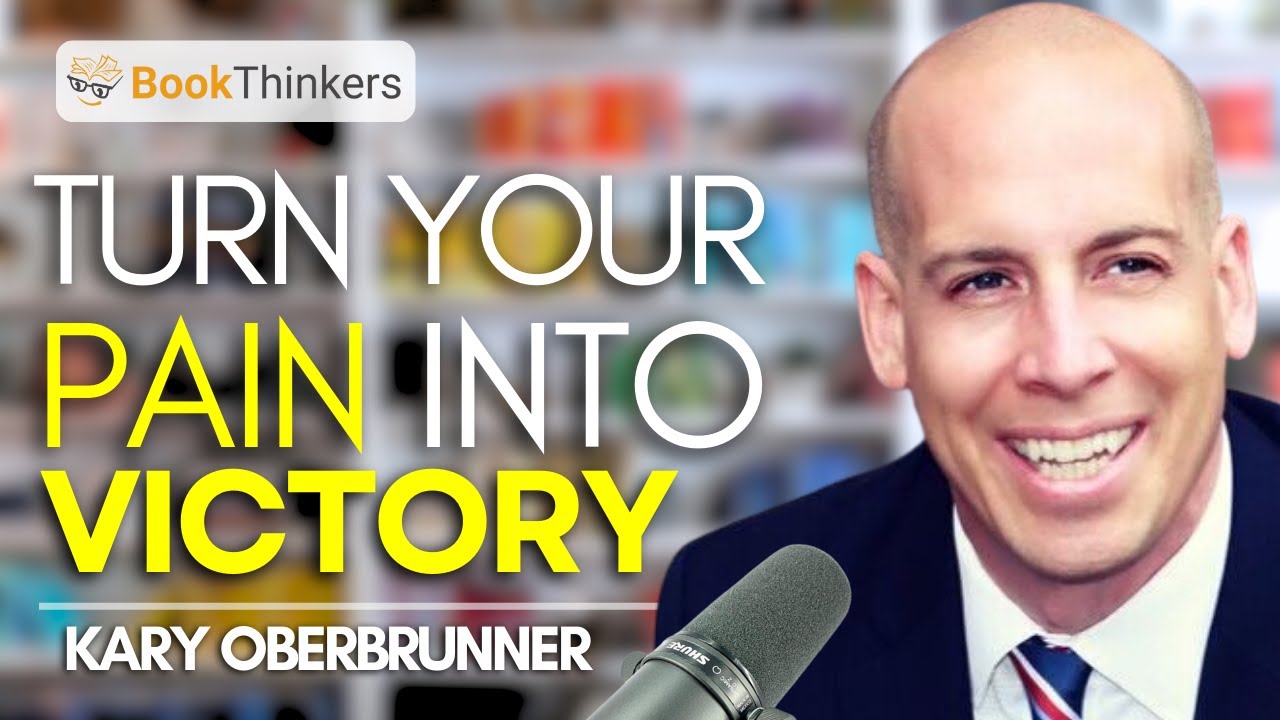
Kary Oberbrunner built Igniting Souls into a multi-million-dollar business by treating books as movements, not business cards. A single book can generate 18 revenue streams through courses, speaking, certifications, and licensing. He uses three personas—Sage, Sherpa, Struggler—to write to his former stuck self.
Chapters
Yeah, this is a deep talk. I mean, it's a deep podcast. You know, most people are not talking about this stuff, but it's real life. And I mean, we live in a world right now that some would say is getting increasingly darker. I tend to be an optimist. So even though that might be true, I'm like, okay, we gotta step it up. You know, us people of light, we gotta step it up even more, which means we need better books, more books, bigger messages for the books. And then if people aren't authors, man, I'd say, look, Yeah. You guys know, everyone says it's a big rage about passive income. The beauty of a book is passive impact.
Carey, welcome to the Book Thinkers Life-Changing Books Podcast. We are so excited to get to know you and talk about your newest book, The E-Mind, which you recently released, and we will definitely get into it. You have overcome so many obstacles from stuttering to lots of rejection, severe depression, and self-harm to becoming a speaker, Author and entrepreneur. You're also a man of faith, and I'd love to start with asking kind of a big question. Why did you eventually come around to thanking God instead of hating him for what you went through?
That's a great question. You know, there's a, um, there's a statement by a guy named, I believe it was Oswald Chambers, and this will not make a Hallmark card, but it says, before God can use a person greatly, he must wound them deeply. And again, that's not going to make a Hallmark card because it's not really fun to talk about. Like, why would a good God create pain? But I'll tell you what, you know, you guys are athletes. We would say— we were just talking about pain, cold plunges. I mean, unless you have pain in life, you don't have growth. And so, yeah, I went through childhood stuttering. I went through an addiction to self-injury, cutting. a depression. But I'll tell you what, I can, I can reach people at a much deeper level. I can, I think, think more holistic. There's so many benefits that have happened from that, that it's kind of like, it sounds weird, but it's kind of like, you know, I should actually thank God for allowing me to go through some of the struggle because it built incredible mental muscle, emotional muscle, that type of thing.
Such a powerful story. I've actually never talked about this out loud, but I felt like today was the day to do it. And I'm a little nervous, to be honest.
But hey, man, you got it.
I actually grew up and I suffered with depression. But this is something that a lot of people know that about me. But the piece that they don't know is that I actually self-harmed for a long time.
Wow.
And when I came across your story, it was very, very powerful to me because I was like listening to you talk about your relationship with God. And I, I've had a tough relationship recently with God and my relationship with spirituality. I've been talking a lot about it with my friends and family, and I just don't know where I sit or feel. But, uh, listening to you is just super encouraging, and I'm just thankful that you were able to get through it so people like me can find your story and grow from it. So thank you for being willing to be vulnerable and share that story. You talk about, uh, how you got rejected by your professor when you first opened up about it. So can you tell me a little bit about— tell us a little bit about how you were feeling and how you kind of dealt with that and overcame the self-harm?
Sure, definitely. Yeah, I don't mind this topic at all. You know, I used to talk about quite a bit, but now in the business realm Not a lot of people ask about it, but I'm happy to chat about it. So, so basically, you know, I am a control freak. I think we all are, if we're honest. And self-harm for a lot of people is a way to reenact pain, but in a way they can control. So a lot of people think, oh, you know, you're self-harming, you're— you actually want to end your life. No, actually, it's a coping mechanism to, to make it through life. You know, just like some people pop pills or drink alcohol or have, you know, illicit sex or whatever. Like, that's a way to actually cope with pain. So I didn't tell anyone, man. I had a great, great mask. I mean, I was voted the chaplain on campus of a Christian college. You know, like, you know, I wasn't being deceitful, but I'm like, who wants to know about depression? I wasn't walking around getting attention. You know, so I was actually doing a master's degree for counseling. Not that I even am good at counseling. I'm not at all. I like future-focused. My wife, I'm sitting in her room. She's a counselor, so she does therapy. They focus on the past. Anyway, I'm in counseling practicum where they— you actually counsel real people. behind glass windows and your professors observe you. It's kind of unique. And they basically are saying to me, look, man, we know your grades are great, but you might fail. I'm like, what do you mean I'm going to fail? Like, failure was not a thing for me. And they said, you aren't going near anyone's pain in your counseling sessions. In fact, they're talking about the pain and you're like going way around it. And they said, you're just not a good counselor and you're not willing to open up. And I'm like, dang, you know. So because of the fear of failure, I basically for the first time ever confess after thinking several nights like, should I, should I? I go in and I tell the professor. Finally, I have enough courage and I'm like, look, man, I don't cut all the time, but I do. I, you know, I've struggled with self-injury for a lot of years. Well, I'm thinking, you know, Christian college, the guy's going to be like, hey, man. Come here, you know. He's like, well, thanks for sharing that. Thanks for sharing that. We'll talk about it. And then 2 days later, I go to my mailbox, student mailbox, and they're like, failure. And I'm like, and I was blown away. And they said, you're not fit to be a counselor. You're going through your own issues. You're out of the program. And man, I was totally angry. I mean, unbelievably angry. First time I Open up and this is how I get treated, right? Well, I mean, I was very angry at God, let me tell you for sure, because my wife and I were engaged. This was a master's degree in counseling, and to fail would mean I wouldn't graduate when she graduates. Like a lot of dominoes, right? So I go to the vice president who's my friend, and he was mentoring me, and he says, listen, man, He can't fail you. He's a professor. I'm the vice president. If you get therapy, we'll, we'll pass you and you can get healthy. Turns out that professor was actually going through his own darkness. I don't blame him, but he was actually sleeping with one of the married students. So, you know, like, I'm convinced that we have— we, you know, not to go super spiritual, but I'm convinced we have like good and evil. And I'm convinced that the moment you get close to your potential, you get close to being a bright light. I believe that the enemy tries to take shots at you. And so, you know, I've told people, like, if you're going through pain, you can actually get frustrated, or you can realize that's a good sign that you're like actually coming to a major breakthrough and the enemy's scared. And so the enemy's trying to take you out. And that was the case because those were the moments that I first got toward freedom, went to therapy, got help, worked through it, and said, I'll never talk. I'm fine, but I'll never talk about it again. And then I got into publishing, right? A book. And so I wrote the 3 Safe books: Safe Book, Safe Book 2, 3. And then I feel like God's tapping at my heart to write the scary book where I talk about self-injury. And I'm like, no way, I'm not writing that story because I was a pastor. And I thought, if I write that story, they're going to be like, who the heck is this guy? He's not fit to be a pastor. Like all that reenactment again, right? So I'm praying about it, I'm thinking about it, and, uh, I feel like, you know, God doesn't talk to me, but I feel like this impression of from God, you don't have to write the book, but if you don't, you'll miss out on a massive blessing. You see? So now I'm like, well, crap, now I have to do it. And that was actually the 4th book, Your Secret Name. It got picked up by Zondervan. Zondervan's owned by HarperCollins. That was like my first big book. And that was actually the book that launched Igniting Souls. And that's pretty much how I Finally was able to get the income to leave my day job as a pastor, become an entrepreneur. Like, it was the precipice, but I almost had too much pride to say, I'm not going to write that book.
Well, that entire story is a great representation of something that I watched yesterday. I think about 6 months ago, Jordan Peterson released a series on Exodus where he sort of does a roundtable discussion with 5 or 6 other— yeah. philosophy types, and they were talking about the duality of good and evil. The more good that can exist, the more evil has to exist as an opposition.
Right.
Like, there is a balancing act, um, that's described in the Bible. And so it's interesting to hear you talk about it this way because their conclusion was that only in the darkest of times can you transcend the pain and then kind of bounce back to the other side of the spectrum, which it sounds like you did because through your darkest moments, you ended up becoming an entrepreneur and freeing yourself in a big way, which is an interesting way to think about it, right?
That's a great example. Jordan Peterson is very deep. So, you know, glad that you are watching that. Yeah, this is a deep talk. I mean, it's a deep podcast. You know, most people are not talking about this stuff, but it's real life. And I mean, we live in a world right now that some would say is getting increasingly darker. I tend to be an optimist. So even though that might be true, I'm like, okay, we gotta step it up. You know, us people of light, we gotta, we gotta step it up even more, which means we need better books, more books, bigger messages for the books. So I, I think this is exactly on topic.
Well, I, I really greatly appreciate you sharing that story. I just think it's so powerful and so many people struggle and they struggle in secret. And I know that like somebody like you talking about it out loud helps them, me, get my voice to say, hey, I've struggled with this thing too. So it's really powerful and I really, really appreciate it. Now, you talked about Igniting Souls. Can you maybe give us an overview of why you picked that, like that name Igniting Souls, like what that means to you and everything?
Man, there's some great quotes here that I'll borrow from people. So, um, The glory of God is a man or woman fully alive. So that's Saint Irenaeus. Love that. Another one that I love is Ferdinand Foch, a French general. He says, the mo— what does he say? The most powerful weapon on earth is the human soul on fire. So when I, you know, other people have taken it and claim it, but When I kind of got ahold of those quotes, I thought, man, that is so true. Like, I'm a sucker for all the movies that the odds are stacked against the guy or the girl, man. Like, I'll cry at— like, I'm not a crier at all, man. I didn't cry for like decades when I was anti-pain, self-injury. But now the older I get, I'm bald. You guys got great hair. You look great. Thank you. But, you know, married, 3 kids, oldest one's 18 now. And the older I get, man, the more like those movies touch my heart because I understand the hero's journey and how tough it is. And there's this great quote by Carl Jung, Swiss psychologist. In all of his research, he said, okay, what's the most damaging thing in the life of a child? And I don't know if you've heard this before, it's pretty powerful. But, you know, I thought, is it alcoholism? Is it abuse? He said that the most damaging thing in the life of a child is the unlived life of the parent. It's like, dang. And, and, and what that means is it means that the kid who sees their parent coming home year after year after year, night after night after night, they say, don't bug me, kid. Give me the remote. Let me veg out. Veg is short for vegetable. Brainwaves of vegetable are dead. Let me go brain dead with the remote and a 6-pack so that I can make it through, so I can go back and live the life that I hate tomorrow in my day job. And sadly, that's like the reality for a lot of people. And I said, I can't have that, nor can I have people around me. That do that. And so, man, I, at the age of 35, 3 kids, 6, 4, and 2, pastor, full salary, benefits, health insurance, life insurance, Christian school for the kids, friends, identity, family. I was like, man, I'm going to become an entrepreneur. And it's not like I woke up one day and said that, but it's like I was dying inside, you know. Nothing wrong with being a pastor, but like, it had parts of what I liked, but it was like super slow, no risk, you know. I could do it in my sleep. Not against it, but I just knew there was a bigger thing for me. And so I dug deep and left it all, man, with a 1-month severance.
Wow.
After spending 12 years as a pastor. And, and glory to God, man, I made it up and turned it into a global international business. I mean, we're not, we're not crazy big, but it's created millions and millions of dollars and affected millions of people. I say all that to say we built this amazing deep community called the Igniting Souls Tribe. And we were having these author conferences and the biggest one was 600. And we had the Author Academy Awards and, and the Oscars actually wrote us a letter where they were going to sue us if we, if we didn't change the name because I bought the website and everything. Author Academy Awards. But it got such attention and we had red carpet, we had hosts, we had judges. It was amazing. And all that happened in 2019. And it's like, man, everything's amazing. And I'm not going to just say it was COVID, but COVID did like created this thing. I had prepaid $80,000 for the next year because I wanted to save on taxes. I'm like, oh, I'll just write a big check, you know? And all of a sudden the world shuts down. That $80K is tied up in hotel fees that aren't even going to happen. And like, Just like you guys, like, you got to make it up as an entrepreneur. And so our clientele shifted. I can get into that. We have a very different clientele now. But the Igniting Souls tribe kind of like— I gave it up, man. And now we reach a very unique client and the whole model changed. But we can get into that.
Well, it's said in business that what gets you there keeps you there. So You need an external force to come in and force you to—
That's it, man. That's a good one, Nick.
Yeah. What gets you there keeps you there. So you're kind of famous for saying a book is not a business card. That is something I'm guilty of saying from time to time. So please correct my philosophy that a book is a business card. Yeah.
Oh man, this gets me excited. Listen, I hang out with really good entrepreneurs. You know, I've been blessed to hang out with Strategic Coach. Strategic Coach is run by Dan Sullivan. You might know Dan Sullivan from Ben Hardy, their book Who Not How Gap and Gain. 10x is easier than 2x. Anyway, Dan Sullivan's the world's foremost entrepreneur coach. I mean, he's coached, you know, Michael Hyatt, Jeff Walker, Peter Diamandis, like really good people. Anyway, one day I wanted to meet the guy, you know, when I was a pastor and couldn't Didn't have an income. I'm like, someday I'll meet the guy. Well, now he's now he's a friend, a coach, a business partner. You could say collaborator. We actually published some of his books. Anyway, I got part of Strategic Coach, and I started to hang around with really successful people like $100 million business here, $1 billion business here, and here's little me. And man, these guys are talking about wanting to work with me, and They're like, yeah, we just need a business card. And, and I started to think about that and I'm like, that is not my model at all. In fact, it's never been my model. I've always taken a book and said, look, that thing can become a movement, not just a message. And I just got back from Universal Studios with the family and we, we went to Harry Potter Land, you know, like that is an example of a book. Becoming a movement, and you might say, "Well, that's unique. That's fiction." Listen, man, I took one of my books called Day Job to Dream Job, which is written in a metaphor of Shawshank Redemption. Shawshank is your day job. Your dream job is Ziwatanejo. The book is broken down into three parts: prison, plan, payoff. The plan is the nine steps on how to go pro with your passion. I turn that into an event. at Shawshank Prison called Dream Job Bootcamp. So like that book became a 6-figure business because we took the book, put it inside the jail, and literally had people come and teach from the content, but in a deeper way. And we partnered with the Hollywood celebrities. This is separate, but this is how I market books. I launched it at the Hollywood reunion for Shawshank Redemption. At the 20th and 25th, I was invited back and Bob Gutten, the, the warden, uh, was there and like, he's literally holding my book and we're launching it. So, you know, that's the number one movie of all time if you Google Voted by the People. So he's the number one villain of all time and here we are launching the book. But Nick, to answer your question, what do you do with a business card? You meet somebody at a networking event. What do you do with a business card after a few days?
Toss it.
Well, historically, in my experience, it gets tossed in the trash.
That's right. So you tell me, you guys love books. Your podcast is amazing, called Book Thinkers. By the way, if you're listening to this, give them a 5-star review. Podcasters love it. This is a great podcast. So if your whole podcast and your whole business is based around books, and yet people are saying, oh, your book's a business card, and where do business cards end up? In the trash. That's a bad model. So you should never say that again, Nick.
I'm just—
I'm done.
It's out of my mouth.
I've washed my tongue with soap. Yeah, it's gone.
That's right. So, so I've literally been able to see like no-name authors, like a guy named Pat Luce, who's a chiropractor in Sioux City, say, you know what, I'm going to take my notes and I'm going to turn them into a book. So he works with us, he turns it into the 7-System Plan. Which literally changes people's lives health-wise. And then he comes to us and says, hey man, you know, I got people now reading the book, but I can't serve them. They're all over the world because that's what a book does. A book opens new worlds. And he says, I can't fly all over the world to help them. Can we create a course? I say, absolutely. So again, this guy's not known.
If you—
nobody's ever heard of him, but you can Google him. drpatluse.com. L-U-S-E. Turns it into— we teach 18 streams of income, okay? We teach softcover, hardcover, audiobook, paperback. That's 4. But then you get into courses, you get into keynote speeches, you get into membership communities, masterminds. I mean, we got a whole model system. But Pat, all he does is take his book into a course, and now he charges $897.
Wow.
And you might say, dang, that's a lot. But yeah, when you see the before and after pictures, people who are ready to literally— if you go to his website, you'll see people on their deathbed and now they're playing with their grandkids. $897 times 2,000 people, that guy's made $1.8 million off of his book-based course. Not to mention he has another income stream called certification. So now he takes other chiropractors. and they become certified on the 7 Systems plan. They then teach it. He gets a cut. They get people in the course. Like, you start to see how this model— and we've had amazing clients, you know, Rachel Peterson, the queen of social media. What does she have? She has social media school, you know. So we have Katrina Eubell, a physician who helps other physician females lose weight so that they don't feel like hypocrites when they're telling their patients Hey, you need to lose weight, and then they're overweight. So again, like, we have so many examples, even fiction. You actually can turn a fiction book into 18 streams of income. I've done it. It's called Elixir Project. It's one of my books. But the point is this, guys, like, a book is not supposed to end when you, when you finish the last page. Even the fact that Nick's got books and, and Luke behind them. We call these back ads, right? What do back ads, what are they leading? Oh, here's, here's one of my friends, Dan Miller. His back ads lead to all of his other products and services, you see? So the book was never meant to be just, oh, that's a nice book, I'm done. It's not a transaction, it's a transformation. But you need other streams of income to allow that to happen.
I'd love to ask you, you've written like So many different books on so many different topics from like AI technology to entrepreneurship business. I'd love to ask you about how you find a passion or if it's just like whatever you're interested in at the time. Like how do you, how does somebody even like discover what their passion is?
Yeah, I have written every book around a problem that I personally have. So I never, I never say what book will sell. Never. And maybe that's why other people are way more successful than me. I don't know. But here's what I've always said. What bugs me? What bugs me? What don't I know the answer to? And then get this, guys. I say that every book has a tone, and I have the tone of writing to my former stuck self. Don't write to an audience. People will feel it. It'll feel very impersonal. When people read my books, they're like, dang, man, I feel like I'm sitting next to you in Starbucks because I'm writing to my former stuck self. I have empathy for that person. I know that person, and that's where I was. You can write with 3 tones. You can write with sage, Sherpa, or struggler. So you can brand a book as a sage from the stage. Tony, Tony Robbins, what's on the front of his book cover? His face. And he is literally positioning himself as a sage. You can look at his book called Money. It doesn't mean he's talking about money. It means that he's interviewing Ray Dalio and all the other people, and he's presenting himself as a sage. I've done the research. I write my books as a Sherpa, someone who's seen the mountain, seen the struggle, says, I'm gonna go climb it. I'm gonna find a shortcut. And that's where you then list your solution as a framework. A framework is a solution broken down into simple steps, and those literally become your chapters. So your chapters are little stones in the way to get to the solution. And then you can write as a struggler, and you might be like, what? You know, how can you write a book as a struggler? These books do well, especially female, because they're willing to say, look, I don't have the answers, but I'm willing to say what the problem is. And even by saying what the problem is and then inviting people to join you as a fellow struggler. Blue Light Jazz, Donald Miller, these are examples of people who've written those types of books.
Yeah, I love that. I think that Rise of the Reader, which you helped me with, you helped me get some great art on Amazon.
It's a great book.
Love it.
Yeah, I identify as that Sherpa as well. Nice. Yeah. You know, I wrote to my younger self, right? 10 years ago, I didn't know how to implement personal development information. And today I do. And so I'm writing to that person. Oh man, that's a little bit more intentional about that.
You know, you, Tools of the Titan, Tim Ferriss, like, I think that those are similar, you know, where you're basically saying, look, I'm going to give you hacks, shortcuts for a problem I struggled with. And, uh, no, I love all you're doing. I mean, I, I subscribe to you guys on Instagram. It was David Hancock that introduced me to you. I just missed you in Columbus. I live in Columbus. You were here for the Lewis House. I was— I missed you by a week before we met, but, uh, really impressed with all you're doing. And, you know, my big— I know we, we go about 30 minutes, so I want to respect the time, but I just want to close by telling your audience, like, if they're authors, think of your book. As a business. If you don't, others won't. And I put out so much free stuff. If you need anything, reach out, you know. But I literally have a book called Your Book Is Not a Business Card where we talk about all 18 streams of income. Every chapter ends with a QR code that leads to a video that leads to more free resources. And then if people aren't authors, man, I'd say, look, You guys know, everyone says it's a big rage about passive income. The beauty of a book is passive impact. Think about that. Probably haven't heard that much before. In other words, I don't need to sit down. You know, you guys hear it. Hey Nick, can I pick your brain? Hey Lou, can I pick your brain? You reach a level of success where you cannot do that. You don't want to be rude, but you cannot meet with everyone who wants to pick your brain. What you can do is Nick can hand them his book, which is like the most dense form of information ever. He's done a ton of work. Rise of the Reader, get that book. And now you're picking his brain, but in a way that is honoring to him. And I would say you can do more of the implementation because it's in a form where you can go back to as well.
Yeah, I had a mentor friend of mine, Kevin Horsley, say recently that he would rather sit down with somebody's book than sit down with that actual mentor because in a 2-hour conversation with somebody, you know, what's in their book is the best representation possible of what they need to teach you. Whereas what you're going to get over a coffee, that's not the best, right?
Oh, that's good. I like that. I'll use that.
Well, feel free to steal it. I don't think he's written it anywhere.
That's good. That's good.
Well, Kerry, thank you so much. For this first conversation. I'm sure we'll have you back to talk a little bit more. To kind of wrap things up, a couple of questions. If somebody wants to work with you, okay, so they're an aspiring author, they're an author, where do they go? What do they do?
So we basically have a website, ignitingsouls.com, and then just /apply. You know, we're at the spot right now where It's taken us a while, but you know we can actually, as Dan Sullivan teaches, we can be the buyer and not the seller. Like I'm not out there being like, hey, work with us, work with us. I did for years, and now we kind of have the ability to to really choose like who's an author that we want to work with that we think we can blow up in a big way. So that's that. And then my my my passion also lately is. for authors to realize that their books are intellectual property. And intellectual property, honestly, according to the S&P 500, the S&P 500, the most valuable brands on planet Earth, the 500, 90% of the S&P 500, the assets are intangible, which means intellectual property. So like my iPhone's value is not in the parts and pieces, only 10% is. The other 90% is in the IP. If you're an author and you start realizing, oh my gosh, when I write, I'm actually writing intellectual property, you can now take that and you can license it, you can franchise it, you can sell it. And so I really want authors to realize that we live in a digital space right now where intellectual property and intangible assets are actually more valuable than brick and mortar. And equipment.
Yeah, it's a different—
so that's, that's EasyIP, easyip.today.
EasyIP.today.
Today, $97. We can basically take any intellectual property, put it on the blockchain, get you a smart contract. And that doesn't replace a patent that costs $20,000 and takes 1 to 3 years. But what it does is it gets you in the IP game that creates an immutable timestamp where you can go back and say, I was the first one to create that. Here's the smart contract. And it actually puts precedence over anybody else.
Yeah, why not? Sounds like a no-brainer. I'll be doing it after we jump off. I will. And here's my last question.
Yeah.
What book have you personally gifted the most outside of the ones you've written? So I'm talking authored by somebody else. What book have you gifted the most over the last couple of years?
That's a great question. Gifted the most. I'm gonna say Dan Sullivan, Who Not How. And it's, it's in 60 seconds. Here's what it is. It's, it's basically stop asking how to do things in your business. It's lame. It's bad thinking. Ask instead who, who, not how. So you can literally accomplish any how if you know the right who. And he teaches you how to find the right whos, how to attract the right whos, and how to employ them. Because it's not delegating, it's not giving people your crap work. It's actually finding people whose passion and their unique ability is the who that you need. Love it.
Yeah. I'm currently going through 10X Is Easier Than 2X by Ken Sullivan and Dr. Benjamin Hardy. So, it's a timely suggestion. Thank you.
Awesome. Well, and listen, I'm so glad Luke shared today, man. That's a huge breakthrough. We got to celebrate you, man, because I remember those early days, like me voicing it for the first time, and it's scary as heck. But I'll tell you what, as you talk more about it, it becomes an external thing rather than an internal thing. And that's where like healing even goes, you know, exponentially.
Well, thank you so much. I mean, thank you for your energy, your time, your wisdom. This has been absolutely amazing. And I'm just like, I was so excited to talk to you today. I'm just so, so glad that we got to talk about some of those things. I always end the podcast with this last question. And that is this: after you pass away, all the information that you put out, the books, courses, masterminds, all of it goes away. But you can leave the world with a single piece of advice. What would it be?
I'll tell you what, it's a C.S. Lewis quote. It says, if nothing in this world can truly satisfy, then quite frankly, I was created for another world. And so I believe that as much as this world has to offer, it's passing. And you and I were created for another world. And so we better be ready. We better— God offers that invitation to have connection, and I think we should take it.
So beautiful. Thank you. Thank you so much.
Thanks for having me.
More from Nick

Napoleon Hill’s “Think and Grow Rich” is a timeless classic #selfhelp #personaldevelopment

4 Books to Help You Get Better at Decision Making #selfhelpbooks #bookrecs #nonfictionbooks


Have you read this book yet? 📖: The 5AM Club by Robin Sharma #selfhelpbooks #robinsharma

Dan Sullivan on Listening to Your Customers Instead of Watching Your Competitors

5 Books That Will Boost Your Financial Intelligence #financialfreedom #nonfictionbooks

The People That Preach the Loudest About Virtue are Usually the Most Power Hungry



Books are the greatest mentors you can find #selfhelpbooks #businessbooks #successmindset

Let’s fight this toxic instant gratification culture together 📖 #selfhelpbooks #jimkwik