Now is the Time to Live Your First Choice Life: Lessons from Thea Rotteveel
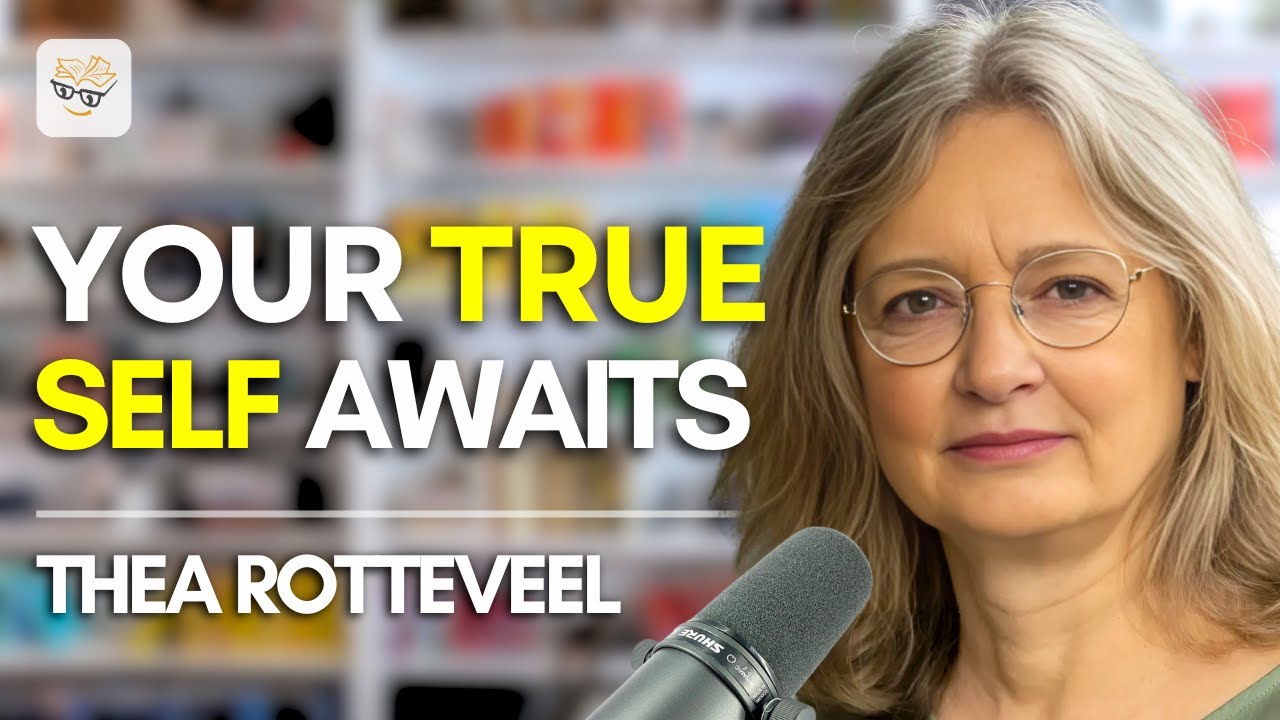
Thea Rotteveel discusses her book First Choice Life, which contrasts living for others versus living by your own intuition. She describes how responsibilities and expectations pull people into a second-choice life, marked by escapism and lost passion, and why she wrote the book with raw honesty instead of prescriptive advice.
Chapters
It's ingrained in our nature to strive to please our loved ones and to crave admiration and approval from others. And then you find— you can find yourself making choices that are not in your own best interest. You're living a life of someone else. You're walking the path of someone else. And And sometimes you don't even know it.
Thea, welcome to the Book Thinkers Life-Changing Books Podcast. How are you feeling today?
I'm feeling excitement.
Yeah, at the time we're recording this, your book is just about to launch.
Yeah, the 22nd of October.
Yeah, it's a special time in an author's life.
I'm looking forward to it. Yeah.
Yeah. Well, I've had a chance to read your book, and I'm really excited to share it with our audience. But today we're focused on the podcast. So here's my first question. On page 35, you say, quote, as a child, the library was heaven on earth. And, you know, we're an audience of book lovers. So can you tell us a little bit about what books meant for you at a younger age?
Yeah, it's just, I don't know if that it are Dutch book books, but stay, keep smiling. Irmgard. I don't know if someone read that in the United States, but also the books of Thea Beckmann. It's about kids who went on a trip abroad with the 4 of them, young kids. I loved it, and they encountered all people from all different backgrounds. I like that book. Yeah, The Chameleon, about 2 boys In a boat, and they saved all people, several people.
Yeah, that's amazing. Well, thank you for sharing a couple of those books. What did they do for you? I mean, were they a form of escapism or just an opportunity to explore new worlds and perspectives? I mean, what type of impact did they have on you?
For me, it was— it broadened my mind. It was so a new perspective. I lived in a village at that time, and my world was small. with my parents and friends. And so it was, uh, also, yeah, uh, yeah, a small community. And so I learned about all other types of cultures, people, abroad world. Yeah.
Yeah, I remember somewhere in the beginning of the book you mentioned, you know, when you were growing up, there was no internet. So when you wanted to go search something, you couldn't just type it into Google, right? You had to go to the library and see if they had books on that subject.
Yeah, I spent days and days in the library to find information, to look. Yeah.
And you mentioned a book called The Secret of Hollywood. That's where you first discovered the term second choice life. Is that right? So tell everybody a little bit about second choice life. What does that mean?
Second choice life is you walk the path of another human being. Um, uh, it's ingrained in our nature to strive to please our loved ones and to crave admiration, uh, and approval from others. And then you find— you can find yourself making choices that are not in your own best interest. You're living a life of someone else. You're walking the path of someone else. And sometimes you don't even know it.
Yeah, I remember, I think it might have been in chapter 2, you were talking a little bit about When you allow the opinions of others into your own brain and you start to make decisions based on other people's opinions and other people's decisions, then you start to live a little bit of a superficial life because it's not really your own free will or your own agency. It's sort of a combination of mostly other people's thinking for you and a little bit of your own. And so no wonder you wake up dissatisfied, unhappy with your life. It's because it's not something that was true to you. Is that right?
Yeah, that's right. Somewhere you have a nagging, uneasy feeling, uh, an inner turmoil. Um, it's your— it's not your life. It's you met the expectations, or you tick the box of expectations from others. Yeah.
Yeah. You know what used to motivate me as a— I would say as a recent college graduate in my early 20s, I got into the world of, we'll call it like hustle culture, or like the motivational business gurus Instagram. And, you know, I think there's a lot of overselling and underdelivering that happens in that space. But one of the benefits of consuming all of that content for me at the time was you had people saying, listen, going to college for 4 years and getting in a lot of debt and then taking a job you hate just to pay the bills.
Yeah.
Only to buy a home that you can't afford, cars that you can't afford, get into a relationship that doesn't really make you that happy. And then boom, you wake up, you're 65 years old, you're still in a ton of debt. You've never worked a job that you love. all of a sudden, I'm thinking like, I don't want that. I don't want that standard kind of lifestyle. There was a poet named Suli Breaks, and he had this wonderful poem. And I remember a line, he says, even if you win the rat race, you're still a rat. And I thought, I don't want to win the rat race, right? And so, that's when I started to think about— that's when I started to wake up and I started to think about maybe reality is negotiable. Maybe I could design something that's uniquely fulfilling to me, which is why I resonate With your book so much. So my next question for you is: When did you have that moment where you sort of woke up and you realized I'm living my second choice life?
I had it several. I have had it several times in my life. I think the first time I was when I was sixteen, almost seventeen, when I. Left my parents' home, and it was such a freedom to live on your own. And then you— I felt awake, vibrant, and everything was possible. And I understand that I, in the years before that moment, I did a lot of things to meet the expectations of my parents, the school, my work. And I think that was a profound moment. Yeah.
One of the interesting things about school over here in the US is that you're sort of taught how to think, and you're also sort of penalized if you don't agree, which I always found that that created less success in life, not more success. Right. So when you moved out and now you don't have the 11th Commandment anymore, which we'll talk about in a minute, and You you were living in this tiny little space, right? Yeah. And your your boyfriend at the time decided to move in with you. Yeah.
Yeah. Yeah. I was not so experienced in the first choice life.
But you had this moment where you started to experience a little bit of freedom though. Yeah. So what did that feel like for you?
Freedom. To design your your own. choices, your own life, and do what you really want. And doing what you really want, it doesn't mean it is always funny, or sometimes— because I wrote this book, it's a part of my first choice life, but well, I can tell you sometimes I had to rewrite it again and again, um, and I had to make choices not to go out with friends, but I wanted to write. I wanted to write, but it's not only fun. I'm so happy to be happy, but it's fulfilling.
Yeah. Yes.
Sometimes it's happiness. Sometimes it's fulfilling. And it's not.
Yeah, they don't always overlap. I know what you mean. I, I've definitely experienced that in my own life. In fact, I wrote a book last year. And it's— there was a lot of times where I didn't want to work on it. And I would get a little bit of work done. And I'd be like, only one more chapter left, or only one more thing to rewrite. And sort of, you know, that it's going to help people and you know that it's a good choice, but it's not always fun in the moment. You're sort of choosing to serve your future self, right?
Yeah. Yeah.
Yeah. So, and, and another thing that I wanted to relate to this is recently I've been interviewing, uh, candidates for a new position at my company, Book Thinkers. We're hiring a customer experience manager. And I've probably had 15 or 20 interviews so far in the last couple of weeks, and almost everybody says the same thing to me. They say, hey, Nick, it's tough out there. It's tough to find a job in the industry that you love. And a lot of these people, they love personal development and self-help and business-type material, books like yours, and they just can't find a job in it.
Yeah.
So, everybody's been saying the same thing, like, I would love to align the work that I do With my purpose. But you're right, like, that's not always fun. So how did you go from kind of waking up a little bit to falling back into the rhythm of a second choice life? So you're 16, 17 years old, you get a little bit of freedom, you start to taste the first choice life.
Yeah.
But then you slide back into the second choice life. Is that right? How does that happen? What, what pressures existed that created that pushback to the second choice life?
Um, I think, um, I was living at the time with my boyfriend and he was a very nice person. And I wasn't always open, and I wanted to do my utmost for him also, so he has a happy life. So that are the first steps. You get responsibilities. I had to pay my rent, so I had to work, and I worked as a typist at that moment. Not very exciting. But it was— I had lovely colleagues. And yeah, you have to pay the rent. And my boyfriend wanted to move to another— we lived in a small apartment with shared bathroom with other people. And you want to move to a nicer flat. And yeah, you get responsibilities. And so before you know it, You are in a second choice life again.
Yeah. Yeah, no, I think that's important to highlight, and I'm happy that you did, because a lot of people, they think, okay, if I can only— if I can only design my dream reality, it will stay that way forever. But that's not always true, you know. You have responsibilities, and oh, there's other people that you look out after. And, uh, yeah, it gets a little bit more complicated. But the good thing is you can always go back to a first Choice life, right?
Yeah, every time again. And when you, when you, you understand the signals of a second choice life, it happens less and less you slip back in a second choice life. I like that the most in my life. So I understand, or I recognize the signals. And so you can easily, more easily turn back to your first choice life.
Yeah. What are some of the other symptoms of a second choice life? Obviously one is like, you're just generally unhappy with how things are going, but what are some of the other symptoms of a second choice life?
When, when you escape behavior, you escape in your work or sports, or, uh, I have a friend, he do a lot of odd jobs in his home, in his house again and again. For me, it's a strong signal when you're, uh, for a second choice life is, uh, you forgot what your passions are or you don't really know what you want. This is a very strong signal for a second choice life. Screaming yourself that your life is great, of ending up at the same crossroads again, an annoying employer again, an unhealthy relationship So then you have to start thinking, what kind of life I am living right now?
Yeah, I— the— when I was reading the book, when you talked about escapism, you know, I see a lot of people who blindly watch 4 or 5 hours of TV every day, or they scroll on their phone all day long. And I think that that's definitely— you can observe it, it's escapism. But you made a really important important distinction. You said, I still read books in my first choice life. It's just that it's a choice to escape. It's not a necessity. And I think for a lot of people, it is a necessity. Could you talk a little bit about the difference between the two?
Yeah. Yeah. When you read books or look at films, watch films, sorry, when you watch films, and it is escapism, then you need to do that. When, when you don't do that, you are not happy. You need to create A fairy tale world or another world. And when you're in your first choice life and you read a book, it's fun to read it. It's not a necessity. It's fun to read it and you consume it differently. You watch a movie, Um, you are not— you don't need the content of the movie to fulfill yourself, and that's a big difference, I think. Or yeah, yeah, yeah.
That, that reminds me a little bit— I've read some books in the past about different relationship attachment styles, and it's kind of the same thing in relationships. It's like you shouldn't need your partner to fulfill you. You should be fulfilled, and they're just kind of like a bonus. And same thing with movies and social media and books. It's like you don't need them to fulfill you, but they're just a bonus. They're a form of entertainment, and it's okay to be entertained, right?
Yeah. Yeah. Well, that's fun to be entertained.
Yeah, absolutely. So, there was also a quick metaphor when I was— or a quick thing that it reminded me of when I was reading your book and you're talking about kind of waking up to your first-choice life. I remembered reading a book early in my personal development journey called The Mastery of Self by Don Miguel Ruiz Jr., I think. And he talks about being at a party and he says, imagine you're at this party and everybody else in the room is drunk, but you're sober and they're swinging from one end of the emotional spectrum to the other. And you try to engage them in conversation, but they just kind of go back to their own thing, their own drama, their own gossip, and they don't want anything to do with your sober conversation. That's kind of how I felt when I feel like I finally stepped into my first choice life. I decided I'm going to build a reality that uniquely fulfills me, that I'm happy with. And it kind of goes against some of the more traditional societal norms, but that's okay with me. And I would try to invite other people with me and they just wouldn't want to have the conversation. It was like, you know, I felt like I was the only sober one at the party. They probably thought I sounded crazy, but that's just, you know, reading your book reminded me of that moment in my life.
Yeah. Yeah. That's a very beautiful metaphor. Yeah. Yeah.
So tell me, why did you decide to write such a personal story? I mean, you're, you're very vulnerable, like right in the first story, in the first chapter, you're talking about something that happened at a Christmas party at work. And, you know, you share a lot of details and I imagine that's tough to share.
Yeah. Yeah. It was, um, it was very tough to share. It was exciting. But for me, the only way is to be honest, because when I'm not honest, why should a reader be honest to themselves? Why should they read it when I'm not honest? It's the only way to relate to readers, I think. But it was exciting because your colleagues, your neighbors, everybody can read it and it's Yeah, you also write about your not perfect sides of yourself. Yeah, for me the most important was my son. Before I published the book, I gave it to him. I had promised myself if he doesn't— how do you call it?
Approve? Approve.
Then I should reconsider publishing. But he read it in 2 weeks. He's not a very big reader, you see. It took him 2 weeks. It wasn't eternally, but it ended up he was very proud of me. And we had such deep conversations. So It makes us closer to each other. And yeah, so I thought, okay, now I can handle all feedback, bad or good. And so it was then it was okay for me. Yeah.
Yeah. If you don't mind me asking, what, what, what were some of the subjects of the deeper conversations that it started?
He was, he was a youngster. He is a youngster. And he struggled with his life to find his way. And he struggles with his father because he— Sam, that's his name, is a very nice person also, but he is always proud of his son. And that sounds nice, but it was a pressure for my son, that stuff. So we had that kind of conversations and also about how you relate to your peer group. Can I do what I want? Yeah, he was looking for— he was in the music at that time, still he's in the music, and he was on the school for entrepreneurs. So that's not the— that is not the very good combination. And so you struggle with these peer groups from, yeah, how do you create your own path without losing friends and stuff like that?
Yeah, well, I'm sure that your book has been a really good resource for Helping him think about things.
Yeah.
Yeah. And I, I know that, uh, I struggled with some of those same things, uh, you know, back when I decided to step into my first choice life. I mean, I had, I had relationships and people around me that were not always positive. And, um, you know, you would try to engage some of these people in more serious conversations and they just didn't want anything to do with it. So I I didn't have a better strategy at the time other than to walk away from some friendships and relationships. And I think in the long term, it probably served me and that person best. But never easy, never an easy thing to do.
No, no. And it's so beautiful when you be honest to people and not walk away, but be honest and then walk away.
Yes.
And that's difficult. That's what I was talking about with my son. Be honest and say what's important for you. And it's not about what— that the other one has to change, but you have— you can say what's important for you. And then when another friend is not relating to it, then it's okay. Then you have a good reason to say, Goodbye to each other, and maybe you find each other years later on each other's path. Everything is possible, but it is important to look for people who where you have a mutual relationship.
Yeah, yeah, I think so too. And yeah, no, I think that's a really good way to think about it. And I'm sure that that comes up a lot for people as they try to go from. A second choice life to a first choice life. I mean, change is tough. It's not only tough on yourself, but it's tough on the people around you sometimes.
Yeah. Yeah. When you are changing, when you are changing, people in your environment or in your surroundings has to change also. And that's the difficult— that's the difficulty because you are not behaving the same as before. So it affects the other one. If you want it or not, and most people don't want to change, but you are changing. When people divorce, in the friends around them, something is changing always. If you made your choices to go your own way, and so other people maybe think, I should do that also, and it is a sparkle of change. in them.
Yeah.
And that's difficult.
Yeah. I read one time somebody said a lot of times people have a difficult time with you changing because it reminds them of their own unfulfilled potential. And yeah, people don't want to embrace their own change. So talking a little bit more about First Choice Life, I don't think we ever defined First Choice Life. So we defined Second Choice Life. What is First Choice Life?
Well, in the first choice life, there is more flow, uh, more flow. You, you are more alert, more awake. It's not, uh, an uphill battle all the time.
Mm.
And I think the most important is in your, in your stomach, or, or in your— you feel it's the right path. that you feel you're doing the things you want to do, and that makes you strong. Because, yeah, people not always applaud for you on your first choice life, but your instinct or your inner heart, your heart knows the way. I always say it's the power who knows the way, and when you follow that, it's always okay what anyone or things or says to you. So it's, um, it's interesting. And, and what I said before, it's not always fun the whole day. It's a lot of fun, but it's not that you have your moments you think, oh, that's, uh, heavy, but I want that. It's, yeah, it's, uh, it's a gut feeling. Yeah.
Yeah. I always, what always resonated with me was the concept of death. The idea that one day you'll be standing at heaven's gates and you're about to approach God or, you know, insert human consciousness or whatever you want. And standing to the right of you is, is the version of you that took all of the risks and lived their first choice life and lived up to their potential. And you're looking at this person and you're thinking, wow, I could have been that way. They look so much happier, more fulfilled, excited to chat with God before They walk into heaven and here I am living with all of this regret. And so then you zap back to the present moment and you say, oof, like, I might as well start living that way right now before it's too late. Because sometimes we, we get this delusional thought that our time is infinite on this planet, but we know it's not. We know that there's a clock that's ticking away and it's finite. So might as well make the most of it today. Yeah.
Yeah, and feel alive. Yeah, yeah, yeah.
What makes, what makes you feel alive in your first choice life?
Alive? Yeah, for me, it's a lot about freedom. I am a self-contractor. You call that something like that? So I have the freedom to choose when I work or I don't work. I like that. It's for me alive. It's also more risk, I think, than in a job, a normal job. But for me, I think it's alive. I like nature a lot, walking through the woods, to the dunes, and feel connected with everything around you— plants, trees, animals. It's for me, then I feel alive. Following my heart. I like that a lot. In your head, you cannot always make the decision, so you jump. It doesn't matter if you are between 2 lines, you can, with your fingers and your toes, let go and jump. Then you feel alive. And that's— yeah, I like that. And because there are— when you follow your flow of your— what wants to manifest through you, there are always doors that are opening, always. To trust on that feeling, it brought me a lot. Yeah.
Yeah, I was reading recently about intuition. And I was reading that a long time ago, people trusted their intuition just as much as they trusted their intelligence, right? It was a different form of intelligence, but trusted their gut a little bit more than we do today. And I think that, like you're talking about, one example of being in flow is following your gut, trusting your heart. There's so many different ways to say it, but it's, it's, you know, you're, you know, you're on the right path when you know you're on the right path.
Yeah.
So, um, I know we're getting close to wrapping up the show already, which is funny. Time flies when you're having fun, right? So, um, a couple more questions for you. Who is the target reader for this book? You know, who did you originally design it for?
Uh, originally I designed it for women, but I was surprised that a lot of men reaching out, uh, They opened themselves. So it was surprising for me. And youngsters from 18 to, yeah, 30 who are struggling there, find the way, struggling in finding the way. But originally I wrote it for women. But I was surprised because of my son, and my son discussed it with his friends, and they are all 19, 20. Yeah, and that surprised me a lot. So I thought, okay, that's nice. And I was surprised that men are thinking that the book is useful. It's already published in the Netherlands. And I received a lot of messages from strangers, also colleagues and friends, but strangers. And it was all kinds of ages, and they reacted different. People in their 70s who reflected on their life and had more compassion about their choices. Yeah.
So, yeah, no, I'm sure— listen, I'm sure that feels amazing. And one thing I wanted to highlight for our listeners is that earlier we talked about you don't want to live your life based on other people's opinions. And what's unique about your book is you're not really telling people what to do. You're actually, at the end of each question, asking thought-provoking questions. And so, you know, don't judge somebody based on their advice, but by their questions, I think is a good way to think about a self-help or personal development style book. Because what you're doing is you're trying to wake people up. You're not saying wake up, but you're asking them questions that will wake them up, you know?
Yeah, yeah, yeah. And that's, um, it's a lot of, uh, people say that it's a lot of recognition.
And yeah, good. All right, 2 more questions for you. The first is this: for people that want to learn more about you and they want to learn more about the book, where should they go? What should they do?
What should they do? They can, uh, look at the website, theorotterveel.com, and the book is at Amazon. But people are very welcome to visit the website and, um, and reach out to me. I will answer questions or kind of stuff.
Okay, good. Yeah, we'll make sure that we get those links in the show notes below. And here's our final question. And usually Luke asks this, but he was unavailable for the conversation today, so I'll do my best. He says something like, if the book disappeared, but you could leave the world with just one message, what would that message be?
That's a very good question. Be realistic and plan a miracle.
Be realistic and plan the miracle. That's, I like that a lot.
And everyone is needed in this world. Everyone. Your contribution, everyone is unique and existence needs everyone. And when you're not turning up, there is a space no one can replace it. So yeah, living your fullest potential is very important for yourself, but also existence needs your contribution, your unique contribution.
Yeah, I think that's a beautiful way to wrap up. For everybody still listening, First Choice Life: Advocate for Your True Self and Live Your Dreams is available. Click the show notes below. And thank you so much for coming on the podcast today. It was a pleasure.
Bye-bye. Thank you for listening.
More from Nick

Napoleon Hill’s “Think and Grow Rich” is a timeless classic #selfhelp #personaldevelopment

4 Books to Help You Get Better at Decision Making #selfhelpbooks #bookrecs #nonfictionbooks


Have you read this book yet? 📖: The 5AM Club by Robin Sharma #selfhelpbooks #robinsharma

Dan Sullivan on Listening to Your Customers Instead of Watching Your Competitors

5 Books That Will Boost Your Financial Intelligence #financialfreedom #nonfictionbooks

The People That Preach the Loudest About Virtue are Usually the Most Power Hungry



Books are the greatest mentors you can find #selfhelpbooks #businessbooks #successmindset

Let’s fight this toxic instant gratification culture together 📖 #selfhelpbooks #jimkwik