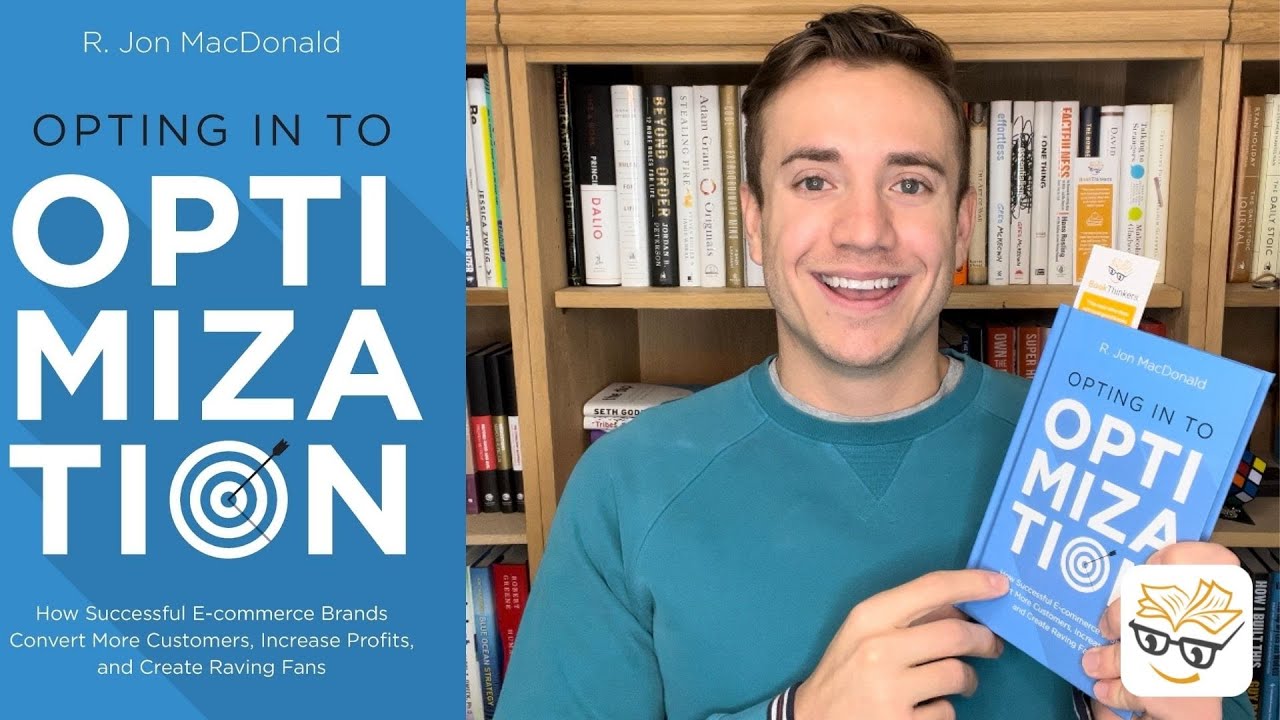
Nick Hutchison reviews R. Jon MacDonald's book on conversion optimization, which argues you must diagnose problems before fixing them, not just copy best practices. Test one tiny change at a time, not bundled overhauls. A good conversion rate is one that keeps improving.
Chapters
Think of the last time you went to the doctor. Imagine you went with some type of pain or injury, and instead of the doctor giving you a detailed physical and asking you about what happened in your personal history, they just shook your hand, gave you a prescription, kicked you out the door, and said, be on your way. And maybe on your way out you say, hey doc, what in the world is this prescription for? And the doc says, it works for most people. How upset would you be with that experience? Yet in business, most of us settle for best practices. Well, here's the deal. Best practices, the things for most people, that general advice doesn't diagnose before it prescribes. It just prescribes. And one of the biggest lessons that I learned in this book that can be applied anywhere in business is that you need to properly diagnose a problem before you prescribe a solution. Well, Book Thinkers family, today I'm going to go through my biggest takeaways from a book I just finished reading and listening to, which I'll explain in a minute. The book is called Opting into Optimization, and it was written by R. John MacDonald. And the subtitle of this book reads, How Successful E-Commerce Brands Convert More Customers, Increase Profits, and Create Raving Fans. And before you jump because I said e-commerce and you might not be in e-commerce, the principles in this book, like diagnose before prescribe, can be applied to any business owner and even a lot of areas of your personal Life. So I said that I read and listened to this book. What in the world does that mean? I decided to try something that a lot of people have actually recommended over time, which is to read the book while listening to the audiobook and following along in real time. Why? Well, I'll tell you the result. It actually increased my reading speed, increased my retention. I still took physical notes in the book. I mean, I still draw all over my books and stuff like that, but It was a really cool experience. And what I'm going to do in today's review of Opting into Optimization is go through some of my biggest takeaways. I'll riff on them a little bit. I'll tell you what I got out of the book. And then by the end of today's review, you'll know if this is going to be a good fit for you, and then you can make a decision. But I think if you're a business owner, this is a must-read. I thought it was really cool, even if you're not in e-commerce, like I said. So I'll go to takeaway number 1. At the end of the foreword, which was written by Nick Sharma, he says, quote, every e-commerce business could use more conversions, and the world could certainly use more good experiences. And what this reminded me of was all of the terrible e-commerce experiences that I've had recently. I'll see an ad for something on Instagram that I think is mildly interesting, and I want to go to the website to learn more. I click the little link I show up on their website and immediately a box says, hey, let me grab your email or your phone number. 20% off, 20% off. I'll exit out of it. More just keep popping up. It's like, what a terrible experience. I wanted to learn more. Now you hit me in the face so many times I have to leave your website. And so the book talks about issues like this, right? You want to increase your conversions? Stop using best practices, diagnose the real problem, and then prescribe a solution. And from a consumer's perspective, the world could certainly use better customer experiences all over the place, and I couldn't agree more. So we'll go into the goal for this book. I'm going to read R. John McDonald's goal for the book. He says, quote, my goal is for you to walk away from this book with new approaches to optimizing your site for conversions and a new way to think about how conversion optimization is synonymous with a good user experience, kind of like we just talked about. But then this is what I thought was great. At its core, conversion rate optimization is about removing— removing, it's subtractive— it's about removing as much friction from a website experience as possible so nothing inhibits a consumer from researching and purchasing a product. And this benefits the customer and you. At the end of the day, you both want a conversion. The brand for sustainable revenue and the consumer to solve the pain or need they, uh, that brought them to your brand in the first place. I thought this was really interesting because like I said, I never really thought about it from both sides of the experience before. But if somebody shows up at your shop, like let's say it's a brick-and-mortar shop, they show up at your shop and immediately you greet them at the front door and you're like, hey, let me get your email for 20% off. You're like, yo, crazy salesperson, just let me kind of browse around and shop a little bit. You want to improve that experience. you would tell your customer store associate to back off a little bit, right? But we tolerate these things online. Okay, I'll go on to some more of my experiences. This is one that I think can apply everywhere in business, and it's something that I actually really love to do. So I'm on page 52 here, and it says isolate each modification. Sometimes you want to make big changes on a website or make big changes in your life or make big changes I don't know, anywhere in your business. And I don't like that. I think you should audit individually. That's kind of what I've been calling it for a little while. But isolate each modification. By isolating each modification, the impact of each unique variable can be tested. So instead of changing a bunch of stuff around and saying, oh, is it better, is it worse, change each tiny little microscopic detail that you can Test. Did it perform better or worse? And then go on. I think about this with sleep a lot. Sometimes people make 3 or 4 major changes to their sleep and they're not even measuring the progress. For me, I use an Oura Ring while I sleep, and so each tiny little variable that I change— like recently I implemented a chili pad for sleeping— I know for a fact what type of change it has on my baseline. Why? Because I'm measuring it, and it's one variable. I'm not introducing a chili pad and starting to wear an eye mask and also putting room darkening shades in at the same time. It's ridiculous. And for business, a lot of people do that as well. That's why I think isolate each modification is such a good piece of advice. You want to isolate each little change you make in your business so that overall you can make a bigger impact. And they've actually tested this. I was reading and listening in the book that if you go make one big change, versus making a series of tiny changes, they cost the same, and you actually get a better result from making tiny little changes than you do making one big change. So I thought that was really cool. And I'll leave you with this, Book Thinkers family. There's something that I thought was really fun in here. How do you measure conversion rate? What's a good conversion rate? Our John McDonald and his team had been asked that question a million times, and so He responds by saying, a good conversion rate is one that's always improving. I thought that was brilliant. What's a good business? It's one that's always improving. What's a good health, you know, situation? It's one that's always improving. I love that answer. Progress is one of my major core values. So Book Thinkers family, if you're interested in learning some of the, the business laws— not just rules, they're used so many times, they're so true that they become laws— if you're interested in learning some of the laws behind optimization, you're going to love reading this book. Take it from me, I've had failed e-commerce experiences and entrepreneurship efforts in the past. I wish I had this resource. It would have gone much smoother. And who knows, this is actually kind of encouraging me to kickstart some of our Book Thinkers e-commerce efforts again. So stay tuned. I really enjoyed reading and listening to this book. I'd recommend that you try that as well. Comment down below, let me know if you have any questions, and I hope you have an amazing day.