Overcoming ANY Challenge with Jenn Drummond
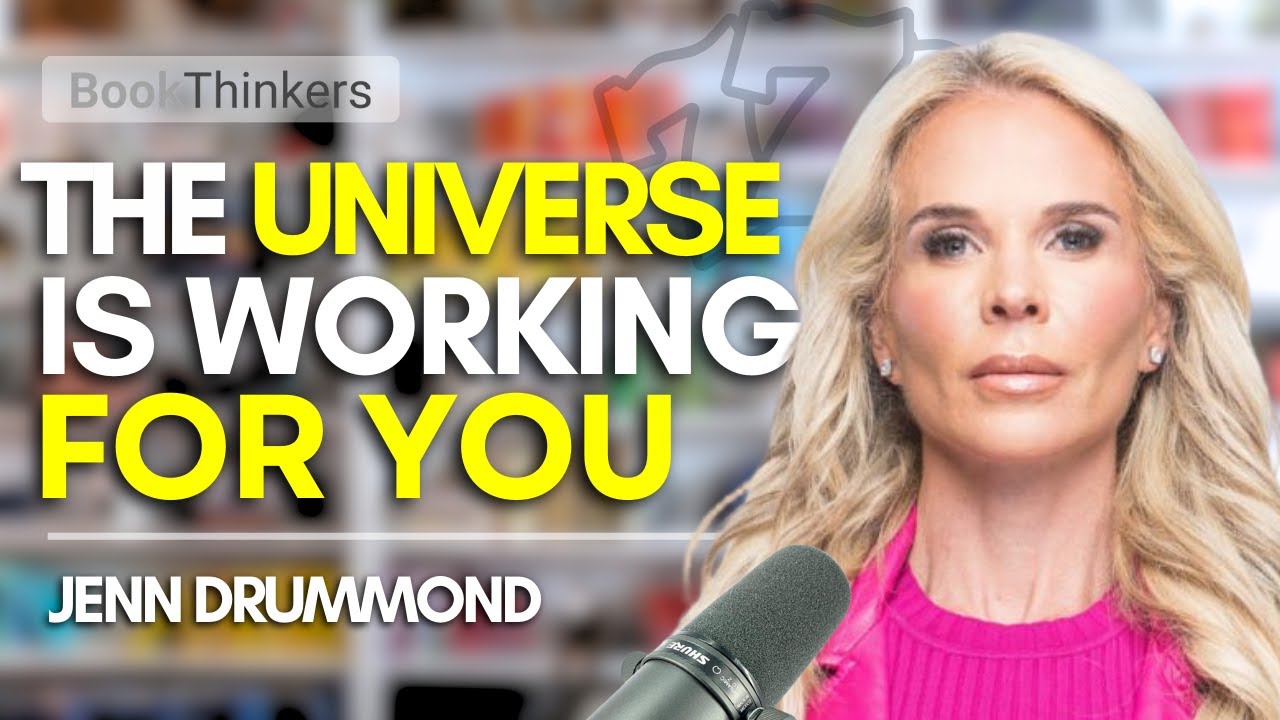
Jenn Drummond, a mother of seven and world-record climber, summited Everest, K2, and the Seven Second Summits after a 2018 car accident shifted her from checking boxes to pursuing extreme challenges. She created the Everest Challenge, a 40-day habit program that translates mountain climbing into daily actions, and wrote Breakproof to help people move from waiting for perfect conditions to taking messy, purposeful action.
Chapters
I said, you know, I elected to turn around. I put people over peaks. My team had an issue. I had the choice to go up. I said, I'm not. I'm gonna go take care of my team. And when you live your life, you're gonna be faced with decisions on, are you gonna put the mountain or the people in front of you? And I sure hope you're a person that puts people over peaks. And so I had to live that message for them to see that message. And then I also said, okay, like, this is part of my pursuit. It's not a straight up climb up the mountain. I'm acclimatizing, right? I hit a point of failure. I'm gonna go back to base camp, recalibrate, and go back up that mountain. And I'm grateful I did because I got a phone call 3 weeks before it was time to go back. And I learned of a person that was training to climb K2, didn't have the resources to make it happen. I'm like, I can help. And so when I got over there, I summited as the 3rd American female to summit K2, and 30 minutes later, the first Pakistani female stands on top of her country's prized peak. And so, yeah, did I have a failure? In my mind, I did at the beginning, but now I look back and I'm like, it wasn't a failure. It was the universe using me for more. I just didn't know the full story until I actually lived it out.
Jen, welcome to the Book Thinkers Life-Changing Books Podcast. We are so excited to get to know you and talk about the release of your new book, Breakproof. You're an entrepreneur, world record mountain climber, author, mother of 7, and overcame some intense obstacles on your way to inner success. I'd love to start with going back 4 years before you decided to take on the 7 Second Summits. which we'll definitely get into, to 2016. A friend's husband who was a guide at the Grand Tetons invited you to go on a climb. Now, until that point, you said that you hadn't even slept in a tent. So why did you make the decision to go on that adventure?
Yeah, so when I moved— I moved to Utah in 2015 and was introduced to this world of the great outdoors. I guess I grew up as a hotel indoor girl or something my entire life, and when I got out here, this They took me everywhere— Moab mountain biking, all this kind of stuff. They're like, hey, we're gonna go climb the Grand. Do you want to join? Um, yeah, I've said yes to every adventure so far. Let's continue the trend. And so I said yes, and it was an amazing adventure.
Now, it wasn't until after your car crash in 2018 that you wouldn't get into— you wouldn't even get into climbing again until 2020. So Can you maybe walk us through like what change happened after that car accident?
Yeah. So after the car accident, I realized I was really going through life checking boxes and I was just busy with the kids. And I kept telling myself, okay, once they go to college, I'll get back to me. Once they go to college, I'll get back to me. That car wreck was like, whoa, life could end at any moment, sweetheart. Like, are you sure you want to just wait until the perfect time sets itself up for you? And so then 2019 became this big year of the bucket list. Like, what do I want to see? What do I want to do? What do I want to try? What are things that I liked from my past that I want to do again? And so climb a mountain got on that list because I had such a good time back in 2016. And so I'm like, okay, I'm going to do that again. I don't need to wait. So that's how that got there.
What do you think it is about our society that most people end up forgetting about their bucket list and they don't take action on their goals? They don't say yes to everything. They just sort of accept life as it is.
I think we're just— we're habit-based creatures, right? That's why we focus so much on habits and recentering and refocusing, because we just— it just slips. It's not like I intentionally set out to say, okay, these last 5 years, like, I did nothing. It was like, wow, these last 5 years just happened. And so, if we do not put in those intentional pauses or those intentional moments where we're like, okay, is this really what I want to do with my life? Life goes. It's happening.
So, it almost sounds like there are 2 habits, broadly speaking, that people can fall into. One is a habit of sitting on the couch and watching life go by and watching other people live life to the fullest. And the other habit, which you've fallen into for the last 5 years, is I'm going after it, right? And so this has become maybe a lifestyle for you now.
Yeah, definitely. I mean, I'm very intentional about my calendar. I'm very intentional about, hey, what do I want this year to feel like or look like, or what do I want to experience? And I just— I'm out there living, right? Like, I don't want to read somebody else's book all day long. I want to read somebody else's book and then get inspired to go do something. I want to watch a game and then get inspired to go explore that area of the world or all that kind of stuff.
I love that. And I think you're right. We can even get caught up in the— I know in the reading world, we can get caught up in just reading the books and not actually implementing them or going out and doing anything about it, but getting caught up in other people's adventure. And then we forget to live our own. So, I'm curious as to how you found the balance. And I know balance is probably the wrong word, but the balance of raising 7 kids and going after your dreams? Because that's something even as a father, I find that there's a selfishness that I have to do even for going to the gym. Sometimes I feel guilty for going into the gym and not spending time with my 3 children. So, how did you come up with the balance for that or what did you do about that?
Yeah. I think we're always going to live with guilt, right? When you don't get to be a part of the big sale at the office because you're watching a recital. Or you're watching the— like, there's always compromise of what's going on. And so understanding big picture, am I balanced? Because on a day-to-day basis, on a moment-to-moment basis, we never are. And then understanding also, like, my kids are watching me do life. I am an example that they're just absorbing. Am I giving them an example of somebody that's hustling and sucking every moment out of life? or by giving them an example of, oh, this is what moms do. This is how we— like, I just, I was that mom. I was that mom who was like, hey, I'm happy. I'm grateful I get to be home with you guys. But I wasn't thriving. I was surviving. And then all of a sudden, when I looked at it from like, man, would I, would one of my kids want to be me? And pre-accident, I would say no. Post-accident, they're like, yeah, my mom lives it up. Are you kidding me? And so I want them to, like, when they're my age, to do who they are and figure out how it works and understand that it's, it's never perfect, but it's always working and always trying to get better.
Oh, I love that. So inspirational. Can you tell us a little bit about the story of climbing Mount Everest and how you decided to do that? I just, I've heard that story a few times and I absolutely love it.
Yes. Oh, that story. So I think life has a way of being humorous. Right? Like, so here I am training for a mountain named Ama Dablam, and I'm training for this mountain because my friends convinced me if I was going to climb one more mountain in the whole world, that would be the one I should climb. Because every time I'd watch a Paramount Pictures movie, I could be like, I climbed that mountain in that logo. Like, that's my mountain. And so here I am training for Ama Dablam, and COVID happens, and I'm homeschooling all these little monsters. And one of my kids is struggling, and I'm giving him that parent pep talk like, we do hard things. You've got this. He looks at me and he goes, if we do hard things, why are you climbing a mountain called I'm a Dumb Blonde instead of a real mountain like Mount Everest? And I sat there for a second. I'm a dumb blonde. I'm a da blonde, honey. Not I'm a dumb blonde. But thank you. And so finish your homework. We looked at Everest. He went to bed. I was still looking at Everest, and I thought, you know what? This kid thinks Everest is the hardest thing in the whole world. I'm climbing it, and I'm going to show him whatever our Everest is, we're capable of summiting.
Such a good story, and I think it like shows you know just the the family dynamic that's going on as well. It's really cool too because you actually got the whole like school involved in your climb. Can you tell us a little bit about that?
Yeah, right. So of course, my fear of climbing Everest wasn't climbing Everest for some reason. My fear of climbing Everest was, how am I going to leave my kids this long? Like, how am I going to be a good mom and have this gap in my parenting? And so that was the wrestling match I was having in my head. Um, and so when you have problems like that, you look for solutions. So one of the first solutions I came up with is buying a hypoxico tent. So this tent went on my bed and I would sleep in it and it would mimic the environment of Everest. So now instead of an 8-week expedition, I could have a 3-week expedition. But 3 weeks still felt long. So I hired— like, Grandma came out and had other help and had everything figured out. I'm like, you know, I'm gonna go to the kids' school and I'm gonna just let the teachers know that I'm gonna be gone and maybe they can give my kids a little bit grace because, you know, when mom's gone, things go sideways even as you try not to. And so I go to the school and the school's like, Jen, this is awesome. Why don't you come into the school and teach the kids about setting an Everest-like goal? And so I went into the school. I taught— like, we talked about goal setting. All the kids had a hiker that had a flag, and on the flag they wrote what their goal was. And it was like, you know, make the travel soccer team, ski a black diamond ski run, typical things that you'd find in Park City. Decorated the hallway. We built a big mountain in the front of the school, and I was a little tiny hiker, and I had a tracking device so they could track and move me up and down the mountain. As I was moving. And so here I am at Everest with no distractions, right? There's really not the best wifi. There's not a ton of stuff going on. And then my kids are at home and everybody, the whole community's like, we saw your mom, or look where she is, or she talked to our classroom today on a Zoom call and blah, blah, blah, blah, blah. And so my kids felt super supported. I had to summit this mountain because now I had a whole school watching me. So I'm like, I cannot not summit. So that helped me get through some of the dark moments. And then I summited and I came back and it was one of those things where it's like, wow, how cool was it that I was gone? And yes, I didn't get to parent there on a day-to-day basis, but how involved and how stepped up the community came. And now my kids know it's not mom that's got my back. It's my entire community that has my back. My teachers, my other friends, everybody cares about each other. And that's a feeling that I want them to have forever.
There's a really cool lesson there, which is that in order to minimize guilt, Luke, going to the gym and things like that, you involve your family in some way, shape, or form in your goal. So, Jen, that's a really interesting thought process there. Have you considered turning that into a program or a workshop that other moms and schools can adopt and use and replicate what you did?
Yeah, so we do have this thing called an Everest Challenge. And what happened was, is I was going to— I summited Everest in 2021. A lot of my teammates didn't. It was a unique year because of COVID and stuff. So a lot of teams got canceled early. And so when all my friends were going back, I'm like, man, I want to go back. Everest is such an awesome experience, and I couldn't go back. So I said, you know what? We're going to climb Everest from the comfort of our home. So I put together a 40-day challenge. And it allows you to climb Everest from the comfort of your home, doing little teeny tiny things that habit stack into something significant. And sometimes companies implement it, sometimes schools implement it, sometimes individuals implement it. But we have another one starting January 1st, 2024, and then we'll have another one starting in the middle of February.
Oh, that's super cool. And how can people get involved in those?
Yeah, so go to the website, jendrummond.com. And then there'll be a thing called challenges, and Everest is one of the challenges. Another challenge is a parenting challenge. So since I knew I was gonna be gone, every time before I left, I'd dial out 40 days before I left. I did this connection thing. So every day I had a, you know, a box to check that said, okay, I connected with each kid on this thing or that thing or that thing. And I loved it. My kids loved it. And I didn't realize how much they loved it until I was done with my last climb. And I got home and my daughter's like, oh, does this mean we don't get to do the connection challenge anymore? I'm like, oh, we'll still do it. So, we like made a couple of different challenges that we do just to give ourselves like those intentional sprints.
Yeah, I think that's so cool. And now, before I kick it back, a reflection on one more thing. So, I wrote down, why would my mom want to be me? Why would my kid want to be me? And it reminded me of a talk that Ed Mylett gave. I think it was last year, maybe 2 years ago, where he said that things are caught, not taught in the home. So it's not what you tell your children, but it's what you represent and what you show them. And I think that's such a cool lesson. So would my mom want to be me? And it's so cool that you're able to say yes, and that your children love and support the life that you're living. So I guess the message maybe to any parents out there is to seriously ask yourself that question. And if you're looking for some inspiration, it sounds like Jenn's book is going to be the right first step, right? A kick in the butt, or maybe one of these 40-day challenges.
Yeah, definitely.
Yeah, I love it.
All right, so I'm curious how you went from climbing Mount Everest to deciding to climb the Seven Second Summits. Can you talk to us about that and tell us a little bit about that story?
Okay, so first I was climbing Ama Dablam. Not I'm a dumb blonde. Then that got escalated to Everest. And then my coach that I hired to train me for Everest, because if you're going to do something you've never done, or you need to surround yourself with somebody that's done it, right? So I called this mentor and I said, hey, listen, this is something I want to do. So now all of a sudden Everest doesn't seem like this far reach because I have a friend that has climbed it who's talking to me on a weekly basis. And he sends me a book about becoming an uphill athlete. Like, okay, so I buy this book and in the front is a lady who got a Guinness World Record for doing something in the Alps. I was having a crappy day, like homeschooling wasn't going good. I have no idea. But I told him like, I could have done that. Like I could have— I suffer, I can do hard things. Like my kids would think I'm cool. They learned how to read on Guinness World Record books. And he is like, well, I'll find you one. So a couple weeks later he calls me back. He's like, Jen, I think you should be the first female to climb the 7 Second Summits. Which sounded like a tongue twister to me. So I'm like, I don't even know what you're saying. I'm sorry. He's like, listen, he goes, the 7 Second Summits are the second highest point on each of the 7 continents. It's only been done by one male. You'd be the first woman. It's harder than the first 7. And think about it, 7 continents, 7 mountains, 7 children. It sounds like a jackpot. And I got one of those whole body yeses that makes zero sense because I had climbed one mountain before. But I'm sitting there thinking, why not? It hasn't been done by a female. If I'm the first one, great. If I don't succeed, it doesn't matter. It hasn't been done. So we'll see what happens. And so I said yes to that before I'd even climbed these other mountains, which is just crazy to think about. But that's kind of my personality, I guess. Dive in and we'll figure it out.
I love it. Well, it's the true marks of an entrepreneur and a high achiever, which is great. So I'm curious, you know, you climbed I think it was on K2 that you, you lost a friend, your team was like struggling, like you kind of failed, right? So what made you keep going and not give up? Because you came back and you could have just been like, you know what, I don't want to do that. You could have let fear take over, but what kept you going?
Yeah, you know, I think we all have a why that we need to lean into when things get hard or don't go our way, um, which that climb didn't go my way. And My why was my kids are watching, right? It's easy to succeed. It's easy to wave our flag at the top of the mountain and said, here I am, here's what I achieved. Rah, rah, rah. It is hard to wave our flag when we're defeated and we have to turn around and we have to say like, I didn't make it. I messed up. I did this wrong. But it's important to do so because that's the reality of all of our pursuits. And so with my kids watching, you know, they asked like, Mom, why didn't you summit? I said, you know, I elected to turn around. I put people over peaks. My team had an issue. I had the choice to go up. I said, I'm not. I'm going to go take care of my team. And when you live your life, you're going to be faced with decisions on are you going to put the mountain or the people in front of you? And I sure hope you're a person that puts people over peaks. And so I had to live that message for them to see that message. And then I also said, okay, like, this is part of my pursuit. It's not a straight up climb up the mountain. I'm acclimatizing, right? I hit a point of failure. I'm gonna go back to base camp, recalibrate, and go back up that mountain. And I'm grateful I did because I got a phone call 3 weeks before it was time to go back. And I learned of a person that was training to climb K2. Didn't have the resources to make it happen. Like, I can help. And so when I got over there, I summited as the 3rd American female to summit K2. And 30 minutes later, the first Pakistani female stands on top of her country's prized peak. And so, yeah, did I have a failure? In my mind, I did at the beginning. But now I look back and I'm like, it wasn't a failure. It was the universe using me for more. I just didn't know the full story until I actually lived it out.
So powerful. So powerful. And you don't— like, that's the thing, you don't know what the grand plan is, right? Or what the grand scheme is. But if you just keep at it, if you just keep at your goal, something bigger can happen. Now, you've officially finished June 1st, 2023, right? That was your— that's when you finally conquered the 7 mountains. So how did that feel like? What were you feeling in that moment?
I, yeah, obviously awe, right? Like you have 10 steps left and then you're gonna be done, right? So I'll be the, like each step was like, okay, this is great. Oh my gosh, I can't believe this is done. Oh, I'm so excited this is done. Oh my gosh, I'm so sad. What am I gonna do? Like you have these mixed emotions. It's almost the reason why these moments are so magical is because you're holding the spectrum. of sadness to elation in the same moment, and you just get to feel it all. And so I felt it all. And then you start walking, and it's like right when you feel it all, you're at the top, everything's amazing. And then when it's time to walk down the mountain, it's almost like you take the soul out of your body and throw it out into the world and say, I can't wait to find you next. Because it's truly the journey that gives us color to our stories in our lives. And we love the summit because it gives us focus and purpose and pursuit, but we become who we are in the chase.
Yeah. And are you considering this book launch the same, the same way, the process versus the peak?
Oh my gosh, this book launch. Buy the book, people. Just do me a favor and buy the book. It's been a true process.
Who's, uh, who is the target reader for this book? Like, why did you decide to write it? Who is it for?
Yeah, I wrote it to the younger version of me that was waiting for things to line up perfectly, that was waiting for everything to be served on a platter. And all of a sudden, when I started to hustle and get dirty and allow it to look different than what I thought it was going to be, that's where the magic showed up. And so for anybody that's listening that is like waiting for a sign, this is your sign. Like, buy the book, do the thing, get messy. Let's go.
Can you give everybody a preview of maybe one exercise or action that they can expect to go through or implement as a result of reading this?
Yeah. So one of the chapters talks about big mountains take big teams. And I think a lot of us set these big goals and then all of a sudden think we're going to tackle them ourselves. And then when it starts getting hard or overwhelming, we start negotiating with ourselves. It's like, oh, I didn't really mean that. Like, that's okay. Like, I can do it a little bit less or whatever else. And that's not a point of negotiation. When you start having that feeling, that's a sign that you're going too long, too hard, too far by yourself. So you need to stop and recalibrate and redirect and just say, oh, is there somebody else that can help Sherpa me up this mountain so I can get to the summit.
I love that. And you mentioned a team a lot, and I noticed it was about, I think, 4 months ago, you actually talked about your grandma. I want to pull it up really quick. I had it. Okay, here it is. All right. My grandma got to see me on the Today Show this morning. She watched with her nursing home friends over breakfast, and I think she really understood for the first time that I've accomplished something significant. It is the people before us that play significant roles in who we get to become. They set the stage. When I read that, that gave me goosebumps. And then you also mentioned your grandma coming out and helping you with some things. So what is the relationship with your family? And I know you're also one of 13. So what role has your family played in your success?
Yes. So family's huge, right? So I'm one of 3, but my dad's one of 13. So I have a bazillion cousins, which I grew up as a force, right? Like you messed with one of us, like you got all of us. And I didn't know that was abnormal until you moved away and other people didn't Have like this force field that they grew up in. I'm like, what do you mean? You didn't have an Easter egg hunt where like everybody was in a bloodbath because you wanted the golden egg and no one cared because you're all family, so you're allowed to poke each other's eye? Like what? That wasn't your way? So family was huge. And it's just like my, you know, grandma, right? Grandma is in her 90s still. She's hard. She's a hard lady. Like she calls it as it is. And unless you're on TV, it hasn't happened, right? Like so it was one of those moments where I'm like, That is funny.
Uh, goal setting is a big piece of your book and your message. So what is your biggest goal for 2024? What are you focused on outside of just the book?
Yeah, you know, I'm taking 3 of my boys climbing in Africa. And so they, they've been along this pursuit for the last 2 and a half years. They've been watching. And when I asked them, like, does anybody want to go? And the 3 big ones said, I want to go try something. So I took them out with a coach, and we decided based on their levels that going to Kilimanjaro in Africa would be a stretch, but not too much of a stretch. And so we're going to go do that. And I'm excited about that because I get to see them in the environment doing something hard. And feeling that in their body and then learning how to overcome that. And once you learn how to overcome that in one environment, it makes it easier for you to overcome it in another environment. And so I'm just excited to be a part of that process with them.
Yeah, it's the benefit of hard things. So what is, uh, what are their ages? I'm curious.
Yeah, so my— it's 17, 15, and 14.
That's so cool. Are there any record opportunities around the youngest people to summit some of these mountains?
Man, there is, but I bet you it'd be like 9-year-olds.
Oh, wow.
Yeah, it'd just be something crazy. So I have 10-year-olds, and I just was like, you know what, we're gonna make this a big kid trip because it's just a thing that their physical fitness will make a difference.
So I'm curious about the, the process of writing, of being an author? Like, how did that compare to climbing these crazy mountains? Like, what was it? Did you feel like the challenge was similar? Do you feel like it was harder?
If anybody tells you, like, write a book or climb a mountain, climb the mountain, okay? Like, hands down, climb the mountain. Um, writing a book is like giving a speech where you can't see the faces of anybody that you're talking to. And so then you're writing it into this space, you're like, okay, did I give enough detail, not enough detail? Is it boring? Is it hitting? Is everything connecting? And so there's just so much, because when you're an author, like, you're always thinking of the reader. How does this benefit them? Is this worth their time? Are they going to get what they put into it out of it times 10? And so that— there's like a lot of pressure. Because you can send it out, like I sent it out to people to get feedback early on and just keep coming back and forth, back and forth. And it's this big thing that you don't know until the end. And we're not at the end yet. So there we go.
Yeah. And Nick might argue that the end, the release of the book is just the, just the beginning. Oh, so what are the, what are some of the things that you've done to get this book out, to write this book? What are some of the practices that you did that you put in place for yourself to actually get the thoughts onto paper?
Yeah, you know, I had to put my judger aside. So when we're writing, we have a critique that's always trying to critique us while we're going, and I always had to be like, listen, you can be in the room, but you're not allowed to speak until I'm done. And so I like really getting separate from that and becoming a vessel where messages just flow through, um, really putting things on paper, giving yourself deadlines. I'm, I'm a deadline person. I'm kind of a sprinter person too. So that's been helpful for me is be like, okay, here's where we're gonna get to this point and to that point. And to Nick's point, like the book is like 10% of it. Then it's how do you get people to know about the book and where do you put the book and what events do you do to like share the book with others and podcasting and radio. I was on a TV interview yesterday. Just all that kind of stuff all plays into it. And again, you're always thinking, how am I serving who's listening? And it's just a lot to take on at times.
Oh, I can agree. I agree. It's a lot. So, you know, we're a book marketing company. So I always love to ask, so far, given everything that you've done to create attention around the book, what do you think has led to the most book sales or preorders? At the time of this recording?
I would say at this time of this recording, speaking engagements. Interesting.
So these are pre-committed sales for future speaking engagements? Or—
yeah. So I, I just did a speaking engagement on Friday and they had 400 people in attendance. And instead of paying me a speaking fee, which would probably result in more money, to be honest with you, especially for me as the author, because of every book I get $2 out of whatever is sold, right? There you go.
$800 speech.
Yeah, right, right, exactly. I'm like, uh, let's add another zero. We might be more in range. But so I gave a speech and they agreed to buy 400 books.
Yes. Yeah, right.
So that's 1 hour in exchange for 400 books. I'm not finding another way to sell 400 books that fast. So I'd say that's been very beneficial for me. And then also just like having your team, right? Again, big mountains take big teams. I have people that volunteered To, you know, help promote the book or host a party or do different pieces. And that's been critical. I mean, even when you launched your book, Nick, like, I bought 30 copies to send to friends and to support what you were doing. And you realize people that you care about, you buy their book because it's a way to support their message and what they're willing to do. I don't need 30 copies, but I like what you're doing. So I want my friends to know what you're doing. And that's a way to benefit both people.
Yeah, absolutely. I found that books in lieu of service, so speaking, posting about other people's books, right? There's so many different opportunities to exchange a number of books being sold in exchange for, you know, a service that you provide. So yeah, that was my most successful probably was, hey, I will post about your book, which normally costs $3,000 in exchange for you buying 30 copies of my book, which costs $500. Like, Yes, I would make more money not doing that, but I care about the book being distributed. And you never know, like if one of the people, the 400 people in that audience, when they read your book and they hand it to somebody else, it could change their life. So it's fun knowing that you're sort of putting good work out into the world like that.
Oh, definitely.
Yeah. Okay. So here's my last question as we get ready to wrap things up today. Outside of your book or the 30 copies, I guess, that you bought of mine, what book have you gifted the most to other people throughout the last few years?
You know, I'm reading the book The Magic of Thinking Big.
So good.
It's such a good book. And so, um, my kids have books that we read together just to expand their brain, and I think that one is— that one's a game changer.
So before I ask my, my last question, I wanted to explore just this just for maybe like 2, 2 minutes. Um, spirituality. You talk a lot about mindset, you talk a lot about, um, you know, doing hard things. But what role has spirituality played in your life? I've heard you say somewhere, it may have been on a podcast, that Michael Singer's book Surrender really influenced you. So I would be curious just to maybe just a little brief overview of how spirituality has played in your life, played out in your life.
Yeah. So huge. I get goosebumps even when you bring up the topic. I'm big into breathwork. I'm big into just surrendering to what is. And that's from that Michael Singer's book, like The Surrender Experiment. I spent 2 months on that book journaling that word because it wrestled with me. I'm like, that's a weakness, that's giving up, that's not superpowers. What are you talking about? And then by the end, I'm like, oh, oh, oh, oh. And then the universe did this little test of saying, okay, you're gonna get into a car accident. The only way you're gonna survive is if you surrender because you're not strong enough to beat this car. And I remember watching the semi-truck hit the passenger side of the car. And the first thing I thought of is, if I surrender, I'll survive. And I did. And I literally have gotten calls from the police station about 3 weeks after the accident. They couldn't rebuild a scenario where I lived, let alone walked away. They're like, we don't know how you're here. I'm like, I do. I surrendered to a higher force, a bigger being, and just understood that, like, I'm just here. To puppeteer the message.
Well, goosebumps. Thanks for sharing. I appreciate it. I wanted, like, I want to do a deeper dive, but for sake of time, we won't today. Um, before I ask my last question, where can people go to find out more about you and learn about what you're doing?
Yeah, so jendrummond.com is my website. Please check me out, say hello. You'll have all my social channels there, a link to buy the book, check out the challenges. And for everybody listening today, I have the most magical photo or video of the Everest base camp where the Milky Way is going across base camp. So if you want to have that video for your phone to remind you how insignificantly significant you are, you're going to text the word Everest to the number 33777, and that will show up on your phone.
Perfect.
I will make sure I link all that stuff in the, in the show notes. Thank you so much for that. I'm going to text it right after this. So my final question is this: you pass away and all the information that you've put out disappears, the books, the courses, everything, but you can leave the world with a single piece of advice. What would it be?
Have fun. We have this huge planet to play on. So get out there and play and experience life.
It's beautiful. We could all use more fun in our lives. I love it. All right, well, thank you so much, Jen. This has been an awesome conversation. You're so smart, and I'm so glad that we got to spend some time with you.
Thank you.
More from Nick

Napoleon Hill’s “Think and Grow Rich” is a timeless classic #selfhelp #personaldevelopment

4 Books to Help You Get Better at Decision Making #selfhelpbooks #bookrecs #nonfictionbooks


Have you read this book yet? 📖: The 5AM Club by Robin Sharma #selfhelpbooks #robinsharma

Dan Sullivan on Listening to Your Customers Instead of Watching Your Competitors

5 Books That Will Boost Your Financial Intelligence #financialfreedom #nonfictionbooks

The People That Preach the Loudest About Virtue are Usually the Most Power Hungry



Books are the greatest mentors you can find #selfhelpbooks #businessbooks #successmindset

Let’s fight this toxic instant gratification culture together 📖 #selfhelpbooks #jimkwik