Reclaim Joy, Purpose, and Perspective with Mike Baker
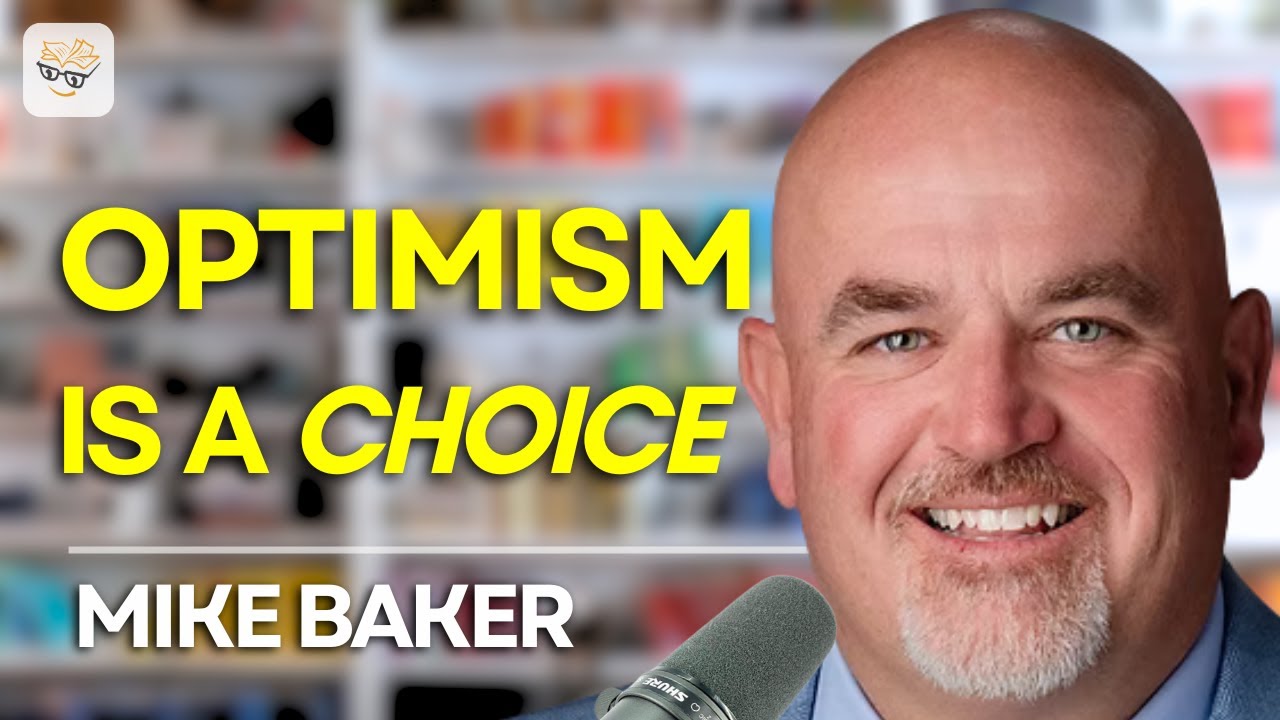
Mike Baker, author of The Optimist's Way, distinguishes realistic optimism from toxic positivity, linking the mindset to Stoic philosophy and describing "Stoic joy" as a calm response to external events. He emphasizes showing your work, pausing to reflect, and small daily acts of light like smiles and empathy to counteract negativity and exhaustion.
Chapters
people that, that live in this depressed state, that it is where they're focused on could be a news media channel. There's a group of people in every workspace that they are the gossip people, and people just— they pull people in. Gossip and that negativity is the most toxic thing for our culture because it just, it spreads like a disease. It's this darkness that spreads versus, you know, looking at people that want to find the light and Light always wins over darkness, and it's such a—I love that analogy in all of our movies and our history. It's another human element that lightness drowns out the darkness, and so we have to be those people. That's like I don't want to dump on anybody that's negative, right? You're not a terrible person, but man, let me just share a little bit of light. Like maybe that person you're gossiping about, did you know? You know, maybe. They just lost a spouse. Maybe, you know, they had a really bad day. We're all fighting a battle. So instead of just dumping on them, why don't we go up and say, hey, I love you. I'm sorry that you're having a tough time. How can I help? And you just, you see people's hearts melt and eyes open and connections being created. And I think that's what it's all about.
Mike, welcome to the Book Thinkers Life-Changing Books Podcast. I'm excited to chat with you about your book, The Optimist's Way. And my first question is this: we live in such a chaotic world. Every single day it feels like there's a bomb going off somewhere, or there's another crisis that we need to pay attention to. Doom and gloom. But you have a very different message. So talk to us, why is optimism more important today than maybe any time in human history?
Yeah, optimism is just such a powerful force. You know, there are always trials in life. And when we, we wake up every day, we have this chance to say, today can either— it can go 2 directions. It can be a really the worst day of my life, or it can be a really good day. And there's probably a 3rd option where it's a mediocre day, but we're making that choice to say, I'm going to choose to look for something beautiful, to look for something good in the day. And when you wake up with that intention, the world starts to move that way because you do find beauty. You do find things to be grateful for. You know, we can look out in the world and say everything's a mess, and maybe it is, but the things that I can control, the decisions I make, that's really what drives us, and that's what builds our energy and connection with, with the rest of the people around us.
Do you consciously avoid things like the news, let's say, because you know that it's a trap, right? It's an extreme point of view and that it's trying to suck you in and basically elicit an emotional response. Or can you consume that content but make a different choice in how you respond to it?
Yeah, it's probably like a 301-level class in optimism to be able to watch the news all day long and not just feel doom and gloom. But no, you have to be informed. I mean, I think the thing I like to talk about with optimism is it's— I'm a realistic optimist. And that's a really important distinction to make. I can just say, oh, the world's great. And sure, but here's the data that I have to back it up. Like, okay, I live in a beautiful community. I have a great family. I have a good job. I have all these opportunities. I mean, there are things that make my world amazing. But when those challenges come by, I don't dismiss them. I can't dismiss what's being said on the news. I need to be informed. But how I react to that and what I do with the information is really important.
So describe to us the difference between realistic optimism and toxic positivity. Because you're right in that, in the personal development or self-help book space, I hear it all the time. I mean, I work in the industry full-time. Ah, that's just toxic positivity. There's no meaningful content there. But you take a very logical, I would say, differentiated approach.
Yeah, I really had to. I mean, I think maybe with maturity, I don't know, I'm getting up there in age, I guess. But, um, I mean, this book really did start back with— I had a board member say, Mike, you're too optimistic. And I received that at a time— it was a really hard time for the organization, and I received that really hard. almost like a criticism. It really made me think, how do I explain this? Because it's so core to who I am. I don't ever want it to come across as toxic positivity. But what I really had to do, and I think the best example I got was in your math class, you certainly can come up with the answer and put it on your paper. But if you don't show your work, a lot of people go, well, I don't know how you got to that. I started to really do that better, like really work on sort of my reaction to everything instead of just immediately saying, hey, it's going to be sunshine and rainbows. Like, I had to pause and say, hey, I am scared. This is a really tough situation. However, we've got an incredible team. We've been through stuff like this before, and I know that there has yet to be a problem that we've encountered that we haven't been able to solve. So let's put our heads together. Let's get to work. And I think that's the job of a leader. Is to take people from where we're at to that next place in a way that's so beautiful that people want to come along with you and experience that journey.
That was already a, I would say, a big moment for me. I don't know that you described it in the book that way. If you did, I missed it. But the idea of showing your work, it's really important not just to jump to the conclusion that everything's going to be okay, but talk with your team if you're in a leadership position, or maybe with your spouse if you're in a relationship and talk with them about how you got to that place. Show your work. I think that's so cool.
Yeah, I— it's really been something I've been working on. I, I think, you know, so I write music and it's tied to the— some stuff in the book, but I, I just released another album the other day and there's a lyric in there that talks about how it's okay for me as a dad— like, I used to block my kids out from letting them see the challenge I was going through instead of flipping it and saying, you know, now I open my heart and let them in. And I think, you know, that's such a powerful thing to do is just to let everybody know what we're struggling with because we're all fighting some battle. I don't have to put up this mask and pretend. I can say, I'm actually having a really hard day today. And, you know, today I could use a hug or let's go get a beer or whatever it is. Lean on people and do that. And that's how you keep your soul recharged so you can be optimistic.
It's one of the reasons that I resonated with your book so much when we first started talking about it, because I've— for the better part of the last 10 years, I've been an avid student of Stoicism as a philosophy.
Yeah.
And within Stoicism, there's this concept of Stoic joy. Stoic joy isn't necessarily always happiness and sunshine and rainbows, but it's an understanding that you are in control of your response. There's a difference between what's within your control and what's outside of your control. And once you understand the difference logically, and you know that only your response to those external stimuli is within your control, you start to make different choices. So it's a very logical joy.
Mm-hmm.
It's a slow, thoughtful process sometimes.
Yeah.
And therefore, there's no swing from one emotional end of the spectrum to the other. It comes across as, maybe a little bit more stern to some people, but inside it's very steady, it's very calming. And I think that's another way of thinking about realistic optimism. It's a little bit more— it's a little bit more, I would say, like thoughtful than it is emotional. Do you— would you agree with that? Or is that—
No, I, I love that. I mean, stoicism is like such an incredible foundation for so many things in life, and I think so. Again, as a leader, I have a few jobs as a leader, and I can run around and— I don't have hair, so I was going to use the hair on fire analogy, but like, I could run around with my hair on fire and like, everything's crazy and it doesn't— and I've had my days when I've done that. And then I look at what that does to my team, and all of a sudden their hair's on fire, and then it spreads through the organization versus Okay, let's just pause. Like, this is another really hard thing we have to work through, but guess what? Here's our resources, here's how we do it. I mean, let's, let's just take that, that pause, that immediate breath to just go, I'm not gonna react, I'm just gonna think through this. And I think that is— that's probably the best advice I'd ever have for a leader out there, is be that stable, solid force for your teams. They know it. Like, people know when I have a bad day. I've, I've done a better job at masking a little bit. I feel like my hair's on fire, but to the external side, right, I'm like, hey, this is, this is tough, this is really hard, um, but we've got this. And I think that, that ties in really well with, with Stoicism and all of the teaching. I, I actually love that. It's a— I spent a lot of time there too.
Yeah, well, we are cut from the same cloth.
That's right.
that's concerned. And, you know, your book is about making a conscious choice to be optimistic, but it's also— you've used the word pause a couple of times now— it's an invitation to slow down. That's what it— I mean, in a lot of ways, that's what it really is. It's an invitation to slow down, to be more present, to observe, and, you know, then choose a different response. It read to me— and I, I mentioned this in my Amazon review for your book, and I think in the caption for the post that we put out. It reads a lot like poetry. I mean, you are an artist. We could talk about the music and the art in just a minute. But when you wrote the book, did it feel like you were writing poetry in a way?
I don't think I intended for it to come across that way. But I think when I tell stories, I'm very visual. And I think, you know, I think I got that from my mom. But so I think my stories come across that way. And it made me smile when you— when I read that on your review, because I've had a couple other people mention that, and I think it ties in with the way I write lyrics and yeah, all those other things. It's, it was like, I have a section in the book about the compliment that got past me, and that was one of those where I was like, oh, that made me think, and thank you. Like, it was one of those compliments that I really appreciated. So.
Yeah, well, even though you didn't intend for it to come across that way, yeah, you're a very visual writer. I'll give an example. I'll read something from the book that I highlighted the first time around. It says on page 23, it says, each sunrise is a silent declaration that no matter the hardships of the past, there is always a fresh start, a chance to embrace life with renewed vigor and tenderness. It's very careful, calming language, right? I picture the sunrise. I picture, okay, this is a breath of fresh air. This is a new beginning. This is a chance to slow down, make the most out of today. Yesterday didn't matter like that. That's actually just one sentence. That I read, but we could talk about that sentence for the next 20 minutes. And I guess that's what I mean by poetry is oftentimes when you read poetry, there, there's a really deep meaning behind each sentence and you don't always find that in what I would call the self-help or personal development book genre. How do you respond to that?
Oh, I mean, again, thank you. I mean, that, that's what I was going for. I, so I was inspired by, so Brianna Wiese and Zainab Keefley, they are just, They're incredible. And so my friends and I, we'd been sharing screenshots of pages from their books for the last couple of years. And I swear it's like voodoo magic. Like some days you just open the page and bam, like that's what I needed to hear today. And so I wanted to sort of take, have my take on that. And so I followed that pattern and I love it because life is hard and there's so many days where you're just like, I'm lost. And I may read a passage, and what I love is when people interpret it through their lens. Like, I may have meant something totally different, you know, in that line, but you took it and said, that was powerful to me. That's why I do this. That's why I write music. That's why I create art. I want that connection. And it's even better when you hear about it from people, when they send you a message and say, hey, I was just reading your book and it made me smile, or Mike, you're a dork. You know, you should say this differently or whatever. You know, that connection that we get all across the world has been so fun for me.
When was the— and I, I'd like to go back to the comment you made, which is that people will interpret what you've written differently and have breakthroughs. And that's amazing. That's a byproduct of the work that you've created. I want to go back to that in a minute. But first, you had the moment in the boardroom, hey Mike, you're too optimistic. Whatever the language was. And that sparked this journey of starting to think a little bit more about this subject. And ultimately, you decided to write a book. But when was it when you said, hey, I'd like to write a book on this subject?
Yeah, I mean, it's probably been 5, 6 years in the making. Because I've, I've been told I'm too optimistic many times in life. And every time it just chips away at me. I'm like, oh man, what am I What am I doing wrong? Because a lot of people view that as a positive trait, that I am optimistic and they like to be around me and I'm a leader they want to follow. But in times of stress and chaos, I get how that can come across. If it's— and that's why I really wanted to hammer home like that realistic optimist concept. Like, it's okay to think that it's going to be all right, but also I can't sit on my couch and wait for the universe to get better.
Hmm. It reminds me of that goofy thing that happens in interviews. Hey, Mike, tell me your greatest weakness. Well, I'm a perfectionist. You know, it's like, well, I'm an optimist.
Yeah, people don't always know what to do with that. But I don't know, I think most people want to hang around with people that bring light and joy versus— that's, I mean, misery loves company, I guess. But man, that's That's not the world I want to live in. I'm like, come on, let's get it out of that dark hole. Let's go, let's go do something better.
Yeah, yeah, absolutely. I mean, you are the average of the 5 people you spend the most time with, as Jim Rohn would say. And yeah, you know, why not hang around with 5 positive people? What role did AI, artificial intelligence, play in the creation of this book and in the other forms of art that you put out into the world?
Yeah, no, thank you for asking that question. I love it. So when I first started using AI to create art, I was connected with my daughter. She has endometriosis, and it's this terrible pain. And I was just, I was finding a way to get stuff out of my head and help. And so I, I stumbled into Midjourney, and I created a couple art pieces that showed my daughter as this badass warrior, like, you can fight, you can do this, make it happen. And something clicked in my head like, wow, that's, that's been hiding in there for a while. But I am not— I've tried, I could barely draw a stick figure. And so I, when I talk about AI, it really has become a partner in, in my life. Like, I talk to it all the time. And, you know, I have it running, I brainstorm things. So, you know, when I'm creating this, when I'm doing music lyrics, when I'm creating art, I'm having a conversation with the tool. And so I liken it to learning how to play another instrument, to, you know, having another partner out there. We all grew up watching like Iron Man and everyone else with their Jarvis and people like that they're talking to. It has just become this trusted advisor. It's been incredible. It's such a great resource.
AI is another one of those subjects that People typically— there's a lot of fear-based conversation when we think about AI, and here you are taking the optimistic point of view. Look at this beautiful partner I have that can help me communicate in a way that I wouldn't have been able to do otherwise. And so it's unlocked something in you, whether it's creating art for your daughter or it's creating a book that other people can read. With the book specifically, how did AI help amplify that process?
That was great. So it was really fun to learn how to use it in that process. So I'd, you know, I'd use it to help me build out the outline of the sections that I wanted to do. I told it the stories that I wanted to work on, and then I'd just hammer a draft. Okay, so let's go here. Here's what I like. Here's what I don't like. It's almost like working with a ghostwriter in lots of ways. But I always, like, I always want to be careful. And I always make this statement, like, I never want to take anything away from A person that can sit down and play the guitar. I'm learning to play guitar. It's miserable and terrible. You know, people that can paint and, you know, pull that out and do that on their own. That's an incredible talent. And I know that there's a group of people out there that, that worry that this is taking away from that. I understand that, that conversation. I also— I have this gift inside me that I've been trying to get out my whole life. And I've been able to find a way to use this in a way that's meaningful. And so I always, always end it with like, what are you going to do with the tools that you have? Right? Like, I can't do what you do. I've learned how to do this. And I get messages from people saying, that saved my life. That helped me today. That music hit me in a way that I needed. That's powerful to me. And so I want to own that side of it. That's where I can go.
Yeah, there's a— and I'm not an improv performer, but I just did a public speaking class and they talked a lot about the term yes, and. And in improv, you can never say no to a suggestion while you're on stage. And I think that the lesson there for me over the last 6 months of participating in that public speaking cohort was that both can exist at the same time. People can be amazing writers and do everything pen on paper or even a typewriter, and it is the most beautiful, well-thought piece of art that's ever existed. And you can use artificial intelligence to create with you, to co-create an amazing piece of art, and they can both have the same amount of impact. Different skill sets, different creators, but no less meaningful. So I think that was a great way that you put it.
Yeah, no, thank you. Yeah, I think a lot of people talk about not having soul in things that AI creates. And I get that, like, you absolutely can just say, hey, write me a book. Cool. But it takes work to get it to a spot where people feel the soul that's coming through what you're doing. And I think that's, that's the innately human perspective of what we have to offer. So we use our tools, whether it's painting on cave walls or Using AI, right? We do something to tell our story. And I think we're wired, we're wired to tell stories, we're wired to connect with people. And I'm, I'm using a different tool belt and I, I love it. It's so fun.
So now that the book is available, who is the target reader in your mind? I mean, who in the world is best positioned to read this book and make a change in their life?
Yeah. The demographic is pretty wide when I look at it. I, um, it's been really neat, but I think the characteristic that I'm finding are those people that are just kind of tired. You know, the last few years, the COVID and everything else that's happened, like, there's a lot of people that are just tired of feeling down and blue, seeing— not, not, not finding the joy in the things they're doing. And I think those are the people that generally write back and say, Hey, you know, page 95 hit me this way, or that story about your mom was cool, or, you know, wow, your wife did this or that. And but, you know, you pause and recognize things. And I think it's just opening the door for a conversation.
There was— I was just looking up the page number. I think opening up the door for a conversation is a great way to put it. On page 38, you had a very simple line that I interpreted, I believe, a different way. So it's a good example of what we talked about before. You wrote, your attention is a form of love.
Yeah.
Now, what happened to me when I was reading this, I was reading this on a plane and I had just watched maybe a couple of hours early, a clip earlier, a clip of Brian Tracy talking about the law of accumulation. And he describes the law of accumulation as whether you're consuming negative content or positive content, it's all having an impact. So some people discount all of the news and the divisive social media stuff they engage with or the gossip they participate in. They discount that. They forget about it. They don't think that it's having an impact on them. And they only focus on the 30 minutes of reading that they do every day or something like that. But what he talks about in that video that I watched, whatever it was, a 2-minute video, is that it all has an impact. And so the negative is a step in the wrong direction. The positive is a step in the right direction. Kind of. And so when you wrote your attention is a form of love, I then took that a step further. I applied it to the law of accumulation because it was recently in my brain. And I thought, if you choose to focus on chaos and gossip and negativity, it's a form of love. You have limited attention. You're showing love to this poison in a way. I mean, it's a dramatic way of saying it, but—
Oh, it is absolutely poison.
Yeah. So talk to us a little bit about What You Water Will Grow.
Yeah, that's right.
And how you came to that conclusion.
Such a beautiful song too. Um, no, I, I love it. And I love that you went into the gossipy and, you know, that for me there's a feeling of darkness that surrounds that stuff. And I was just listening to your interview with Dr. Vitaly Um, that was amazing, by the way. I want to meet that guy. He's so cool. Um, but looking at, you know, again, that focus of I've got to clean myself up, I got to do this work— that's what he was talking about— and then where I put my time and energy, it's going to bring light or it's going to bring darkness.
Mm-hmm.
And I can— and I see people that, that live in this depressed state, that it is where they're focused on could be a news media channel. There's a group of people in every workspace that they are the gossip people, and people just— they pull people in. Gossip and that negativity is the most toxic thing for our culture because it just, it spreads like a disease. It's this darkness that spreads versus, you know, looking at people that want to find the light. And light always wins over darkness. And it's such a— I love that analogy in all of our movies and our history. It's another human element That lightness drowns out the darkness. And so we have to be those people that's like, I don't want to dump on anybody that's negative, right? They're not a terrible person. But man, let me just share a little bit of light. Like, maybe that person you're gossiping about, did you know, you know, maybe they just lost a spouse? Maybe, you know, they had a really bad day. Like, we're all fighting a battle. So instead of just dumping on them, why don't we go up and say, Hey, I love you. I'm sorry that you're having a tough time. How can I help? And you just, you see people's hearts melt and eyes open and connections being created. And I think that's what it's all about. So I love that concept. It truly is. You have to focus on the intention that you want to create.
Yeah, you get more of what you think about in life. So other than going, hey, person trying to suck me into gossip, please read this book. I mean, what's What's something that somebody in the audience can do today if they're on their way home, they're listening to this podcast, they know they're going to get out of the car and their spouse, somebody that they love, is going to pull them into some gossip? What, what can we do in that moment? Because that's a tough moment, I think, for a lot of people.
Yeah. So here it is. So remember, there are a couple people that are always right in your life— your mom and your spouse or significant other. They're always right. So my mom, she's always right about this. She said, listen, you know, every, every person you meet can be your best friend. There's a beautiful rock, there's a beautiful tree, there's something out there that's beautiful. So as you're on your way home, if you stop and get a coffee, honestly, just smile at somebody and say, hey, I hope you have— I hope you have a great day. You know, be that per— that source of light that's walking around just bumping into people with darkness. And just spread it. You never know the impact you make. Even, even something as simple as a smile to a stranger, you know, that means the world to people. And in your close relationships, then don't shy away from those conversations. Like, you know, Nick, looks like you're having a tough day. Is there anything I can do to help? Or, you know, I mean, make those connections. People are just, they're aching for connection.
Yeah, they really are. I, I had this boss before I started Book Thinkers. His name is also Mike, funny enough, Mike Fiscaldo. And he was, he was my boss at this software company that I was working at right when I graduated college. And he was the most charismatic human being I've ever been around. And there was this moment, he had just been hired to the company and I was going out to breakfast with him across the street from the offices in New Hampshire. And we walked into this coffee shop, and the the person who seated us, he made her feel like a million bucks. Hi, honey. How are you doing? Amazing day. You know, I'm just new in town. You know, love this downtown. So cool that you get to work here every day. What an amazing restaurant! Look at the lighting. I love your hair today. Whatever. She sits us. Then the then the server comes over, and he makes the server feel the same way. And it was. He exuded optimism, or, or just, it, it was light. And I'll never forget, I always try to replicate that. I always try to be that person because I watched how they felt. I mean, they went from, this is an average morning, it's kind of early, to I feel like a million bucks today. And I just think anybody that gets to do that for other people every single day, what an amazing blessing.
No, absolutely. And, and I, I think It doesn't necessarily take a class or, you know, a training. It's a decision we make every day. You know, every interaction, you see people treat their servers like garbage. You see people treat people, servers, like they're royalty. I mean, there's that balance in everything that we do. And it's like, I want to choose here because life is so short. And I want to be just— I want to be known as the guy that made somebody smile. Like, if that— That's what somebody remembers about me. Then I feel like I did something good on this earth versus oh, you know that guy? He was always an asshole and da da da da da. You know this kind of stuff. It's like who wants that? And I don't think we need that in the world right now. There's plenty of it. So let you know read the book, take a class, do whatever, or just like make that decision to say I'm gonna choose today to have it be the very best day possible and. Make it better for 3 people. And yeah, follow that pattern and you get good at it like your friend. Uh, it's natural.
Well, it's a, it's a learned skill. It becomes natural. Yeah. And that's what I think is so cool about what you're talking about is people aren't— people may be naturally negative or divisive or pessimistic, but that doesn't mean that it's a permanent fixture in their life. They can change their paradigm through, you know, a lot of the reflections in your book and, and by consuming more positive content. It's that law of accumulation. You know, your, your attention is a form of love. I'll probably be quoted saying that. It's your quote. That's great. I'll probably be quoted saying that 1,000 times over the next couple years.
You've done something good in this world, right?
Yes, absolutely.
I love that that's something you've taken away from it. So thank you.
Yeah, yeah. And don't love the negative divisive stuff that's designed to hook you and pull you in the wrong direction.
Yeah.
Talking a little bit more about pausing and slowing down, it seems like a lot of your writing, whether it's about nature or relationships or whatever, it's, it's about slowing down. So do you have a daily mindfulness practice? Do you meditate? What's the process of slowing down look Like for you?
So for me, it, it really, it comes natural. So I don't wake up in the morning and think like, or meditate necessarily. But I'm always in my head. I'm all like, every interaction, I'm like, man, how could I do that better? What does that look like? So it's like, I know that's the opposite of meditation is because you want to shut down your mind. But my brain is always firing in a way that, you know, Sort of steering me to a better outcome or analyzing, and so I spend a lot of time doing that. And that's why I really have said I I have to actively pause sometimes to let my brain just stop and sort of gather its thoughts for the moment to be present because I'll be talking to you and I'm here, I'm locked in, and then I have ADD, and so all of a sudden it's like choo choo choo choo squirrel squirrel squirrel, and you know I'm trying to fight those as much as I can because. I— the last thing, again, I want to do is leave somebody feeling like they weren't the most important person in my world today.
Yeah.
And so you do have to slow down. You have to pause. And I love those moments for me, like sitting around a campfire, you know, sitting on the back porch. Like, as I was writing the book with the dogs, like, I'm in the living room, I got my laptop on, I got the dog sitting by me, and it's just like your brain can sort of finally just breathe for a minute. And process stuff. And I think seek those spaces, find those spaces.
I've heard a lot of different definitions for meditation and mindfulness over the years of, of hosting this podcast, but also reading and just learning from amazing people like you. And the one that has always stuck with me is that meditation is simply the return to breath. And so the way that you just said, let your brain breathe, it's like Returning to letting your brain breathe a little bit. And that could be while you're sitting on the couch with the dogs writing the book, or it could be while you're walking from meeting to meeting, or it could be the minute that we get off of this Zoom and, and you just sit back for a second before you get back into your email and you go, oof. So I think, uh, in a lot of ways you do meditate and, and it's just that return. Um, but that, that's cool to hear. That is cool to hear.
No, thank you. Yeah, it's— I don't know, just I guess as you get older, that wisdom starts to creep in and you just— I analyze ways that I handled situations before and, you know, I just like— I'm quick to say I'm sorry. Like, I really— I'm sorry that I didn't handle that the best. I— here's what I was going through, or here's why, and not as an excuse, but this is where my heart was. And I want to be better. So just, you know, help, help me be better. And, you know, again, those words just allow you to slow down and kind of think through what, what the next steps are going to look like. How can the next 30 minutes be better? How can tomorrow be better? Because we stopped and analyzed it and we made a conscious decision to say, I'm going to do it different.
The quote that I read earlier from your book on page 23 ended with the word tenderness. Which, as you said, as you get a little bit older, you're quicker to forgive and say sorry. And I think that is an example of tenderness, just being a little bit more gentle with your language and how you interact with people. And so my grandfather on my dad's side, when he passed away, they found— my dad found this book of Sudoku puzzles.
Oh.
But instead of filling them out the right way, he just, on every page, he wrote 3 words, kindness, forgiveness, and tenderness. What was unique about those 3 words is that he was a full colonel in the Army, multiple tours to Vietnam, commandant of cadets at West Point, like a very hard man. It wasn't until the end of his life that he realized that kindness, forgiveness, and tenderness should have been more of a focus for him. And so I love that word tenderness. In fact, I have it tattooed And I just, I think it sums up this conversation, I think, in a really beautiful way, which is just that we need to slow down and be more forgiving and focus on optimism. And that's a choice. It's a choice.
It is a choice. No, I, I've really enjoyed, uh, this conversation. Thank you so much. And, and really thank you for, you know, creating this platform to have these conversations. I mean, I don't know you super well, but you're super optimistic and you're this happy. You have this really amazing energy. about you, and that, that attracts people to you. So thank you for using your gifts to allow us to sort of spread our voices out there, because, um, it doesn't do any good if it sits on the shelf and nobody reads it. It's really fun when people take it and create some action around it. That's how you make the world a little bit better.
It is, and you're welcome, and thank you for acknowledging that. I have a couple more questions for you. We'll go kind of rapid fire. Yeah. Before I ask those, where can people go to learn a little bit more about you and get a copy of the book?
Yeah, so I— my stuff's so spread out everywhere. I had a whole bunch of websites at one point, and I just like, okay, we're gonna do mikebakerhq.com. That doesn't speak to ADD? There you go. You're like, one centralized place for all my madness. So that's a great spot to go. The book's for sale on Amazon. And Yeah, my music's on Spotify and all the, all the playlists or all the streaming services out there.
Okay, amazing. We will have that in the show notes below and a link to the book directly on Amazon. Okay. Before we press record, we were talking about Ironmans because I may be trying to convince you to do a Spartan Race with me later this year.
I'm all in. I'm all in.
And, uh, you said something that I thought was so cool. You said your favorite part of the race is 11 to midnight. So why is that?
I love it. I mean, props to the pros, right? I mean, they spend their lives training and it's incredibly hard work. So I'm not taking anything away from those guys and the people that are crossing that finish line from 11 to midnight. They have been out there the entire day working their guts off. Um, and they still have a smile. I mean, I had a smile on my face. I finished in that time zone too. And it was, it's incredible to see the energy of people that are out there. And it's like, if you can't be inspired by that 80-year-old man that's going through on crutches, like, I don't know, maybe you do have a black spot in your heart. Like, you can do anything, you know, if you just put your mind to it. And so I love, yeah, the best time in the world is to be right there at that finish line and the energy of the group and the crowd just cheering people on. And then from like 12 to 12:30, they stick around for the people that are still crossing the finish line. And I crossed at 12:07. It's a longer story. In St. George, we had a windstorm that actually almost drowned all of us. It was crazy. So they let us go. And I finished at 12:07. But my family, my dad, I mean, I got the biggest hug in the world. And the whole community was there cheering us on. Like, wouldn't life be so much better if that's the way we saw other people? That we're at the finish line just cheering them on. Like, I don't care what time you finished, you finished, you worked your butt off. Like, you did what you could do and you finished something incredible. Like, we should be the cheerleaders for everybody out there.
Yeah, 1,000%. Not all of us can be, uh, there's a former— I don't know if you've heard of him— there's a former guest of this show, James Lawrence, the Iron Cowboy. Yeah, and he did like 102 full-distance Ironmans in 102 days or Something crazy like that, you know. But I think what you're saying, and I root for people like that all the time, I try to. It's like the fact that you committed, you got out here, you tried, and you finished. Like that's an amazing accomplishment. I think for a lot of the people that you're sitting there rooting on, yeah, it's like the greatest accomplishment of their life. And one extra person that can slow down and be present and say congratulations and clap for you, like. What an amazing feeling. Yeah, that's awesome. Uh, if your book was deleted but you could leave the world with just one simple message from it, what would that be?
Honestly, it's just slow down and find the beauty that's all around you and spread that to everyone you see.
Yeah, whenever I, whenever I think about seeing the beauty around me, I think it was like Thoreau or something that talked about, yes, you could travel the world and see amazing things, but you can also look down under your feet and notice like the world happening in that little, that little 1-foot-by-1-foot block of grass, you know, the entire ecosystem that exists in it. And you can get lost in that just as much as you can get lost in traveling to the Great Pyramids in Egypt.
Mm-hmm.
And, uh, yeah, slow down and just notice the beauty around you. We, we all have it. So wherever you are, listening or watching this podcast, maybe you just pause it for a quick second, or it's about to wrap up. So you could wait a minute and just look around and try to notice something and maybe call it out. Maybe just point it out, even if you're by yourself and just give acknowledgement to the beautiful world around you. All right. Final question for you, Mike, and then I'll let you go.
Yeah.
Who has been the greatest mentor for you through the lens of optimism? Like who, who helped you along this journey? Is it somebody that you read about? Is it somebody from your family who, Who's helped you the most with optimism?
Yeah, I mean, honestly, my, my parents, they, they taught us this, right? I mean, they just— everything they did was about being present. And I mean, we had ice cream parties for 45 years at the end of the summer, and the whole neighborhood came over to our house, and they just— they felt the love that my parents had for them. And there's just stories after stories of people that connected with my parents. So I grew up in that. I love Brené Brown. Again, I talked about Zainab Keithley and all of that, those authors that are just tapped in and trying to make sense of the world in a way that we can relate to. So I spend a lot of time with those guys.
And you are part of that club now as well.
It's pretty exciting. I hope I can have just a fraction of the impact that they all do. So thank you for your help with this.
Yeah, thank you for coming on the show today.
More from Nick

Napoleon Hill’s “Think and Grow Rich” is a timeless classic #selfhelp #personaldevelopment

4 Books to Help You Get Better at Decision Making #selfhelpbooks #bookrecs #nonfictionbooks


Have you read this book yet? 📖: The 5AM Club by Robin Sharma #selfhelpbooks #robinsharma

Dan Sullivan on Listening to Your Customers Instead of Watching Your Competitors

5 Books That Will Boost Your Financial Intelligence #financialfreedom #nonfictionbooks

The People That Preach the Loudest About Virtue are Usually the Most Power Hungry



Books are the greatest mentors you can find #selfhelpbooks #businessbooks #successmindset

Let’s fight this toxic instant gratification culture together 📖 #selfhelpbooks #jimkwik