Servant Leadership is the KEY to Life | Randall Haug
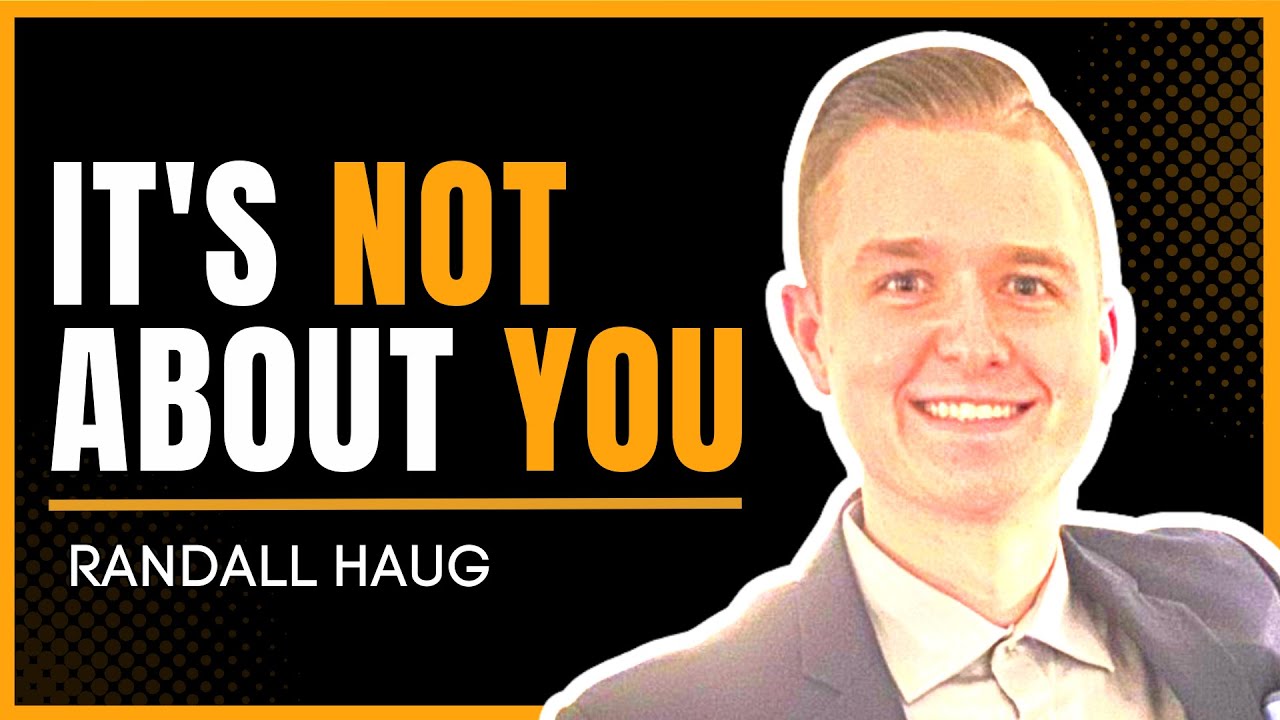
In this episode of the Book Thinkers Life‑Changing Books podcast, host Nick Hutchison (joined by co‑host Luke) interviews Randall Haug, a 29‑year‑old sales manager and author of It’s Not About Me. The conversation explores the core ideas of Haug’s concise, 90‑page guide, which is built around servant leadership, the "average of seven" principle, leading questions, active listening, sacrifice, and measuring impact. Haug shares personal stories—his relationship with his former baseball coach‑turned‑boss Jeff Ward, the influence of his parents, and the habit of waking at 5 a.m. to read and make personal deposits. He explains how focusing on helping others, rather than personal gain, leads to greater success, and he offers practical advice on letting go of negative influences, asking leading questions that create win‑win outcomes, and cultivating active listening. The hosts discuss the book’s appeal to recent graduates and early‑career professionals, compare it to other leadership books, and reflect on personal takeaways such as slowing down, being present, and being the "hardest job you’ll ever love". Haug also teases his upcoming second book, Let There Be Light, and provides contact information for listeners.
Chapters
Randall, welcome to the Book Thinkers Life-Changing Books Podcast. How are you feeling today?
Awesome. Thanks for having me, uh, Luke and Nick. Appreciate it.
Yeah, we're excited to jump in. So right off the bat, why don't you introduce yourself to the Book Thinkers family? Why don't you tell everybody a little bit about who you are and why you should pay attention to this book that you just wrote?
Yeah, no. So, Randall Haug, I live in central Arkansas. I'm 29 years old. I'm married with 2 kids, and I am actually a sales manager. And one of the things that I feel like— I, I love developing people. And one thing that my generation typically gets a bad rap about is they are extremely selfish and only worried about themselves. And so what I decided to do for a lot of the millennials and people you know, coming straight out of college and going into the workforce was kind of write a, uh, a guide on how to be more successful and really create life-changing relationships with your customers, your peers, and whatnot.
So I loved, I loved your book. The biggest thing that I honestly like, the thing that I loved most about it was just such an easy read. It was like, it was nice, short, concise, and to the point. And man, I love when books can do that. Like, you did a great job at getting clarity on a lot of things, which I feel like, you know, sometimes there's, there's a lot of books that I read that are just like rambling. So it's like, okay, get to the point, get to the point, get to the point, get to the point. You just like— I mean, I feel like right off the bat you were just there. You just got to the point, which I love. So I'm gonna do that too and just get kind of, kind of right to the point. Um, in, in the first chapter, I just, I, I love the idea of servant leadership. It's something that I'm trying to cultivate in my life a little bit more. Um, it's something I kind of grew up with a little bit too, but I haven't done a great job at it throughout my life. And I loved your take on it. But if you don't mind, maybe you can describe what servant leadership is to you, what you— how you think about it. And yeah, just describe that to our listeners.
Yeah, absolutely. And thank you. When I was writing this book, I was going for, you know, short and straight to the point. So many people can get stuck in writing a 300 or 400 page book. And you can truly deliver a powerful message Without writing 400 pages. I mean, you guys read a ton. I read, try to read every single morning, try to, you know, break that mental sweat just like I do on the others. But a 300 or 400 page book can get, you know, kind of deceiving, right? It's almost like I don't even know if I want to start it. But servant leadership to me, I mean, if you take a step back, right, take a step back and think about how you can be of service to your team, right? Be available. Be able to get in the trenches with them, show them how to do the job, right? Be there for them every single step of the way, give them guidance. And sometimes, right, a boss tells you what to do, a leader jumps in and shows you how to do it, right? I love Jeff's take on it because a true, you know, servant leader doesn't tell their team or guide them down a path of somewhere they haven't been before, right? So getting in there and showing them how to do it. And being available is the best way.
Yeah, and I agree with that. I loved your, um, your story about Jeff Ward— was his name correct?
Yes, sir. Yeah.
Yeah, what a great guy. He, um, seemed to be like a— he played a pretty pivotal part in your journey. Uh, I would love to— you know, he was your coach and then he was your boss. Maybe you can share a little bit about that story and how that happened and how that evolved over time. That'd be great.
Yeah, absolutely. So he's actually my boss now.
Oh, awesome.
Yeah, no, that's been wonderful. But no, he was my baseball coach growing up. And then as I was, you know, becoming a teenager, driving, having to have a job and whatnot, he ran— he owned the 2 branches of the previous, which is now a national company. He ran the 2, he owned the 2 locations and whatnot. So I knew that I had an opportunity there to really, you know, create a lot more experience for myself, right? To really invest in myself there, learn a ton from somebody who is, you know, taking over, right, Arkansas and whatnot. And so getting into that was one of the best moves I ever made. And we always made jokes in baseball about how, hey, you know, I'd love for you to drop off a resume and whatnot. He would never do it, right? So I had to go to him. I went to him one day and he— that's what he was waiting on. He was waiting on me to take the step, right? Because you have to— the world is yours, but you have to get out there and take it, right? It's not going to come to you. It's not going to come to those that are sitting there waiting on it.
Yeah, yeah, I love that. And is that something like, you know, it seems like from a young age you had a pretty good idea of those things? Is that— do you think it's because of those people in your life like Jeff? And maybe— I don't— I feel I, I can't remember exactly, but I feel like you, you talked a little bit about your parents too. Um, but I would— is that— I know in the introduction you talk about, uh, you're the average of the 7 people that you hang out with the most, right?
Yeah.
So I loved— do you—
if—
I don't know if— let me see the quote because the quote is really great. Um, maybe you remember it off the top of your head. If you do, that'd be awesome. But you say it's something about the, the negative, the, the 7 negative people that are in your, your head the most.
Yeah.
I'd like elaborating on that.
Yeah. So you are the average of the 7 positive people, right? The 7 people hang around the most and the 7 people that have made a negative, like, impression on you, right? So those you hold in your heart, right? Because You are— you take bits and pieces from the people you admire, but you also take bits and pieces from the people that have given you hardships, right? So you know that I don't want to do— I don't want to be anything like that, right? It really shapes you and evolves you. And if you want to be 100, surround yourself with 7 100s, right? Because you are the average of that.
Yeah, and I, I totally agree with you. It's something that I've worked really hard on in the last couple of years, just changing the changing the room I'm in and the people that I hang around because I've realized through a lot of pain that hanging out around people that are a little bit more small-minded and don't have the same goals and aspirations as me are also people that contribute to holding me back. And something that hit me really hard when you said the 7 negative people that are in your mind. So, you were saying that not even just the people that you hang around, but the people that you think about. And that was like this big wake-up for me because like, oh, man, I've removed myself a little bit from those smaller-minded people, but they still take up some space in my brain, which is crazy to think about. And I'm wondering, do you have any advice for people like me that are struggling with getting these negative people out of your head? Do you have any advice around that? I would love to hear it.
Let it go.
And that's hard, right? Because as long as you're thinking about them every single day, even if it's not— not even if it's not every single day, it's once a week, twice a week, they are winning. Let it go. If they occupy space in your mind, they've got a grasp on you somehow, right? And that's hard because I find myself struggling with that at times.
Right?
But there are, there are those people that, like you said, short-minded. That was very well put, right? Because they're just out for the short-term gain about themselves, right? They are there trying their hardest to occupy that space, right?
They may—
they, they won when they're occupying that space in your mind and that you're holding on to that piece of it. You can't reach your highest potential. Let it go. Move on.
Let it go, man. It's such a— it's such a difficult, difficult thing for sure. But, uh, I'm gonna pass the baton over to Nick because I've been hogging, hogging this a little bit.
Well, I'm curious. I mean, this is probably the first time we've had, uh, 3 29-year-olds in the room chatting it up.
There you go.
29, right?
Yeah.
Trick question. I knew Luke was 29. So 29 is an interesting age because I feel like right now the differences between my friends, uh, at the age 21, 22, you know, coming out of college, the difference between those friends is, is that gap is widening between the people who are focused on personal development and the people who are stuck in that kind of like college party, I'm gonna just clock in and clock out and then go have fun type of mentality. You know, the type that wants to build a family versus the type that just wants to have a good time. So, I'm curious, how do you let it go? Like, if there are people in your life that are having a negative impact on you, uh, and they're not supporting the direction that you're going, how do you let it go? How do you get rid of these people in a cordial way?
Great question. Right? And when you think about your wellbeing and your why, almost, right? Like who you have to be day in and day out to help you accomplish your goals, help your family accomplish those goals, you can't let others drag you down. Right? And that's hard. I mean, I know all 3 of us right now, nobody's perfect. Right, but you have to, you have to get in that mindset to throw it into 5th or 6th gear and go all out and be the person that you've got to be for others, right? And it's hard.
I think so. It is hard. Yeah.
I was just, you know, um, just further elaborating on that. You know, your book is called It's Not About Me, and it's so interesting because I feel like what you're saying now is almost like you gotta— you have to work on yourself a little bit to be able to serve others. And I think that's something that we— I don't know, just in general, we— the general we— we have a hard time with almost coming to grips with how much do I work on myself versus how much do I help others. And I'm wondering, you know, do you think there's— if there's a balance to that, or do you think like, hey, you have to Kind of like the airplane thing, like put on your mask and then you can put on other, other people's masks. What's your, what's your viewpoint on like doing the work, doing the work on yourself?
Yeah, no, I love that. And that, that is something that I've had a lot of success with here lately through advice of others and whatnot, because if you don't take care of yourself, you can't take care of others. But at the same time too, you have to set aside time to make those deposits into yourself, or else you're not going to be the person that you need to be. For others, right? So you almost have to set aside time for it, right? Because if you're not intentional with your— you know, Nick Saban talks about be 100% intentional with your time, right? If you don't set aside the time for yourself, you can burn out, right? You can burn out, and then you are the shell of a human that you need to be for others. But if you don't set aside that time for yourself to put the deposits in, get rest, Right, turn it all off, you are not the leader that you have to be for the people that are counting on you day in and day out.
Well, you mentioned setting aside time every day for reading and that mental— so how long have you been a reader? Is that something that you, you enjoyed when you were a younger guy?
So like when I was in college and right when I got out of college, absolutely not. Absolutely not. But when— and what I do, I wake up before the world wakes up. So like my family typically gets up around 6:00, 6:30. I get up at 5:00 because that's my time to shut off the world and make deposits into myself. Right. But I knew that again, it's not about me, meaning like I learned a lot from the individuals in my book, but I knew that there were So many messages out there that could help me, because you're not going to learn every single thing from every single book that you read, right? You're going to learn bits and pieces from each one. That was my idea with the 7 leaders there, is that there's a certain piece that's going to stick out, and it's different for everybody, right? You both probably learned something different from my book, took key takeaways from different portions of it, and I love that because there's not one angle that reaches everybody. that grabs everybody's attention. But I really became a leader when I knew that I wanted to make a difference. Like, I started reading more when I wanted to make a difference in other people because I had to figure out what's their hook, right? Everybody's hook is different. Everybody learns different ways. Everybody's got different whys. And you have to figure out what that is before you can really start serving others.
Yeah, I agree. What are some of the books that influenced you? What are some of the, what are some of your favorites when you think about leadership and mindset and?
Yeah, yeah. So The Coffee Bean by Damon West, and then so John Gordon's The Energy Bus. Like, I've loved those because if you don't bring energy to the conversation, right, people are out in minutes, right? First impressions mean everything. And then The Coffee Bean was an interesting perspective that I actually met Damon West, super, super good guy, servant leader.
himself.
But like, I loved, you know, The Power of Positive Leadership by John Gordon. I love that because people will follow or unfollow you within minutes. If they can tell that you're a positive person, they will follow you forever.
I like that.
What about you?
Well, the first books that I read were Rich Dad Poor Dad by Robert Kiyosaki. Yeah. The Total Money Makeover by Dave Ramsey and The Richest Man in Babylon by George S. Clason. So when I started my journey, I was really insecure around money. And so those books deal with personal finance and financial literacy. And so that's kind of how I got my start. But then I moved into the personal development space, The 7 Habits of Highly Effective People and books like that. So That was kind of my, my quick transition. Luke, you want to share some of your first reads?
Yeah. I mean, you mentioned the why, right? I used to own a coffee shop and I got into books. It's probably been like 6, 6 or 7 years now, but I got into books like literally out of necessity because I just didn't know what I was doing. And I was like, okay, I'm going to start reading books. Nick was sharing about books and I followed him on Instagram and he was sharing all this stuff about books. So I was like, all right, well, maybe there's something to this book thing. Let me read some books. I started with a really simple one, and that book was pretty instrumental in just opening my mind to new perspectives because up until that point, like, I just didn't have— I don't know, I just didn't have the capacity for different perspectives. And I like, I just thought the world was very black and white and this is how it is or this is how it isn't. And as simple as that book is, it just showed me that it's like, okay, there's more to this. So, I just got From there, I just got super curious and started to buy all of it.
I don't think you did.
Start With Why. Yeah, did I not say that? Okay.
I don't think so.
Sorry if I didn't say that, but yeah, Start With Why by Simon Sinek. Um, I've probably said— told this story a few too many times at this point. That's why I'm just like, oh, everyone knows the name now, you know, in my mind. But yeah, books have played a really instrumental role in my life. And, um, books like yours, It's Not About Me, like They're so great because they really do, you said it, like show different perspectives and everyone takes something different from it too. You know, my favorite book won't necessarily be your favorite book and what worked for me in your book won't necessarily work for you or someone else. And what I love about, you know, Nick and I, we do a lot of these podcasts together and we both read these books and we come up with different questions to ask and it's always so fascinating to see just the, the different perspective that he has from what I took from it, right?
Yeah.
And I love that. So you, you, you talked about that a little bit. And, um, I'm just thinking, I'm thinking through, uh, too, there was, there was something that stood out to me. And I'm thinking about perception, or maybe I'm thinking about, yeah, perception. Yeah. Um, or maybe it's, uh, not perception. It's, uh, your other chapter, which is the way you perceive. What was that one? That one? I'm thinking about the story. It's a, it's a cute, funny story, which is, um, the boogers and nickels.
Yeah.
Would you, uh, I don't remember if that one is, is, is that one in Perception?
I, I, that one. Yeah, that one's in Perspectives.
Perspectives. Perspectives. Yeah, I'm sorry. Perspectives. Yes, yes. That, that was so amazing. So if you don't, do you mind like sharing a little bit about that story? Yeah.
So he, he talks about like what the message he rolls through with his sons every single morning, right? About taking the good for the good and the bad for the bad and whatnot. And he had such an interesting way about, because he was one of my college teachers. I actually speak to one of his classes, a couple of his classes every single semester. I enjoy—
Awesome.
Speaking at those every single time, just getting to meet those young students that are hungry to learn and eager to make a difference and whatnot. But His, his deal there was everybody, everything that comes to you, there's a different— there's a— everybody's got a different perspective on it, right? And there's a positive and negative connotation about it. But when you go into it with an it's not about me mindset, that's how you can really find, you know, people's thought processes with it, right? And so again, like you said, different perspectives. and whatnot are, are everything, right? Because everybody's got a different thought process and perspective about everything. And it's when you're able to tap into that that you can really, you know, relate with people on those things.
What's been a perspective in your life that, um, that you had to really like change, that changed the way you thought about things? Like, is there any like one big perspective change that you've had throughout your life?
Oh man, let me piggyback on that because you said you were not a reader in college and coming out of college, but yeah, you were. So what's the big difference?
I would say for me, and this is kind of where that perspective comes in, is when you stop trying to— when you stop worrying about your own success and you start waking up every single day trying to help others be successful, making a positive impact, making a difference in their lives, your success will take care of itself on the back end. Right. And that was something that for me, like early on, it was, how can I make the most money possible? Like, what do I, what can I do? And the more I focused on me, the less successful I was, but the more that I focused on, you know, my customers or my team, Helping them accomplish their goals, because not everybody's driven by money. So, you know, a bunch of people are driven by work-life balance, being happy, less stress and whatnot. When I was able to take on my team's tasks that were bogging them down the most, help them come out of that, they worked harder for me every single day, which indirectly made me more successful. Right. So that was, I would say that was a perspective for me. It was. Not necessarily just working hard, but working hard for others, right? Because you've got to— you have to be able to motivate at 3 levels. You got to be able to influence up, influence the people at your level, and then influence people below. When you're able to successfully influence all 3 of those levels, there's no ceiling to your success.
Hmm. Yeah, I really like that lesson. Well, you asked us what our favorite takeaways from the book were.
Yeah.
Mine, I did a little preview on Instagram around the million dollars to kill an ant.
Yeah, blow up the ant.
Yeah, that's kind of— I think that's my biggest takeaway is that you've got to— well, I don't want to spoil the metaphor. Why don't you tell the story to everybody and what the kind of outcome is?
Yeah. Yeah.
So Gilberto's coach asked you, you know, how do you kill, you know, how do you kill the ant? If I was to give you $1 million, how would you do it? Right. And his takeaway was, I would go to the bank, take, take $200,000 out, buy a nuclear bomb, and blow the ant up. Because then you have absolutely no doubt in your mind that the task is accomplished. Right. You still— and then you net $800,000. Right. The idea there is to complete every single goal to 100% fulfillment, leaving no doubt in your mind that anything was left undone.
Right?
That's an interesting perspective and perception on the piece of it. But that story right there grabbed me because Gilberto, right? He's a wealth management advisor for Northwestern Mutual. And he always tracked, right? Not by the dollars that he made, but how many lives he had an impact on, lives that he influenced. And I love that because that right there is a life that's not about me, right? How many people can I positively— how many people can I make a positive impact on in a day, in a month, in a year, right? Then you think about the impact that you're like— what you do has. You're getting more and more viewers and followers every single day, right? It's creating more and more impact out there, and I love that.
Yeah, I mean, imagine if the entire world had that mindset of impact? I know that it took me a while to find it when I was coming out of college, just like you shared about yourself. It was money, money, money. And in some respects, it still is. I think one of the things that BookThinkers is trying to do is shift some of our KPIs from revenue over to impact. And it's a tough thing to quantify sometimes. So I'm not sure if you have any advice out there for people around deciding to focus on impact, because if you did, that, that could definitely be valuable for everybody.
Oh, man. The more lives that you can touch, which this was something that I thought about too, if you have the opportunity to make a difference in someone's life, take it and don't look back, no matter what the repercussions are for yourself, right? I love that. Because when it's all said and done, it's not about you. It's about how many people you can influence at the end of your life, right? And that's what I just— I told our publishers, like, with everything that was going through, if I help someone get the courage to stand up and do something different, this entire project, just one, this entire project was worth it to me.
I'll reflect one more thought and then I'll toss it over to you, Luke. In Greenlights by Matthew McConaughey, which was a really fun listen, Matthew talks about— he actually talks a little bit about Jesus, but he said that Jesus was aligned because what benefited him also benefited other people. And Matthew said that he was trying to live the same life, like what was good for him was also good for other people. He built a life that revolves around impact, and that's something that I think about a lot. Like, how could Growing Book Thinkers be good for me but also be good for other people? That's a fun challenge, but it's also a fun way to build a business and live your life because then it's not about you. And even if it is about you a little bit, it's really about other people at the end of the day.
Absolutely. No, and I love that.
He—
I actually have that book. I haven't started it yet, but I mean, it was a New York Times bestseller. I mean, right off the bat, he's actually doing a kid's book too. Oh yeah, some exciting news that he just released. But well, yeah, he's awesome.
Yeah, it's a, it's a great book and I highly recommend the audiobook. I'm not a very big audiobook person. I like, I like holding the book. I don't, I don't feel like I learn or retain as much when I'm doing the audio. I kind of get a little bit too passive with it, but that audiobook, super, super captivating. So, um, highly recommend that one. It's a great book. But yeah, it's so interesting, you know, all the times in my life when I have focused on impacting others' lives and I have focused on someone else outside of me, my life has just been better.
Yeah.
And it's crazy, but I can just— I can honestly say that. Like, I, I spoke a little bit about— I own— I used to own a coffee shop, and, um, I talk about that a little bit off too often maybe on the podcast, but I used to own a coffee shop, and like, I struggled for a long time, and Eventually, I just got to realize that I have to make this so focused on serving everyone else that it just, it can't be about what, what's going on in my life and everything, all the problems and all this stuff. And as soon as I did that, it really like things just started to change. So I think that if most people could start to focus on that, and then also like, I think to the, like Nick was talking about, which is the, it's really hard to find that KPI. for lives impacted. And it would be so cool if we could come up with— and maybe it's you, Randall, maybe you come up with the system and sell it or something— but come up with a system, uh, of measuring that. Like, when do you put in, you know, the spreadsheet that, oh yes, I impacted one life today? And I think like that's like the big struggle with us a lot of times. Like, ah, we're not really sure, we don't really see that. Now, it took me until I closed my— I closed my coffee shop, um, down during COVID and— or just like at the end of COVID And I'm gonna get a little emotional here, but I just got afterwards, like, I didn't realize the impact I was having. I was trying to have an impact, but I didn't really realize the impact I was having. So after I closed down, I got hundreds, hundreds of letters that were thanking me for the service. Thank you. Like, what a difference the coffee made in their daily lives. And like, that still to this day, I have my drawer by my desk full. When I'm having a rough day, I just pull that out and like just read through the letters because—
Yeah.
There's nothing like it. There's nothing like it. So anyway, sorry about that little ramble, but kind of tying it back around, Nick was talking about his favorite takeaway from your book. And what I loved about your book so much, it was like the value was right there right at the beginning because I know we already talked about it, but I loved that. And I just pulled it up here because I wanted to know exactly what it said, but people are the average of the 7 positive and the negative 7 negative people that have made a lasting impression on them throughout their lives. And I had to literally sit back, like I put the book down and I was like, I have to reflect on this for a while. So, that was a huge takeaway for me and it was like right in the introduction. So, very cool that you delivered that right off the bat. And you can mark on your— if you have the spreadsheet, you can mark that you impacted my life right there.
Yeah, you got it.
I appreciate it. Yeah. Anyway, we can maybe bring it a little bit back to the book a little bit. Leading, making it not about yourself and making it about others requires a lot of sacrifice. And you have a chapter in there about sacrifice that I really loved. I would love you to maybe just expound a little bit on that, what sacrifice means. You talk about with yourself having to get up a little bit earlier than the average person, maybe the sacrifice is sleep a little bit or—
Yeah.
I would just love to hear your thoughts around it.
Yeah, no. And I would say sacrifice goes hand in hand with servant leaders because we all have things that we have to do, right? And you can, you can wake up every single day dreading getting out of bed, worrying about that list of, that list of things that will never end, right? Like you accomplish one thing and 2 more get added onto it. It's never-ending. Or you can look at it again as an opportunity, an opportunity to make an impact, right? An opportunity to again add one more feather to your cap that shows why people follow you, right? And you do, you sacrifice your time that you would have to, because we all have deadlines, right? But when our team comes to us, it's gotta move everything that you have on your list to the top. Because again, people will, people will follow and unfollow you in seconds, right? It's about your attitude. It's about willingness to complete in full what people are asking you to help them with, right? And there's a fine line there though too. And I want to jump back into, you know, the 7 positive and 7 negative, right? Because we just got done talking about let it go, right? But you're almost having to hold on to the 7 people that made a negative impression on there so you can learn how to not be like them, right? At the same time, you have to be willing to let go the hardship that they gave you, and there's sacrifice that comes into that. I don't know, I don't know if that answers your question or what.
Yeah, absolutely. And I think like, like you just said, you know, sacrifice comes in a, in a lot of different ways and a lot of different colors, and It's just such an important part of, yeah, important part of leadership that a lot of, I feel like a lot of leaders today just aren't willing to do because they're willing to sacrifice a lot. I mean, I'm noticing just in the world, like they're willing to sacrifice a lot of employees for their own pockets, but they're not willing to make any sacrifices themselves, which is a really sad, sad reality that we're living in right now. So we need more people like you that are coming up and telling people, whoa, this is not the way we do things. This is not how we should do it. For the long term.
Yeah.
Yeah. So I think that answered my question wonderfully.
I've got another question. So Randall, you were telling us before we started that one of your favorite lessons comes from chapter 5, from Brent's chapter, Leading Questions. So what is a leading question and how does it relate to this book?
It is— so gosh, Brent, what a What a great guy. He had— he just has a way with people, right? And so asking leading questions is again finding ways to ask the questions that lead both parties down the path that mutually benefits them both, right? So don't ask yes or no questions. Again, don't, don't ask what time it is. Yeah, don't, don't ask what time it is. Ask how the clock is made. Right. So ask the questions that lead both parties to a win, right? Because when people get stuck in a me versus you, a win versus lose mentality, at some point, whether you're the winner or you're the loser, someone's got to lose. And that doesn't make anybody happy. It doesn't make people want to continue doing business with you. It doesn't make people want to follow you. Find a way that both parties can win. Asking leading questions is by far one of the most impactful lessons that I've ever had, because you can make a connection with that person, right?
Yeah, and it, it sort of ties into your, uh, leading at 3 levels. Like, you've got to be able to ask questions up the chain, you've got to be able to ask the right questions to your peers, and you also have to ask the right questions of the people that you're serving.
Absolutely.
Yeah.
And I think like so many people have, you know, struggle. I know I do. Like, I'm still working on this for sure, but they struggle with, uh, what do we call it, active listening. And like really listening to— not, not just like trying to listen to, to, to answer, but like really like sitting here and listening to what you're saying and then asking questions, follow— following up with that. So do you have any— do you have any— I know in the book you had an acronym, LISTEN. And I don't remember exactly what it stood for, but it was really good. But do you have any other tips around listening and asking better questions, or do you have any resources that you use personally to help cultivate more better questions in your life?
Yeah, so listen, extremely impactful, right? So I mailed a copy of my book to one of my English teachers, and he loved that. He thought that teachers across the United States could really benefit from that, right? But For me, active listening— and I love that you both brought that up because that is so crucial in being a good leader, because if you're spending the majority of the time talking, it's physically impossible to listen, right? But clearing your mind— and again, like, I have 1,000 things that are running through here all the time— but having a notepad down so you can write takeaways and take notes and everything, but Fully engaging and looking them in the eye, right? Being in the moment with them, clear your mind and be 100% with that person allows you to absorb everything. Active listening, not like you said, not only enables you to answer the questions, but it allows you to absorb, right? And there's so much that goes into active listening, right? There's looking at people's composure, looking at, you know, feeling the temperature of the room. being able to de-escalate a hot situation effectively, not right, not necessarily quickly, but effectively, and bringing people's concerns down as part of that as well.
Yeah, I know that for a long time I struggled with active listening from a leadership perspective, I'm sure, but also on this podcast. I mean, I would generate a list of questions from a book and I would stick to them. So you'd answer a question And maybe that would even create some curiosity if I had been listening for a follow-up question. But instead, I'm thinking about how to word the next question. And I would have these abrupt, okay, on to the next question type of things. And so part of what we've tried to do with this podcast is make it more human.
Yeah.
I'm listening to you. If I'm curious about something, I can ask a follow-up question. Or I could tell a story like this that helps hammer home a point about active listening instead of just saying, okay, so in chapter 6, mistakes, You know what I mean? Yeah, that's, that's been— I think that our audience has enjoyed that change as well.
Absolutely. And you have to be able to switch gears like that, right? Because when you, when you've hit a gold mine, you want to dive in deeper, not just like you said, be so, okay, Nick, let's move on to the next one here. People don't want that.
Yeah, God gave us 2 ears and 1 mouth for a reason, right?
Exactly.
Ratio.
Yeah. So I'm curious, you know, reading your book, getting to know you a little bit, what are some of the, the biggest struggles that you've had when it comes to, when it comes to leadership? Like, what are, what are your Achilles heels? Like, what are the things that you on a daily basis are like, okay, this, this, this piece is hard for me?
I would say, I would say early on And this can tie into a lot of people, but when people get stressed, right, when people get stressed, they tend to dive back into the person they were before, right? So they've laid out this plan of how they're going to accomplish all their goals, they're going to meet all these deadlines, but then, you know, something out of the blue that you can't plan for happens. Right. Right? And then you're stressed. You're not following any of your guidelines. You're not following up on phone calls. You're not calling people back and whatnot. For me, like I knew that if I was going to be true to myself, I had I had to roll with the punches, right? And staying organized goes right along with that, right? Setting aside time, blocking out the time to you know meet these deadlines. You know if it Didn't get done today, it's got to be done tomorrow. But when does it have to be done, right? Set aside the time to do that. Block out time. Be intentional with it. Um, but no, I would say one thing for everybody really is being able to understand how to calm yourself down whenever you're stressed, right? Take a step back. Calm yourself down. Get back into Right, get back into that war chest, hammer things out. Right.
Yeah, we've talked a little bit about how your book is different, a little bit about why you wrote it. Who do you think the target reader is for your book when you envision the ideal customer for this information?
Yeah, yeah. So for me, I would say my target audience is really like the younger crowd, right? So I would say my target audience, and not necessarily even the younger crowd, but people coming right out of college, uh, people that are leading over others, people who have the ability to make an impact on people, right? So I mean, that, that could be teachers that are early on in their career, people that are early into their corporate world, people that don't have a lot of experience managing people, right? People that are looking for that next opportunity but aren't exactly sure how to get there. That would be what my target audience would be.
Yeah, yeah, I think that makes sense. If you could go back to that age, that recent college graduate age where you weren't a reader, Yeah. Do you think this book would be appealing to you? And I don't ask that question in an attacking way. I ask it because I know I wasn't a reader at that age, and it would be hard to convince me to read a book. So I, you know, I'm curious, do you think you would read this book when you were coming out of college?
I would say, I would say yes, for the simple reason that it's not a long read.
Yeah, yeah, that's a good point.
Right. So, I mean, yeah, yeah, yeah. You're talking about 90 to 100 pages.
I think that's like the, like the, like I said at the beginning, it's like one of the biggest strengths of this book is just it's straight to the point. And I really love that when, when books can, they don't have to beat around the bush. They're just like, here, here's the information. This is what you need to know.
That's it.
And it's, it's really nice that you took the time to do that. I know, like distilling information into a short form like that, is really, really hard because it's easy to ramble and ramble and ramble and stories and stories and stories and stories and have, like you said, 300, 400 pages of just like tons of information. But it's really hard to distill information down to, I mean, what this has under 100 pages, I think, or just at 100 pages.
Yeah.
So anybody listening today that is like on the fence of reading, even this is a great book just to get into reading because it is, it's such an easy Easy read and very applicable to your daily life. Because I think, like, you know, when you talk about impact too, you know, everyone listening today can have an impact. They have that power to have an impact on anybody who's behind them. And that's what's so cool about your book too, because it's approachable, right? It's approachable for anybody at any age, really, which I appreciate. Well, we're probably going to want to get wrapping up here, but We're coming on to an hour. So a couple— one, one question I love to, I love to ask our, our podcast guests is, if you were to pass away, you were to die, and you— all the information, everything that you've acquired goes away with you, and you were allowed to leave one sentence, one piece of advice for those behind you, what would it be?
Oh man, big one.
It's a big one.
It's a hard, it's a hard one.
Yeah, thanks.
Sometimes, sometimes people like sit here for— you can, you can sit here for 5 minutes and just Yeah, it's okay.
I would say for me, how can I be helpful? How, how can I, how can I be helpful? Yeah, that, that would, that would be what it would be for me.
I'm curious, is that the same piece of advice that you would give your younger self? Like, let's say that You got a chance to go back and talk to Randall at 18, is that the same piece of advice that you'd give yourself?
I would say, like, I would say just because that, that, that kid was so concerned about, I mean, just getting to the next thing, right? Getting to, getting to the next piece. of the puzzle that moved things on to go faster. And some, some of the best advice that I've ever been given is slow down, be in the moment, and just enjoy the ride because it'll be over before you know it.
Yeah, that's amazing advice. I mean, we're all sitting here at 29, and I'm sure all of us, uh, 10 years ago we weren't even 20 years old yet, uh, but time flies. I mean, it literally seems like it was yesterday for me, so.
Oh, I know. It's nuts, and it seems to be going faster and faster each day that goes on.
Yeah, well, you and Luke both have kids, so yeah, I'm sure that accelerates the clock even faster.
Oh, that's for me.
Yeah, it's— it is the hardest job you will ever love, as my wife says.
Oh, I love that. It's the hardest job you will ever love. Ain't that the truth? That's a good one. It's from— you said your wife says that?
Yeah, she says that. She says that every morning before we wake him up. She's like, it's the hardest job we'll ever love, right? You got that right, honey.
What's next for you, Randall? Are you going to write another book? Do you want to get on more stages to speak about this? What's going on with you?
Hopefully both of those. But no, I have a second one coming out. And the last 4 words that are in bold are the title of, uh, the second one there at the end, uh, Let There Be Light. I don't, don't wanna, don't wanna jump into that too much. We'll have to do it on the next podcast.
But, uh, I highlighted that too. That's funny. Yeah, we can't find it, but you know where it is.
Oh yeah, yep, that's the, that's the title of the second one. It's a, uh, it's a dark world out there. Sometimes you just got to be that little, uh, candle flicker. You got to be the little light that shines in the darkness.
Yeah, I love it, man. Well, thank you so much for today. A lot of valuable information that I think we'll be able to grab out of this podcast and that listeners who are still on obviously were able to receive. Where can people go if they want to learn more about you? What should they do?
Yeah, so there's my Amazon bio on Amazon and then my website at www.randallhoward.com. Okay. Reach out, send me an email, ask me a question. Let's get connected.
Awesome. I love it. Luke, any final thoughts? Any final questions?
Just thank you for taking the time to, number one, write this book. Great book. Thank you for taking the time to be on here today. I can't believe it's— we're already coming up on an hour here. It's crazy how fast the time goes when you're on these things. Like, yeah, time just flies, which, which I love when you're having fun. So thank you for coming on. The conversation was great. I appreciate your time so much.
Yeah.
Awesome.
I appreciate you guys.
More from Nick

Napoleon Hill’s “Think and Grow Rich” is a timeless classic #selfhelp #personaldevelopment

4 Books to Help You Get Better at Decision Making #selfhelpbooks #bookrecs #nonfictionbooks


Have you read this book yet? 📖: The 5AM Club by Robin Sharma #selfhelpbooks #robinsharma

Dan Sullivan on Listening to Your Customers Instead of Watching Your Competitors

5 Books That Will Boost Your Financial Intelligence #financialfreedom #nonfictionbooks

The People That Preach the Loudest About Virtue are Usually the Most Power Hungry



Books are the greatest mentors you can find #selfhelpbooks #businessbooks #successmindset

Let’s fight this toxic instant gratification culture together 📖 #selfhelpbooks #jimkwik