Stop Overworking. Start Living. With Phil Portman
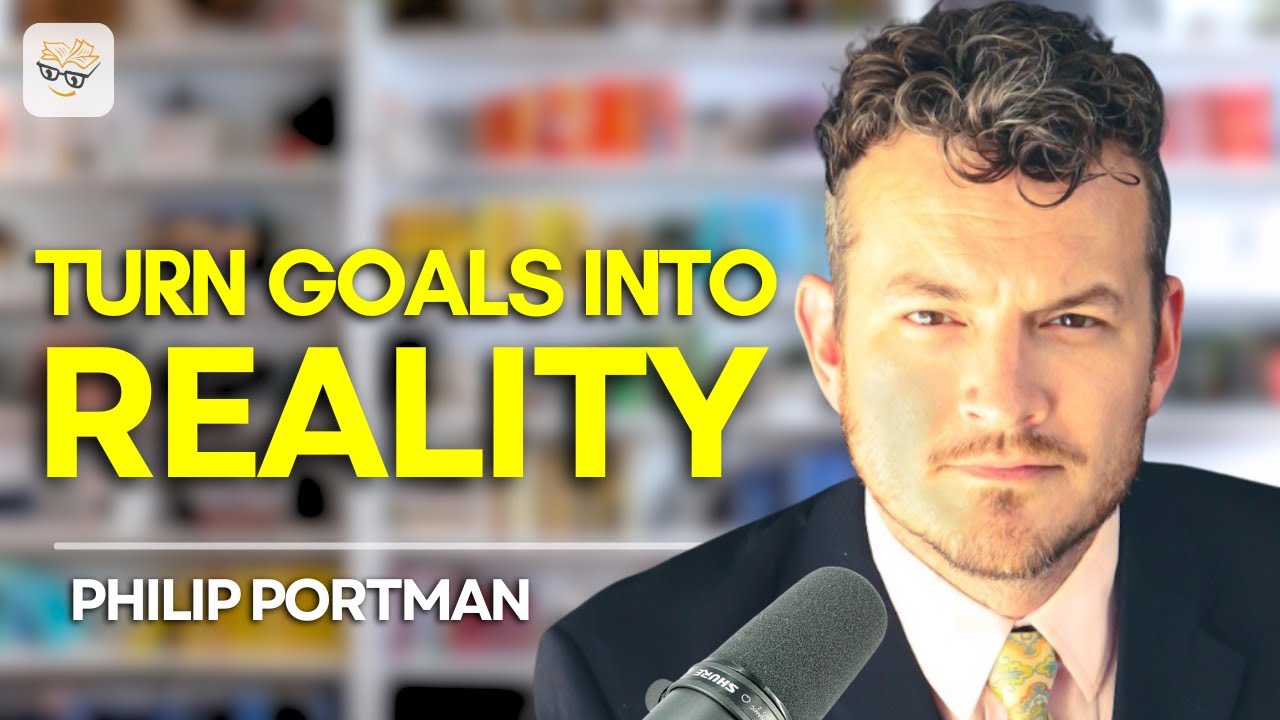
Phil Portman, author of The 3 Keys to Success, discusses why novelty and adventure slow time perception and build confidence. He walks through the 100-goal exercise, balanced goal categories, and the importance of healthy habits like reading and exercise. True success, he argues, is financial stability plus family time, purposeful work, and impact.
Chapters
If you've ever looked back and said, man, time is going by so fast, I would say it's probably because you're getting a little too comfortable. What happens is in life, when we start doing the same thing day in, day out, your brain just bundles it all together. Right? It's like if you've commuted from work, You get home and you're like, how did I get here? Your brain went into autopilot during that time. Well, the same thing can happen from working the same job, driving the same thing, doing the same activity year in, year out. Suddenly, 5 years is gone because your brain just bundled it all together. But if you do novel experiences, things that scare you, things that are new, things that are adventurous, They become anchor points in your brain and time actually slows down a bit because you look back and you say, oh, yeah, I remember last year. That was the year I did this. Case in point, we all look at like the 2020, 2021. That was COVID. That was all a new experience, right? We can all describe vividly what we did during that time because it was nothing like any other time in our life. So, I would challenge you not only do it for the standpoint of developing the level of confidence to achieve your dreams in life, but also do it to help slow down time because that's ultimately what it'll do.
Phil, welcome to the Book Thinkers Life-Changing Books Podcast. I'm excited to chat about your book. Today. But my first question is actually about your mom. You decided to dedicate the book to your mom, and you said in that dedication that she taught you certain things like how to work hard and be resilient. So talk to me, why was she such an important person in your life, and what are some of the lessons that you learned from her?
Yeah, thank you for that question, Nick. Uh, so my writing this book was a chance for me to reflect on a lot of my childhood experiences. And a recurring theme that kept coming back was the influence that my mother had in our life. Raising 7 of us as a single mother in itself is incredible, but doing so with very few marketable skills— and we were never without, you know, we always were provided for. We weren't by any means wealthy. We didn't have a lot of the fancy things that my other friends had growing up, but we were never without, you know, and she always figured out a way to make it happen. And throughout my success in life, in business, and the things, endeavors that I've achieved, I've always had this motto that I'll figure it out. Like, whatever it is, I'll figure it out. It could be an overwhelmingly complicated or complex problem. But that attitude of I'll figure it out came from the way that my mother approached things, and it was instilled in me. That work ethic and all of that came from the things that she taught me when I was young, and I owe a lot of that to the success that I now have in my life, is to the things that she instilled in me when I was younger.
Do you think growing up one of 7 in a you know, single-parent household like that where your mom's just grinding and figuring it out is one of the reasons that you're not a very flashy person. And what I mean by that is in chapter 1, you talk about how being flashy makes you uncomfortable and you'd rather not hide your success, but it's kind of like the millionaire next door vibe that, yeah, you've been successful, but you don't need to show everybody. You're comfortable with it and that's enough.
Yes. So, I'd say my mom has like this Depression-era mentality, right? Even though she never lived through it, she's not that old, but she has that kind of mentality. So, we grew up with that. So, we're very frugal. I'm still to this day fairly frugal. I actually had to reach a point in my life where I started looking at the opposite side of it, like this is going to cost me more from a time standpoint than it's worth. And you kind of have to start making that shift a little bit. And it's things like cutting my own lawn, right? Our house is on 2.5 acres. And if I was to do that myself, that's an entire weekend that I could be spending with my kids and that sort of thing. So, a lot of that was an adjustment for me that went from being frugal to being able to outsource some of the things that are taking away from either the growth of my business or the quality time that I want to spend with my family. And so, I actually had to make that transition. But still to this day, I am not a flashy person. Most people, when they see me, wouldn't realize that I'm a multimillionaire. I still drive an old truck. My wife has a Cadillac. I guess that's something. But overall, we don't look like flashy people.
I believe that's, in a lot of ways, probably why you're so successful. Like you said, the frugality mindset. In the early days of business, so many people fail because they overextend themselves financially. And so it's a superpower not to do that. Uh, one of, one of our former podcast guests and a, and a big mentor of mine, Alex Hormozi, talks about that all the time. You know, so many people lose their opportunity to great— to build a great business because they drive a fancy car that they can't afford. And so it's cool to hear that you're still driving the truck. Makes me smile. When I hear somebody like you talk this way.
Yeah, I think it extends beyond that. If you're constantly in the pursuit of the approval of others, it's going to limit you in making smart decisions, right? So, sometimes I have to make uncomfortable decisions for my employees, my customers, things that are long-term going to be Beneficial. An example of that is with one of my companies, TechStrip. There were some compliance changes coming down the road. We knew it. We saw it. It was a few months down the road. We proactively set up our company in a position for those. I went to speak at a conference, and the day before the conference, they introduced me to 200 people that were going to be at the conference the next day. And they were— they had had a couple cocktails. They booed me. They booed me before I was supposed to speak the next day. And it was because we had put forth these compliance regulations that we knew that were coming out before anybody else in the industry was doing it. But what happened was a few months later, every other company was having these problems. Their messages were failing. They were getting blocked. We didn't have those issues because we were proactive around it. So, had I been somebody that's like really worried about and concerned about what people thought of me versus doing the right thing, the long-term thing for the company, I could have set ourselves up in a bad position.
So, we share that same philosophy that comparison and worrying about what other people think is a very negative— it only has negative outputs. I was not always that way, but I'm curious, were you always that way? Have you always thought that it doesn't really matter what other people think?
No, absolutely not. I think that's something— unless you're a sociopath, I think you're naturally going to be kind of concerned about what people think about you. Um, when, when I was younger, it was like clothing and it was looking cool and And even having the nice car and the nice things. But as I got older and looked around, I realized that the people that prioritize those things, either in me or themselves, were not truly people that I cared about. The people that I cared about, my family, my wife, they didn't care about those type of things, right? It was more about the experiences. When we bought each other presents, they were kind of like, oh, great, thank you.
Yeah.
Thank you for this. But when we spent time together, or they were gifts and presents that we took time to create, or we went on trips together, those were the things that we cherished. So, for me, it was seeing that the superficial items were temporary and fleeting. Styles change. Things get old. But the experiences, the knowledge, the relationships, those things were long-term. And I think for me, it was just shifting in the direction towards things that I found important because we all start off with caring about other people and things like that, but we eventually make that shift and understand that the superficial things don't really matter. It's the experience and the relationships that do.
Yeah. Beautifully said. I think that's the first mic drop moment of the conversation so far. Yeah, I used to care way too much. About what other people thought, and that created a lot of insecurity in me. And then I'd overcompensate and my ego would step in, and I was not a lot of fun to be around, I think, in that period of my life. And I've read so many great books that have helped me form a different belief system, but the, the one that sticks out to me based on your comments of the superficial items, in The Psychology of Money by Morgan Housel, he talks about how when you see a, a great supercar, let's say a Lamborghini goes by and it pulls into the gas slot behind you at the gas station, You're admiring the car, not the person that steps out of it. And so it's so ironic that when you drive a car like that and you want to be seen as cool, people find the car cool. They're never looking at you. And once you realize that, the car becomes a lot less cool at the end of the day. So just so many funny ironies, I think, in the world of kind of superficial flashiness. And like I said, I just love when I have an opportunity to speak to somebody like you who has the money and the success. But isn't just trying to show it off to everybody all the time.
Yeah, absolutely. And that's part of the reason I wrote the book and I started the Successes Podcast is because social media and out there is inundated with people taking pictures in private jets, which are actually like a studio that they—
I know. Yeah.
Or taking pictures in front of a fancy car that's not theirs, by the way. Right. They're projecting this version of superficial success. And most of the truly successful people, people that I know that are multimillionaires doing very well for themselves in their life, you look at them and they drive like an old Subaru, right? And they wear like old polo. Like, you wouldn't recognize them as being as successful as they are. And I said, so, let's start interviewing these successful people. And that was kind of the catalyst for a lot of what I wrote in this book.
How do you define success today? And I know the answer to this, but I'd like you to describe success for our audience, not only having experienced success yourself and pursuing at first what was not actually representative of success, but also hosting your podcast and, you know, getting to hear so many different diverse perspectives. Yeah.
Yeah. Early on, when I was younger, success for me was money. Ever since I was a little kid, I said, hey, when I get older, I want to marry Cindy Crawford and I want to become a millionaire. That was what I told everyone when I was younger. And as I got older, I eventually hit that target, what I wanted. I said, I want to be a millionaire, and I hit that. And then I got to this point in my life where I was like, wait a minute. This isn't enough. Having money in the bank account, like, I'm still not satisfied. I still wanted more. Like, what's my issue? What's the problem? And I started exploring deep down to figure out what I really wanted in life. And first and foremost, for me, success is having balance. And by balance, I mean, yes, I still want to have a rewarding job, a fulfilling job. I still like I still like being able to provide for my family financially and do things. But beyond that, I want to spend time with my family. I want to make memories together. My mom was a single mother. I don't want my wife to be a single mother while I'm out working. I want to be there for all of the events.
Yeah.
And I want to be a part of their life. But beyond just that, my bigger purpose is I want to make a difference in the world. I want to— right now, we have a goal of hiring 20% of our workforce are individuals that are going to have disabilities. So, we've started hiring people with mental and physical types of disabilities. And I want to be able to provide a work environment for people that they love going to and they say, this is the absolute best job I've ever had. And I want to make a difference in the world. And that's ultimately my goal today is to make a difference around those priorities while still spending time with my family and being part of their life as well.
What impressed me about reading your book and hearing you say this right now is that you are communicating you can have your cake and eat it too, which is that you can be financially successful but also healthy physically, have great relationships. And that is balance. So many people hate on that word balance, but I think what you're saying is, yeah, part of your balance is the pursuit of more and better and impact. It's not just sitting back on the couch all day, you know, drinking mojitos and watching TV. It's also proactively improving yourself. You talk about the importance of continuous education. It's All of those things can sit in harmony at the same time.
Absolutely. And if your version of success, a lot of times, if it's overextending yourself, and let's say you're working 12-hour days, 7 days a week, and it's to make a payment on something like a car or whatever, you are helping that car manufacturer achieve their version of success. at the expense of you living inside an office or working. And I don't think, to me, that's my version of success. The thing that I had to explore for myself was being the way I was raised early on with this work ethic, I actually had an anxiety that prevented me from enjoying life. I had this anxiety that was telling me, you need to keep hustling. You need to hustle harder. You need to keep working. You need to keep working. And I said, well, one day I was thinking, I was like, why? Why am I doing this? What is the purpose of this? To buy more stuff? To be more of a consumer? help move my assets and contribute to somebody else's version of success? No. So, now I'm looking at my day differently. What I look at in a day is, where did I— where was I happy? Where did I find— what am I grateful for in my day? Where did I have moments to enjoy the present? Because tomorrow is not guaranteed. It's really not. All we really have is right now, today. And so, for me, real success is today. It's enjoying the moments today because we don't know what's going to happen tomorrow. And if you keep hustling harder and you're working 12, 14-hour days for a future version of success, be cautious because you may not be guaranteed tomorrow. But also, it may not be that you can find happiness until you can be happy with the present. Because you're— if you're like me, you're dealing with this anxiety where you just got to keep throwing work at it.
Reminds me a little bit of that Fight Club quote. I don't remember it exactly, but it's like, we buy things we don't need to impress people we don't know. And that's pretty silly behavior if you ask me. Now, Phil, here's maybe a little bit of a tougher question. What would you say to somebody in the audience that's like, hey, Phil, that sounds great, man. You have all this money and you're saying you don't need money to be happy, but you don't deal with the anxiety of putting food on the table every night like I do. How do you help that person?
Yeah, absolutely. So, what I'm saying specifically around that is not that work is bad, not that long work is bad, not that hustling harder is bad. It's bad if you're doing it for the wrong reasons. That makes sense? So, first and foremost, examine why you're doing the things you're doing. Yes, obviously, putting food on the table, providing for your family, stability, those are all important. Inside my book, I talk about Maslow's hierarchy of needs and meeting a lot of those base needs. But if the reason why you're working hard is because you want to impress other people with stuff that they don't really care about, then yeah, that, that should be something you examine. Why is there that need? to impress other people, or if you're working hard because you just can't sit still because you have this burning anxiety in you like I do, maybe it's time that you explore mental health like I did, time that you explore meditation, time that you explore why your brain is telling you that you got to keep working and working and working. So, once again, I'm not taking away from Working towards a goal, like you and your family want to travel, and so you're putting some extra hours, you're hustling on the side, or you have a goal of 5 years, you want to quit your day job and start your own business. Those are all noble quests. But along the way, examine the balance that you have in your life. When you hit that 5-year goal, are you going to slow down? Are you going to start enjoying life? Are you going to build your retirement? Look at those types of things and make sure that you have balance, that you're not doing it for the wrong reason. Yeah.
Your invitation to slow down will resonate with this audience because so many people come to the Book Thinkers Podcast for productivity and business tips to work even harder. And I think that your message is really well-timed today with the hustle culture that exists on social media. And it's oftentimes when you slow down and you take a breath and you become a little bit more reflective that not only does the tension and the anxiety start to go away, but there's this funny inverse property about success where when you start to do a little bit less, oftentimes you'll start to earn a little bit more. And there are diminishing returns to working too hard and burning out. So many people experience those.
Yeah, absolutely. I talk about it in the book as well. And something I would continuously find when I was working long hours and doing a lot is I'd be trying to go to bed or I'd be standing in the shower and all of these ideas would just start flooding my brain. And what I realized is this was the only time where I was still enough for my brain to process all of the stimuli. that I had going throughout the day. And so, I said, well, I'm coming up with great ideas in these times. What if I could expand the time that I'm reflecting on the day and either delegate or automate a lot of the other busywork that I was doing throughout the day that was generating the stimulus? And like you just said, when I started doing that, I found that my business exploded.
Wow.
Exponential growth. So, don't trick yourself into thinking that more busywork is going to result in future success because you may find that more self-reflection is actually the best thing you can do for your business and your life.
Yeah. Delegation. There are lessons in delegation that we could dive into, but I want to give a couple more previews from your book. I'll just share a funny statement that one of my early mentors used to say to me all the time. He would say, Nick, He who can do the work of 5 people is not as great as he who can get 5 people to do the work for him and then have the space to think about the work, right? So it's this idea of automation, delegation, elimination, removing the low-impact activities, the busy work, replacing it with highly leveraged activities. And, you know, we could do a business masterclass in that, I'm sure, with you today. But I want to make sure that we highlight some of the keys to success in your book. So first, let's talk a little bit about setting clear goals. Can you bring us back to that keynote speech that Matthew Kelly gave that sort of rocked your entire world and set you on this path?
Yeah, absolutely. So yeah, Matthew Kelly, I read his book and then we ended up, uh, he was a keynote speaker at this event I was at and I, I thought he was an incredible speaker. I wasn't a huge fan of his book, but I thought he was An incredible speaker, and really what he was talking about was not just setting goals. We do that all the time in business, right? If you set goals all the time, but his was talking about creating goals for your personal side of things, your relationship goals, setting goals for artistic goals, and splitting things up, and really so that you're creating. balance in your life. It's not just heavily weighted towards career and finances, but you're creating balanced goals. So, his was really about setting different categories for your goals. So, I went home and did that with my wife. We wrote down our goals and we started having discussions around it. And it was the first time that we really sat down and kind of mapped out what we wanted our life to look like. And I remember having that moment going, God, I wonder how many other people actually do this, like actually sit down and like have that discussion with their spouse saying like, what are your dreams? What do you want to do in life? Versus just assuming what it was. Because what I found in that conversation with my wife was her goals in life were wildly different than what I thought they were. And it really helped us create a better partnership instead of her just supporting me in like my career goals and things like that, right? And me helping provide for the family. We instead became a team in what we were achieving. And so, what I'd like to say is, for me, it's like If you're floating down a river in life, you're going to bump into banks and you're going to end up in different destinations. And it may be where you want to go, but chances are it's probably not. It'd be a better idea if you kind of had a map towards where you're going and you're paddling in a direction. Yeah, you still might end up over a waterfall or crashed into a bank, but more than likely, you're going to head in the direction that you want to go. So, just sitting down, taking a moment to write out your goals. And if you do have a partner, write down the goals together and share those goals and come up with some common ground there. But you're more likely to achieve it. And there's some data around it. If you write down a goal, you're 33% more likely to achieve it right off the bat. If it's written down and shared with somebody, You're 76% more likely to achieve that goal. And there's one more. If you've written down, shared, and then you visualize your goal, right? So, you actually visualize yourself achieving it. You can see yourself achieving that goal. You are 140% more likely to achieve that goal just by those 3 things right there. So, write down your goal, share with a partner, visualize yourself doing it.
I share those stats in my keynote, which is how to retain and implement more from the books that you're reading. And so I love that you, that you decided to share that with everybody today. Um, so 100 goals though, I mean, that's a massive number. So I haven't gone through the exercise yet, but I am planning to do it, uh, before we put out more content on the Book Thinkers feed about the 100-goal exercise and then put everything into the right buckets. Talk to everybody about the number 100. I mean, was that difficult to do for you?
Yeah, very difficult. And that's kind of the point around it, right? We all get stuck in this narrative that we tell ourselves and tell other people. And when you start digging a little deep into your goals, into why your belief system is that way, you start questioning it. You start really finding things out about yourself that may challenge what you originally thought. And that's what the 100 goals helps you do. You'll get through 30 or 40 pretty quickly because those are your common goals that you tell everyone you've always thought of. But then, once you start getting past that 40-goal mark, it gets really difficult. And then, you start thinking, what do I really want in this life? What do I really want to do? What are my priorities? And that's where the magic starts to happen because you're thinking about it. You're not going to finish it all in one day, probably. If you do, good for you. But for me, it usually takes a few days every time I do it because I'm thinking about it and I have my notepad, my phone, and I'll think of something. I'll go, yeah, that's one. I'll plug it in there. And by the end of it, you have— yes, you're 30 or 40 that you tell everyone and they've always been your goals. But then, you have this, this whole other group of ones that you really took some time to think about, and they were kind of stretch goals. You take all of those and you start examining them for where the direction of your life is going and where you want to put it. So, instead of you just fumbling around life and just ending up where you end up, you are telling your life where you want it to go. And so, that's the purpose of the 100 goals. It's to get through the 30 or 40 that come easily and then spend time really examining. And what I find is the additional 50 to 60 that I'm adding on are sometimes at odds with the 30 or 40 that I initially threw out there. And it gives me an opportunity to go, well, geez, what do I want? And then, the end result is clearly defined goals that are around not only what I've been telling people, but where I'm at today, which sometimes is different than I was 5 or 10 years ago.
When I ask you the following question, I'd like to know what comes to mind first. So, I'm not looking for a perfect answer here, but can you share with the audience one of your most ambitious, crazy goals? What comes to mind?
The craziest thing that comes to mind is Where my current company Techstrip ended up financially. Okay, I had this weird thing and I don't wanna get too like woo-ha with you guys, but I had this whiteboard at home where it's next to my workout equipment where I write out like my workout goals, like how many reps, the weights I'm doing, all that kind of stuff. Well, I started splitting it in half Because while I was working out, that was kind of like one of those moments where like between sets, I had like just kind of a chance to think. And I started writing business goals out. And there's a weird thing that kept happening where I kept hitting it like almost to the dollar around this goal. And I was like, I wonder what happens if I just start writing like just a crazy goal on there, just a crazy financial goal, like just Exponential growth, right? And so, I started writing these goals on there by this date and I'd hit them. And it's just the business just exploded. And I mean, this was not my first business. So, part of it was I kind of had an idea what I was doing when I got into it. But I was hitting the exact targets that I was writing, which was like really odd for me. So, I started telling my wife about this, like, hey, this is what's happening. Like, I'm writing this goal, this number by this timeline. And so, she said— so, I just kept pushing it. She was kind of giving me pushback on it, but she said, all right, I'm going to try it this year, right? So, she wrote it as a goal for her book. She's an author. She said in, I think it was this year, 2025, I want to be top 5 in my category. Okay. Well, on day one of the new year, she was top five in her category, and she has no idea why. She didn't run any crazy promotions or anything like that. She just ended up hitting it. And so for me, it doesn't always work out like that, right? Like a lot of times, the goals that I'm writing, I have a lot of support efforts that that go up to it, right? I've established a lot of things that that go up to it. But for me, it's always amazing when I write a written goal out, I visualize how I'm going to get to it, the steps that I need to get to it, and by this date, and we hit that target. It's always amazing to me. And TekStrip was an example of what we did with that, and it ended up— and it's a gigantic business now. We have over 70 employees. Gigantic for me, let me rephrase that. 70 employees working for us and we continue to grow at an exponential rate. So, it's been pretty fantastic.
Yeah. What you just shared is my favorite part of the conversation so far. I think that's really cool. And I don't think it's too woo-woo or whatever you said. I think that's how the universe works. I mean, in one of my favorite books, The Alchemist by Paulo Coelho, says the universe conspires to assist you when you state your goals to the universe.
Yes.
And, um, or yeah, when you state your goals to the universe, it will conspire to assist you or something like that. And yeah, that's, that's how it works. That's the law of attraction. That's all of those things. And I've— it's funny, I used to tell my team that I know proof positive, if I have an amazing workout in the morning, I am a— I, I generate more revenue for the business in the afternoon. Like, I just— it is 100% directly correlated. And that's because my energy is better and the exercise endorphins are running and I started off my day the right way and the universe rewards me for that. Now, speaking of the second key in your book, which is all about creating healthy habits, you already talked about your exercise routine a little bit. Maybe give the audience one or two other examples of what they could learn about in that section of the book.
Yeah, absolutely. So, exercise is a, is a habit. Um, so I, I interview a lot of successful people. And on my podcast, and I would often ask— one of the questions I ask is like, what are some habits that you've done to achieve your version of success? Now, to be clear, these people are from a variety of backgrounds. Some of them could be entrepreneurs. We have hedge fund managers, successful authors, all sorts of different backgrounds. But there's a common theme between highly successful people. And what I found is more often than not, they do have some sort of physical exercise routine like you're describing, right? They have something that they do to keep their body active so that not only do they have the endorphins and the energy, but also in the times of stress, they handle it better, right? Because they've already have a way of releasing a lot of that anxiety that builds up.
Yeah.
So, first and foremost, they have the physical exercise, which you just described. Another thing that I constantly see with them is I can ask them, what book are you reading right now?
Mm-hmm.
And they'll pull out the book and say, this is the one I'm reading right now. They all continuously educate themselves. Here's a fun stat. After college, 42% of college graduates will never complete a full book again.
Makes my heart hurt.
On the flip side, CEOs, top CEOs in the United States read roughly 1 book a week. So, you can see the separation between the average people and the most successful people. The most successful people are readers. So, if you're not, if you don't have it, and I don't know why, if you're following Book Thinkers here, you're not a reader. If you don't have that as part of your daily habit, I'd recommend adding it to it. And the thing I tell most people is, find a part in your day where you can plug it in, even if it's 10 minutes a day, just start building that habit. So, we talked about healthy habits to build, but in my book, I talk about destroying bad habits, or watching out, or being very conscious of negative habits. And this is something that successful people do really well. is they're constantly watching for things that are taking their time and how they can fix it, both in work and in their personal life.
I keep this red no button on my desk for that reason.
And then, a really big one that eats up your time is this thing right here, right? It's like Pavlov's dog thing where it rings the bell and they start salivating, right? It's trained to sit there and notifications pop up and it sucks you into it. You don't realize it, but every time you're pulling up that phone, 10 minutes, 15 minutes goes by and it's eating away at you and producing no results, or it's not working towards your goals or the things you really want to achieve in life. They're just time sucks. And so, for me, I have all notifications turned off on my phone. You cannot even call me as an emergency contact because nothing turns on on my phone. Instead, I check my phone, or social media, or activities like that during predetermined times. So, that way I am managing those things instead of allowing them to become an unhealthy habit. So, those are the, the 2 things. So, develop the healthy habits really around not only your physical health, mental health, reading constantly, but then on the other side, watch for those negative habits that are going to become time sucks.
Yeah, people might be listening and saying, wow, you seem pretty strict, Phil. I don't know if that sounds like a lot of fun, but what I've found, and this gets talked about a lot now, is that the more discipline you have, the more freedom you create. And so, if it takes you 10 hours to do 5 hours of work because you're constantly scrolling on social media, Then you're wasting your time. If instead you get the 5 hours of work done, now you have a ton of freedom in your calendar. And if you dedicate an hour to social media, at the end of the day, the experience is the same because it's all useless anyway. So the predetermined piece, I love that. Have a little bit more discipline in your calendar. And like, I, I had interrupted you, so I apologize, but I held up my red no button because I find that it's really important to say no as often as I, you know, more often than I say yes to create the space for the things that I have intention around and not just let my day get sucked into the overwhelming chaos.
Absolutely. Time and money. If you don't tell them where to go, they will find somewhere to go on their own. That is right. Time and money. If you're overwhelmed in your day, you don't have enough time, or you're constantly struggling with money, I would bet that you aren't budgeting either one of those, or in this case, telling them where to go.
Yeah, there's so much wisdom in that. Well, I think the 3rd key that you talk about is very unique. Um, you know, we at Book Thinkers, you know, I get, I get to work with a lot of amazing authors, and a lot of people talk about habits, and a lot of people talk about goal setting, but not so many people would put self-confidence in those, you know, on par with those other subjects. And so I wanna, I wanna say kudos to you. I find that really unique, and I also find it incredibly important. So talk to us a little bit about an exceptional self, of an exceptional sense of self-confidence, and why you think that that subject deserves to be its own key.
Yeah, absolutely. And I'm sure we've all seen incredibly intelligent people that we thought were gonna be wildly successful in life. come up short. On the flip side, we've seen people that have no reason to be as successful as they are, but they just have this air of confidence that just drives them, just gets people motivated behind them, and they achieve the success in life. And that's it. It's this level of confidence. I had a quote in there about Steve Jobs. I'm going to summarize it, but he said, You know, you eventually realize this entire world, everything that we have around us, is created by ordinary people like you and me. Just ordinary people are creating this infrastructure that we have, the buildings that we have, the amazing technology that we have. There's nothing special about them except that they decided to go out and do it. They took the risk. Something else that you'll find from these successful people that I interview is they usually have a story where they took a crazy risk. They left their job, they overextended themselves by buying this massive building. Against all odds, they did it. And it led to the success that they had in life. That takes a level of confidence that I like to call arrogant confidence. Because in your head, the rational thinker says, yeah, this don't make sense. Why would you do that? Stay the safe route. You have a 6-figure income at a great job. Why would you leave that to jeopardize it all and risk it all to start your own business? Because I have this confidence in myself and I'm going to do it. I'm going to pull it off. So, that's what we talk about is this arrogant confidence and building it up and trusting in it. It may not come naturally. You have to put on this hat to pull it off. But if you do that combined with the clear set goals and the healthy habits, it's the catalyst that drives everything forward, the success forward. You can have the great laid, the best laid plans, but if you don't actually go out and do them, then they're just going to sit in a book somewhere and you're never going to pull them off. So, that arrogant confidence is really that push at the end. It's the thing that drives you forward. To pull off your dreams. And all of the wildly successful people have gone out and done it.
Yeah, I love this message because I'm, I'm always trying to be the boldest version of myself and take more risk. And like you said, it didn't come naturally to me. Uh, question, have you ever done the CliftonStrengths test?
Yes, I have.
So I did mine recently, and in my top 5, number 5 was self-assurance. And a coach of mine at the time said That, that's one of the least likely to rank in the top 5 because the average person doesn't work on developing self-confidence or self-assurance. But it is a skill. And as you expose yourself to more discomfort and you take bold action, there's momentum that starts to build, right?
Yeah, absolutely. Yeah, absolutely. The more you put yourself out there and do those scary, concerning things, the less scary and concerning they become.
Hmm.
There's something else I would add to that. If you've ever looked back and said, man, time is going by so fast, I would say it's probably because you're getting a little too comfortable. What happens is in life, when we start doing the same thing day in, day out, Your brain just bundles it all together, right? It's like if you've commuted from work, you get home and you're like, how did I get here? Your brain went into autopilot during that time. Well, the same thing can happen from working the same job, driving the same thing, doing the same activity year in, year out. Suddenly, 5 years is gone because your brain just bundled it all together. But if you do novel experiences, things that scare you, things that are new, things that are adventurous, they become anchor points in your brain and time actually slows down a bit.
Hmm.
Because you look back and you say, oh, yeah, I remember last year. That was the year I did this. Case in point, we all look at like the 2020, 2021. That was COVID. That was all a new experience, right? We can all describe vividly what we did during that time because it was nothing like any other time in our life. So, I would challenge you, not only do it for the standpoint of developing the level of confidence to achieve your dreams in life, but also do it to help slow down time because that's ultimately what it'll do. And there's some studies at the University of Michigan that actually support this as well.
Yeah, novelty slows down time. And gives your life more meaning. I believe that. Well, this has been an amazing preview for your book and conversation so far. So, the next question is for those in the audience that would like to grab a copy and they're fired up and they want to take some bold action and read and implement this material and continue to learn from you, where should they go? What should they do?
Yeah, go to philportman.com and check out the book on there. It's also available any of the stores anywhere you look at. It's The 3 Keys to Success by Phil Portman. But philportman.com, you can order it right off of my website. At the back of the book, I actually have my phone number in there. I would love to hear your feedback. Shoot me a text on it at the end of it. Yes, it does go to me. And yes, I will respond to your feedback at the end of the book. Love to help you on your journey to achieve your version of success. I do have to have a disclaimer in there. There is some hard work in there. There are some exercises. I mean, the 100-goal thing you mentioned earlier is one of them. It is not an easy breeze-through book and boom, I'm going to flip a switch and have success in my life. But if you keep hitting this ceiling, you keep hitting this wall that you just can't move past, if you do the activities in this book, it will help you push past those things. I guarantee it.
Beautiful. Couple of rapid fire. Okay, so we will have those links in the show notes below. Couple of rapid-fire questions before we let you go. I know you're a big fan of continuous learning and reading, obviously. So, who are some of your favorite authors and what books have had the biggest impact on your journey so far?
Yeah, I talk about a few of them inside there. First, one of the first books I ever read when I was younger, my stepdad moved in with my, you know, into our house and he brought all of his books from, he was was an executive at HP and he brought all of his business books. And one of the first ones I read was How to Win Friends and Influence People. I think it's like a starter book that anyone getting into business or life should read. And it's just about interacting with people. And I developed a lot of my, I would say, servant leadership style off of lessons that I learned from that book. And it's just, I think it's a foundational point. Another one that I referenced in my book, and it's based off one of the keys, is Atomic Habits. If you haven't had a chance to read Atomic Habits, get in there and read it. It's a great book. Another one that I really love and I quote all the time is The Four Agreements. Are you familiar with that book?
Yeah. Don Miguel Ruiz. We've had his son on the podcast before.
Yeah, I think it's a great book around not taking things personally, right? Not assuming things about other people. It's just a great book for how you view others around you because oftentimes, we think other people are thinking about us and then you realize that, no, they're usually thinking about themselves. They're not thinking about you at all, right? And when you start understanding that, you become less worried about what they're thinking and how to impress them and instead focus on yourself. And that was a lot of what I got out of that book or that type of thing. Um, those are, those are 3 that come to mind off the top of my head that, that I think are, are great books.
Yeah, 3 great books that, you know, with How to Win Friends and Influence People, my favorite lesson from that book is just the idea that another person's name is the sweetest word in the English language. And so to use somebody else's name as often as possible. With Atomic Habits, I mean, that's the bestselling nonfiction business or self-help book of the last couple of decades. James Clear, I think his work on launching that book is a masterclass in book marketing, but the book itself provides a lot of value, which is why the word of mouth keeps spinning for it. And then again, The Four Agreements, that's one of those books that I read every single year and I get something new out of it every year as well. So I love those 3 recommendations. Um, final question for you. If this book was deleted, But you could leave the world with just one message from it. What would that message be?
One message. You are far more capable than you give yourself credit.
I love that.
You are far more capable than you realize. And if you take away everything else, understand that. That's why I really push the arrogant confidence thing. Because yes, to you, it feels like arrogance when you put on this hat and say, I'm going to do this. But in reality, it's the truth. The lie is you telling yourself you can't and then coming up with excuses. Because in this day and age, you could do just about anything. Think about if your grandparents had this box in their pocket when they were your age that gave them access to all of the world's information immediately, this genie box, what would they do with it? Think about all the things that we have today. We have that genie in our box in your smartphone, right? You have AI and you have access to things. We should be embracing the magic of the things that we have today. And if you use that to apply your dreams and your vision and, and you take the bold step to move forward in it, you're capable of anything.
That's a wonderful note to wrap up on. Thank you for sharing.
More from Nick

Napoleon Hill’s “Think and Grow Rich” is a timeless classic #selfhelp #personaldevelopment

4 Books to Help You Get Better at Decision Making #selfhelpbooks #bookrecs #nonfictionbooks


Have you read this book yet? 📖: The 5AM Club by Robin Sharma #selfhelpbooks #robinsharma

Dan Sullivan on Listening to Your Customers Instead of Watching Your Competitors

5 Books That Will Boost Your Financial Intelligence #financialfreedom #nonfictionbooks

The People That Preach the Loudest About Virtue are Usually the Most Power Hungry



Books are the greatest mentors you can find #selfhelpbooks #businessbooks #successmindset

Let’s fight this toxic instant gratification culture together 📖 #selfhelpbooks #jimkwik