Successful Entrepreneurship Comes Down to This with Tommy Whitehead
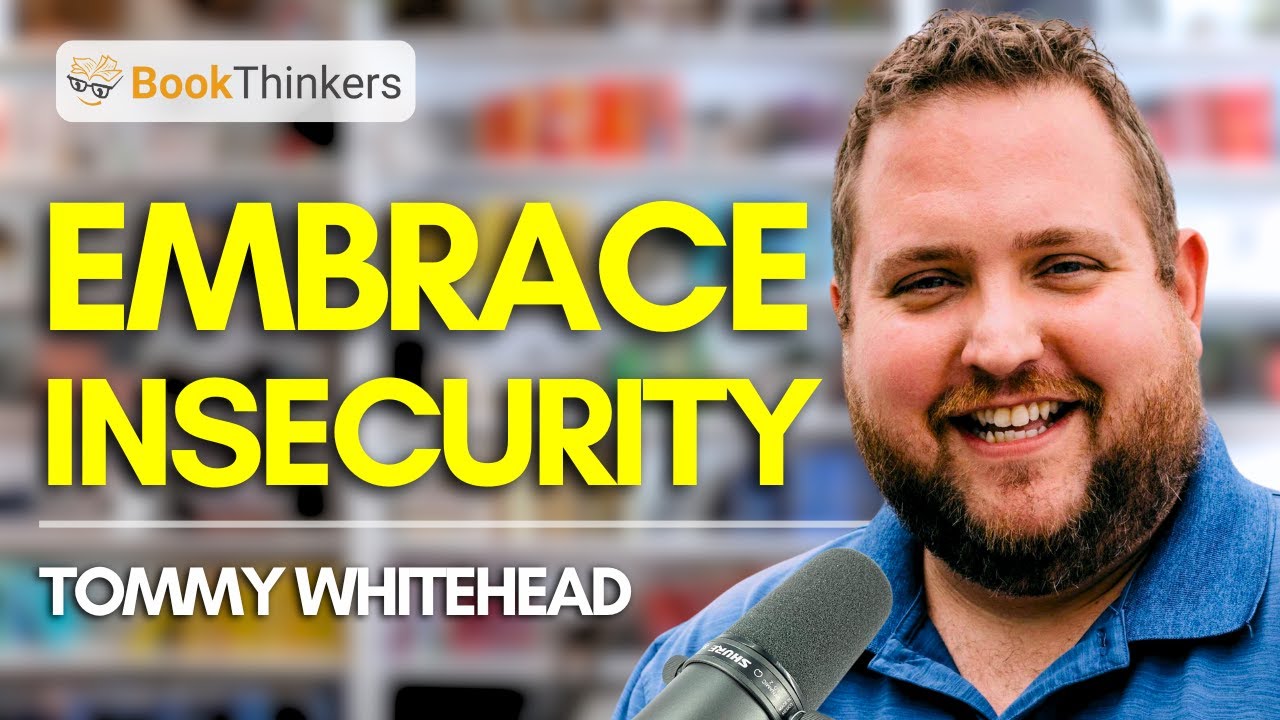
In this episode of the Book Thinkers Life‑Changing Books Podcast, host Nick Hutchison interviews entrepreneur and author Tommy Whitehead about his new book Building Success and the principles that have guided his journey from a modest upbringing to running a construction‑focused business. The conversation covers how to treat failure as a learning tool, strategies for confronting insecurity and public‑speaking anxiety, the challenges of writing a book and dealing with imposter syndrome, and identifying the book’s ideal reader—people in their 30s‑40s who feel stuck in life. Tommy explains his ironic path into the construction industry, the looming labor shortage, and how his company is developing AI‑driven take‑off and estimation software to reduce administrative burdens for architects and general contractors. He shares practical networking tactics, including the use of a digital business card (Popple), personal CRM practices, and leveraging free resources like SCORE and Small Business Development Centers. The discussion also details the ambitious three‑day Building Success Summit, framed as his 40th‑birthday celebration, featuring tours, pitches, workshops, and social events. Throughout, Tommy emphasizes the importance of communication, connecting people, and believing in oneself, concluding with a concise mantra: “Believe in yourself, keep learning from failures, and you’ll succeed.”
Chapters
So you remember your failures more than you remember your successes, if you think about it. And so as long as you're identifying and acknowledging your failure, don't be ashamed of it because we all have them. And then you learn and change something. Now, if you fail and then do the same thing over again and over and again and over again without changing your tactics or methods, that's a bad kind of failure. You're not learning anything from it. But if you know, I can't sell blue t-shirts that don't sell blue t-shirts and you try to sell them again, that's a problem. But if you know I can't sell blue t-shirts and then you go to green and you're a top-selling t-shirt provider, you learn from your failure. You know, it's so it's very important to identify what they are. And if you can't identify why you're failing, talk to somebody else and say, I'm not sure where I'm at in life. I'm not sure why I failed. Can you please, from an objective perspective, look at this and say, hey, How do you think I failed? What would you have done differently? Maybe you like their answer and maybe you don't, but if you get that, that feedback, then it allows you to change what you're doing and to move forward and to try something differently.
Tommy, welcome to the Book Thinkers Life-Changing Books Podcast. How are you feeling today?
Nick, I'm feeling great. It's always fun to talk about something that was so personal to me, and I really appreciate you being on here. You've You've showcased a lot of great books, and I feel privileged to be part of your show today.
Well, Building Success is up next. So here's where I want to kick off. When you were younger in your childhood, you didn't really realize you were poor until your backpack was compared to those of your classmates. So my question is this: how did that moment shape your understanding of poverty and success as you grew a little bit older?
Well, realizing at first what's going on, you start to feel insecure. It's like your first real insecurity in life. You're a kid and you're in elementary school, you kind of forget about it. It's when you get into middle school, and that's where this kind of started to feel different, realizing how different I was. And so it shaped me in life because I can relate to people in all socioeconomic statuses now. I don't ever make anybody feel embarrassed. about who they are, where they come from, where they are in life. It's not offensive to me to know that you were poor. It was part of my life. It could be part of anybody's life. So it's really, it's really shaped me in an empathetic way to understand what other people are going through. And it can happen to anybody. Even the most wealthy individuals could go back to that time in life where, where there was something wrong. Or in the future, something happens and destroys your life. So you never know.
Yeah, insecurity, which you just highlighted, is one of those interesting things that everybody has to deal with. Everybody has to deal with it on some level. And so I'm curious, do you have any strategies for overcoming insecurity? Like if somebody comes to you and they're really insecure about something, you're like, here's the solution, here's what I used, or Is it just one of those battles that people are going to have to face forever?
Well, I— let's talk about it from a male perspective just a little bit, because women communicate better. I mean, they're a little more effective with communicating their feelings than men are. Uh, but men, we have the exact same insecurities and issues. Uh, and so I think it's important to understand that. Um, so I'm going to use an example of somebody, um, that has an insecurity. It's, it's, you know, a younger guy that, that wants to open up and wants to feel vulnerable, but feels like they're going to be attacked. So when somebody comes to me with their insecurities, I say, okay, let's acknowledge it. It's here. You don't like it. Let's talk about that. Usually, if you verbalize it in a safe space with somebody else, it becomes less powerful. You know, I, I've lost about 100 pounds over the last year, but before that, if I was insecure about my weight, I would make fun of myself. I would take the power away from somebody else, and the insecurity went away. Because I don't— the insecurity is the fear of what other people are thinking about you. So if you put it out there first and take control of what's happening, you've taken control of the narrative. You can't be insecure about something anymore. So it, it works differently for everybody. Everybody has their own stage. But if you acknowledge it, you start to take its power away. When you hide it away, that's when it, when it festers.
Yeah, that's really interesting. It reminds me Of a strategy. So, I've always had public speaking anxiety. I mean, I think more people fear public speaking than they do death. And so, a strategy that a mentor of mine gave me years and years ago, he said, Nick, the minute you walk out on stage, highlight the insecurity, shine some light on it, tell everybody that your mentor told you to stand in silence for 10 seconds and get the awkward feeling out of the way so that you can start your presentation. And I did that and it was terrifying, but I highlighted the insecurity and I said, listen everybody, I'm working on this. This is a strategy to get all the jitters out. And everybody kind of gave a little round of applause and they're like, how cool is that? And if I tried to hide it, if I tried to keep it in the dark, right, and not shine some light on it, I think the insecurity would have taken over the rest of my speech. So that's really cool that you say shine some light on it and it will go away. Expose it.
It does. It helps tremendously. And then other people respect you because most people, like you said, are afraid of public speaking. You know, I get up on a stage and it's just like, okay, if I'm talking to 2 people or 500, it doesn't matter to me. It's just having a conversation with somebody. To get over my insecurity, I literally thought about that. All I'm doing is talking to a couple people. Now, maybe that's 1,000 couple people, but it's just a couple people to me. And all of a sudden I'm having a conversation like I'm having a conversation with you. So So you control it, but you have to acknowledge it. Don't be afraid of it. That controls you when you become afraid of it.
All right. We've already got one home run point from this interview so far. So I love it. I'm curious, did you experience any anxiety or maybe imposter syndrome while writing this book, or was it an easy process for you?
I would say both. So I I am not your typical author. I'm not your typical anything, really, but I can command an audience on stage or a small group or a networking event, and I can ad-lib and I can improv and have great conversations. Putting it down in writing, though, was a challenge. It really was. I had to realize it's just a series of stories, and then let's tie lessons to those stories and then make them all make sense over 20 chapters. So I am so grateful for my editor, Shirley Jum, because she helped me put this together. Because if I would have just written it down, nobody would have understood it. So yeah, it can't— it was a little bit of an imposter syndrome. Why would anybody want to read this? And then as people have started to read it, you know, people have previewed it, and these are people that I paid to preview it. These aren't just friends trying to be nice to me, right? I need a real opinion. So they're like, wow, this is, this is kind of interesting. We had no idea that was something you went through in life. And then I'm like, okay. That's awesome. I'm very open about my life when I'm talking personally, but there's a lot of stuff in the book that I haven't talked about openly. And so it made me feel a lot better when people recognize that and think, oh yeah, I mean, that's, that's kind of cool. Then they see themselves in the book, which is what is just very humbling. They went through a period where maybe they lost everything, lost a loved one, had a triumph, had a failure, fell forward or failed forward, I should say. So it's really cool to hear everybody else's feedback and when they're trying to relate their life story to mine, which is awesome. That's— I love hearing that.
When you decided to write this book and document all of these experiences, in your mind, who is the perfect avatar in terms of a reader? Who did you write the book for?
You know, anybody that is really nervous about where they are in life, especially probably something in the 30-year-old to going into 40-year-old range, where they're like, okay, what, what am I doing with my life? Or what have I done with my life? Or how do I get to the next stage in my life? And so I kind of just put it out there of all the scary stuff I've done, and I have failed. You know, building success takes failure. It has to happen. When you acknowledge it, it's— there you go, insecurity. When you acknowledge it, you can move forward, and it's no longer conquering you. So I really wanted to resonate with those people, men and women, but especially men, because we're taught, you know, boys don't cry. Keep yourself quiet. We don't have emotions. It all happens. That doesn't mean you need to be feminine. It is not a femininity or masculinity thing, but we do have feelings, anxieties, insecurities. And if you talk about them, especially with other guys, you realize we all have them. You're not the only man in the universe that has this feeling. And so I really like that it's resonated with people in that audience and that demographic because they can see, oh, this guy looks like he's done some cool stuff. He, he's not some feminine guy. But he has these insecurities. Oh, well, I guess, you know, it's okay that I have them. And that's— that was the point.
Yeah. One of the years and years ago when I started thinking about this podcast as a whole, I started to realize that I'd love to take each author's superhero cape off because a lot of times people come on the show, they have this amazing portfolio of businesses and all of this accredited success, and they just want to highlight that. And it's like, well, you're not super relatable if that's all you're going to do. So let's take the superhero cape off for a minute and talk about some of those failures and talk about those insecurities and highlight those things, because then your readers and the people in the audience listening and watching to this show, they can relate to you and form a better relationship and then ultimately learn from you as well. So one of the issues that I had growing up with my public education was that I was always taught that failure was a bad thing. And you just highlighted something that you talked a little bit about in your book, which is that Failure is a positive thing. You can learn from these failures and fail forward a little bit. So talk a little bit more about why failure is actually a positive thing. I'm sitting here today with Ken Rusk, who has done hundreds of millions of dollars in business. He's also sold tens of thousands of books and changed countless lives. We're sitting here today because he is sponsoring today's episode. So Ken, tell everybody about your course.
Well, thank you. I built a course called The Path to a Successful Life. It's designed around trying to get You know, sometimes you're feeling like you're kind of stuck in where you are and you're not really sure what you want your life to look like or how to go about getting it. Well, for the cost of about dinner and a movie and maybe the time you spend on a weekend, you can know exactly what you want your future to look like and how to go about getting it.
You know the power of vision. That's why you watch podcasts like this. So click the link below, get signed up, and let me know what your experience is like.
So you remember your failures more than you remember your successes, if you think about it. And so as long as you're Identifying and acknowledging your failure. Don't be ashamed of it because we all have them. And then you learn and change something. Now, if you fail and then do the same thing over again and over and again and over again without changing your tactics or methods, that's a bad kind of failure. You're not learning anything from it. But if you know I can't sell blue t-shirts, that don't sell blue t-shirts, and you try to sell them again, that's a problem. But if you know I can't sell blue t-shirts, and then you go to green and you're a top-selling t-shirt provider, You learn from your failure. You know, it's so— it's very important to identify what they are. And if you can't identify why you're failing, talk to somebody else and say, I'm not sure where I'm at in life. I'm not sure why I failed. Can you please, from an objective perspective, look at this and say, hey, how do you think I failed? What would you have done differently? Maybe you like their answer, and maybe you don't. But if you get that, that feedback, then it allows you to change what you're doing and to move forward and to try something differently.
So much value in that. So much value in that. And I couldn't agree more. Part of building success is embracing failure. How ironic.
What's the old saying? Yeah, I gotta break a few eggs to make an omelet. It's true.
Yeah, that is very true. Well, let's talk about something else that's a little ironic. As you were growing up, from what I remember, you had a little bit of disdain for the construction industry because that's where your father was working. Yet somehow you ended up building a, you know, a business in the construction industry. So let's talk a little bit about how that happened for the audience.
Listen, if you're talking about the mother of all ironies, it was right there. It was right there. I didn't get along with my dad so much. I didn't care for the construction industry too much. You know, I was brainwashed by the go to college and don't be a trade worker kind of mentality that so many people of my age We're brainwashed to believe. And right now society is having a problem with it. Not to get too off tangent, but 40% of the construction workforce is retiring and we don't have enough people to replace them because we were all told— guys my age are all told— oh, go to college and get your degree and you're going to make 6 figures. And that was truth at the time in the '80s and early '90s. It's a lie now because everybody followed the advice. So supply and demand created an issue. So Yes, it's a high level of irony. I was actually going to be an accountant. I had been a director of finance and accounting before I got into construction. I was pretty darn good at it, and it's been very helpful in my career to have that knowledge base. But I figured out that construction isn't just picking up a hammer and a nail. That's what everybody thinks construction is, but it's really not. Construction is a multitude of faceted career paths. It could be design and architecture. It could be electrical where you're really good at just connecting breakers. It could be plumbing. You could, you could see different plumbing paths and drain patterns. In my case, I'm excellent at communication and project management. I have the ability to utilize and coordinate the skill sets of other people in ways they don't have themselves independently. And I can bring it together kind of like a conductor conducts an orchestra. I can bring all those people together. I don't need to know all the electrical codes. I don't need to know all the plumbing codes. I just need to know a general level of what's supposed to be done and the professionals that execute those and then get those execute— the professionals execute together. And so I figured out I'm a problem solver, and project management is a large amount of problem solving. So thank you, Super Mario Brothers, for helping me to get through my problem-solving skills at a very early age.
I love it. Shout out Super Mario Bros. You know, it's funny because if you were to ask anybody 5, 6 years ago, they would say when artificial intelligence takes over, it's going to take over in the form of robotics and the basic stuff like flipping hamburgers and putting up drywall. That's all gonna get automated, right? Robots are gonna come in and take over. But the reality is here recording this in 2024, is that artificial intelligence has showed up and replaced a lot of the white-collar jobs, right? Lawyers and things like that. The pricing has fallen through the floor. So I know we're jumping the gun a little bit, but in the end of your book, you talk a little bit about the disruption in the construction industry. In what way is that happening? Because I know that a robot is not showing up to your house and mowing your lawn just yet.
Absolutely. Well, actually, they do have robots that mow yards now. You need to Google that. It's really cool. I don't know.
I might need one of those.
Super awesome. I saw one deployed at Epcot like 10 years ago, and now they have them commercially available. They're great. So everybody thinks a robot's gonna show up and build my house, or people in the construction industry whom are slow to change are afraid that they're gonna lose their jobs. They're not. That is not the objective. There is gonna be a little bit of that, especially in hard-to-reach area like deserts or the moon, believe it or not. In interstellar space, in space travel, they're investigating 3D structures because you can't take an entire block mason crew to Mars to build a structure. So there are going to be some instances where that is practical. Right now, we are working on, at Tomco and an affiliate of mine, an AI company, we are working on construction takeoff and estimation tools. Imagine being able to upload full sets of architectural plans and in minutes get the exact cost to build a house. Not days or weeks or sending it out to bid, but minutes. From a project management perspective, every minute we're at a desk, we're not in the field. When we're not in the field, we're not assuring quality. We're not talking to our customers as much. So when we can take out some of that administrative work off of our plates, it allows us to be in the field making sure that the level of finish on that drywall is quality. Did the inspections happen properly? Sometimes just standing and talking with an inspector can create an issue or not create an issue, solve an issue. Before it becomes one versus just having them show up and you're not there. So, so as far as disrupting the industry, we're doing something that nobody else is doing right now. And that's trying to find ways to take that administrative burden off. You know, like I said before earlier in the segment, you know, 40% of our employees are gone. They're leaving. They're retiring. We don't have enough people to replace them right now. So we have to take away to take off all that minutia, that, that data entry, all that stuff. We have to take as much of that off our plate as we can.
Mm-hmm.
So that we can pick up that hammer, that drill, those tools and get out to a construction site.
Oh, it's amazing. And who's your target kind of primary customer for this software?
So we are actually going to target architects and GCs. So imagine a GC that can take hundreds of hours off of their plate in a year by just being able to upload a plan and spit out their estimates. The customer turnaround will be incredible. And we all know that if you can provide an estimate faster to a client, they're more likely To select you for their services because they think they're going to get good service throughout the entire process if you can get them an estimate. And that's something we all struggle with as contractors is we can get out to a job site, but then trying to type it all up and make sure it makes sense and it takes a lot of time and then it could take a couple weeks before we get that done. I want to get that down to a couple minutes.
Yeah, when I was in college, I ran my own house painting business for 2 summers. I hired all my college buddies. I went door to door. And I would try to book estimates and I would go back and I would measure square footage that needed to be painted and try to like calculate it all myself and then give them an estimate. So I can imagine, you know, if there was a software where I could just plug in the dimensions of each side of the house and it told me within minutes exactly what I needed to charge, like that would have saved me so much time.
Yeah. And they have some of that technology already. It's not quite perfected, but I mean, we even have 3D imaging technology. We can go into a house, do full scans and measurements off of that. Instead of going line by line, we just plop a machine down and it takes all the measurements and puts them into our design program. It's incredible. A lot of contractors aren't doing this kind of stuff. They're very pen and paper. Let's do it the old way because we have such that generational gap. But now the new generation, my generation, your generation, we're coming in and we're— we grew up with technology. We're not scared by technology. We're okay learning new stuff. And I won't lie. I mean, because, you know, I'm 40 on June 1st, the same date that the book drops. So technology is different to me, even though it, it, it was to people that are 10 years younger than me. I feel that age difference and not able to pick up on certain things as fast. But we're trying to still be innovative and I'm, and I'm trying to be right there in the forefront of that.
There's an important lesson there, which is just stay familiar, continue to use these platforms like ChatGPT, for instance, and become familiar with them so that they don't just blow right by and you can't catch up. And I mean, listen, I'm 30 years old. I'm 30, and it's, it's moving at a pace that's hard for me to keep up with half the time.
Yeah. I mean, your, your generation actually had the iPad in the hand when they grew up, practically. We were still, yeah, we were still in dial-up. You know, internet was just coming to a household in just 10 years. Now imagine somebody that's 20 and the AI technology, and you mentioned that, and prompt engineering is a new career path that some people are contemplating. That's actually how you tell the computer the instructions. It's like being a teacher. And I've actually become pretty adept at prompt engineering to give instructions to a large language model so that they can do things for you. But it's the equivalent of sitting in front of a classroom and reading a book and teaching somebody how to do something is the same thing you have to do to the computer. And that is something even the 30-year-olds are having problems with, but the 20-year-olds are already picking it up. So it's, it's very interesting. We've never seen a change in technology Like we have in the last 20 years.
Well, let's talk about another big change. As I shared with you before we press record, there are a lot of early-stage entrepreneurs in our audience, but also aspiring entrepreneurs. And at one point in time, you were an aspiring entrepreneur transitioning from employee to business owner. And so could you talk a little bit about that experience? What are some of the challenges that you had to overcome growing your business today, and what are some of the lessons learned?
So I think the biggest challenge for every entrepreneur is thinking you have to do everything yourself.
Mm-hmm.
I can't afford 2 full-time employees to do this, so I just won't do it, or I'll figure it out myself. People get themselves in legal problems. They get themselves in financial and tax problems. They get themselves in the sales slumps and cash flow problems because they don't ask other people for help. You don't always have to pay for that help. And there's— that's a secret, right? Go to the local small business development center. Here in Tampa, we have the USF Small Business Development Center. Free consulting to do business plans, marketing, SEO, budgeting and planning, viability studies, whole bunches of things that you can get from free consultants. There's a local SCORE Center, S-C-O-R-E, and they're national as well, and they have the same resources. Your local chambers might have information. Don't try to do it all yourself. Even, even the genius CEOs that are those billionaires at 20-something, Even those people had a lot of help around them. You can have a great idea, but you gotta be focused on what you're really good at. If I'm really good at project management, I shouldn't be painting a house. Can I paint a house? Yes. Could it take me 3 times as long as it might take you to paint a house?
Yeah.
But can I project manage 20 projects at a given time? Oh, yeah, I can do that better than any painter could any day. So you have to find out what it— what is your specialty? And there's a book out there. 10x is easier than 2x. And I, and I, I drew a lot of inspiration from it. And it says focus, focus on the 20% that you're really good at. And it frees up so much time when you give that 80% off to somebody else and you end up making more money. You end up doing better. You become more educated. Be good at what you're good at. Don't be good at everything.
Yeah, ask yourself that question that they highlight in the book. Who can help me with this? Not how can I do it myself? And I think that's the first question you've got to ask when you're looking to delegate. And by the way, I also love that book. It's a fantastic read. Yeah. I wanted to ask about, oh, you mentioned in your book that when you were younger, you were more introverted and you didn't really catch your groove until your 20s. I was sort of the same way. So how did you get out of your shell a little bit more? How did you start to network more efficiently and sort of improve your social skills?
So I— it was about my mid-20s where I started getting better at it, and by now I'm a pro at it. It was difficult at first because let's go back to insecurities. I was insecure about things. Did I not look right? Was I not smart enough? Would I know what these people are talking about? So I started getting out of my shell just by going to events here and there. Sometimes it was just office parties, socializing more with people in your immediate circle, and then going to networking events and start talking and And don't be overwhelmed by an entire room of people. If you're not a networker and you walk into a room with 75 people, it is overwhelming. Pick one person, especially a person standing by themselves, because they're probably in the exact same spot where you are feeling awkward, feeling nervous, not knowing how to introduce themselves. And I do that still consistently to this day. If I see somebody standing in the corner scrolling on their phone in a networking event, that's usually the first person I go to talk to. They usually have something interesting to say. They're just not confident in saying it. And so I would say, have a little faith in yourself. You're not gonna goof this up. There are at least half the room is there is just as nervous as you are. And that's okay. But what are you gonna get if you sit home? You're not gonna get the new client. You're not gonna get the new subcontractor. You're not gonna get the new educational opportunity, the volunteer nonprofit opportunity. You're not gonna get the new vendor. You're not gonna get anything if you're just sitting at home. So just being there is a win, and if you screw it up, just try again and try again and try again. It's okay. You're really not gonna mess up. Walk up to somebody and ask them about themselves. If you're nervous about talking about yourself, that's okay. A lot of us can be. Hey, I'm Tommy. Nick, nice to meet you. What do you do, Nick? Oh, I, I run Book Thinkers. Well, what is Book Thinkers and what does that do? Can you tell me a little bit about that and what your good client is? Let them talk about themselves. You'll find people open up to you very, very quickly. Then that gives you a minute to calm down and you're comfortable to open up about yourself.
That's amazing advice. I have been saved in the corner of networking events while scrolling on my phone by people like you who recognize that I'm just there to share. And if you come up and strike up a great conversation with me, I'm happy to tell you a little bit more about what I do and see if I can help you as well. And I think one of the best tips too is know exactly what you need help with. when you're at events like that. Yeah, sometimes you'll say, what do you do? What can I help with? You know, I'm just here to meet people. And it's like, well, if you just told me your problem, I might be able to help you solve it. So that's something that I've learned over time there as well. Now, have you joined any groups like Toastmasters or anything like that?
No, I haven't been a member of Toastmasters. So I am a member of an executive business club here in the city of Tampa called the Tampa Club. Uh, it's on the 42nd floor of the Bank of America building. It's a very high-end facility, but it's Not a dinosaur club is like I used to say, you know, I don't want to join the old white guy club. That's not where, where my business is going to lie. No, at the average age, I think is in the early 40s. 80% of the people are in the workforce. It was the demographic and the people I wanted to be with. And I just went socially. I didn't go for work. I went socially. Then I went to the networking events and then other members, you're part of a club, they start to like you, they start to get to know you, then you start Building relationships, and after 1 year I was appointed to the board of directors. And that is only because I put so much effort into just showing up, showing my face, and, and to keep repeating. So I am a member of BNI. It's great for certain professions to get out there. If anything else, if you go in for a full year of BNI and you don't get a single referral, which is rare, but if you didn't, you get a full year worth of networking education of how to present yourself, how to do a 30-second pitch, how to How to identify what other people need, and that education in itself is very valuable. There are a myriad of other networking organizations you can join. There's local chambers. I'm a member of the LGBT chamber here. There's the Tampa Bay Builders Association. There's National Association of Remodeling Industry. There's all different types of chambers, events, and things you could do. Now, only go to something if you're gonna be able to go to 2, 3, 4 of the events in a row. Because it's repetition. It's just like practicing a sport. You don't run out into a soccer field and expect to score a goal on your very first kick of a soccer ball. You're probably not even gonna hit the damn ball. You're probably gonna kick and fall on your butt. That's okay. But when you go over and over and over again, you start to get used to it. You're more comfortable, and then you're hitting those goals. It's the same thing with networking. People start to realize, oh, I saw Tommy. He's the contractor. He talked about a flood he was working on. He had a stressful day last week because Some house burnt down and he had to go and help a client and he was really sad. Oh, let's check in with him. Oh, oh, I saw Tommy the last 3 events. Oh, that's right. I saw Tommy again last, this 4th event. Oh crap, my neighbor just had a fire. Let me go over and give him Tommy's number. That's how that works. So it's just, just keep trying. It's okay. You're not gonna succeed. You're not gonna hit it outta the park the first time and that's fine.
Do you keep any type of personal CRM, like customer relations management tool where you're taking notes on the people that you meet and putting in the business card info Or is it more just show your face, develop those relationships, and the people that you need to know, they'll stick out?
I do a little bit of both. I have some people helping me with the CRM system now because I meet so many people. But CRM systems are important. But here's a quick, another quick tip. Popple, P-O-P-P-L-E. It's a digital card. You can do it for free, or you can pay about $100 for the year and get the advanced version. It's, it's It provides a QR code for you that you can put on your watch, your smartwatch, or you can buy a Popple card where you can tap it. You can also scan business cards right into your CRM system and you can make notes. And when you scan or connect with somebody on Popple and say you do it like, say I'm in the Tampa club, it records where you met them. So sometimes I might meet 3 Nicks in a week and I remember each Nick, but I don't remember which Nick is which. Until I remember, oh, I met Nick at the Tampa Club. Yeah, I know he's the guy that's the author. He's the editor. He's the show, the podcast host, not the Nick that's the concrete guy. So it's, it's very simple. It's very inexpensive. And then just keep little notes. And if you come away from a conversation hearing something important to somebody, you know, I had, I had a person that I met, really, really cool guy. He collects Nintendos, all the original Nintendos, and I played all the original Nintendos. And he was missing one system. I happened to be in a store. It was like a retro video game store, and they had that system, and I had to buy it for him. It was just— he's such a cool guy, and I really wanted to do something. And so I dropped it off of his office, and I got a call. He's like, oh my God, Tommy, you got me the, the Super Nintendo system. Thank you so much. I can't believe it. Where'd you find it? So it was just giving a little bit of thought, but it could be things like birthdays, colors, cakes. Food that they like. You might both like NASCAR, like to go fishing, little notes like that. It's really great to recap your conversation with somebody with a quick text or email. Hey, Nick, it was a pleasure meeting you last night. It's really cool that you like 10X. Here's another book that I read that's like 10X you might like as well. Have you read it? You just make that personal bonding connection and you create that rapport. It's, it's once that rapport is created, then it's a genuine relationship. It's not just a shake your hand, hi, I'm a contractor, call me if you need anything kind of relationship.
Yeah, I love how you went from introverted, finding your groove in your 20s, to like totally mastering networking and sales and joining networking groups and everything like that. I mean, do you think that mastering communication is vital for growing a business like the one that you have today?
I think the more perfected your communication skills are, the more perfected your business skills are. I will tell you that personally, being a connector, just introducing other people, has been one of the most successful and beneficial things I've been able to do for my company. I was a part of one nonprofit, and another nonprofit was raising money for shoes. I used my nonprofit just to post a couple messages. We raised $2,000. Then I got a call. Hey, we got some shoes to donate. Yeah, cool. How many? Oh, we have about $30,000 worth. We're a supplier and we can't sell them anymore, and we just need to get them out of our warehouse. $30,000 worth of shoes and clothing donated to people in the foster system, to orphans, to people that are refugees, because you just connected to people. And so don't focus on what it's for you. Just meet people and introduce them to each other and connect people when you can. But that connection, those level of communication skills makes me stand out of any, any crowd, whether I'm in the construction industry or whether I'm attending a finance conference, whether, whether I'm going to an art gallery. Those, those skills, they, they just really benefit you. And you can't measure it. It's just insane. So practice, practice makes perfect on that.
Yeah, it really does. And just to highlight sort of the arc for everybody, you grew up in a mobile home. And now I want you to tell everybody what you're doing for your 40th birthday party, because it was the craziest 40th birthday party plan that I've ever heard somebody put on. It's so cool.
So it was going to be a little party, you know, a book launch on June 1st. And then we got talking with people like I do, because I'm a talker, if you can't tell. And we developed the Building Success Summit. Which is now a 3-day weekend with sponsors. On Friday, it kicks off with a special sponsor tour of Tampa, taking them behind the scenes in the Florida Aquarium and actually taking them on an in-tank dive, a gourmet chocolate tasting, Florida Key Lime sparkling wine tasting, private dining room in a 100-year-old restaurant, and a nightcap at the Tampa Club overlooking the clouds at the 42nd floor. Saturday is gonna be a pitch session. We've got 6 companies pitching their business ideas to investors. We got silent auctions, vendor fairs, book signings, open bar, food trucks. And after a couple speeches, we are going to have a Rocky Horror Picture Show live shadow cast performing. And then Sunday is a cabaret brunch dockside, and we are gonna tour multimillion-dollar yachts, one of which had the stateroom designed by Versace himself, and we're going to have a dockside brunch party. And for those same sponsors and some of those investors, we'll do a sunset sail on a private yacht chartered for that evening. We're going to add in some other seminars, workshops, and a couple other things that are coming up. We're still fine-tuning the details, including maybe even a component for an athletic workshop to help athletes kind of perfect their trade and become better business people. A lot of really cool stuff going on, but I wanted to help other people build their success as I'm building my success. And I thought, okay, I'll just invite 350 to 450 of my closest friends to come and hang out at this building success seminar or summit. And that's kind of just how I decided to throw my birthday party.
All right, Book Thinkers family, you heard it here first. When I turn 40, I'm going to throw something like that and you'll all be invited.
That's amazing. I'll be there. I'll be there.
Well, yeah, you'll be turning 50. Time flies.
I will be. Yeah.
As we wrap up, somebody's— they're in the audience. They've listened to you. They're like, I really love Tommy's energy. I love some of these concepts from the book that we've talked about so far, but they're just on the fence. They're like, I don't know if it's the right fit for me yet. What else should somebody know about your book so that they can make the right purchasing decision?
So if they want to hear a couple of quirky stories and how they relate back to life, it's definitely fun to read. You know, some of the chapter titles, look at the chapter titles. We'll be posting those out there soon. But one of them's How I Taught My Mom Algebra.
Yes.
You know, so it's a very, it's a very role reversal. It's a very different book. I'm not your typical guy. I'm not your typical networker. If you're on the fence, Is $20 gonna kill you? What could you learn from it? Could you get a good chuckle? It takes $20 to go to a movie right now. So $20 for a book's not so bad. And I'm a, I'm an excellent connector and I'd love to connect with people that are reading with me, especially on LinkedIn is one of my highest level connection platforms. And I would love to connect with, with people. I love to chat with them and we're expecting to have future Building Success Summits. So if it's something that resonates with you in the book and you can't make the one on May 31st to June 2nd here in Tampa, Florida, Uh, then, then maybe there's future ones. Connect out with me and, and tell me what's going on with you. Uh, you never know what connections you can make. So if you want somebody that wants to engage with you, it's a cool book to read. Um, if you're a very boring individual, then please don't buy this book. Like, like boring people are not allowed to—
Boring people not allowed. Some reverse psychology.
I'm a little more— Tommy, you're not supposed to tell people that. It doesn't work when they know it. I'm not boring.
Let me buy it right now.
I'll show you. Show me, show me 10 or 20 times. That's fine. You got to really prove me wrong.
Yeah, just 10 or 20 times. Show all your friends too.
Yeah, that's right.
I've got 2 final questions for you before we wrap up today. Question number 1, where should people go to buy a copy of the book and to learn more about you? You mentioned LinkedIn. Where else should people go?
So tommywhitehead.com has got all my social handles, some of the stuff I'm up to today, links to my business websites, and it's got 2 quick preorder links for you. You can get it on Amazon and Kindle right now, um, or you can get the paperback copy, uh, preordered at Barnes& Noble. After June 1st, they'll be available on Amazon as well, and we'll update those links. But tommywhitehead.com is always going to have your updated information.
Okay, we'll have that in the show notes. And then the last question I'm stealing from My co-host who's not here today, so I'm going to do my best to ask it anyway. He normally likes to ask something like this. So, Tommy, imagine you get deleted, right? You disappear, the book disappears, all of your talks disappear, this 40th birthday party disappears, but you do get to leave the world with just one single message. Imagine it's up on a billboard. What would you like to leave the world with?
Believe in yourself. You got to believe in yourself.
It is—
you'll fail. You won't be successful all the time. But if you keep on chugging, keep on believing in yourself, you'll get there.
Yeah, learn from your failures and believe in yourself. Absolutely. Build success and you'll come out on top.
Exactly. See, you're reading it right off the script. I love it.
Thank you, Tommy, for coming on the show today.
Nick, it was my pleasure. I love this conversation. It was a lot of fun. Maybe a little too much fun. Maybe taper it down for the next one just so you don't scare anybody off. But, but yeah, that's pretty good. I give you, I give you a 5.
Tommy's next book, Reverse Psychology for Business or something like that.
Don't buy this.
Don't buy this book. Call Shirley.
It's already a bestseller. I can just see it.
More from Nick

Napoleon Hill’s “Think and Grow Rich” is a timeless classic #selfhelp #personaldevelopment

4 Books to Help You Get Better at Decision Making #selfhelpbooks #bookrecs #nonfictionbooks


Have you read this book yet? 📖: The 5AM Club by Robin Sharma #selfhelpbooks #robinsharma

Dan Sullivan on Listening to Your Customers Instead of Watching Your Competitors

5 Books That Will Boost Your Financial Intelligence #financialfreedom #nonfictionbooks

The People That Preach the Loudest About Virtue are Usually the Most Power Hungry



Books are the greatest mentors you can find #selfhelpbooks #businessbooks #successmindset

Let’s fight this toxic instant gratification culture together 📖 #selfhelpbooks #jimkwik