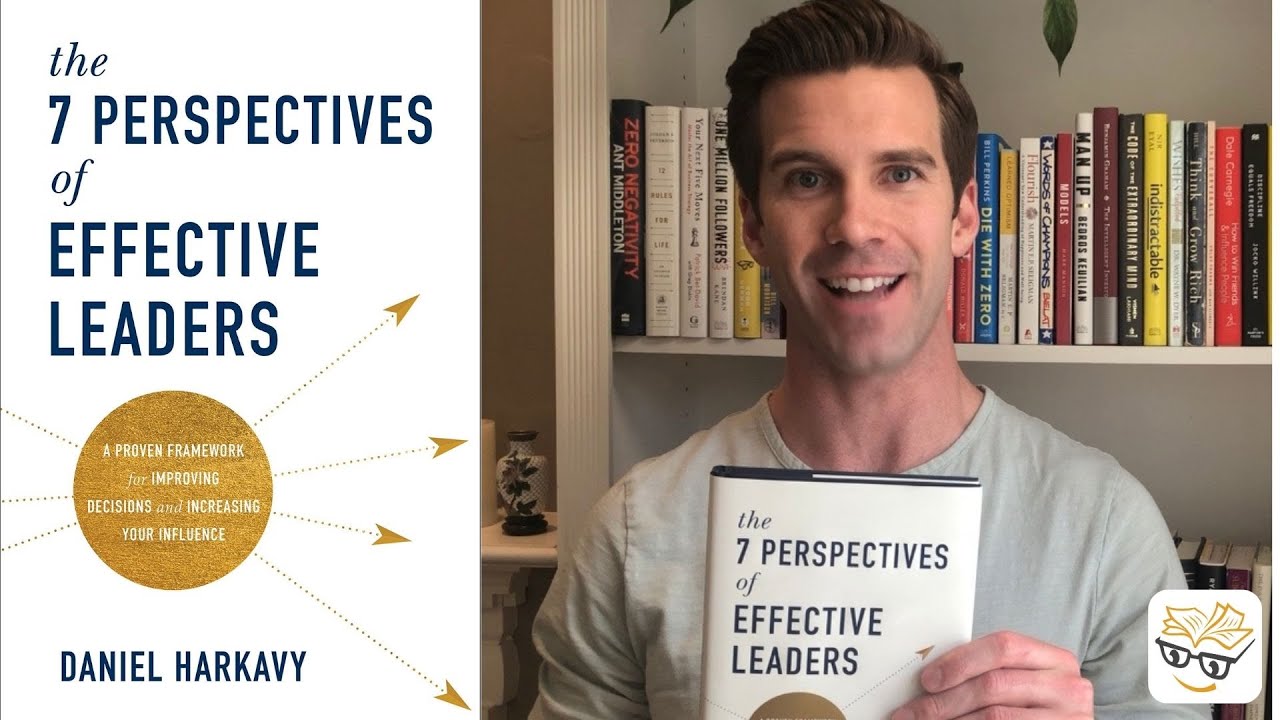
In this YouTube review, Jimmy from the Book Thinkers channel introduces Daniel Harkavy’s book The 7 Perspectives of Effective Leaders. He opens with a Karate‑Kid analogy, explaining that just as Mr. Miyagi’s seemingly unrelated tasks combine to create a skilled fighter, the seven leadership perspectives must work together for effective leadership. Jimmy stresses that leadership effectiveness hinges on two factors – the decisions a leader makes and the influence they wield – and that self‑leadership precedes team leadership. He then walks through the first six perspectives: (1) Current Reality – a deep, honest assessment of where the organization stands; (2) Vision – a written, magnetic vision that answers “what we belong to, who we will become, what we will build”; (3) Strategic Bets – risk‑taking initiatives that bridge the gap between reality and vision; (4) Team – ensuring every member feels heard, with listening highlighted as the top way to show care; (5) Customer – truly understanding customer needs and using past experience to serve future customers; (6) Role – clarifying the personal contribution that adds the most value and committing to personal growth. He teases the seventh perspective without revealing it, urging viewers to read the book to discover it. Throughout, Jimmy recommends the book for business owners, CEOs, and corporate team members, noting he will apply its ideas in his own business.
Chapters
Are you looking to improve your leadership skills? Hey, Book Thinkers family! My name is Jimmy, and I'm reviewing The 7 Perspectives of Effective Leaders by Daniel Harkavy. This book can really help you connect the necessary leadership dots so that you can focus on the right things for your business or generate ideas for your team, organization, or community. In the classic movie The Karate Kid, Mr. Miyagi begins teaching karate To a young Daniel LaRusso through a series of seemingly unrelated tasks such as painting a fence or washing a car. You might remember the wax on, wax off. None of these tasks would have much effect by themselves, but combining each movement together is what makes for an effective fighter, much like each of these 7 perspectives of effective leaders do not work singularly, but only collectively as a whole. Your leadership effectiveness will be determined by just 2 things: the decisions you make and the influence you have. It's important to note that self-leadership always precedes team leadership. It's about eliminating distractions that drain your energy and have— and having the confidence that you are getting the right information from the right people at the right time. The first perspective is current reality. Where does your company, team, or organization currently stand? A lot of leaders overlook this. What type of talent do you currently have available to you? What is the culture or health of your team? What does the first impression of your brand speak about you and your team? What's working well? What's not working well? Failure to understand current reality can kill your business. You can never delegate current reality to anyone else. The second perspective is vision. Your vision needs to be in writing and shared with your entire team so that everyone is on the same page about the direction of your organization. The vision needs to be clear and compelling. Does your vision have magnetic pull power? What is magnetic pull power? When you read this vision over and over, are you gravitating and naturally going towards this vision as you read and you're getting more and more ideas? 3 important questions to ask for your vision development are, what do we belong to? Who are we going to become? What are we going to build? The 3rd perspective is strategic bets, which are initiatives that add to or differ from how your business operates today. Strategic bets are grounded to your current reality An anchor to your vision. Strategic bets are designed to close the gap between your current reality and your vision. Strategic bets take us out of our comfort zone. They're not a guarantee. That's why it's a strategic bet. You may win, you may lose. All great leaders take risks. The 4th perspective is the team. Understand that everyone in your organization needs to be heard and feel like they have a voice in where your team is headed? How do you create casual conversation with the people of your team that communicate empathy and trust? My favorite part of this perspective is Daniel's note that the number one way that people can show they care about their people or their team is how we listen to them. The 5th perspective is the customer. We need to understand our customers, what they truly need, and how our service, product, or subscription can properly guide them to meet their goals. What can you take from, you know, past experience from past customers and how you treat your future customers? The 6th perspective is your role. Get clarity on what you do personally that adds the most value to your team or organization. You need to grow and evolve personally just as your organization does. The 7th perspective was my favorite perspective. I'm not going to mention that now. I highly recommend reading The 7 Perspectives of Effective Leaders to find out what that 7th perspective is. This book was awesome. I highly recommend reading it whether you're a business owner, CEO of an organization, or a member of a corporate company. You can bring and implement ideas from this book And I'm going to be using it in my personal business as well and implementing ideas with my team.