The CEO’s 100-Day Playbook for AI, Climate, and Societal Shocks with Caroline Stokes
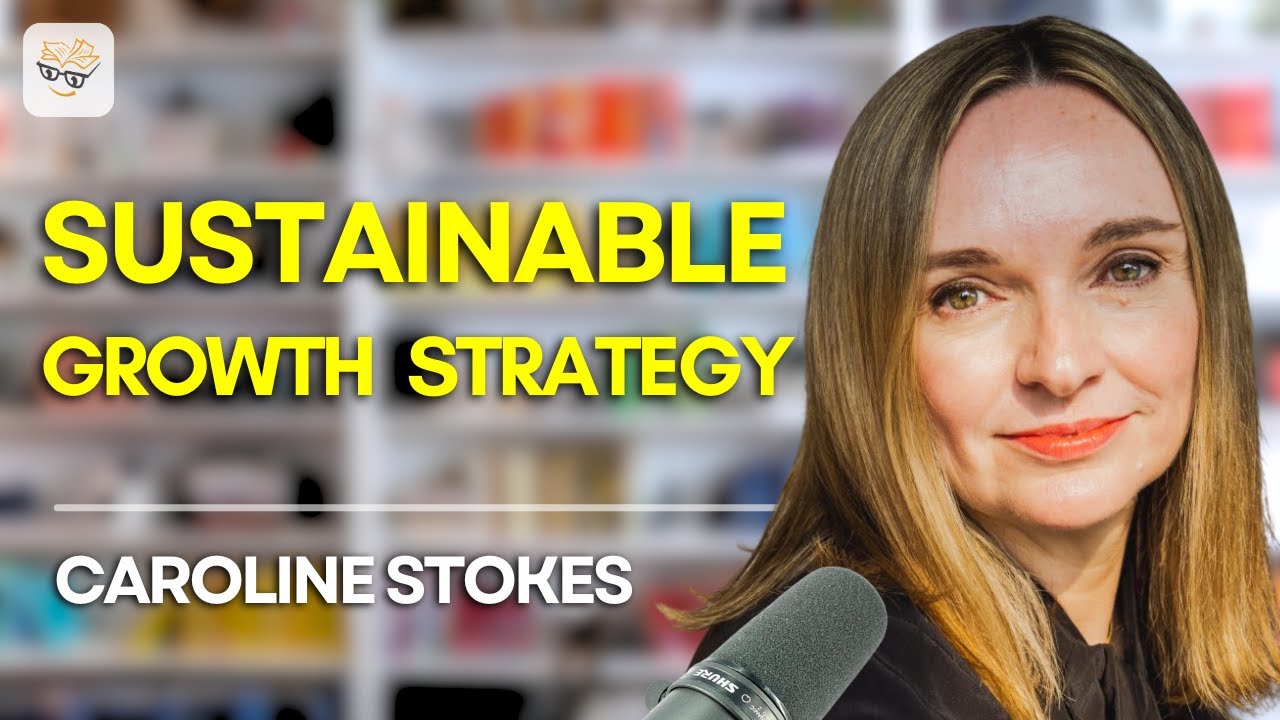
In this 30‑minute interview on the BookThinkers Life‑Changing Books podcast, host Nick Hutchison talks with Caroline Stokes, author of Aftershock to 2030, about the urgent need for CEOs to re‑engineer their organisations for the converging shocks of climate change, artificial intelligence, and societal upheaval. Stokes explains that CEOs have a moral obligation to shift from the old, top‑down, profit‑first paradigm to a sustainable, human‑centred model that integrates human‑capital development, technology innovation, and ecosystem redesign. She outlines the book’s three‑part structure – a diagnostic of the current state, a deep‑dive into AI, trauma‑informed leadership, and systemic pressures, and a concise 100‑day implementation program that can be executed by any leader without a PhD. Drawing on personal experiences of cultural displacement from the 1970s through multiple economic crises, Stokes illustrates how rapid, generational change creates a “culture shock” for leaders. She also discusses her decision to publish the book only as an ebook and audiobook, providing detailed carbon‑footprint calculations that compare print versus digital formats, and argues that publishing, while a smaller emitter than aviation or cement, still contributes significantly to climate debt. The conversation touches on neuroplasticity as the engine of growth, the importance of empathy‑driven, trauma‑informed leadership, and practical steps CEOs can take—human‑capital development, technology adoption, ecosystem collaboration—to evolve faster than the surrounding chaos. The interview ends with Stokes sharing where listeners can purchase the digital versions of her book.
Chapters
that the very disruptions that leaders must embrace instead of complaining about them and arguing about them and pretending that they all go away, we have to understand that we need to develop human capital development, technology innovation, and an ecosystem development. Because if we don't reinvent all of these systems collectively, which is very hard to do when we know that we have collective burnout, we're in this very tricky situation. situation that we don't know how to do that. And it's hard for people to let go on how to do that, which is why I wrote the book. So CEOs are able to quietly, confidentially have a book to quietly read, understand how they need to shift so they can come into the meetings, uh, you know, their Monday morning meeting and say, okay, I've had, I've had some thoughts about this. This is the, the way that we need to go. Because as we all know, No, very— it's very rare for CEOs to say, okay, let's get an entire leadership team in here to help us figure out how to deal with this kind of change, because change is really, really hard. And really, this is why I wrote the book, to help CEOs realize they're able to make that change happen, and their children's children are gonna be so grateful to them for making that shift.
Caroline, welcome to the Book Thinkers Life-Changing Books Podcast. I'm excited to interview you today and talk all about your new book, Aftershock to 2030. So here's my first question. The dedication to your book reads, quote, for your children, because they will live with honor and breathe the choices you make today. Why did you decide to write the dedication in that format and what does it mean to you?
Thanks for asking that question and thanks for having me. So when I wrote this book, I started writing the book in 2024 and I could tell from forest fires and I could tell from our deep addiction to capitalism and consumerism and the way we were living and the way we were building our businesses that we weren't focusing on building a future for our children, for my children's children. And I have a 22-year-old and an 18-year-old and they want children and I'm scared for them. And I think every generation says that about their children and their children's children. But in particular now, when I heard in 2023 that from the UN that we had until 2030 to reverse the climate catastrophe that we are basically on the edge of before it becomes irreversible. And, you know, we all look left and right saying, well, how are we gonna solve this? How are we gonna do something about it? Are we expecting governments to do something about it? I'm recycling, I'm doing this. How am I able to support what I need to do? Meanwhile, there have been so many shifts for ourselves at work. AI has been coming in. A lot of people feel under threat that they're going to have their jobs taken by AI or they're trying to future-proof themselves so AI can't take their jobs. And really all of those attitudes, I believe we need a mindset shift. And that mindset shift needs to be along the lines of we are in a world where we are going over the cliff edge that is going to be irreversible, where maybe our houses are not going to be, we're not gonna be able to maintain our houses. We may not be able to be insured for our houses. They may be blown away by the next climate catastrophe, or we are going to be too hot to be able to have an enough to have the right soil, to have supply chains bring us food, how the heck are we going to solve this? So this is where I did some very big thinking. And I went to MIT on 2 occasions to work on business sustainability, which in other words is environmental, societal, and governance, but hear about how the businesses can adapt for this climate shift. In the meantime, Shortly afterwards, I then did MIT's course on AI for Business Sustainability and Strategy, brought all of that together with the solutions that I had learned with my coaching experience and what have you. And I came to the end of it going, it is the CEO's moral obligation to adjust the direction of their organization to create a sustainable business model for people plan it and to ensure that they're able to profit from it.
I've— well, thank you for answering that question and very clear answer. I've read a number of books talking about different leadership styles, but from a different perspective. I mean, I think we all know that in general, and I'm about to make a generalization, we're moving away from a top-down leadership style into what a lot of people call a servant leadership style. And people focus on culture and employee engagement in different ways. But your book is really the first book that I've been diving into and reflecting on that talks about things from a sustainability perspective. Now, you said there are a lot of CEOs that are resigning from their jobs because the pressure to adapt to this new way of thinking is just too much and it's happening too fast. Can you talk a little bit about some of the pressure that these CEOs that you're studying are going through?
It's a systemic answer that I have for you here because We're going from one paradigm to another. It's happening pretty abruptly. All the warning signs were there back in the, you know, 5+ years ago, just before the pandemic. And, you know, good, healthy organizations were adapting, usually in finance, usually in biotech. All of these very big industries were going down that particular path to bring in AI or to bring in ESG governance and what have you. And they've done very well. The, the CEOs in that, in those environments have typically done pretty well. Um, but everywhere else, because it's been so volatile since the pandemic, uh, even the World Economic Forum just yesterday or the day before, so that would have been the 23rd of September, uh, it, it published a p— a very sizable report for September 2025 specifically talking about The shocks, they've actually used the term shocks, which made me pretty happy considering my book is called Aftershock to 2030. The shocks that have happened and now we're at this tipping point to use Malcolm Gladwell's phrase, which is that we're at this tipping point where we need to get used to this new shift. We're not going back. We've got AI, we've got the environment, we've got all of these different aspects and we are looking to our— and let me just add on there, the societal dysfunction that we are now having because, and when you, include all of those 3 systems, you have to then understand that you have to operate your business in a very different way. And most CEOs were trained for the old paradigm. The new paradigm is going to be very easily understood by the, what I call the AI-native generation, which will be Generation Z, Generation A, as they come in. Millennials as well, to a degree, are going to be able to adapt. But the real opportunity here is for CEOs to make the shift now. And it's a mindset shift. It's an in-body shift because we're so used to working in a particular way that to abandon that is going to feel like the greatest culture shock of anyone's career. So yes, this year has been huge. We've had Edelman Trust Index talk about the era of grievance and the lack of trust in corporations and CEOs. There have been— there's a lot of societal unrest with what's happening globally. It isn't just North America. You just have to look at Europe and Asia and various other parts of the world to know that this is a global phenomenon. This is not a localized situation. And it is a lot for normal human beings to be able to deal with, but also with CEOs, just to go back to your question. CEOs being able to adjust the sales fast enough and through their own organizational system, because not only do they, CEOs, need reinvention, their employees need reinvention, their supply chains need reinvention, their products need reinvention to ensure that it's compatible with all of the different requirements from an environmental perspective, climate perspective, supply chain perspective, supply chain perspective, et cetera, is profound. And I think this is why there have been such— there's been such whiplash in 2025 in government and economically, and why we're all a little bit shocked, to say the least. And the faster CEOs and their teams are able to realize that this is the reality that we are in and not just say, okay, well, this is it, let's just give up. You know, we'll just keep on shifting this product until, you know, we're done. It's a case of really reinventing from the inside out in probably the most exciting way that we've had since the last industrial era.
Well, speaking of since the last industrial era, over time, there have been big shifts and changes and new paradigms are put in place. Yeah, I think that as you're highlighting, I think for a lot of CEOs, they're getting that wake-up call today, really for the first time in their career, that a big change is happening fast, not gradually. But talk to us about your experience, because you had a unique upbringing in that you went from England to Singapore, back to England. You got to watch a country and a society and a way of life change so fast, and it was shocking to you. Now, I'm sure for those living in England at the time, it didn't feel shocking because it was happening gradually. But what was that experience like for you and what kind of impact did it have on your young mind?
Yeah, take me way back to the '70s. I appreciate that. So one of the things that we all don't realize until it's too late, it's called the— I'm sure you've heard of this on countless occasions. It's the boiling frog parable, which is you don't realize the environment or the situation heating up to becoming, you know, that you can't escape until it's too late. It just becomes the norm. So I was very lucky. I was very, very young in the 1970s, and so young— I was, I was 5— and went from living in the UK, moving to Singapore only for a few years, and then came back to, uh, to not having any cultural understanding about what was actually happening in England. And then, uh, also when I was living in Singapore, it was just a different environment. I felt very safe. I was able to walk around anywhere. I was able to do anything. And there was just a completely different perspective, a multicultural perspective that I hadn't experienced. I went back to the UK, 1980, and, uh, found, found it an impossible concept, which was that the, the people in my school were very racist, uh, because I came from a different place. Um, I was considered an outcast because I didn't speak the same language or have— I did speak the same language, English, but I had different cultural, uh, aspects or experiences and wasn't able to speak, you know, the schoolyard speak, etc., etc. And I could see all of these systems around me being so different. And when you're so different, you have to adapt. And you never really lose the previous experiences that you have. You just learn to adapt. You become a chameleon. And then lots of different things were happening in the UK at that time. There was hooliganism. I remember I would go to soccer matches, as we say in North America, but in England it's called football. Went to football matches and, um, very quickly realized it was not safe to be there. It was not safe, uh, because the, the, the environment at that time with, uh, Thatcherism, it was just creating a really negative environment to be able to, to walk anywhere, uh, in those kind of environments. It did not feel safe. There was violence on the TVs. Anyway, fast forward to that. I went to college to do my business qualifications and it was just at the tipping point. It was just on the edge of the recession, the very first recession that I experienced in 1989. And I could see then, you know, how challenging it was for people to be able to pay their mortgages. There were a lot of people were losing their properties because the mortgage rates went up something like 12 points or something ridiculous. It was a very, very dark time in England. And at that time, I was also working, working at that time at Virgin Interactive before working for Sony to launch the PlayStation in 1995, and could see the disparate, different cultures that were— and people that weren't adapting even then to email, moving from fax to email, or moving from email to the internet and researching and moving, being able to move a lot faster to be able to gather that level of information. So all of those experiences, and we all have them, we just don't often remember them, to realize that we have experienced profound change in our lives. And, you know, through to 9/11, through to 2007, to the Lehman Brothers situation, through to the pandemic and to where we are today, we've all gone through these seismic economic challenges that have impacted us so significantly. It meant that we had to potentially relocate country to find employment. That was something we had to do back in 2005 when there was a recession from the UK, moving here to Canada. All of these different things impact our ability to survive. And right now there is this huge migration and it's It's— I wish I could just remember it. I've just lost my words. But there's a huge migration of people from the Global South moving to the Global North, which is also creating a lot of unrest because of overpopulation and, you know, people not feeling like they're able to have access to gainful employment and all sorts of things like that. So there is incredible unrest at a scale that we've never experienced in our lifetime before. And when you account for that scarcity of maybe food supply and people's ability to be able to buy and consume what they once used to be able to do, there are so many mindset shifts and habits that need to and will inevitably change. But the problem is, is that we're not all collectively in that boat like we were, for example, with the pandemic where we all had to nod our heads and say, okay, the majority of us have to go and get a COVID shot. So we're, you know, so to ensure that we don't break the system if we're all ill at the same time. And, you know, we haven't had that kind of collective global agreement of ensuring that we do the right thing. And we're, I think we're on that tipping point right now. Just have to look at the World Economic Forum, what they're trying to do right now with regards to sustainability and leadership and the kind of language that they're using. And I'm just gonna bring up that, the notes that they said. So Philip Grosskirth, he's the insight leader at the World Economic Forum, and he shared the chief economist's latest report just this month. And what he says is that the very disruptions that leaders must embrace instead of complaining about them and arguing about them and pretending that they all go away, we have to understand that we need to develop human capital development technology innovation, and an ecosystem development. Because if we don't reinvent all of these systems collectively, which is very hard to do when we know that we have collective burnout, you know, we're in this very tricky situation that we don't know how to do that. And it's hard for people to let go on how to do that, which is why I wrote the book. So CEOs are able to quietly confidentially have a book to quietly read, understand how they need to shift so they can come into the meetings, you know, their Monday morning meeting and say, okay, I've had some thoughts about this. This is the way that we need to go. Because as we all know, it's very rare for CEOs to say, okay, let's get an entire leadership team in here to help us figure out how to deal with with this kind of change because change is really, really hard. And really, this is why I wrote the book, to help CEOs realize they're able to make that change happen and their children's children are going to be so grateful to them for making that shift.
Beautiful answer again. And there's a synonym to the word change that you used in the book a couple of times, which is to evolve. And I think that if we can go from feeling like we're forced to change and changing that to, hey, we have an opportunity to evolve. I'm 31 years old, so I guess I'm at the tail end of the millennial age bracket. And so I grew up in a corporate America prior to starting BookThinkers where, yeah, companies would focus on providing value and profit for shareholders and they could operate in a little bit of a silo. And so a manager of a company or a CEO could just focus on their business in a little bit of a vacuum. And the change that you're highlighting in the book, and that I'm starting to only digest really for the first time, I think, is that to be a responsible business owner moving forward, you have to be globally conscious and aware of how your business impacts the environment and the people around you in a different way.
Mm-hmm.
And you, you say in the book, the only way to survive is to evolve faster than the chaos around you. And so to be a successful CEO, and there are plenty of them in this audience, you have to focus on evolution. You have to evolve and it has to be done fast. And a great way to accelerate that, that speed of change is by reading a book. I mean, I love reading books. You're condensing decades of somebody else's great experience and the shifts that they've gone through. into days of consumption. Reading is such a great way to understand your entire buildup for this argument. And so I have a question about the reading process quickly. You decided only to put this book out as an ebook and as an audiobook. Tell us why you decided to do that.
Well, it was very easy for me to do it, um, because when I had my first book out in 2019, I felt Number one, when you get your book, your box of books, and it lands, UPS deliver it and it lands, you are feeling so good. It's like, oh my gosh, all the hours that I've put into this book, hundreds and hundreds of hours, it's here, it's real. And then I realized, actually, I've kind of had an activist kind of mindset for such a long time. Why am I not actually happy with having books printed. So, as you probably know, the minimum print run usually is about 3,500 books. 5,000 were printed. And I did the math and when 25 books is the equivalent of one tree that's felled.
Oh, wow.
Yeah.
I've never heard that before, but I believe you've done your research.
Yeah, I've done my research. And, you know, the publishers will say, well, we reprocess it. Well, then you have to think about the amount of chemicals that are used? And where do the chemicals go? How are they disposed of? What area of land is actually being— whose drinking water is being contaminated here? What systems are being overly done? So I look at that entire ecosystem. I think— I don't think, I'm pretty sure that it is unsustainable. And there are facts out there that it is unsustainable. And when you know— I live in Vancouver. We experience forest fires every single year. The forest fires that happen up in the northern side of Canada, which pollutes North American air is so significant that, you know, sometimes our air quality is worse than Beijing or any other part of the world at any given time. And this is Vancouver, which is known to be like one of the cleanest, most sparkliest, most beautiful places on the planet. It's why British Columbia is called beautiful British Columbia. But often in the summertime, the sky is orange because of the forest fires in the south and the east and the north. And sometimes even in the west on the islands. So what are forest fires? They are trees and they are carbon bombs that are happening at any time. So I have a real, as you know, I have climate in the title of my book. When I think about the climate collapse that is happening, I quit buying actual physical books a while ago when, and it was a very painful process to come to that realization that I need to my glorious luxurious habit of buying a book, I'm not going to make a dent. But if, let's say, everybody that buys Brené Brown's latest book, she's probably got a print run of at least half a million. But if half a million people decide to buy that book on an e-reader, on a Kindle or whatever device that they use, or your mobile phone or your iPad. Apple, what do you call it? You, uh, if half a million people did that, that would change the industry and decarbonize it, decarbonize it overnight. And someone out there would be the hero. Now, I have huge nostalgia for books. I have books, I have actual books, but I stopped buying books once I realized, how can I complain about the orange skies that happen when I'm contributing to it? So I made that choice for myself. One of the things that also made me stop in my tracks is that I think it was earlier in September, a man named— I'm just going to read the data that I've got here, so I'm going to sound like I'm reading, but Dr. Luke Kemp, he's the author of Goliath's Curse, and he summed up the climate challenge in 5 words. And it's going to be potty mouth alert, potty mouth alert. So cover your ears up. So he's says, and he's Australian, so Australians are known to say this, he said, don't be a dick. And in 2025, that means detangling from ritualized habits that feel harmless but do real harm. So me buying a book. Now the difference is, is that, you know, because I'm— I romanticize. I know from a neuroscience perspective, I can remember where Something that, something that I learned, I know where it is in a page. I know that that is a scientific, that is a scientific fact. But the reality is, if you have a Kindle— I use Kindle, I don't use, um, any, anything else. I only need one device for, for reading a book. Um, and because that has its own, uh, carbon footprint in itself, I have to read 36 books on my, uh, e-reader to ensure that I I've then got a net zero point to it. So it's not that simple, you know, and so on. But the reality is, is that as early as 2007, the Green Press Initiative reported that US publishing consumed, listen to this, 30 million trees annually and emitted more than 12 million tons of CO2. In the early 2010s, ebooks surged, offering a clear path to decarbonization, but for whatever reason, it then changed out. And you can have lots of different ways forward, but I had to make a stand for myself. If I can't ask CEOs to rethink their organization, I need to rethink how I do. And I can tell you right now how hard it was for me to not walk into a bookstore, touch the book, want to flick through the book and go, yeah, I'm gonna feel good about reading this when I'm in bed or when I'm walking around, I'm gonna carry this around. It is one big, huge seismic habit change. But the reality is that there is a cultural halo around the book industry because it's very virtuous. There's a signal of intellectual status there. There are all of these really great things about having a book in your hands and it's very virtuous. But I wouldn't even have one single print copy for the Library of Congress. And I had to have that argument with the book publisher and say, nope. not happening for the simple case that if it does, I cannot live up to my values, which is to support CEOs in their transformation. Just one book would mean, for me, this is just for me, that I wouldn't be able to do it. So it was a hard one to do because we've grown up with the romantic idea that, you know, books are educational. We learn from them. It feels good. It's nice to have them around. I have— I still have books around, but I'm, I'm not going to buy new books. Um, I listen to audiobooks, and I love listening to audiobooks. Uh, I listened, and I have my ebook, and whenever I see anything that I need to save, I'm able to save it and, uh, say, save the line and then use it for educational purposes, which is actually You know, it's just like underlining something or highlighting it with a highlighter pen or putting a sticky note in the print copy. So yeah, I mean, it's a pretty significant thing because one of the, what I call a dirty secret of the print industry, is that some 40%, upwards of 40% of books go unsold. and are then pulped or burned. So a lot of people have argued with me and the argument will continue until I die probably, which is that people say, well, at least the carbon is intact. It's like, yeah, so all the books I have, they're intact. I'm not going to destroy them, the ones that I have, 'cause I will just be adding more carbon into the planet. And that means that we're gonna have more carbon, we're gonna have more climate challenges, which means more hurricanes.
Yeah.
If we all changed in some way and we got used to and we normalized it and we made it a very en vogue concept, we're still reading, we're still learning, we're still being entertained. It's just on a different platform. And I have a joke that I tell people, and so I hope nobody's offended with this, but guess who had the first tablet? Who downloaded the first tablet?
Who?
Moses.
True.
Because he had his tablet and he downloaded the information from the cloud, from, you know, uh, that, that, that's just my silly joke there. It's just like, you know, tablets have always been there.
Well, I am at a loss of words. It's funny that I've worked in this industry now For a long time, and I was unaware that 25 books equaled 1 tree, or that 36— it takes reading 36 ebooks on a Kindle to get to net zero, or that— and I had an inkling that 40% of books go unread or more. Uh, that one is, is the least surprising to me, I suppose.
Well, the new one, another data point for you is that, um, so if, if I download an ebook or an audiobook, it's 0.3 pounds of carbon because, you know, you're storing it electric— you know, from an electrical perspective. It's slightly less for audiobook, believe it or not. But here's the interesting thing. For a book, a normal book, you're looking at anywhere between 3 to 7 pounds per book of carbon that is used.
Hmm.
And if I had done a print run of a minimum of 3,500 books, books for my Aftershock, uh, to 30 book, 3,500. That— I would have needed 368 mature trees to offset the carbon that I would have used to print those. And guess what? With trees burning in forest fires and trees being cut down, I would have to— I don't know, I don't live in a, um, a Roblox or a Minecraft world where I can just make trees in 5 minutes. This is, uh, you know, it takes, it takes a couple of decades for trees to become mature and they're burning.
Yeah. And just 3,500 is 140 trees just for the paper too. So that's, that's all of this is really interesting. And, and I'll share with you as a book influencer that I'm without submitting, I'm on so many publishers' lists where I just get books shipped to me automatically in the mail that I'll never read. I never opted in to receive them. I'm just on a list of some type of influencer distribution. And so a lot of those books, they get donated to a 501.
Beautiful.
Or given out to my audience, but a lot of them will, will never be read. And that is sad. And I, I'm also a really big advocate for reading the books that you buy. I think that I'm not wearing any of it today, but a lot of our swag says read less and apply more because I love that.
I love that. So, you know, I just want to say, I mean, publishing doesn't rival aviation, cement, fast fashion, or beef production. It doesn't. But it's there. It's, it's— I would argue it's in the top 10. It's a carbon sink.
Mm-hmm.
And, um, I had somebody on my own podcast and he was saying to me that, um, Uh, Canada is— the forestry is the number one, one of the— has the highest, um, carbon debt in the world or something like that. And it's like, well, that's where the— that's how, how books are made. So it's, it's really tough. We have to— how we make our decisions, it's a very overwhelming, very hard challenge that we each have to Reckon with. And you just have to think how hard it was when, during the pandemic, when we were, we were told we couldn't do X, Y, and Z. I mean, it, it, it, it made it very, very hard. Very hard. We didn't know what to do with ourselves that we didn't have that freedom of choice. And we still have freedom of choice. But at the same time, uh, if we are wanting If we're aware— let me say this instead— if we are aware that we are able to make the choice and we can all do it together, um, and you— we do generally start to feel better about it.
Awareness is the first step. I mean, I think about— I'll share an experience with you that I had recently as it relates to this subject. I mean, I moved to a reusable water bottle a long time ago and away from plastic water bottle use. But my family and I, I think this was 2 years ago, we went to a resort in Mexico, an all-inclusive resort, and the amount of plastic water bottles that we saw, I mean, just tens of thousands a day, maybe with a thousand— well, Maybe a little bit less, maybe 10,000 a day. I have no idea. But it was— I mean, I was aware of it and it was mind-blowing to me. And I think a lot of people, as a result of this podcast, will look at their bookshelves and the books that they have in their Amazon cart through a slightly different lens.
Yeah.
I'll share with you quickly too that one of, one of my greatest mentors, he's a memory guru and he talks about the benefits of using a Kindle. And he uses a metaphor that I love. He says that a physical paper book is like a, is like a paper map in the car versus a GPS, which is more like a Kindle. And he talks about all of those features, underlining, exporting your notes, looking up data in real time, 1,000 books on one device. There are just so many benefits to using a Kindle. And for some reason I've never got around to, to making that change.
Yeah. I mean, it's hard to do. I think, you know, if, if you're open to hearing my suggestion is that you ask ask your, um, maybe you could suggest that you are going to be climate first from 2026, uh, to the publishers that you work with, and you ask them to send you— send it to you on your Kindle account. So you'll— you will have an email address on your Kindle account that is dedicated, that is a dedicated Kindle email address, and they can then send it direct. They just forward it that way, and then you're not paying for— they're not having to pay for shipping, they're not having to— there's no, um, carbon footprint with regards to gas and it shipped to you. There's no packaging involved. There's no warehousing. And you would have saved maybe 7 pounds of carbon.
Hmm. I love the suggestion. And like I said, you've given me a lot to think about. And so I'm happy that we've had this discussion. I do, because time flies when you're having fun. We're already over 30 minutes into the conversation. I want to read something from the beginning of your book and ask a couple of questions, helping you give a better preview for the book to my audience before we wrap up. Does that sound fair?
Lovely.
Okay, so on page 22, you said you won't need a PhD in organizational psychology, climate change, or AI to read this book, but you will need curiosity and a willingness to look inward as much as outward. In the chapters ahead, I'll be introducing ideas that may feel unfamiliar at first: nervous system regulation, trauma-informed leadership, emotionally intelligent AI, and why your body might be the most underutilized leadership tool you have. So tell us a little bit about what the audience can learn inside of this book, outside of how to be a more aware CEO.
Do we have another half an hour? Okay, I'll be fast. Okay. The reader is going to learn that— so there are 3 different sections. The first section is really realizing or understanding where they are right now, uh, in, in the world and the reality that is there. Section 2 is being able to see the greater aspect of the world where we, we are with AI with regards to human, uh, humans' trauma how they're able to— how people are adapting and all of the different generations, different cultures that are all colliding, all intersecting, all communicating potentially in different ways. And the data that's there, I even have a section in there about how to avoid prison, which is a genuine perspective based on a co-author of mine when we wrote an article for Harvard Business Review you because he had gone to prison and how to basically avoid that. Because we get so kind of caught up in making a quick buck when it comes to the capitalist quarterly target systems that are happening or that have been happening for over a century. So one of the challenges is that there you're looking at all of the elephants in the room. And in each chapter, you're then identifying, or there are these reflections for you to do in private and some to do with your C-suite. Or if you're not in the C-suite, you're able to review it and do the work yourself as well, which is gonna be pretty meaningful. And it's deep work. This is why I encourage a level of curiosity. Because when we have to look into ourselves to understand our own operating system and our mind and how we interact with all of the different points from a societal and environmental and organizational and governance system, it's pretty overwhelming. And so this is the amalgam of everything that any CEO needs to be able to deal with. And then the very last section is how you can implement this right now. It's actually the shortest and most impactful, most, this is what you need to do next to ensure that your organization is future ready. And I put that into a 100-day program because I also run a 100-day group. But with this, it's in particular to ensure that leaders can say, okay, this isn't gonna take 2 years because everyone else is going to say this is going to take 2 years. Nobody has 2 years. So it's a 100-day program on how to do that reset, but to start from the very beginning so one can see the, the, their own journey cycle and see how they are a part of it, um, and how they want to move forward in a really, um, encouraging, exciting, adventurous way that will ensure that their children and their children's children are really proud of them.
I'd like to highlight to the audience as well that you don't write in a style where, as a reader, as a business owner violating a lot of these things, I feel attacked. I just feel— I feel like I know what needs to change and I'm aware of changes that are happening around me. And if I want my business to continue to survive and thrive and positively impact this planet, it, there are more opportunities to do that. And so, you know, again, it's not a threatening style. You're not saying, hey, the world's going to end unless you do this. You're just saying, yeah, it might, so pay attention. Um, quick, quick question for you before we wrap things up.
Mm-hmm.
You had a concept in here which I did want to explore selfishly, and that was a takeaway you had that neuroplasticity is the meaning of And from understanding comes growth. Talk to us a little bit about that philosophy.
So thank you. It's my favorite phrase next to my second one that you would've noticed, which is from understanding comes growth. And they're both interconnected actually, because when we learn something and then we apply it, some people might call it the purple platypus or somebody might call it, people are now calling it the kind of, AI, what is that? That's what are people calling it right now? The AI junk or whatever people are calling it. You're able to create anything in AI right now and you can create an absolute masterpiece of a document or a deck, but can you apply it? No, because you haven't gone through the actual hard work of finding the understanding what is going on with all of the interconnected aspects Using empathy to understand how this might hit with the various audiences, um, and then being able to say, okay, and then this is how we would apply it, and this is how we need to discuss it, and this is how it needs to go. That is when you're dealing with a really difficult challenge and then you reach the summit and you go, whoo! That all is a brain experience that we have where we've achieved We've unlocked, you know, it's achievement unlocked using gaming speak, and you're able to just go, yeah, this is great. So neuroplasticity is the meaning of life. When we reach those summits in our mind, it could be going to the gym every day and lifting 5 pounds heavier or 10 pounds heavier. It could be completing a marathon. It could be achieving, you know, making your meeting minutes happen that much faster because you're using AI and people are understanding it a lot lot faster. We experience such amazing chemicals in our brain. And when we're able to bring all of that along to enable us to grow, our brains to grow, and we develop our relationships and we develop our companies and we develop everything that much better, it's the meaning of life. And it is the most amazing thing once you realize it. But you have to go through, unfortunately, Pain. You have to go through that difficult pain, which is why I'm addicted to doing MIT courses, because it is painful. You're doing 20, 40 hours a week understanding the challenges that you've never experienced in your life before. It's like writing a book as well. You're writing something from the beginning. When you get to the end of your first draft, your brain has changed, the way you see the world has changed. And I'm inviting with this book for people to change their brains so they're able to move forward.
That was amazing. Yeah, thank you for sharing that. We're very like-minded in that way. I mean, I'm an advocate for reading full books, not book summaries, for the same reason. One of my early influences was a book called The Art of Learning by Joshua Waitzkin.
Wonderful.
And he talks about studying subjects so intensely, he calls it form to leave form or numbers to leave numbers, that you study something so intensely that your subconscious can take action on your behalf automatically. And he became a grandmaster in 2 different, very different disciplines. One was chess and the other was a form of mixed martial arts that, that I forget. yet. And he did it by studying so intensely and overcoming challenges. And I believe you're right in that your brain needs to go through the change. You can't just— AI can't just do everything for you. And, um, you know, the definition for the meaning of life that, that my audience has heard me use, which I think is very in line with yours, is to enjoy the passage of time. But I don't enjoy my time If I'm sitting on the couch watching TV all day, it requires a little bit of pain. It requires overcoming challenges. That's why I'm involved in all sorts of intense activities outside of my work at BookThinkers for the same reason. And I think neuroplasticity is the meaning of life is a great way to wrap up today.
Thank you so much for your time. I really appreciate it.
One more time, Caroline, where can people go to get an ebook or an audiobook version of your book?
Thank you. I think Amazon is probably the best place. Apple Books also has it. I know Barnes& Noble also, you can download it, or obviously go to Audible and any other place where you're able to get your audiobooks.
Thank you for the wonderful conversation.
Thank you so much. It was really wonderful.
More from Nick

Napoleon Hill’s “Think and Grow Rich” is a timeless classic #selfhelp #personaldevelopment

4 Books to Help You Get Better at Decision Making #selfhelpbooks #bookrecs #nonfictionbooks


Have you read this book yet? 📖: The 5AM Club by Robin Sharma #selfhelpbooks #robinsharma

Dan Sullivan on Listening to Your Customers Instead of Watching Your Competitors

5 Books That Will Boost Your Financial Intelligence #financialfreedom #nonfictionbooks

The People That Preach the Loudest About Virtue are Usually the Most Power Hungry



Books are the greatest mentors you can find #selfhelpbooks #businessbooks #successmindset

Let’s fight this toxic instant gratification culture together 📖 #selfhelpbooks #jimkwik