The Future of Humanity, Tech, and Psychedelics with Milan Kordestani
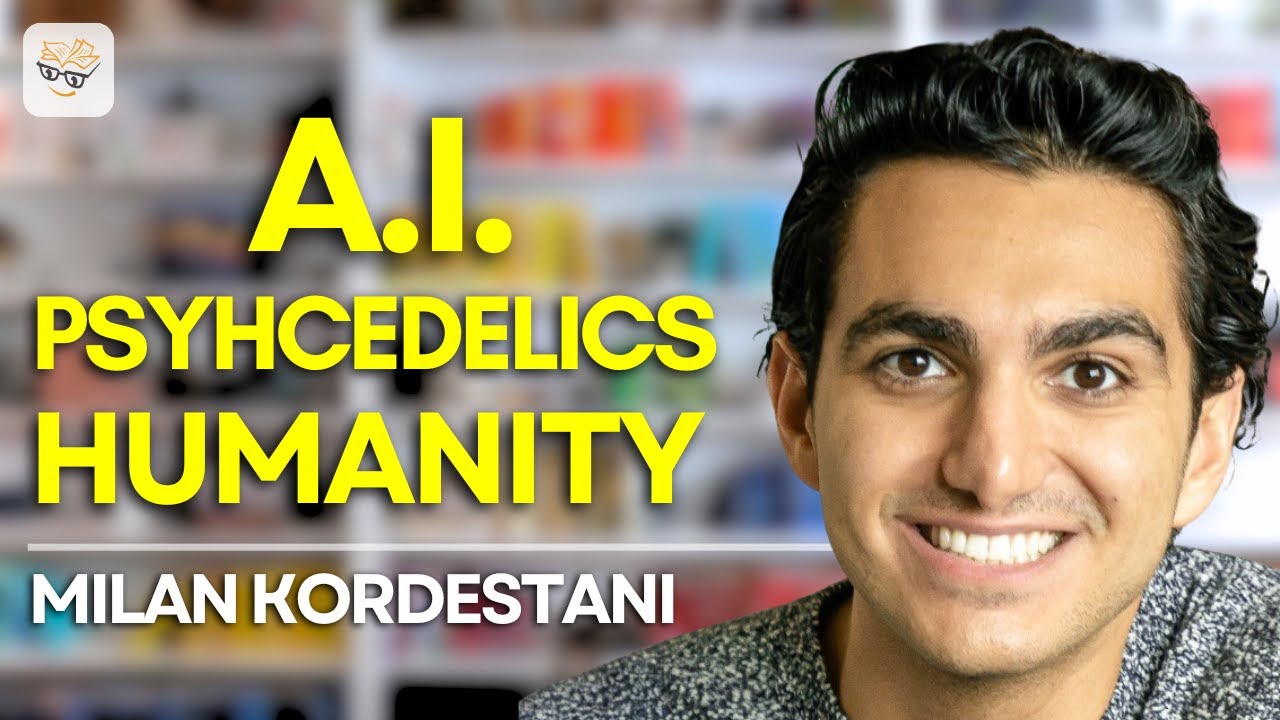
In this episode of the Book Thinkers Life‑Changing Books Podcast, host Nick Hutchison interviews author Milan Kordestani about his new book Moonshot Moments. The conversation weaves together Kordestani’s personal journey—sparked by Michael Pollan’s documentary and his own ketamine‑assisted therapy—with broader themes of AI‑driven societal change, transhumanism, and the historical pattern of "moonshot" projects. Kordestani explains how the rise of generative AI (e.g., ChatGPT) created both fear and opportunity, prompting him to explore how mental‑health breakthroughs, especially psychedelic‑assisted therapy, can rewire thinking and enable people to adapt to rapid technological disruption. He defines "moonshot moments" as large‑scale, collaborative breakthroughs (e.g., the Apollo program) and introduces the concept of "moonshot clusters"—multiple breakthroughs occurring simultaneously. The dialogue also covers the importance of global historical perspectives, the need for personal knowledge management (PKM) to handle information overload, and practical advice for business owners facing AI‑induced job shifts, including thoughts on universal basic income, multi‑planetary colonisation, and cultivating daily curiosity as a skill. The interview ends with actionable recommendations (building a PKM system, aggregating information, asking nagging questions) and a concise message: cultivate curiosity to become an optimistic, productive member of society.
Chapters
The message would be to really cultivate your own curiosity on a daily basis because it's going to enable you to be the kind of open-minded person that will, one, be really optimistic about the world, but two, be a really productive and valuable member of your society and community.
Milan, welcome to the Book Thinkers Life-Changing Books Podcast. I'm excited to chat with you about your brand new book, Moonshot Moments. I had a blast reading it. And my first question is this: take us back to reading Michael Pollan's Netflix— or sorry, watching Michael Pollan's Netflix documentary Change Your Mind for the first time. What was that experience like for you?
Yeah, well, thanks for having me on the show. Grateful to be here. And thanks for reading the book. Watching that and then going and reading his book, was— it was almost like it felt like I was— I somehow, I don't know, I was going to find my way to this information. And I just found someone that perfectly laid out all of the information that I needed to hear for that point in my life. And specifically, I always really resonated with Anthony Bourdain. And so Michael Pollan, I found, was actually— he's kind of like a version of that. He's that kind of journalist who's really interested in learning about new topics that are kind of, I would say, more fringe and sharing that information in a way that's really relatable. And so, yeah, watching that for the first time, it was just really intriguing to watch someone that was kind of like my parents' age going and trying psychedelics and just very quickly having all of his preconceptions about psychedelics challenged. And so I, at the time, learned a lot about myself because I had been in traditional therapy. And I, you know, I had been working with this therapist who was like a TED Talk speaker and this really accomplished guy who, you know, at the time was kind of harping on me to, you know, kind of intensify my life more than I already was. And I felt like my life was already quite intense from a work perspective and kind of felt over over, like, stretched thin in all that I was doing. And so when I found the Michael Pollan documentary, it kind of was this, I don't know, like this, this light of sort that I was like, huh, maybe there's an alternative that I'm not seeing here or an alternative way to think of my mental health that I'm just not aware of. And, and so, yeah, that kind of began the rabbit hole of going down the rabbit hole about psychedelics.
Yeah, my, my rabbit hole started with Tim Ferriss. I've always been a fan of The Tim Ferriss Show and Tim's books, and of course he's very interested in psychedelics. And then as a result of my fascination with Tim, I was introduced to Michael Pollan's work as well. And so it might seem strange for the audience to say, how does AI and transhumanism and the future of the world relate to psychedelics? But I think you do a beautiful job at connecting them for us. So Take us through the experience of writing this book. When did the process start? And was it funny to you to tie all these subjects together at first, or was it completely natural?
It was not natural at all. In fact, it took a— in writing the book, it wasn't until I was maybe halfway through writing it that I started to find how all of these themes would come together. And specifically at the time when I'd started writing the book, there was this— it was the wave of AI, like ChatGPT had just come onto the scene. And people were able to use that chat-based interface to be able to generate new content. And so there was all of this fear, which still exists and is why I wrote the book, but there's all of this fear about what is the future of humanity going to look like if so much of our day-to-day lives gets automated, or if the things that we don't enjoy doing can be automated? Where does that leave people? And so both my agent and my publisher were from my previous book, were really focused on that issue for me, uh, especially because I, I'm an entrepreneur and I had been working in AI. They felt that, you know, a young voice on that perspective would be really helpful to kind of bring some form of optimism to the, uh, to the world, you know, on, on how AI could be great for the world and great for humanity. And so I started reading a ton of different books, uh, on AI, only to find that almost all of them were quite pessimistic. And so really when I found Michael Pollan's work and I started, uh, I experienced psychedelics myself, and I experienced psychedelic-assisted therapy. It all started to come together that, okay, the way we are looking at the world right now, the way we approach mental health and the way we approach our work, all of these things are going to need to profoundly change because AI is going to change society dramatically. And so that was how those topics started to come together in that if we want to be able to leverage AI in ways that are positive for society and really be able to be futuristic and thinking of trying to create a reality that is not dystopian for the world, then there's a lot of change that has to happen in our mental health. And so that was kind of how the psychedelics tied into that conversation, that there was this massive change and wave happening in AI, and that there was this upcoming wave happening in our approach to treating mental health. And then the final element of it was this element of transhumanism. And as I started to look and trying to project kind of what the future of humanity could look like in a way that's more positive and a little more utopian-like, then the conversation started to become about, well, how do we make sure that the human body is able to withstand the changes that we're going to see, whether it's things like climate change or whether it's becoming a multiplanetary species and trying to, you know, survive the radiation that exists in space and the the challenges of changes in nonexistent gravity in space, and all of these things that are really difficult for the human body to be able to endure, but are questions that are becoming increasingly more important to ask and to create solutions for as time goes on. So yeah, I hope that kind of helps bring those topics together a little bit.
I think it does. It helps our audience catch up a little bit. And, you know, for the audience, For the Book Thinkers family members that listen to a lot of our episodes, they'll recognize that Nick Bostrom was on our show recently talking about his book Deep Utopia. And recently we did a collaboration with Reid Hoffman where we talked about Superagency, his new book, which I think had a positive spin on AI. And, uh, this subject is ever-present, but one of the reasons it does create a lot of fear is because fear stems from uncertainty. And when we're uncertain about our future and we don't spend time thinking about these questions that you think about and reading different perspectives that are positive, of course, we'll default to, I don't know, and that scares me. So I'm happy that you've written this book and I'm excited to jump into some of the different subjects. You sort of kick off the book bringing us through the history of moonshot moments. So first, what is a moonshot moment and how did you come to find that terminology?
Yeah, so the term moonshots comes from JFK and this vision for us going to the moon. And that was kind of— I talked to Robert Greene recently also in the process of creating this book, and I asked him, like, what was the moonshot that, you know, most resonated with you? And he pointed to that moment in time specifically as well. And so it was a moment where basically great amount of collaboration existed to make something really fantastical happen. And so what that looks like is basically government organizations, academic organizations, and the private sector coming together with great amounts of funding and research to be able to propel us to some vision that is shared among all of those different groups. And that's, that's what a moonshot moment looks like at a really large scale. And so I talk about that a historical perspective early on in the book, because I want people to see that throughout time in different places, there's similar circumstances that exist that enable those moonshots to happen. And right now we're at a time with AI where it's feeling like the conditions are right to be able to usher in another one of those eras of creating moonshot moments. And when a lot of those moonshots happen at the same time, I call those moonshot clusters. So that's kind of what a moonshot moment is and why I wrote that kind of historical background, because it really— it's not like it's something that is novel and hasn't happened before in time.
I have a few things to ask here. The first one is just kind of a fun, silly question. Do you believe that we went to the moon?
I do believe we went to the moon.
Yes, I do, too. I do, too. But there's a whole lot of conspiracy theories about that these days, huh?
Yeah. And I think there's a lot of validity to the— I don't know, the conspiracies in that there's a lot of lack of trust, I think, in, in the— in our government these days. And so it's very easy for people to dismiss that, that moment in time and say we didn't do it. That being said, and also the people who believe that, why can't we go there again if it was so easy for us to do it then and we have all this great novel technology now? But it really— it was the circumstances were right for it, I think, at that time. And we haven't quite— we haven't quite had that level of the public support actually for space programs the way that we once did. And that's part of why at the end of the book, I really emphasize that going to space, going to the moon is not some kind of like luxury, actually. It's something that's necessary for the human evolution. Because we, as we keep growing, are going to need lots more resources, and this planet has a finite amount of resources. We can genetically create new resources. We can— we found new ways of creating things, but ultimately, you know, there's an abundance of resources in our universe, and if we can go and pull those, whether it's from asteroids flying by that have precious metals on them, or mining for frozen water that exists on Mars and taking the hydrogen from that and using that as fuel. There's a lot of different things that we can do or resources we can pull from, from our galaxy and from the universe. And so I argue that it's not a luxury, it's a necessity. And I think that that mindset will enable us to eventually go back to the moon and go to other planets.
I think so, too. And, you know, most of this show is focused on business. And we all know if you own a series of businesses, you don't tuck them under the same corporate entity because you you want to mitigate liability. And we are experiencing a moonshot moment today, and there are a lot of people talking about the dystopian side of AI and about how it's going to ruin the planet, etc. And so if we want to mitigate liability and ensure that the human race lives on, I also think it's a necessity to become multi-planetary. So good perspective there.
Thank you. I'm glad you agree.
Yeah. Um, in chapter 2, I thought it was really interesting. Maybe what I'm about to say is a little ignorant, but I read a lot, and I read a lot about history, and I read a lot about philosophy, and I read a lot about big moments in history. And a lot of times those are focused on some of the areas you talk about in the book, like old Europe, for instance. A lot of innovation happening in Greece and then eventually Italy. We're both fans of Stoicism. We understand where that stems from. Then we look at the Renaissance and all the amazing things that blossomed out of that area of the world. But what I don't hear a lot of people talking about are areas of the world like the Middle East or India or China. And I thought it was really cool. You talked about the House of Wisdom in Baghdad. And I mean, just imagine being a fly on the wall, listening to philosophers from all over the world consolidating in this one space together and talking, looking for a brighter future. And I just wanted to sort of give you a pat on the back and say, I thought it was really interesting that you decided to go there, which is a little bit outside of the norm.
Thank you. Honestly, that chapter, when I was sending it around and I was sending my manuscript around to friends and different advisors, I knew it was the most dense and it got some of the most critical feedback, I think, because it was so dense and kind of not as— I don't know, not as fast-paced and like novel to some people. But I felt it was super important to talk about How this isn't just like a Western concept of having philosophers and having these moonshot moments and these great leaps in progress, and to kind of show that they can exist in different places around the world and they feed into each other. And that was kind of the vision I was trying to really portray for people, is that we don't always know what's happening in other countries, but you have to kind of assume that They— it is happening. These conversations are happening and that progress is being made and we have to be really competitive. So at some point later on in the book, I talk about China and kind of their progress with AI and, and how, as we start to think about, uh, development of AI and, and kind of cybersecurity threats, it starts to become really imperative that we talk about, um, what regulation looks like across countries. And, and so, yeah, I felt like the history was really important. So I'm glad you liked it.
Oh, I really did. In fact, in that area of the book, it sort of reminded me of maybe a Yuval Noah Harari. And then you mentioned him on page 43. And so I was thinking, I wonder if he's an inspiration, because Yuval does a great job at tying together progress all over the planet in different areas and how people come together. And you did the same thing very well.
I'm a fan. I felt like his most recent book, Nexus, was super dystopian. And he— I mean, he's definitely like the historian right now on this topic. Like, I would recommend his books to people, but it's very alarm bell ringing, which is necessary. But I do wish there was a little more optimism in his stance.
Well, you know what? Robert Greene. Speaking of Robert Greene, we had him on the podcast a while ago to talk about the OG book, 48 Laws of Power. And one thing that was really interesting that he said to me was, Nick, I didn't write the book so that people could take advantage of each other. I wrote the book so that you could protect yourself against others using those misconceptions and power dynamics and things like that. And I think we can choose to read through either lens. We can read these dystopian books and let ourselves be kind of down in the, down in the dirt a little bit, or we can read them and say, let's protect ourselves against a future that looks like that. Right. Or you just choose to read books that have a positive outlook. I guess you could do either one.
Yeah, no, that's fair. That is fair. And yeah, Robert Greene has such great stances on things. His most recent book that's coming up is on the sublime. And that concept, when I saw him talking about that on social media, I made a big effort to get to talk to him and do an interview because the immediate question I had was, you must have done psychedelics, right? You must have taken psychedelics and experienced the sublime through that. And that's how you know about this. And, and sure enough, that was the, that was the conversation. And he was like, yep, my time in Berkeley, it taught me about that. It taught me about the sublime and I got to see it. And, and then, you know, he talked about several other instances in his life, like having a stroke that, that also showed him the sublime. And so, yeah, all that, all that to say, in my book, I really wanted to, you know, talk about how there is the dystopian angle and that there is this fear and not try to be dismissive of it. but still try to be, you know, talk about how there's opportunity to change our minds, chase the sublime, and create a more utopian society.
When, when we look back in history, when you look back to these moonshot moments in history, it seems like there's a big adjustment in terms of wealth and prosperity each time one happens, meaning as new technology comes out, certain people get to take advantage of it if they're early adopters. They will gather resources for themselves and create more security and opportunity. And those that choose to ignore it, they fall behind and then they kind of, maybe they were wealthy previously. Now on the other side of this moonshot moment, they are not anymore. And so because this is an, a, a business-focused podcast for the most part, I'm curious, what should the average business owner be thinking about? How do we make sure that we don't get left behind in this moonshot moment as AI and all of the other subjects in your book continue to grow and Popularity?
Yeah, that's a big question.
It is. We could chunk it down too, if you'd like.
Yeah, I'll try to address it from a few different angles. On the broadest scale of this, like I talk about how in the book, I talk about how Elon Musk even mentions that we're going to face this major challenge of what are we going to do with this ample amount of time we're all going to be left with quite soon. When a lot of jobs are eliminated and people are no longer deriving value from their jobs that have traditionally given them a sense of purpose in life, they're going to have an abundance of time. And they, you know, if we— he's a big proponent of universal basic income because he thinks it's going to be necessary, which is very surprising, actually, for Elon Musk, I think, to be such a proponent of universal basic income in today's political climate. But That stance is super interesting because on the one hand, you could say, wow, if you gave everyone universal basic income, maybe they'll go and they'll become philosophers and they'll go become artists and they'll do all of these things that are uniquely human and that we value culturally in society. But on the other hand, they might not, and it could go the opposite way, and people might not use their money in ways that are productive for society. So that's kind of one of the questions I grapple with a little bit in the book is, What do we do with all of this time? What do we do with the fact that jobs will change and there will be less of them? That's one part. The other stance I have is that if we believe that we're supposed to become this interplanetary species that's going to populate the universe and other planets and so on, that there actually will be tons more jobs and that our jobs will actually increase in magnitude of what the value is that we Uh, you know, what value we contribute to our society every day. And so that— I use that to say that, you know, there will always be— and what we see from history, though jobs change, uh, they often multiply, and there's new jobs that emerge from them. And so we have that to look forward to. Um, that being said, change is a lot slower also than we think it is. Uh, to— we, we wake up and we think, wow, AI's gonna come change everything today. But today, if you use AI in your job, you're probably gonna keep your job because now you're operating at like the capacity of 3 or 4 people, um, depending on your job, of course. But, uh, for a lot of us who are, you know, entrepreneurs and, and digital natives, um, the leverage— leveraging AI makes our jobs easier, makes us be able to do more and produce faster. And so, yeah, I think that's what we can look forward to.
I love the abundance mindset. And, you know, the common example is like when Henry Ford started pumping out cars, there were a lot of horse and buggy drivers that were out of a job and they found other things to do. And that's also said for, you know, thousands of different examples over history. And yeah, if we become multi-planetary, I think that the human race in a lot of ways is just like nature. You know, it finds a way to support itself. And over time, if the human population is 100 billion, well then we'll need the infrastructure to support 100 billion people. And that means a lot more opportunity in ways that we can't even possibly imagine today. And I would much rather think through that abundant lens than through the dystopian lens of scarcity and everybody's on universal basic income and watching Netflix all day long. I mean, geez, I hope everybody becomes a philosopher, but I don't know how likely that, you know, how likely that is.
Yeah, I'm not sure either. But what, what I can say is that the reason why I talk about psychedelics and mental health is for that very same reason that you say that, you know, the horse and buggy driver, you know, needs to change their job. It takes a mental shift to be able to say the job that I've been doing for a lifetime or a decade or however long is now gone or changing. And I need to, I need to somehow evolve. I need to learn new skills. I need to find a way to be useful to my society in a way that's different than what I've been doing. And that's not natural to, I think, a lot of people. And so that's part of why I really make this, this focus in the book about psychedelics and radical thinking and associative thinking, where you connect ideas that normally don't make sense together. But, you know, you start thinking kind of outside of the box and you start embracing creativity, and all of a sudden lots more doors start becoming apparent to you of what you could do and how you could be, you know, useful to your society and find a new way of deriving meaning and money in your life.
Yeah, in your book, you talk a little bit about first principles thinking. And I think as human beings, we need to understand that there's a difference between what's in our control, what's in our sphere of control, and what's outside of it. And the rate at which AI takes away your job is not something that is within your control, but your ability to be on the front side of this technology and use it and just accept that you need to move on and find a way to be useful, that mindset or perspective is within your control. And so you get to choose how to react to this. And I think that's a very important piece of your core message, which is there is this beautiful utopian-like future that could exist as a result of all of these changes. So let's focus on that. Talk to us a little bit about your psychedelic experiences. I'd love to hear what you have to share.
So I, you know, I think it was like 2 or 3 years ago, around the time I found How to Change Your Mind, it made me realize that all of these— so let me start again. In LA, I had been seeing all of these various signs. I live in Los Angeles that were saying psychedelic clinics, and I had no idea what that meant. And But I had an idea that, okay, maybe there's like a clinic. If you're really depressed or possibly suicidal, you go to this clinic and they treat you with therapy and maybe some kind of medication. Once I watched Michael Pollan's documentary and, and then I read the book, I was fascinated with this new concept of how, you know, you can go into your mind and your brain will present to you these almost hallucinations or these visuals of memories, and you, through the process of the therapy with the psychedelics, you're able to create these new relationships with your memories. And so that idea was really intriguing to me. And so I thought, okay, I've got to try this. And so I did a little bit of research, and I found this clinic that was in Los Angeles called Field Trip, which later their name changed to Stella. And It was kind of the perfect setting to do this in. And that was one of the things I learned in the Michael Pollan documentary is that the setting and the environment you do this in is really important. Not just having someone as a facilitator there that's able to help guide you through it and calm you down and kind of show you the way, but also for you to be able to feel comfortable and let go, which is a really important part of the experience, is not trying to control it, not trying to— think through it, but to actually kind of let your body and brain do the work of showing you what, what it wants to show you, almost like when you're sleeping at night and you're dreaming. And so I went into this clinic and, you know, I mean, first you have to do like 3 or 4 different sessions of therapy to get to know— for the therapist to get to know you and understand your psyche a little bit so that they can make sure you're a good fit for this. And and all of that. And so, yeah, I went in and the treatment I received was with ketamine. And it was— the first session was maybe not as profound because they kind of start you off at like a lower dose. But as the sessions increased in dosage, they became much more profound. And so through the process of doing that, I mean, so much of my life changed. Like the way I approach relationships in my life changed, whether it was like with the partner I was with and kind of changing that relationship, whether it was my approach to work. At the time, I was the opera— I was like the CEO of multiple startups I'd created, and I didn't have any real co-founders. And so I started to change that and bring in co-founders and kind of elevate them to positions so I wasn't the main contributor all the time. My mindset about kind of like working really hard at all hours and not really taking care of myself, that changed a lot. And so The experience was really powerful for me. And I tell people that it kind of like made me more human and made me, I don't know, a lot more— it made me appreciate the sublime a little bit more. That like you go on a walk outside, the appreciation of like, wow, I'm alive for this moment in time. And it's not a very— it won't be a very long moment in time in the comparison of the history of man. But, and so it creates this appreciation for your life a little bit more. And And the ways it does that, I talk about in the book, like the effects it actually has on the brain and such. But really, the simplest way to say it is like it really sparks neuroplasticity in your brain similar to like a child. So it really inspires that curiosity in the world again and, and really allows you to kind of have this associational thinking where all this information in your brain kind of maps differently for the first time. So yeah.
It's fascinating. It's fascinating. Yeah. You call it the ultimate growth mindset. And, you know, we've known now for at least a little bit of time that our brains are plastic, but it's tough to undo those fundamental, you know, well-worn track systems in our brain and to form new relationships, uh, through an experience like that overnight, as compared to years and years and years and years and years.
Yeah.
Uh, what a beautiful breakthrough for us. And I have a tattoo on my chest that says, memento mori, remember your own mortality.
Yeah.
And so, I think a lot about that and I want to take advantage of the life I have today and I want to make sure that I don't waste it. And so, reading books like yours and spending time in the future thinking about the different outcomes and what I can do today to set myself up for success in the future selfishly, You know, it's a, it's a really fun reason to read a book like yours.
Thank you. Yeah, I, I say it in the beginning of the book. I'm not— I don't suggest everyone just go and take psychedelics on their own. I don't want to get in trouble for that. But, and also, I don't want people to have bad experiences with it because that is part of what kind of held back a lot of the progress in this, in this field from a scientific perspective, from a mental health treatment perspective. And so, Yeah, if you, if you know someone in your life that's kind of an expert in this, or you've seen signs where you can go to a clinic near you and, you know, you felt like your therapy or whatever, your treatment of your own mental health has not been effective, I do recommend it to a lot of people.
Yeah. And I would, I would back up all of your statements. And I think it was pretty clear in your book. I heard Rogan say one time that he thinks every politician or world leader should do at least 10 LSD or psilocybin or ketamine, you know, guided sessions, and maybe everybody'd have a little bit more empathy and love for each other.
Yes, I, I concur.
I think that's probably true. I think that's probably true. Well, I'll spare you with— I'll spare you of all the boring details of my psychedelic, uh, experiences. But let's, uh, let's wrap up a little bit just talking about who you think the target reader for the book is and And, you know, what some of the additional core messages are from your perspective.
Yeah, I wrote this book for people who are pessimistic about kind of the future of the world and who are worried about their jobs being lost and who are maybe struggling with their own mental health in light of the kind of the conditions of our times right now. And so if you are that type of person, I recommend this book for you. And really, I guess the one part we didn't talk too much about is the one of the most practical chapters of this book is I kind of teach people how to organize the like massive amounts of information that we're consuming every day. And so, yeah, if you're someone that's kind of struggling to kind of keep up with all of the information of the world and you want to, you know, be more effective at cultivating these moonshots within your own life. Um, this book is for you.
Yeah. Well, share a couple of examples with us. Yeah. Some actionable insights.
Yeah. So one of them, uh, is kind of this, this idea of creating a personal knowledge management system, what I call a PKM. Um, and lots of different, you know, I'm sure people talk about this like Tiago Forte and, and, uh, Ali Abdaal and others, but basically finding a place, whether it's on Notion or Evernote or wherever, where you start to really aggregate information that you feel is important or is interesting to you, even if you don't know what the value of that information is yet. And what you start to do in these, in your own personal management system, is you start to kind of map knowledge together, and eventually it becomes clear over time how that information will be useful. But that's the first important step, is kind of aggregating it in one place. Right now, people have it buried in disparate places. You save stuff on Instagram or Pinterest, or you read an article and then you never find it again. But really being able to pull that information, aggregate it into one place, and start to kind of categorize it is the first step to training your own large language model that's tailored to you. And I do this down to the personal level. I meet new people and I create a page for them and I write down their favorite foods and types of music they like. And, you know, just categorizing information from your day will then be able to help the— at least in Notion now, you can have an AI companion based off of all that information. It helps then resurface that information at important times when you need it. And I mean, it's a really— we're living in a really cool moment in time where that's possible now with AI. So yeah, aggregating all that information to then be able to use it When it's needed.
Yeah, it's an incredibly important suggestion. And listen, the best time to plant a tree was 20 years ago, or 2 years ago, I guess, in this case with language models. And I think it's important to, if you're listening to this podcast today, buy a copy of Moonshot Moments, go read that chapter and implement your own personal knowledge management system because, oof, I mean, if you can be a connector And if you could take advantage of everything you're learning, then, uh, you'll be well positioned to take advantage of the future and have your own moonshot moment. So listen, man, what a wonderful conversation. For people that want to learn more about you, where should they go? What should they do? What links should we put in today's show notes?
Yeah, you can find me @milankordistani on all platforms. Instagram is kind of my most prominent and where I push out most of my videos, but also on YouTube. And, um, yeah, you can also find me @moonshotmoments on Instagram where I've aggregated tons of content, uh, on the book and interviews, uh, that have helped make this book possible. So, yeah.
All right. And final question for you. If this book was accidentally deleted, but you could leave the world with just one simple message from it, what would that message be?
The message would be to really cultivate your own curiosity on a daily basis, because it's going to enable you to be the kind of open-minded person that will, one, be really optimistic about the world, but two, be a really productive and valuable member of your society and community.
All right. One selfish final follow-up question. If curiosity can be cultivated, and I do believe that it can be, I think it's a skillset that you can work on and, and you can get more excited about over time. How do you start that process? If today you're just a consumer of information and you're not out there taking action, but you're inspired today, how do you cultivate more curiosity? What are some of the actions that you can take?
Yeah, I would start with aggregating the, the stuff you're already interested in and seeing what story starts to come about from it. Like, When I started aggregating information about trying to tell the story of how AI could usher in this kind of new renaissance for humanity, it wasn't clear to me yet that there was this concept of moonshot moments or how psychedelics would make sense in that, or that there's this whole school of philosophy called transhumanism focused on the human evolution with tech. None of that just was clear to me, but it began with this curiosity about a couple of different things. Curiosity about my own mental health and novel ways of treating it, curiosity about how can the world be better? You know, like if I think or if everything I'm reading says doomsday is coming, if everything I'm watching in sci-fi films says doomsday is coming, then okay, where do I have to look to find the alternative perspectives? And that's kind of the curiosity. I think it starts by asking questions that are really Kind of nagging in your head, or that you've otherwise maybe not given the priority to actually explore. And you've just got to make the time to do that.
Beautiful suggestions. Thank you for your time today.
Thank you, Nick. Thanks for having me. Thanks for reading the book.
More from Nick

Napoleon Hill’s “Think and Grow Rich” is a timeless classic #selfhelp #personaldevelopment

4 Books to Help You Get Better at Decision Making #selfhelpbooks #bookrecs #nonfictionbooks


Have you read this book yet? 📖: The 5AM Club by Robin Sharma #selfhelpbooks #robinsharma

Dan Sullivan on Listening to Your Customers Instead of Watching Your Competitors

5 Books That Will Boost Your Financial Intelligence #financialfreedom #nonfictionbooks

The People That Preach the Loudest About Virtue are Usually the Most Power Hungry



Books are the greatest mentors you can find #selfhelpbooks #businessbooks #successmindset

Let’s fight this toxic instant gratification culture together 📖 #selfhelpbooks #jimkwik