The Mindset Shifts That Make or Break Entrepreneurs with Lana Sheppard
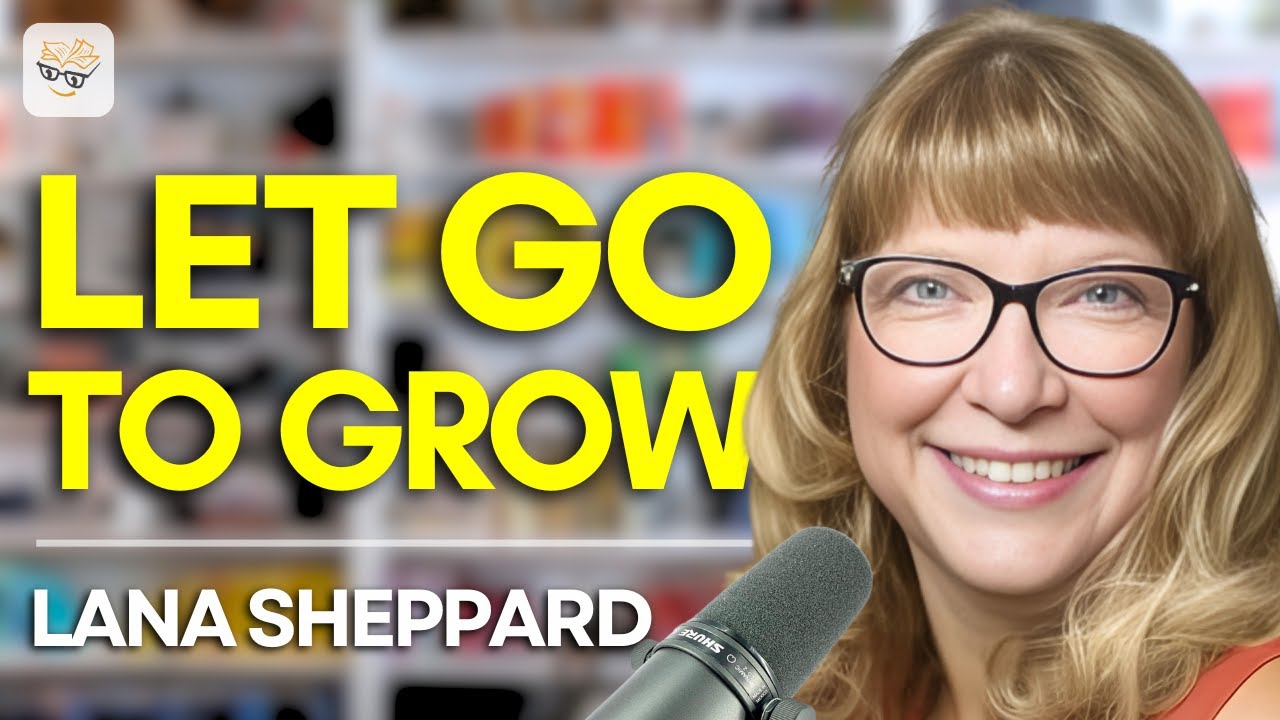
Lana Sheppard, an entrepreneur and author, discusses how childhood beliefs shape business decisions and why awareness breaks the autopilot cycle. She argues that financial literacy is essential—reading your statements like a scoreboard, not chasing vanity metrics—and that giving up toxic habits creates space for real opportunities. Every yes is a no to something else.
Chapters
And it takes time. You know, you see so much on Facebook and Instagram where, oh yeah, first 3 months of my business and I made $1 million. Okay, well, you must have been very, very lucky 'cause that's not usually the way it goes. And you see a lot of successful people, but do you know the story behind how they actually, you know, made their money, lost it all, then had to start over? You know, they all have had journeys to get there. And they make it all flashy and fancy, but they don't talk about the hardships. They don't talk about different things that have happened along the way. And that's it. It's a journey. It's not a destination.
Lana, welcome to the Book Thinkers Life-Changing Books podcast. We are going to jump right in and start talking about limiting beliefs. Now, on page 102 in your book, you talk about this experience with your high school math struggles. You were not a fan of algebra. You call it a foreign language.
Exactly.
And so your mom got your dad to help, but there were still some gaps in knowledge there. So enter Norm, your helpful neighbor. Let's talk a little bit about how you started to change your perspective on math and removed math as a limiting belief.
Well, it had a lot to do with my father and plastic fruit, actually. And, okay, so imagine this, 15, 16 years old, and my father's trying to explain to me that an orange times an apple is equal to a banana. How does that work? Right? And I, to this day, I can vision his disgusting look on his face, like, my God, you're the daughter of an accountant. How do you not understand algebra? But the lesson I learned from it is just being patient and having a mentor or having a coach that can actually teach you the steps. And once I got it, then I was off to the races. So by doing that, everything else in life after that was kind of like, well, I just need to either find a mentor or coach, or I need someone to kind of walk me through the steps. And then you're off to the races.
It really is that simple. But so many entrepreneurs and young professionals suffer from limiting beliefs that they just can't get over. And so, you've already suggested a few ways to overcome those limiting beliefs. One is mentorship. What are some of the ways that you've consistently overcome these obstacles in your own life?
Awareness, paying attention, not living on what I would call autopilot. So, for a lot of years, you just go through the motions. Just think, you know, how many times have you walked out of the house and gone, okay, did I shut the lights off? Or did I remember to lock the door? Or, you know, did I leave the curling iron on? That's one that I used to always have. It's because we do so many things without thinking about it. It's kind of like second nature. So we all have limiting beliefs. They all have started from when we're young, 4, 5, 6 years old. And they literally run in the background in your unconscious and you're not even aware of them most of the time. So awareness is so important because Pay attention to what are you saying to yourself? What beliefs do you have that you're making, using to make decisions in life? And it all stems back. And I guess the next question would be, are those limiting beliefs true and are they serving you or are they holding you back and are they detrimental? That's why I wrote the Give Up book is because a lot of these beliefs that we have are internal. They're not external. And it's what's holding us back from stepping into our greatness.
Yeah, in Limitless by Jim Kwik, which is one of my favorite books, and Jim was one of the first guests on this show, actually, he says that the 2 words I am are some of the most powerful words in the English language because they do determine your beliefs. And if you say I am bad at math, Or as an entrepreneur, I am bad at numbers. Of course, that's going to lead to a destructive cycle where you end up avoiding some of the necessary aspects of running a business and as a result bites you in the butt.
Yeah, 100%.
Now I'm really curious about when you first started to become aware of these beliefs that you were having. I think everyone is on their own journey and we all have different stories around it. And I would love to hear kind of your story of Kind of becoming aware of these limiting beliefs and what were the first things, what was happening in your life at the time that helped you become aware?
My daughter Sarah, who is my eldest daughter, she had just finished chiropractic school and had come back. She was in the States going to school and she came home back to Saskatoon and she was working in a chiropractic clinic and I was trying to teach her Financial literacy, business got her reading Tony Robbins. So she came to me one day and says, "Mom, let's go to the UPW in Los Angeles." I'm going, "What? Are you kidding me? Like the tickets are this much, and we'd have to pay for a hotel. I don't want to take a day off. I haven't taken a day off in eleven years. Why do I want to take a day off?" Well, she talked me into it, and I took both my daughters and I went. To the Galen Center in Los Angeles for a three-day UPW, and my life turned 180. It was the questions; it was the process that you went through. I did the firewalk, which I wasn't going to do. My daughter says, "You're doing it." I go, "Okay, Sarah, whatever." And best thing in the world I could have done because I walked away from that and thought, "You know what? This sucks." I'm going through the motions. I'm exhausted. I don't even know what I— I didn't know what I wanted for lunch, never mind what do I want, you know, 6 months from now. What do I want out of life? I totally had lost myself in just process. So I had a huge thirst to turn that ship around. And Sarah had asked me, what's your budget, Mom, when we go to Tony Robbins? I said, I'm not buying a thing. I bought Master University, I bought Business Mastery 1, 2, I bought all the CDs, DVDs, started doing that. And then I just started reaching out for anybody that was in personal development. So I've done Mary Morrissey, John Demartini, you name it. I just, I had a super big thirst for it. And it's like somebody had opened this door to all my limiting beliefs and they all fell out on the floor. And it was like, I'm not stuffing it all back in the closet. I'm going to look at every single one of them and I'm going to determine, is it serving me or is it not serving me? And if it's not serving me, then I need to replace it with something that will serve me. And 2017 is when it all, it all started. And it's been a wonderful journey of giving up and self-awareness, mindfulness. Um, just— and I can actually tell you that I can smile on the outside and I'm smiling on the inside. So it's—
that's— it's been such a beautiful— It's a beautiful story and a beautiful representation too of awakening. And I, I love that. I would love to know maybe your advice on Somebody who's listening to this that— this is something that's actually in my life right now that I'm kind of going through. There's people in my life that I really love that I'm trying to kind of pull out and give them the awareness, but I'm having a really difficult time doing that. So what do you think it takes for someone to get that awareness? Like, if your life— if your daughter wasn't in your life, like, what do you think it would have taken to kind of shake you out of the routines and the habits and everything that you were doing. What advice would you give to somebody else?
I think sometimes when you get to the point where there's enough pain, then you have to take a pause and go, okay, I don't want to be like this anymore. I'm grateful that I had my daughter push me. I don't know how much longer I would have gone actually. I think it would have been close to a breaking point, but I'm grateful that that she saw in me that, hey, mom needs to go to Tony Robbins. She needs it worse than I do. And, you know, a lot of times there's a Chinese saying that, you know, you can't see the back of your head. And when you think about that, others can see what you need or what could help versus what you can see. And it's— I think it's difficult to Sometimes help somebody when they're not quite ready for it yet. You know, maybe it's not the time in their journey yet where they need it. And maybe by, for example, if you are showing awareness and they see change, that sometimes is going to be the influence to going, hey, you know, Luke's doing these things. Maybe if I pay attention and see what he's doing, maybe I can improve my life. So you can lead by example more than you can— it's like, you know, what is that saying that you can't— you can lead a horse to water, but you can't make them drink. If they're not ready for it, they're not ready for it.
Yeah, it's so true. And I think it's just a— it's a great reminder to realize that it's only what you can do on the inside to yourself and then be an example to others. Like, that is the true mark of a leader. That's what you have to do. And I think about people in my life too. That's how it's always been. I've seen somebody, I'm like, they look happier than me, so what are they doing differently? And then that led me to reading a ton of books and opening my own awareness. Now, your book is called Give Up Ignition. So I would love to understand what is it about giving up? Because giving up, especially as an entrepreneur or somebody who is a high achiever, that doesn't sound great. Like, we don't want to give up. We want to keep going. So why giving up?
Because I think giving up it, it allows you to create space for meaningful, a meaningful journey and new yeses. So for example, if you were to give up toxic habits, what you would then be able to say yes to is personal growth, for example. And that's the thing, a lot of people think Excuse me. A lot of people think that they got to hang on to everything. So with the Give Up series, so Ignition is the first one. There's another book coming out shortly for Liftoff. Think of a hot air balloon. You know, you're giving it the fire. So the first 11 give-ups are what do you have to give up to start as an entrepreneur? The second book, Liftoff, is You've put the hot air into the balloon. Now, what are the sandbags that you got to let go of for the basket to go up? So what do you have to let go of to pursue and to become successful?
One of my, uh, one of my favorite takeaways from the beginning of Ignition is the idea that you need to give up things that don't contribute to profitability. Like flashy office spaces and marketing gimmicks that don't really provide a return on investment. And earlier this year, I was at an event and I heard a speaker say that revenue is vanity and profit is sanity. Oftentimes you hear entrepreneurs talking about how much money their business does. And it's like, at the end of the day, it might be fun from a marketing perspective. But it doesn't give you peace of mind if you do $50 million a year in business, but you spend $51 million, your life is a mess. But if you do $1 million a year in business, but you only spend $800,000, you're living a great life. You know what I mean? So I really liked that idea of prioritizing profitability over popularity or vanity metrics.
Yes. And it's how do you keep the wealth? And I believe every dollar you spend in a business should be generating your revenue. So if you're buying stuff you don't really need, you know, you know, and there's the other thing too is a lot of people are programmed to spend it all so they don't have to pay any taxes. I used to have clients phone me and go, I had to pay taxes. I went, congratulations, that made— that means you made some profit. Now you just need to have a financial advisor to minimize your taxes. But don't give it all, you know, don't spend it all. Or you'd have clients that would say, I made $150,000. I've got no money in the bank. Yeah, because you went and bought a big truck or spent it on things keeping up with the Joneses, you know. So that it's prioritizing the fact that you want to have wealth, you want to build wealth because that's a long-term investment in your business and really pay attention to how am I spending my money and if the money I am spending, is it going to generate revenue? Make sure that it's turning. Look at the people that spend on social media and they'll have somebody doing this, that, and the next thing. They're not paying attention to the analytics and it's not generating any leads. They're not getting any traction but they still continue to put messages out there. That's not a smart move to do for a business owner.
Financial. That is like one of the hardest things I feel like for entrepreneurs, like getting that right. What is like the first pieces of advice when somebody comes to you and says, hey, listen, you know, I made that $150K, but I'm missing it all. What is the first things that you tell them to look at in their books? Or what is it, what is it that you coach them to do?
First thing is to understand their financials because that's usually why they've spent it all is they have no idea what those numbers mean. And Warren Buffett says it well that business is a game. So, you don't go to a football game or a soccer game and sit there without a scoreboard. If there's no scoreboard, how do you know what's going on? And your financials are your scoreboard for your business. So if you're going to make decisions and most of your business decisions, if you're not paying attention to your financials, are based on assumption. So when you make a decision in your business, how are you going to follow and make sure that the numbers are going in the right direction? And really, your financials are basically telling the story of your business in numbers rather than words. Every single number that's in your general ledger is a decision that you've made In the business. So by learning how to read that and understand those numbers helps you make better business decisions, helps you figure out where you want to be in 3 years, 5 years. And that's your blueprint to get to the point where you're making the profit and running a profitable business.
Go ahead, Nick.
Yeah, you, you talk in here a little bit about the importance of making decisions from a place of logic and not emotion. And early in my business career, I was around a few people who were spontaneous and emotional and loud and a little bit too loose with money. And I started to pick up some of those behaviors as well. I mean, I'm as guilty as anybody. And over time, you just said something really important, which is that every decision you make tells the story of your business. And also every dollar you invest should in some way, shape, or form go out there and help you earn more. And I just don't think, I think when people are starting businesses, they're just, they're not making decisions from a place of logic. They should be a little bit slower, right? Sharpen the ax a little bit before they start to chop down the tree. And I just, I think it's the advice overarching there is just slow down a little bit. You know, don't be impulsive.
That's part of it. And the other part is do a business plan. As awful, awful as that sounds, a business plan, it makes you ask the right questions. It makes you look at your marketing. There's lots of businesses, they think they got this great product, they don't do any marketing, they spend a bunch of money on a retail space, they hang their shingle, And then they're shocked nobody walks in the door. And they haven't done their homework on whether that those everybody wants birdhouses or whatever they're they're selling. That's first thing. And a business plan should be a working document because you can take that and it's kind of like your guide. It's your blueprint on. Taking those steps. And when you're a new entrepreneur, there's a lot of moving parts, as you know. You got your advertising, you got your sales, you're a one-man show until you're able to have a team. And you think you have to wear all the hats as well. And sometimes it's not how you have to do something, it's who can help you do that, rather than you feeling like you have to be the expert in Every, you know, every aspect of, of your business. And business plans are so, so important. And it's not you do them and then put it on the shelf and it collects dust. Use it as a guide because it will keep you, you know, headed towards your North Star.
When you talk about a North Star, could you give everybody in the audience some advice around goal setting? I mean, I already know the answer to this because I read the book, but do you recommend controlled growth or do you recommend shooting for the stars or somewhere in between?
I recommend controlled growth and your North Star. For example, would you get on an airplane where the pilot's going, yeah, I really don't know where we're going. Just, you know, get in, buckle up, and we'll see where it's going to go. We'll see. We don't know for sure.
Or would you want to be— By the way, it's my first flight. Yeah.
Yeah, exactly. Or would you want to get into a plane? The guy knows exactly where he's going. He's got a flight plan. And even when you're up in the air, you know, depending on the trade winds, they're going to still have to do some adjustments, but at least they got to focus on, you know, what that destination is. I personally don't like to use the word budget or goals. I like blueprint. For instead of budget, and I like to use outcomes instead of goals because your goals can change. But if you've got an outcome, then you always can ask the question: What I what I'm doing today is it going to reach my my outcome? And I think goals people think it's very restrictive, and the word's exhaustive in my. I like to just shift the mindset a little bit and use a different. A different word. That's same with making mistakes. I don't like to call them mistakes. I like to say you're failing forward. And you have to be failing forward if you're in business because if you're not failing forward, you're not growing. You need those learning steps along the way. And as long as you're learning from the failing, then you're moving forward.
Just a quick comment before Luke jumps in with his next question. I love that term outcome. And if it was in the book, if it was in the book, I didn't catch it the first time where I just read over it. But I think for 2025, I'm going to talk about what outcomes am I looking for from next year? And who do I want to be walking into 2026? Not what goals do I have, but what is the outcome of next year's effort in every area of my life? That's, that's fun. Thank you for that.
And then what give-ups do you have to give up to reach those outcomes?
Yeah, I think it's so profound too, because everything you're talking about, it's like you have to be willing to do the boring work. And I think especially if we're speaking to entrepreneurs or business owners, like a lot of, a lot of us want it to be flashy and overnight and really quick and fun. And, and really it's not, it's about sitting back, taking that and looking at the big picture. So Why do we— why do you think we all— I don't know, most of the entrepreneurs I know, and myself included, I've been here many times. We want to start this business and tomorrow we want it to be really successful. And you know, we're a month in and then we're like, okay, it's not super successful, so we give up on it too soon. Why do you think we get caught in that belief that it's like this overnight quick thing?
Instant gratification. And it's not a sprint, it's a marathon. Slow and easy, slow and easy. And you have to have patience, you know. And a lot of people have short-term mindset versus long-term. You know, I would ask, I used to ask all the entrepreneurs that came to my bookkeeping, I'd say, you know, where do you want to be in 10 years, 15 years? Well, they didn't know where they wanted to be on Friday. Never mind 10, 15 years. And then I say, what's your exit plan? Well, I've just started my business. What do you mean, what's my exit plan? You need to have that because that's where you're headed. And it takes time. You know, you see so much on Facebook and Instagram where, oh yeah, first 3 months of my business and I made $1 million. Okay, well, you must have been very, very lucky because that's not usually the way it goes. And you see a lot of successful people, but do you know the story behind how they actually, you know, made their money, lost it all, then had to start over? You know, they all have had journeys to get there. And they make it all flashy and fancy, but they don't talk about the hardships. They don't talk about different things that have happened along the way. And That's it. It's a journey. It's not a destination for a business. So I think instant gratification is one of the biggest things we have in society. You know, it all started with, you know, you could go buy the furniture and pay for it later. Or, you know, you can get it on Amazon and it's delivered to your door within an hour or any of that kind of stuff. So when you're— you're in that environment all the time, then your expectations are that that's going to happen with your business.
So if you were only to give 3 to 5 mindset shifts, if you can only pick 3 to 5 mindset shifts that business owners/entrepreneurs need to have, what would be like the top ones that you would say are pretty common amongst entrepreneurs? Yeah.
Mindsets. I think first one is fear of failure. I think we all as entrepreneurs are super freaked out thinking everyone thinks I'm crazy because I've got this idea. And if I don't pull this off, then they're right. I am crazy or whatever the case may be. Fear of failure, I think, is one of the biggest ones. I think for me and probably a lot of other ones there, it's that need for approval. So who, you know, who are you trying to— for me, it was my dad. You know, I would give anything for my father to say, hey, I'm proud of you. I know my father's proud of me. He's never really said it in words, but I know it's there. So that was one. And then when I finally thought, you know what, it doesn't matter, I just need to go do I just needed to be authentic me and go do my thing. And it didn't matter at that point. Judgment is another one that I think a lot of entrepreneurs struggle with. Like even publishing my first book, I was going to do a big launch and all this kind of stuff. I literally went to the lake and literally hid under a rock going, oh my God, everyone's going to think this book is horrible. You know, I have suffered from these things just as much as, as anybody else. And I think it's really about just releasing what no longer serves and do what really matters, like be authentic, go out and serve whatever you're passionate about. Just go and do the best Best that you can. And if you find that you have failing forward or that sort of thing, then reach out, find your people, who's your community that are like-minded, find a mentor, find a coach, reach up for somebody that has already walked the path, that they'll take you under your wing, under their wings and help you along.
Lana, you are somebody who leverages a lot of mentors. And even at the level of success that you've had in your life and at the stage that you're in, in your life, you're still investing in new relationships and mentorship. I mean, heck, you're recording this podcast from Malaysia because you just attended a 4-day event and you're working with mentors. So, how much of your income do you dedicate towards mentorship, or is it just kind of a feel-type thing? How do you analyze that?
I have, I can't tell you how many hundreds of thousands of dollars I've invested. Seriously, since 2017, I wouldn't hesitate to say I've spent about half a million dollars on courses, education, personal development. And I do it for 2 reasons. One, for my own personal, but also because then I got all these extra tools in my toolbox to help my clients. And you don't know what you don't know sometimes, and everybody learns differently. Like right now, I have a business coach. I have one two. I have two mentors, Vince Tan and John Lee, and John has now taken me under his wings to push me farther. And and is is it scary? Yes, like the idea of being on stage speaking to an audience on financial literacy or my Give Up series scares the living bejesus out of me. But I know that's where I need to go. You know, and sometimes you have to be comfortable with being uncomfortable because that's where the growth happens. And I also feel it's a disservice to entrepreneurs if I don't share my journey and my learning because If it's going to make a difference in another entrepreneur's life and they can learn one or two things from my book or podcast or anything else, then I think that's awesome because that's really what it's all about. So I strongly believe in having a business coach, having a mentor, belonging to a community of like-minded because that's where you're going to get the energy and the passion. And when things get hard and the road gets a little difficult, then you know you've got somebody to, to, you know, reach out to because it gets lonely sometimes when you're out there on that entrepreneurial journey by yourself.
Yeah, it definitely does. And you have some great thoughts in your book related to this subject on complacency. Oftentimes when you're lonely and you're operating a business and times are tough, You want to shrink back into your comfort zone because things feel good there, right? You default to the path of least resistance, like watching TV, or maybe you revert back to a normal 9 to 5. But having mentors in your corner, they hold you to that path of most resistance where you embrace your, your, you know, the discomfort a little bit more often and maybe with a little bit more support and strategy. So I think all of those things are so important. Yeah.
Makes a big difference.
For people, like, I feel like one of the things that people often come to me for is like, they ask, where do you find mentors? Like, where do you find these people that— where do you find these coaches? How do you know which ones to invest into? So what's your advice to those people that maybe are looking for that business coach? Like, they know they need a mentor, but they're just not sure who to choose or how to look for them or how to find them.
Oh, good question. There's a lot out there. I guess a lot of time for me, I've been really fortunate. Like, I just kind of knew who I had to. Now I have had some coaches and I have done some courses that were like, what was I thinking? But at the same time, you still can glean, you know, one or two gold nuggets from that course, then it makes it all worthwhile. And you kind of figure out who you can work with, and that didn't work. Okay, well then I need to shift and find somebody else. One fellow told me that you know you can go on Instagram, you can find, you can go on YouTube, you can listen to people like Jim Rowan or Bob Proctor, ones like that, and find. There's a lot of information out there that you really don't need to hire somebody, but find out which one kind of resonates with you. Now, Jim Rohn's passed away, Bob Proctor's passed away, but there's a lot of people that are following in their path. So once you kind of figure out what kind of coaching advice or mentoring you resonate with, then look for people that are in that realm, find communities. You know, you've got different, different groups. I belong to a great big mastermind group in Malaysia. I don't have a lot in Canada, unfortunately. You know, so it doesn't necessarily mean that it has to be in your backyard. And with Zoom and the global world as it is now, you can reach way outside your own, own neighborhood. But you just kind of have to, it's trial and error, I guess, in some ways as to how you go and find somebody that you can resonate with.
Yeah. And that makes complete sense. And that's usually like the thing that I'm telling them too. It's like, well, you know, read the books and listen to the podcasts and see who you see where you're stuck and type that into Google first. Right.
Exactly.
That's the, that's the starting point. Um, Nick, before I ask my final kind of final couple of questions, do you have anything else you want to cover and talk about? And Lana, you too, is there anything that you feel like we may have missed that you're like, hey, I'd really love to talk about this that I'm excited about?
I think the biggest thing is for entrepreneurs to have awareness. That's like I was telling you guys earlier, you know, I've read hundreds of books. I've got a library in my basement of probably 700 books. And somewhere I missed the memo on belief systems. It's like, how did that happen? You know, I didn't realize I had all these beliefs running in the background, helping, you know, making decisions that I really wasn't aware of. So I think the biggest thing is, you know, for myself, for about 10, 11 years, I basically ran on autopilot, just going through the motions, getting work done. My husband had passed away. I was Putting my kids through school. Don't feel, don't think, just work. Work, work, work, work, work. Bad. And if anybody's out there doing that, stop it. If you're working all-nighters and not getting proper rest, stop it. And I'm 63 years old. About a year and a half ago, I figured out something my mother used to say. You can't go have any fun until the work's all done. Simple little things like that that you get told as a kid. You don't think anything of it. And all of a sudden, it's like this big light bulb moment going, oh my God, no wonder I haven't had any fun. Well, as an entrepreneur, is the work ever done? No, there's always piles of work to be done. To this day, I have to pay attention to that. And I have to sometimes give myself permission That I can walk step away from it and go and have some fun. So pay attention to and be aware of you know what are you saying to yourself? What what's going on in your in your thought process when you're making decisions? And are those beliefs serving you or are they disserving you? Like to me that's the biggest, and that's why I wrote the Give Up book is because it's all based on the limiting beliefs. that held me back in growing and being successful. If I would have had a Give Up book 25, 30 years ago, oh my gosh, I don't know where I'd be today, but the journey would have been a lot different just by having that extra learning and understanding that we have these belief systems that do play a huge part in our decisions.
Well, I just wanted to say thank you for writing the book. And thank you for the discussion today. As we were talking about before we pressed record, that last nugget of wisdom that you just shared was a little bit of an aha for me. Uh, you know, you could give yourself permission to end the workday and have some fun knowing that the work isn't finished, but it will never be finished. That was the big thing for me. It's never going to be finished. Uh, as a business owner, I will always have more to do, but that doesn't mean that I can't enjoy the present moment. once the evening hits. And the other one for me was that idea of outcomes. So, I'm going to change the way that I'm thinking about 2025 since we're recording this at the end of December 2024 and think about who do I want to be walking into 2026? What outcomes am I looking for? And that was a cool perspective shift. So, thank you.
And when you're thinking about those outcomes, every time you say yes, you're saying no to something else. So make sure those yeses all line up with your outcomes.
Yeah, that is a really powerful way to look at things. I'm excited. I've always like struggled with this idea of goals. And even for myself, like I wrote down when you said it earlier, I wrote down outcomes, like underlined it twice. I'm like, that is a very light bulb moment for me too. So change some lives today. Amazing. All right. So these are my final 2 questions. And the first one is this, where can people go to find out a little bit more about you and learn about your book and all the other fun stuff? stuff you're doing?
We have a website, www.giveupbook.com. The book's available on Amazon. And when you purchase the book, in the book at the end of every chapter is a website that takes you to a workbook that's free. It's downloadable off of Notion. And the workbook has some extra tools and tips. And it also helps you have a tracker So as you're working through the chapters, you can actually keep track. You can journal. There's a vision, visioning exercises in there, checkmarks on what you can celebrate, even those little wins, because the more celebration you do, the more you want. It helps you propel in the right direction. And I really believe that when you read something, If you don't take action and implement, then you really don't gain the benefit from it. So I just felt that the workbook would be an additional tool for anybody that's bought the book to be able to implement anything they want to do in their life. I'm also on LinkedIn, so that would be the best place to find me as well.
Amazing. And I love when authors think about the action piece. A lot of authors don't think about that. So kudos to you for actually thinking about that piece and then giving people something they can tangibly do, because that is the most important part of books. We can read all these books. Like, I mean, you were talking about, you have 700 books down in your library, similar here. And a lot of those books we read and then we forget and we don't take action on. So it's so important to take the action to implement the things. And it's beautiful that you thought of that.
Thanks. That's where the power is. And actually, I had a business coach tell me that, go, okay, you read all the books, now what have you implemented? It's like, duh, never thought of that, right? And it's true. I would read, read, read, read, read, but was I implementing it in my own life? No. I was more intentioned for clients and that sort of thing, kind of forgot about myself in the process. So that's another reason that I did that is because, again, if it would've been me having the book, that would, would've been a big tool for me to actually take the action and implement those small steps.
I love that. And as Rory Vaden says, you're best positioned to serve the person that you once were. So that is just so beautiful. And I'm just grateful that you thought of those things. All right. This is my final question that I love to ask all of our guests. And it's this, you pass away and all the information that you put out unfortunately disappears, the books, the courses, everything that you put out. But you can leave the world with a single piece of advice. What would it be?
Oh, what would it be? I think to live authentic self. Live your authentic self, serve at a high level, take care of everybody. Lift them up. Don't push them down. And, and leave your mark. That's what I would say.
So beautiful. So true. Lana, this has been amazing. You're such a beautiful spirit and soul, and we have learned so much from you today. Like we already said, you've given us some nuggets that have changed our lives in just this conversation. So this is incredible. Thank you so much. And I can't wait to talk to you again.
Thank you.
More from Nick

Napoleon Hill’s “Think and Grow Rich” is a timeless classic #selfhelp #personaldevelopment

4 Books to Help You Get Better at Decision Making #selfhelpbooks #bookrecs #nonfictionbooks


Have you read this book yet? 📖: The 5AM Club by Robin Sharma #selfhelpbooks #robinsharma

Dan Sullivan on Listening to Your Customers Instead of Watching Your Competitors

5 Books That Will Boost Your Financial Intelligence #financialfreedom #nonfictionbooks

The People That Preach the Loudest About Virtue are Usually the Most Power Hungry



Books are the greatest mentors you can find #selfhelpbooks #businessbooks #successmindset

Let’s fight this toxic instant gratification culture together 📖 #selfhelpbooks #jimkwik