The Most Overlooked Skill in Business with Devin Sizemore
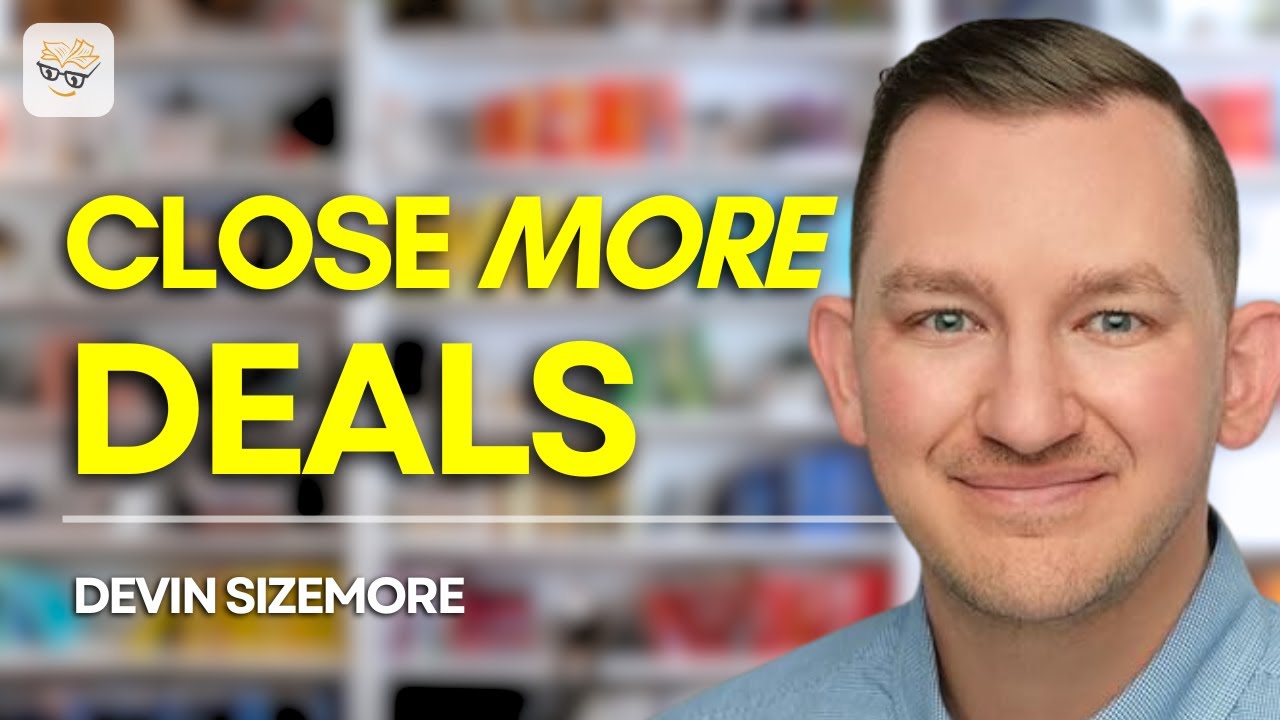
In this episode of the Book Thinkers podcast, host Nick Hutchison interviews Devin Sizemore about his Connection Expansion system, a framework for scaling business success through strategic networking and referrals. The conversation opens with Devin’s "dash" philosophy – reflecting on the impact one wants to leave between birth and death – and how aligning with that purpose drives abundance. Devin shares a personal failure story of losing $1 million due to a bad partner, explaining how the experience reshaped his approach to joint ventures, emphasizing a cautious "date before marriage" vetting process and involving spouses for gut instincts. The core of the interview revolves around the "referral dilemma": most people ask for introductions to their ideal client, creating friction; Devin teaches shifting the ask to people who have access to those clients, thereby expanding connections. He outlines practical components of his system: a three‑week check‑in, templated emails, a simple CRM workflow (tasks, dates, minimal tagging), and the option to delegate follow‑up to a virtual assistant. The discussion contrasts collaboration versus competition, describing how giving options and referring to perceived competitors actually builds reciprocal relationships and fuels a network of JV and affiliate partners. Devin also details his tagging taxonomy (location, service, interests, ideal client, connect tags) and cautions against over‑complicating CRMs. He recommends several books that shaped his mindset and explains his role as a speaker and mentor to entrepreneurs. Finally, he promotes his ACEs Connection Group – a free, Skool‑based community for B2B professionals – and reiterates his core message: define the impact you want your "dash" to have and integrate it into every action to generate momentum.
Chapters
When you die, there's when you were born, when you die, and there's a dash. And what, what impact do you want to have with your dash? And I think the moment you step into that and own that and it becomes everything you're chasing and it is the foundation, that is the moment you will find abundance. And if it feels like you're fighting, if it feels like you're struggling, it's okay. We all have seasons of that. But when it clicks, it gets easy. And I don't mean it gets easy that you don't have to do the work, you don't have to do the repetition, and you're not gonna have hard days. It gets easy because abundance starts flowing. So my message, and the most critical one I heard, was what do you wanna be remembered for, for your dash? And whatever that answer is, integrate that into everything you're doing as fast as possible, and you'll be amazed at the momentum you create.
Hello, Devin. Welcome to The Book Thinkers. Life-Changing Books podcast. I'm excited to interview you today and talk about connection expansion. But before we do, you said something to me during the prerecording that I'd like to address. You said, you know what, I'll talk about anything, even how I lost $1 million. So, what is that story all about?
Nick, thanks for having me, man. I'm so glad to be here. And yes, I think that as leaders, sometimes we put our armor up and we try to be the the best, right? And we put that persona, but the back of my shirt, if I turn around, says real people, right? And so if I'm not real, how can I expect that of others? So after I sold my marketing agency, I went through this phase where we launched a few ventures, and unfortunately one of the partners ended up extorting a bunch of money and was a bad player with the investors. And it left us closing one company, getting kicked out of another, and barely bootstrapping the consulting company and keeping that one alive. And unfortunately, Made a lot of money in the business before and ended up losing a whole lot of money in that 18-month period because of one bad player.
So moving forward, Devin, how do you use that experience to either understand failure as part of the process, maybe it doesn't surprise you as much, or prevent something like that from happening again?
Yeah, so it's, it's, it's a date before we get married approach now. And I've got a few business projects pending right now. You know, I think the younger me was just like super gung-ho at opportunity and just would charge, which is great. Like, I love the rhino mentality and that analogy and idea, but now it's very cautious, right? So let's joint venture something. Let's all pick a lane. Let's see if it succeeds. Let's see if we like working together. I have an investor in one company right now that gave me an unsolicited offer and I said, that's great. Why don't you come on as a client? Let's spend 90 days figuring out if we like each other, seeing if you like the value that company provides. And we're literally 3 weeks into that engagement and like, I'm already going like, I'm not sure that that's a great investment fit. Client fit, yes, but not a good investor fit. So just really cautious about dating, looking for value alignments. And then the super sneaky part is bring your spouse around them and let their gut tell you what's good or bad because they're usually—
I love that last tip. For the loyal members of the Book Thinkers audience today, they'll know I've had some similar slip-ups in the past with business partners, putting the cart before the horse and not doing my due diligence. And so, you know, Devin, as you get to know me better, you'll hear me say, no matter how many times you read Aesop's fable, Tortoise and the Hare, the tortoise always wins. It's slow and steady. It's not sexy, but when you do it the right way, you minimize risk and everybody is better off. And so I think that's such a great message to kick off today's podcast with.
I'm glad we started there, man. Like I said, I love the real conversations part. And again, if we can't be real with each other, why are we here?
Yeah, absolutely. So first, I want to draw some attention to your subtitle. I'll read it to everybody. You are one connection away from massive success in your life and business. Now, I'll tell you what, that makes me want to learn more. So let's tee that question back up to you. Why did you put it on the front cover of the book? And why is that central to your belief system?
Yeah, so this is one of those mentor moments where I had a different subtitle, which was something like a scalable, duplicatable system to scale your network, blah, blah, blah. I don't know, it was very like technical. And he's like, that's great, that is a best practice subtitle, right? It tells who does what and how and what value you do. He said, but I was listening to a story you told one time in a mastermind, and you have these what-if statements, right? Which they're in the book as well, some of them. There's 100 of them, but He said, you said this thing and you said that there's one. And that intrigued me because that doesn't take a lot of work necessarily. It doesn't overwhelm us to hold these crazy expectations that it has to be hundreds. And it really gets to the core of what the book talks about and what I preach, which is if you remain curious and you don't judge anyone and you meet everyone, you never know what connection will happen. In fact, Today, this is— we're recording this podcast after 8 meetings. One of those meetings today was a perfect fit introduction that came out of a random referral. And now we're looking at collaborating in events, JVs, integrated offers, all from one meeting and one conversation. And so I think so often people put so much pressure on themselves to produce volume and they miss these really interesting opportunities because they're not curious, they're not asking the questions, and they're making too many judgments. Hmm.
There are already so many mic drop moments within that little soundbite, so everybody should go back and listen to that again. I love what you're saying, Devin. And it, as I started to pop around your book a little bit, and as I saw firsthand how many introductions you made to me, and I'm starting to meet those people, I, you know, it started to, I guess, get me to remember so many business partners and amazing, great fit situations that I've stumbled into today. And I started to trace them back and I'm like, oh, I met Devin. Oh yeah, this one came from some super obscure situation that I probably—I almost didn't pay attention to. But I just said, you know what? Let me display a little curiosity. Get on the call. I have some time. And now here we are five years later in this wonderful situation. And I think for the audience, pause the podcast a little bit. Think back to some of the most meaningful relationships that you have in your life and start to trace them back. Where did they come from? And you'll probably find that. It was because you had a little bit of curiosity. You took a call that maybe there wasn't obviously a great fit. And now look at what it's blossomed into today.
100%. And I'm so glad to hear you reflect that. You know, we practice what we preach and all day, every day. I am so blessed that I get to hear people talking about the one connection, right? A text from someone, made one intro, met both parties, and now they're exploring a business together. A text from a good friend of mine yesterday closed a $20,000 deal, so it can be monetary. A text from someone else yesterday saying, hey, thanks for that introduction. We're exploring collaboration. Like, you just never know. And so just stay curious and be others-focused. And when you can do that, man, it unlocks some stuff. The last big deal I closed was 14 connections deep. We go back and trace them just to figure it out. And it was crazy to think 14 handoffs, connections, introductions to get to a close. And that doesn't talk about all the amazing things that happened with those 13 other people.
Wow, that's amazing. I almost— in my head, I started going back to how did I even start my company Book Thinkers? And there is an origin story to that, and it's dependent on a few other people. And then I thought, how did I get introduced to those people? And so entire businesses come from these crazy connections sometimes. What are some of the other myths about connecting? I mean, why, why is the average person today such a poor connector compared to you? You're a super connector.
Yeah, it always comes down to what I just described as the referral dilemma. And so everyone listening, if we talk about it, right, you want more referrals. That is a true statement. I've yet to come across anyone that's like, I don't want more word of mouth. people edifying me and handing off referrals. But there's, there's 2 big problems with the referral dilemma. One is, right, you want it, but you have no clue how to systematize it. And then there's 2 obstacles. So the first obstacle is your ask. And so when I ask people, and this happens in meetings all the time, who do you wanna be connected with? They always default to their ideal client, cuz that's what we're taught as sales, marketing, business professionals.
Mm-hmm.
Is you answer with your ideal client. But what that does is it positions a really interesting situation with a lot of friction, because what you just asked me to do is go through my database, eliminate most people down to your ideal client, and then find the ones that actually need what you're offering when you're offering it, and then make an introduction where you can sell to them. Like, I don't know how many moments of friction you just heard in there, but it's a lot.
Huh.
And so the quote that goes with that is, Everybody wants to buy. Nobody wants to be sold. Everybody wants to buy. Nobody wants to be sold. Yet again, when we ask for the ideal client, we're forcing people to position us to sell. And it's, it's very, very tense. And so what we do first is we shift people to change their ask. So they ask for the people who have access to their ideal clients. That's a connection expansion exercise. I think it's chapter 3 in the book. It goes through the whole process. So that's, that's the first hurdle is your ask is wrong, which is limiting people's ability to connect you. The second hurdle is you're selling too soon and you're not training by doing. And so if you want people to refer and connect you, you need to refer and connect others so that they can see best practice. If you lead by example, people will reciprocate and typically they will try to outperform you which makes this whole thing work.
Wow. Again, so much, so much value there. And so for everybody in the audience, chapter 1 of the book is the referral dilemma. So if you'd like to go through that process again a little bit deeper, grab a copy of the book. And then yeah, the connection expansion system, and then followed by the exercise, those are chapters 2 and 3. And it makes a lot of sense. You know, I think I've been caught in that situation all the time. You probably did it with me on our first call. Who can I connect you with? And I probably told you my target customer, not who could introduce me to my target customer, right? You still followed up and made a bunch of great introductions, which I so appreciate. And even though I probably told you my target customer, you actually introduced me to who my target customer works with. So you did that beautifully. Thank you very much.
Appreciate that, man. Yeah, it's part of what we teach because one sticking point that everyone's gonna come into when you try to digest this process is, great, Devin, I hear you, I'll do this stuff, I'll use the templates, use the language, but how do I make the connections? Well, how we make the connections is we do the same exercise we do for ourselves to change the ask. We do the same exercise for everyone else. So when I talk to you and you say, hey, this is my ideal client, I instantly go through the exercise in my head and go, ah, okay. And that's the case. You want to know publishers, you want to know these people, you want to know those people. Great. Now I can make those intros and they're strategic. I can edify both parties. There's no friction and everyone wants to have those meetings. And so it makes me look good because I can add value to you. It makes both parties feel validated and they both get value. And I have permission to follow up because I get to check in on you. Hey, how did that introduction go? And now I'm creating relationship equity, which at some point I will cash in on.
Yes. Yes, you will. This is, this is a masterclass. Thank you so much. You're already providing a ton of value for the audience. You also mentioned in a previous statement that reciprocal relationship. When you give to me, I want to give back. It's a natural part of the human experience. And because I'm competitive, I want to give back more than you gave me. And that turns into a beautiful referral relationship. And it's all because you changed the ask. I think that's amazing.
100%, man. Yeah. And never benchmark that. So a lot of people get stuck there because they'll start giving and giving and giving, and then they'll be really worried that they're not receiving in equal. But one of the 5 core principles is control what you can control. And this is critical to that piece. All you can do is meet people, make intros, follow up. You can control all those things. I can't make you Introduce me to anyone. I can provide the value. I can show you how to do it. I can connect you with amazing people. If I do all that correctly, what tends to happen is those people who lean in and go, challenge accepted, will outperform. A percent of the people will do nothing other than take the meetings, have the meetings, have a good time, get good feedback, and it will balance out to about a 30% ratio. And so every 3 connections I make, I'll get 1 back. And so that has been proven over the last decade. And so what's great is I know that in every meeting, if I make my 3 connections follow up, I'm probably going to balance back to 1 connection coming in, which last week led to 52 inbound connections.
And then out of those 52 inbound connections, how many of them converted on the spot?
Yeah. So this is the fun part, right? So, uh, we closed what, 3 high-ticket clients last week and probably 6 or 7 for a couple of clients. So a dozen of those turned into real deals really quick, and the rest all opened doors and opportunities.
Now, Devin, you do this very well online. I've witnessed it firsthand. You're providing value to everybody right now in the form of a podcast interview. How does this translate to in-person networking events?
Yeah, 100%. Great question. Um, yeah, it works virtually, which I think we should pause and put an exclamation point on because I think a lot of people in the virtual world struggle to find real connection.
Hmm.
And the system gives you the language and the approach to get that done quickly. Uh, we could do it in 15 to 20 minutes and I can make you feel heard, validated, and want to have a relationship. Um, in person, we have to deal with a few other things. So first, we have to deal with the never make assumptions Part. And the joke I always make there, right, is assumptions make an ass out of you and me. And so if we're gonna go to a networking event, we can't make assumptions. What that means is every person in the room is value. They all can provide value to you. Most people, when they go to a networking event, get stuck trying to find a prospect because that's what you think your intent is. But again, I would be a fool to go in a room of 100 people. only looking for prospective clients. I would rather go into a room of 100 people with a clear strategy on how to ask questions, get your contact information, and follow up. I can control those things. And if I control those things, it empowers me to follow up properly, use the right language when following up, and get you into a meeting. In a meeting, we can explore the opportunities, what's possible, what's not possible, share connections, build relationships, whatever that looks like. And so in the networking world, everything we're talking about matches exactly the same. There are some questions. Those are in the Book 2 for exactly what you can use when networking. And then the rest of the system just follows the process, right? So how you follow up, how you book connection meetings or connection meetings, the follow-up process is the same. All of the communication language is identical. So it's— it sounds simple.
I'm sure it's not as easy to implement, or maybe it is. For those in the audience scratching their heads saying, okay, you're going to give me the templates in the book, you're going to explain the system, I've already had some aha moments, but how do I keep track of all of this? How do you solve that problem? Yeah, 100%.
So that is part of the problem is people get overwhelmed with the process. The thing you have to remember is no one else is good at following up. Like, that is a very true statement. Most salespeople, business owners, marketing professionals suck at follow-up. And so if you just do okay at follow-up, you will already outpace your competition. I don't like that word, but we'll use it for this analogy. I call them partners in awareness. But your competition, right? You're going to outpace them because you're following up. You can track this system in a spreadsheet as long or a to-do list. You literally just need to know, hey, this is Nick and this is what my next task is related to Nick. So I need to follow up from the meeting. I need to send him the connection check-in email 3 weeks after making connections. I need to send him the nurture email 6 weeks after that. And every 6 weeks moving forward, he needs to get the check-in email so I can just have Nick. With a date and check an email. Now, that's not super efficient. So having it in a CRM is going to be more beneficial. And so you should have it in a CRM. But even then, don't get overwhelmed with choosing a CRM and trying to automate everything and systematize it and add crazy tags. All that stuff can come over time. What you really need is a contact with a task and a date. If you can accomplish those things, and you can hold yourself accountable to a to-do list, In whatever form that looks like, you can succeed.
Yeah, I also, I back that suggestion that when you get into a CRM, if it's your first time ever building out a CRM, don't try to add all the bells and whistles and automations. Just get the contact profile to capture the information that's relevant to your business. Have the ability to take notes and see that timeline of engagement. Integrating it with your email is very easy to do. And then have that next step. Put that task every day, get into the system, look at your task list, execute what's due. And like you said, you'll do more than most people. So I think that's a brilliant suggestion for those that are like, okay, what CRM? Like, do you have any major suggestions there?
Yeah, so I have preferences, but I usually don't share them. I'm not going to because what I tell people is find the one that fits. It's the path of least resistance. Just use it. I see people use this as an excuse to delay the whole process because they spend so long building it out. You do not need a Salesforce-level CRM. Let me let me repeat myself: You do not need a Salesforce-level CRM unless you are a massive enterprise doing crazy things, and even then it usually bogs your team down. The other warning I'm going to give you about CRMs is make the process fit the CRM, not the CRM. Fit the process. Let's talk about it. The process fit the CRM, right? So you're going to build your process and then you're going to put it into the CRM. The other version is you pick a CRM and you try to force the process into it. That doesn't work because you're going to degrade your process. And so I have people do that all the time where they're going, oh well, the CRM only lets me do this, this, and this, so I can only do the process that way. No, no, no, the process is proven. 700 clients later, It works. So just work the process. The CRM should support it.
I'm curious, uh, in your world today, are you handling most of your follow-ups or do you have a virtual assistant or an assistant in the office, an executive assistant helping you reach out? Because I imagine there's a lot of people in your system every week.
There is a lot. Yeah. So as you get the task, right, the nurture check-ins, the follow-up to schedule meeting, the connection check-ins. Um, yes. So you can totally do it yourself. Most people aren't going to do the volume we do. We do 30 connection meetings a week. I personally do, uh, which is 90 introductions and 3-week follow-ups with the 30, and then 6 weeks of nurturing after that. And we're talking hundreds and hundreds of people. Um, you can do it yourself at the scale that most people listening are probably going to do. Once you hit a point where you're like, man, this is actually like taking a decent chunk of time every day, yes. Your VA can do all of it. So in our CRM, my back office manager goes in and every morning the first task that he does is he goes in and sends the schedule follow-ups, the connection follow-ups, and the nurture emails, and then moves all the tasks based on the schedule and template. And then we're done. And by doing it manually with my VA, he can validate if, oh, wait a second, there was already a meeting booked. Oh, you talked to this person yesterday because we don't want to send a nurture email. if he's able to see like, oh wait, Devin picked up a phone call with that guy yesterday. And so that kind of degrades the process and makes it not feel real. So that's the only part you have to be careful with if you hand it off to a VA is make sure they have visibility to actually see your communication. But yes, all of it can be handed off and you don't have to worry about any of it.
You talked a little bit about the collaboration versus competition. You don't like to call them competition. And so let's talk a little philosophical for a second. It feels like in today's business environment, which has been commoditized in a lot of ways, that individual achievement, uh, like this stoic entrepreneur who fought against all odds to do it himself, like that gets glorified a lot on social media. And it seems like you are fighting a different fight where you focus on collaboration and networking and co-creation with others, and that your philosophy might be, I don't need to run out and grab it all for myself, but there's enough for all of us. So let's have fun and let's have reciprocal relationships and let's give and let's receive and we'll all kind of live in harmony. So tell us, like, have you always felt that way? Uh, and is the picture that I just painted accurate?
Yeah, so it's 100% accurate. Um, when I had my marketing agency, which is kind of what was the foundation for a lot of what's in the book, uh, in that world, hypercompetitive, dog-eat-dog, everyone's just kind of degrading everyone. I was like, I don't want to play this way. Like, this isn't my— when I look at my core values, this doesn't align, right? It doesn't fit with who I am as a person. And so in that time, I decided, you know what, I'm gonna go meet every agency owner in town. And I went out and met every single one of them. And some of them, like, looked at me like I had a third eye. They're like, who are you? Why are you here? What's your motive? What's your goal? Like, they're always looking for something. And what's great is I had no motive and no goal. And in fact, I started to get business from most of them because what they realized is, oh, well, we don't actually do this thing you do. So when someone asks me and I don't want to fulfill it, I can just hand them to you. I said, yeah. And in fact, I'm not a full PR agency, so I can hand people to you. So what I found young, and I'm grateful I did, was that often those people we perceive as competitors, and this is why we use the partner and awareness language, are actually out there spreading the same message with a different deliverable. Even if you think the deliverable is the same, it's different. Yesterday, yesterday, this is real time, right? Yesterday I met with someone who reached out to me on LinkedIn because they heard a podcast. He said, I think we play in the same industry. I'd love to talk. He talks first. We go through the connection conversation. I'm asking all the setup questions so I can learn about him and build a relationship. And I'm like, damn, like you are really aligned with how we play, but you're really focused on the client part. And you've cracked the code on how to get clients quick. That's great. I focus on the strategic partnership side. So when people ask me that they need revenue today from clients, we can do that, but I'd rather just hand them to you and let you be an expert. And then when your clients are like, we want to play the long game, you can hand them to me. He's in Aces. He's in my connection group. We are playing together now. And from the outside looking in, everyone would be like, oh, they're competing. Which one do you refer? The other side of that is I always give my clients and people in my network options. I want to connect them to 2 or 3 people because I don't know if the company I'm connecting them to is at capacity right now. And so I don't want them to be let down that the one vendor I referred them to can't take them, or maybe there's a character misalignment I misunderstood. And so I always want to give people options so that they don't feel like they're being sold and that they can choose between people I do advocate So this is exactly what we practice and preach all day, every day. And in fact, my best referral partners now are JV managers, affiliate managers, other connectors. Those are the people that send me the most business.
Yeah. Oh, this is brilliant. Did you develop these philosophies yourself, or did you study other, let's say, personal development or business figures? Were you reading books? Were you attending events? Did you you know, seminars, like workshops? How did, how did this entire philosophy develop? Who are your mentors, I guess?
Yeah, for sure. So all of the above. Um, it's a little bit of everything, and I think that's everyone's journey if you're paying attention. Um, and so yeah, I'm only here because I had amazing mentors. You know, my first real mentor, uh, I was in network marketing when I was 18, right? And, uh, you can talk bad about the industry all you want, but as a young person, it was great. I learned how to get rejected. I learned how to talk to people. I learned how to to like do all these things and be mentored, really. Um, and so that started laying the foundation for like work ethic, attitude, being rejected, rejected, and then being part of masterminds and facilitations and retreats. And I've done all of it, and I'm always looking for the little nuggets that optimize the system, right? Because anything we can do to become more efficient and more effective is beneficial not just for me but for our clients and the people that we're sharing it with. Um, and so for me, yeah, I have some clear mentors. My first real boss was a mentor because he pulled the curtain back in the company and showed me everything. That's a, a great thing. If you're listening and you're like early in your journey, um, get to a family business, man. There's so much access. They may not give you the best benefits, they may not give you the best pay, but what they do is they give you access. And so you can try and dabble in so many things That knowledge base for me laid the foundation for success because I was so confident in so many areas of business because I was able to dabble. So just be a sponge to everything. Obviously, I work with a lot of authors too, and so I'm just a sponge. I love learning, and I'll grab the nuggets that work for me and I'll implement them.
I love that advice. And I didn't know this back then, but now in hindsight, I followed your your suggestions there. When I was graduating college, I took a full-time position in a small software business where I was one step away from the senior leadership team, and therefore I had access to the entire business, and I got to understand how new business was generated, then how it was implemented, fulfilled, and serviced throughout the entire lifecycle of what we were selling. And I had some friends who performed much better than I did in school. I was a horrible student, and they went to work for these big firms with the fancy business card and the great titles. And you know what happened? They got coffee for their boss for 3 years, and they were operating in this tiny little area of the business. That was a big business card, but their learning was limited because of that. And so just like you're suggesting, small business environment, family business environment, Even becoming an executive assistant so that you're sitting in the meetings with the CEO, like that's a faster path to success, I think.
100%. I, I do a lot of presenting to young entrepreneurs. Just booked a keynote in Vegas at a group. Love colleges. And that's my biggest thing to them is like, intern, be there, ask the questions, be a sponge. Yes, I know you all want to rush to 6 figures today. Great. Unfortunately, that's not the reality. Um, but if you want to get there faster, go learn everything about the business you're interested in and learn it all. Uh, pay attention. How do they treat people? How do they act? How do they onboard employees? How are they paying? What's their philosophies? What makes you feel good? What doesn't make you feel good? What do you like? What don't you like? Right? Think about it all. Um, and then become a student of business, right? And so you probably do what I do, and I know a lot of entrepreneurs do this. When we go to businesses, we're looking, we're thinking, we're like, that's weird. Why do they do that? And I'm always curious. And occasionally we see something at a business where I'm like, that's a great idea. Like that little thing was amazing. And I just put the Walt Disney post up yesterday on my LinkedIn, right? I think Disney is a great example of like the client experience. And so think whatever you want, but like when you look at the Disneyland experience, they're so good at immersing you right in this full new reality. There's some lessons you can learn there, which is why there's masterclasses. from former CEOs and current CEOs of Disney that are brilliant because their approach to customer experience is, is next level.
Yes. Yes, I agree. I have a wife whose family goes every single year to Disney World in Orlando. And, you know, I'm new into that annual trip. But you're right, you get fully immersed into the experience. And obviously they have probably the most diehard raving fans as adults out of any business on the planet. So they are a great example. What— now you have a lot of books behind you, but I'm just curious, what 2 to 3 books have had the greatest impact on your life?
Yeah. So the books behind me are all clients we've worked with, and there's so many amazing stories in there. I just had the pleasure— we'll talk about this book, Scott Cutland's book, Unreasonable. I just had the pleasure of spending time with him down in the desert. And when you talk about real humans, Um, man, Scott's the real deal. He's climbed the Seven Peaks. He climbed the north side of Everest. Um, just an amazing story. And what's crazy is he won't talk to you about it. He's so not the guy that bangs on his chest and says, here's who I am. But the questions he asks are mind-boggling. Um, and so I just want to like give him a personal shout out because that's a real-time one that's very prevalent today. I love that. I really enjoyed, as a young entrepreneur, Three Feet from Gold. That's one of those books that I think is so much easier to digest than Think and Grow Rich. And so, like, if you're looking for something easier to digest but still impactful with great takeaway moments, I think that's an easier read with big, big moments. The Magic of Thinking Big unlocked a lot in me and just like how we think about habits and future vision. I mean, I read so much, man. Oh, a sneaky book. Every Shot Must Have a Purpose. So for the golfers out there, my buddy, when we closed on our last home, he was my mortgage lender, gave me that and a bunch of other stuff as a gift. And I read it. It's really interesting for the golf game. It's great on the mental side, but there is a really interesting life lesson there. And so that book's really sneaky and interesting. So for the golfers, that's a sneaky one. Rhinoceros Success is great. Dude, I just, yeah, read everything.
I agree. Read everything. And that Think and Grow Rich to 3 Feet from Gold with Greg and Sharon and whoever else wrote that book. Like, yeah, you're right. That, that original like group of philosophies is so incredibly important. And so many of the books that we read today, they stem from those original classics. So much material out there. And my motto, my reminder for the audience, you've heard me say this 1,000 times, but I do believe that repetition leads to retention. Make sure that you apply what you read because somebody like Devin sitting here, he's not just reading all of these books. He's applying what he learns, and that's the reason for the success. That's why he wrote his book. That's why he's on the podcast today. So make sure if you buy a copy of his book that you implement these systems because you're just one referral away from making it all happen. And the way that that happens is by implementing what you learn here. So listen, Devin, as we wrap up. I did want to ask before my final couple of questions, where can people go to learn more about you, buy a copy of your book, get access to this system? I'm sure everybody is like, ah, I'm ready to go.
Yeah, for sure. So Connection Expansion is available on Amazon in all formats and an audiobook if you want to listen to me talk through it in an hour and 54 minutes. It's there, uh, connectionexpansion.com. will take you to information about ACEs Connection Group. In there is everything— the email templates, the video walkthrough of the system, the video walkthrough of the connection expansion exercise, the GPT— and it happens to be a community full of amazing people looking to make real connections. And so those are kind of the best 2 places. I'm super accessible on every social platform. Just ping me, reach out, and per my mantra, I'll have a conversation.
Oh, good. Tell everybody quickly more about ACEs.
Yeah. So ACERS Connection Group, man, I'm so excited about it. It is a place for B2B professionals, business owners, and ultra-high net worth to come together and facilitate real people making real connections. And so it is my way to give back to the world and say, hey, here's everything that I want to share. Yes, there's a couple of things you can buy in there, but the group itself is free. It's built on the Skool platform and we do a monthly connection roundtable. It's all about let's really help you fast-track this idea of making real connections. And then we bring in some amazing expert interviewers or interview guests, and then we just dive in, man. Everything's value-focused, everything's education. It's just my way of giving back. So come hang out and play with us. Ask all your questions. That's the place to do it.
I love it. I love it. So now that the book is out, is there anything that you wish you included in it that you didn't?
Oh, that's such a fun question. And like I said, we work with people— with my biggest client on books. Um, I probably would've made it like just a tad longer. Um, well, there is a sweet spot for writing a book that's easy to digest and take action on. And so there, there's a science to that that we try to stay in. I do get good feedback because the mastermind I was just at, someone held the book up and said, hey, read it on the airplane here, which is great. That's what I wanted. I want people to be able to digest it quickly. So maybe just a tad longer. Um, the thing that's not in the book that I found really helps the system is the 3-week check-in. So after we make connections following a connection meeting, 3 weeks later, I send a check-in email. That email's in ACEs, the template's in there. So we're— we've created the content now, but that really is a critical moment in the relationship development because it's the validating moment. Like, hey, Nick, how are those connections? How are those conversations? Because that feedback's critical because you may come back and say like, that was epic. It's amazing. Great. That's a good moment to either ask for something or explore the relationship. More, or you may come back and say, "Hey, two of those were good. This one guy, like I don't know how to say this, but like man, it was weird." Great. I need that feedback because if there's takers in my network, I have to eliminate them, and so I need the feedback so I can get rid of the people that aren't conducive to the process. So that three-week check-in—that's something we probably should have included. Other than that, man, everything's in there.
In the list of relationships that you have, whatever CRM it is, are you tagging? Industry, you know, job title. Like, what are some of the other categories that you're capturing when you meet people?
Yeah, another great question. We've gotten significantly better at this due to AI as well. And so we tag location. So I always qualify people with where they live. So I'm always tagging city and state or country if they're in Canada or the UK or other places. We then go service. So service underscore whatever their service offerings are. Usually there's 2 or 3 that we tag. We tag interests. So if I hear you're interested in investing in sports and golf and travel and things, we try to track some of those interests so we can do value alignment between people. We do an ideal client tag. So if you tell me who your ideal client is, we have a couple of tags for that. And then we have a contact or a connect tag. So if you tell me your best connection is publishers, then it'd be connect publishers. So when I search publishers, I can look at the service. _publishers and a connect_publishers and instantly can make connections between. Those are some of the ways we do it. My recommendation for tags is create a system that's very duplicatable. Tags are something that can get out of hand really quick and make your CRM very messy.
Great advice. All right, final question for you. If the book was deleted and ACES was deleted, but you could leave the world with just one simple message from your philosophy, What would that be?
Yeah. So the message I always leave is I had someone talk about the dash, right? When you die, there's when you were born, when you die, and there's a dash. And what, what impact do you want to have with your dash? And I think the moment you step into that and own that and it becomes everything you're chasing and it is the foundation, that is the moment you will find abundance. And if it feels like you're fighting, if it feels like you're struggling, it's okay. We all have seasons of that. But when it clicks, it gets easy. And I don't mean it gets easy that you don't have to do the work, you don't have to do the repetition, and you're not going to have hard days. It gets easy because abundance starts flowing. So my message and the most critical one I heard was, what do you want to be remembered for, for your dash? And whatever that answer is, integrate that into everything you're doing as fast as possible, and you'll be amazed at the momentum you create.
I am a living testament of that step forward. into the dash and the impact that you're, you're looking to have. And I feel the energy every single day as a result of it. So, Devin, what a wonderful way to wrap up. Thank you so much for your time today, and I look forward to building this relationship with you.
Thanks, Nick. Appreciate you. And, uh, yeah, excited to add value and share with your audience.
More from Nick

Napoleon Hill’s “Think and Grow Rich” is a timeless classic #selfhelp #personaldevelopment

4 Books to Help You Get Better at Decision Making #selfhelpbooks #bookrecs #nonfictionbooks


Have you read this book yet? 📖: The 5AM Club by Robin Sharma #selfhelpbooks #robinsharma

Dan Sullivan on Listening to Your Customers Instead of Watching Your Competitors

5 Books That Will Boost Your Financial Intelligence #financialfreedom #nonfictionbooks

The People That Preach the Loudest About Virtue are Usually the Most Power Hungry



Books are the greatest mentors you can find #selfhelpbooks #businessbooks #successmindset

Let’s fight this toxic instant gratification culture together 📖 #selfhelpbooks #jimkwik