The Secret to Powerful Messaging in Business with Davina Stanley
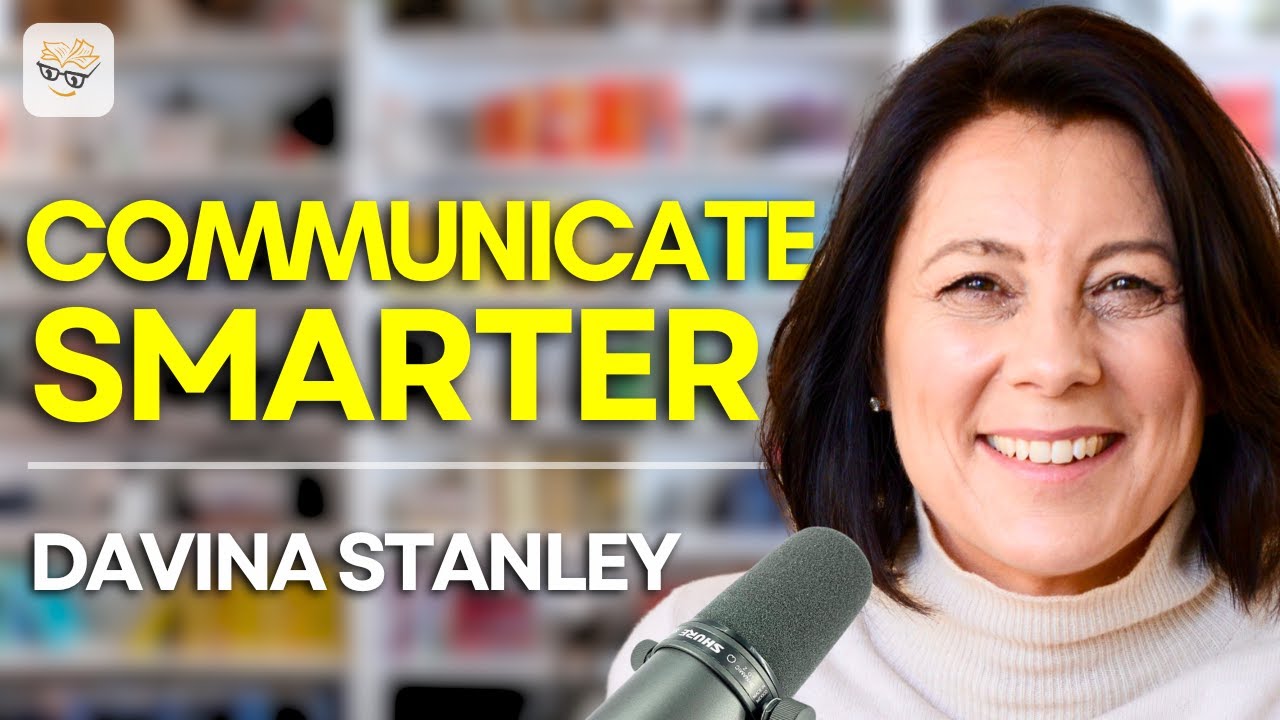
In this episode of the Book Thinkers Life‑Changing Books podcast, host Nick Hutchison interviews communication coach Davina (referred to as Devona/Devana) Stanley. Davina shares her eclectic career path—from a potato farm in Australia to kindergarten teaching, then a communication specialist role at McKinsey Hong Kong—illustrating how structured communication techniques enabled her to tackle complex business tasks like a 50‑page finance deck. The conversation centers on the paradox that constraints fuel creativity, and she outlines a concise messaging framework: a brief introduction, a single main message, and a few supporting points, all presented with white space and visual hierarchy (bullet points, bolding). She emphasizes the importance of deeply understanding the audience and stakeholder motivations to persuade effectively, and she critiques AI tools such as ChatGPT, noting their usefulness for summarisation but their inability to bridge context, detect gaps, or maintain appropriate reading levels without human oversight. Davina also discusses the value of upfront preparation (“sharpening the axe”) to accelerate decision‑making, the role of collaborative drafting (Board Paper Bootcamp), and practical hacks like the “Marie Kondo for ideas” analogy. Listeners are directed to her Clarity First Program (clarityfirstprogram.com) for courses, free email lessons, and books, and she recommends Richard Metcalfe’s Making Time for Strategy as a recent impactful read. Throughout, the dialogue blends personal anecdotes, actionable advice, and reflections on how clear, simple communication drives career advancement and organizational progress.
Chapters
Yet the senior leaders want you to take a risk. So a lot of the work that I do with communication, whether I'm working with more younger professionals or more senior professionals, is actually about the value of constraints on your thinking and how you can use those constraints to push you to think, but also to have a point of view. The fundamental premise of the way I work with people is, okay, so what are you really saying here?
Devona, welcome to the Book Thinkers Life-Changing Books Podcast. How are you feeling today?
I'm awesome, Nick. It's so good to be chatting with you again.
Yeah, we're here to talk about all things communication, how to communicate collaboratively, more efficiently, in a faster manner. So there's so much value that we're going to unpack today, and I'd even say that effective communication skills are more important today than they ever have been before. So Before we jump into that wonderful subject though, I'd love to understand your background a little bit because I don't know too much about it. So how the heck did you get into this space?
Oh, I have an eclectic career. So I began as a kid on a potato farm in Australia and thinking that anything was possible because I had no idea what anything was, right? So there were no sort of limits. in a way, but also no constraints around like what a career looked like. I had no idea about any of that. So I became a kindergarten teacher, which was such the wrong thing for me to do. Okay, just wrong. And so I did that for a heartbeat. And through a series of steps, I changed careers completely into communication. And then by chance, I would say, joined McKinsey in Hong Kong. as a communication specialist. And so I learned to write when I was at teachers college. A wonderful Australian author taught me how to write as part of the teaching curriculum. So I knew that that was something I really enjoyed. And I just landed on my feet with this communication specialist role at McKinsey. And, you know, it just blew my mind, you know, it's to the ways in which you can think about communicating, about how you can use a really structured way to unpick, I don't know, the first thing I did was something like a 50-page PowerPoint on restructuring the Singapore Stock Exchange. I mean, I had no idea about any of that kind of world, but the techniques they taught me meant that I could do that. So going from using really creative techniques to these highly structured ones was really quite fun. You know, the things that I learned at Teachers College from this children's author were fantastic, but totally useless, you know, in fixing a 50-page PowerPoint. And so, you know, I've just loved that journey of learning these new things. And I've been working independently for a long time now, sort of after the McKinsey time.
Yeah, I have a bunch of questions that we can unpack, but my first one is a little bit out of left field. So, You mentioned growing up on a potato farm in Australia and sort of believing as a kid that you had no limits because you didn't know that those limits or constraints existed. What do you think it is about society today where children are the most limitless and the most creative, and then it seems to die a little bit as we age? Like, what is it about society where that, that happens?
It's statistically quite proven, I think. I don't remember the actual statistics, but I remember learning at teachers' college that was true. And then I've read more things recently. I just think we— education is a system. The school— let me reframe that. Schooling is a system that you've got to get through to function in our society. And so unless you have an alternative education pathway to go through, through homeschooling or Montessori or some of these other Steiner-type ways of learning where— I don't know if it's cause and effect, whether the kids who go through those pathways have parents who are really determined to let them be, or whether it happens because they're there. I don't know. But I think, you know, school is a system. It's an industrial system, isn't it? And so you learn so much about behaving, about passing tests, about conforming. And, you know, those things really matter actually to have a functioning society. But it means that in— I think, you know, some of the creativity gets lost. You know, you've got big classes, you've got kids who've just gotta keep up, gotta do the thing, you know. So I think it's just the way it works, isn't it? Really?
Yeah, I think so too. My wife and I, we just had our first baby. Uh, let's see, only like 2 weeks ago.
Oh my word, you look remarkably fresh for a man who's just had his first baby. Congratulations.
Yeah, thank you so much. And, and over the last year or so, we've been doing a lot of reading, as you can imagine somebody like me would do. It's, it's my favorite way to learn and I just read a book called The Montessori Baby, and I think that is a path, or homeschooling. I think that some version of those things will get mashed up into how we decide to raise our child, because just like you've highlighted, I've noticed that so many people, especially business people, as they age, they get less creative and more structured. So my next question for you is, with the senior leaders that, that you help, do you find that they lack creativity and they're too structured? Do you find that They're too creative and lack structure. I know there are so many other variables other than those 2 things, but they sort of exist on a spectrum sometimes, don't they?
I think there's a suggestion in what you're saying there is that creativity and structure are opposites. I don't actually think they are. So I think that structure can push for creativity because constraints actually drive creativity. So When I look at why people conform, let's say, in a business setting, it's usually the social pressures around them and the fear of taking risk. And yet the senior leaders want you to take a risk. So a lot of the work that I do with communication, whether I'm working with more younger professionals or more senior professionals, is actually about the value of constraints on your thinking and how you can use those constraints to push you to think, but also to have a point of view. The fundamental premise of the way I work with people is, okay, so what are you really saying here? And, you know, if you are sitting at a desk some of the time, and even if you're not sometimes, you're not sitting at a desk very often, your boss actually wants you to think. And so when one of the biggest challenges senior leaders have is trying to peel off all the bureaucracies, is, you know, what's really going on here? Whereas you get people in the middle who are a bit scared, maybe who wanna hold their position for whatever reasons. They're just not confident. They're, maybe they feel they've been promoted too far. Maybe there's all sorts of other reasons which, you know, I don't presume to understand them all. But I actually think the really successful ones are really creative. So I think it's the fear of having a point of view and standing out, and maybe the lack of confidence that people might have in having a really good discussion about something where you don't agree with someone, and you've actually got to stand up for your point of view, not in an aggressive way, but just say, Well, you know, the analysis I've done suggests this. And then if the leaders can hop in and say, well, that may be true, but how do we make that commercial? How do we fit that within the strategy? You know, if you can think more and understand more about the strategy for the organization that you're working within and how the analysis, the work you're doing fits within the team, the division, the company's strategy. Then it just becomes a great discussion, you know, ultimately writing and PowerPoint are proxies for a discussion. So I don't know if I see a lack of creativity as people go up, you know, I think people have the capacity for it.
Oh, I do too. Yeah, I do too. I love how you said constraints drive creativity. And that sounds— it almost sounds counterintuitive, but I've seen that play out in other areas of my life. I mean, I don't do a lot of, you know, business papers in my day-to-day, but I've seen in other areas of my life where constraints actually drive all sorts of things— creativity, progress. Like, the limit itself actually creates opportunity.
Yeah, that's right. And I mean, you think of what Elon Musk is doing at the moment. You know, I think yesterday I saw in the paper that His rocket just landed back in the arms that it had launched from. And it was quite remarkable to think that this 18 or 19-story-tall rocket went up and then back on exactly the same spot. And you think, what is it that makes him be able to do this? And I think he's had constraints for money all the way through. Obviously, he's phenomenally clever and he's hired phenomenally clever people, all of that. comes together. But a lot of it, I think, is the constraints of how do we actually make that rocket land back in exactly the same spot? There's no wriggle room, is there? That's a tight constraint. And so if we think, well, communication isn't physics, right?
Mm-hmm.
But the way I work with it is using logic where we have some rules, if you want to call them, you know, a super short introduction, one single main message, and then a small number of supporting points that if we interrogate them, you can see the relationships between them. And so whether you're writing an email or a book, you know, anything in between in any format, those principles apply. And so when I look at communication, if we think of that 50-page finance deck that I mentioned on the Singapore Stock Exchange, you say, okay, well, how could a kindergarten teacher with some communication training and an understanding of this structured communication toolkit, but really very minimal business and certainly very limited finance understanding, certainly no knowledge of how, you know, stock exchanges work, like none. How could I take this really sort of unstructured 50-page PowerPoint deck with all these numbers. And I assure you, numbers are not my favorite thing. I can do the basics, but they're not my favorite thing. So how can I actually untangle it and turn it into something cohesive and coherent that I could then take to my boss, fear and trembling, because it was the first task I'd been given. And it was sort of like, okay, so here's your training. Now prove you can do it. You know, it was that. And I said, I went to her and I said, okay, here's what I think he's trying to do. And I'll use some language, but, you know, it's, it's got 4 parts to it. I think he's trying to make it a deductive structure. If anyone's learned Pyramid Principle, they'll be familiar with that. 4 sort of sections of it, but the links in the logic are really poor. So I think you could do it neatly as 4. This is how I'd do that. But you shouldn't. You should do it only 3 because deduction has a major premise, a minor premise, and a conclusion or recommendation at the end. So it should only have 3. So if you take that rule on board, you can do it in 3. And here's what it would look like. And she's like, oh, thank goodness. Okay. Yeah, you can do it. All right. Now go pitch the managing partner. It's like, oh yeah, it's his client. He needs to be sold to. Okay.
All right.
So I could, but I could do that. Because the techniques were so helpful in helping me untangle, put things in like Marie Kondo with my thinking in the right place and make sense of all this mess. And, you know, that's a creative process, but it's also using structure. So, you know, it's an incredibly powerful technique for any sort of communication.
Yeah, I love that Marie Kondo for your thinking.
Oh, totally. Think colors-coded sock drawers, but actually for your, you know, your ideas, your mind. Yeah. When you're communicating.
Yeah. And another kind of left-field question that just popped in my brain, but I wanted to ask it since it sort of just popped in. What are your thoughts on how AI and platforms like ChatGPT are stepping in and helping people simplify and organize and clean up their thinking.
So, so far I've had mixed experience with it. We experimented with it with some research that we did in our business, and we wanted to understand how much time, but more what proportion of the out-of-hours work time was spent by people, whether individual contributors, leaders of small teams, or leaders of really huge teams were spending reworking their own communication. and other people's communication. So we got some analysis, we got some findings, we did a survey, we got some things back. And my assistant said, oh, here we go, throw that in ChatGPT. What are the key findings? And there are all these comments that people gave. And what was really interesting was I looked at it and went, oh dear, my business is finished, right? I skimmed it, went, oh dear. And then I went, hang on, I'm gonna read it properly, of course. And so I read it and went, oh, interesting. it can't differentiate between repetition. So there were 5 points. It was laid out nicely, 5 bullet points with like bold statements at the beginning, and then, which, you know, as a principle I would encourage. And then, but when I read them, I went, oh, but actually there's gaps and overlaps in the thinking here, huge gaps and significant overlaps like repeat. So From that level, I think the human has enormous value. Maybe it will get better. I assume it will. But I also found when I did some tests with it, so I put what it spat out into another tool that I use called Hemingway, which is if anyone needs help with their writing, I think it's so helpful. It's like $20, really cheap. And so you just put it in and it tells you the reading age. It tells you whether sentences are well structured or not. And so I did that and it was like really high reading age. So it wasn't easy to interpret at all. So I then threw it back into chat and, you know, tried to lower the reading age and so on. So I think sometimes it can be useful at summarizing, but humans need to interrogate it pretty carefully. I think too, when I see the reading age that comes out of the ChatGPT stuff, It doesn't always improve it. It often actually makes it worse. At least I understand I write for a living. But yeah, I don't think its standards are very high. I also think it lacks context. So where we add value, be it an email or anything, is taking the facts. And this is where creativity comes in. You take the facts and you look at your context and you say, how do these relate to each other? You know, how do I actually make sense of this where I am? So, so what if the fact is this, if I can't make use of it? So ChatGPT can't make that bridge, right?
Right. Yeah. No, I, I have also had a lot of mixed kind of, uh, experiences with it so far. I'm finding it really useful for some things and totally incompetent for others. And I think the, the human element is becoming more and more important. I over time, I think it's easy to differentiate what a, what a system like ChatGPT might throw at you versus what a human who understands all of the context might be able to do. And you talk about that in this book. You talk about, for instance, understanding each stakeholder, their role in the decision, what their expected outcome might be. And so those are variables that are hard to capture in a, in a platform or a system like that. And you also asked me sort of what You know, before we press record, we were just kind of chatting and you said like, what differentiates your writing and your style from everything else? Because I have read a lot of books and what I find with you is you're incredibly logical and you're incredibly actionable and thoughtful. And I mean, you come across as very articulate while talking with you. You also come across that way in the book, but it's really easy to understand and you could tell that. You're a professional writer in a different capacity, you know, which a lot of authors don't come across that way. So for all of those reasons, you're a human, and I think that's the most important piece.
Yeah, thank you. Yeah, no, it's an interesting sort of thing writing a book when you help people communicate because I actually don't write very much at all anymore. You know, I'm coaching other people and giving them skills to help them write or, you know, think through their messaging. Really, if I think what is my thing, I help people think through their messaging and give them a technique for doing that. But, you know, one of the principles we work to is, okay, so if you open an email, a book, whatever it is, you should be able to skim it and not just skim headings, but skim the messaging and that it should make logical sense, but it also should make you wanna know more. So, you know, you put an idea out there, a point of view about something, and then Make someone go, oh, that's interesting. Tell me more, rather than holding it back to the end, you know, bringing those ideas forward and making them really visible, structuring it visually to make it really easy to find. It doesn't matter if you're organizing a conference or, you know, solving world peace. It doesn't matter what it is. It's the same principles apply, really.
One of the things I remember, uh, from our first conversation, which feels like forever ago, I don't know when it was, a month ago, 2 months ago.
Yeah, not long.
Yeah, not that long. Maybe a month, a month, 5 weeks ago. Anyway, I remember just asking you more and more questions about what you do and who you serve with your books and with your coaching and everything that you do behind the scenes. And one of the things that really stuck out to me was you help people persuade others with their writing, like be, be more persuasive with your writing. So I'd love to ask, like, for a little preview of that, could you share some tips for the audience, some things that they might be able to get from reading your work more? But just like, how do you help people persuade others?
Well, I think first and foremost, it's almost the hardest thing in the world, right? Just understand them. If you think, what are the hard things in life? Some of them are just clichés. It's like, well, understand your audience. It's like, yeah, sure. But how, you know, especially how when you never meet them because, you know, you're often writing for people you never meet. And so I think, you know, having a very clear purpose for every communication. As a result of this email, I want Fred Blogs to agree to give me $50, I don't know, for my training workshop I want to go to, whatever it is. But thinking, where's the value in this for the other person. Now, in big corporate things, you first and foremost got to think about the organization as a stakeholder. You know, what is the entity? You know, what is the company aiming to achieve? What is your ethos? All of that. But then as a human, just learning whatever you can about your key decision, like who actually will make the decision, is not always obvious. But then think, well, in terms of their role, what are they responsible for? That's more concrete. That's easier to find. And you're going to spend more time on this, of course, if it's a bigger thing than if it's a small thing. But if it is a bigger thing, then you might say, well, who knows that person? Who can I speak to who can give me some insight on their past decisions, on the way they work, on things that really matter to them? And you know, you can read the tea leaves a bit around a company. Okay, budgets are really tight at the moment, so we're asking for money. We better drill in and make sure that we've really thought very carefully about why we're proposing $50 and not $45. You know, so you really, I think you've got to shore up your own proposition and make sure it aligns with the things that you're asking for. So it's not just about, you know, people talk a lot about emotional connection and these things in terms of communication. Some of it's just, oh, you nailed that spot on. So just getting very clear about what you need and why. And I think, you know, 2 things are hard. One, understand your audience. 2, explain yourself as to why your thing really matters. It's one of the hardest things to get people to do because if you're an expert at something, it seems obvious to you. But your decision makers might not have the same technical discipline as you. So if you're talking to a mid-level decision-making team, you've usually got people from all sorts of different backgrounds on purpose, right? So you've got the people perspective, the technology perspective, the marketing, the, you know, every other perspective. So you've got to be able to explain why. Things matter, you know?
Yeah, I do. You did a wonderful job explaining that, and it, it, uh, reminds me of my days of, uh, back in the day I used to have a software sales job, which I had for a long time, and I would, uh, I would be selling these really complex software packages to other companies. So it was B2B, and those other companies would not only have 4 or 5 different decision makers at varying levels in the company with different reasons for wanting or not wanting us to come in and replace their software. Plus, they'd be evaluating 4 or 5 other solutions at the same time. Now, you add all that together, and there are a lot of different variables that you need to account for. And so, although somebody might think, oh, you just sell the software, here are the highlights. No, no, no, no, no, no, you need to spend a lot of time understanding all these different variables. And so, it's, uh, it's funny because it made me think, I was like, oh yeah, no-brainer. This is also a book for salespeople in complex sales situations.
Yeah. Yeah, absolutely. And look, simple things, you know, get on LinkedIn, have a look at their history. Gosh, they were an accountant. The numbers really matter to them. Gosh, they worked in sales. The sales are gonna really matter to them. And not, that's not, you know, people are not linear or singular in their focus, but you can glean such a lot from available information, can't you? And so I imagine you spent a lot of time on LinkedIn, you know, Who's this person we're selling to? You get to know your competitors too and know their strengths and weaknesses. And, you know, even internally when you're pitching for money, let's say for something, that's a competition too. It's a sale. Absolutely, it's a sale because every dollar is being prioritized and your leaders are making trade-offs and Do we give $50 to that or to that? And what matters more? And, you know, people, so many people come to me and say things like, well, tell me why my communication failed. We'd had this terrible fail. And then I learned that they've got a new CEO. And, you know, their project had been really wonderful according to the past CEO because it was a passion project, but it never really made sense. So you've got to really be very honest with yourself about whether your thing actually makes sense for the business and just know, okay, so this is, you know, my managers, the CEO, whoever, it's their passion project. That's great. But you've got to deliver value to actually make it work. It doesn't matter how beautiful your language is, you know, it's got to actually do something useful.
Yeah. Begin with the end in mind. What's the outcome, right? We talked about that a little bit before we press record, I think. And Now, that's one of the cherished 7 habits from 7 Habits of Highly Effective People. Another one from that book is sharpen the saw. And it all— that, that one always reminds me of the idea, if you give me 6 hours to cut down a tree, I'll spend the first 4 sharpening the ax. And one of the things that you teach in, in your work is how to get to decisions more quickly.
Absolutely.
And what's ironic about that too, just like the constraint thing earlier, is that if you want a faster decision, you need to spend more time preparing your pitch. Basically, you're— and so it requires more time upfront, but that sharpening of the saw, of the axe actually creates a faster process for the decision.
Absolutely. And, you know, sometimes you're sharpening a different saw as well. So I had an email come from somebody this morning actually who just participated in my Board Paper Bootcamp. And she said a few things and then she said, you know, it was so helpful to crystallize the messaging because we worked out that the reason we were struggling with it was that it was— our case was too weak. We really didn't have a case. So the good news is we realized that rather than sending a really waffly thing up for decision and embarrassed ourselves with the decision maker because we really didn't have a case at all. And so we could work that out and say, right, let's manage our influence and our integrity and so on with the decision maker by just saying this thing, it's not going anywhere either until we can work out, you know, change it, work out where the value is, or maybe never, right? So it's being gutsy enough to actually say this thing doesn't help or it's just not ready. But also, you're absolutely right. You know, what you don't want to do is A, send something up again to your manager, whoever, send something up that they're going to reject, that you— it's not— if it's not clear in your mind, it's not going to be clear in theirs. So hold back, you know, if it's not ready, hold back. Make it ready, of course, if you can, but don't send it until it actually says something useful, because when you do, you're not going to be sent back with questions. You're not going to be spending time in that really valuable meeting doing things like having your manager say, so can you explain to me what happens here? And having your manager say, oh, so is this what you're trying to do or that? And going down all these rabbit holes which are really like not where you want to play. So as soon as there's a lack of clarity, you send your audience off on all these tangents. You have discussions that are frustrating for you and for them, trying to work out what the whole thing is rather than having these really great discussions where they can go, oh, what a great idea. Okay, so if we did that, would that mean this? Does that mean we could even do that? Oh, so Or even better, you know, you pitched your case and they say, awesome, go do it, come back next week with the plan, you know. So just such more satisfying conversations. And one thing we talked a little bit about before is that I think when people think of writing or preparing PowerPoint at work, you tend to think of this as a solitary activity. This is something I do at my desk, rather than saying, actually, there's got to be some of that. But at what point in that do I actually involve other people? And what I give people is a really structured way to flush out and be creative around, okay, what outcome do we really need? And how do I map the messaging on a single page so that I can collaborate and get really helpful ideas in from maybe a peer who can say to me, oh yeah, great, but maybe strengthen that bit there a bit, or, oh no, that's terrible. Much better to have a peer tell you that than your skip manager tell you that, right? So having a structured way to collaborate around important messaging where your people can help you really quickly, you know, people often will send a draft up to their manager for review, Right? And what tends to happen is the manager has a look at it and says, great, okay, I can see there's a lot of work gone into this. And it's gonna take, it's gonna take me some time because I really wanna do it justice. I want that thinking time. So I'm just, I'll, I'll get to it when I get a gap. And of course they're back to back in meetings and there's no gap. So it waits and waits and waits. And then the manager thinks, oh, crumbs. This actually has to go out in 2 days, tomorrow. So at 9 o'clock at night, they open their laptop and they have a look and they have no choice but to redo it for you because they've left it too late because they can't find the messaging quickly. So if you send it in a way that the manager can find the messaging really quickly, then they can come back to you really quickly and everything moves forward. Otherwise, you create bottlenecks just by not being clear.
Yeah, I was just, as you were saying that, I was on my other monitor over here looking for a quote that I highlighted, which was, can you glean the core messages within 30 seconds? I mean, that's the level of clarity that, that you're suggesting we find. And, you know, I think that I've just noticed this in, in my own life and in my own business experience. If, if the average person Never mind, like building an entire paper, but even just a simple email. If the average person spent an extra 2 minutes reviewing an email, you know, restructuring it. So you have that statement up top, the body, the supporting points. It's like life would be so much better, wouldn't it?
And, you know, the simple things, right? The seemingly simple things. Take 2 minutes, work out what the main message is, bring it near the front. Now, the quickest hack of all, bring it near the front. Put white space around it and then don't do big blobs of text. Work out the structure in it like bullet points, white space, you know, it's— I think, you know, I tell people, okay, so you've got a sentence at the beginning, hi Mary, carriage return, white space, a sentence, white space, and the main thing, Right? Give them a tiny bit of context so that they can turn their head into your world in a heartbeat. White space, main message. You can bold in email, right? Don't do random bold, but bold the main thing. More white space and then some bullets or some numbers underneath, right? And if you've got more than 2 lines in a bullet, there's a thing where you can put a carriage return like I think it's Shift+Enter and have white space before you get to the next bullet point. It's amazing how different it becomes to have white space and a tiny bit of bold, not random bold and lots of colors all through something. That's a high— that's like a red flag for, you know, not Marie Kondo, you know, that other kind of thing. So yeah, just make it easy to find. what you want them to do.
Yeah. Yeah, yeah. That point right there is worth its weight in gold. So everybody should grab a copy of these books and check out your site and continue to learn from you. And you'll be distributing some great thought leadership video across all the socials. So of course, we'll have all of your social media in the show notes. But before we go, I've got a couple more questions for you. So first is this. There's somebody out there listening right now, and if it's you, you know who you are. You're on the fence. You know, you're like, ah, I think I wanna buy some of these books. I think I wanna learn more from Devona, but I'm not quite sure. So what's your message for that person?
Ooh, the clarity of thinking in your message will set you up. If you can be clear in the thinking around your message for any of your communication, your career will absolutely take off. I've seen it again and again. And, and again, where people who might be stuck because they're working in a very technical place and they can't make that step up to think conceptually, where people just suddenly start sending emails that get responses really quickly. You know, if you, if you want to move up in your career, you've got to be able to communicate clearly, and you need to really focus on the messaging. Don't focus on the documents. They'll take care of themselves. Focus on the decision you need and the messaging you need to get there. And, you know, my books help you with that.
Oh yeah, that's so perfect. Yeah, I, um, another quick side tangent. I recently put out a LinkedIn post, a job offering, kind of listing what we were looking for. And part of this Part of this hiring process for me, for this customer experience manager that we're hiring, I'm giving them sort of a few tests via email because I want to see how they communicate. Is it clear? Is it, is it to the point? And I'm looking for that clarity piece, especially having like read your books over the last couple of weeks. So I'm using it in my own, in my own process. And then of course they'll be reading these books so that they know how to effectively communicate.
Thank you.
Yeah, yeah, of course. It'll be be part of our onboarding process. Um, but I love that. I love what you just stated. I think it's so incredibly important. You will stand out if you can communicate with clarity, right?
Stand out for the right reasons.
For the right reasons.
Even if you say something that your manager says, oh no, not that. Good news, you've got the answer, right? Quickly. So I think not to be afraid of that, you know. Yeah, you mentioned those conversations. It's, it's okay to disagree or just to learn because you didn't know something, so they've helped you, and then you can, you know, you can address that.
Yeah, I, I love that. I just, I'm, I'm excited, so I, I jumped in and, and cut you off accidentally there. But one of, uh, the first interviews ever on this podcast a few years ago was with an author named Vishen Lakhiani. He's the founder of a company named Mindvalley, and they do a whole bunch of cool stuff. But he said to me, he's like, Nick, when, when you create content or when you are hiring for a position, he's like, you should be opinionated. People should either love you or they should either know that they don't love you. But everything in between, that ambiguity, that's what creates mediocrity and sort of ruins companies. It creates miscommunication. And so I love that you're an advocate for being opinionated. State what you want or what you're for, what your opinion is as a result of the data. And if your manager or your senior leader, whoever the owner of the business doesn't agree, they can tell you that rather than be confused. And, you know, customer always says no.
Yeah, definitely. Definitely. So no, that's right. And, you know, ultimately it's all about contributing to progress, isn't it? And if you don't have clarity around your little piece of that, it's really hard to contribute to progress. And so, you know, I love hearing things like, oh, I think there's lots of less— there's a lot less silly emails floating around. You know, I feel like it's just, you know, our whole world is just feeling a little calmer because we haven't got all this silliness going on because people are actually thinking before they go Send, you know, simple things, simple things.
Yeah, you had a line in here. I'll find it real quick because I had saved it. It said, yeah, great writing and powerful presenting are the consequence of great thinking. That was from your introduction, and I, I loved that. Uh, we need to think a little bit more. So a couple more questions and then we'll wrap things up today. This is a question that Luke normally asks, although he wasn't able to attend the podcast today. So it kind of goes like this. Imagine that your writing, your coursework, it all disappears, but you could leave the world with one simple message. What would that message be?
Oh, okay. Just simple message around my work.
Yeah, around your work. If you could leave, you know, all of these business people one message, one simple message, what would it be? And I didn't give you any time to think about this or prepare. So whatever your gut reaction is, is totally fine.
You didn't. So what would I like people to understand?
About communication, we'll say, we'll add that constraint.
That the money thing is that single message that you need to communicate and you need to be able to convey it in a single sentence. And as much as that sounds like a cliché, it's true. That should be one idea, one sentence, 25 words or less in active voice. Yeah. If you can sum up anything in that, you know.
Yeah, I think so too. It's, yeah, there's something amazing about simplicity. Yeah.
Simplicity looks easy when it's done.
Right.
People underestimate how hard it is to be simple.
Yeah, it's that whole thing of, oh, if I had more time, I would have written a shorter letter, you know, that whole thing.
Yeah, it is that whole thing. And it's absolutely true, you know. And, you know, well, here's another thing I'd add, you know, there are faster ways to think than to write. You know, a lot of people say, oh, the best way to think is to write. And I think writing is a really powerful way to think, but it takes a very long time. And for practical business communication, there are much faster ways, you know, to focus on the thinking first. You know, my website is Clarity First Program, right? Because if you can get— find a hack to get clear about your thinking first, The writing is actually really easy. So if you're writing for yourself, you know, thinking to writing to think, it's a different thing than writing for other people. And when you want to write for other people, there are much faster ways to do it than just writing.
Yeah. So your version of if I was given 6 hours to cut down a tree, I'd spend the first 4 sharpening the axe. Your version would be if I was given 6 hours to write a paper, maybe I spend the first 4 thinking, Thinking and talking with other people, right? Collaborating too.
Yeah. And introverts need to do work on their own. So I don't mean to diminish that. I think that's really important. But as a result of this email, I need Mary to what? That little formula, nail that and then work out what you wanna say. Yeah.
Yeah. And the rest is history. All right. Second to last question for those that want to learn more about you and get copies of your books and learn from your courses and everything, where should they go? What should they do?
Oh, wonderful. Come to my website, clarityfirstprogram.com. I've got some free courses. There's a 10-minute email course if you want to get a little taster of how I think and how I work. All the information about my books is there, my online courses and my live programs as well.
Okay, amazing. We'll make sure that all of those— well, that that link is in the show notes. Okay. And here's my final question for today. I see a lot of amazing books behind you, including copies of your own.
Yes.
And I didn't prepare you for this either. So whatever comes to mind first is totally fine. But what's the best book other than your own books? What's the best book that you read in the last 12 months?
Making Time for Strategy by Richard Metcalfe. It's, um, I know Richard, I collaborate with him and I just think that whole idea that, you know, making time for strategy doesn't matter again what level you are, but making time to think, it's such an easy read. He writes beautifully and makes everything come to life so well. And the concepts are so powerful. They've really changed the way I run my business. So I'd encourage people to have a look at that one.
All right. I just added it to my cart. Yeah. Yeah. I just, one final reflection for me. I've found that the more time I spend working on my business instead of in my business, the more successful it becomes. And as a result, the more authors we can help, the more readers we can help, etc., down the line. And it's counterintuitive, just like this entire conversation has been. The more time you work on something, you know, the easier it is to work in it later on. So thank you. Listen, thank you so much, Devana, for the conversation today. You're obviously a wealth of knowledge. A couple members of the Book Thinkers team have had the chance to get to know you intimately, and they have nothing but amazing things to say. So I can't wait to continue to promote your work and promote you and help you get in front of the right people. And it's really been a pleasure chatting with you today.
No, my pleasure, Nick. I've loved working with you and your team also. It's been a real treat.
More from Nick

Napoleon Hill’s “Think and Grow Rich” is a timeless classic #selfhelp #personaldevelopment

4 Books to Help You Get Better at Decision Making #selfhelpbooks #bookrecs #nonfictionbooks


Have you read this book yet? 📖: The 5AM Club by Robin Sharma #selfhelpbooks #robinsharma

Dan Sullivan on Listening to Your Customers Instead of Watching Your Competitors

5 Books That Will Boost Your Financial Intelligence #financialfreedom #nonfictionbooks

The People That Preach the Loudest About Virtue are Usually the Most Power Hungry



Books are the greatest mentors you can find #selfhelpbooks #businessbooks #successmindset

Let’s fight this toxic instant gratification culture together 📖 #selfhelpbooks #jimkwik