The Truth about Autoimmunity, Cholesterol & Chronic Illness with Dr. Hartman
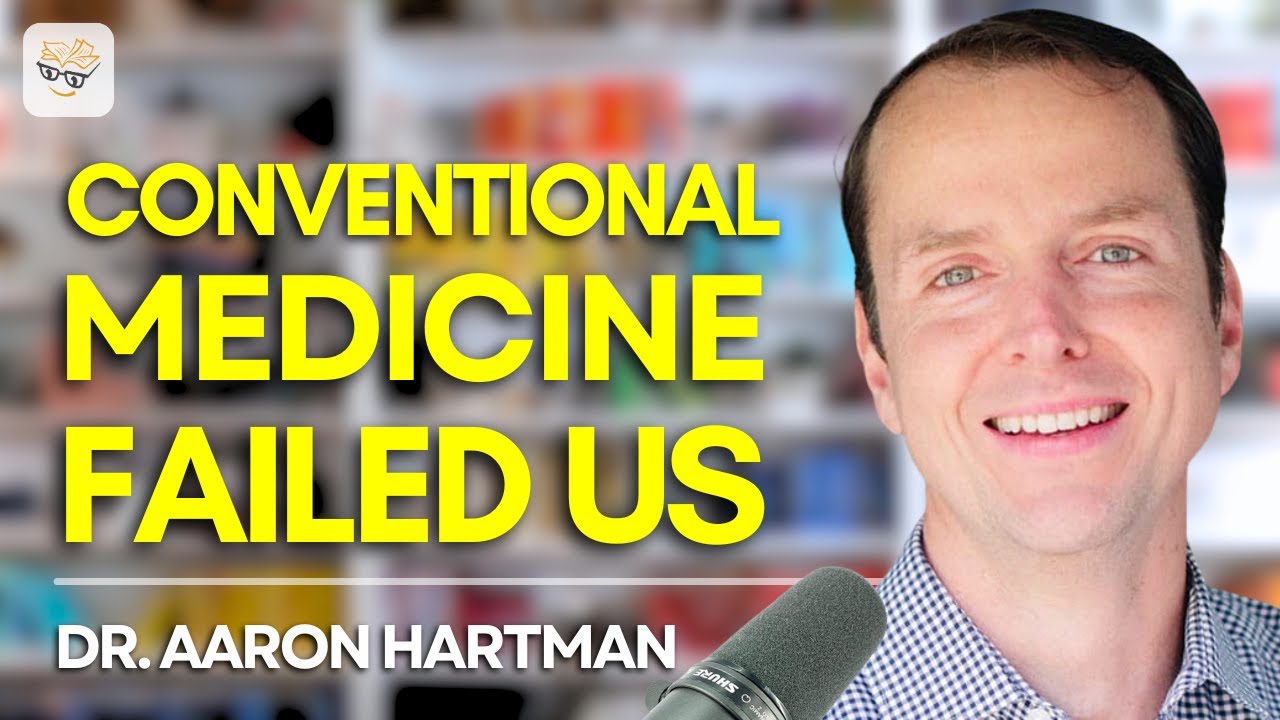
In this hour‑long interview, host Nick Hutchison talks with Dr. Aaron Hartman about the personal and professional journey that led him to write his new book Uncurable. The conversation begins with Dr. Hartman’s first encounter with Anna, a foster child born with severe brain injury, and how caring for her reshaped his medical practice, sparked a deep dive into functional and integrative medicine, and motivated him to start a clinical‑research company. Dr. Hartman describes the systemic problems he sees in U.S. healthcare: a specialist‑driven, procedure‑focused reimbursement model that discourages holistic thinking, the “VOMIT syndrome” (victims of modern imaging techniques), and the silencing of clinicians who question standard protocols (e.g., refusing a feeding tube, being reported to child‑protective services). He links these issues to broader public‑health failures, such as poor nutrition education, government‑influenced dietary guidelines, and the prevalence of processed foods, high‑fructose corn syrup, and environmental toxins (obesogens, water contaminants, mitochondrial‑toxic drugs). The interview then moves to specific medical controversies: the outdated belief that diet doesn’t affect heart disease, the cholesterol “J‑curve” (optimal total cholesterol 200‑240 mg/dL for lowest all‑cause mortality), the impact of low cholesterol on hormones and myelination, and the role of inflammation in cardiovascular disease. Dr. Hartman critiques the blanket vaccine schedule, suggests nuanced conversations with physicians, and highlights the need for multiple inflammatory markers beyond hs‑CRP. He also discusses bioidentical hormone therapy, the shifting consensus on its safety, and the importance of personalized testing (growth charts for cerebral palsy, LDL particle number, oxidized LDL, homocysteine, F2‑isoprostane). Throughout, Dr. Hartman emphasizes the role of faith and personal responsibility, the necessity of both top‑down and bottom‑up health education, and the emerging momentum of functional/anti‑aging medicine (A4M, IFM, AIHM). He provides practical resources for listeners: his book Uncurable (incurablebook.com), his website (aaronhartmanmd.com), and guidance on finding qualified functional‑medicine clinicians. The interview ends with a hopeful call to action for broader health literacy and systemic reform.
Chapters
A lot of it's just the educational piece. It's gonna take us a while to reeducate our population that what you eat matters. I mean, when I was in 6th grade, we had Jiminy Cricket, you know, you are what you eat from your head down to your feet, right? Are the kids seeing that in school anymore? I don't know, probably not. It's, I think there's a big educational piece and it's also just the government, you know, we've picked the wrong things to put, you know, the, the food plate, the food pyramid. They've picked these things that are largely influenced by special interests, not actually by data. And so And it's hard. People are like, if this is real, if food really matters, why, why isn't anybody else talking about it? You know, when I was in medical school in 1996, I remember one of the top cardiologists at MCV telling me food didn't matter. What you eat didn't matter for heart disease.
Hmm.
You know, as he smoked his cigar outside between lecture breaks, you know, so it's one of those things where like that was the, that was not a weird thing in 1996, right? And so it takes years to change country's, um, mindset. So this is gonna be a long game. It's not gonna be a short game. It's gonna be a long game. And things like what you're doing, education, things like what I'm trying to do, um, the whole Maha movement, just from the— the government needs to educate people. It needs to be a top-down, but it has to be a bottom-up as well. It can't be one or the other. It has to be both.
Dr. Hartman, welcome to the Book Thinkers Life-Changing Books Podcast. I'm excited to chat with you about your brand new book, Uncurable. And my first question is this: tell us about the first time that you saw Anna and why it's etched into your mind like it happened yesterday.
My wife Anna was one of my wife's, um, patients. My wife's a pediatric occupational therapist, and, um, she'd been seeing Anna ever since she got out of the hospital when she was 6 weeks old. And her foster home was closing down, so my wife was like, hey, would you want to consider Um, bringing her into our home. And so sure, so it was, it was like an introductory meet and greet, meet the foster family, meet, meet Ana. And we walked into the home and I just remember her sitting in the bumbo chair towards the right, leaned over, kind of falling over. A bumbo chair for those who don't have young kids, I don't even know if they still use these today, actually, if they're still commonly used, um, with young kids or not. I don't know.
But I have a 1-year-old and I don't think we have one of those chairs. So what is it?
Well, it's basically— and it might— for neurotypically— for typical normal kids, it's probably not used, but it's a chair you sit a kid in that has tone issues. They can't hold themselves up. And it basically almost like they sit in a chair that comes along their sides and just allows them to kind of sit up. And she was just kind of being held up and kind of like bending forward, kind of in a really bad position with her hands kind of turned in. And so that was just the first image of her, um, And she had brain damage. She was exposed to crystal meth throughout the entire pregnancy. She had a stroke before she was born. So you could physically see it. And she was like 12 months roughly at this stage old. You could physically see the damage that she had happened to her for birth. And so it was just one of those things you're like, wow, this is cute little girl that's got significant problems.
And What did you decide to do with Anna?
Well, it was more about— like many things in life, it was more my wife's prodding. And after a while, you kind of realize you become more comfortable with the way you used to think, you know, 15, 20 years ago. And I had a conversation with my wife, you know, like, hey, would we consider bringing her into our house? And just me being me, being a very linear, linear, you know, captain in the military, a physician, I'm like, you know, if we bring her into our house, you know, if things don't work out, can we give her back? And And my wife was like, sure, why not? And she knew— my wife knew. You know, wives know. You know, wives know. She knew that I was going to fall in love with Anna, and she knew that I needed to have that, like, out in my head. But, but we got— what we did with her is we brought her into our house, and from the get-go, I started doing the best I knew how to do. I mean, she was small for— she was small for gestational age, or failure to thrive is another term, which basically means she wasn't growing the way she was supposed to. So feeding Became a big issue, giving her enough food, and she didn't feed very well. So I'd spend time kind of flying food into her mouth, and my wife and I debate you know how much of that I did and all these different things. But the gist is that from the get-go, once we brought her in, I was all in as far as like again, it's the way I'm wired. Like I took this responsibility on. Now I need to do everything within my power to fulfill my responsibility, and that's part of my journey going from you know duty. driven to falling in love with her and then being, you know, my heart getting involved and realizing I had to figure things out for her. So it was— this whole story is also about my, my personal development, my personal growth, and, um, which is a huge part of the stories about— and my wife, both of our growth through this whole— the struggle. I mean, struggle of life and the struggle of bringing Anne into our home.
And I want to ask about a food-related story in just a moment, but before I do, and I think you know what I'm talking about, Before I do, what role did your faith play in bringing Anna into your home, if any? I'm curious.
Well, you know, you know, I have— I'm a person of faith. I'm a Christian. And part of those basic values are to care for those who can't care for themselves. We'd say today at-risk people, right? So in the old-school term, it was widows, orphans, and strangers. So it's the people without a country, immigrants, people without a family, and people without a spouse. And so Literally, it was when my wife mentioned Anna to me. It was like, here's an opportunity. Like, do you— wasn't an opportunity, it's really a challenge is the way I kind of took it. Do you really believe the things you say you believe? Um, will you open your house to this orphan, this little girl who has no home? And for me, it was very much like, I say I believe these things, therefore I need to do these things. And that also was part of my personal journey. Um, you know, there's, there's— I think there's an old saying, um, I believe it was, was it Anselm of Canterbury? I think said, you know, it talks about faith and belief, and part of that is just doing. A lot of times we we do things, and the more you do them, you understand the more. That's part of like the whole head, heart, hands thing. And so bringing her into our home was initially just an act of the will, but it changed my heart and engaged my whole body, my mind as well. And it's that it's that it was it became an inch at Cape Canaveral that was a mile at the moon. It's totally changed my practice of medicine. It led into me starting a clinical research company. It, you know, it, it resulted in me bringing Anne to my house. If you think about it, it's affected thousands of patients. Thousands of people's lives have been changed because of that small decision, um, to bring her into my house. And so further out I go from that little inflection point in my life, it's the more impactful Anne has been on. And that's part of the purpose of the book is I want my, I want my daughter's suffering. I want her pain. I want everything she's gone through, her challenges as well as her successes. I want all to be worth it. And I think people hearing her story and realizing they can do it too, um, will, will make it all worth it. You know?
I do. And I think that's a beautiful way of thinking about it. And the, the call for us to take action on our faith is a really interesting one that I'll be reflecting on a little bit more. I even have a tattoo, Dr. Hartman, that says faith in action. And I do think I take a lot of action, but the action that you taught, that you took of bringing Annie into your home, I mean, that's a really big one. So. What, what started to happen when she became really involved with your life as it relates to the traditional medical system? What blind spots did you start to become aware of, and how fast did that happen?
I've been pretty fast. I mean, there's this, you know, the couple of weeks you bring her in, you start feeding her. We took her to the— we lived in Florida. I was still in the military, and they had like a little, um, like outdoor water feature at the downtown place that people would play with their kids in it. So I took her there and sat her and held her and just played with her, trying to get her to hold herself up. And, um, just everything was just doing the standard thing. What was I supposed to do? Try to get her to walk as best she could. She couldn't walk. Get her to sit up on her own. She couldn't sit up on her own. Help feed her. She couldn't feed herself. So just doing all these traditional things you do with a kid with a brain injury. And, um, part of that was feeding. But what happened is, is we had an interaction with the GI doctor, um, who said she's too small, she's failure to thrive, So the next thing is to put a feeding tube into her, which that was like the slap in the face. Like, okay, you've, you've tried for your 6 weeks, you've had your 8 weeks and it hasn't worked out. So now we're gonna cut a hole in her stomach, put a plastic tube in and go from there. And knowing that affects speech, that affects swallowing, that affects brain development. I mean, you can't practice crawling when you have a plastic tube, right, hanging out of your belly. It just doesn't work very well. And so we said no. And, you know, it was, it wasn't, It wasn't anything big or crazy. It was just like, this is not the best thing for our girl. So no. And the system did not like that. And the GI doctor reported us to Child Protective Services for child neglect because we refused to do a surgical procedure on my daughter. And that was its own story. And the funny thing is my wife actually worked in the system. Actually, the nurse that, that investigated us, she personally knew her. So it's all these little things that kind of were funny how they worked out. That was the first inflection point where it's like the system doesn't like it when you say no. And if you say no, guess what? You might get in big trouble. The second inflection point was 6 months. This is more to your point. 6 months later, I found a growth chart. Well, actually, my wife, doing all her research, found a growth chart for kids with cerebral palsy, which was the diagnosis of Anna. Still is her official diagnosis. And she was in the middle. She was normal for age. So all of a sudden, the second inflection point was the specialist didn't know that this growth chart existed. And so they're getting ready to commit her to one surgical procedure that turns to another surgery, another surgery. Anna's 19, getting ready to turn 20. Typical kid with her diagnosis at her age would have had 13 surgical procedures by the time her age. She's had zero. And so us following the standard of care what we were told by the specialist, um, would've taken her down a completely different path. And that's when I realized personally, like, the experts didn't know, the system didn't like it when you push back. And I realized this was my burden to carry. This was my, you know, Fellowship of the Ring, my— I got to— there was my ring to take to Mount Mordor, and I had to figure out how to make this happen. Right. And so it became a weight, like an emotional weight on me that I had to figure it out. But the result was early mornings researching, early mornings getting up, reading articles, From around the world on different fields of medicine to figure out how to help this little girl, because I realized early on the experts weren't going to figure it out. They didn't know, and if I went to them with some of these things, I might get in trouble. So it really opened my eyes to how much the weight was on me to figure things out.
Yeah, this story was only the second time I had ever heard about the silo effect, and it seems like these specialists in the U.S. Like our system rewards people for getting narrower and narrower and narrower and narrower in their focus. And so you become a specialist in something like GI, but then you miss the full picture. It's like you can't see the forest for the trees, that kind of saying. And so why does the— why does the US system reward people for getting narrower, narrower and narrower? And why is that potentially a bad thing in some cases?
You look at our system versus the European system we have, and I haven't looked at this number in the last 5 years. This number's a little dated, but it was about like a 60/40, 70/30 split in the United States with specialists. So most physicians in our country are specialists versus Europe. They have more primary care. And it's based on, you know, government mandates, but also reimbursement. If, you know, if you get paid, you know, $75 to see a patient versus, you know, $400 to $500 to see a patient, Which specialty you choose, you choose the one who pays us, you know, 5 to 10 times more. And so what's happened, because in our system we pay for procedures, our whole, you know, you get paid way, way, way for, you know, for example, I remember when I started doing skin cancer stuff, uh, to take care of a patient's skin cancer, they'd reimburse $250 for like, you know, 5 minutes of my time versus I went to the hospital and saw a patient in the ICU, did documentation, I'd get like $83 for that hour of work. And so all of a sudden it's like, Our system does not pay for using your brain, doesn't pay for cognitive work. It pays for procedure work. So the natural, you know, you get what you pay for, you get what you reimburse, you get what you incentivize basically. And so our system monetarily incentivizes procedures and the natural thing with more technology, new imaging testing, new surgical procedures is people to get more and more subspecialized, which has its benefits. You know, if you have an acute heart attack, You know, you can get, you know, I'm in Midlothian, Virginia. Our community hospital can get blood-saving anticoagulants for a stroke or, or stent put in you in like 2 hours. Like, that's pretty amazing. It can happen that fast. So acutely we're awesome. But like, the chronic care is where, where we lose, we lose track of it. We don't know how to connect the dots between someone's gut issues and their ADHD and their cardiovascular problems and their dental health. And we have literature that all these are connected. And so our system doesn't reimburse thinking literally. And the result is we, we, we become a— medicine's become a very procedure-oriented thing. There's a little, there's a little acronym for this actually that I learned about at a trauma conference that I went to in 2004 in Las Vegas. Actually, it was at Caesar's Palace back then. And the acronym was VOMIT syndrome. We are victims of modern imaging techniques. And the idea is that because we have technology and we're using it more and more, we're becoming less clinically astute, less clinically aware, and we're losing like the practice of medicine, which is, I mean, that's what we do. And this was being mentioned at a trauma surgery conference in 2004. And I'm like, how much more so now? Oh, have we become victims of all these modern imaging techniques and become, you know, almost addicted to, oh, where, what's the fancy testing for that? I'm like, Yeah. You don't need fancy— you know, supposedly, while I was trained, we're supposed to be able to make 80% of diagnoses just by talking to a person. You know, we've— our current system totally forgets the patient is the focus, and patient care is what we're supposed to do, not technology.
I'm curious, do you think you would have stayed in the regular family doctor style world if it wasn't for Bringing Anna into your home?
That's a good question because I'm— I was always learning, always reading. And so, um, you know, I learned how to take care of, you know, Lyme disease coming back to Virginia just because I saw patients with it, even though the local specialist didn't see it. I learned about MRSA and weird infections in Florida because we were seeing it down there. So I feel like eventually I probably would have gone down this pathway, but it would've been so much slower. I mean, you know, being up at 4 in the morning, reading from 4 to 5 to 6 to 7 every morning, at nights reading late research articles, going to training courses across the country, getting 2 additional board certifications. Like, I did that all within like 5 or 6 years, you know? And so, like, the fire that Anna lit under me, because I knew I had limited time, her brain was developing. And so I had a small window that we had to act quickly with that. Put a weight on me emotionally, physically. I knew I had to be the person to figure it out, so that drove me. Would I have eventually gone this pathway? I like to personally think I'd eventually kind of gone this pathway, but it would have been a you know twenty-year, thirty-year journey, not a five to seven-year journey. So I think she literally threw the gas on my fire, and because I was so engaged, because I was falling in love with, I fell in love with this little girl. That was the major impetus for me to do. All these things.
You know, I have a 1-year-old, and that moment when your child is born and a couple of weeks later, as a parent, you're asked to give the green light for all these vaccines to be injected all at once, it's a scary moment because there's 2 sides to that coin. There's what if something happens and I'm— I gave the green light for something to happen? Or what if you decide not to vaccinate and something horrible happens anyway? And it's like, you know, it's just a really scary moment as a parent. And then I was thinking about the doctor that we have, and I'm like, you know, is— can you ask about it? It's such an awkward thing just as an average Joe. I mean, I'm not a doctor. I didn't go to school. I didn't study these things. I just listen to podcasts and read books and do my own research. And so It's scary to ask doctors questions and to challenge people and see if they're consistently reading and researching and updating. And so what's your advice for someone in the audience who's like, you know what, I'm starting to wake up a little bit. I wanna ask my primary care or my children's pediatrician some questions. How do you even start those conversations?
You know, we actually, in our book, Incurable, we have a lot of resources and one of them is how to talk to your doctor. It's a little video that kind of walks through how do you talk to your doctor about this kind of stuff. The biggest thing is your— does your provider, your doctor, whoever you're seeing, your licensed practitioner, do they still have intellectual curiosity? Do they actually listen to you? Are they actually hearing what you're asking? Because it's amazing how many times physicians, we get programmed to like, this is the way to think. You mentioned vaccines. You're like, well, why wouldn't you get all these vaccines? I was actually— listen, there's a big melatonin controversy a couple weeks ago. And it was interesting reading about one of the specialists was like, why would anybody— why would any doctor prescribe think to prescribe melatonin to a patient. It's not FDA approved. And part of the study was 60% of the people in the study were getting it prescribed in the UK system. So in the UK system, it's actually a prescribed drug.
Mm-hmm.
But this person making that statement probably had no idea about that. And so all of a sudden you have to realize, is the person you're working with open to new ideas, new things? And, and, and it's simple questions. Hey, you know, all these vaccines, I've heard, you know, these concerns. What are your thoughts about, is it okay to delay The vaccines. Are there any vaccines that's okay not to do now? That's another question, you know, and just put that question out there and see what the response is. If the response is the APA says this, the ACIP says this, which is the American College of Immunization Practices, then you know they're going to follow the book by the book, and they might not be someone who's going to think outside the box. If they say, well, there are some options, and da da da da da, and you have to realize as well, like, is that visit like an eight or ten minute visit? So how much can they really get into it, right? That's another limiting factor as well, the time and then the person. And so just stick your feet in the water, stick your toes in a little bit, because the reality is you don't want to get labeled as, you know, an anti-vax or an anti-science, anti-whatever person. There's actually a textbook I have here somewhere. It's probably up on my thing here. It's actually a textbook of vaccines and autoimmunity written by Dr. Schoenfeld, who is probably the top, if not one of the top immunologists in the world. It's a textbook literally about how vaccines and autoimmunity, like It's actually a thing. It's just for some reason it's become political or I don't know, it's kind of weird. But, you know, there are certain vaccines like why do you need a Hep B vaccine? You know, as long as your child doesn't have sex with prostitutes and doesn't do heavy drugs or start, maybe they can wait till they're 6 or 8 or 10 or 12 for that one. You know, then there's ones like Hib and Prevnar. I mean, the meningitis in kids is pretty much gone in our country. Like I had to go to Ecuador to see meningitis in a kid. I've actually, when I did my training, I didn't see it simply because there's those 2 vaccines. And so there are ones that have immense benefit and there are ones that we could probably hold off on. You know, it's question is, does the pediatrician provider, doctor, whoever realize that, you know, are they willing to talk to you about, you know, polio is a great example as well. Yes, it's eradicated. It's horrible. You should get your vaccine. But the only 2 countries that's active in right now are Pakistan, Afghanistan. So unless you are around a lot of refugees from that part of the That part of the world, maybe wait till they're four, five, or six. You know, and there are ones they should get when they're two months old, like Hib and Prevnar, because again, pediatric meningitis, you know, the tetanus shot, whooping cough, horrible. You know, so there are ones that you should consider, and there are ones that you should probably think about putting off. It's unfortunate that conversation there's not time for it, and then people are kind of programmed on both sides that we don't talk about that. We accept the the rule, so to speak. So. Those are my— that'd be my initial recommendations and thoughts on that.
Oh, thank you for sharing that. And, you know, it makes you wonder, does the system incentivize doctors to lose their curiosity? You know, like you're kind of highlighting, you have to flip patients every 8 to 10 minutes. You're getting kickbacks for every vaccine that somebody takes. Does it reward money more than curiosity? It seems like it does.
There's, there's a lot of information out there that's kind of right but kind of wrong. It's really hard to make money on vaccines in a practice unless you're doing tons of them or you're, um, in a system that gets the— you can negotiate a better price on them. You know, for example, a shingles vaccine is like a $250 vaccine. It just takes insurance not to reimburse for one, and you make usually $15 or $20 on the injection fee, right? So if one's not reimbursed or paid for, you have to do 10 just to cover up the losses. And so when my practice I was at before, we saw almost 60,000 patients a year come into the office at our busiest. And so we had vaccines there, and it was always a debate. Do we stop giving them? Because it's really hard to make money and justify the expense. We just did it because it was good. We wanted to be able to provide to our patients. But as far as the way— so there's a lot of nuances behind that. But as far as like, how, how, you know, what we're thinking, it's once you get out of medical school, once you finish your residency, you know, how do you keep up with stuff? And every month you get your journal. For me, it's from the American Academy of Family Physicians. And that journal has articles in it that a board of review approved for me to look at. And every 7 years they go through a certain amount of content to prepare me for my next board review test. And so everything I see is gated. It's, it's like, this is what I'm allowed to, you know, to look at, to read and whatnot. And it's really funny how, like, my reading— I read a lot. And so it's funny, like, I'm supposed to get about 150 credit hours every 3 years to maintain my board certification. On average, I probably do 200 to 300 credit hours worth of reading a year. So I literally have more than 3 times the amount of reading that just is required by my organization. And that's at a low end. Sometimes I'll have, you know, 400 to 500 credits in a year just because I read so much. And I get no credit for any of that whatsoever. I don't get paid anymore. My 2 additional board certifications, I don't get paid anymore for them. So, so unless you're driven by something more than, you know, career aspirations, you tend to just stay in whatever you're being spoon-fed, literally. And that does over time create stagnation and thinking, stagnation and curiosity, and just the system. If you're busy seeing, you know, A patient every 15 or 20 minutes. I have some colleagues that see 70 or 80 patients a day, and so they're like they don't have time to think. It's just in and out, in and out, in and out, in and out. But that's how they make the money. So there's so many incentives out there for stagnation and inappropriate care. There's actually in the book I talk about blind spots. You mentioned this before, and I kind of tend to agree with some of Dr. Martin McCary. He's was from Hopkins. He wrote. The book Blind Spots. And he's now in the HHS, I think he's in the government now doing cool stuff. But, you know, he thinks based on his research that maybe medical error is the 3rd most common cause of death in our country. Think about that for a second. If that's the case, it's up to me to make sure I'm not a part, I'm not pushing that statistic forward. So, but it's hard to really dive into that when you're pushed for volume and there's not enough time to think.
When you think about today's healthcare recommendations versus 50 years ago, I mean, 50 years ago cigarettes were healthy, or at least they weren't super damaging. And today everybody knows you shouldn't smoke. What, what are your predictions 50 years from now? What are some of the things that we're doing today that people will look back and say, I can't believe they were living in the Stone Ages?
There are a couple things I could say right now that are very political right now that might get me canceled in some places, so I won't. Maybe after we start.
I don't mind a little intellectual controversy, but yeah, tell me afterwards too because.
Oh, maybe your audience will love that one. But I think something that is pretty basic is bioidentical hormones. 2002, the Women's Health Initiative came out, and literally overnight women were like, "Don't take them; you'll die." And we heard that for years and years until even today. Like women are like, "I can't do hormones because I might get heart attacks." Da da da. You know, last week the FDA just removed the black box warning. On hormones, on bioidentical hormones for men, which is interesting. Marty McCary's book Blind Spots pulls out research looking at if you're taking bioidentical hormones and you're diagnosed with breast cancer, it's actually less invasive. So wait a second, are bioidentical hormones breast protective now? And so literally in this— we're recording this in 2025, you know, end of November 2025. Literally in last month, there's this shift in our national thinking about bioidentical hormones. from bad research that was published early. Lots of, we could talk about the controversy behind that. That's another conversation, but it's taken us a quarter of a century to get this right for women. So we do this all the time and there's a bunch of other things going on as well. And so one of the things I do is I look at stuff and I'm thinking, what am I doing now? Or what could I be doing now that 25 years from now we'll go, oops. You know, cholesterol's a great one. That's another contro— controversial one. You know, cholesterol causing heart disease, saturated fat causing heart disease. We actually know those 2 things are not true. Full stop, no question. But it's still a part of the national conversation. You know, we give medications to treat cholesterol and if your cholesterol for men, if it goes less than 170, it can lower your testosterone. For women, it can lower your hormones. It's important for brain function. Like all my autistic patients and my kids with PANDAS and neuro— and neurological kind of issues on the, on the spectrum, almost all of 'em on the spectrum have low cholesterol levels. So for them, I'm actually giving them healthy fats to get their cholesterol numbers up. So there's so many things out there that we, You know, the blind spots I say are things that we think to be true that are wrong, or we think that are wrong that, that are true, and we just don't know. And they've always been there and they're there now and they're gonna be there. My goal is to be at the tip of the spear figuring that out so I'm not a part of the problem.
Yeah, I did. I use Function Health for my blood testing twice a year. And about a year ago, my cholesterol came back really high after basically a month on a mostly carnivore diet, which Yeah, that wasn't too much of a surprise. But it was funny for me because I, I read a lot about cholesterol, uh, just like you are. And it was funny for me to see even Dr. Mark Hyman's measurements. He was saying that it was high, you know, when maybe it wasn't. Maybe it wasn't such a bad thing, but it kind of came back as red and, hey, you should fix this through diet and supplementation. I'm like, I wonder if I should be fixing it or not.
Well, here's a question for you. What is the cholesterol number At which you have the lowest all-cause mortality. So that's, that's a research term for the lowest risk for dying for any reason— heart attack, stroke, cancer, whatever— because if your cholesterol is too low, your risk for cancer goes up. So yeah, interesting. So what is that number? It's based on Japanese research, 80,000 individuals. So this is a huge study. And the optimal cholesterol— there's actually, it's actually a J-curve. So if your cholesterol is too low, your risk for cancer and some things goes up. Okay. And if your number's too high, your risk for heart disease and neurological issues goes up. And so you want your cholesterol number between those 2 inflection points, right? It's 200 to 240.
I'm looking mine up right now. So 200 to 240 is the lowest risk for all, all-cause mortality.
All-cause mortality. Yes. And so just looking at that number, that's period. And so you can talk about ultimately, you know, stroke, heart attack, these are horrible things. But when you look at like the strongest—
And that's total cholesterol?
Total cholesterol, yes. Okay. All-cause mortality. And so now there's that, there's that, that's, that's a lot to unravel because you have hormones, you have inflammation, you know, the carnivore diet, if you eat too much saturated fat, you can actually pull endotoxins, which are, they're basically toxins that, that surround gram-negative bacteria and we all have them in our gut, can actually pull those across your, your gut membrane and it goes to your liver and your liver sometimes, and actually cholesterol's a part of your body's innate immune system. So sometimes a high cholesterol is your body's response to an outside chemical toxin stimulus, whatever. And so in your case, just the large amount of saturated fats can do that. You know, the question is, what did your inflammatory markers do? What did your hs-CRP, your homocysteine, what'd your, what'd your F2-isoprostane do? What'd your particle number do? There's all these inflammatory markers you can look at that actually tell you what's happening in, in your body, not just what your liver, your, your liver, about 80% of your cholesterol is made by your liver. So when you have high cholesterol, you really need to think, why is my liver kicking this out? Or why is my periphery not absorbing it? 'Cause there's this cholesterol transport thing. So, and, and these are questions that you should be asking your physician, but there's not time to have this kind. I mean, it took me like—
Yeah, yeah, I was gonna say there's no time for that.
Yeah, it's like, here's your statin, have a good day. We'll check your numbers in 3 months.
Yeah, I don't even tell my physician these things because, you know, like you said, there's not enough. I, I guess AI, well, I wanna ask about that. I guess AI's become my physician. To share the numbers with you, uh, not that we can get too into it right now, but I love these subjects. My total cholesterol in January came back as 209, and that was, that was flagged as too high. Through some dietary changes and less experimentation with the carnivore diet, in July when I retested, it was 170.
Cool.
And so, it's almost like I gotta kick that back up a little bit. But, you know, I have all of that other data too.
Yeah. I mean, if it goes again, if it's less than 170, you'll start to see your testosterone fall and you'll, you can see myelination issues like in your nerves when it gets down to 140. Yeah, I had a patient, we, I, I had a cl— I have a clinical research company that we, we actually closed it down a couple years ago after the, the pa— after the pandemic. But we, we did over 70 clinical trials over about 12 years and We had one, one trial with a PSK9, which is one of the newer drugs. This individual, their total cholesterol was 100, got driven to 100, and their LDL was like 20. And they had this spontaneous encephalitis. Their brain got inflamed, and the MRI showed their brain was actually demyelinating. They were losing the, the, the insulation on their brain. And I actually, which was a big— now, and I wasn't the principal investigator for this, so I called the, the actual medical director for the entire study, which was somewhere over in Europe somewhere, cuz this is a worldwide study and mentioned this to her and she was like, I've never heard this happening before. I don't know what you're talking about. And kind of blew off this whole thing. I'm like, someone's in the hospital right now in the ICU. You don't think that LDL of 20 has anything to do with it? And I was kind of incredulous that on their radar it wasn't even a question mark. I'm like, just look at this base. This is basic lipidology. This is like just basic biochemistry I learned in medical school. Like, These numbers get too low, you have issues. And so, yeah, it's kind of crazy.
I— we, we can edit this next one out if, if you want me to, but I'm curious. One thing that I haven't been able to figure out personally in my own blood work is that across the board, everything is in range. I mean, everything except my C-reactive protein's really high.
What is it?
2.6.
Okay, that's an— I assume that's an hs-CRP, correct? Or cardiac CRP? Yeah. Okay.
And but I'm talking everything else is in range except for that marker.
Your part— I don't know what they check on functional health. Do they check your particle number?
Yes, I— they do. I have LDL particle number.
Yeah.
Do you want me to read it to you?
Yeah, what's that? Yeah.
LDL particle number was 970 most recently.
Good.
That's good.
So another question is, you know, what's your, what's your oxidized LDL, which looks at inflammation on the cholesterol molecule? What is your, your homocysteine level, which they do have on the Function Health? A lot of things they don't check for. F2-isoprostane, which is a marker for Another marker for inflammation.
Homocysteine was 7.6.
Okay, that's fine. Yeah. I would look for other inflammatory markers besides the hs-CRP, like sed rate, fibrinogen levels. I would look at your, you know, F2-isoprostane, your ADMA, SDMA. I would look for these other things that, what's called a Cleveland Heart Lab evaluation that actually takes a deep dive metabolically. 'Cause you have to realize all heart disease, this is the thing, all heart disease Is an autoimmune disease. Think about that for a second. Cardiovascular disease is an autoimmune problem. You have you have three things: inflammation, endothelial dysfunction, and immune dysregulation. Those are the three parts of cardiovascular disease. So think about you make bones in your arteries, right? Like that's not normal. That's you making the wrong tissue in the wrong place. And this is actually an autoimmune process. And so inflammation is the primary driver of this. And so you want to look at multiple inflammatory markers, not just one. It's like looking at. You know, spokes in the wheel. You know, cardiovascular disease is in the middle, but which inflammatory marker are you looking at? If you look at just one cholesterol, you're only getting one of those. You want to look at a whole bunch of these things. You know, what's your white blood cell count? Is it over seven? What's your MEBs, your monocytes, eosinophils, basophils? Like what does that number add up to be? If that's elevated, you've got gut inflammation. And so you have to look at all these markers to get a really good picture. The hs-CRP, CRP is actually an Acute phase reactant, which is a marker for inflammation, but it's also an antimicrobial peptide. So sometimes when it's up, it can be a marker for infection. Do you have periodontal issues? Do you have bleeding gums? Do you have a root canal? Any fillings in your mouth? Do you have gut issues, gut inflammation? Do you have yeast overgrowth in your gut? Because that number's up, it suggests some occult low-grade infection or colonization or whatever somewhere. But typically hs-CRP, usually if everything else is fine, 2.6 is not that high. It's barely up. Usually some aged garlic, some vitamin C, and extra virgin olive oil for most people is all you really need to do to get that down. If everything, if everything else is fine.
I will, when we go back on the recording, I'll implement, I mean, I take a lot, I take some great olive oil every day. I take a shot of it every day. I try to get it on everything. I saw a clip once.
Where do I take— Where do you get your olive oil from?
Bryan Johnson's company. Okay.
Blueprint. Yeah. The thing with olive oil, the question is from crush date to when you get it, how much time is that? 'Cause a typical company, and I'm not gonna mention names here 'cause there's a lot of fancy people out there trying to do the best they can, but it was almost 2 years from crush date when you're actually getting it and you lose a lot of the polyphenols. So I get mine from a local guy who get, it's literally source of origin. They order it straight overseas. The crush date is 3 to 6 months and And when you drink it, it's really spicy and actually you get that little peppery taste in the back of your throat when you swallow it, you know? And that's those polyphenols that you're, you're kind of tasting. So you can, you can get a good source, it can be extra virgin, but then the question is how long is it from fresh date to when you get it?
Yeah, I'll, I'll double check. I think he cares a lot about that.
Yeah.
But I don't, I don't know the date. So that's, that's good info. See, this is the kind of stuff that I love. This is the kind of stuff I nerd out on. Like I want to be, The healthiest version of myself for as long as humanly possible. Like, I love life and I want to be able to give back and grow my influence, be there for loved ones. And it's like, that's why I care about these subjects. Why do you think, Dr. Hartman, that in the United States today, we're the fattest we've ever been? We have more heart issues than we've ever had. Everybody's eating this processed garbage and they're looking the other way. Like, what is it about 2025 in the West where we just don't care about our health anymore as a society? I mean, individual people do, obviously, but like, come on, we're obese.
Well, that was 2 questions. One, the question is why, and why don't we care? The why, it's everything. It's the processed food, it's the fake fats, the partially plastic fat we consume in our diets. It's environmental chemicals and toxins. They're actually called obesogens or neuroendocrine disruptors. These chemicals in our environment literally mess up your, your nervous hormonal system. How many people have hormone issues these days, right? How many people have fertility issues? How many guys have low testosterone? The answer is lots, right? So it's the chemicals, the toxins, you know, something as simple as, you know, our water. If you look at your water, the Environmental Working Group, you, the water, water, Tap the water, the tap water database. If you're getting water from your city municipality, you've got chloroformate, you've got dibromomethane, you've got a whole bunch of other chemicals, even TCAs, which are things, dry cleaning solvents in your, in your water you're drinking. And so it's just chemicals, processed food, and then the environment. Are there's mold in half of all the buildings in our country have some kind of water damage. So you probably have mold exposure. You know, all the materials we use in our homes are particularizing. So it's like all these things. And on top of that, you throw medications. You know, we're also the most medicated. And 30%, 30% of all drugs are mitochondrial toxicants. So if you're taking, you know, 2 or 3 medications, you are definitely taking, most likely, you know, one of those is a mitochondrial toxicant. If you're taking a statin plus an antibiotic plus an antipsychotic, you know, all 3 of those types are, are, are known to affect your metabolism and increase metabolic syndrome. And so It's all that stuff, you know, why don't we care? Unfortunately, that comes to marketing and education. Like, you know, we didn't, we didn't think smoking was bad for us until like, it took 50 years, 7,000 research articles, right? Before the Surgeon General of the United States said smoking was bad for us. Like, I grew up when there was smokers' rights. Like, it's my right to smoke inside. It's my right to smoke around other people eating food because people like, they thought, well, it's not that bad for me. And Right? And so that, what was that? That was, that was marketing. That was TV ads. That was TV shows with famous people smoking and doctors saying, my doctor smokes Lucky Strikes, right? And so a lot of it's just the educational piece and it's gonna take us a while to reeducate our population that what you eat matters. I mean, when I was in 6th grade, we had Jiminy Cricket, you know, you are what you eat from your head down to your feet, right? Are the kids seeing that in school anymore? I don't know. Probably not. It's I think there's a big educational piece and it's also just the government, you know, we've picked the wrong things to put, you know, the, the food plate, the food pyramid. They've picked these things that are largely influenced by special interests, not actually by data. And so, and it's hard, people are like, if this is real, if food really matters, why, why isn't anybody else talking about it? You know, when I was in medical school in 1996, I remember one of the top cardiologists at MCV telling me food didn't matter. What you eat didn't matter for heart disease. You know, as he smoked his cigar outside between lecture breaks, you know, so it's one of those things where like, that was the, that was not a weird thing in 1996. Right. And so it takes years to change a country's mindset. So this is going to be a long game. It's not going to be a short game. It's going to be a long game. And things like what you're doing, education, things like what I'm trying to do, the whole Maha movement, just from the government needs to educate people. It needs to be a top-down, but it has to be a bottom-up as well. It can't be one or the other. It has to be both.
Yeah, I like that. It seems like the pendulum is starting to swing in the other direction right now, in that being healthy, being fit, caring about what you eat, caring about what you put in your body is starting to become attractive to at least half of the population in the US. And I think everybody should pay attention. You mentioned special interests instead of data. And you talked about fat earlier. It's like, yeah, the, you know, who is behind that propaganda? Sugar. So you go back and you start to go down some of these rabbit holes, and it's really interesting how a lot of the marketing decisions are made and who's paying for them.
Well, I mean, well, it's interesting. So one of the things that made high fructose corn syrup become so popular in our country is there's actually a cane embargo in the '70s. And so the price of sugar, cuz we used to get it from cane, right? Skyrocketed. Well, all of a sudden it's like, well, how do we still get sugar to, for the Americans at a cheap price? And all of a sudden we got corn and we got this thing called high corn, high fructose corn syrup. And so that came in super cheap. So that's kind of how that got into our food system. And we're Americans, we, for some reason we love cheap and inexpensive and convenient and unfortunately cheap and inexpensive and convenient. Isn't always the— typically is not the most healthy thing for you. And so there's so many different factors and everything's got a story. It's so interesting how, how we got where we're at and it's just not natural, you know, it's not the way things are supposed to be and it's ultimately not healthy for our kids and our adults and our grandparents or for me or you.
Yeah, very true. As we get close to wrapping up here, and I got carried away, we're already a little over our time, but this has been a fun conversation. As we start wrapping up, how does someone go about working with someone like you? If they go, wow, my primary care really doesn't want to have these kind of conversations, how do they find a functional, uh, or, uh, what's the other term, integrative? How do they find a doctor that cares about these subjects as much as you do?
There's, um, a couple places that— there's a lot of places that are popping up for training, but the major ones are the A4M, the American Academy of Anti-Aging, Regenerative, and Metabolic Medicine. I think they've been around probably the longest and they're associated, some of their stuff actually is associated with USF and George Washington. So you get, you know, CME credits for it. It's legit. The other one is through the Institute for Functional Medicine, IFM. They probably are the most well-known. Dr. Mark Hyman is a big, one of the guys that I think helped start it. And so they're well known. And then AIHM, and they do their training through the Wheel Institute in Arizona. And so those are the 3 major ones that have like a 2-year program. I've done both the A4M and IFM, and then my colleague, Dr. Jenske Mathis, he's done the A4M and the AIHM one. Get these things all mixed up, but you want someone who is literally who's taken the time, usually 2 to 4 years, to actually study and get some kind of official certification, um, whether it's a certification through the IFM or a board certification through AIHM. And you want someone who continues to learn, who does additional stuff, doesn't stop there. And it's always nice if they have a personal story as well. So usually on the website, when you're looking, they'll say like, hey, this is what got me down this pathway. Yeah. Um, because you want someone who's, who's— it's, it's more than just academic. It's actually I got skin in the game. I'm doing this for a reason. I'm I'm going upstream for a reason, not just because you know it's the cool thing to do because it's it's just now becoming cool. It wasn't cool eight, ten, fifteen, twenty years ago. If you did this thirty years ago, you're crazy. You're a quack. It's just now becoming legitimate. So um that's a great story as well. You know, integrate integrate leaky gut was considered quackery in the nineteen nineties. It was like what? That's nothing. Well, you know. And just now in the last year or two, it's actually becoming popular. My father-in-law goes up to the NIH every year for a liver conference 'cause he had a liver transplant. He's like an ambassador for liver transplants. And just in the last 2 years, they've been talking about the gut microbiome and liver disease. So we're at this inflection point. It's becoming the cool new thing now. This was ridiculed. This was told it was quackery literally 30 years ago. So that's kind of how long it take— it takes to change sometime.
Well, thank you for being on the forefront of it and for risking, uh, you know, your own success, I guess, to be at the forefront of it. Because like you said, you know, it was considered quackery and it's starting to get a lot of momentum right now. And I hope that your voice can continue to get elevated on social media and in front of real audiences because this is the kind of stuff that actually changes lives. You'll hear me and you'll see me with shirts and hats that say books change lives, and it's like Books like this change lives, that's for sure. For anybody that wants to learn more about you or grab a copy of your new book, Uncurable, where should they go? What should they do?
For the book, you can just go to incurablebook.com, um, and that'll take you right to, um, um, Amazon. Or learn more about me, you can go to aaronhartmanmd.com. And from that website, Aaron Hartman MD, it takes you to my podcast, takes you to my blogs. We have over 400 blogs, all my educational materials. Um, but those are the 2 jumping points for the book, incurablebook.com, and for me, aaronhartmanmd.com.
Oh, one more time, thank you, Dr. Hartman, for being a positive light in this world. I think the world needs more people like you.
Thanks, thanks so much for that, Nick.
More from Nick

Napoleon Hill’s “Think and Grow Rich” is a timeless classic #selfhelp #personaldevelopment

4 Books to Help You Get Better at Decision Making #selfhelpbooks #bookrecs #nonfictionbooks


Have you read this book yet? 📖: The 5AM Club by Robin Sharma #selfhelpbooks #robinsharma

Dan Sullivan on Listening to Your Customers Instead of Watching Your Competitors

5 Books That Will Boost Your Financial Intelligence #financialfreedom #nonfictionbooks

The People That Preach the Loudest About Virtue are Usually the Most Power Hungry



Books are the greatest mentors you can find #selfhelpbooks #businessbooks #successmindset

Let’s fight this toxic instant gratification culture together 📖 #selfhelpbooks #jimkwik