The Way to Lead Better in 2025 and Beyond with Dr. Sylvia Rohde-Liebenau
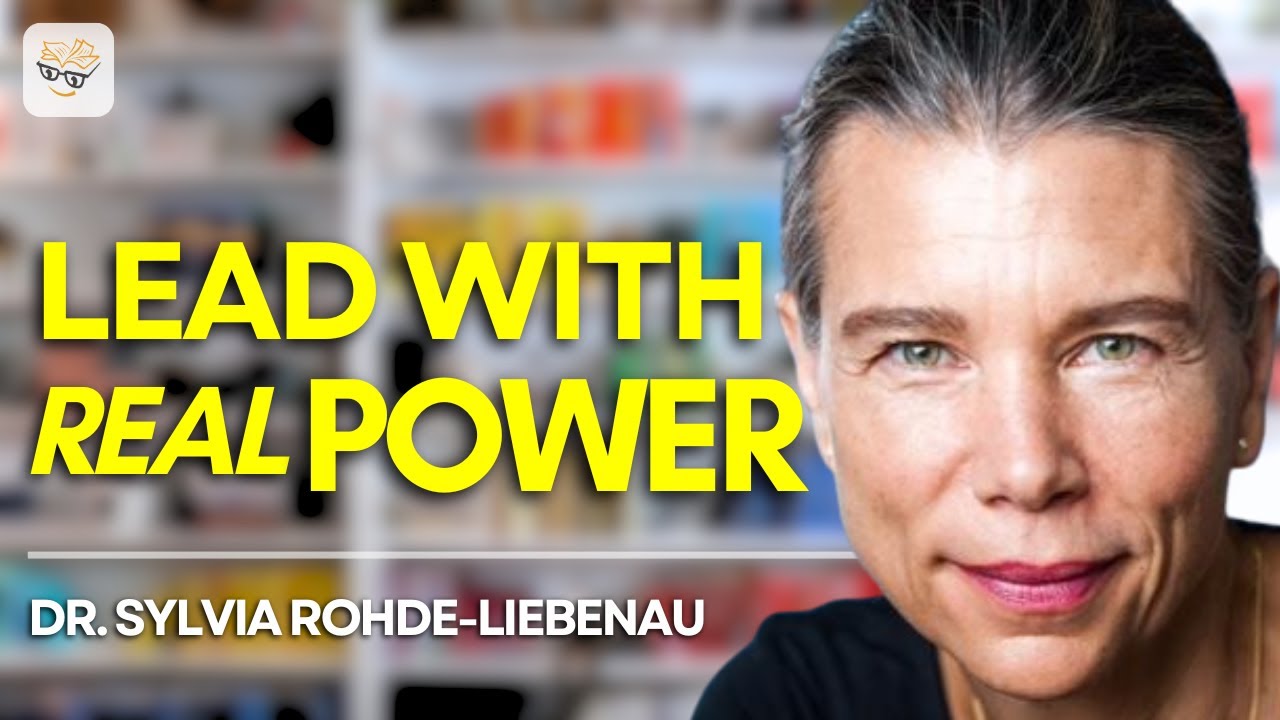
In this podcast episode, host Nick Hutchison interviews Dr. Sylvia Rohde‑Liebenau about her book Who’s in Charge? and her vision for leadership in a complex, fast‑moving world. Sylvia explains how her academic background in power and communication, combined with corporate experience at the European Investment Bank, led her to question traditional "old power" – a force‑and‑fear based, top‑down style – and develop a new "SMART Power" framework that emphasizes collaboration, purpose, authentic personal power, and systems thinking. A central part of the conversation is the four‑dimensional energy model (physical, emotional, mental, spiritual) and how leaders can manage energy leaks through emotional literacy, task‑switching reduction, and purposeful practices. Sylvia discusses the importance of legacy, encouraging leaders to align work with personal meaning, and advocates for teaching emotional literacy in schools. The interview also explores how AI can support co‑creation, decision‑making, and leadership communication when used with discernment and the right questions. Throughout, Sylvia stresses that modern leadership must be collaborative, purpose‑driven, and rooted in love rather than fear, offering practical tips, anecdotes, and references to her website smartpowermethod.com.
Chapters
Because in leadership today, especially because of complexity, most of all, we can't really do things on our own, even if we are the leader. Think of any larger organization, but even as an entrepreneur, if you go it alone, you're not connected to your entrepreneurial community, to maybe to peers who are also developing similar things. You might sometimes compete with them, but you're also like you can learn from each other, you can support each other, you're losing out really. And so the need to collaborate today is much larger than it was yesterday, and it will increase in the future.
Hello, Sylvia. Welcome to The Book Thinker's Life-Changing Books Podcast. I'm excited to help promote your book today, Who's in Charge? Why don't you tell us a little bit about how you decided to write this book? When did it happen? What was the inspiration? Why did you feel called to put this book together?
Well, first of all, hi, Nick. It's such a pleasure to talk to you today about the book. And yes, how did it come about? It's not like one day I said, well, let's write a book about leadership. Actually, I just spoke about that to a friend recently who was like, why did you write it? And actually, I've been writing it not for all my life, but since I was at uni at least, where I got to study power and communication in international relations. And I found that often it's not what you think. Like studying guns and bullets in security studies, like, ah, but why do people actually at a disarmament conference, why do they speak about values and the merit of certain policies, etc., not just about the guns and bullets. So power seems not to be only about the tools of force. So that was one first thought about that. And furthermore, also understanding the power of communication in international and transnational relationships. And then I started to work in the corporate world. And I saw how often, like, corporate leaders use old power, as I call it, and how that often does not serve their teams and their organizations in the best way. And then I was responsible for leadership at the European Investment Bank for a number of years, and we tried to have the leadership model transform to a way that was more adapted to the challenges of this fantastic institution, which at a certain stage became the climate bank for Europe, which, as you maybe can imagine, if you become the climate bank, it's pretty complex to deal with that. So how do you then lead outside with your stakeholders, promoters, etc.? And how do you lead inside to get the people to really walk many extra miles to do something that is really difficult. You can't do it with old power. You have to be smarter. And therefore, I was thinking about like, how do we redefine power to really understand what power is and how it works today? And how do we help leaders to stay energized? Because it's tough sometimes. It can be very stressful. So how do you sustain yourself? And then thirdly, the part legacy in the book. Energy, power, and legacy. Legacy is I've met so many leaders who like play the game outwardly but privately say, well, actually, that's not what I want to do. I want to give more meaning to what I'm doing. And so I thought, well, I want to make this part of the book to help leaders say you can actually do this. It's not either or. You can do business or be a leader out there and have a purposeful, meaningful life inside.
Yeah, well, beautifully well said, and, and thank you for that background context. I'm excited to talk a little bit about energy. I think that my favorite takeaways from your book are all about energy, and that was surprising for me. But first, let's talk about something that you just said, old power. How do you define old power, older styles of leadership, and what is different about the need for leaders today? What's different about why we should read this book and what we should learn from it?
Yeah, so old power, as I define it, it's like the traditional idea of what power is. It's actually about having power rather than doing something constructive with it. And it's also about using force and control, which actually come from fear. So that, and that makes it kind of weaker, because when we come from fear, we are inhibiting ourselves, even if we bark very loud. So this force and control-based power is in the end not so creative. It doesn't create the impact that it wants to create very often. You see that in business as well as in politics. Now, why do we have to change? It's possible that maybe 100 years ago it was, it was okay to use old power like force and control, barking down the corridor. I'm the general, you have to follow. But today, in the complex and very fast-moving world that we live in, it's often not working, because if you think you can just oblige people to run, you're missing out often on their good advice where to run or how to run best. You're also not really getting their full commitment, their full energy, because people will say, yeah, okay, then it's the boss, so he's the boss, so I'll do it, but they don't give their full commitment. And don't get me started on Gen Z, because younger people definitely don't want to be led like that. So to get the best out of them, and I have 2 daughters who are Gen Z, They are brilliant, smart young women, but you have to lead them a certain way so that they really bring what, what they're capable of giving. So many reasons.
Well, I'm curious, do you think 100 years ago or 500 years ago that the average person was okay with the older force and control-based power styles, leadership styles? Um, and, and if not, why did they tolerate them versus why does the Gen Z today— why are they speaking up? Is it because they have more options or they're more conscious? I, you know, help me understand, I guess, why today is different. I understand it's more complex, but what happened socially that made those older power styles less okay, right? They're not okay anymore.
That's actually really a complex question because I don't believe it's only like they were educated in a different way, they had all this freedom, etc. If I listen to young people, it's also because they're actually aware of the challenges of this world today. If, like, I grew up in the '70s and the '80s, And it was pretty cool. I mean, we had the East-West conflict and there could be war, etc. My parents were very liberal, so it was okay. Like there was, there were no, no big worries really. If I see the kids who are today in their 20s and they are smart, they see, oh, this planet actually is, is not in such a safe space. So there's one thing people would say like, okay, I've got to do something about it, and other people would say, well, I want to enjoy my life because I actually don't know how much I get of this life or how much I will get to really create the future. So there is, there's a willingness to commit and do something, but there's also a desire to live simply. So with this outlook, it's very difficult simply to say, well, you're— I'm the boss, you're the underling, and you have to do what I tell you. Because they will tell you, hey, wait a minute. First of all, are you sure that you're right? And second, well, this is no fun. I don't want to live like my work life like this. Well, there will be some who will accept, but far less than we had like 50 years ago or so.
Yeah, I think back to my own experience. Before starting BookThinkers, I worked in corporate B2B software sales, and the company that I was working for was acquired twice while I was there. And during both of those acquisitions, my role became further from the top of the company, and that meant that there were more management layers in between me and the ultimate decision makers in the business. And I remember valuing things like speed when making decisions, and I would get a lot of friction and pushback, and I was told. You know, your ideas are okay, but we're not going to move forward with them. And I wanted more autonomy and freedom. And I started to read books that promised alternative lifestyles where you're not working in a cubicle. And that made me aware of more options and I wanted more control. And so I decided to step out and build my own company. And I think that, yeah, it's, it's access. to different realities or different versions of what work could look like. And I was also very aware for some reason of my own mortality, that I wanted to live a life that I loved, and I didn't wanna sacrifice 40 years of a top-down leadership style where I had no control, only to end up wishing I had done something different in the first place.
Okay.
And so, yeah, I'm happy that we're talking about this now. The culture has changed. Things are more complex. People are aware of different options. And so leaders need to change, right? And that's why you've written this book, so that leaders can understand how to operate in 2025 more effectively with their teams. And it goes from top-down leadership styles to more of a collaborative leadership style. Is that an accurate statement?
Yeah, it's collaborative. It's also purposeful. Like, if you're— if you want to be an effective leader today, one that brings people along and that actually gets something done, if you only look at the transaction, like, I have to, like, KPIs, this I have to fulfill, etc., you might be, like, going fine on some level. But if you really want to create impact, you have to know what you really want to create and why. And so it's the purpose, it's the collaboration, and it's also the— I call it like authentic personal power, like to be able to relate authentically with other people and to have a certain degree of personal mastery. So it's not only in the head.
Right, it's not only in the head. Shifting gears just a little bit to the energy piece, I wanted to share with you that Since reading your book and talking about it with my wife and talking about it with my team and talking about it— actually, I was interviewed, I was interviewed on a podcast yesterday and the host asked me what the biggest change or the biggest aha moment I've had in the last couple of months from reading was. And it came from the energy section of your book.
Oh, wow.
Uh, and I told 'em all about it yesterday. I'll forward you the interview once it comes out. I, I've read a lot of different leadership books, and I don't think any of them, and I mean any of them, have a section talking about energy. So where did this come from? When did you realize that energy was an important component of being an effective leader? And then what kind of, you know, how did you start studying it? I'm curious.
Well, um, as many things in life, it came by chance. I was part of a team dealing with staff relations. I was responsible for conflict management and difficult situations, stress, people being stressed, etc. One day I'm being asked, do you want to, or please do this stress survey? We don't want the medical team to do this. Someone from HR has to do it. And I was like, ah, stress survey. That's not very sexy, like, we're all stressed, but who cares? And okay, but I'll be nice and I'll be doing it. And then while I was getting into it, something I didn't know anything about, and I got into it and I understood that on the flip side of stress management, you have great leadership. Because if an organization team is stressed, it's because the leader doesn't lead well. And if the leader leads well, you have a thriving team. So that's how I got interested in it. Like, oh, this is actually about leadership. And then I learned a lot about it. So I worked with consultants who helped us develop the approaches. And so in the book, you have a lot from Tony Schwartz, the 4 dimensions, but I worked on it further to go deeper. So taking also the energy of purpose and spiritual energy, which goes beyond that. And, uh, had my own development also being, being someone who works with the body. Um, I, I really had my good dig into that.
Yeah, you know what's funny is sometimes, uh, when an author writes a book, a reader consumes the book, and then they take what's being given and they modify it a little bit in the way that they explain it to other people or that they choose to implement it. And I think what happened When looking at this diagram specifically, where you have almost like a Maslow's hierarchy of needs, but on the bottom you have physical, the next step is emotional, you then have mental, and at the top you have spiritual, which would be like Maslow's self-actualization, for instance. And when I looked at this, I became aware of a number of family members and friends that I have that I talk with on a regular basis. who are checking the boxes from a physical perspective. So, when thinking about energy, they have dialed in their nutrition and their exercise and some of the other fun things, sunlight exposure, fresh air, red light therapy, whatever it is.
Yeah.
But they're missing the next steps on the ladder, the emotional, mental, and spiritual connection and purpose to what they do.
Yeah.
And so I have friends that complain about their energy, yet they're doing all of the right things physically. And I just had this big awareness moment where I said, I know your problem, now we can solve it. And so I've gifted a couple copies of your book to those people because it's an epidemic. It really is. And I think that just one more piece, talking about the leadership thing, is The more options we have as individuals, I think the harder it is to feel really well connected to a purpose because there are so many options and we're constantly thinking about opportunity cost.
Mm-hmm.
Really finding that thing that lights us up, that's very tough to do for people. So I'd love to hear maybe a reflection on what I just said. Maybe you can add a little bit more context to, uh, to the ladder here. And then tell us a little bit more about how do we find purpose? Because I think there are probably a number of people in the audience who are like, hey, that sounds great, but where do I start?
So first, on the, on the, on the model, um, physical, emotional, mental, and spiritual, um, energy. Yeah, yes, indeed, we think a lot about the physical, and we know, maybe we know quite a bit, although some, some bits and pieces also get lost. But I saw especially in the corporate, like, yes, we had a gym, we had doctors to go to, but then it kind of stopped. And what I learned is when you take care of your emotional energy, that is understanding your own emotions, knowing how to address them, how to express them, not being carried away by them. So because you lose lots of energy if you are just carried away by your emotions wildly rather than I feel them and I can express them. You also have like people who are not aware of how to use their mental energy in terms of focus. Like think multitasking is a great thing. Well, actually multitasking doesn't exist. The poor mind has to jump from one thing to the next and it's a waste of energy and of time actually because each time you park in and you park out again, you're wasting. Spiritual energy, as I understand it, it's like going beyond the energy of purpose, is really the awareness that it's not your own little self that you're inhabiting in this lifetime. You're connected to something larger, and when you feel that connection, you actually have more energy. I mean, that's what I learned. Even when I was in corporate and I did my meditation and was just like going for a walk in the feel like, oh, this is so beautiful out there. It's not little Sylvia alone. Like, I'm part of something much bigger, and this is so nourishing. It gave me so much energy when I had then difficult situations, rather than thinking I have to fight it on my own, and it's just like only the physical part of our work or of our lives. So I experienced all this myself, and it's so true that if you take the whole the whole bandwidth of energy. You have so much more to play with and so much like, okay, my physical energy is down right now, but how can I get energy from, for instance, give me a hug. So then I already feel better. I go for a walk in the woods to recharge on a spiritual level.
Even though I read it in the book, I just had another Another moment of understanding while you were talking. It's not just— I think a lot of people view energy as additive. So what else can I add to my routine that will give me energy? But what you just talked about, swinging from one end of the emotional spectrum to the other, you lose a lot of energy throughout that process. Task switching, multitasking, you lose a lot of energy as you move from one task to another.
Yeah.
And so focusing on where you're leaking energy instead of just where you can go out there and pull more energy into your life, I think that's probably where a lot of people should start. So you mentioned a couple, you mentioned again, task switching is an example of where people might lose energy, poor emotional regulation. That's another example of where people might lose energy. Are there any other examples that come to mind?
Useless engaging in silly arguments. I mean, I had this boss at, like, quite early in my career. She was a brilliant woman, but she would start getting excited, like angry at colleagues, and then she would start having us write notes to these other colleagues. And then we had the war going on, and my God, we lost so much time and energy just dealing with the outfall of that. With the fallout of that. So she would have saved everyone a lot of energy taking a deep, deep breath and thinking, okay, this is very annoying, but what do we do actually? What do we do about it to address this rather than having an outbreak which didn't serve anyone?
Yeah, I can think back to many moments in my life when I was a little younger and I had less emotional intelligence. Where there would be an outburst of energy, positive or negative. Things are excited and, uh, it becomes difficult to communicate when you're in that either, you know, either side of the spectrum. It becomes very difficult to communicate. And then once all the emotion wears down and you cool down, now you're ready for more of a mature conversation. And so if you could just start with the mature conversation and be able to tame your emotions a little bit more.
Yeah.
Uh, that would be a beautiful thing. And you have this diagram in the book of what looked like— I, I don't remember how many different emotions that can actually be named, but there are like 100 of them or something. And you say that naming is taming. So for those in the audience that are curious, how do I regulate my emotions? That's a wonderful suggestion.
Yeah, that's, that's a very good one to start with because sometimes we feel just there is an emotion going on. But when we feel into ourselves, so that is, there's a physical feeling. Oh, okay, that's actually in my stomach, or it's like in my throat. So that's already, it helps us to relax. And then what you just said in the book, I give this like simply to give an overview to help create emotional literacy. Like, okay, I feel not irritated, but I feel helpless right now. So it's helplessness. And by knowing, oh, it's actually helplessness, I maybe I can do something actually not to feel helpless. And then I go to be more resourceful.
Yeah, Sylvia, the 2 areas that I think the US public education system, just because that's what I'm familiar with, uh, fails to teach their students One is financial literacy, and you can catch me talking about the importance of financial literacy on 1,000 other platforms, right? Talk about that a lot. But that was another big takeaway from my book, is that emotional literacy is a skill set, and that as you're taught how to be emotionally literate, you then start to tame your emotions and you improve your emotional intelligence. Which therefore has trickle-down effects to your ability to communicate, your ability to preserve your energy, and 1,000 other benefits. And so I'm sure you would say yes to this, but should school systems be teaching emotional literacy?
I definitely say yes to that. Yes.
Yes. Yeah, I think it's kind of silly that they're not. And, um, yeah, especially in the days of, of artificial intelligence, no?
Because Computers can do a lot of things for us faster, etc. But to be fully human and to leverage our human capacity, it's really, it will be more and more our ability to understand our emotions and connect with our emotions and connect with other people. That's what really will make our success or not success in the future.
I didn't even think to bring that up. But how will artificial intelligence impact our ability to lead? Yes, it can improve our IQ when writing emails to the team, right? And it can maybe summarize meeting notes and next steps so everybody knows what their responsibilities are. But maybe a fun question for you is, how can artificial intelligence help us co-create and be more proactive in our leadership style?
Well, co-create already, definitely it can help us co-create with artificial intelligence. I mean, that's my favorite way of engaging with AI is to like, I've got this thought, any ideas? And then something comes back and I say, well, thank you, but this is not yet good enough. I want this. Oh yes. And then we are brainstorming away. I see you nodding.
I do the same thing.
So it's not actually to get responses, but to have a— unless I ask it to make a translation of English from English to Spanish, because I live in Spain now and learning the language. And then I just take the response. But otherwise it's really about dialogue. And so if you say, what can leadership learn from AI is to probably engage more deeply and to know, like, start with knowing what actually do I, do I want to ask the right questions? Because with AI also you, you, you get really rubbish in, rubbish out if you don't ask the right question, or you're smart in asking a good question, you don't get a good answer. And so it is in leadership and in whatever you do out there. And the other thing is, with AI, you have to be discerning. So not everything that you get will be true or useful. So the human intelligence then has to set in. Well, is this really true? Is that really helpful? Or actually, what did I want? No, no, this is not what I wanted. So I remain purposeful and discerning. And these are very important leadership qualities.
Now, I would say that's an understatement. Yeah, they're very important leadership qualities. And just like you, my favorite tip, and I'll share this for everybody listening, I enabled a hotkey on my keyboard. If I tap it twice, I can then dictate And so I'll open a platform like ChatGPT. I'll just hit the hotkey twice, and then I'll talk in a very informal and open way when, when I haven't formulated a full thought yet, but I have the spark of an idea. Sometimes it's just to document it. And oftentimes, like you, it's brainstorming. And then I'll say, you know, books give me the ability to articulate things sometimes that I know intuitively, but I haven't had the language to articulate.
Mm-hmm.
to articulate. And I think AI is accelerating that progress for me because I don't then need to select a book that can teach me how to articulate what I'm trying to communicate. AI can help me do that as well. So I would say AI, AI plus a good, a great book like this, that those are wonderful leadership tools.
Absolutely.
Yeah. One of my favorite lines from your book, I'll read it to everybody. It's on page 72. You said, everything in our culture educates us to aim to achieve things on our own, whether at school, university, or work. We are largely assessed and rewarded for our individual achievements. Why is that hurting our ability to lead?
Because in, in leadership today, especially because of complexity, most of all, we can't really do things on our own, even if we are the leader. Think of any larger organization, but even as an entrepreneur, if you go it alone, you're not connected to your entrepreneurial community, to maybe peers who are also developing similar things. You might sometimes compete with them, but you're also like, you can learn from each other, you can support each other. You're losing out really. And so the need to collaborate today is much larger than it was yesterday, and it will increase in the future. And to solve complex problems, and if you go a bit further into like political leadership or leadership in academia, or also in organizations where you have like, how do we actually do this with our clients, or how do we create this new platform or whatever, you normally need different parts of the organization, or you need— in academia, you need different disciplines, or in science, you need different disciplines to work together. So if you think you, you're just leading it and people may like contribute, you will be really less smart and less effective. And so what I've learned is In organizations that can be difficult because people grew up thinking they had to protect their silos and do it alone and just ask for little contributions, but hide the information, etc. And simply observing that it is really suboptimal, that the results are not as good. And when people open up to work together, and that's what I do, like systematically in my professional coaching and leadership development. Like working with others, like, let's start creating this program. What do you think? What do I think? And then we actually have this A and B creates a C, which is neither A nor B, but something that is actually more valuable than the initial ideas that were brought by the partners.
Yeah, I think so. It reminds me all the way back to one of the personal development classics, which is Think and Grow Rich by Napoleon Hill. He talks about the mastermind. 1+ 1 can equal 3 because 2 parties or 10 parties focused in the same direction, working to solve the same problem, create this other mind. You know, it's like this co-creation with the divine, right? It's the spiritual piece that you're talking about. And I think that that's activated when you're working with a group of other people.
Yeah. Exactly. And it's sometimes astonishing what, oh, we've created something new, and neither side would have been able to create that on their own.
Very true. Now that the book has been out for a little while, are there any leadership principles that you wish you included?
Yes, because that's what came next. So when I was, when I'd already completed the book, I was invited to give a workshop at a Harvard alumni virtual class. And so I quickly developed like, how can I condense the power part of the book in something that is not 80 pages but simple and easy to take away? So I created SMART Power from there. And SMART Power includes most of what is in the book but gives more emphasis on systemic thinking. And like the system, the ability to think in systems are particularly important today because given complexity and fast speed, if you only look at the particles, like the little elements, and like this is probably the cause, you don't see what you should be seeing. So if you see the system, like the whole picture and how things influence each other and what are maybe also longer-term like ripple effects, you are a better leader, and you need that today more than, more than like, again, maybe 50 years ago.
As a leader, do you recommend pulling individual contributors as part of that system out with you to look at the entire organization so that they understand their part in the system, maybe what comes before it or what comes after it? Is that something that you recommend doing?
Definitely to help and encourage people to see the whole, even if they are further down the ladder, because they will work in a more effective way than just feeling that they're a little cog in the wheel, naturally.
Yeah, I think a lot of businesses, and I'm guilty of this as a business owner and as a leader myself, we focus on the short term sometimes and sacrifice the long term, and we make decisions that might improve one part of a system and actually hurt the downstream effects of a later part of that system. And I often try to pull out and look at the entire business from a 30,000-foot view and try to understand all the little moving parts and pieces, which not only include team members but systems. And so I think that's a valuable thing to do as a leader.
Yeah. And sometimes we feel pressured not to do it. You have to take a decision, have to take an action. And that's also okay because sometimes action is what is needed, or a decision, whatever decision is needed. But from time to time, or in general, we have to be able to take that, that higher view to keep on, like, keep the course and not get lost in the little details.
I think so too. Well, as we start to wrap up, why don't you share just a preview of what somebody might be able to learn in the legacy section of your book?
Well, in the legacy section, actually, this is an invitation to think about what you really, really want. Because I have seen people, like, as I said initially, they're successful, they earn good money, but there is a doubt deep inside them to think, am I really living my life or am I living someone else's life? And how would you— will you feel when you're 80, hopefully, and you've done many things, but then actually you think, well, it's actually not the life I wanted to live. So it's an invitation to think now and to feel into it now. What is really the life that I want to live and that will make me feel fulfilled? So if I died tomorrow, I would say, I don't want to die tomorrow, but I'm happy with what I have done. I think that's, that's a huge gift that we can give to ourselves to really stay connected to what do we want our life to be about.
Yeah, because of that section in your book, and because of the energy section, I was on a longer walk with my wife the other day. And we were talking about legacy and energy. And we were talking about What she does professionally. And we actually used AI to do an Icky Guy assessment.
Yes.
Uh, and it would ask a question and she would respond, and then it would ask another question and she would respond. And we almost finished, you know, all of the different sections, um, but then we were interrupted. So we need to go back and finish that for her. But it's because she's checking all of those physical boxes and some of the emotional boxes, but maybe missing some of the higher levels. And, you know, then thinking about legacy, looking back at the end of your life and saying, did I live up to my potential? Was I fulfilled the entire time? Everybody could benefit from going through that exercise. So what a wonderful way to wrap up today.
Yeah, I so much enjoyed talking to you, Nick. Really, I think we've covered a lot of ground and hopefully we have given some ideas to the people who are listening to it.
I think we have. Now, of course, we will have a link to purchase a copy of the book in today's show notes, but where else can people go to learn a little bit more about you?
Well, they can go to on LinkedIn because I regularly publish and also to my website, which is smartpowermethod.com.
Okay, perfect. And the very last question today, if your book, Who's in Charge, was Deleted, gone, and the website disappeared, and a lot of your work disappeared, but you could leave the world with just one simple message from this book. What would that be?
Um, come from love. Come from love, not from fear.
Come from love, not from fear. Yeah, that does sum up the new leadership style, doesn't it?
Yeah.
Yeah. Well, Sylvia, thank you so much. I had a lot of fun today.
Yeah, me too. Thank you, Nick.
More from Nick

Napoleon Hill’s “Think and Grow Rich” is a timeless classic #selfhelp #personaldevelopment

4 Books to Help You Get Better at Decision Making #selfhelpbooks #bookrecs #nonfictionbooks


Have you read this book yet? 📖: The 5AM Club by Robin Sharma #selfhelpbooks #robinsharma

Dan Sullivan on Listening to Your Customers Instead of Watching Your Competitors

5 Books That Will Boost Your Financial Intelligence #financialfreedom #nonfictionbooks

The People That Preach the Loudest About Virtue are Usually the Most Power Hungry



Books are the greatest mentors you can find #selfhelpbooks #businessbooks #successmindset

Let’s fight this toxic instant gratification culture together 📖 #selfhelpbooks #jimkwik