What Actually Works in Sales Today with Leslie Venetz
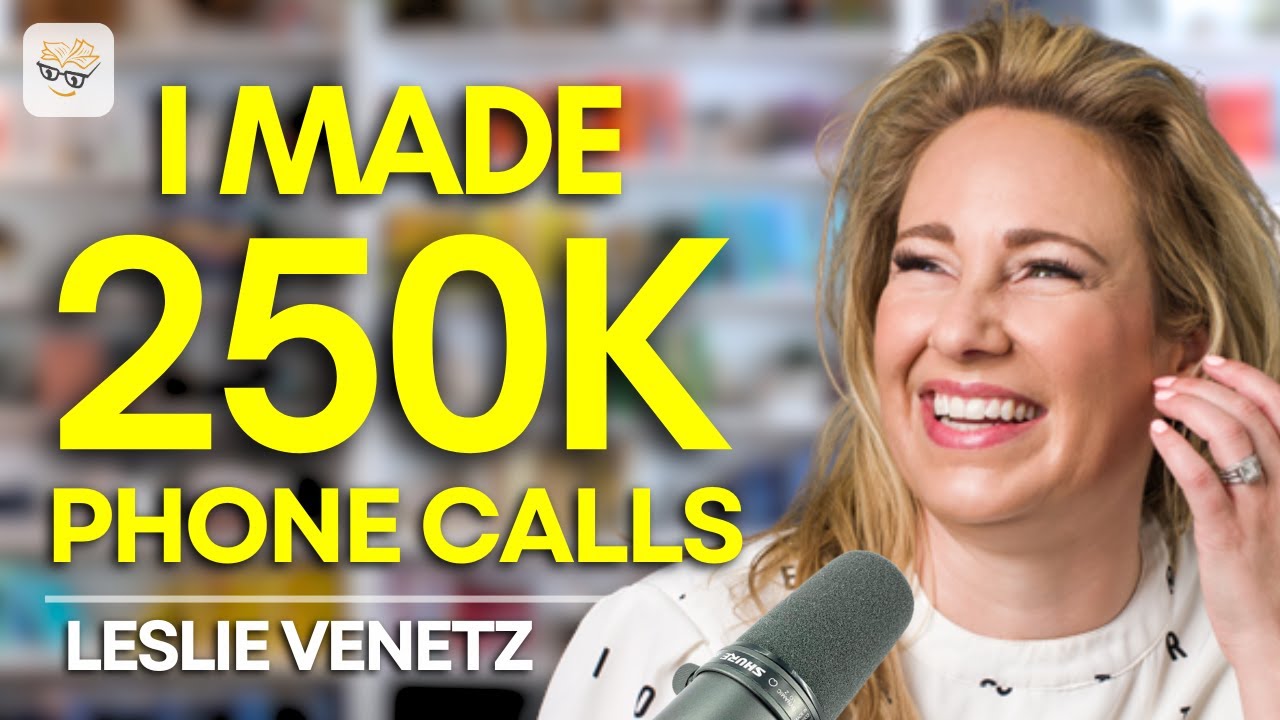
In this episode of the Book Thinkers Life‑Changing Books Podcast, host Nick Hutchison interviews sales veteran Leslie Venetz about her new book Profit Generating Pipeline: A Proven Formula to Earn Trust and Drive Revenue. Leslie shares her 15‑year sales career—including 250,000 cold calls and leading teams that generated over $10 million—to establish credibility. She explains the book’s central mindset: “earn the right” to a prospect’s attention, time, and consideration, and how that underpins every sales interaction. The conversation dives into core principles such as treating objections with gratitude, active listening, and building trust, as well as a 9‑part “Profit Generating Pipeline” formula she teaches to consulting clients. Leslie discusses the challenges of writing and editing a book, the iterative process that forced her to sharpen definitions and cut 8,500 words, and how short, clear language from her short‑form content helped. She outlines practical tactics for personalization at scale—tight list segmentation and micro‑campaign messaging—versus ineffective contact‑level personalization. The interview also covers launch strategy: a USA Today bestseller goal, a dedicated salesledgtm.com/book landing page offering $400 in bonuses, a book club, and a virtual launch party. Throughout, Leslie emphasizes the simple, repeatable mantra “Earn the right” as the single takeaway for salespeople.
Chapters
Earning the right to your prospect's attention, to their time, to their consideration, to their business. That is just the underlying thread, the mindset that supports everything else I teach. Because if we are not writing emails in a way or preparing for discovery calls in a way that earns the right to ask our prospects to give us their most valuable resource, which is their time and attention, and then later stake, you know, their, like, really their reputation on the line to advocate for buying our product or solution, then, like, we are simply not doing our jobs.
Leslie, welcome to the Book Thinkers Life-Changing Books Podcast. How are you feeling today?
I am feeling good. I'm feeling like I am in the final moments of getting my life-changing book. Into the hands of people. So I'm pretty excited about it.
Give us the pitch. What is the book?
Yeah. Uh, Profit Generating Pipeline, a Proven Formula to Earn Trust and Drive Revenue. So it is very focused on helping people that are doing that top of funnel, like that outbound sales work, do it in a way that doesn't feel icky, that doesn't turn off our buyers. Where they are getting responses and their responses from people that are excited to learn more, to have a conversation about how the solution they have can help solve their prospects' problems.
Yeah, well, you are speaking to the right podcast host because number one, as I probably shared with you during our original connection, I used to be in high-ticket B2B software sales. What a crazy world that is. And our audience is full of business professionals that all have to sell something. And so I'm excited to dive into this with you today.
Yeah, I love that you say that because so many people don't necessarily realize they're in sales if they don't have a quote unquote sales title. But all of us are in sales in some way or another. And that's especially true for business owners. And I think more than most people, they sometimes struggle with finding ways to reach out and talk about the amazing product service they're putting in the world in a way that they feel really confident in.
Well, tell us a little bit more about your background, because here's the deal. There are a lot of great sales books out there, and now we are in 2025, so things have changed and evolved, and I want to talk about that in a minute. But tell us a little bit more about your background. Why were you the right person to write this book?
Yeah, I have done it. I have done the dang thing. I spent 15 years in sales as an individual contributor. I've made 250,000 cold calls myself. I've done the player coach role.
Wait, hold on one second. 250,000?
Yeah.
That is so many calls.
The teams that I have managed, like trained coach, have made over $10 million.
Oh, wow. Yeah. So you are the right person for this. Sorry, go ahead. Keep telling us. I was just like, wait a second. Did I process that the right way?
Yeah. No, when I say I have done the work, like I have done it as an individual contributor carrying my own quota. In the player coach role, I was carrying a quota and managing a team as a first line, second line, third line leader. So I have both done the work of standing up, like creating and standing up the strategy, building the repeatable processes, but also have been in a seat where I've been responsible for executing them myself. And it's, you know, it's, it's interesting because I do think that sales has changed, which everybody says, right? But even in the last year, I feel like outbound has gotten harder. And what I didn't want to do was write a book of, like, trends and tricks and tactics and things that would only work for a few months, maybe even a few weeks. I really wanted to give folks an insight to some of those foundations that are benched in, like, human psychology, that are benched in truths that are not valuable for a short window of time. Like, they are, they are just those fundamentals that can be applied Even in super tough markets like the one we're in today.
Yeah, I love that. So it's sort of first principles thinking, like what is the most important set of skills and understandings and principles that you need to understand in order to be an effective salesperson?
Yeah. Yeah. And you're going to see a lot of techniques. Like we go through specific scripts and frameworks and techniques. So, so folks get all that meaty tactical stuff, but then you're also going to see a lot of stuff that you might not see in other sales books, like Multiple sections dedicated to the importance of active listening, or an entire call that before you respond to objections, train your brain to treat them with gratitude. So maybe some slightly different takes than people are used to seeing in sales books.
Oh, I love that. That's so fun. I don't think I've ever thought about gratitude and sales in the same sentence, although I have I've spent my, my whole adult life selling and I have a bunch of gratitude tattoos and gratitude is part of my daily practice. But here I am bridging 2 worlds that I never thought would be combined. So tell us what that actually means. Can you give us an example?
Yeah. Yeah. I think about it most clearly when I'm training folks how to respond to objections. And where I start is getting them to admit That not hearing an objection is always worse than hearing an objection, because not hearing it means you were just hung up on. Maybe they lied. Maybe it was just an omission of the truth that's going to get you ghosted later. So hearing an objection leaves space for a conversation to be had, like it leaves the door open a little bit. And certainly later in the sales cycle, hearing that objection concern question means that you've created a space that's safe enough that your prospects feel like they can be honest with you. So retraining our brains to realize that if we are hearing objections, it both gives us an opportunity to continue the conversation, and it also is indicative of us creating a safe dynamic for our prospects to engage. But that's so different than the narrative that we have historically heard around objections, which is like, smash them, tackle them, crush them.
Yeah, I was always taught back in the day before even the software sales, I was in door-to-door sales. I ran my own house painting business and I was taught this framework of restate the objection, isolate it. So make sure that if it's solved, nothing else will pop up and then handle it. And I feel like that's too much emphasis on, on like, like you said, crushing the objection and not opening up. Like a vulnerable, safe conversation to make sure that what you're selling is actually needed and that whoever is buying it feels really comfortable moving forward rather than like they have to because you pulled something over their head or whatever.
Yeah, I love the isolate technique, but it's better served for later stages in the conversation when you're moving to that like negotiation bottom of funnel part of the sales process. But you're exactly right, Nick, like early in the conversation when somebody says they have an objection. If you greet it with gratitude, it changes it. I think it changes the way you approach the conversation from feeling like you have to defend what you are trying— like the solution you're trying to offer— to just like, hey, what does that even mean for you? Is this even the right solution? If it's not this solution, is it something else? So it's— yeah, it's a really nice pivot, and it makes selling more fun too. When we deserve to enjoy the work we do.
Yeah, that's so good. Well, thank you. Greet it with gratitude. Now, you have the 250,000 cold calls or 10 million under the teams that you've managed. You are the right person to have written this book. But why a book? I mean, why did you decide that you would commit so much time to putting what you've learned, condensing these decades of information into days of writing? I mean, that's really— it's a really hard thing to do.
It is harder than I realized, that's for sure.
Okay, so there was some blissful ignorance on the front side.
Okay, that's called ignorance for sure. Uh, it was, it was so many things. Um, one is that I genuinely did not realize how hard it was going to be. Not that I didn't think it would be difficult, but I, I didn't realize how much of a mental and emotional thing writing a book was like. It's not just the time it takes. It's really— it was really something to reckon with, admitting that I believed that the knowledge I possessed was important enough to put out into the world in this way. And then throughout this, like, writing, editing, publishing process, coming back to some of those challenges around, like, self-doubt and imposter syndrome, and then thinking, no, This book is going to find its way into the hands of the people whose lives it has an opportunity to change. And simultaneously, I create a lot of content on LinkedIn, on TikTok, and seeing the DMs come in from people saying, oh, I tried this and it closed this deal, or, you know, I heard you share this story about XYZ thing that happened in your career, and I actually Got out of a toxic job situation because of it. So I was, I was getting some of the feedback from the social media content I was creating. I was crystallizing a lot of my thinking and my point of view. And it all just sort of came together in this piece of long form, the longest form of content that I've ever created.
Yeah, I think that's great. You saw an inbound demand. for the information that you are providing. And so where there's an inbound demand for something and then you can deliver a service there, you're better off than so many of the authors that I meet with that are like, oh, I just had this fun idea. No, I didn't test it or receive validation that it's needed in the marketplace, but I figured because I'm so great, if I put it together, people will buy it. So it's great that you started with like, you knew that there was a need for it.
Yeah, and it's what I teach my clients. So the middle of the book, it's a 9-part formula. And that formula, that blueprint is what I have been teaching my consulting clients. It's what they pay me like tens of thousands of dollars for. But I have a pretty niche group of folks that I serve because I am a solopreneur. So it's also a nice opportunity to take what I have operationalized and then I can, can share with these clients in that more like done-with-you consulting way and give it to people on a much broader scale.
Yeah, it's one of the reasons that I love books. I mean, you're charging tens of thousands of dollars for the same content that you're making available for less than $30. So anybody that chooses not to take advantage of that, that's listening or watching this show today, I mean, you know, that's why I love books. That's why BookThinkers exists, is that you can get access to the world's smartest people for a fraction of what they would normally charge. And so you decided to write the book. What's been the most challenging part of the process for you so far?
Ooh, the editing, the editing process. I was saying, I was saying this to you before we went live though, um, that in addition to editing the sections and editing the chapters and spending so much time like in the minutia of the book after writing it, I've now read it cover to cover 4 times. And so while the editing process has really tested my skill sets, because I would not say I'm a strong editor, like that is not, that's not something I came to the table with as a domain expertise. The book that I submitted to my publisher last year is a much, much different book than I'm putting in the hands of people. And I think I was having this conversation last night that the knowledge has always been good, but good knowledge doesn't equal a good book. So it's been that process of taking my knowledge and synthesizing it, refining it, make sure I'm telling the right anecdotes and personal stories so that it's sticky, and then translating that into, let's see, 8,500 fewer words than it was when I first sent it to my publisher so that I'm getting knowledge into the hands of people in a way that I think it's most accessible to them and that they will be most Easily able to convert into action so that they can gain the benefit in their own outbound motions.
Yeah, it reminds me, I think it's a Blaise Pascal quote that's like, I apologize for the length of this letter. If I had more time, I would've written a shorter one. And so it takes time to refine your content, to simplify it, but keep the value there. So did that just happen as a natural byproduct of having to go back through the book, or did you learn and collect New ways of communicating throughout the revision process? Like, what actually happened that led to 8,500 fewer words?
Yeah, and I should say that's 8,500 fewer words even after I've added in like the foreword, the implementation, all the other stuff. So I think I, I probably cut like 16,000 words, and then I've added in some precision with like anecdotes and making sure that the thing I was trying to communicate was actually being driven driven home as a point. So I think it was a little bit of both, Nick. I think as I synthesized the concepts while I was writing the book, it helped me be a better consultant because I wasn't just teaching them and workshopping them. I really— like, here's a perfect example. When I very, very first started talking about the book like 2 years ago, and I was talking about some of the terminology I would use in the book, I found that And I was like, oh, that's a really interesting question. I've never come up with a definition. I can describe to you what it is. I can describe to you how to do it. We, we can workshop it together. I can outline the set of steps or the process to get from A to B, but I don't have crisp one-sentence definitions for a lot of the things that I'm teaching. So it, it's a really interesting question.
Yeah.
It pushed me to get crisper in the way that I was explaining things that then allowed me to have better conversations with my clients. And through those better conversations with my clients, I could feed back more examples and more of that precision to the book. So it was a bit circular.
Did you find any of your writing to be surprising? Like, ooh, I can't believe I wrote that. I don't remember writing that. Like, did that ever happen as part of the process?
Um, I found some of my writing to be very repetitive. It was like, I will forever curse all of the people that just kept telling me, just write it, just write it, write it all. That's what the editing process is for. Don't worry about editing while you write. That was terrible advice. Like, I should have edited just a little bit while I was writing. Um, but, you know, I will say the first time that I read part 1, All the way through. And part 1 is very focused on foundational leadership, like the premise that before you can ask your team to follow your processes and to trust your vision, you have to show them that you are worthy of that trust. And I had read all of that through. And my husband's in the other room working, and I finished it, and I was like, oh my God, this is really good. And I hear him from the other room go, What? What do you mean? What do you mean? Did you not already know that? But it was— I had been editing in, you know, chapters and chunks and sections, and so I hadn't really sat down after doing all of that heavy editorial and developmental work to read it word for word. So I think I was— I don't know if surprised is the right word, but it felt very validating to read it And afterwards say, oh, this is something that I would read if I was not the one that had written it.
That's a great— that's a great realization to have, because sometimes I'll meet an author who's written something for their younger self, but it's not positioned or written in a way that their younger self would have found it attractive, right? It's too elevated or too distant or whatever, that it doesn't resonate at an emotional level. So I'm happy to hear that You do think a younger version of yourself would resonate with the content?
Yeah, yeah, definitely. And I have to say that a lot of the work that I've done creating content, um, on like short-form platforms, the, you know, the, the YouTubes, the LinkedIns, and certainly the work that I have done copywriting for sales emails where, you know, brevity and clarity are king, translated well to this manuscript. I mean, I— it was difficult in many ways because I had not been pushing myself for years to have that, that depth in my writing because that's simply not how you create short-form content. But it helped me write with simpler, more direct words and sentences, which had I have attempted this earlier in my career, I think I would have fallen into the trap of trying to like You know, write with these big words and like, you know, fancy sentences to try to make myself feel and sound smart. But 20 years into my career, I understand that like short, simple sentences, direct communication, that is how you can best share your knowledge with people in a way that it's just easy for them to digest.
Yeah, I love that takeaway. It reminds me, there's a previous guest on this show, Alex Hormozi, and he talks a lot about how During his sort of revision process, he's simplifying to the point where a 5th grader could understand these complex business subjects. And I think that that's, that's the mark of a true master right there, is that you're not trying to sound smart, you're trying to be understood. And those are very different things. Now, my next question for you, the subtitle of the book is A Proven Formula to Earn Trust and Drive Revenue. Talk to us a little bit about earning trust. I, I think a lot about accelerating trust and building trust as a personal brand through social media. But how do you do that as a salesperson? What are some of the techniques that you've written about?
Yeah, I love that you honed in on trust specifically, because when I was going through the title iteration process, I got a tremendous amount of pushback on the earn trust piece of the title because it doesn't pass that I want test. Like, I want to drive revenue. I want a profit-generating pipeline. But do most sellers and sales leaders want to do the work of earning trust? I know, I know. But it was a non-negotiable for me because the concept of earning the right, earning the right not just to ask your team or your bosses to trust you, to trust your processes, to trust your vision, but in the context of this book, Earning the right to your prospect's attention, to their time, to their consideration, to their business. That is just the underlying thread, the mindset that supports everything else I teach. Because if we are not writing emails in a way or preparing for discovery calls in a way that earns the right to ask our prospects to give us their most valuable resource, which is their time and attention, and then later stake you know, their, like, really their reputation on the line to advocate for buying our product or solution, then like, we, we are simply not doing our jobs.
Yeah, I think so too. I'm surprised. I, I find how do I earn trust to be attractive. Maybe that's because I understand it's a prerequisite to doing business or part of the process. But I always think about— I think a lot about trust, I guess, earning trust. Yeah.
But it's hard to do, right? Because you're earning it. And so I think that like, that's— I would say, I would guess, Nick, that there's probably, you know, like 20% of people that are already there that are like, yes, very much like, I'm willing to do the work because I understand how fundamental it is. There's 20 people that are like, This book is crazy. Like, earn trust, just tell them to give me their credit card, buy my thing. And then there's 60% in the middle that are like, I get it, but that seems like a lot of work, and I'm not sure that it's worth it, or I'm not sure that I want to do it. And hopefully, you know, universe willing, that like that 60% of people will find their way to my book and realize how essential trust is to this entire equation. And that they will be able to use the strategies that I teach in my book to tap into selling in a way that better serves them and better serves the prospects.
Yeah. And you have the drive revenue piece to catch that 60%. And so they say, oh, well, there's something in here that I can find useful. Yeah.
I mean, we still got to make our money.
Yes. Yeah, absolutely. Well, we talked a little bit about why you wrote the book. We talked a little bit about the process. We talked a little bit about the target user and some of what somebody might be able to expect. If they buy the book, can you give us a couple more lessons for those that are a little bit on the fence in the audience today? Like, yeah, this sounds like it could be a good fit. Leslie sounds like she is the right person to learn from, but I need a little bit more of a push before I can commit to buying it.
Yeah, well, one of my favorite outcomes from the book is helping to answer the question, should I do quantity or quality outreach? Or often we'll hear it described as like, how do you personalize at scale. And so what the beginning chapters of like the proven blueprint portion walk you through are how to manage your territory in a way that allows you to build lists that are tight enough, that are segmented enough, where you can write copy, sales copy that is so relevant to that specific segment that you no longer have to do contact-level personalization.
I need that.
I know, right? Well, because so many of us are like, oh, everybody's telling me that I need to do personalization. And then how it usually shows up is either something really creepy, like, how was your vacation to Cabo in 2017? Was swimming with the dolphins fun? Which, like, nobody wants that. Or it's really disingenuous, like, I see you're the founder at Book Thinkers, or I saw your LinkedIn post and love what you're doing in today's B2B sales landscape. It's a game changer. Anyways, here's my widget.
Yeah.
Right. So it is, it's not additive to the conversation. We're not saying anything that is meaningful to the person receiving the message. So it falls flat, but even when sellers are getting contact level personalization, right. It's not scalable. So for the majority of us that are selling something in the B2B space that's between like $20K to $45K annually, numbers still do matter. Like you have to have enough at-bats so that I call it a micro campaign strategy. And that is like having a tight enough list that you can be super confident, you know, what is relevant to them so that you can create messaging that's speaks to them directly, that speaks to their outcomes without having to do contact level personalization. And it is one of my favorite things that I teach, and I'm so excited to get it into people's hands so that I get fewer, I see you're the founder at SalesLed GTM Agency emails and more emails that speak to my problems and the outcomes that are important to me.
Yeah, I need that. So I'm excited to be coming your way. I'm excited to go through the book line by line and be able to implement that piece because that's, yeah, that's missing out there. And I think that my agency, it does a lot of like individual contact level outreach as a result of that.
Yeah.
Well, good. So now we've gone through expected outcomes. What is your outcome for the book launch? Like, what are your hopes? Are you trying to hit a list? Like, what can people be rooting for?
I know. Well, I don't want to get in trouble with our friends at Brand Builders Group and say that my number one priority is hitting a list because I know it's not about the lists. It's about getting the books into the hands of people that can use it to change their lives. And that is important. I wrote it, but like, my gosh, I have put in the work and I do really want to hit a list. And I'm on pace. to launch as an instant USA Today bestseller. So it's amazing, um, the endorsements that have come in so far from, you know, USA Today, New York Times, Wall Street Journal, bestselling authors. Like, have— like, it just has been so incredible to see the immediate, like, overwhelming positive support. Um, so thank you for everybody that's done an endorsement. I'm so grateful to know that the book is meaningful to you in the same ways that it is meaningful to me. Um, and yeah, like, here, here we go, days away from finding out if I achieved that dream of launching as a USA Today bestseller.
Yeah, it really seems like you've done the work. I mean, for those that haven't gone to the show notes yet to click whatever link you're about to tell us to click to go get a copy of the book, where should people go? What should they do? How do they buy their copy or maybe bulk order some for friends and family?
Yeah. So Profit Generating Pipeline is available on every single e-commerce site, but I suggest that you go to salesledgtm.com/book because you can then put in your confirmation code and get access to over $400 in freebies that I have set up. Um, so it's, I host a book club, so it's access to that, like exclusive, uh, time with me and my intimate book club every single month. Um, an amazing interview with the man that wrote the foreword, um, Andy Paul, who's a 3-time Wall Street Journal bestselling author himself, uh, my virtual launch party, and I'm gonna give away over $1,000 in like swag and food, all of my live launch parties. So it's, it's great stuff. Come hang out with me by putting your confirmation code at salesledgteam.com/book once you have purchased it.
Okay, perfect. We'll have that in the show notes. And then to wrap up, If the book was deleted, gone, all the bonuses gone, but you could leave the world with just one simple message from the book, what would that be?
Earn the right.
Earn the right.
Yeah. Would be the message. Like it at every point in your interactions with prospects, ask yourself, what have I done to earn the right? to make this ask of them.
I love that. Well, thank you so much for your time today. This was a blast. And although we're recording it in advance of launch, this will be coming out right in advance of your launch, like right before the launch. So everybody that's listening or watching or has made it this far into the podcast, go grab a copy of the book or buy one for someone in your network for who the book is relevant. One fun hack for gifting books is that rarely will they contribute the value from that book to the author. So sorry, Les, But they'll contribute it to you as the person that gifted it. Gift a copy of the book, make somebody's day. And again, thank you so much for coming on the show.
Thank you so much, Nick.
More from Nick

Napoleon Hill’s “Think and Grow Rich” is a timeless classic #selfhelp #personaldevelopment

4 Books to Help You Get Better at Decision Making #selfhelpbooks #bookrecs #nonfictionbooks


Have you read this book yet? 📖: The 5AM Club by Robin Sharma #selfhelpbooks #robinsharma

Dan Sullivan on Listening to Your Customers Instead of Watching Your Competitors

5 Books That Will Boost Your Financial Intelligence #financialfreedom #nonfictionbooks

The People That Preach the Loudest About Virtue are Usually the Most Power Hungry



Books are the greatest mentors you can find #selfhelpbooks #businessbooks #successmindset

Let’s fight this toxic instant gratification culture together 📖 #selfhelpbooks #jimkwik