Nancy Lyons' Work Like a Boss offers workplace advice for people who don't fit traditional corporate culture. The book centers on principles like optimism, kindness, and seeing problems as opportunities, blending directness with compassion to shape your workplace culture regardless of your position.
Chapters
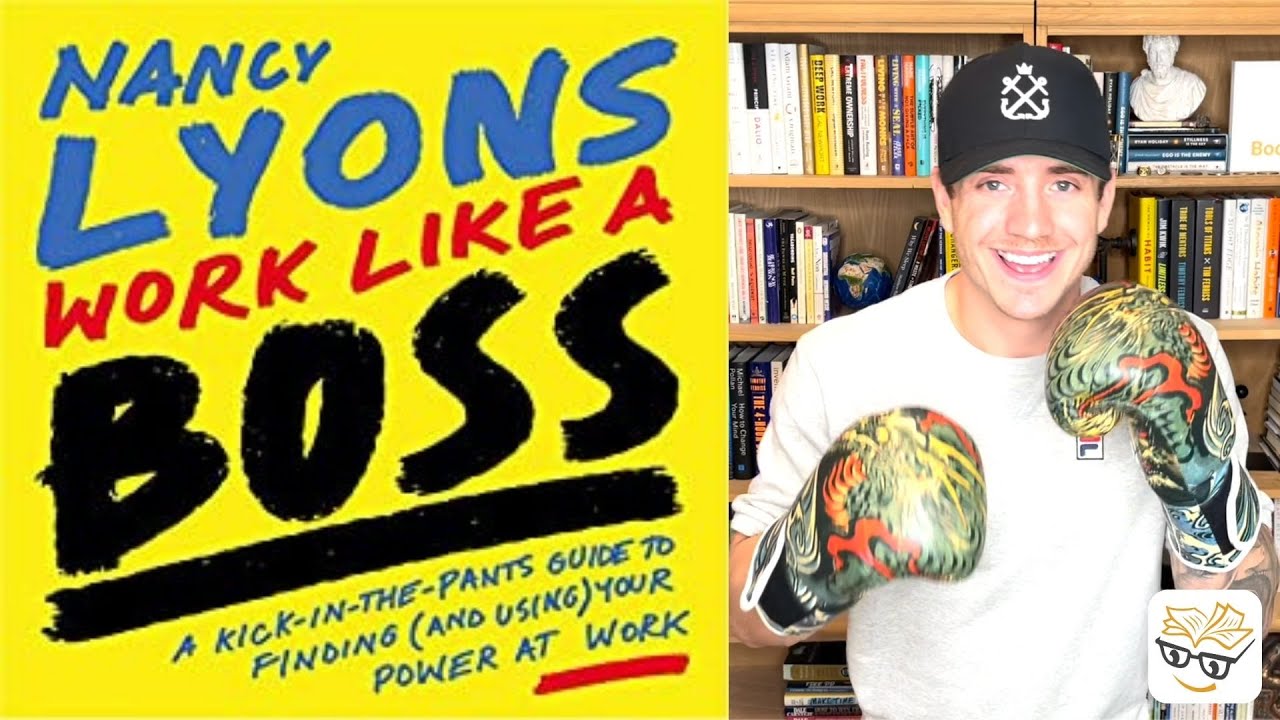
Woo! Book Thinkers family, have you ever seen anybody kick off a video by throwing a couple jabs at the camera here? Today is actually a video book review for this book right here, Work Like a Boss by Nancy Lyons. But I wanted to kick off the video with these gloves because 2 things. Number one, you have to kill them with kindness. That was one of my favorite lessons from this book. And number two, you need to make a punch feel more like a hug. And so those were 2 lessons from that book right there. I'm going to take my gloves off. I'm also a little bit Out of breath there from those couple punches. I listened to the audio version of this book, and Nancy has a big voice. She's also very articulate, and she's very charismatic, so it was a very pleasant listen. So thank you for narrating, Nancy. You did a fantastic job. This book is full of wisdom for us misfits. I know I've always been a misfit. When I first got into the workplace and I experienced more of a traditional workplace culture, I had a lot of questions. I mean, nobody really prepared me for a lot of the things that I was facing, and I didn't really know how to deal with all of them. And so I've always been somebody who kind of pushed the needle a little bit too far, pushed the agenda a little bit too aggressively, and I wish I had a resource like this back in the day. Let me start here. Nancy has always been a misfit. She was always kind of loudmouth. She was always a little bit outside of the traditional norms. And so fitting into a traditional workplace environment was very hard for her. When she became her own boss, she knew what she wanted to measure against. And so a lot of the qualities in the book and the stories that she tells are very personal, but they also create more of a welcoming, opening working environment. And they allow you as a misfit to leverage your power in the best of ways, no matter whether you're an employee or a boss. So there's kind of fantastic advice for anybody that sits in that spectrum. Those two lessons that I talked about—the first was you have to kill them with kindness. I read an entire book on kindness earlier this year and interviewed the author Adrian Bankert. The book was titled Your Hidden Superpower, and again, your hidden superpower is kindness. So Nancy exhibits a lot of that. She's always kind. That's always the first foot that you need to put forward, and I really enjoyed that. The second was that you need to make a punch. Feel like a hug. You can be direct and care a lot at the same time, and that's always been something that I've struggled with. I've always been very, very direct. Everybody knows I'm very transparent, and sometimes— most of the time— to a fault. And so what I've had to do is learn how to cater my message to the audience a little bit more effectively, which I should have been doing because I'm a salesperson, but sometimes in my personal life I let that professional boundary slip. Something that Nancy says is there doesn't need to be a boundary between personal and professional, by the way. So I always should have been trying to kill him with kindness and make my punches feel like hugs. And so there's that cliché saying, if you don't have anything nice to say, don't say anything at all. Well, not always the case. If you don't have something nice to say, then find a way to say it in a nice way is a better and more constructive way to live life. Now in this book, Nancy covers a lot of different subjects. I'm going to read a couple of my favorites here just so you could get a taste as to what this book is all about. To work like a boss, you need to be optimistic, take initiative, try and keep trying, be kind, kill them with kindness, see opportunities instead of problems. I recommend the entire book The Obstacle Is the Way by Ryan Holiday. It's a really good Uh, it's a really good foundation for understanding why you need to lean hard into your problems and see them as opportunities. Be solution-focused. Bring good energy. That's so important. We have so much to be grateful for in this life. There's always an opportunity to work like a boss if you're just— again, that positive foot forward, that kind foot forward. There's always an optimistic way to look at things. And so practicing gratitude on a daily basis can help you feel more energy. It can help you bring good energy to the table, but more on that later. Say yes and jump into something new. Offer your best ideas and share credit. This one's really important. A work environment where you feel comfortable offering a solution and feel comfortable pushing the agenda a little bit is going to be a healthy work environment. Every kind of workplace needs to breathe a little bit. It needs to accept things from the outer surroundings. And anyway, I grew up thankfully in an environment where I was on a plane one time with my old boss and he— we were sitting down and I was right out of college. I was in sales and I was kind of wondering whether or not this job was going to be a good fit for me and whether or not there was the opportunity to grow within my position. And he said to me— I'm from Boston, Massachusetts, so the New England Patriots and Tom Brady were kind of reigning dominant at the time— and He said to me, hey, I kind of see myself like Bill Belichick, who's the coach of the Patriots. If a rookie comes into training camp and kicks the butt of maybe a 10-year veteran, then the rookie, if they give me the best chance to win, is going to get on the field. And so that has always been very important to me, is it doesn't matter how long somebody's been in a position. If they're brand new but they're offering something that would help the company or push the agenda forward in a big way, then they should have the opportunity to share that idea and do so. So that was a really important one for me, and that's just a little story from my life. We have show empathy and compassion for colleagues. That one's really important too. I've always struggled with empathy. Empathy is a learned skill. That's what they're finding out now. And there's always more room for empathy. Again, that blurring the line between personal and professional is helping me bring more empathy into my professional life and more empathy into my personal life, which is good. Create space that encourages creativity. Creativity, again, that's a learned skill too. I was not a creative person a few years ago, and now I'm out here doing book reviews and finding fun creative ways to kick them off and stuff like that. And so if you can create a work environment that cultivates creativity intentionally, you're going to just have a bunch of people— and ideas are okay— just spewing ideas around all the time, which is such a fantastic work environment. Bring out the best in others. Embrace differences and diversity. Contribute to a sense of belonging. Feel a personal responsibility for the organization. I recently read No Rules Rules by Reed Hastings, and he was talking about how their kind of expense policy is just: Is it in the best interest of Netflix? If yes, spend it. If no, don't spend it. And so always making sure that you're acting like the company's money is your money is a great way to look at that. And then take accountability for the culture. In— and I know I'm tossing out a bunch of book recommendations here, but in Extreme Ownership by Jocko Willink, he says you have the opportunity to lead up the chain. Nancy's a big fan of that too. Take responsibility for the work culture no matter where you fall in the corporate hierarchy. Speaking of corporate hierarchies, Nancy also did a fantastic job at bringing us all the way back to when this modern-day U.S. corporate hierarchy thing was created. She brings us through who are some of the personalities that really created this compared to the relative population at the time, and why are some of those traditional views of corporate bureaucracy sort of outdated today. And so that was also a lot of fun to work with. There's going to be a lot that I remember from this book. Definitely make sure your punch feels like a hug. I'm going to be using that, I think, for the rest of my life. If any of that resonated with you, any of it, I would really recommend getting this book. Like I said, the physical copy, which I did flip through a lot, it has pictures in here. It's a very easy read. It's kind of fun in a unique shape, just like she is. She's fun and unique. And then also the audiobook was a fantastic experience. So I would recommend this, Work Like a Boss. Nancy Lyons, you did a great job. Go read something.