Write a Best-Selling Book with Everette O'Keefe
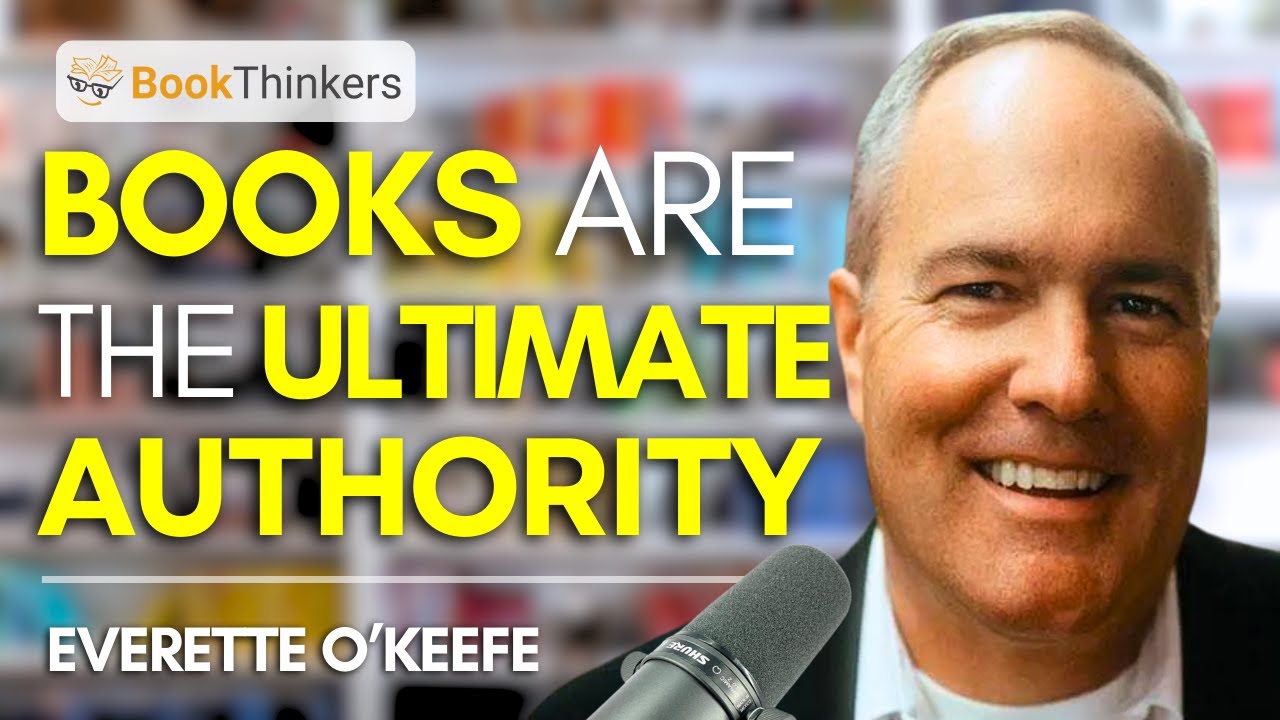
Everette O'Keefe, co-founder of Ignite Press, hit #1 on Amazon in 30 days with a FAQ-style book on video marketing. He explains why nonfiction authorship builds authority and credibility, shares tactics like gifting signed copies to land business deals, and describes Ignite Press's hybrid publishing model that lets authors keep full ownership.
Chapters
So you think about it, you know, lots of people want to write a book. Very, very few accomplish it. I taught you in my book, The Power of the Published, I talk about it being rare air. You know, being an author is breathing rare air. You're just a fraction of a fraction of a percent of the population. And, you know, that has that internal impact. But of course, just for others.
The—
if you want to convey expertise, if you want to stand out against your competition, if you want to separate yourself from other people who do the same things you do, nothing like a book. I joke around about, you know, if you were— if you were, let's say you needed an attorney, you decided to interview 2 attorneys for whatever it is, and you go to one attorney's office and it's in a, you know, upscale office, it's totally professional, etc. And You go to another attorney's office and it's kind of in a dumpy neighborhood, you know, low rent, whatever. The first guy's driving the Mercedes, the second guy's driving the Yugo. I do— I don't know, can you even find Yugos anymore? You know, whatever. But if one of them's written a book on your topic and the other one hasn't, like, all things being equal, would you go with the guy with the book?
And in fact, all things being Everett, welcome to the Book Thinkers Life-Changing Books Podcast. We are excited to introduce you to our listeners and get to know more about you and your book, The Power of Published. You have a pretty diverse background from vocational counseling to marketing and a lot of other things in between. You're also—
You've been doing your research.
Oh yes, I always do my research. You're a multiple-time bestselling author and have helped others achieve the same thing. I'd love to start with asking how you went from working in marketing to getting into publishing.
Yeah. So first I'm gonna say I'm just blown away. I have the, like both of you here. I just feel like such a VIP to, you know, to have both rock stars. Definitely are on the podcast here. And man, you know, I just feel bad for the people who don't get that treatment because, you know, anyway, yeah. So that bridge from marketing to publishing, the truth is my business partner and I, John Wright, and we had founded a company called The Solution machine. And it was basically, hey, you have a problem, a marketing problem, we'll find a solution. And we were doing all sorts of things. And a lot of it was Main Street marketing, you know, just helping small businesses be successful. And we were attending a number of marketing conferences and at one of them, you know, they were talking about Amazon bestsellers and becoming an Amazon bestseller. And I'd heard it enough times that I'm like, you know, all right, I'm going to try this. I'm going to— I am going to create a book and do a book launch and just see what happens. Because I always— I'm always the guinea pig. I guinea pig myself for our clients. It just makes sense. So I was coming back from this conference. I called my business partner up. I said, John, we're going to write a book and we're going to write it tomorrow. He's like, really? Because what on? I go, I don't know. I'll meet you in the conference room at 10 and we'll figure it out. So we did. We sat, we met in the conference room at 10 and we decided to write it about video marketing because that's something that we'd been doing a lot of. And remember, this was a test project. This was just a proof of concept. I had no expectations of what to do with the book. It was just, can we write a book quickly and can we make it a number one bestseller on Amazon? So we sat down and we wrote down about 20 frequently asked questions for our business. What is video marketing? Do vi— how long do videos need to be? Do I need to be funny? You know, do I need to have an expensive camera? Do I have, you know, all these types of things? We wrote down 20 frequently asked questions that we've been asking all the time. And by the way, for listeners, this is a great model for you as to how to write your book. And then I plopped a microphone on the conference table and we dictated responses to each of those questions, about 5 or 10 minute response to each one. And that became our core content. And we went ahead and had that transcribed. We then had it edited by this guy, which is a mistake. Don't ever edit your own book. But again, remember, this is a proof of concept. And, and then we decided we, we put the book on Amazon. We carried out an Amazon bestseller launch sequence that we had learned. And 30 days later, I'm sitting there looking at my book on Amazon, and it's the number one bestselling book in small business marketing and entrepreneurialism. I'm sitting it, sitting there looking at it going, wait, that guy Malcolm Gladwell? Oh yeah, I'm, I'm, I'm beating him. Oh, that guy John Maxwell? Oh yeah, him and Andy Andrews, one of my favorite authors. I'm like, and, and I just can't tell you the experience. you know, I felt having that without any expectation just didn't— like, that was crazy. So we started going, well, why aren't we providing this for our clients? Why is this not something that we do for our clients? And we started to publish books and we had people coming out of the woodwork first going, wait, how? What did you do? How'd you do that? And And that ultimately, you know, we started doing that. Sadly, very shortly thereafter, my business partner, John Riding, passed away. He was playing a volleyball game on a Sunday afternoon and sat down to take a drink of water and had a massive stroke. And I lost my best friend and my business partner in one shot. And it was a shocking, terrible time. However, like, you know, quite honestly, and I know you guys have some faith background, he was an amazing man of God and moved so many people, and people came around us and helped carry our business forward. And God, God did some amazing miracles during that time. And one of them was that John was our video guy and I was our publishing guy and it caused us to double down on publishing. And now that's all we do. All we do is publish books and about now we're 150 books later. Here we are. So that was a really long answer to your question, but we covered a lot of ground.
Yeah, no, I mean, I love it. Thank you for, thank you for sharing. I can't imagine, I just, I literally cannot imagine how hard that must have been, like getting this business off the ground and then losing a partner like that. Like, that just— thanks for sharing that. That must have been so heavy.
Well, you got— like, you guys have a really close relationship. I've seen you guys in action, so I know you understand. I know you totally get it.
So that— I just— to clarify, that was your first book that you would ever put on Amazon? That was it? Your first book that you authored as well?
Yeah, yeah, yeah, it was. And it was hilarious to watch what happened. We we got our first, like it was a testbed, right? It wasn't intended to sell video marketing, but of course it did. And we ended up getting our first, you know, our first 5-digit, you know, first 5-figure customer in video marketing came right off that book. Someone was like, wait, you know, I read your book and what can you do with us? And our first publishing clients came right off that book, you know, as well.
And that's a—
and it's a crappy book. I mean, like, I'm just gonna tell you, it's a crappy book. Because I edited it. I laid it out. And you should never like, you know, trust me, this is not how we do books now, right? This was a proof of concept only. And, but it had every impact you would want from a book. And I also can't overstate just the internal dialogue that happens with I am now an author. I am now an Amazon number 1 bestselling author. That changes your posture. It changes how you interact with clients and prospects. And you guys know this. You guys have been through this and that, and you've helped authors on their journeys. And it's crazy powerful, right? And that people don't talk about that internal dialogue part that doesn't get talked about. And I can't I just, it's something I didn't expect at all but has been so powerful.
Well, as somebody who just achieved his first Amazon bestseller status—
Congratulations with Rise of the Reader, baby.
Yes, sir.
And you're crushing it. You're crushing it, Nick. I can't believe all the reviews you have already in just such a short time. You're absolutely crushing it.
I've gotta get on with you every day, Everett, so I can hear that. That feels good. Well, I'll tell you what—
Just play the recording. Oh, true.
I forgot we're recording. Well, I'll tell you, I felt like we were just at Linner again, right? Lunch and dinner.
That's right.
What you just said is totally true. I mean, I've been operating this business with a number of people now since 2017, and for a long time I felt confident in my ability to promote and market a book. But now that I've gone through the process myself and experienced experienced the success and I have that status of an Amazon bestselling author, I do operate with more confidence. So here's my question for you. What are the benefits of being an author? I understand your background, your business, what happened with you, but for the average person listening today that's thought, oh, you know what, I always wanted to write a book, but I'm not sure if I should. What are the benefits of being an author? Yeah.
So let's talk specifically about the benefits of being a nonfiction author. Okay. I, you know, I mean, fiction's great, love to read it. It's not something that we specialize in. But the benefits of being a nonfiction author, there is nothing like a book to convey authority and expert status. You know, videos are great and they are powerful, but there is nothing like a book. And part of it is that long-term format or, you know, that long format. I think part of it is Hey, you know what? Books have been the primary communication method for millennia now, right? And I'm kind of like, hey, if it works for God, it works for me. It sounds like a good, good rule to follow. And it's, it's incredible the impact that it can have. So you think about it, you know, lots of people want to write a book. Very, very few accomplish it. I taught you in my book, The Power of the Published, I talk about it being rare air, you know, being an author is breathing rare air. You're just a fraction of a fraction of a percent of the population. And, you know, that has that internal impact. But of course, just for others, if you want to convey expertise, if you want to stand out against your competition, if you want to separate yourself from other people who do the same things you do, Nothing like a book. I joke around about, you know, if you were, if you were, let's say you needed an attorney, you decided to interview 2 attorneys for whatever it is, and you go to one attorney's office and it's in a, it's in a, you know, upscale office, it's totally professional, etc. And you go to another attorney's office and it's kind of in a dumpy neighborhood, you know, low rent, whatever. The first guy's driving the Mercedes. The second guy's driving the Yugo. I do, I don't know, can you even find Yugos anymore? You know, whatever. But if one of them's written a book on your topic and the other one hasn't, like, all things being equal, would you go with the guy with the book? And in fact, all things being unequal, may you still go with the guy who wrote the book? I, you know, and we just see that over and over. So anyway, there's a whole section in my book about the power of the unread book. You know, you think about— I'm looking at your, you know, you guys have these nice color-coded bookshelves. I've got old books, right? But, you know, you, you're an author, you give someone a copy of your book. Nick, I know you do this every time you meet someone or interact with someone online, you send them a copy of your book. Right.
That is true. And in fact, tonight I'm playing basketball and I'm giving everybody I play basketball with a book. Why not?
Absolutely. Because you don't know, like you talk about arrows in your quiver. There is no arrow in your quiver like this bad boy, right? You know, your, your book. But even if they never ever open your book, they immediately, they're convinced that you are an expert on the topic because your name is on the front cover of that book. Provided it looks professional, right? It doesn't look like you did it at Kinko's or you didn't do the artwork yourself, you know, and if that just sits on their nightstand, sits on their desk, it's in their bookshelf, whatever it is, continually screaming credibility and authority. And at this point where they need your expertise, you're the one they're gonna go to every time. So those are just some of the benefits of authorship. And Nick, you're experiencing that. Right now. I mean, you're seeing it right now. Hey, by the way, I was on a podcast the other day and I said a strategy and I didn't know if I learned it from you. And if I did, I forgot to attribute it to you. So I want to give the strategy now.
Give the strategy. Let's hear it.
And find out if I learned it from you. And if not, I think I know who else I learned it, might have learned it from, and I'll give them credit. So not only— so here's what I'm doing now. I just started doing it this week. Is every time I send a book to somebody, I'm sending two books to somebody. I'm sending them first a book that I've signed to them with a note to them, and then the second book goes like this: It goes, "Hey, I'm signing it." You know, Nick Hutchison thought so much of you that he wanted to give you this signed copy of this book. And I'm so now I'm sending two copies of the book. So it is two relationships I'm starting. And not just one. Did I learn that from you or from someone else, Nick?
I was doing a slightly modified version of that. Your version is better. So I was sending somebody a signed copy of the book, but also asking them to buy their own so that they could write a verified Amazon review and that they could just gift that other copy away. So if we didn't talk about that, what you're doing is far more powerful. Maybe it becomes a 3-book play where you ask them to buy their own, but then you—
I, I, and, and, and, and of course we're breaking a rule of marketing, right? Which is ask people to take one action. But it's absolutely worth it because I did learn that strategy from you of, hey, I'm gonna buy your book and review it and would you please also, you know, do the same? So it might be that second copy I might have learned from Alex Strathdee then. That might be who I gave credit, who I need to give credit to. But the variation is even better. See, now it's a trifecta.
Now it's a trifecta. That's cool though. I, I will start doing that as of tonight. Yeah.
So, and you think about what, what additional does it cost, right? And for, you know, for those people who don't know, a book print on demand, my book is about 180 pages print on demand. I think this cost me $3.06 for author copies. And so for me to stick an extra book in that same package, It's costing me this plus a little bit of weight on the shipping. It, maybe it's costing me $4 more total.
Well, yeah, exactly. So a $3 book being mailed by itself, a 1-pound package through USPS book mail is $3 in shipping, but then it bumps up to $4 in shipping if you add a second pound.
So yeah.
There you go.
There you see, you've got it down, Nick. You've got it down.
Yeah, I had to learn. All right, we'll kick it back to Luke.
All right, we'll try to bring this back around.
So I know we're out of control. We're out of control.
No, it's all good. All these things are great. So for somebody that's listening that's like, hey, I want to author a book, but I don't know if I should go traditional publishing. I don't know if I should self-publish. Like, what's the difference between what you do and both? What's the difference between self-publishing and real publishing and then, or traditional publishing, I guess, I should call it.
Yeah, hybrid, traditional and self-publishing. Thanks for asking. So traditional publishing is what everyone thinks of and it has some challenges to it. It is very, very hard to get picked up in traditional publishing. The first question often is, you know, do you have 75,000 followers? You know, what's your proven sales track record, etc.? And the publishing companies, you know, can only gamble on a small number of titles each year. And they don't want to gamble, so they only want to pick up the sure thing. It's like going to the bank, you know, the bank's happy to loan you money if you don't need it. And that's true with traditional publishing. They're happy to take you if you don't need them. Traditional publishing, you get paid too little for your own book, you know, for sales of your book. You pay too much to buy your own book from them. Plus you've sold your content to them, so they own your content. They have first rights at derivative works and you don't have the freedom to do what you necessarily want to do with your content. And that may work fine for some people, but for a lot of business people, that doesn't work great because they need to have complete freedom as to how to leverage their content. Self-publishing is great. You have complete creative control. All royalties flow to you. You get your books at cost, but you have to do everything. And/or contract everything. And if you screw one thing up, then it can be a disappointment, right? You, you could have the best words in the world in the book, but if you screwed up the layout or the COVID no one's gonna get to them, right? So we're in the middle there. We like to think we're the best of both worlds as a hybrid publisher. What we do is we publish books that are set up in our, in accounts that our clients own. So they All royalties flow directly to them. They get their books at cost. They have intellectual, you know, ownership of their intellectual property and really physical ownership of that, of that as well. And then, you know, we don't get any money on royalties and or book sales. So therefore we charge a fee for our service. But at the end of the day, our client owns absolutely everything but doesn't have to do it all themselves. I mean, we provide professional copy editing, professional layout and cover design. Ask our clients about our cover design contests that we do and for, and they'll rave about them. So anyhow, but that's what we do and then we do the Amazon bestseller launch. So if people are weighing what their options are, it's really how do they intend to use it? Is success gonna be measured only if they sell a bunch of copies and make money in royalties? Are they gonna measure their ROI one digit at a time through book sales? Or are they gonna measure their ROI 4 or 5 digits at a time through new clients and new opportunities? That use pattern, I think, determines what method is best for people.
Just a quick comment on the traditional versus hybrid versus self. I host, I don't know, 10 sales calls a week with authors looking for help promoting and marketing their books. And whenever I meet a traditional published author, I'll say 9 times out of 10, they are just pissed off at how poorly their publisher has treated them.
Yeah.
Right? Just like you mentioned, they play the VC game. They place 20 bets, 19 fail, one takes off, they forget about the other 19. And it's sad to see what happens because that person no longer owns their IP. So they have little control over what happens with the book moving forward. And in some cases they're not allowed to build a course or speak. I mean, it's just, it's tough.
That's right. They're not allowed to monetize in the ways that they really wanna monetize. And this is what I love about what, what you guys do. Okay? Because so many people go to traditional publishing companies looking for marketing, right? They go there because they think that they're gonna end up on Oprah. There's gonna be a media tour. They're gonna have book signings, you know, they're gonna have all of the flash that they think comes with being an author. So they go to a traditional publishing company for marketing and then they're really disappointed because they don't get that marketing, right? Like you said. So this is great. I draw these boundaries around what we do. We're publishers, not marketers. And you guys are marketers, not publishers, right? And so you guys are helping people carry their message to the world, expand their audience, go deeper in relationships with their audience. So that they can actually leverage that tool that they've created in the book because the book is the ultimate tool. It's the most enduring, durable tool, right? What tool will you create for your business that you will still be using 10 or 20 years from now? And you guys help make that sing, right? So this is why I love what you guys are doing.
Couldn't agree more. Couldn't agree more. I'm curious with all your clients, What is the biggest thing that people tend to get stuck on?
I mean, certainly creation of the manuscript, you know, and, and, and finally freeing it, like releasing it. Some people get right up to the finish line, and then suddenly there's fear of failure kicks in. And it's like, oh, is it good enough? You know, will people like it? Should I put it out there in the world? Right? And they'll get stuck and someone like needs to kick them in the tail end.
Can I throw something out there real quick? My book was 80% finished for like a year and a half before I just finished it.
Yeah, I'm totally with you. Fortunately, now there are tons of ways to create the manuscript, right? I described the FAQ model of writing a book where you just, you know, write the FAQs of your business and then make each one a chapter. Other people want to do it in a more organic fashion. That's fine. Obviously, some people are experimenting with, you know, using AI to assist them in the process now. And of course, there are always ghostwriters and developmental editors and people that can always help with that. So that's a big sticking point. Now, once they get to us, we're kind of like, honestly, they're kind of home free from that point. It's not that there's not work to be done, but we'll carry them the rest of the way. We'll carry them through the whole production and publishing and launch process. So that, you know, I think we carry them past all those other potential sticking points that would come up. But I think people otherwise get pretty lost in, yeah, oh wait, what is content editing versus copy editing versus developmental editing? What do I need to pay attention to on layout or cover design? Or where do I, where and how do I publish all these things? And, you know, All of those are questions that people would have if they're not working with someone that's gonna help them through it.
Yeah, makes sense. Do you believe everyone should write a book or like, what is your, what is your belief around that?
I know, I don't know that everyone should write a book. I think that, I think that there's a place for it in almost any business or brand or organization, whether it's telling the story of the brand or it's educating, you know, clients and prospects. I think that there's a role there. Most people say they have a book in them and as an exercise, it'd be great for everyone to write one. I do love the fact that we're living in an age with a, where there is a democratization of the publishing process. It's not like 20 years ago, you know, where you could only get it out if you were You know, playing with the big, playing with the big boys. So I love the, I love that fact. But almost any business or brand could benefit from the expert status and authority that comes with a book.
So if somebody in the audience wants to explore your services because they, they have a book, they've written it, it needs to be finished and they're looking for somebody to do the bestseller launch with them, what are the next steps? How do you evaluate books? Who do you choose to work with?
Yeah. I mean, so first we're gonna have a consultation where we're gonna talk about what are the goals, right? What, what's your, what's your plan and how will you measure success with the book? You know, are royalties the number one goal or are new opportunities and relationships and better clients, you know, or, and closing clients faster and, you know, all the other benefits that can come. So we'll have a consultation, see if, if we're a good fit, if they like us and we like them, then I'll have them send us their manuscript. One of our editors will go through their manuscript and summarize it for us and evaluate it also, you know, what's the writing like and how much, what of a, how much of a slog is it gonna be on the editing side? And then we then make a decision as to whether or not it's something that we can, you know, bring to market. And we don't, you know, we don't cover every topic. But, you know, we definitely turn some projects down. When they're not a good fit.
I'm curious, are there any, without naming names, of course, are there any crazy stories around books you've had to turn down where you're like, I can't believe somebody wrote a book this poorly, or I can't believe somebody wrote a book on that subject or anything like that?
I mean, yeah, the deal for us, like, you know, we've had some books come to us that were, let's say, racier than we would want to take on, you know, and Or, you know, we, you know, definitely some topics that we've, that we've passed, passed on. I've got a book we're maybe getting now that's, I don't know, I don't know. Let's say about a 100,000-word book, which is about, by the way, 3 times longer than most people should be writing. 100,000-word book, but the guy has poured his entire career, you know, and knowledge into it and wants to get it out to the world. And You know, I hope we hope we end up getting that one and and taking it taking it out. But yeah, I mean, we did. We had one book that was brought to us that was simply the history of a single cycling race that goes from near where I live up to about eight thousand feet. It's called the Climb to Kaiser, and they do it every year. And this guy is self-appointed historian of this. race. And, you know, cyclists are passionate. People are passionate about their hobbies. And he wrote a 750-page book, which is now a 750-page hardcover book about the history of this cycling race.
Oof.
And, and, and wow. I mean, just wow. So, and, but the guy poured his heart into it. Honestly, we took it on almost on a pro bono basis. We were just like, The guy didn't have the resources. We just wanted to see his— really what this is, is his life work. We wanted to see it out. So, so it's a, it's this tome that we have now. So go figure.
Not to put you on the spot too much, but I'm curious, do you have any fun success stories from your clients that you can think of?
Oh, we have lots. We have lots. I'll share just one. Okay. So we got this client, her name is Cindy, and that's not her real name. It's like names changed to protect the innocent. She came to us and she was going to be attending a medical tourism conference in Dubai. And I think we were about 60 days out. And she said, Everett, I've got this manuscript I've written. I'd love to have at least something I could bring in to this conference. And she, again, she's just attending it. So we said, well, let's take a look at it. We decided that we, we actually, and this is faster than normal, We went ahead and took it through editing, layout, cover, all of that, published her book, and basically got copies into her hand just as she's stepping onto the airplane. Okay. She steps on the airplane. She went with like 10 copies or something. And that first day, she handed out these copies to some, you know, people that she thought were key people. That night, she, she told me she was like, kind of tripping out because she's walking through the lobby and she saw one or two people sitting down reading her book. She's like, oh, well, this is, this is kind of cool, right? You know, every, every author wants to see that. And the next day she was approached by several of these people. The end result was that one of them gave her a very substantial contract that became a client for the coming year. Another one asked her to be a contributor to a textbook that was used in college courses. So now, of course, she's among the intelligentsia, right, and has that credibility. And then another one ultimately was a relationship that they hired her to come to be a speaker at that conference the following year. So she came to that conference with no footprint on the international stage, and, and left that conference really as an internationally recognized expert. And that's just, you know, I mean, obviously, that doesn't happen with everybody. But that's what, that's what a book can do. It separates you. Oh, I heard this great phrase, also don't know where I learned it. And I'm gonna keep using it. You want to be the one who wrote the book, not the one who read the book. She's the one who wrote the book. And that paid off. That's what pays off.
Such a powerful story, Nick. I saw you unmute there, but that's such a powerful story. I'll just kick it to you, Nick, because I feel like I've been hogging so much. I don't know if that's true, but I feel like I've been hogging.
Oh no, all good. All good.
You know, it reminds me, Everett, of something that I see you say a lot, the you never know factor, right? So might as well have the book, might as well hand out some copies. You literally never know what's going to happen. I mean, I had somebody read my book recently and then she came back and she said, hey, I have this sort of mastermind group. I want to buy 70 copies for everybody in the group. And so it's just little things like that. You never know. You never know.
And that's 70 new— that's 70 new highly qualified prospects to your business or brand.
That is—
what is the value of that? There's one guy I don't know him personally. He wrote a book for 5 prospects. He created 5 people. They were CEOs of companies. He said, if I want to get to them, I want to write a book that speaks directly to them. He wrote that. He gave those book— that book to those 5 people. He landed conversations and relationships with 3 of them. So what is the value of one relationship? Yeah, it's crazy.
I'm taking notes over here.
Well, and guys, I know that you're, you know, we're running out on your, you know, your normal podcast time. So I want to be sensitive to that. I'm just grateful that we could have this conversation. It's been so fun.
Yeah, well, we will have you back. That's for sure. And we'll hit that same lunch spot next time because it was pretty good that we're out visiting the West Coast. So here's my final question, Everett, to wrap things up. We just finished 2023. We're just kicking off 2024 at the time of this recording. So I'm curious, what was the best book that you read last year or maybe starting this year? I'm curious what comes to mind when I ask that question.
Oh, can I cheat?
Oh, of course you can cheat.
Can I cheat a little? So Luke was so kind to recommend that I read $100 Million Offers by Alex Hormozi. And so I am, I am most of the way through that now at Luke's recommendation. And that has been fantastic. It really has been fantastic. Oh, I just realized I failed the test.
I just— You were supposed to say Rise of the Reader.
I was supposed to say Rise of the Reader.
You did not fail the test. Alex Hormozi is a former guest on this podcast. We did a deep dive on $100 Million Offers. So that's an acceptable answer.
Oh man. Okay. But next time I'll do better. I promise.
I'll ask you the same question next time and I'll give like a wink wink or something.
Yeah. Yeah, please. Or, or just hold it up. That's even better.
Yeah, true. That, that would've been better. I could've been like, what was the best book you read last year?
Well, the good thing is the people who were just getting the audio version of the podcast would have no clue, right? They'd have no clue about that.
Oh man. Well, I have 2 more questions. The first one I wanna ask is where can people go to learn a little bit more about you and find out about your Yeah.
So a couple of things you can do. One is if you, if you want, you can go pick up The Power of the Published on Amazon or anywhere else. It's anywhere books are sold, The Power of the Published. And I think that for anyone considering writing a book, this is a great tool because it'll teach them what a book can do for them, a ton of different strategies to employ the book and some strategies to rapidly write a book. So pick up The Power of the Published. And then otherwise, you know, if you think we're a good fit, you've got a business or brand that you want to expand through a book, you can reach out to us through ignitepress.us. That's ignitepress.us and you'll see a button there where you can schedule a consultation directly with me.
I love that and I'll make sure I put it all in the show notes. All right.
Thank you, man. Appreciate it.
Very welcome. This is the final question. This is the final question. After you pass away and all the courses, books, everything that you put out disappears, but you can leave the world with a single piece of advice, what would it be?
Man, I wish you'd prepared me for that answer. And I bet you I'm not the only one who said that. Oh my gosh, man. I don't, I just, you know, love your family. Love, love, love your family. Spend time with your family. Don't let that get past you.
Oh, amen. Relationships matter the most. I love that. Yeah. All right, Everett, thank you so much for your time. We appreciate you. Can't wait to have you back.
Hey, thank you guys. What a joy. And again, thanks for the VIP treatment.
Always.
More from Nick

Napoleon Hill’s “Think and Grow Rich” is a timeless classic #selfhelp #personaldevelopment

4 Books to Help You Get Better at Decision Making #selfhelpbooks #bookrecs #nonfictionbooks


Have you read this book yet? 📖: The 5AM Club by Robin Sharma #selfhelpbooks #robinsharma

Dan Sullivan on Listening to Your Customers Instead of Watching Your Competitors

5 Books That Will Boost Your Financial Intelligence #financialfreedom #nonfictionbooks

The People That Preach the Loudest About Virtue are Usually the Most Power Hungry



Books are the greatest mentors you can find #selfhelpbooks #businessbooks #successmindset

Let’s fight this toxic instant gratification culture together 📖 #selfhelpbooks #jimkwik