You can add 24 years to your Life with Torkil Færø
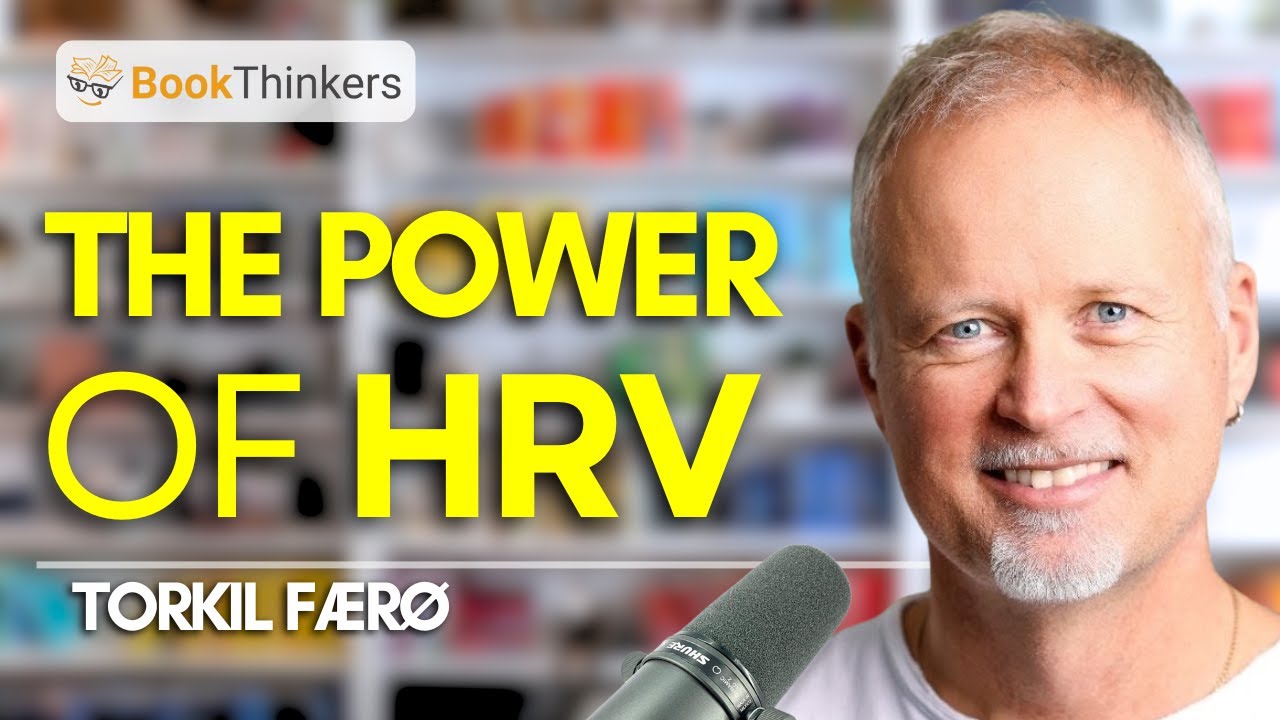
Dr. Torkil Færø explains how heart-rate variability, measured by wearables, predicts health better than most medical tests. A study of veterans found his Pulse Cure protocol adds 24 years of healthy lifespan through sleep, exercise, cold water, and breathwork. Tracking becomes a game that lowers anxiety, not raises it.
Chapters
to stay away from the diseases because the big pharma, there's too much money in sick people, unfortunately. It's follow the money principle. So, to be able to stay away from getting sick as much as you can, it'll save you so much money and so much life quality, really. There's a big research going on from former American veterans that tells you that if you do the same lifestyle changes that I advocate in The Pulse Cure, you'll live 24 years longer than the ones who don't. And these are not 24 years of poor health. It's also a good healthspan.
Torkel, welcome to the Book Thinkers Life-Changing Books podcast. podcast. I have to admit, I haven't been this excited to interview somebody in quite a long time. I'm fascinated by everything in your book, and I read it cover to cover. I'd like to read a passage from page 5 and then have you respond to kick off the podcast. So here it is. and refer patients for a myriad of tests, examinations, and specialized care. The way we practice medicine is backwards. We wait until people become ill before we heroically intervene. So that's the end of the quote. I'd like to have you respond and tell us a little bit about why you think this is.
This is because this is what we learn in medical school. So, so we are not trained to create health. We are trained to repair disease or, or to identify and repair disease. Um, so this is how all us doctors are trained. So it's no wonder why few doctors know a lot about preventative, uh, healthcare and how to stay healthy because we are not trained in it. Um, so that's, that's the fault of the system. But so many people are changing this around. Uh, so, you know, I, I'm on so many podcasts, so many health-related podcasts. So many people know this now, except for many doctors, unfortunately. But I myself did not know this only 5, 10 years ago. So, I can't blame them. We have had enough to do. To study disease takes a long time. It's very complex. And then, you have to work and get experience. So, But, to know what to do to avoid getting sick, that takes you this book. I think that you know already now by reading the book most things about how to stay healthy.
I think so too. As I was sharing with you before we pressed record, I really enjoyed reading this book and getting a better understanding of HRV and why it's important. Can you define HRV for the audience and talk a little bit about why it's such an important Measurement?
Yeah. So, HRV is heart rate variability. It's the variation between heartbeats. So, if there's a good variation between heartbeats, that means that your body is not under a lot of strain. So, if you have a good HRV, then your pulse will get up as you breathe in and go down when you breathe out. And, if you're in a stressed state, It'll beat very steadily regardless of your breath. And so this is how the watches can tell if you're in the stress state or in the de-stressed restorative state. And unfortunately for us, we are in the stress state most of the time. And this makes us sick. Our bodies, our physiology, our immune system, our brains are not made for this. It's— they are developed under completely different circumstances. And, it makes us sick. It gives us heart disease, cancer, autoimmune diseases, the plethora of diseases that we are treating instead of going to the root cause and making people able to have a good stress balance, which is not only making them more healthy but they have more well-being. They sleep better, they feel refreshed when they get up in the morning. And, I think the success of the book in Norway, it has been on the bestseller charts for 69 weeks, is because people immediately get this. And, so many people already have the wearables, they just don't know exactly how to use them and particularly compared to health and disease.
So, Torkel, I've been wearing my Oura Ring for 5 years now. I have data going back until 2020. And I've worn it very consistently over the last 5 years. And as I was going through your book, I was shocked when I looked at my year-over-year HRV, that it's been trending down for the last 5 years. Now, I know part of that is due to aging, but I want to get it back up. I want my HRV to be as high as possible. And so although I feel like I'm checking a lot of the boxes, I eat very well, I sleep very well, I exercise a lot, it's still going down. So maybe you can help me out a little bit.
How much down?
Well, let's see. And I'm kind of shy to admit these numbers because out of everything I do, I feel like this is my worst performing metric. But when I go back to 2020, I was averaging around 75 on the Oura Ring heart variability Scale, which is very good. Now I'm down to about 60.
All right. What is your age?
I just turned— well, I'm 30 and a half. I'm 30 years old.
Yeah. Because in that age, from 25 to 30, that's when this curve is the steepest. It's kind of like an opposite hockey stick curve where it goes fast down from 20 to 30, and then it flattens out more. So you have been caught just in the time where it naturally will go further down, but it may also be other factors that you're maybe working more or having some different habits, so it'll go down in addition to the normal aging, which is why as an athlete, you cannot expect to be very good athlete after 35. And only the exceptional athletes like Cristiano Ronaldo, or Tom Brady will be top athlete at 40, you know, because we are— the HRV will go down. And, and Cristiano Ronaldo, he has actually said that his Whoop band is like having a doctor on, on the wrist. So, he uses it a lot, the Whoop band. So, so, so I would think it's quite natural. So it would probably not be possible for you to get all the way back up to 75, or it would take a lot of effort to do that. But it could be a good challenge though. Yeah. But your numbers are great. Okay. Your numbers indicate that you are a fit person. Yeah, definitely.
Okay. Yeah, that makes me feel better. I have so many more questions, but I've been hogging the mic. So let's kick it over to Luke and see what he has to say about HRV.
Yeah. Well, I just wanted to maybe give our audience some context. And like, I love diving into these numbers and everything, but I'm like, okay, a lot of people might not completely understand this HRV thing. So first I wanted to ask, like, how did you discover HRV as one of the most important, if not the most important metrics to measure as far as it goes with health? Because there are so many other things like Nick just mentioned, all these other metrics that he's measuring. Why is HRV the most important one?
It's because it tells you, your, your heart tells you so much about the inner state of your body because your heart receives nerve fibers from, from, you know, all the organs from, from, uh, so it's kind of a central command. It, uh, it'll take in the signal. So whatever reason for stress, whether it's mental or physiological, if it's because you've had alcohol, if you have trained too much, if you have eaten the wrong thing, if you're nervous or whatever, the heart will react to it. And, it's very, very sensitive. And, we are not sensitive to it as we are living our lives just now. I would not know if I have a 60 in heartbeat or 90. And, this would be a big difference. And, in all of our other senses, we can distinguish between thousands of colors of green. We can hear a bird chirping a mile away, but our sense for our inner state is almost nonexistent. And, this is why we are so poor at this and this is why we get into a burnout state and fatigue and get sick and still push on without realizing the pressure we put on our systems. But, the watches that keep track of our heart rate, will find out this immediately and, and are very, very sensitive. So, and probably Nick would also, could also tell that the, the Oura Ring will understand that he's getting sick or getting into a, a tired state before he does himself. Or, or, or what do you say, Nick?
Yes, I agree. I do remember something maybe about 2 years ago where my body temperature went up a full degree Fahrenheit. And my Oura basically said, hey, you're sick. And then a day later, I was sick. So yeah, it's very good at predicting that. And I think my— or I think my wife's Oura Ring predicted that she was pregnant as well. So yeah, there's a lot of cool stuff like that.
Yeah. And particularly around pregnancy, the Whoop band that takes in information from the users, they can see that Like, I think it's 6 or 7 weeks before birth, the HRV does a switch. So, they can tell in advance to predict when you will give birth. And, that is, of course, very important to premature births. And, of course, after having had a child, it's so important to keep your HRV in order because that's a very, very tiresome time. Yeah. With little sleep and you know much activity and and so on. So because eighty percent of autoimmune diseases, they they you will contract them the first year after pregnancy. So it's probably because of the stress on your body that your immune system will not work properly. So that increases your chances of getting sick. And maybe having I'm not I don't know how old your child children. Is or child is, but maybe that has something to do with a decline in the HRE as well.
So I don't have any yet. All right, this will be my first, but Luke has 3. All right. Yeah. Um, real quick, we've talked about a few different devices, the Oura Ring, the Whoop, and I know you're a big fan of Garmin. Could you talk a little bit about which devices are your favorite and maybe provide the most data for anybody that doesn't have a device right now?
Yeah. The, the, the by far best device at this moment, this could change like in a month or two, that would be Garmin because they can track it, you know, throughout the day and, and night. And you always can access, you know, with one, I can just push a button and I can see the stress in the moment. And I have the body battery measure to see how much physiological resources do I have. in the moment. So, that is the most useful one. But, of course, Whoop and Oura, they're also very good. And, if you have an Apple Watch, then there's an app called Athletic that is quite good. But, I know also now that Samsung is stepping up their game and coming with the Galaxy Ring and the new Galaxy Watches. So, this may all change just in a couple of— over the summer. And, there's kind of a technological war in this because it's It's so useful and so many people can understand this and so many people want to take charge of their own health and not wait until they get sick. So, there's a new generation now and they have seen that in research that are more motivated to take charge of their own health and use these wearables to do it.
I remember during our first conversation, which at this point was maybe 3 or 4 months ago, you told me which Garmin watch you recommended. But, at the time, I had the Oura data and I wasn't doing much endurance or cardio. So, I was like, I don't need that. But now, I've gotten into sprint triathlons and I'm really enjoying the sport. And so, I do need to up my fitness tracking. So, which Garmin watch do you recommend?
I would go for the best ones, which would be the Fenix 7 Series or Epix 7 Series. Most people or some people, they start with the cheaper watches, but they usually end up buying the more expensive ones. Because they can give you more information, both if you're an athlete and also if you're in poor health or if you are in a state of fatigue, then it's particularly important to have these good measurements because then just a walk in the park can be regarded as a heavy exercise for people. So, I think it's important to Get the best watches, really.
Duly noted, and I'm going to probably up my wearable game too. I'm just getting into this whole this whole world, and honestly, Torco, like being honest, like it freaks me out a little bit because I think, oh man, this might cause more stress because I like feel like I'm a stressed out person, and I'm like, oh, if I have to measure all these things, am I going to become more stressed out, and that's going to make my HRV worse? Like I have those thoughts a lot. So what do you say to someone like me who has those feelings towards measuring and tracking everything?
Firstly, then I know that you haven't tried it because my experience is that once you, once you try it, uh, you just take it in as a, as a measure, just like you do in the car where you see the speed. These are kind of physiological speedometers that tells you your physiological speed and, uh, you get used to it very fast. So this doesn't seem to be a, a real problem once you start. And I like it because you said it's a game because this is a gamification of your health. It is fun, you know, when you, you start realizing the effects these things have on your system and that you're able to control it. If you weren't able to control it, then it would be just stress. You know, you would just see that you're stressed and you don't, you wouldn't know your way outta it. But, the Pulse Cure, the book, it shows the way out of it. And then, it starts becoming a game and becomes fun actually.
So, for people that are maybe just starting out into this whole world of wearables and kind of gamifying the HRV, what are some first steps they can take to improve their overall HRV? Is it I mean, I guess just give us your take on that, some of the first steps.
That would be getting better sleep to make sure that you get those 7 to 8 hours of sleep every night that we really need. And, the body, when you just make sure that the body can sleep for that amount of time, it will do the job itself as long as you let it. So, that's the easiest part. And, One of the most important ways is to cut down on alcohol. Unfortunately, I used to drink a couple of glasses of wine every day, you know, to wind down and thought it was just good. It was the doctor's orders at the time, even, you know, ten years ago. And now we know that it's really, really detrimental for our health. And so most people that start tracking their HRV will cut down on alcohol—not necessarily cut it totally out—but be much more. You know, choosy about when to drink or not to drink because they can see the effect on it. And Whoop has done research on athletes and seen that it takes 5 days to get back into the same recovery state than you were before, you know, having a, a night out on town. And then, of course, if you drink twice a week, you know, you, you're never performing at your best. So, so that would be the most important things. And if your fitness level is low, Because the Garmin watches will show which kind of VO2 max you have, which is a, a number for your fitness level. And then it would be important to raise it to get into better shape, a better fitness, to have better than you, your cells are better than all your organs will work better and smoother because you have a better fitness level. But if, if your level is poor, then it— you have to be very, very patient. Then it would take like no, very little amount of exercise before you get a lot of lactic acids and you feel sick and you will be demotivated. So, and I know the Garmin watches will have kind of a coach and also the Whoop band will have artificial intelligence coaches that will help you on the way. So this is actually, this is one way of using artificial intelligence. Combined with millions of people's data and giving you advice on how to maneuver your physiology in this very busy world.
Go ahead, Nick. I'm sorry, I'm hogging the mic now.
On the subject of alcohol, you had some data in the book that I thought was really interesting. You talked about how Like a large percentage of people in countries like Italy and Portugal, they do consume alcohol, but they don't consume to the point of intoxication. And actually, a large percentage of people in those countries don't touch alcohol either. So it's like, of those that do, they drink very moderately.
Yeah.
And they have a more active kind of healthy lifestyle compared to us Americans over here in the West, where everybody's obese, overweight, and drinks to the point of intoxication. And I'm starting to see a shift, especially amongst younger people, maybe 30s and below, where they're looking for alcohol alternatives or ways to have fun without drinking. And, um, you know, it's a weird shift for me to make because when I was in college, you drank every day of the week to the point of intoxication, but you were young enough where you could rebound. And I've just noticed like that's not the case anymore. And so, um, I thought it was, it was a really interesting section of the book because you admitted to Up until recently, you were drinking fairly regularly, and now you're trying not to touch it anymore. So what advice do you have for people that are sober curious, but they just don't know how to say no to a drink at the bar?
Yeah, then it's particularly interesting to use the wearables and to see the difference because it becomes so obvious. So both when it comes to alcohol, when it comes to fasting, when it comes to cold showers and. cold water therapy. It's so motivating to see the differences on your watch, uh, to, to, for this kind of gamification. And then I would recommend maybe taking 2 weeks with no alcohol and 2 weeks with your normal amount of alcohol and see the difference on your wearable. And the best, but the very best thing would be to go hold 3 months without alcohol because only then you would see the full potential of how you are working without alcohol. At least that's what I've heard from the experts on it, and I can really believe that. So, try to experiment with it and see what works for you. And of course, there are some things you could drink like vodka or white wine instead of red wine and dark liquors like whiskey and brandy and so on. This will also have an effect on your HRV. So yeah, so it would be very important. Maybe the first thing I would try, really.
Great advice. And it's so fascinating because it's like, yeah, just, you know, you don't have to go cold turkey, but just take some time and do a couple different tests wearing the different wearables and see how you feel as a result of those actions. You mentioned on another podcast, and I might be butchering exactly how you said this, but You were talking about one of the most important measurements is actually through the night. Could you explain maybe why that's true or isn't true? Maybe I misquoted a little bit, but, or misunderstood, but I would love to hear your explanation on that.
Yeah, it's true because then there's not so many confounding factors. You know, you're lying in the bed, you know, relatively still. There's an amount of 6 or 7, hopefully 8 hours for that to do. So it's more better to compare it because during the day, your, your heart rate goes up and down. You're busy doing a lot of things. And it's just a better way to, to follow the kind of the curve of your, of your physiology over time. So yeah, that is why I, why I say that. And all, all the variables will only check heart rate variability at night. But Garmin will give you a stress number throughout the day. But that's a combination of different things also and not only the heart rate variability. But all the devices will give you the heart HRV overnight.
Yeah. That makes total sense. And I thank you for clarifying that. That's beautiful. Is there something that everyone should shoot for? Is there a standard HRV rate that we should shoot for? I know you talk about this in your book, but maybe for our audience listening and they're like, oh, we're just kinda curious about what their HRV should be? Is there an overall number that we should be shooting for?
There's at least, there's an average with maybe if you're 30 years old, that average would be 40, 45. Down to my age, you know, above 50, it could be 25, which would be an average. But in general, also, you should not compare your numbers with others. Because even if, like, if you look, would have 30, and Nick would have 60, you could have exactly the same level of health, uh, because the, there's just 50% or so genetics, uh, on the HRV number. So you need to find out what is your optimal number, uh, and not compare it to another person's number. So, uh, so that is very, very important. Um, so don't look too much about on the averages, but, but obviously an HRV of 60 and 75 as Nick had is is obviously good, but, but HIV of 30 could also be good because, because of the genetic effect on it.
Yeah, that makes perfect sense. Sorry, Nick, I keep interrupting you.
Well, no, listen, it's great when we have a podcast guest that we both want to talk to and ask as many questions as possible, right? I'll just ask, or I'll just make a quick statement, which is that I sneakily, while we were talking, bought a Garmin Fenix 7 and got a little orange wrist strap to go with it to match the Book Thinkers branding. So, Torkel, as I continue to run sprint triathlons and get more involved, I'm interested to compare my data from the Oura to the Garmin and kind of see if things are trending in the same direction.
Yeah. And of course, Oura is developed by a sleep lab to optimize sleep. And Oura would be better to get the sleep phases. an evaluation of your sleep. But Garmin is developed for athletes. So I like to have this combination to have Oura, which is better for sleep, and then Garmin, which is better for activity and exercise. So I like to have both.
For people who feel like, oh, they're listening to this and they're like, oh man, I don't want to spend— I don't know how much the Garmin is, but $200, $300 on a piece of a wearable, what is your advice to them? Should they— is it that important that they should get it? Should they try to find some cheaper alternative? Like, what's your thoughts around that?
Yeah, so the cheapest Garmin that is still very, very valuable, it would be the VivoSmart 5, which would cost maybe $100. Maybe Nick can check as he's online. I would guess it's like $100 or a little bit more. So it wouldn't give you the HRV overnight. That is one of the downsides of it, but it will give you so much more information. It will give you the stress level in the moment. It would give you the body battery levels and it's super useful. So that is also the advantage about Garmin. It's the cheapest way to get into it. But as I said, a lot of people who start buying the cheapest ones end up selling it and getting the most expensive ones. But, there would be cheap ways into the system and you can, of course, buy it secondhand for nothing because they had this Body Battery system probably from 4 or 5 years ago. So, you would be able to buy 3-year-old watches and still get this stress level and Body Battery.
Yeah. And frankly, I look at it this way too. I kind of play the devil's advocate, but if it's $1,000, let's just say, that is so much Cheaper than trying to, like, than getting sick and then having to be in the hospital for, you know, however many years and however much time. So like anybody listening to this that has a little bit of doubt whether this is worth it or not, it's like, it's $1,000 for the health that you can improve for the rest of your life.
$100.
Yeah. Or $100. I, I was just saying $1,000 as like, I don't know how much the Garmin is, but I was thinking, okay, if it's $1,000, it's like totally worth it. And people spend that much on a phone too. So it's just like, it makes sense.
Yeah, absolutely. And particularly in the US because in Norway, you know, healthcare is free, so it doesn't matter. You know, the, the government will pay for it. But I, I know that it's not like that in the US. So, so to stay away from the diseases, you know, because the, the big pharma, there's too much money in sick people unfortunately. You know, it's, it's follow the money principle. So, so to be able to stay away from getting sick. As much as you can, it'll save you so much money and, and so much life quality really. There's, there's a big, a big research going on from former American veterans that can tell you that if you do the same lifestyle changes that I advocate in The Pulse Cure, you'll live 24 years longer than the ones who don't. And these are not 24 years of poor health. It's, it's, it's also a good healthspan to it. So, um, because the, the good thing is that the things that give you the way to live that gives you the most wellbeing in the moment is the same that keeps you healthy and the same that makes you live longer. So it is, is exactly, you have to take care of your cells in the body and the most important cells are in your brain. So, so if you just do these things and, And live a little bit more like we were developed for, sleep at night, eat real food, move regularly, but not too much, stay outside in the day, get some sun and so on, refrain from too much alcohol. And once you do these rather easy things, cheap things, free things, it's free to meditate, it's free to do breathwork. It's free to be out in nature, all these things that we know is healthy. So, so that is all free. It's once you get sick, everything, the bill starts to get up.
Yeah, they really do. You know, when I first got into this industry, I got in because I saw a lot of rich people had written books. And I said, if I want to figure out how to make money and be successful, I need to read about money. And money is a skill set. It's a valuable skill set to have. You don't need to be materialistic to understand the importance and value in money. But if you're just financially successful without your health, it's not worth that much. And if you're financially successful and healthy, but you have bad relationships and you're not happy, it's also not worth that much. So, I've started to view success through more of a holistic lens. One other thing that's free is dancing. And I loved a video I saw on your Instagram recently where you were like on a boat and you were dancing and movement is free. It really is. Tell everybody a little bit about your social media presence and why you curate things the way you do, because you seem to just have this like fun, free-spirited lifestyle about you.
Yeah, but I do have a fun-spirited lifestyle. I thought about this the other day that there should be a disorder named, you know, fun deficit disorder. You know, it's, you know, that has always been my priority. to do things that I think is fun. And, uh, my, my Instagram account is a bit like that. So that, because one of the best things to do for movement is spontaneous movement that you jump around your office or, or in, in this case in my boat, uh, to, to, uh, to run around, jump a bit, uh, get your heart rate up and, um, get, uh, flexible, uh, you know, So I have this kind of office bounce that I call it on my Instagram. And then people used to like that because I look a bit crazy when I do it. So that's good.
I love that. I have— Nick mentioned it, but I have 3 kids and something that we do daily and I just, it's my favorite time is just like we go upstairs and have a little dance party. We put on some music And just do some dance before dinner. And it's always like, even if you've had a really stressful day, that little simple thing just brings you down and brings you present. And it's beautiful. So yeah, I encourage people to do that all the time. I do have a question about like, just out of curiosity, why do you, in your opinion, like, why do you think all these things are free that we talked about, you know, meditation, movement, breathwork, sleep, cold water, nature, like all these things, yet so many people, especially in the US, don't take advantage of them. Why do you think that is?
There's so much commercials for, for things that cost money, you know, there's no money in it, you know, so there's no commercial pressure for people to go and tell you you should do this. So it's free, you know. So, so I think that's, that's the reason there's nobody to push it except people that are authors or having courses and so on. But, I want to say about your children, that's so important because I see most children that comes to my office, they don't know how to move. They're sitting and being transported all around and they just don't have any balance and they don't have any muscles and way to coordinate themselves. And, it's like if they go out in nature, they would fall over because they don't have this balance. So, I think that's very important. in all societies they have had dance. So you can usually, you can usually ask yourself, you know, did people do this 5,000 years ago? If they, if you can say yes, okay, it's probably healthy, you know, because the tribes that had the, the right way to, to live, they, they survived better than their neighbors. So the, I think that dance is kind of exercise, like an ancient exercise that they did not run around, you know, checking their lap times and so on. They were dancing and then having games. So, we should do more of that. They certainly didn't sit still for hours at a time with their PlayStation or phones or whatever. So, you're doing a good thing for your kids. And, it's also developing their brains because the best things for your brain cells, that is to get muscles, to have good fitness levels. Uh, that's the best thing you can do for your brain cells.
Yeah, I appreciate that. That's something that I definitely prioritize with my kids is we go on hikes a lot, we dance a lot, we move a lot, we walk every day. Like, it's something that's really, really, really important to me. And, um, I didn't grow up dancing or doing any of those things, and as a result, you know, I was uncoordinated, and I'm the guy who's falling over in nature or whatever. So I'm like, I don't want my kids to have the same. I was also very overweight. So I'm just like prioritizing a lot of different things in their lives that I'm learning from people like you, which is awesome. And I'm so grateful that I can learn these things from people like you who have done all the research and all the work. And, um, yeah, anyway, it's just, it's great. And I appreciate you just reconfirming to me that, uh, yes, reaffirming that I'm supposed to, that I'm doing what's right. And that makes me happy. So thank you.
Yeah. And, and I know we're wrapping up right now and I'll just I'll just kind of say to anybody listening, I've posted about the book a few times on Instagram. You can go check out some more of my thoughts. I'm going to continue to post about the book on Instagram because, you know, especially once I get the Garmin and I, and I'll post about some of my data with HRV and everything for everybody to see. So you guys can go check it out there. And also just to give an example to anybody listening of how free all of this stuff really is, I'll just detail my morning routine from today. So, I woke up and I went on a walk with my dog. Walking is free. My dog isn't free, but walking my dog is free. And I got some sunshine before I consumed any caffeine. I, you know, got some walking cardio in. It was almost like a walking meditation. I then went to the gym. And when you average it out, my gym is like $1 per workout. But I went to the gym, I got a good exercise in. And at the end of my workout, I went in the sauna. And I sat in the sauna for about 20 minutes, and I had a wonderful conversation with somebody else that was in the sauna, a younger guy who had just lost a lot of weight. I made a couple of book recommendations. I then got home, and it was really sunny outside, and I went and I rolled around in the backyard without my shirt on to get some extra sun, without any shoes or socks on, on the grass with my dog. We played a little bit of fetch. We ran around. It was like amazing. I came back inside. I showered. At the end of my shower, cold water, which is less expensive than warm water. And so I got a little bit of cold exposure in, and then I sat down and did a meditation in front of my red light before I kicked off my day. So most of that is free. The gym costs a dollar, you know, per exercise basically. And the rest of it everybody has access to. And these are all things that I do to set up a wonderful day, to have the energy to talk to people like The good doctor here, and just show up with a smile on my face. It's all about my brain. It's all about my body. It's all about showing up with great energy, and so much of it is free. And what's great about a book like this is that it's available for $20, and you can read it in a few hours of your time, and you can make changes to your life that will impact you and your family for the rest of time. So, just thank you so much for coming on today. I know Luke's got a couple more questions, but I've had a blast talking to you.
Yeah, thank you. And it's also an audiobook and ebook as well. So just for many people, they don't like reading so much, you know, they have dyslexia.
That's great. So Torkel, I have 2 more questions. The first one is where can people go to find out a little bit more about you? And obviously we'll link it in the show notes and everything else.
Yeah, they can go to thepulsecure.com. There they can also see a video lecture where I show you how to use a Garmin. And of course it's an hour that I explain more in detail what to do and how to do it. And it's also a social website. So, there's a blog there and links to other podcasts and lots of stuff. And they can go to my Instagram, Dr. Torkel. So, I'm changing it now all the way into English. It has been in Norwegian most of the time so far, but as the book is translated into more and more languages, I need to up my English content on it. So there will be interesting things to learn there as well.
Beautiful. I'm so thankful for you. And again, we'll link all that in the show notes. Okay, this is my final question, and I love to ask all our guests this, and it's this. You pass away and all the information that you put out— books, courses, speaking, Instagram— all of it goes away. But you can leave the world with a single piece of advice. What would it be?
That would be that it's possible to live an adventurous life and live life as you really want it and make that a priority. It doesn't have to be expensive, but it's possible to do it. That would be the most important thing. That is the base of everything that I do. I've written a book before. It's called The Camera Cure on how to— it's not translated. it's not in English, how to live your life. But, to be able to live your life, you have to have this autonomic nervous system in balance. If you're too stressed, if you're not sleeping, then your head is not really working. So, the Pulse Cure is a part of a bigger scope, so to say, that is about how to live your best life.
I love it. And, we didn't get into it, but I know you go on adventures with your family a lot and you've been all over the world in 80 countries and and all kinds of other fun stuff. So maybe we'll have another conversation another time and dive into that stuff. But yes, it starts with your HRV. Get that right and then you can have an adventurous life. Torkel, thank you so much for your wisdom and your knowledge. We have had such a great time chatting with you today.
Thank you so much. Great to know you.
More from Nick

Napoleon Hill’s “Think and Grow Rich” is a timeless classic #selfhelp #personaldevelopment

4 Books to Help You Get Better at Decision Making #selfhelpbooks #bookrecs #nonfictionbooks


Have you read this book yet? 📖: The 5AM Club by Robin Sharma #selfhelpbooks #robinsharma

Dan Sullivan on Listening to Your Customers Instead of Watching Your Competitors

5 Books That Will Boost Your Financial Intelligence #financialfreedom #nonfictionbooks

The People That Preach the Loudest About Virtue are Usually the Most Power Hungry



Books are the greatest mentors you can find #selfhelpbooks #businessbooks #successmindset

Let’s fight this toxic instant gratification culture together 📖 #selfhelpbooks #jimkwik