You have the Right to Self-Acceptance with Dr. Abbie Maroño
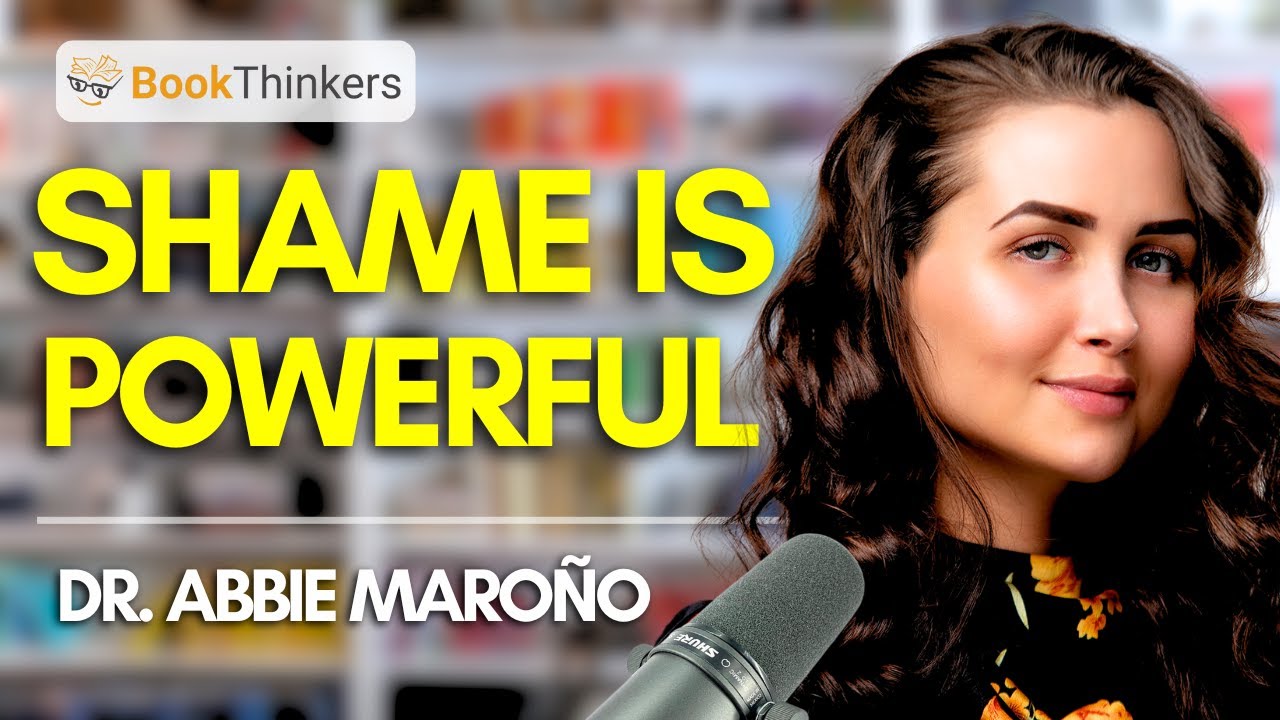
In this episode of the Book Thinkers Life‑Changing Book podcast, host Nick Hutchison interviews Dr. Abby Maroño, author of Work in Progress. The conversation traces Dr. Maroño’s personal journey from a troubled adolescence marked by drug addiction, family neglect, and academic failure to a rapid academic turnaround and a professorship by age 23. She explains how a pivotal moment at 16—realizing she was dying from addiction—forced her to abandon drugs and rebuild her life. Throughout the interview she reframes empowerment as self‑acceptance rather than hyper‑independence, emphasizing that true empowerment comes from acknowledging one’s flaws and refusing to let them be used against you. Dr. Maroño discusses the fundamental human needs for purpose and belonging, linking them to evolutionary psychology and the neurobiology of social pain. She offers a nuanced view of shame, arguing that shame is a functional signal that guides behavior change, distinct from guilt, and can be a catalyst for empowerment when integrated rather than suppressed. The dialogue also tackles gendered narratives around empowerment, advocating for inclusive emotional expression for both men and women, and critiques the self‑help market’s tendency toward “tough love” versus evidence‑based guidance. Practical advice is provided for supporting individuals in crisis: non‑judgmental inquiry, recognizing underlying issues, and offering help without judgment. Dr. Maroño highlights the importance of scientific integrity, citing mentors like Chris Hadnagy and Joe Navarro, and stresses that her work aims to give tools rather than quick fixes. The conversation concludes with reflections on identity as a work‑in‑progress, the role of neuroplasticity, and a final piece of advice: embrace your flaws.
Chapters
And it was really in those moments I realized empowerment isn't pretending I've never made a mistake and just saying, right, I've got this, I don't need anything. Empowerment is that self-acceptance. It's self-understanding too. And I use a phrase, I say empowerment is you can't use me against me. And it doesn't mean that I think that I'm perfect or I'm flawless or any of these notions. It's I've accepted the versions of myself that I have been, and I accept the flaws that I have, and I have accepted the baggage that I've carried to this point. And you can't hurt me with that because I have this self-understanding and I want to be better. So that's the advice that I would give. It's not about being perfect. It's about being willing to ask for help and accepting the imperfect parts.
Dr. Abby, welcome to the Book Thinkers Life-Changing Book podcast. We are so excited to get to know you and more about your book, Work in Progress. I would love to start with asking you to, you to paint a picture of how you went from using drugs and being kicked out of college at 16 to writing your first academic research paper at 19, and then later becoming a professor at the young age of 23. So firstly, what led you to drug use? And then how did you have such a radical transformation so quickly?
Diving right in.
Going for it.
Um, so I didn't have the easiest upbringing. I would say it wasn't the worst, but my mum was pretty neglectful and we didn't have a particularly stable family home. So when I was really young, I didn't really have emotional support to go to. I was bullied pretty badly. And eventually, I found a group that were willing to kind of take me in and become my friends. But the requirement really to become friends with that group was drug use. And I started small, as you do. And then I was like, these people accept me. So I eventually got dragged in. And a lot of young kids take drugs, but it doesn't always end up to an addiction and as bad as it got. And I think for me, the catalyst was I already had a lot of underlying mental health concerns that really weren't dealt with at that point. So when I started taking it, it became an escape. So I wanted to keep taking it and then it got really bad. And then, you know, you level up with the kind of drugs that you're taking. And eventually I got into some bad relationships and some Bad behaviors. And I was kicked out of college and I was kicked out of my dad's home. So I lived with my mom, which was so much worse than being in my dad's home. So I eventually got kicked out of that. So I was living with a friend for a little while and neither parents knew. And to say there was, there was one point that was the moment for me that I realized it was sink or swim. And I don't really know how to translate it into advice. But the moment was I had really lost everything. You know, I was kicked out of college. I'd actually failed all of my subjects, including psychology. My psychology teacher hated me. I did not like her. And I had set up about a year beforehand to go on holiday with an old friend. And it was her and her family. And we didn't even speak anymore because she was a friend before I got into the drugs. And she reached out to me and was like, we still have this holiday booked if you want to come. And I was kicked out of both homes. So I was like, well, I have nowhere else to go. So sure, I'll come and stay with you in a caravan for like a couple of weeks. And it was at that point, I had been taken away from, you know, all of my escape mechanisms. And it was this beautiful holiday in Devon. And I was in the bathroom one night shaking and sweating and being sick. And I realized, oh my God, I'm a drug addict. I realized, it hit me at that point how bad things had gotten. And I remember looking at myself in the mirror because I used to always be very ambitious. I always had, like, I didn't know what to call it, but this like fire in me. My parents always said that I was going to do big things and I just lost it in my mental health. And I remember looking in the mirror and seeing that version of myself. And it was that moment that I realized, like, I'm gonna die. And I'm 15 years old. Or I think I was 16, just turned 16 at that point. And I was like, this is gonna kill me. And my dad had told me he couldn't look at me. My mom didn't want to look at me. My sisters couldn't even bear the sight of me. So I felt like I had no family. I had no friends. And I was in a bad relationship that ended because he said that I was too much of a mess. So I just watched all of these things. And at that age, they all feel so catastrophic. And I don't know what it was inside of me, but something just said, that's enough. And I remember looking at myself in the mirror and just saying, that's enough. Now we're done with this. Because I could just see the way that it was going. And there was no other option. And there was no ease into it. There was no slowly pick myself back up. It was, you are either going to die or you are going to change something instantly, and you have to be a different person. So I realized at that point something had to change. So when I got back off that holiday, everything changed. I thought I got back in college. I told my dad he had to, you know, let me come back home, and he did. I never touched those drugs ever again from that moment. And that was when I was 16. So I don't know how to translate that into advice, but it was just something was like, you've gotta fight. And I, I do think maybe it was because I didn't have the support of parents. So I really brought myself up and my sister helped bring me up. So when you realize that no one is gonna come and save you, it does make you stand on your own 2 feet. So I am grateful. for that from my childhood of no one ever came to save me. So I guess maybe that's my advice, that if you don't pick yourself up, no one else is going to.
Yeah, well, thank you so much for sharing that story and being willing to be vulnerable. Like, that is a— it's a scary thing to share those things. I know you're— you've started to share this story more and more, and then in your book and everything else, so I'm sure it's getting a little bit easier, but it's still very hard to be vulnerable, and I understand that. So thank you So much for sharing. I am curious, like, why is it so important for— and this is like backing up in your story a little bit— but why is it so important for us to feel this need for belonging? And, you know, because you mentioned like these kids, you're like, oh, these kids accepted me, so I felt safe and good with them. So why is it so important that we have that belonging in life?
Well, I really think that the foundation of what it means to be human depends on 2 things. And that's purpose and belonging. And I got asked this question recently by, I think, Matt Holt from Matt Holt Books in my book interview. It was a heavy question. And he said, what is the pursuit of happiness? And I just said, purpose and belonging. And that means so many different things to different people. But belonging is something that's so deeply human, and it's undeniable. You know, the fact that the parts of our brain that process physical pain also process social pain. And, you know, we have a heartbreak and it physically affects the heart. We get the pain in our stomach when we feel fear of losing a person. Our physical body is tied to our social body or our social interactions. So we need to belong. And one of the most well-supported phenomena in psychology is the in-group/out-group. That doesn't matter what the group is based on. We're so desperate to belong to some kind of group. And it makes sense from our evolutionary history, we needed our groups to survive. And then the other factor is that purpose. And some people get that from their career. Some people get that from relationships. Some people get that from health. Some people get that from, you know, consistently pursuing certain goals. Doesn't really matter what that sense of purpose, whether it's your religion, whether it's your own personal moral code or helping people volunteering, as long as you feel like you have a sense of purpose to your life, that individual factor, and then a sense of belonging, that's what true happiness is. And when you look at things like anxiety and depression, they're really founded on one of those things lacking, a sense of purposelessness or a sense of non-belonging. And in my life at that point, I felt so deeply that I didn't belong. And that's why a strong family bond is so essential for children too. They need to belong. And they need to belong to a family and feel nurtured. But then of course, as we grow, we need our peer groups. We're so socially inclined. And kids, they don't have that prefrontal cortex. They don't really have— well, they have the prefrontal cortex, but not fully developed. So they don't have that real sense of critical thinking and emotional control. So everything is heightened. So that need to belong really is so central to that core of identity too, because they're still trying to figure out who they are. So if you take those things away, of course, you know, they're going to feel overwhelmed with mental health.
Dr. Abby, in that, in that moment, you're 16 years old, you're looking in the mirror, you go through your own sort of transition from shame into empowerment, you make this big decision. Is there anything that somebody could have stepped in and maybe said to you that could have helped that transition happen faster? I mean, a lot of us, you know, probably in the audience know somebody who's dealing with or has some mental health struggles and they're hitting a low. Is there something that we can do, you know, as people who just want them to heal and to improve their lives? Is there anything that we can say? Like, what would have worked for you?
That's a great question. And to be honest, that moment looking in the mirror, I don't think that was my empowerment moment. My empowerment moment came a couple of years ago because when I looked in the mirror and was like, something needs to change, I had a very toxic notion of what it means to change. It was like I said, no one is going to come to save me. So from that moment, I have picked myself up off the ground for every single thing that's happened in my life. I've never even reached out a hand to say, please help me, because there's never been a hand reached out to me. So you just go, okay, well, I'm in this alone. So my concept of what empowerment was for a really long time was, I've got this. I don't need anyone. I don't need anything. And I built a very successful career on needing absolutely no one for anything and being so independent that I was like, That's empowerment. I don't need a partner, I don't need these people in my life, I just need myself and I just need to build a successful career. And that isn't empowerment, that's over and hyper-independence. And because I had that view of I don't need help from anyone, I can do this alone, I wouldn't really look into why it's okay To need help. And my advice would be to, when you see people self-destructing, when you see people struggling, not to judge, but to ask what's going on. Because at that age, no kid gets addicted to drugs without something happening underlying that. Kids do drugs all the time and they don't get into that situation. There's got to be something underneath it. And if someone had— really sat me down and tried to help me, I think I would have just crumbled. But I never had a hand reached out, and it was when my psychology teacher helped me but pursue my academic goals, I felt like I had some kind of worth. But for me, empowerment came much later on, and the lessons I would give people would be those lessons. It came for me when I didn't feel like all the bad things I had done defined who I was. And it was really Chris Hadnagy and Joe Navarro that were the points for me that I stepped onto the right road of empowerment. And because when I started to be honest with myself about some of the things I had been through, especially things like the assault that I write about, I thought that it would have a negative effect on my career. because people would judge me and they'd see me as someone who is not professional and who is not this perfect professor. And it was Chris Hadenagy that was like, actually, that's not true. He said, we accept you for you. And actually, your story just shows that you're human. And if you step out and say, this is who I am and this is what I've done, but this is who I'm going to be instead, he said, that is empowerment. And that's the person that we want to support. And he was my boss too. And I had said, if I tell this story, it could look bad on you because I'm your director of education. And he just, he laughed and he was like, if anybody wants to discredit you for those things or discredit us, he said, we don't want their business. You do what you need to do to feel authentic. And it was really in those moments I realized empowerment isn't pretending I've never made a mistake and just saying, right, I've got this, I don't need anything. Empowerment is that self-acceptance. It's self-understanding too. And I use a phrase, I say empowerment is you can't use me against me. And it doesn't mean that I think that I'm perfect or flawless or any of these notions. It's I've accepted the versions of myself that I have been, and I accept the flaws that I have, and I have accepted the baggage that I've carried to this point. And you can't hurt me with that because I have this self-understanding and I want to be better. So that's the advice that I would give. It's not about being perfect. It's about being willing to ask for help and accepting the imperfect parts.
It's like that scene in 8 Mile where Eminem, like, talks about all the, all the, all the things that the other rapper would have dissed him for anyway, and the other rapper didn't have anything to say. Yeah. So what you're saying is that it's universal, that anybody can access it. It's just this process of Sort of admitting who you are to yourself, self-acceptance.
Yeah, absolutely. And even the notion of empowerment really gets almost safeguarded in one direction. It's like, well, empowerment belongs to this certain group, and it's always women. And I'm a huge advocate for empowering women, of course. You know, I've been an advocate for women's independence and everything, of course. But I think that What has happened in the recent years is it's become instead of let everyone be equal, it's now me against you, men against women. Well, women have this worse. Yeah, but men have this worse. Yeah, but we have this worse. Okay, well, we get this. Okay, well, we get this. And empowerment is something that women have really said, well, this belongs to us now. And even when I say the word empowerment, you instantly think female empowerment. Well, what about men? And when you say, well, what about men? Then they go, oh, so what about women? Like, it's for everyone. That self-acceptance shouldn't be one type of person. It's not an age. It's not a gender. It's not an occupation. It's something that everybody should have a universal right to. And that universal right really, it just comes from understanding how we feel, accepting ourselves. We've all done things we regret. And I really think one of the most important reasons that we need to show that it's okay for men to have this too is because people think that the antithesis of empowerment is shame, and that isn't the case. Accepting shame and growing from shame is the road to empowerment. And shame is so heavy in men because they feel like they can't talk about their emotions, and they feel like having basic human emotions that everybody has, that is just a byproduct of the way the brain works, is something to be ashamed of. So they get shame for their basic humanity. And when they suffer with mental health issues, it's like, well, that's what society says isn't manly. So you have to suffer from that and you can't talk about it. And that's not right. That's not empowering. So if we really want to understand what empowerment is, we need to understand how human beings work. Both men and women, their brains, although they're different, the emotional centers work basically in the same way. So we should have the same basic rights to emotional regulation and talking about our emotions and empowerment.
Yeah, it's so wild. Growing up, I was definitely shamed for crying, for— it was like, be a man, you know. That, that was definitely the, the world that I grew up in. And as a result, I Got into really like just deep depressions. I was suicidal and all this stuff, and it was like there was no there was no outlet for me because I felt like oh if I actually gets me a little emotional, but if I actually talk about these things, I am I'm not a man. I'm not okay, and I think it's so important to and I've become a really big advocate for men speaking their emotions. I do poetry, and I try to encourage guys to talk about their feelings because it is really difficult. So I I'm so grateful that you brought that up today, and, um, it means a lot to me coming from you. It means a lot to me that you bring those things up. I want to ask a little bit more about shame because you've had— you have kind of a controversial take on shame, which you say shame is positive, can be positive in our lives. So can you maybe unpack that and tell us what that means?
Yeah, well, firstly, thank you for sharing. I know it's not always easy to put yourself out there, so I appreciate that. And yeah, I laugh when you said controversial because I don't feel like it should be, but it is. And I speak to therapists and they, they've read the book and they come to me and they say that this is something that goes against everything that they've taught, but they're reevaluating what they're teaching now. It blows my mind because the science is out there. You know, and just to think about the way the brain works, the fact that the brain weighs 2% of our body weight, but takes up 20% of our energy, and we think that it's just throwing out emotions for no reason, it's just wasting all this really important energy that it has. That's not how emotions work. Emotions are not impractical. They're signals. Everything we know about human emotions are that they are purposeful. Now, that doesn't always mean that we should listen to them, and they help make the best decisions, it means that they're purposeful. They're designed to help keep us alive. They help us survive. Now, that can mean that they're irrational, but irrational doesn't mean purposelessness. They serve a purpose. They signal to us that something in the environment needs to change. Something in us needs to change. Something is happening. You know, you listen to joy. Something in the environment is making us feel good, so we should repeat it. Anger— something in the environment is making us feel like something is unjust, so okay, well, it's motivating us to do something about it. But then when it comes to shame, we go, oh no, shame couldn't possibly have a purpose because it feels so bad. It just feels bad. But just because something feels bad doesn't mean we should ignore it. And a lot of the advice you get is, again, that shame is the antithesis of empowerment. Because it feels like it. But actually what shame does is shame signals to us that something we are doing goes against who we want to be or who we perceive ourselves to be. And that's directly tied to our moral compass or our ethical compass. That's why it's so heavy in individuals who are religious and then they behave in a way that goes against their religious teachings because it's contradicting who they want to be or who they feel they should be. So they feel a sense of shame, so they correct the behavior. And that's what it does. It tells us we need to change. And if we turn away from it and don't listen to it, then we don't really understand why we're doing that thing. Because to change our behavior, we need to understand our behavior. And that was the turning point for me. I was ignoring all of my emotions and ignoring all of these things because they didn't feel good. And healing is promoted as this, you sit and meditate and everything feels so good and wonderful. And I'm like, that can't be shame, because shame feels really bad, so that can't be part of my healing process. But it is, because if you don't sit with it, you can't listen to it. And the shame for me was telling me I felt so deeply ashamed of the things I was doing, and I had to sit with that and say, why was I doing it? And, you know, I was running from a lot. And I said, you know, I got hooked really early on because it allowed me to escape a lot of things. And then later in life, I did a very similar thing, but obviously with very different drugs and different escape mechanisms. But every time you feel it, it's saying something needs to change. But it's so intense. It's not like other emotions. And we compare it a lot to guilt. Like, say we do something bad, and this is how we know that it is really saying something about us needs to change, not just a behavior but something internally. Because when we do something bad and we feel guilt— say you break up with a person and you feel guilt— well, that says, okay, well, I hurt them, I didn't want to hurt them, but what I did actually does reflect what's best for me. Whereas if you feel shame, it's different. It means I didn't do it because it's consistent with what I need, and it's something that went against my moral compass or my ethical compass. They're very different. And if we listen to it, that's how we grow.
So fascinating. I— so does everyone have different— since, you know, you mentioned religious and moral and ethical— does everyone have different things that they're ashamed about? And can you change the things that you feel shameful for that maybe you shouldn't feel shameful for?
Yeah, absolutely. Because it's so dependent on that sense of self. So for example, I might feel shame. I don't drink. I don't really drink. I don't really go out. I've not ever really been someone that's like a party girl. It's just never really been my thing. So if I go out and I get really drunk and I, you know, do something stupid, I will feel such deep shame for that because it just goes against how I like to present myself, how I feel I am as a person. Whereas somebody else who is a little bit more social and does enjoy those things, they wouldn't feel shame for those because it doesn't go against their sense of self. Same for, say, I do something that goes against a religious principle that isn't a religion that I stand by. Say I eat some food that other religions consider unethical. I wouldn't feel shame for that because it has relation to my sense of self. So it's really deeply personal. But we also do know that there is general shame in society when we break social norms. And I did a TED Talk recently. One of the things I started with, I said, you know, we know that shame is important because if you see someone acting in a bad way, don't we say, don't they have no shame? So even in our everyday kind of language, We say shame is a good thing to a certain degree without really realizing that's what we're saying. Because if someone acts in a way that goes against a social group, if they feel shame, they're more likely to try and correct that behavior to be accepted in the social group rather than if they just feel guilt. Because it is a social principle as much as it is an individual principle, because that sense of belonging is so central to our sense of self. Wow.
I'm like, there's a thousand questions going through my brain about this because I find it so fascinating. I know I've read a little bit of like Brené Brown's work on shame, but I feel like you take such a different, just a different perspective of it. And I really, really appreciate it and like it. So we can get onto other stuff too, but I just, I'm so curious about this. The sense of self, where do you think that comes from?
That's a great question and, first, I just want to make it clear, like, I love Brené Brown's work and she was a huge inspiration of mine and I feel like, although mine is different, it complements a lot of what she says because she does talk about different notions of shame, like, she talks about healthy shame and toxic shame. I think I've just kind of taken that a little bit and run with it more in the direction of empowerment. But I love her work also. But in terms of the sense of self, I think we all have a general innate sense of self, and it's an accumulation of our goals, our genetics, our desires, our wants, our personality. But it's not necessarily a stable thing. As much as we do have a core sense of self, it's something that I believe we can also Create, so and that's why I called the book Work in Progress because we have this idea that we reach this empowered sense of self. I find myself. I'm searching, and to a degree, yes, you can find those core values that make you feel comfortable and make you feel like I'm living this really authentic life. But we can also create part of our identity too. You know, you go actually, I see how these people are, and I'm inspired, and maybe I want some of that. Maybe I want to be this kind of person. The beauty of it is we can always change the kind of person that we are. And that's what neuroplasticity is. And that's why it's so hard to balance, because we do have our experiences make us who we are. Without our memories, we would be a completely different person. So we do have part of us that is genetic and founded on what we've been through and how we've learned to regulate ourselves and all of those things. But we can also adapt and grow and change. So if you say, I don't want to be like this anymore, well, through neuroplasticity, that's great, you can change. But there is that caveat of you can't completely shed yourself. And this is why that idea of empowerment is so hard. Because we go, okay, new year, new me, I'm going to be completely fresh, completely new. You know, I go through this breakup, I'm going to leave all these emotions behind, leave these feelings behind, I'm going to be completely new. I'm now someone that works out all the time, goes to the gym, I have all these new food preferences. And then we find it really hard to stick to. And it's because it's so much more complicated than either we're set in stone as one person, or we can recreate ourselves. Somewhere in the middle, that we can recreate aspects of ourselves, but we can't completely shed our skin like a snake. We can't do that. We don't have a metamorphosis. I wish we did. I wish I could wake up and be like, okay, these are the exact traits that I want, but I can't. That's not the reality. So we have to find this balance of, okay, well, what's left over and what's new? And that's particularly hard after you go through something like a really hard trauma or a big life change, because you're trying to find this version of yourself that is comfortable for you now. Or a lot of people get this when they had one religion, and then they're thinking of converting, or maybe they're going from being religious to non-religious, or the opposite way around, because it is that core sense of what you stand by. And then it's really hard to be like, what stays and what goes? So it's finding that balance. And it's— there's no simple recipe for it. It's just, you've got to keep pushing every day. And you've got to be willing to accept that again, you are a work in progress, that some days healing might be feeling really, really good with what you're doing and thinking, okay, well, this is it. And then actually feeling bad about it and go, no, that doesn't quite fit. So it is a partially trial and error. And it's not, you know, the most comforting reality, but it is the reality.
Yeah, I want to thank you for everything you've shared today. This has been an amazing podcast. And as we start to wrap up a little bit, I suppose my final question is this, and I'll try to get it out in a clear and concise way. There are so many different influences, influencers putting out competing messages. And I know there are some that you don't love so much, you know, become bulletproof and take me as I am and that kind of thing.
Yeah.
Why do you think there are so many different takes on empowerment and shame? And why do you think that yours is the one that the audience should pay attention to?
Well, I think, well, there's firstly a lot of people that are just wanting to prey on people. It would be really easy for me to sit here and say, okay, well, because I study nonverbals and lie detection, I'll teach you how to be a human lie detector. You know how easy that would sell and how much money people make from that? But I won't. And it's because I could prey on the things that people want. And if you sell what people want to hear, you can make a lot of money. And you can make a big name for yourself very quickly. But I don't want to do that. So I moved that one to the side. And then there's also people that really want to help people, but they get their information from secondary sources. So they're getting someone else's kind of chewed up version of the science, who then is passing on to someone else who's passing on to someone else. And then they really, really want to help people. But if you get trash in, you get trash out. And it might not be intentional, but they do so. And then obviously lots of people have different views. You know, if there was one set science in psychology that was like 100%, this is correct, you'd never have multiple research papers on the same topic. Psychology isn't like the other sciences where you can say something with 100% certainty. There's always going to be differences of view. So I wouldn't say that mine is You know, I wouldn't say that absolutely mine is the 100% correct route, but what I try and do is be as objective as possible. I say I don't have a horse in this race either way. Like, I just try and be objective as a scientist. I feel like that's my, my job and that's my motivation. So I try and give people the real science. And one of the reasons that I feel like this route is the best route to go is because I don't really sugarcoat If I wanted to make people feel really, really good and buy my book because you're going to feel really good about it, I could do so. And I read a lot of self-help books that do that, but that isn't how human beings work, and that's not how healing works. It is hard, and it is a lot more tough love than a lot of them, but that's the reality of it. And painting people this really pretty picture that they want to look at sells, but it doesn't help them in the long run. I wanted people to put the book down and be different. I wanted them to have that hard truth of, this isn't going to heal you, this book. What it's going to do is give you the tools to now go and do the hard work. But it's hard work. It's not easy. No one is going to do it for you, but it's okay to ask for support. And I say about when you ask for support and get help, Therapists and friends and family can show you where to safely step, and that's what this book does. I show you where to step, but you have to do the walking. No one's going to do it for you. And again, saying this is going to be really hard and hurt and uncomfortable, and there's going to be moments where you feel like the world is ending— that doesn't make you feel like you want to buy it, but that's what you need if you want to get to that end goal of feeling empowered.
It's so important to have an accurate view of reality. And I appreciate that you're doing that because so many people, like you said, don't do that. They just say the thing that they know will sell.
Yes. And it, it's really appealing when you look at, you know, how much they charge. But I said to myself when I became an academic that I'm doing this because I want people to have accurate knowledge. And I will stand by that principle. And I always say, take the long road rather than the short road. Don't take the shortcuts. Do what you know to be right. And eventually it will come back to you.
Dr. Abby, this has been such an amazing conversation. I would like to end with these 2 questions. The first is, where can people go to learn a little bit more about you and buy your book?
Everything about me is on abymarono.com, LinkedIn as Dr. Abby Marono, and then Instagram as Dr. Abby Official. And obviously my book can be found at all major bookstores online and Amazon, of course, but again, on my website.
Perfect. And of course, we will link all that in the show notes. Okay. This is my final question that I'd love to ask all of our guests. And it's this: if you pass away and all the information that you put out, the books, the courses, everything that you put out, the blog posts, everything disappears, but you can leave the world with a single piece of advice, what would it be?
Okay, to be flawed. We present ourselves as perfect and as unbreakable, and it's okay to be flawed. There's no shame in being human.
Such a great moment. That was perfect. Thank you so much, Dr. Abby. I appreciate it. This has been an awesome conversation.
Thank you so much. Again.
More from Nick

Napoleon Hill’s “Think and Grow Rich” is a timeless classic #selfhelp #personaldevelopment

4 Books to Help You Get Better at Decision Making #selfhelpbooks #bookrecs #nonfictionbooks


Have you read this book yet? 📖: The 5AM Club by Robin Sharma #selfhelpbooks #robinsharma

Dan Sullivan on Listening to Your Customers Instead of Watching Your Competitors

5 Books That Will Boost Your Financial Intelligence #financialfreedom #nonfictionbooks

The People That Preach the Loudest About Virtue are Usually the Most Power Hungry



Books are the greatest mentors you can find #selfhelpbooks #businessbooks #successmindset

Let’s fight this toxic instant gratification culture together 📖 #selfhelpbooks #jimkwik