Your Business Should Run WITHOUT You - Rodric Lenhart
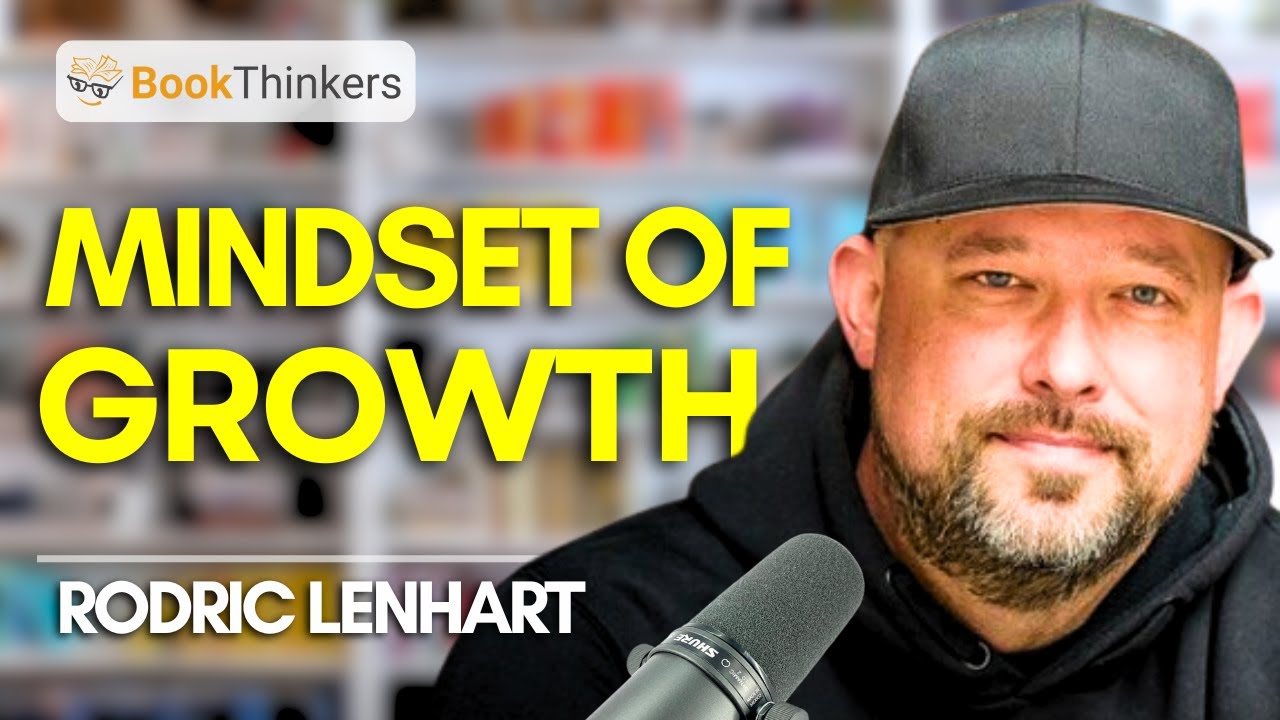
Rodric Lenhart, an entrepreneur and author, explains how to build a business that doesn't need you running it every day. He introduces the WAVES framework for decision-making and describes five phases of entrepreneurial growth, from Believer to Business Buddha. His goal: a "phoneless vacation" where your business keeps running without you.
Chapters
I'm about getting you out of the business. So, you know, I say you're usually only a few systems, strategies, and tactics away from having a business you can walk away from. And my 6-week goal, we do everything in 6-week triangles, but my 6-week goal for people is the phoneless vacation. And that resonates with a lot of people, you know, not just builders or other people in real estate, but it means you've built something healthy. You know, if you can't walk away and you are the bottleneck, you don't have a healthy business.
Roderick, welcome to the Book Thinkers Life-Changing Books Podcast. We are excited to get to know more about you and your book, Million Dollar Flip-Flops. At 8 to 10 years old, you were already selling candy bars, and by 13, you were listening to Tony Robbins and full into the self-development world. So, I'd love to just start with asking, where did the mindset of growth and entrepreneurship come from at such a young age?
I'd like to say I have absolutely no idea, but it had to have come from my mom at some point. She was the one that bought me that Get the Edge Tony Robbins when I was probably way too young to understand half of what was happening, but there I was on my rollerblades taking it all in.
That's amazing. And doing a little bit of research on you, I found out that you grew up a little bit poor and everything. How didn't you let that— a lot of people let that thing stop them, that they let that growing up poor, they let that stop them from achieving anything. So what was the difference maybe between you and other kids at the same age?
You know, it probably was a little bit of luck, honestly. It was, you know, the first thing I ever did was went down to the public golf course at the end of my street and got golf balls and sold them back to the golfers and figured out that if I went every day after school and got all the golf balls, I could make $30, $40 in a week and get myself a Nintendo and get myself a bike and, you know, all the things that my parents couldn't do. And had that not gone well, you know, that first kind of foray into entrepreneurship, maybe we're having a different conversation now. But it taught me a lesson that I didn't appreciate till much later in life. You know, it's why I did about 3 years, I call it semi-corporate America, but otherwise I've always been a business owner.
Yeah.
And it's that I want to get out what I'm able to put in and I'll put in an F-ton. I don't know if we can cuss on here, but the—
Go for it.
You know, be able to get what I want. And I think that that lesson has carried through for my whole life.
So whether it's a fruit stand in your mother's front yard or the golf ball business, like, is everybody born with some entrepreneurship traits or is that something that was unique to you and that your mother kind of helped cultivate? Like, what's the situation there?
I ask this question of a lot of people, and I probably am in the minority when I don't think that everyone is cut out to be an entrepreneur. I think there's a certain skill set you have to have and a certain risk tolerance you have to have and a thick skin you have to have. And it's this combination of traits that I just don't I don't think you can teach all of it. I think you can teach a lot of it, but I don't think you can teach all of it.
Yeah, that's a fascinating perspective because like, I mean, you know, we live in this world where it's like anybody can do it. Anybody can be successful and be an entrepreneur. And especially 2024, which we're in now, it seems like everybody is trying this entrepreneurship thing without even asking, do I want this? Will this work for me? But it's just like the— it's almost become the, in my opinion, like the new 9 to 5. Something that's like really interesting to me is like my brother, he's very much excited and happy to be in the kind of this normal 9-to-5 type of job. It's like, I have security here, I've got my benefits, and I can show up not stressed out and feel good about that. He's tried his little forays in business a few times and it's not him. So I think that's really cool. You've come up with kind of this system that you call the Wave System, and I'd love for you to maybe do a little bit of a dive into that and how that Kind of relates to this concept of getting to know yourself before diving into the world of entrepreneurship or even like purpose or anything else.
Yeah.
Before we do that, I just want to say that the people that have jobs that think they're secure, it always blows my mind because the Bobs can come in tomorrow and you're gone. Like, do you know how many people I have to piss off to lose everything in a day? Like, it's nearly impossible. I don't consider job security, but it's a conversation for another day. The WAVES method is just real quick because it's multiple chapters of the book, but it's your why, authenticity, values, exploration, and statement of purpose. And I think the why we hear about all the time, Simon Sinek, go down the list of people that talk about their why. I throw in a curveball when I ask people why they're doing what they're doing. I say it can't involve money, power, or notoriety. And when you throw that in, sometimes you get a blank stare. The A, authenticity, is we aren't taught necessarily to think for ourselves in the modern education system. And, you find yourself much like I did in my 20s that you follow this map that was given to you by your partner, your parents, your pastor, whoever it is, and you get to the top of that and you're like, right map, wrong mountain. I've been climbing the wrong mountain the whole time. And the authenticity piece of that is figuring out exactly what you want, not anybody else. And it's not natural to think that way because you're always taking everybody else into consideration. Values is, mine are freedom and autonomy are my top 2 values. So how could I ever go to corporate America? I love to travel and own businesses. Exploration is taking those highs and lows of your life. And when, man, everything's jamming, everything's working, I feel great, I'm happy, I'm content. What values are you honoring during that time? And then the converse of that is everything's shit. You know, why am I getting up every day? What values are you not honoring? And following those trends, then ultimately you can start to build. And all of these things are living things. You don't do it once and you're good for 50 years. You know, ultimately you build your statement of purpose, which, you know, I work with small business owners. That's what I do as a coach. And 99% of them have business mission statements, but they don't have a personal mission statement. They don't know why. Like we started the show talking about, they don't know why They're in business. They don't know why they're doing this thing. And a lot of them just create a job for themselves. And they're— so what did they gain by being an entrepreneur? I commend those people that just show up to their 9-to-5 and go home and, you know, have a protein shake and go to bed, do it again the next day.
Well, I've got a question for you. Maybe we can go down the rabbit hole a little bit. So freedom and autonomy are also 2 of my top values. And just like you, I love traveling the world and I love owning businesses. And the traditional education system in the US sort of looks down upon those values. It wants you to conform, it wants you to fall in line, and it wants you to be a great employee. And so I'm curious, A, why do you think that is? And then B, I have my first kid coming later this year. Like, what resources are available for parents like me that value this alternative lifestyle? And I don't know if this is something that you've researched a lot or have a lot to talk about, but I'm just curious, like, from your perspective, what resources are out there?
The rabbit hole indeed on that one. You know, I think we are— I'm giving a commencement speech for 1,800 people in a month, and it is far and away the largest public speaking event I've ever done. And I've been thinking a lot about these kids and that they're at, they're at this They're about to go down some path, right? And do they have the right map? Are they climbing the right mountain, et cetera, et cetera? And you're right, Nick, that they're not. We have a very antiquated education system, but I think what we're— you were taught to run a press. You know, if you showed up every day and could make the widgets, you were a successful human being based on the Fords and the Carnegies and the people who set all these things up back in the day. We don't teach a kind of a Socratic way of thinking for ourselves. But put that aside, I think today we're seeing the democratization of business. It's so much easier to start a business than it was 25 years ago when I started my first business. You can have a business tomorrow. You know, for all intents and purposes, you can have it. There's very low barrier to entry, but you're also seeing the decentralization of education. And I had somebody on my show an hour ago and I asked her, I said, think about all the things you learned in the last year. How many did you learn from a school and how many did you learn from YouTube? You know, the fact that a 19-year-old can go out tomorrow and sell his information to a 16-year-old and everybody wins is mind-blowing. Like we're in the middle of that right now. It's just like, I get chills talking about it, right? It's like this new revolution that we're kind of on the cusp of. And it's fascinating to watch and be a part of.
All right, I've got another follow-up question here. You're giving a commencement speech to 1,800 kids. What can you say that will actually leave an impact and not just leave kids rolling their eyes? Because like, I remember myself at— what age is this? High school commencement?
Yeah.
So at 17 or 18 years old, I would have looked at you and I would have been like, who cares? Like, I don't want my own business yet. And What's this guy have to teach me? Like, I just want to go party and have fun. Like, how can you— have you thought about this? Like, what are you doing to position a message in a way that it can become actionable for these kids and not just make them roll their eyes? And would you have listened to this message when you were 18?
I think I probably would have, but I was probably wired a little different too. And that goes into my thought process on this is twofold. One, it's as much for the parents who are ultimately my clients as it is for the kids. And I know 95% of the kids are just gonna be looking at their phone, you know, oh, look, another old rich white dude telling me how to live my life. What does he know? And it's like I always say, the older I get, the smarter my dad becomes, right? Like all the things he taught me that I was like, old man, you know, I'm like, damn, he was right again. So, you know, I think there's a couple nuggets in there for them, but really I think it's for It's those brain bombs, right, that are going to hit them 10 years later and they're going to go, I remember when that guy said that. So, we'll see how it goes.
Now, I'm curious. I want to back up just a little bit. I was listening to you on another podcast and you said, I can buy anything, go anywhere, do anything, and you live an unbelievable life, but I'm absolutely miserable. Now, I'm curious what got you to that point. And I know you were in corporate America, but what got you to that point? And then what got you through that?
Yeah. I mean, if you look back, that's really where this book and the Waves Method and all of those things, that was their seed. It was, let's Tarantino it. I'll tell you how I got out of it and then I'll tell you how I got there. I dove into all of the books. I have over 1,000 books here. I'm a voracious reader and I had read the the Robbins and the Dyers and the Chopras and the DeAngelis and the Williamson and like, you know, go through all of those books and, and figure out how did I end up here? Why do I feel this way? And I was right in the middle. I'm at the top of that mountain when I— and realizing that I'm on the wrong one at that moment in time. And I wanted to build— I had thought I was making all the right decisions and I wanted to make sure that that never happened to me again in my life. So I took bits and pieces out of all the great works, quote unquote, And made myself a decision filter. And ultimately, that's what the Waves Method is. When you say, I'm going to pick this partner, I'm going to decide on this business, I'm going to move to this state, you can run it through this system and it gives you a— there's never a sure thing, but a relatively clear yes or no. Should I do this? And it's because you've put in the work on the other side to determine your values, determine your why, know what your statement of purpose is. When all those things mesh, then you're most likely making the right decision. But we're always making the right decision with the information we have at hand, right? So what I did, I was running 2 companies at that time. I was selling an automotive performance part that I had invented, which is a whole other rabbit hole to go down. And home theater and car audio cables. I was wholesaling home theater and car audio cables. And bought my first house. I was 20, had 21, just turning 22, and saw a new homes neighborhood behind the park behind my house and made friends with the sales agent. And a month later, I'm working there and slowly shut down the businesses, start down this— they were a Fortune 100 company. And I was, I was 24, making well over a quarter million dollars a year with stock options and flying to Santa Barbara and flying to Palm Beach and all these things. Dinner with Kareem Abdul-Jabbar. Like, you know, I think I've got— I'm making it. You know, Dad would be proud. And I just woke up every day saying, is this all there is? You know, and I couldn't fill that hole. No, no number of new cars or trips or anything would fill that hole. And I ultimately, I was depressed, I was anxious, I had suicidal thoughts, you know, and I'm just like, this should not be happening to me. You know, I'm, I have a great life, you know, what's going on? And, and I quit that job and that's when I went through all these books and kind of built what ultimately became the Waves Method. But it was just a decision-making tool for my life.
Now, that's amazing. Number one, thank you for sharing that story. What was missing in those books that you kind of put into your book that you addressed in your book? Like, what was the thing that was missing that was like, okay, I need to write a book about this because none of those books had, had it?
I think my book's probably missing things too. You know, I, I think that there's— I say this whenever I sign up for a mastermind or go to a seminar or sit down to read a 300-page book. I say, if I can get one nugget out of it, it was probably worth the price of admission or the time it took me to read. And there's a lot of people that are gonna read my book and they're only gonna get one nugget out of it. They're not gonna want to use the whole system, you know, but there's a certain number of people that's gonna click for. And, and I don't know that anything was missing from those books based on their experience and what they went through and what worked for them. But ultimately, isn't that what life's about is taking all the disparate pieces and trying to make our way?
So I'm sorry, Nick. Nick's trying to ask questions and I just keep going. I'll let you go after this, Nick. I just want to I wanted to ask about the title of the book. Why did you call it The Flip? Why did you call it that? Million Dollar Flip-Flops. Million Dollar Flip-Flops, yeah.
There's 2 stories behind it. I was on a beach in Thailand. I had just sold my last business and 6 months had gone by and I sat there and looked at Nicole and I'm like, we got to give it all away. And she's like, what? Had no idea my entrepreneurial mind had been just wheeling away and toiling in the middle of the night figuring out what I'm going to do with chapter 2 of my life. And I knew what I wanted to do. I knew I wanted to coach small business owners. I knew I wanted to kind of try to jot down my life experience. It was one of those, it's even if it only helps one person, it's silly for this just to go to the grave with me, right? And when it came to naming the business, it was, well, everybody wants a million bucks, give or take. Everybody wants to wear flip-flops because it means they're somewhere fun. They're on vacation. They're not at work. And I 100% of the time have flip-flops on. Like, I will give that commencement address in flip-flops. I do keynotes all the time in flip-flops. I build houses and hot rods in flip-flops. Like, it's just my thing. So, it all worked out. But what really, if you look at the subtitle of the book, Peace, Prosperity, and the Courage to Change Course in Life and Business, and my superpower, quote unquote, has been the ability to change. Change partners, change businesses, change locations, change my friend group, change whatever that is, and not be afraid of the consequences. And I credit the Waves Method and a lot of those things to giving me the legs underneath that confidence table to be able to make those decisions. But Million Dollar Flip-Flops, if you take flip-flops to mean change, it's the change that led to the millions. So, it ended up kind of having Bilateral meanings.
I love it. What's the, what's the best country you've traveled to in the last 12 months?
I think we talked about this when you were on my show. Yeah. I'm a huge Thailand fan. We're going back again for a month here in a few months. But man, I mean, the last 12 months I've been to 15 countries. So that's a, that's a big question. I really enjoyed Austria. I didn't think I would like, I was in Austria for, For launch, and it was it was great.
Yeah, I do remember we chatted a little bit about it. I haven't listened back to that podcast episode, but Luke, maybe you can put the put that link down in the show notes for everybody that wants to follow up to this conversation because we did rocket and talk travel quite a bit. Yeah, Austria also. I don't remember if we talked about it, but Austria also surprised me in a very pleasant way. I only got to visit Vienna, but. They have a beautiful kind of outdoor, you know, food and drink culture. And yeah, it was a lot of fun.
Yeah, the food was killer. I've never been a big Europe guy, but Eastern Europe has surprised me with how good the— I always just think it's all goulash, you know, but it surprised me with how good the food's been.
So you've been to over 50 countries, I believe, is what I've heard. Maybe more than that. 60. Wow, that's insane. What are some of the top lessons that you have learned from that? And why is it so important Why is it important to you to put that into your life?
You know, we donate 100% of everything we do to our foundation, Send a Student Leader Abroad, and we're partnered with EF Tours. And if you're not familiar with EF, they're a fantastic organization, but they're a $7 billion company with 70,000 employees. And our work with them, like, they have treated us like family since I brought the idea to the CEO via a cold DM on LinkedIn, mind you. And which is a whole other story we could have. But, you know, there's things that the reason that's what we're doing with our money and with the foundation and our goal is to send a million kids abroad, kids that couldn't otherwise afford trips like that, because I was that kid who couldn't afford that trip. And my mom spent money she didn't have to send me is because there's, there's things you can learn traveling that you can watch every documentary under the sun. You can read every book, but there's a level of compassion and empathy.
Yeah.
And less so in the smartphone era, but being resilient, being resourceful, being— there's all these things you learn when you travel to a foreign country, not going to Canada if you live in Michigan. It's when you go to the other side of the world. And that's what I want kids to experience. And really, if you broke it down into one phrase that I use all the time, it's, there's no them, there's only us. You know, you figure out quickly that with rare exception, all 7, 8 billion of us, we want a better life for our kids. We want warm meals. We want a roof over our head. You know, there's— we're all one big human family. And I think people that never leave their town or never leave their country, that's— those are the ones talking about them and what they are doing and how they act. And you start to realize that, man, we're all the same. And that's what travel gives you.
Yeah, Roderick, I just got back from my 4th journey to Iceland this week, actually yesterday.
I've never been to Iceland.
Yeah, such a fun country. And one of the most— and I brought my parents with me. So that was a gift for my parents for this past Christmas was a travel experience with us. And it was my wife and my parents. And one of the biggest cultural differences is that in those sort of Nordic Scandinavian type countries, they value minimalism. They don't value space and opulence like we do in the US. And so hotel rooms are about the size of the bed in a tiny closet. And that's about it. And the homes, like I have a local author that we work with. And he's got a lot of money, but they just don't value like a big mansion. They value a very spacious, useful, minimalistic type vibe. Which Luke does too, by the way. Luke, maybe you're supposed to be Icelandic. Um, and anyway, it just shows the different way that people live. It permanently alters the perspective that you have when you're back home in the US. So I think it's wonderful that you're doing that.
Yeah, couldn't agree more.
Yeah. So is Iceland on your bucket list or, or on your list anywhere? I think you should put it somewhere towards the top.
You know, maybe you can sway me. I've just never— it's the same reason I haven't traveled. You know, I've been to a lot of Europe, but I just, it's just not exotic enough. I'm like, I want to get, I want to be somewhere crazy. Yeah.
Well, I'll tell you what, it's exotic, not in, not in the palm tree sense of exotic, but volcanoes, geysers, mega waterfalls. It looks like Mars out there, you know, sometimes. So black sand beaches, like it's exotic in a different way, but I totally agree. I mean, my 2 favorite countries, my 3 favorite countries to travel to have been Iceland, Aruba, and Colombia. So very different environments, but all exotic in their own way.
We just got back from Turks. I'm not a Caribbean guy either, but man, I get it now.
Yeah, I do too.
So kind of steering a little back to the book here, although this travel talk is definitely a part of self-growth and it's cool because Roderick, it's also a part of what you're doing with your book and your coaching programs and everything, which is giving back to the community and people who don't have it as well. That's amazing. Something that really stood out to me in your book was your portion, you talk a lot about friends and family, and maybe you can just give us a high-level overview of what that is, because I think I'm guilty of this. A lot of people allow their friends and the people that are close to them and their family to hold them back. So what is your take on friends and family just in general?
Yeah, it's not a popular opinion. And I probably get that question more than any other from the book. But I say your friends and family are the worst place for advice. And it's, it should be said at the beginning, it's not because they don't love you, you know, or don't want what they think is best for you. It's because they're afraid of being left behind. And You have to find people in your life that, let me put it this way, nobody ahead of you is telling you to slow down. Nobody ahead of you is telling you to quit. Nobody ahead of you is telling you to not work so hard. Nobody ahead of you will, they're pulling you along with them. It's the people that are afraid of being left behind that are like, oh, come on, let's just go to the bar. Oh, come on, we should do that. No, I'm working on my business. Oh, come on. Their advice, the example I give in the book is, you know, my friend Zach, I just moved to Charleston, South Carolina. I knew nobody. I had one friend because he was a car guy and he was moving to Texas. And I'm like, no, that job sounds terrible, Zach. You don't, you don't want to go there, right? Because I don't want to lose my buddy. Like, it's not what's best for Zach. It's what's best for Roderick. And when you, when you understand that everybody is coming through the lens always, Of what your parents do, of what's best for them, whether they mean to or not, then you can start to take advice with a little bit bigger grain of salt, I think.
So what would be your advice to someone that is like struggling with, I don't know, maybe having to separate themselves from their family a bit because they feel like they're holding them back?
It's tough. I mean, it's, it's really tough. It's still hard for me. Like there's, you know, when you realize that not everybody is along for the ride, you know, it's, it's like a subway car. You know, some people get on, they get off at the next stop. Some people are on for the whole ride with you. Some people get on, get off, get back on later, you know, but, but for, for those people to become who they were meant to be in this life and for you to become who you were meant to be in this life, you're not all gonna be at the same pace. It's impossible.
Yeah, I find it really interesting too that, you know, you talked earlier, you were like, hey, you know, I'm, I'm okay with letting partners go and like moving on and change and everything else. So is there any practices that you have in place or anything that you recommend people do to be okay with change in their life?
I mean, clearly the Waves Method and my book, you know, the unabashed touting of the, of the book, but you know, in all honesty, it, it really is taking the time to understand yourself. as much as you understand the new car you're going to buy or the reviews on the latest gadget that you're buying. We spend so much time researching all of these external things and we spend on the whole very little time thinking about what do we really want from this life. And the bits and pieces, friends and family included, take care of themselves because the misalignment is glaringly obvious once you see it.
So we've got a lot of aspiring entrepreneurs in our audience. You know, we've got a lot of kind of young professionals who maybe are starting a side hustle, maybe growing a side hustle, looking to take the jump into a full-time business. What's your advice on when is the right time to make that jump?
Age-old question. You know, there's— it's always, when would now be a good time? You know, it's, it's I'm a burn the boats guy. If you're going to hang on to the job and you've got— I get it, you need a cushion, you need whatever, but those are the people that take 15 years to get the thing off the ground. If you only had a month, could you? And if not, why? And if so, why are you still at your job? There's those questions you have to ask around the thing. And is it legit? Is it for real? Is there a market for it? There's 1,000 business questions, but But ultimately, I think the people who don't get started, and you probably see this in the book writing world too, everybody has, I'm writing a book. Yeah, sure. Everybody's, everybody on the plane next to you is writing a book, but they're, they're as scared of success as they are of failure, you know? And if you can kind of grapple with that question a little bit, I think it moves you along a little faster.
Yeah, I think so too. Now, what about somebody who's an early-stage business owner, small business owner? What types of services, what types of coaching, what types of outcomes can somebody expect to get if they choose to engage with you?
So, my typical client is already running a successful business. Like, I turn down a lot of people that come that are early-stage looking for systems, trying to figure out how to run a business. I'm about getting you out of the business. So, you know, I say you're usually only a few systems, strategies, and tactics away from, from having a business you can walk away from. And, and my 6-week goal— we do everything in 6-week triangles— but my 6-week goal for people is the phoneless vacation. And that resonates with a lot of people, you know, not just builders or other people in real estate, but it means, it means you've built something healthy. You know, if you can't walk away and you are the bottleneck, you don't have a healthy business. And that's, that's my people or the, you know, I want to help you buy back your time. I want you to be at the T-ball game. I want you to be present at dinner. I want you to be able to take 2 weeks and not spend 8 hours a day putting out fires.
Do you talk pricing openly or is that something that people should engage with you about individually?
Uh, I've got one program. It's mid-five figures and it's not for everybody.
Oh, I love that. Mid-five figures. That's fun. And then what about somebody who's listened to the 28 minutes of our podcast so far and they say, okay, I like this guy's energy. I sort of understand what the book's about, but I'm not there yet. What's kind of one final thing you could say to a prospective reader to get them to go to Amazon or the show notes below and click the button?
I think if they're still here, we're not convincing them with one final statement. No, I mean, the book, like I said, if it was going to help one person, I was happy that I wrote it. We were fortunate to hit number 1 in 7 categories on Amazon on launch, best new release, blah, blah, blah, all those things. So I didn't know if just me and Grandma would buy it or if 1,000 people would buy it day one, but people seem to like it. So maybe you will too.
I actually went on your website and took the quiz that you built out, which was Really cool and fascinating. I think those kind of things are like great ways to pull people into your program and your system. I got the anxious philosopher, which made me anxious.
Yeah, you can absolutely go— it's milliondollarflipflops.com/quiz, or it's right there on the homepage. But it's the 5 phases of the entrepreneur. And I think just watching that YouTube video I did about the 5 phases is pretty eye-opening. happening for people because you see yourself at any stage, you see yourself in all the stages. So it's fun.
Could you maybe give a quick overview of those 5 phases? And then I'll probably link that in the show notes too, because that was— I watched that too. And that was really cool. Yeah.
So it's the believer, which is I've got this thing, everybody's gonna want it. I'll be a billionaire on the beach in 6 months. I just need to get more eyeballs, right? Then there's the showman, people do want it. Now, you've got the house and the SUV and all the bills and all the things that go along with that business, but you're still in the middle of it. You can't leave. You're working 25 hours a day, 8 days a week. And while you have all the signs of success, you don't feel that way. Then there's the anxious philosopher, which is where you're at and where most people, like thousands of people have taken that quiz and like 80% plus end up an anxious philosopher. And that is where you, you know, there's something better, but you don't know how to get there yet. And so, you're looking for mentors, you're looking for other people that have done it. You just know there's something more. And what a lot of people do is they quit the thing they're doing, whether it's a career or a business, and they go back to the believer and they start it again. And they, they never break through to what we call the peaceful warrior, where now you have the wherewithal. So like me, I'll never build a business that doesn't allow me to travel, travel ever. It'll never happen. Right? That's the peaceful warrior. You build with the end in mind. How do I want my life to look? Now let's build a business that fits that. And then business Buddha is self-explanatory. You have pure enlightenment.
Luke, is that where you want to be? Pure enlightenment?
Absolutely. Sometimes I'm there. Some days, some hours. Oh, I love that. Nick, before I ask my final questions, Do you have anything else you'd like to ask?
What are the secrets of the universe? I mean, I've got tons of questions like that. I'll ask a different question. What's the best book that you've read in the last 3 months? Anything come to mind?
I just finished The Biggest Bluff, Maria Konnikova. I'm going to mess up her last name. She was the journalist that decided to play the World Series of Poker. And she has a psychology background. And within a year, she had a poker bracelet. And it's that journey. And it's a pretty long book. It's like 350 pages, but I blew through it. I mean, it was killer. And Robin Sharma, of course, I just finished The Wealth Money Can't Buy. That was a great book.
Yeah, we've got Robin coming on again in a couple of months.
Awesome.
Yeah, he's awesome. He's been on the show. I'll have to check out the other book though. I just watched some poker movie that my wife picked out. Like, and it was about this woman who ended up running one of the biggest poker rings in—
Oh, I did see the previews for that.
Yeah, that was a cool movie.
Yeah.
Um, but Luke, I'll kick it back to you to wrap us up.
Beautiful. All right, well, I know you've kind of said it a few times, but you know, uh, repetition leads to retention. So where can people go to find out more about you and learn about your book?
Super easy, @milliondollarflipflops. On every channel, milliondollarflipflops.com. Email me, roderick@milliondollarflipflops. And that's it, man. I'm easy to find.
Beautiful. Well, thank you so much. All right. So, this is the last and final question I like to ask all of our guests. And it's this: you pass away and all of the information you put out— books, courses, coaching programs, everything goes away— but you can leave the world with a single piece of advice, what would it be?
The cost of anything is the amount of life you exchange for it.
So quick.
So true. Tattooed on my arm.
Ah, there it is. Yeah, man, those play bigger triggers. I love it. Well, Roderick, this has been a blast. You're such a great character. It's been fun talking to you today. Um, can't wait to chat with you again and, uh, yeah, introduce you to our, to our people.
Yeah, thanks guys. I appreciate it.
More from Nick

Napoleon Hill’s “Think and Grow Rich” is a timeless classic #selfhelp #personaldevelopment

4 Books to Help You Get Better at Decision Making #selfhelpbooks #bookrecs #nonfictionbooks


Have you read this book yet? 📖: The 5AM Club by Robin Sharma #selfhelpbooks #robinsharma

Dan Sullivan on Listening to Your Customers Instead of Watching Your Competitors

5 Books That Will Boost Your Financial Intelligence #financialfreedom #nonfictionbooks

The People That Preach the Loudest About Virtue are Usually the Most Power Hungry



Books are the greatest mentors you can find #selfhelpbooks #businessbooks #successmindset

Let’s fight this toxic instant gratification culture together 📖 #selfhelpbooks #jimkwik