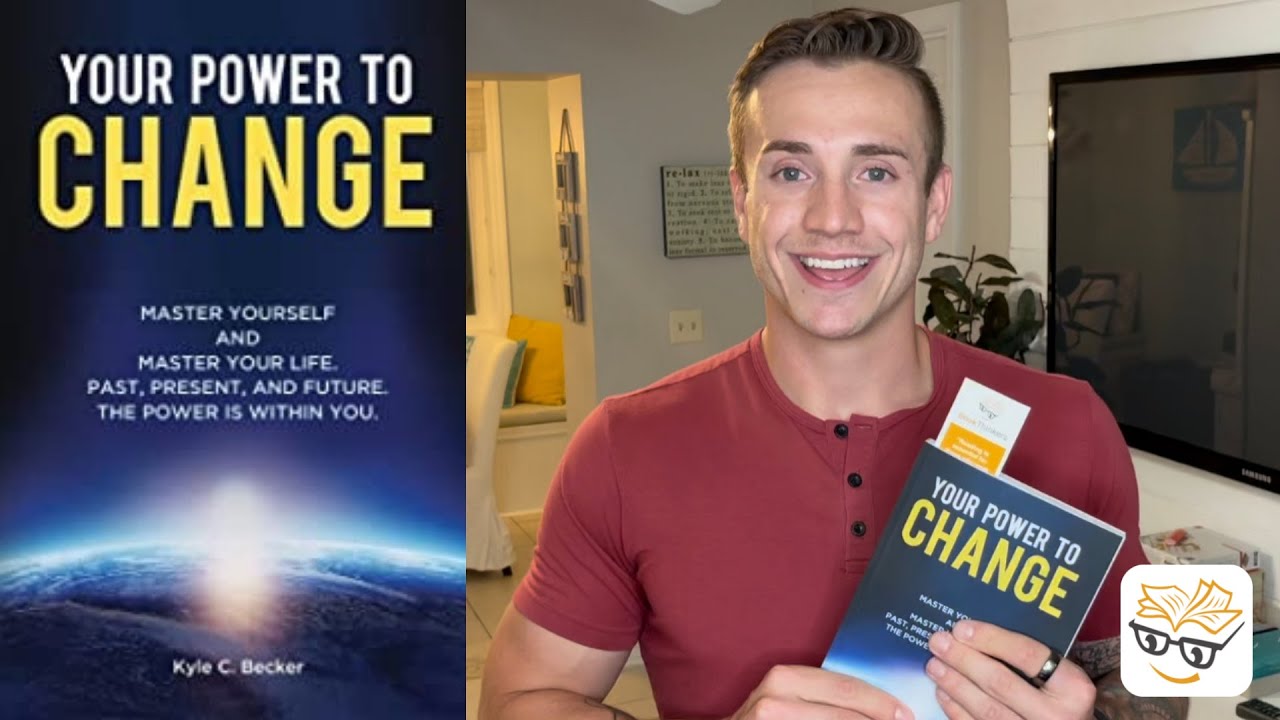
In this solo video, Nick Hutchison reviews Kyle C. Becker’s self‑help workbook The Power to Change for his “Book Thinkers” audience. He introduces the book’s two‑part structure: the first half helps readers clear out the “garden” of their lives—removing weeds, rocks, and unproductive plants—while the second half guides them to redesign and plant the life they truly want. Hutchison explains the garden metaphor in detail, then walks through Chapter 4, which is a personal‑inventory exercise divided into four sections: (1) resentments and regrets, (2) harms caused, (3) romantic relationships, and (4) fears. For each section he recites the journal prompts Becker provides, shares his own emotional reaction to doing the work, and emphasizes the raw, non‑fluffy nature of the exercises. He concludes that the book is a comprehensive, actionable personal‑development guide, urging viewers to comment, DM questions, and read the book.
Chapters
Are you living a life full of unfulfilled potential? You know what I mean. Is there a big difference between where you are today and where you'd like to be? I know most of us are living in that kind of life space, and if that's you, if you identify with that, then Book Thinkers family, you are going to enjoy today's book review. Today I will be reviewing The Power to Change by author Kyle C. Becker. And the subtitle reads, Master Yourself and Master Your Life, Past, Present, and Future, the Power Is Within You. And I really enjoyed this book. It could almost replace half of what's in my library at home. Right now I'm filming this in Jacksonville, Florida, where I'll be for the next month or two, which is why I've got a different background. But you know the bookshelves I'm talking about. This book is so well written and it's full of so many exercises and things to execute on. that I think it could seriously replace half of what's on my bookshelves. Kyle is a student of the personal development game and he really knows his stuff. He's even an NLP practitioner in all of this. So the first half of the book gets you back to square one. The second half of the book helps you design your ideal life and it gives you the power to change. There's a metaphor about halfway through the book that I think sums this up perfectly. Kyle says that Your life is kind of like a garden. If you looked at it today, it's probably a little unkempt. There are some weeds and plants that you didn't really intend on growing in there and taking up resources. Maybe the soil is not as fertile as it used to be. There are some rocks and things that need to be removed. There's no fence, and so all these creepy crawlies are getting in there. Your life is like an unkempt garden. And the first half of this book is intended to help you kind of like dig in there, By the roots, pull up all of those weeds, get rid of the plants that you didn't intend on, replace the soil, nourish it, remove the rocks, reorganize things so that they make sense to get back to square one. That's the first half of the book. The second half of the book is, okay, now that things are stable, what kind of life would I like to live? Where is my potential? What fulfills me? What kind of things do I wanna bring into my life and plant in my garden? Moving forward so that I can reap the rewards later, eat those vegetables and fruits, right? And, uh, it is a great question. I mean, a lot of us, we are not even aware, I think, of how our gardens are unkept in the first place. But once we do become aware of that and we do the hard work, and I will give you an example of what a little bit of that looks like in just a minute, what kind of life would we like to design? And what tools are available to us, real tools? are available to us to make that a reality. So that's the first half of the book and the second half of the book. I mentioned that this is part workbook. I'd like to actually walk you through part of chapter 4, tell you a little bit about what Kyle will teach you to give you an example of what you can learn in this book, and then you can make a determination if this is going to be a good fit for you or a bad fit for you. But I think it's a good fit for everybody. So chapter 4 is all about your personal inventory. And here's what Kyle is going to teach us in summary, and then I'll walk through some examples. He breaks this up into 4 parts. Part 1 is resentments and regrets. Part 2 is harms. Part 3 is romantic relationships. And part 4 is fears. We know that we need to address these things, but oftentimes we just sweep them into the garden and we let them grow into things that kind of get out of our control. So part 1, resentments and regrets. This line is fantastic. Kyle says that they say that harboring resentment is like drinking poison and expecting the other person to get sick. Imagine that, and imagine that we tolerate that in our lives. So here's some of the questions that Kyle's going to bring you through and that you'll journal directly into the book. He says, who do you resent? Why do you resent them? What instincts were threatened that caused you to resent them? What was your part in it? And then lastly, once you've journaled those 4 things, what's the ideal situation look like moving forward? And that'll cause you to take some action. That'll cause you to reach out and have some uncomfortable conversations. That'll cause you to write some letters to yourself and then just burn them up, right? You need to get that out in the air and you need to share them with other people. Part 2, harms. Who was harmed? How were they harmed? Why did you harm them? And then number 4, what's the ideal situation? And Kyle talks about his first time going through each one of these exercises and how painful it was, how many emotions were stirred up. And then when he shares these with other people for the first time, how emotional he gets, how difficult it is to share these things with other people. This is the type of personal development work that we think about, right? It's not fluffy, it's raw, and it's intentional, and it creates real change. Sometimes, like, for the first time in your life, you're going to be voicing these things, you're going to be writing them down and reflecting them again for the first time maybe in your entire life. I think that I experienced a little bit of that as I was going through the exercises. So it's really powerful stuff with relationships. Especially ones that failed. Okay, we're talking about ones that failed. What happened? What were— what was your part in it? Were you ever— and then he goes through some characteristics— were you ever like threatened or jealous or insecure? You're going to journal about these. Being needy. He goes on and on and on, and a lot of them will just punch you right in the face. But you need to deal with these things if you want to kind of like spruce up your garden and get it back to square one so that you can actually build from a strong foundation. And then what's the ideal? And then the fears part. He lists a bunch of fears and I'm like, I think I identify with every single one of these. But then once you go through each one of the fears, and he had like 40-something, I think I remember the first time that he went through this, were they real or imagined? Did they actually come true? Did they happen? Why do you have these fears? And then he'll continue bringing you through the exercise. That's just one example of what you're going to learn in this book. Imagine doing that personal inventory. How much change can you actually create? And then multiply that throughout the rest of the book. That's just one chapter. So in summary, and again, I wanted to give you that so that you could determine if this is going to be a good fit for you. In summary, this book is like the ultimate personal development guide. And if you're tired of just skimming books and putting them back on your shelf, I call that shelf help. If you're tired of that and you actually want to create real change, this is going to be a good fit for you. So Book Thinkers family, comment down below. Let me know what you think of this video. Comment down below if you've read the book or you know Kyle and you want to give some feedback for everybody else. DM me with any questions that you might have. You can also check out Kyle's profile below. Cool. Let me know if you have any questions and go read something. Bye. Bye.