You're selling WRONG | David Newman
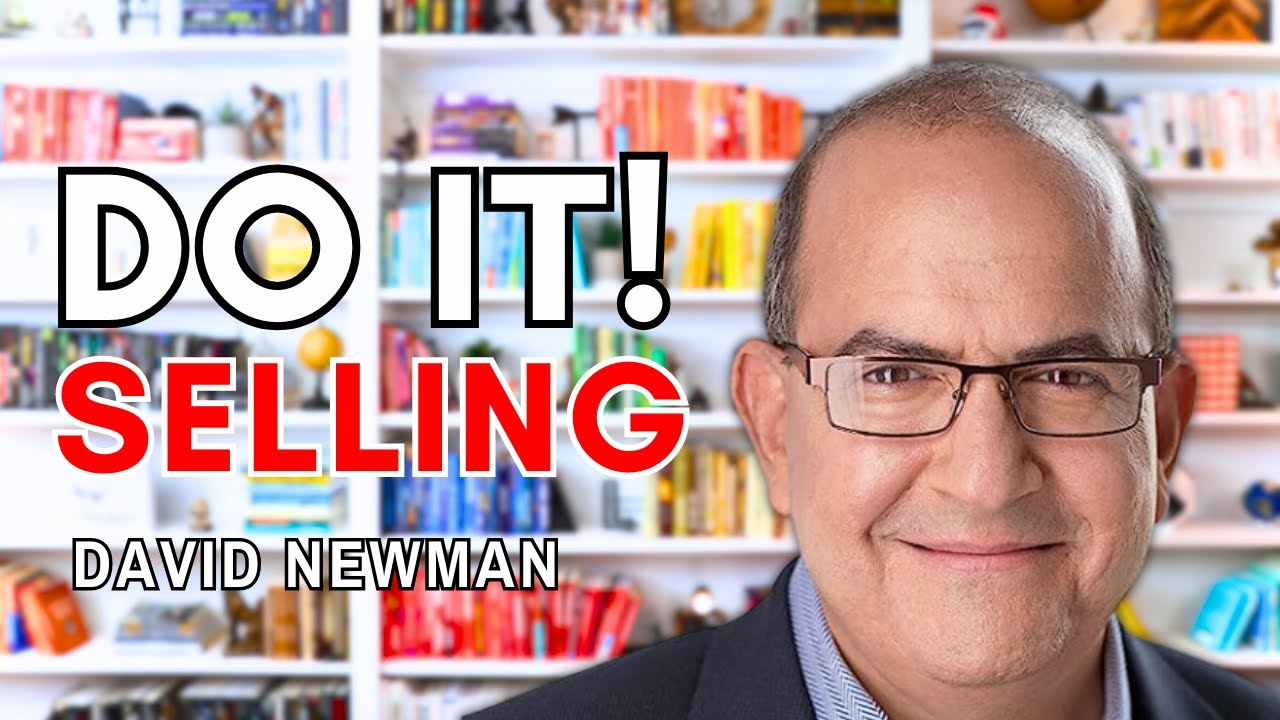
Sales expert David Newman argues that expertise-based businesses need different sales approaches than traditional enterprise sales. He reframes selling as invitation and conversation, and shares how helping-first interactions generate business. His advice: don't focus on being a better salesperson, focus on being a better person.
Chapters
Is if you don't like the word sales, you don't like the word selling, take those 2 words out of your vocabulary and replace them with 2 new words. The 2 new words are, it's really all about— A lot of people say that the 3 most addictive things in the world: sugar, carbs, and a paycheck. And I will tell you, I had a blinding flash right then and there. The problem with being a generalist is that you're known for lots of different things, which means you're really known for nothing, there are probably things that you are great at that you are unaware that you are great at. When you're an entrepreneur, it's no longer about how good you are at doing the work. It's—
Mr. David Newman, welcome to The Book Thinker's Life-Changing Books Podcast. How are you feeling today?
Nick and Luke, I am ready to change my life. So, let's hit it.
Yes. Well, you are in the right place. I'll tell you that. David, pretend our audience has no clue who you are. They don't know anything about your 3 books. They don't know anything about your business. They don't know who David Newman is. Can you please introduce us? Fill us in.
Well, once I get over the shock that there's actually people who don't know who I am, Once I gather myself together, yes, Nick, absolutely happy to. So, my name is David Newman. I run a company called Do It Marketing. My first book, purely for lack of imagination, my first book was called Do It Marketing because I figure that's the name of the company. So, that's the name of my platform. And the Do It Marketing book is actually 10 years old this year. So, Do It Marketing came out in 2013. We're recording this in 2023. Um, and then Do It Speaking came out, uh, in 2020. And then the latest book is called Do It Selling. Our whole business is around, uh, marketing and, uh, strategic and tactical revenue acceleration for professional services experts, meaning consultants, business coaches, business book authors, professional speakers, anyone who is selling their expertise for a fee. Those are the folks that we help to monetize that expertise and to accelerate their revenue and their income and their impact and their happiness in their business. So that is the whole Do It Marketing Empire, Do It Selling Empire in a nutshell.
I love it. Okay. You're also the host of The Selling Show, which we could talk about in a minute. But first, and we'll kick off with this question, what was your first sales job? And were you born a salesman? Did you know that you wanted to sell?
Oh my goodness, quite the opposite. So my first sales job, like many of my clients, my first sales job was an accidental sales job. So When I had a 10-year corporate career with a paycheck. By the way, fun fact, a lot of people say that the 3 most addictive things in the world: sugar, carbs, and a paycheck. So, I somehow broke the paycheck addiction, went out on my own. This is the beginning of 2002. And I realized, you know, I'm a really good consultant. I'm a really good speaker. You know, I should be able to do this on my own. Why am I making all this money for these companies? I should be making all this money for myself. Quickly realized when you're an entrepreneur, it's no longer about how good you are at doing the work. It's how good you are at getting the work. And when you said, what was my first sales job? That was my first sales job, which is selling for myself. Bad news is I sucked. I just sucked. It was bad. It was terrible. I made every mistake in the book. I, first of all, I went out in the marketplace as a generalist. So literally 30 different workshops. I signed up with one of these franchise training companies where 30 different workshop binders arrive in a box, thud, drop that off at the front door, ding dong, delivery. And oh, look, there's my business, 30 different workshop binders in it. So literally, it was leadership, sales, marketing, time management, HR, leading through trust, leading through change, effective presentation skills, performance reviews, everything under the sun. And I went out into the marketplace as a generalist. I've now learned, here's a soundbite, folks. The problem with being a generalist is that you're known for lots of different things, which means you're really known for nothing. And, you know, generalists kind of go fade into the background and experts and specialists are the ones that really thrive. And that was true 20 years ago. It's even more true today, I think. And it was a good 3 years of bumping into brick walls and dead ends and every manhole cover that opened in front of me, I fell into it. And I finally, finally realized if I'm gonna make a go of this, I have got to learn to sell. And then I started hiring some mentors. I started studying. I realized a lot of the sales training out there, and I think this is still true today, a lot of the sales training out there is fantastic either for enterprise sales, meaning, hey, you're selling for IBM, you're selling for financial products for Merrill Lynch, and a lot of sales training came out of those big companies, like Xerox is another example. Xerox sales training, world famous. IBM sales training, world famous. Doesn't really apply to a small business owner. Doesn't really apply to a solo expert business owner. And then the second kind of sales training is based on product sales. So we're selling a thing. We're not selling an intangible. We're not selling an idea. We're not selling value. We're not selling air. Sometimes when people go, oh, I get it, consulting, training, coaching, you're just selling air. There's nothing, there's no there there. There's no substance to that, right? So it's a service sale instead of a product sale. And so as I was taking all of this kind of not quite right sales training, I was furiously taking notes. I was modifying. I was applying. I was testing. And I figured out, okay, to sell an expertise-based business, these things work, these things don't, these things apply, these things don't really apply. Or the way to apply it, if you're a company of one, meaning that you're selling yourself and you're selling your own services, is completely different when you're selling with a big brand logo that's on your business card and you have all of that prebuilt credibility behind you and all of those things. So I finally, finally, finally started to get this right and I started selling and I started getting some big corporate contracts with companies like Microsoft and QVC and IBM, strangely enough, and PNC Bank and some really big companies. And then some of my friends and peers were coming to me and going, hey, can I pick your brain? Can we have coffee? Can we have lunch? Can I buy you breakfast? And I was like, sure. And I really didn't think anything of it. And they're like, how'd you do this? How do you do that? Tell me why you're doing this on your website. Tell me what you're doing on LinkedIn. Tell me how you're having these sales conversations. And I was just freely giving this information. So these were good folks. They wanted some help. I was happy to help. One day, and this was kind of the turning point, One day, a friend of mine says, we're having breakfast and he literally puts his fork down in the middle of the breakfast and he says, you should do this for a living. And I said, what? Eat bacon and eggs? He says, no, no, no, no. You should teach me how you built your coaching and training business. And gentlemen, I laughed at him. I said, that is ridiculous. Most consultants, speakers, coaches, trainers are broke. Thanks, but no thanks. I'm going back to my big corporate contracts. But he finally prevailed on me. He said, listen, if I get 3 or 4 folks together, would you just do something informally just for us and see how it goes, kind of give this a test run? So I said, here's what we're gonna do. We're gonna meet in my living room. It's gonna be 4 weeks. You get everyone together, but I'm gonna have to charge you. And you're not going to believe what I charged them because this was like a breakfast meeting. I said, hey, let's get together at 7:30. We'll wrap it up by 9:30. I said, I'm buying bagels, coffee, and juice. I'm going to charge y'all $50. And my friend says, $50 a week? I said, no, no, $50 for the whole 4 weeks. $50, just the bagel, juice, coffee money for 4 weeks. So, y'all chime in $50 and we're fine.
Great.
Big money.
I know. I know. So at the same time, I had a $10,000 contract. This was like a 3-day thing. This was back in 2007 or so. And I was charging $3,500 a day for like training/speaking. They wanted 3 seminars, 1, 2, 3. So $10,500 deal, which in 2007 was a big deal for me. And at the same time, I'm doing the breakfast club here with the little consulting group. I walk into the $10,000 gig and I see all of these grumpy people that did not want to be in that seminar room. And they're frowning and they're farting around. They got their arms crossed in front of them. They just do not want to be there. And I will tell you, I had a blinding flash right then and there. I am in the wrong room doing the wrong thing for the wrong people for the wrong reason. And I'm having a lot more fun with my little consultant group that's paying me $50 than I am in this corporate training room with these 20 prisoners who did not want to be there for $10,000. And literally that day in 2007 is when I started to dial back. And stopped doing my big corporate work myself. I didn't stop cold turkey, but I dialed it down and I started doing coaching, private coaching, group coaching, group training for small solo expert businesses. And that was the turning point. Wow.
I love that. So, you took a 21 times pay cut, but you boosted the fulfillment, the happiness, the presence, all of that. So, I'll kick it over to Luke for the next question. But David, thank you for sharing that. I think that'll give a lot of people in our audience an understanding of what it takes to really sell and how you kind of fall into it accidentally.
Yes.
Man, what a great story though. I have to ask this question though. Why do you think so many people are averse to selling? Because I know like so many people are listening today and they're like, oh yeah, you know, that's great. I hear you. I know we have to sell, but you know, salespeople are icky and I don't want to have to do that. What do you say to those people?
So, Luke, I think it's 3 sources of that. Number one, it is bad sales training. Number 2, it's bad salespeople that we've experienced as prospects. And it's bad sales experiences where either you sold something and it was a bad experience or you were sold to and that was a bad experience. So I think if we redefine selling. And that's one of the first things I do in the early part of the Do It Selling book is if you don't like the word sales, you don't like the word selling, take those 2 words out of your vocabulary and replace them with 2 new words. The 2 new words are invitation and conversation. Because I really believe that sales, especially trusted advisor type of selling, it's really all about initially an invitation to a conversation. Generally speaking, when I say, okay, the invitation. No one's afraid of invitations. No one thinks invitations are scary or bad. Invitations are usually good. On the other end of an invitation is a party with, like, you know, cookies, cake, bourbon, whatever. So invitations, good. We like getting them. We like sending them. Conversation. Let's look at part 2. Generally, people are not afraid of a conversation. Conversations where you get to meet new people. Connect, exchange ideas, share experiences, perhaps start relationships. Some of those relationships might be fairly short-lived. Some may be lifelong friendships get started that way. Some of those relationships might be your next strategic introducer, your next referral partner, your next center of influence. You never know who you're gonna meet. And so generally conversations, people are not afraid of that either. So when I, when I tell a consultant or a coach or a trainer, hey, how many people last week did you invite to a conversation about how you can help them? And they go, oh boy, yeah, hardly any. I said, do you know who you want to do business with? Oh yeah, yeah, yeah, sure. Do you have a target list? Yeah, yeah, totally. Do you interact with these folks on LinkedIn? Sometimes. Do you ever connect with them? Maybe. I'm a little bit shy. I don't want to do this. Do you ever like email them if you happen to have their email address? Oh no, that would be weird. Do you ever like, you know, God forbid you pick up the phone and call them? No. Oh my. No, no, no, no, no, no, no. So again, that's because we're afraid of being pitchy. We're afraid of interrupting people. We're afraid of being a pest. We're afraid of being part of the noise. If we build a relationship and then we simply ask the other person, you know, as they're talking about a problem or an issue or a challenge, Hey, I'm curious, would you like some help with that? Right? That is the easiest, most natural, organic type of quote unquote sales conversation. I mean, that's at the 101 level. We talk more in the Do It Selling book about what does 201, 301, 401, and 501 look like because there's a ton of questions and questioning frameworks in the book. But essentially, even a networking conversation. Can generate business. So we've got some amazing folks on our team that that help me deliver this work to the clients. One of our coaches, whose name is Ray, Ray will be able to close business in a grocery store. In a grocery store at the checkout line, he just starts up a conversation with somebody ahead of him, behind him, whatever it is. Maybe they have a business of some kind. And you know, hey, what's up? What's cooking? You know, he'll make a joke. He'll you know he's a very fun guy, and people will just start to spill their guts a little bit. Oh God, I'm so frustrated! I'll tell you, I got this problem with some of my my folks down at the the store, and blah blah blah blah. Ray says, "Do you want some help with that?" Yes. Oh my God! Give me your card. Let's set up a call. I'm happy to help. Now again, it always starts with a helping call in my world. It always starts with a helping call. If there's business to be done, people are smart. They will sometimes ask you, hey, how can I hire you? How can I work with you? I mean, it's funny. Nick and I met through networking and Nick didn't pitch me. Nick didn't make an offer. I found out what Nick did. I found out what kind of guy he was. I found out about his track record of what you guys do at BookThinkers. And I was like, hey, Nick, can we have a chat? Because Maybe I could, you know, we could maybe help each other with some stuff. And here we are. So there you go. I mean, literally, if you can close deals in a grocery store line and you're totally comfortable inviting people to a conversation about how you can help them, I think the whole selling mystery and resistance will start to fade away.
Yeah, I think so too. David, I'd like to share my first selling experience with you. I was in college working for a company called Collegiate Entrepreneurs that would help you start and run your own painting business during the summer, house painting. And so I went to some sales trainings with the local guy that hired me, did a little bit of role playing, started to read some sales books. I went out to knock doors my very first time. I had this entire script built up in my mind. Knock on the first door and the homeowner says, hello, like, what's going on? And I said, hey, would you like an estimate? And they were like, who are you? And an estimate for what? And I totally forgot the whole first half of my sales script because I was so nervous. And the sales trainer behind me stepped in and helped clean it up a little bit. But I'll tell you what, by the end of that first day, I knocked doors for a few hours. I set up 4 or 5 appointments. And I thought that was the most that anybody had ever set up in their first day cold calling with this guy. Out of a couple dozen people. And I thought, wow, I might have a little knack for this, you know, through the repetition. So do you hear stories like that all the time? I mean, are people's first sales experiences typically awkward?
People's first sales experiences are 99.9% awkward, uncomfortable. And it's funny, and I love your success story, Nick, because just because it's awkward, Just because it's uncomfortable does not necessarily mean that it's not successful. So you had some great success because of your tenacity, right? I forgot half the sales training. I forgot half the script. But you kept on showing up. You kept on walking down the street. You kept on knocking on door after door. And sometimes, especially early on, if you have not had a lot of training and you really kind of quote unquote don't know what you're doing, It's almost like beginner's luck is in your favor because you're not worrying about being a better salesperson. You're just showing up, right? You're showing up, you're authentic, you're being real, you're being yourself, and people can connect with that. And it also ties back to one of my big lessons in sales that when I was heads down really studying all of this sales stuff, one of my early mentors says, David, You seem really committed to being a better salesperson. Don't worry so much about that. Be a better person and more sales will happen. And that to me, I still keep that top of mind. And that's part of our core training for all the people that we work with is be more curious, be more helpful, be more relevant, be more connected. There it is, right? You're holding up that page.
Yeah.
So this is such an important thing. We look at, you know, here's David Newman, the human being, and then over here in this next chair, here's David Newman, the salesperson. Folks, I got good news for you. You're all sitting in the same chair. There is only one Luke. There is only one Nick. There is only one David. And the more of that Luke and David and Nick that you bring to your sales conversations, the more comfortable you're going to be. The more comfortable your prospects are gonna be and the more effective and successful you will be because people pick up when someone is just after the sale, right? In sales, we call it commission breath, right? It's like, oh, I can smell the commission breath on this guy. He's just after my credit card. He doesn't care if I'm gonna be successful. He doesn't care if this product or service is a good fit. He doesn't care about the outcome. He just wants to run my credit card and ka-ching, ka-ching, ka-ching. Other people we can sense, wow, this person is really curious about me or my situation or about my business. This person I think is really relevant. They're asking me great questions. They're really committed to my success whether I do business with them or not. They want to be helpful first. They want to be relevant first. They want to add value first, and then they're going to let me buy. So there's a huge difference between pushing through the Zoom screen with all of this kind of sales selfish energy versus kind of leaning back, relaxing, immediately being helpful, immediately being valuable, and letting the prospects lean in and letting the prospects go. You know, I think you can help me. It's like, I know I can help you, but it's better coming from you than coming from me.
I love everything I'm hearing so far.
I love your energy. I'm just like soaking it all in. It's so great. For those people that, you know, we talked a little bit about generalists and I wrote this down. So I want to ask it because I feel like I'm kind of a generalist. For someone who is a generalist that is like, man, I have this skill and that skill and I'm kind of good at this. I'm kind of good at that, but I'm not great at anything. What is your advice to Those people?
There are probably things that you are great at that you are unaware that you are great at. So I will tell, and this is a very, very common theme among all kinds of entrepreneurs. So you will always have the greatest impact on your customers and clients, and you always make the most money on things that come easily to you But are difficult for others. Now, the fact that they come easily to you— here's the soundtrack in your head typically: Well, Luke, doesn't everybody know that? Doesn't everybody do that? That's not that valuable. I've been doing that for years. I've known that for decades. What do you— people won't pay for that. That's not that important. That's not that big a deal. I can do that in my sleep. Now, I will sometimes have some fun with my clients. So they come with a really thorny, really complicated sales situation. There's a proposal, there's a committee, there's like 3 different buying agendas. There's all this kind of stuff. I unpack this for them in about 12 minutes. I'm having fantastic fun. I'm cracking jokes. I'm just like I am now with you guys. And, and they're like, oh my God. I would have never thought of that. That is so brilliant. That is so incredible. And I'm sitting here in my head because I've learned to turn this voice down to like a 1 on the volume meter. I was like, this is so goddamn easy. I can't believe this guy doesn't know this. Are you, are you kidding? Like, you're paying me money for this advice? Oh my God, David, this is a game changer. I'm gonna look at every proposal in a completely different light from now on. And then I will make the joke. I will say, you know, I'm, I'm pretty good at this. I should almost do this for a living, don't you think? Because it comes easily. Now think about a brain surgeon. Imagine if, you know, you go in and the brain surgeon is doing things that to you and me seem impossibly complex and life-savingly valuable. Imagine if the brain surgeon is there nervous, Sweating, going, "Oh my God! I don't know how this works. I don't know what to do. Is this a scalpel? What kind of? Oh gosh! And oh, this guy's brain looks like a different kind of brain. I don't know." Brain surgeon doesn't walk into the operating room that way. Brain surgeon walks into the operating room going, "Got it. Give me a number three. Fantastic." You'd look at this guy; he's like he's slicing deli meat. It's no big deal. And he's got an eight o'clock operation. He's got eleven o'clock operation. The final thing he's doing is the two o'clock operation. So, so this reminds me, funny story about my dentist. So I go in for a root canal. It was my first root canal. And, you know, root canal's famous for, oh, it's very painful. Kids, it's not that painful. It's a little uncomfortable. It's not that painful. So he's about to start, and he's a little bit of a comedian. So he's like, root canal, root canal. He's scratching his head. Gosh, I haven't done one of these in 2 hours. So again, the joke is I do this all the time. This is second nature. This is easy for me. Relax, I got this, right? So when you say, who am I, right? Imposter syndrome. Who am I to fill in the blank? Who am I to host the podcast? Who am I to be helping authors to showcase their books and their brilliance? You know, who am I? To coach, consult, teach, train, whatever. Well, do you love it? Yes. Are you pretty good at it? Yes. Does it come easily to you? Is it fun? Is it like doing a crossword puzzle? Would you almost do it for free? Yes, yes, yes. Great. I guarantee for other people, you're a magician, but you don't see your own magic because to you it comes easily.
Yeah, that's so true about our business, especially when we're doing the onsite filming stuff with clients. We always hear, you know what, Nick or Luke, you should be in the chair. You should do this. It seems like it's too easy for you when we're coming up with ideas. So it's good to hear that validation, David, that we're in the right spot providing the right types of services. And obviously you are as well, which is really cool. I'm wondering when you were first starting and you were studying these sales books and everything arrived in the mail and you continued to be a good student, you hired mentors. Who were some of your sales mentors at first? Who are some of the people that have had the biggest impact on you and do they have books out there?
They do. So one of my first sales mentors, and I'm sure I'm among millions of people because he's sold millions of books, is Jeffrey Gitomer. So I went to a Jeffrey Gitomer seminar here in the Philadelphia suburbs in 2003 and I walk in, it's in one of these big hotel ballrooms and he used to do these before the pandemic. I think he's still doing them now again. But literally like 500 salespeople in this big, like Hilton Hotel ballroom and, you know, big giant screen. And he's up there and he's ranting and raving and swearing and doing all the Jeffrey Gitomer stuff. And I was like, I think I'm gonna like this. These seem to be my people. So certainly Jeffrey Gitomer was someone that I had studied and followed and read pretty much all of his books, even as they were coming out, all the new ones. But I started out with The Sales Bible, which is kind of his first big book and then Little Red Book of Selling and all of that. And then early on, this wasn't about sales, but it was certainly about ideas and empowerment and entrepreneurship is Seth Godin. So, Seth Godin, certainly starting with Purple Cow and then even going back to Permission Marketing and All Marketers Are Liars. The one that I really like that I think is kind of the unsung Seth Godin book that people might want to check out is Linchpin. Linchpin is a fantastic book if you haven't read that about your importance to your clients, your importance in the world, and also frankly fighting some of that imposter syndrome that we were just talking about, like, who am I to be doing this? Who am I to be doing that? And so there was a couple of really pivotal authors and books that changed my thinking and changed my trajectory.
Now, as you're reading these books, were you sitting there thinking, oh man, one day I'm gonna be an author, or was that even on your radar? Like, how did that come about?
No, not at all. Totally not on the radar. Not on the radar in any way, shape, or form. And it's funny because, and I'm sure that you guys can track with this and our listeners can track with this, Once you've had a little bit of success, whatever you measure success by, and then you look back and you say, did I even see myself here 5 years ago? Could I even imagine that this was possible? So, it's funny because there's all this concept of having big, giant goals, right? I'm going to be an Olympic athlete. I'm going to be a New York Times bestselling author. And certainly, some people do have those goals from very, very early on. But most of us mere mortals, we just do the day-to-day work and we just seize the opportunities. We maximize our value. We try and help and serve as much as we can. And then slowly, all of that good work, all of that studying, all of that preparation, all of that investment, that we make in ourselves emotionally, intellectually, financially, it all starts to pay off. And then you turn around, you're like, I never imagined. So even in my career, you know, I got my certified speaking professional designation from the National Speakers Association in 2014. Never imagined, never imagined that I would qualify. And, you know, because all my heroes and mentors were certified speaking professionals, including Jeffrey Gitomer, by the way. Then in 2017, I qualified to join the NSA Million Dollar Speakers Group. And that's if you have 7 figures of revenue and they actually look at your tax return. So, it's like a real thing. It's vetted. And I was like, I was having a hard time making like $50,000 a year, frankly, or early on. It's like, I don't know how to make $50,000. And then when I hit 6 figures, it was like, oh my God, I've arrived. I've got $100,000 a year. This is so amazing and so incredible. And then every milestone, right? You hit 250, then you hit 500, then you're like, oh gosh, maybe I'll hit 700 someday. Maybe I'll hit 800 or 850 or whatever. You turn around and again, it wasn't intentional. It was just like, gosh, look, this is just the accumulated momentum of staying in the game. And just like Nick, right? I kept knocking on doors, buddy, just like you. I kept knocking on doors. I kept doing the work. I kept, you know, I would not give up. I would not give up. And one of the mantras that I really believe, which I forget who said it, I wish I could give you an attribution, is when things get hard, do not change the goal, change the path, right? Many paths up the mountain. It's like, I want to do X. Okay, well, there's 100 different ways to do X. You start hitting an obstacle, a roadblock, right? Go around the obstacle, dig under the roadblock, go a different way. Do not change the goal, just change the path. And if you stick with it, I have a hard time believing that you won't be successful. You might not be successful in the way that you thought, but you might be way more successful in some different ways and some different avenues.
Yeah, that's some great, great points. And, you know, something we've been talking about a lot recently internally is vision. And I think even our view of that has changed a lot over the time that we've had Book Thinkers. And, you know, we want it to be this perfect little thing that fits in this perfect little box. But the reality, when things unfold before you, it doesn't do that at all. It's like, that's the exact opposite. But the ability to keep going and not give up is what makes you stand apart. And I want to, like, you said you didn't want to give up, but did you have those moments of doubt? Did you have those times where you're just like, man, I want to throw in the ring and I'm done?
Absolutely. Oh my gosh. And so, yes, a lot and frequently. At one of the events that I attended, I sat at the same table as somebody that, it wasn't Survivor, but it was another one of these reality shows where they're literally in the jungle for like 100 days. And this guy won. This guy had won this competition. And I said, and he was going through the story like bugs and malaria and mosquito bites and snakes and being covered in mud and not bathing for 10 days. And I said to him, how in the world, how in the world did you get through that, much less win? I mean, didn't you want to give up? So, I was asking the same question, Luke. I said, didn't you want to give up? The guy said to me something profound. He said, I wanted to give up about 10 times a day. 10 times a day for 100 days. That's 1,000 times. I wanted to give up about 1,000 times during this whole experience. And every time I just said, I'm not going to throw in the towel this time. I'm not going to quit. Right now. I'm going to keep going, whatever the next thing, the next meal, the next challenge, the next day. And he said, winning something like this is not about winning it once. It's about winning 1,000 times. Each of those 1,000 times that you say to yourself or ask yourself, wouldn't it just be easier to quit? And he says, you don't win that competition once, you win it 1,000 times.
David, that reminds me of Luke and I. We've both done some cold plunges. You know, you get out, you do a little cold exposure in the morning, kind of wake yourself up, get the endorphin rush and a little hit of dopamine. And so when you're in the cold plunge, it's about winning that battle 3 or 4 or 5 or 10 times during one experience, one 2 or 3 minute tub experience. is a series of battles and you have to overcome each one individually. So I love that metaphor. Before we get wrapping up here, David, I want you to talk a little bit about Do It MBA, your business, and tell us a little bit about who's a good fit for this business, who needs B2B coaching. And yeah, tell us a little bit about that.
Absolutely. So our core flagship mentoring program, as you said, is called Do It MBA. And there's really 3 different groups of clients in there, Nick. We have, and I have nicknames for them. So the first group is Zero to Hero. And Zero to Hero is either that corporate refugee who just like me back in 2002, you're leaving your corporate job, you're about to leave your corporate job. Hey, I'd love to be like some of these other guests on Book Thinkers. I'd love to be that business book author, that professional speaker, that corporate consultant. And you're just starting out and you want to build the marketing and sales and revenue growth foundation the right way. So those folks, they're either newer entrepreneurs or they're that corporate refugee in the zero to hero group. Second group, they're probably making between $100K and $200K already. This is hero to superhero, and they would like to double that or triple that in the next year or two. They've hit some kind of ceiling of complexity in their business. They're like, well, I know how to make $150K, but I don't know how to make $500K. I don't know how to make $600K, or I'm making $200K. I have no idea how to get to $400K. It's like, do I have to work twice as hard? Do I have to work twice as many hours? Do I have to start hiring people? What do I do? Where do I go? How do I scale this thing? And then the third group are the folks that are superhero to intergalactic and superhero to intergalactic in our world. Maybe they're already making $400K and $500K, but they're still solo. Their calendar is full. They're getting on the verge of being maxed out, stressed out and burned out. And they're like, I want to grow this business, but I got no more bandwidth. I got no more capacity. I have no idea what to do. My calendar looks like I'm playing a game of Tetris and I need to get my life back. I need to get some scale and some leverage and some freedom back in here. Otherwise, my wife or my husband is going to leave me. My kids are not going to recognize me. My dog is going to start biting my ankles when I come home at night through the door. So, all 3 of those folks are great candidates and we have different tracks. For our zero to hero folks and then hero to superhero and superhero to intergalactic. But the short story is, and you'll see this on the website for the folks that pop over to doitmba.com, is we— our goal is no guarantees, of course, in life, but our goal is that we will help you grow your expert-based business 50 to 500%. In the next 15 months, and we've had client after client after client and success story after success story after success story. If people are open, if people are coachable, if people do the work, if people stick through the hard parts, right? We just talked about it's not about winning once; it's about winning a thousand times. And sometimes it feels that way as you're building and growing and scaling a business. But if they stay in the game with our help, with our structure, with our guidance. We have an amazing track record of client success stories.
Do you work with small businesses that maybe have 5 to 10 employees or do you just work with solopreneurs?
So it could be a small consulting firm or a small coaching company or a small training company. But it's funny. So we, it's really B2B professional services. speaking, coaching, training, advisory type businesses. But with all 3 of my books, and this is kind of a funny thing in the author world, people have picked up the Do It Selling book and they have said, dude, you have written the sales manual for yarn stores in Vermont. And I'm like, okay, that's strange. And then someone else will say, oh, I have an industrial steel rack manufacturing company in Chicago. This is my new sales go-to book. I'm like, industrial steel rack manufacturing? Like, what? Someone else is in real estate. So, we don't coach real estate people usually. You have written the sales Bible for every real estate agent. So, as much as I love those folks getting value from the book, our clients are typically not yarn store in Vermont, not steel rack manufacturer, not real estate agent. But it's that professional services seller who sells their expertise by way of consulting, coaching, speaking, or training.
Interesting. Okay, maybe we have to have a conversation once this is over about that. But Luke, I'll kick it over to you for your famous final questions.
Yeah. Well, before we get to that final question, I just wanted to say, you know, on this podcast live that the book that you wrote is not only amazing, the content itself, but also the inside is just Beautiful. Before we hit record, we were talking about that. And for those listening that haven't checked out Do It Selling, please go look at it. What did we say? It's a coffee table book for business. I mean, yes, that's like, says it perfect. It's a masterpiece. It's beautifully done. So the final question that I always ask our guest is really simple but kind of difficult to answer, which I like. You pass on and all the information that you put out just disappears. You don't have your books, you don't have your website, nothing. But you're allowed to leave the world with one single piece of advice. What would it be?
Don't worry about being a better salesperson. Be a better person.
Boom.
Nail on the head. I love it.
There's a reason I highlighted that in here.
Yeah.
That's what it comes down to ultimately. And I think you kind of roundaboutly said it, but know thyself first too, which is great. Well, David, thank you so much for your time. I love your energy. This has been an amazing conversation. I always hate when these things have to end, to be honest. Like, I just want to keep going for another 2 hours, but it's been a blast and we appreciate your time. So thank you.
Well, Luke and Nick, thank you both. This was great fun.
More from Nick

Napoleon Hill’s “Think and Grow Rich” is a timeless classic #selfhelp #personaldevelopment

4 Books to Help You Get Better at Decision Making #selfhelpbooks #bookrecs #nonfictionbooks


Have you read this book yet? 📖: The 5AM Club by Robin Sharma #selfhelpbooks #robinsharma

Dan Sullivan on Listening to Your Customers Instead of Watching Your Competitors

5 Books That Will Boost Your Financial Intelligence #financialfreedom #nonfictionbooks

The People That Preach the Loudest About Virtue are Usually the Most Power Hungry



Books are the greatest mentors you can find #selfhelpbooks #businessbooks #successmindset

Let’s fight this toxic instant gratification culture together 📖 #selfhelpbooks #jimkwik