Author Mark Coopersmith on The Other "F" Word at NASDAQ's @theCenter
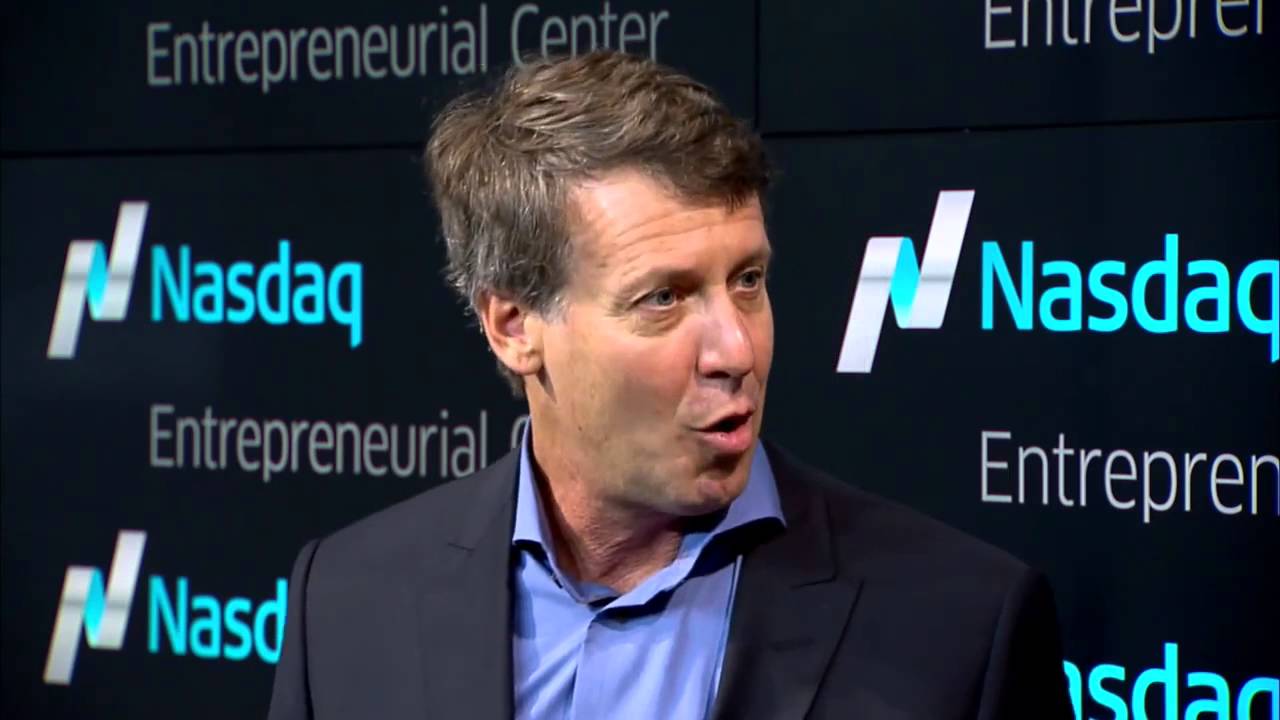
In this interview at the Nasdaq Entrepreneurial Center, author Mark Cooper Smith discusses his book The Other F Word, which reframes failure from a stigmatized outcome to a strategic resource. He explains how Silicon Valley’s “fail fast” mantra often masks deeper cultural nuances, contrasting it with more risk‑averse regions. Smith introduces the concept of “failure zones” within large organizations, urging leaders to delineate where failure is acceptable (e.g., new product development) versus where it is not (e.g., core transaction processing). Central to the conversation is the 7‑stage Failure Value Cycle—respect, rehearse, recognize, react, reflect, rebound, remember—offered as a practical framework for individuals and teams. The dialogue also covers how trust is forged through failure, the role of failure in great workplaces, cross‑industry perspectives (aerospace, entertainment, sports), and coaching leaders to capture lessons even when they cannot see a failure through to completion. Smith shares a personal failure story from his e‑commerce venture WebOrder, illustrating the financial and emotional impact of market timing. He concludes with a forward‑looking metaphor that likens failure to gravity, suggesting that, like a slingshot maneuver, organizations can harness failure’s pull to accelerate growth. Throughout, he emphasizes cultural adaptation, diversification of failure strategies, and the importance of transparent, portfolio‑style experimentation.
Chapters
I'm Nicola Corzine. Welcome to the Nasdaq Entrepreneurial Center. And today I'm here with Mark Cooper Smith, author of The Other F Word. And we're gonna have a real conversation today about how we came to this place that is. So, Mark, The Other
F Word. Yeah, hi.
Tell me what that other F word could be, 'cause I'm thinking of a few in my head right now, and I'm guessing it It may not be the one that you had in mind.
Well, the other, other F word we talk about here is failure.
Yeah.
And, you know, we connect it with the other F word just because that's the way most people think about failure.
Right.
You know, that it comes with all of those really negative connotations.
Yeah.
And the key reason that we wrote the book was to really unmask that a little bit more, to turn failure from this regret, this thing that we brush under the rug, into a resource, which it is, and which it is especially here in the San Francisco Bay Area. We understand that. But sometimes the way that we look at it is perhaps misunderstood once we get outside of this region.
Yeah, yeah, no, that's very true. I mean, I think that there is a certain element of wearing things as badges of honor, and I think especially here in this area, at times failure is looked on as like the rite of passage to be a real entrepreneur. But when you think about sort of all the people that you met and the history of sort of failure and the evolutions inside of this region. How did you define kind of this shift in mindset that's clearly happened over the last probably couple years?
Right, right. Well, I'll start with 2 thoughts. Number one, agreed. And sometimes this element of it's okay to fail, fail fast, fail often, fail forward, you know, all of that— perhaps we ladle that on a little bit thick here in the San Francisco Bay Area and Silicon Valley. But the counterpoint to that is that there's some real— there's really insight there. And the way that we look at startups in particular is startups are real-time experiments, and experiments come with positive and negative outcomes. You start with hypotheses around businesses, around business models, around product-market fit. And what happens here, of course, is people go out and they test those. Yeah. And they test them and they learn from those tests, and we do this rapid iteration here. So You can look at that and say, well, it's okay to fail because you learn from the failures, and that's really what happens. But we're not looking at failures as business failures per se, but really as experiments. And with that as a mindset, we said, okay, how does the rest of America, the world, look at this concept of failure from a business context? And the answer was not in a really healthy way. That's right. And that's what really— that was the impetus to say, let's look at this a little bit deeper.
How do other cultures deal with that? How do we deal with that? What fundamentally do you say, you know, gets you to being able to move to that point where you have that, I went through this curve, I discovered the issues, I moved on, and not get stuck in the weeds of sort of saying, I'm just a failure?
Yeah, so there's a lot in that question or series of questions.
Yeah, it's totally loaded. I know, I know.
Let me try with a couple of responses. First of all, Failure is really painful. I mean, all of us remember— we typically remember our failures more than we remember our successes in many cases. We may have a few shining examples of successes, but it's those failures, those embarrassments that we sometimes keep tucked inside, and we don't like those, so we try and avoid them. As a result, we have this fear of failure, and especially if you're inside larger organizations where if you fail, you get treated in a certain way that's not good, then you certainly don't want to fail. So we look at larger organizations and we talk about things like, you know, a trial and error mentality or approach towards doing things right. But inside those organizations, depending upon how failures get handled, you really have more of a trial and terror kind of culture.
Yeah.
So that first and foremost becomes a real issue to try and overcome inside larger organizations that aren't in this experimentation around new business models because they already have businesses that work. Right. So one of the things that we look at for bigger companies that are trying to innovate and act in an entrepreneurial way is to say, what are your failure zones? Where is it okay to fail? New product development, new product introductions, marketing, different ways of looking at the customer experience, and is it okay to fail there? And the answer is yes. In fact, you want to take risks. You want to try new things because if you don't try new things, if you don't try things that will fail, eventually you're just not changing enough. The status quo wins. But then there are other parts inside organizations, big organizations, manufacturing lines, transaction processing, things like that, where of course you do not want to fail. Ideally not. Yes, yes. And you put in place mechanisms and security systems to make sure that doesn't happen. So one of the things around it when we look at failure is to say inside bigger companies, understand where it's okay to fail and where it's not, and then encourage those activities to drive innovation, to drive growth and experimentation, because you're going to learn from those.
Interesting. So you mentioned earlier sort of other cultures, and I'm thoughtful or mindful of the number of companies inside of the San Francisco Bay Area and Silicon Valley that really do have a global presence. So given that even our smallest of startups and earliest of founders may have team members that live in multi-parts of the world, and large corporations certainly do, how do you get over this very concept of having multiple acceptance levels of failure in different regions? How do you create a unified safe zone that works for a company that's international?
Yeah, so that's a really big issue and that's a great question. You know, I've been fortunate to both have visitors from around the world come and study with me and also, of course, traveled around the world talking about this topic. And one of the things that we find is in different parts of the world, there is fundamentally different acceptances of this approach. I mean, I really equate a lot of that to resilience. In some parts of the world, if you fail, you say, what did I learn from that? You pick yourself up and you move ahead. In other parts of the world, Failure becomes one of those life-defining moments, and it can fundamentally change your trajectory. Within larger organizations, one of the things we do is look at this whole concept of failure zones and culturally start to talk about, okay, as opposed to, again, thinking of it as a business project, let's change the language. Let's change the words that we use a little bit. If we talk about experiments, all of a sudden that changes the dynamics. If we look at things like engineering, that changes the dynamics because they have disciplines around failure analysis, for example. Once we can redefine the language and the playing field a little bit, then globally people become far more comfortable. The other thing that we try and do is to say, what are some examples of how people learn from failure effectively. In the book, my colleague John Danner and I, after hundreds of interviews and looking at hundreds of different companies, came up with a 7-stage failure value cycle. It's a different way to process failure. For those people that need the 7-stage process, we actually have it. It's like, I'm not—
It's great. It's formulaic. You know where you are, where you're going.
For people who say, I need to break it down into discrete steps. Right. Now, your mileage may vary on how this is, and it's not a one rule fits all, but if we think about how failures happen, we've broken it into 3 key segments: before failure, in the moment that a failure is taking place, and then what you do afterwards to leverage the failure effectively for the immediate term and especially for the long term, for the culture of the company and for long-term growth. And we've broken it down into these steps. And I'll take a moment and run through these steps. Yeah, please. Number 1, respect the fact that failure happens a lot. And it does. If we take a look, and we share a lot of metrics, 75% of venture-backed companies don't even return the money to their venture founders. 99% of patents don't generate revenues and are not profitable. Fascinating, 99% of patents. How are you doing on your New Year's resolution? 88% of those fail. We live in a land of a lot of failure, and respecting the fact that failure will intrude itself, as opposed to always expecting that it won't, is the place to start. Then secondly, we say, look, rehearse for those failures that do happen. There are 2 types that we talk about there. One of them is rehearse for those failures that happen a lot. That could be the front lines in customer support. And secondly, rehearse for those that could be fundamentally existential failures that could bring down your venture. So understand and have a game plan in place. That's 2. 3, recognize them. Mm-hmm. So recognize them as early as possible. Put in place different types of warning signs, radar systems, scan the horizon, etc. And then 4th, when a failure happens, react properly and in the moment. And that typically goes right to the leadership team of your ventures or companies, but it also is often pushed out to whoever's on the front line. So how do you react? And then fifth, reflect upon it. What did we learn? And we provide some key tools to extract learnings from failure. What did we learn from that failure that we can apply in the sixth stage, which is rebound? Yeah. That's when you go back on the offense and you say, we had a failure, Here's what we've learned, now let's go. And then finally, through that cycle, once you've rebounded, if you've done all of those well, once you've proven yourself to be failure savvy as a leader and as an organization, what do we do to remember it in the best possible way?
That's good.
So what are the takeaways that we have so that culturally we become a more resilient company? So that's our 7 stages. And in the book, we provide examples along the way from companies large and small.
How do you coach leaders on understanding that sometimes, even if they've given it their best and they're in that moment of failing and they want to come through it to be able to share the lessons, that sometimes you don't have a chance? How do you process when you're not allowed to go through all of those stages yourself?
Yeah, yeah. So, so that's perhaps one of the most difficult things because there are times when, regardless of how failure savvy you think you've been as a leader, regardless of how well you think you've prepared your people in your organization, you run into one of these existential failures, or your strategy just doesn't work, and you're not there to be able to see it all the way through. And in those moments, I think that's where the right leaders will say, what are the lessons that we can extract? I may not be there to see it all the way through, but my role as a leader with responsibilities to customers, employees, and shareholders is to ensure that the lessons from this aren't lost. that the value accrues back to the organization. And those leaders that can bring that through are ultimately, over the long run, those leaders that are the most respected and the most successful.
That's great guidance.
You know, there's one thing that I'll share. We were able to interview and investigate a lot of companies and people that we knew, but of course we reached out to hundreds that we didn't. And what was really fascinating was a number of the most successful CEOs that came back to us and said, thank you for writing this book. I think this is a very important topic. Let me make myself available to you, for example, to talk about these issues or to share my insights around that. And it was those who had had huge failures that said, we were able to persevere through it, or it helped mold the way that I now drive culture drive performance in my organization in a different way.
Yeah.
You know, there's one other thing that came through as we're talking about culture, and we did some work with the Great Place to Work Institute, which is the one that has all of the best places to work, small, medium, large, the top 100, every region. We all know them. They interview more than 10 million people, or they do surveys of more than 10 million employees a year in the US alone. So they talk and they hear from a lot of people. and have these massive amounts of data points. As we spoke with them, we said, well, what's the role of failure in helping create a great place to work? They said, oh, it's huge. We didn't initially see what exactly that connection was. They said the most important factor, if you had to distill it down to one factor, is trust. Employees that trust where they work, they trust their coworkers, they trust their leaders, they trust the organization, are the ones that have the most allegiance and enjoy— rank their companies the highest on these indices. Then we looked into it a little more and we said, well, where is trust forged? Failures are the crucible within which trust is really forged. If you think about it, when everything is going great, you're not really worried about who has your back. Or who to trust. But it's when things go sideways or the wheels come off a little bit that you really see who's got your back and what kind of work environment do you have. And those organizations that do well during those periods when everything is not rosy are the ones that frequently rise to the top as great places to work.
Extrapolated as a result of going through that pain. Were there any that surprised you as far as industries that either don't recognize failure as much or those that really do embrace it? And I mean, not technology related, but sports, arts, entertainment. I mean, is there anywhere where you point to it and go, that's interesting, that's different, it doesn't quite map to everything else out there?
Yeah, so that's great. So we looked at businesses. Obviously technology and startups are all about creating fundamental new ways to disrupt. So if you're going to do that, you're launching all these experiments. Actually, using the metaphor of launch, it's really interesting. We talked to astronauts and fighter pilots and people like that where you can say, to paraphrase NASA, failure is not an option.
Yeah.
And they were actually instrumental in a couple elements of our failure value cycle. They said, for example, you need to rehearse failure. When we have a failure, if it's not exist— if it is existential, it's huge. We have to understand it so it doesn't happen again. But if we come close and there's tons of near misses, We need to look at those in depth. We need to deconstruct them, and we need to figure out how to deal with them. So the rehearsal and the recognition and the respect that they have, the pre-elements, those were disciplines that changed the way we looked at it.
Interesting.
Which was really interesting.
Yeah.
To use that as an example. If you look at things like the entertainment business, where entertainment is not really linear, you know, what creates a hit movie or a hit song or a hit TV show? Of course, there's elements that you say, better acting, better directing, better writing. Right. But then there are things that happen and they surprise everybody. So that— some of that is taking more chances. And they said, we have to embrace failure. So we have to find ways to less expensively create new pilots or to get new content out there or new ways of distribution out there, knowing many will fail. Because if we can be one of those that fundamentally changes, that happens across something new, then we have the opportunity to capture the value.
What happens inside of corporations when they make a bet, a big bet, and everything is actually going well, but it's that outside influence that ultimately, you know, doesn't let them meet the potential of what they see? And the typical one, of course, is market timing, right? Right. I mean, you want to be on the curve over here before it gets to the point of being recognized in the magic quad of Gartner or anybody else. And yet the market is just off. Or somebody else beats you to it.
Well, and timing is one of those— And timing, yeah. Timing is everything, as they say. One of the companies that we interviewed, that I interviewed, the leaders was Julie Wainwright of Pets.com. And at the time, for those of us that remember Pets, it was an online retailer selling pet supplies, including 50-pound bags of dog food. And everybody goes, what a silly idea. to sell 50-pound bags of dog food. Well, today, 15 years later, you want that tomorrow, it costs you $3 more. And we all expect that. So that element of market timing becomes absolutely crucial. So it's— but if we go back, and again, the question there was, how do we manage that?
Yeah. How do you look at that as in, is that failure or is that an out that a company gets to say and go, well, it wasn't failure, obviously that was just not predictable from our standpoint.
This comes right back to that ratio that we talked about. It comes back to the way that Google, for example, is managing this, saying, we have a portfolio of new business initiatives. We're not putting all of our bets in just one initiative. We have a portfolio of real-time experiments, of investments in the future, and our expectation is some will fail and some will succeed. And that is a different approach to Wall Street and investors than we're typically used to. And it's a transparent approach, which is one of those things that I really advocate, because then you've laid out what your rules of engagement and what your expectations are.
Okay, so just as one should think about having a diversified portfolio of one's own offerings, you would almost advocate for diversification of a failure strategy too?
So absolutely. I mean, if you If you want to change the status quo, if you want to disrupt yourself before somebody else is going to disrupt you, and you know, if you're a big organization, there are a lot of people out there trying to take your business away and disrupt you. You have got to try new things, and some of those will fail. So I would say absolutely. Give yourself room.
Diversification.
Give yourself room for a few failures along the way.
All right, Mark, hard question. When was the last time you failed?
When was the last time I failed? Well, I've had a lot of failures.
Pick any that you would like. Tell us about one.
So I'll tell a— I'll share a failure that deals with the financial markets. It's one of the reasons, actually, why 15 years ago I went back and I started teaching entrepreneurship at UC Berkeley. So I spun a business out of Sony. called WebOrder, which was an e-commerce payments platform, and took that through funding and growth. And it was acquired in the year 2000, right at the time that the stock market, the NASDAQ, hit one of its all-time highs. As the CEO of that company, I was locked up and for a variety of reasons wasn't able to hedge, collar, or whatever. And I watched the value of my personal shares go down phenomenally until such point as lockups finally came out and I was able to do that. Now, that was a personal failure because my investors were able to sell their shares, as were most of the other stakeholders. But what it taught me, first of all, was to be a little bit more failure savvy about that and not quite so optimistic that shares will keep going up. But it also said there's an opportunity to go back and educate the next generation of entrepreneurs to be able to be a little bit more knowledgeable about some of those elements that they should look out for, not just for their stakeholders, not just for their employees, but also as entrepreneurs themselves, because entrepreneurs are taking huge risks, as are the investors that invest in them.
We often look at sort of what's the next chapter, I think, in everything that happens here. I'm assuming we probably haven't learned all there is to learn yet. really about embracing failure and what's to come. When you look at sort of the signs or the past history, what do you expect for the next few chapters of failure to really look like here?
I think failure, kind of like the real-time experiments that we talk about, is that way. Failure is a reality of life. In the book, we talk about it being like gravity. It is all around us. And with those kinds of forces, the best way to leverage them is to understand them and to continue to understand them and then to put them to work for you. You know, if we think about— we talked a little bit about astronauts. Right. But if we think about— I'll use gravity and we'll use a little bit of space exploration. How do we send probes to the far reaches of our galaxy or at least, you know, of our solar system? We use gravity to slingshot Those satellites around planets. And the way that I like to look at it is to say, use failure that way. Recognize that it has a pull, but there's learnings and there's strength and power in that that we can put to work.
What surprised you the most when you were researching this topic overall?
The broad spectrum of ways that people either didn't want to talk about it at all, I'm going to put my head in the sand, to the way that some of our most powerful business leaders and other leaders really embraced it and said, it's a part of the way that I approach every day. For example, Jeffrey Bewkes, who's the CEO of Time Warner,
Yeah.
was one of those executives that said, this is an important topic. And he said, and Time Warner had a near existential failure Yeah. And he goes, and we've learned from that. And then he was kind enough to write the foreword to our book. Fantastic. So people like that that say it's important that we also use those as guideposts in the rearview mirror as well as in the future to help us navigate a very complex business and competitive environment are the people that have really understood what it means to be a failure.