The AI Cybersecurity Crisis Is Here | Nikesh Arora (Palo Alto Networks CEO)
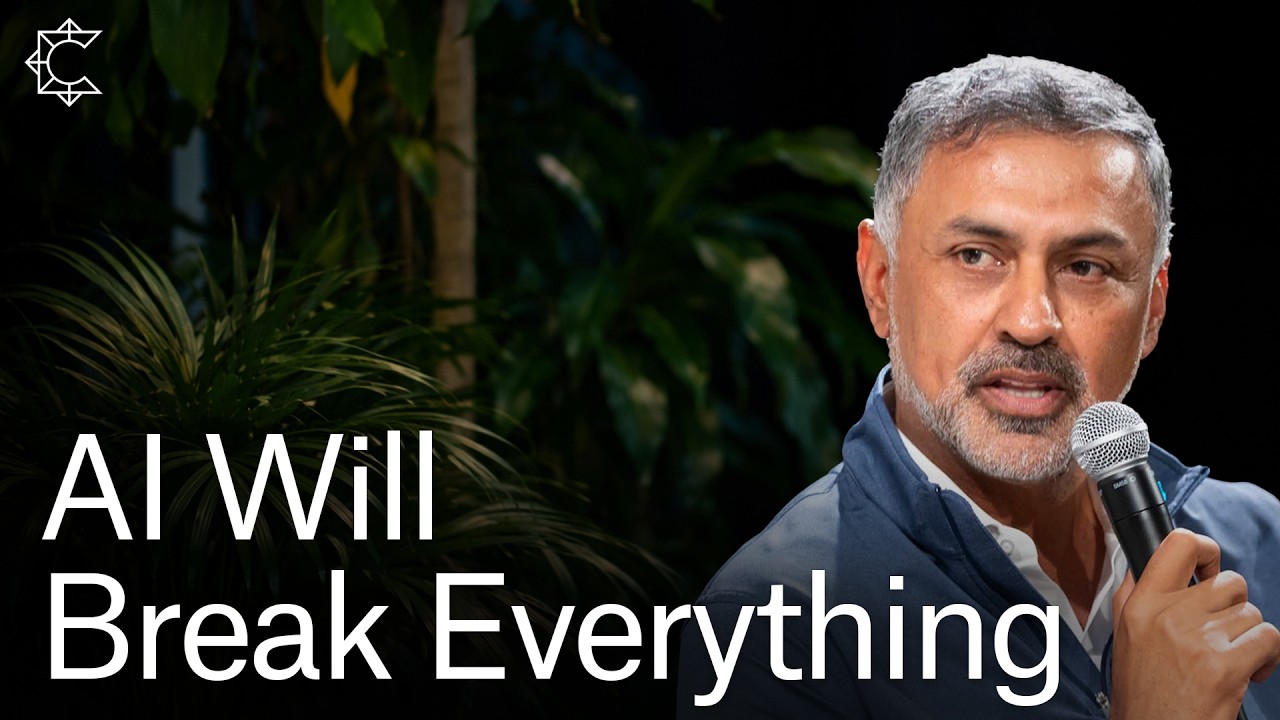
Palo Alto Networks CEO Nikesh Arora warns that AI-generated vulnerabilities will flood the industry in the next 6-12 months, requiring unprecedented patching speed. He describes the company's "Mythos" platform, which can find years of bugs in months, and outlines a strategy built on agentic security, kill-switches, and governance to control emerging AI risks.
Chapters
This might come as news to you, but humans have been writing bad code for a very long time. No company knows how many models they have in place right now. Nobody has any idea how safe those models are, how secure they are, if they have backdoors or not.
Tell us about Mythos.
In every enterprise, you'll find vulnerabilities in vendor-deployed software, custom code, and open source. This thing's gonna find all of them. We will find vulnerabilities which would've taken us 10 years to find in 6 months.
What does it mean to have agentic security when we don't even know what agents are, but all of us are building agents all the time?
In cybersecurity, There's generally 2 modes. One mode is—
Welcome everyone to SPC. Very excited to have all of you here. Obviously very excited to have Nikesh here to tell us about his own -1 journey and also to get a window into what I think are bound to be really interesting times in our industry, but also in cybersecurity in particular. Nikesh, just rewind a little bit. You were telling me before the talk here about some of your kind of incredible kind of like origin story.
I don't know about incredible, but sure.
And I think it was what I found really interesting was the audience at SPC, a lot of them are here trying to figure out what to work on next, trying to figure out kind of that in-between phase that we call -1, how to really, I would say, step on the gas in terms of ambition and find that interesting spot between being patient and impatient and letting in some ways like the bigger idea come to you. So You've had a number of incredible transitions in your own career, right, leading to some incredible opportunities. How have you navigated some of those times? Like, how have you found inspiration? How have you really kind of like taken, in some ways, your time to find like the big thing? Because you have an incredible, I would say, success rate.
Well, first of all, thank you for having me here. Appreciate it. And, thank you all for braving the rain and showing up here. I hope this is useful for you. I think in terms of inspiration and in terms of how to bide your time until the right thing hits you, one of the challenges with extremely smart people is they can apply themselves to any problem and put their heart and soul into it and do a great job for it. Like many people, I'm guessing everybody in this room believes they're smarter than the average person. That's why you're here.
I think everyone.
Okay, well, don't forget that. Eventually, if everybody believes they're smarter than the average, there's a problem. But that's a different mathematical problem. We'll deal with that later. If you were to apply yourself to something and if I said, here are options, 3 options, 1, 2, and 3, you could say, I could do all of them, right? I can start the world's best restaurant, I can start the world's best airline, I can build the best video model with beating Sora, LLMs, et cetera. So the question really becomes is what can you connect with and how tractable the problem is and how patient are you? I think to your point about Patience, impatience. You said earlier when we were talking, there are too many companies being started. I think we sometimes get waylaid or trapped by the idea that somebody else is getting traction so quickly, therefore I must get traction quickly. And then the risk is then you end up building a feature, you end up building a part solution to the problem. You're not solving the real problem. In our times, we can always point to Elon Musk and say, look, He didn't take an easy problem. Said we're going to go to Mars. Sounds like a hard problem. Or he said I'm going to build an electric vehicle or go build an autonomous vehicle or Waymo did that. Those are hard problems. They're 10, 15, 20-year horizon problems requiring tons of capital. And you almost feel like holy shit! How am I going to even get started in that direction and solve something that big? That's at one extreme. And the other extreme, you think there's you can go program something really quickly and in six months you'll have. you know, product market fit, in 12 months you'll have $100 million ARR. So the answer is somewhere in the middle, right? I'm not sure that there's a moat for a company that built $100 million ARR in the first 17 months or 20 months. Maybe that moat may exist, may not exist, may get obliterated by the next person, or maybe it becomes a competitive advantage because you got out first and you captured all the market and that became like, you became the winner in that space.
You know, it's interesting, Nikesh, if I look at, for instance, when you joined Google, it must have been $30 billion in market cap.
$18 billion, but who's counting?
$18 billion, exactly. So it's kind of, you know, it's obviously close to what, $3.5, $4 trillion today, something like that. And then when you joined Palo Alto Networks—
Coincidentally $18 billion.
$18 billion, coincidentally $18 billion on its way to the big one. So in some ways when you joined them they were kind of like a fraction of the size that they were but they had some scale. So were you joining them for what they already had, were you joining them for in some ways the latent potential energy, some combination, and what was your version of patience and impatience kind of as you got to those? Maybe Palo Alto Networks, I think you've talked a little bit about this, you kind of came in as not knowing a ton about cybersecurity. What did you see kind of before you joined?
Well, I think Google, I joined because I needed a job. So, and it turned out into an amazing company and has gone to $4 trillion in market cap or thereabouts. And so there was no more genius. I can, in hindsight, I can justify it. I can tell you all the great things. But at that point in time, I needed to get out there, get myself a real job. And that was a great job I got. And it was amazing. I think it had a market opportunity bigger than most. At that point in time, digital advertising was 2% of advertising. Today, probably 60 to 70% of all advertising. So you could see that there's gonna be huge opportunity. You could see consumption, you could think about commerce, et cetera. And I think we're at the beginning of a similar trend with AI. I think for the next 15 years, every industry will get transformed with AI. So whatever you're thinking of is not big enough. Whatever you're thinking of is too small and too specific. There's tons and tons of opportunity. I think that's the parallel you can draw. I think it just had tremendous amount of tailwinds. And then I think Google's secret sauce is they were able to execute in multiple dimensions across the board. In Palo Alto, similarly, we, when I started, we were 1% market share in our sector. And generally, if it's 1% market share in your sector and your sector's gonna grow at 10% a year for the next foreseeable future, then you have the opportunity getting from 1% to something bigger. And if you do the math of enterprise, for those of you who are interested in enterprise companies, the math of enterprise generally tells you that if you get critical mass, you get escape velocity, you get to be big enough, then you get a field force that is big enough that allows you to have a larger and larger share of wallet of a customer. So we went from 1%, approximately 6 or 7% now, and there's no reason why we shouldn't be 20, 30% market share in our segment. And if that's true, that makes us a much larger business.
Perhaps to come back to Google for a second before we inevitably turn to AI and cybersecurity. It's interesting, I always believe that the best antidote for any kind of organizational problem is winning. If you're winning, it kind of solves and kind of papers over all cracks. And it's often hard to know what an organization is from the outside in. Most of the external narratives, they're not wrong, they're just kind of It's very hard to kind of capture the zeitgeist of a company internally. But if you, from your benefit of kind of the amazing run that you had there, what are some non-obvious, like non kind of externally talked about reasons why Google continued to be so good for so long? Like the longevity in terms of innovation is also quite rare, right? Like oftentimes you can build a good thing, you can milk it for a long time, have a good company, but they kept on building good things. And what lessons can you draw from that for entrepreneurs?
If you abstract and you think about all the companies you admire and, you know, like pick your favorite, whether you like Facebook or you worked there, you worked at Waymo, you worked at Google, or you worked at Tesla, where you did, most companies take on the form of the leader. Think hard. Companies, company culture, especially where there are dominant founders or prominent founders, a lot of the company's values are closely aligned with the way the founder behaves, the founder thinks. And it's normal because you know what? Everybody in the company is trying to impress the founder or their management to try and make them feel that they understand them and they work like them. So over time, the cultural values of companies become very consistent with the founders or CEOs if they're long-tenured CEOs. So in that context, I think what is amazing at Google was Larry was product obsessed and nothing else mattered, right? He said to me, I still remember my first meeting with him when he became CEO, he says, So you run business? I'm like, yeah. He's like, I'm told by the board you're doing a really good job. I had a whole PowerPoint deck ready. I was ready to walk him through all the amazing things we were doing in the team, all 18,000 of us, and flip him through every page in painstaking detail. He didn't want any of it. He's like, you know, I'm sure if I had 2 hours, I could make you do your job 10 or 20% much better. I just don't have 2 hours 'cause I'm too busy doing product. So I just bit my tongue saying, now you let me know when you have 2 hours. So he didn't care about most things other than product because he said no company in tech became great because they had great go-to-market. They became great because they had amazing products. And if you think of the history of technology, a lot of the car wrecks or the mishaps or companies that are no longer relevant, they became irrelevant because their product no longer mattered. And it's blindingly obvious, it stares you in the face. Yet technology company after technology company ends up at a certain point in time just declining and dying because somehow they're trying to do everything else as well as the product part. But your product's commoditized, everybody else has the same product, and somebody else goes out and discovers something amazing. So what Google has consistently done is been able to be really good at great products. And coupled with that, Larry was obsessed with hiring the right people. I remember, I'm trying to think back, I wanna say the first 10,000 or 15,000 employees, Larry read every hiring pack himself and he would throw 10 to 15% of the recommendations out of the window and there was no appeal. You couldn't go back and get the same person hired if Larry rejected that person. And he read every packet to the first 15,000 to 20,000 hires by himself. Eventually he, ran correlation tests with my decisions and other peers of mine. And depending on who had above 95% hit rate, you got the right to hire more people yourself. I hit 98% because we used to model his behavior and then we translate. He's gonna reject these following 5, he's gonna get these 15. Sometimes you could say the 5 that he rejected, we already knew he was going to, but you need these 5 to get the 15. So, but that was him. He was product obsessed. He was obsessed with getting the right people in the company. I think that shows that Google has always been that place. which hired really great people and built really good products. There's, sorry, one last story. There's like—
Please, please.
He went to see Steve Jobs and Steve said to him, Larry, you have one piece of advice for you is focus. Look at us, we focus, we build great products, but we build very few products at one point in time. Larry took the opposite. He says, we're gonna do a lot of them and we're gonna build great products. And remember, even today Gmail does not have, other than the enterprise version, doesn't have consumer monetization except for perhaps paying for storage. Or Google Maps doesn't have that good a monetization model, but they build products, or Google build products without monetization or business in sight. And that's why I said to somebody earlier, it's like the word business does not factor in the brains of some of the most obsessed entrepreneurs. They get obsessed about product. I don't think Elon knew when Tesla was gonna break even. I don't think Travis knew when Uber was gonna break even. So, think about it. These people just burned the ships, went out there and said, I'm gonna build something amazing. And, if I build something amazing, amazing things are gonna happen. I know there's a selection bias in my comment. I'm sure there are other people who tried to do that and they're still at the bottom of the river. That's a whole different conversation, right?
I mean, yeah, for what it's worth, this is the same lesson that a lot of us learned at Facebook, which was that if you build something that it is a sufficiently high number of people signing up, coming back, spending 20 minutes a day, you'll figure out some way to make money from it. And so to this day I probably take this to a fault when an early-stage entrepreneur, seed stage, pre-seed stage is talking about making money or a go-to-market action my only question that's going through my head is who is using it, how much do they want to use it, do they want to use it more tomorrow than they do today and everything else is just premature kind of optimization. So Nikesh perhaps in that same vein of kind of organizations being modeled on their leaders What does Silicon Valley not understand about Masa that you can tell us about? Because I find him to be a fascinating individual that we don't— nobody in Silicon Valley seems to truly deeply understand, I think. So what can we learn as entrepreneurs from him? Because he's kind of like this crazy enigmatic guy who floats in and out of our imagination funding some of our companies and going boom and bust, but eventually doing just fine. So what can we learn from him?
Well, Masa, like you said, is one of the more interesting characters in this space. I think the best way to think about him, and you've probably heard me say this before, first of all, Masa is a romantic. He falls in love as if it's the first time, every time. Well, he falls in love with ideas and then he pursues them to the nth degree. And that's his persistence. But he's one person, I've said this before, so I apologize if you guys have heard this before. As humans, we're conditioned to de-risk our children. Those of you who have children or those of you who were children not too long ago, that sort of must be some 18-year-olds in the room, right? So anyway, so every time I'm saying, look on both sides of the road before you cross the road, or don't do that, you're gonna hurt yourself, Don't carry a knife in your hand like that. Carry it from the other end. So we're constantly, that's all de-risking. It's the protective instincts in us which say, don't take risks because you could hurt yourself. And over time, if you're from my culture or your culture, it's like, oh, it's time, you're 24 years old, you should settle down. What does settle down mean? Get married, have kids, have a house, have a mortgage, buy a car, and don't take too much risk. So—
Yeah.
This is like the whole training is to de-risk yourself. Masa didn't have those kind of parents. The guy swings hard every time. Every time he swings for the fences. He has zero concept of risk management. He's like, Masa, let's just put a billion dollars. Let's put $10 billion. But we don't have it. That's all right. Japanese banks, 0% interest rates. No problem. We'll borrow. All right? So that's him.
You know, it's incredible because the conditioning runs so deep. I look back, at least at my own life. And I'm like, man, I wouldn't— I don't know if I would tell my kids to do the kind of things that I did, because now looking back, it's just like batshit crazy, right? Like, take on as much risk as—
but you did managed risk.
I'll tell you something.
Where did you go to school?
Uh, CMU.
Okay, that sounds like an average institution.
Yeah, you know, top 3 in the world, as they say.
Ah, there we go. See, he didn't— he did not take risk. He went to the top 3. Why would he go to a Country bumpkin school like me.
Well, you know, my mom and dad went to your school. So just saying, okay.
Like I said, country bumpkin school.
Exactly. But I don't know, it's interesting. So do you think the lesson that you're trying to tell entrepreneurs is they should maximize risk? They need to, right?
I've never met a successful entrepreneur who wished they hadn't taken more risk Not given as much equity to the VC and held out longer. So you have to play to win. If you're not gonna play to win, don't do this because nobody walks out saying, I am going to manage the fact that I could fail. Everybody in the room who starts a company, everybody in the world who starts a company plays to win. If you're gonna play to win, go to the end of it as long as it's above board and legal.
So you spend a couple years at SoftBank and then you move on to— Palo Alto Networks. How do you assume moral authority of a company when you're not kind of the founder, especially Palo Alto Networks, which is a pretty product-driven company? So how do you come in as a business guy and assume like moral authority and not make it into a straight-up go-to-market machine?
You know, there is a fallacy which is true at Google. Sometimes I get— people get confused. I went to engineering school like the rest of you guys.
Had a bit of country bumpkin school.
Exactly right. Yeah, exactly. Yeah. So the fact that you can be good in market doesn't mean you don't have engineering savvy. So you have to walk in with engineering savvy. But the first 6 months were terrifying. I walked into a domain, I thought cybersecurity were 2 different words. Now we write it as one word. So that's how much I knew about it. And I said to the board, you're hiring me, I wonder what the spec looked like. So you wanna hire a guy who never sold enterprise, who doesn't understand cybersecurity, never ran a public company. Let's make him the CEO of a public company. That sounds like a really good board.
Great fiduciary responsibility.
Yeah, exactly.
Yeah.
Fiduciary responsibility, well executed. So look, the first 6 months is like full-on imposter syndrome. Like I was there, I don't understand cybersecurity. I'm trying to make decisions and tell 5,600 people what to do. I always contend you bring half your— you're really good at certain things. That's half the job. You bring them with you. The other half you learn on the job. If every job we knew 100%, then A, nobody else would get a new job in their life because you'd need to have 100% experience. And B, it'd be boring as shit. So true. So I walked in. I used to call the founder either in the morning on my way in, ask him all the questions that people had poison me with in the night. And then in the evening I'd call the head of product and ask him a lot of questions. So those 2 were my sort of technical crutches. Even today I call one of them because anytime I'm confused. So I don't have to be a technical expert to know all the inner workings. I have to know enough to know which bets are gonna work. Because I was joking this morning with somebody that they asked me, how do I allocate my time? I actually don't have a job. Everything that happens in my company, somebody else has a real job with a title which says this is what they do. I'm not the chief product officer, I'm not the CFO, I'm not the chief marketing officer, I'm not the chief legal counsel. I have people who do all these things. So my job is to constantly flit about, prioritize, think about long-term strategy, help them jump in and execute in certain areas. But my job is also to make sure the right people are in the right place. So that's what I did. I did that at Google for 10 years. I've done that here for 8 years now.
It's been 8 years?
Mm-hmm, almost.
That's been interesting. So 8 years, obviously we had kind of the ChatGPT moment coming up on 4 years now. So what was the overall AI slash— obviously you guys had a ton of machine learning at Palo Alto Networks, it was a key part of your overall kind of technology stack. What was your AI posture like prior to kind of generative AI coming into the larger consciousness? Was that something you were working on in a more research setting?
Mostly it was machine learning.
Okay.
I think, you know—
Can you talk a little bit about your stack there?
So what's fascinating is I still believe that many labs, whether it's Google or perhaps, I don't know if Meta or not, but other labs, many labs had the capabilities that ChatGPT had when it came out. I think most of them didn't believe this was a real product because it was hallucinating 20 to 30% of the time. How could you make something useful come out of it? I think they didn't anticipate or understand the consumer use case where we as consumers would make our own judgment and we could tell how much of that was hallucination. In some cases we didn't care because writing a Shakespeare sonnet in Eminem style is cool. It doesn't matter if it's right or wrong. And they didn't quite understand the value of that product. And I think that's what Sam Altman did with OpenAI. With ChatGPT and came out and that's kind of flipped the bit. And that is why we're all here trying to start companies as quickly as we can. I think that's kind of what gave the impetus to generative AI at least. Until then, because of the hallucinatory nature or the non-deterministic outcomes, none of us in real business applications were comfortable deploying that technology where we couldn't predict what it was gonna do. I think subsequently, Everyone is gingerly, at least I'll call it the incumbents, which are us versus the new companies you guys are gonna build. All of us are gingerly infusing LLMs into certain use cases where we believe they'll do a better job than what we were using in the past. Perhaps not as much as we need to. I think all of us are slowly rethinking workflows in businesses to see how business is gonna be conducted in the future. And in the short term, it's slow going. I do believe longer term it's gonna get better and probably more than any of us can imagine.
Perhaps I'm giving you a layup here, but obviously, you know, we'll talk about Mythos in a second, which I think that the cybersecurity positioning as it relates to AI has dramatically changed over the last even just 3 or 4 weeks. But prior to that, How much of a tailwind was kind of essentially generative AI to your business or even to your technology stack? Like, was it fundamentally changing both what you were doing, how you were doing it, and in some ways how you were able to charge for it?
What's fascinating is in our industry, in cybersecurity, we have to think one step ahead of the technology adoption curve. Because if when ChatGPT comes around or LLMs come around, we're trying to figure out, well, how are people gonna use models? How many models on average are they gonna use? How are you gonna inspect the traffic of the models? There is prompt injection. There's data poisoning. There's all kinds of bad techniques that are out there, or bad actor techniques that are out there that will be used to take over, hijack these models.
Mm-hmm.
Given their learning mode, their non-deterministic mode, their bidirectional traffic mode, whole bunch of new cyber capabilities have to be built to deploy them well. So we were constantly trying to figure out how this thing's gonna work. And then you throw agents on top of that, then you throw these MCP servers on top of that. None of these things have security built in, right? You told me about OpenClaw trying to deploy it.
Oh my God, yeah. It's a nightmare. Terrifying, yeah.
Yeah, so, and I made the joke, TSA was not invented when they made planes, just FYI. You guys might think so, you know? When they made planes, they were just trying to get from one place to the other and there was no TSA. TSA came about much more recently in our lives. So security is very often an afterthought because you suddenly discover the bad actor can use them for bad things. So in our job, we are supposed to make sure that we anticipate the bad actor's behaviors build technology in anticipation of how you're gonna deploy it, right? Most recently, a large company got hacked. Many large companies got hacked because one of their agents got compromised. Now they wanna put security for agents all over the place. I'll tell you what, half the people are still struggling on the definition of an agent, let alone agentic AI security. What is an agent? We can have that debate afterwards on coffee. But so there's so much stuff that's gonna happen. So we're constantly busy trying to figure out how to build the scaffolding, how to build the control points, how to build the kill switches, for when AI goes rogue, which it will, it has, and will continue to do so for long. So we're busy fixing that stuff.
I mean, it's crazy, right? Even before you look at— and again, we'll get to Mythos in a second. To your point, all of these new parts of the stack that have been introduced over the last 3 or 4 years, they have zero security in them. And arguably we haven't even seen like— perhaps you have seen it, but we haven't seen a major attack through one of those kind of vectors, whether it be an unsecured MCP server, kind of a weird prompt injection attack through a model. We are hardening ourselves against all of that. And then we'll obviously get to these new coding models getting to the point where Mythos is exposing a huge class of vulnerabilities. So does that mean I need to go out and buy like some Palo Alto Networks stock?
Well, you can do whatever you want. It's for sale. That's what I'm told. But before we get there, look, every new technology when it comes about without security by design, there's tons and tons of different sort of places that today there is no secure version of MCPs. And I read yesterday or 2 days ago that Salesforce went headless. Well, I don't know what the security governance controls are because not too long ago one of their marketplace apps had gotten hacked and a whole bunch of companies had to go deal with that.
Yeah.
Now just imagine you're gonna be running agents talking to Salesforce agents, there's all kinds of stuff going on. There's no authentication. No company knows how many models they have in place right now. On average, if you go to Hugging Face, that people are downloading a million models a day or a million downloads a day, they're going to some enterprise environment. Nobody has any idea how safe those models are, how secure they are, if they have backdoors or not, whether there's a backdoor connection that is sleeping that opens up 3 months later. You don't know. You have no idea what's in the model behind it. So there's tons and tons of security vulnerabilities as it's related to AI implementations. There will be tons and tons of debate, discussion, and I don't think there's a standard architecture to deploy agents. If I asked you, you work for enterprise, or how do you create an inventory of all agents that you have? The answer is, I don't know. That's a great place for us, by the way. If anytime customers say, I don't know, that's when we show them, this is how it's going to work.
Yeah, let me tell you.
Let me tell you. Yes, exactly. So look, we're busy trying to figure out how agentic security is going to work, right? How are you going to have control How are you gonna have governance? How are you gonna have the ability to intercept? So in cybersecurity, there's generally 2 modes. One mode is, I know it's bad, I stop it. That typically happens when you click on a bad URL or you go to a bad domain. I can sit in the endpoint, see those bad things, and stop 'em. The problem is never the known bad. The problem is the unknown bad. Approximately 50% of the stuff that gets through your sensors in the endpoint looks like legitimate traffic. It reconstitutes inside, and then bad things happen. Or it's misconfigurations, vulnerabilities in your code, whole bunch of stuff which humans create. So the entire challenge of cybersecurity is how quickly can I find it? How quickly can I plug it? Or how quickly can I block it? Or how quickly can I detect it and remediate it?
Mm-hmm.
That's where all of cybersecurity, that's where $350 billion a year is spent, right? So what AI is gonna do is gonna expose those vulnerabilities faster, make them exploitable faster, hopefully allow us to patch them and find them faster as well.
So it's interesting. So are you— do you find yourself in a somewhat more unique position, Nikesh? Because to your point—
My parents have always said that.
Yeah, you're a unique guy.
Everybody's parents have said that to them. Yes, so I do.
Because this stuff is changing so quickly, in some ways, does Palo Alto Networks have to also educate all of us in terms of how— like, what does it mean to have agentic security when we don't even know what agents are, but all of us are building agents all the time? So how are we all going to figure this out in real time? And does, like, you have the leading security company now, like, are you supposed to be in some ways leading from the front, or are you trying to take a slightly more like, let's wait and see approach?
No, no, we can't. We can't afford to take a wait and see. Look, people expect us to have an answer. So we did. We've made 3 acquisitions in AI security. We built 2 or 3 of our own native products. We have obviously transformed some existing products. So we can sit in your cloud instance, and intercept and monitor all traffic.
Okay.
That goes east-west traffic into your cloud instance, we can sit and monitor it. That allows us to have a control plane that allows us to intercept based on policies and bunch of rules and bunch of known techniques. So we can do that today. So typically the right answer is, and we have one of our companies we bought, HackerOne, which used to rate and understand models. So they have full pen testing capabilities and model vulnerability understanding capabilities. So we have enough, sort of meet around what AI security is gonna look like. The next place is agents. We're gonna— we already made an announcement at RSA, not far from here, a few weeks ago about having an agentic gateway. The first thing you need to understand agents, I need to be able to send all the agent traffic to one place.
Totally.
If I don't understand all the agent traffic, I don't understand their authentication, their governance, validation, and control. So this stuff we're building on the fly. Typically all of our partnerships are part design partnerships because customers are deploying it differently. It's the Wild West out there, right? And everybody who was selling technology transformation now selling AI transformation. I don't know how we have more AI transformation consultants in the world than AI people developing it. 100%.
Yeah. But they're out there. So tell us about Mythos. Tell us about kind of like the— how do you unpack this thing that's happening in real time that obviously kind of has a potential national security aspect to it? But how do we as an industry reason through the capabilities and what seem to be like real security threats to critical parts of infrastructure? So what role are you playing in it? And how do we need, perhaps like as an early-stage founder, how do we need to be integrating the capabilities into our thinking about what we are building?
Okay, first of all, this might come as news to you, But humans have been writing bad code for a very long time. Just saying.
Not mine, but okay.
Yes, sorry, just saying. It's never yours, but just saying there's tons of vulnerabilities out there in the world. Now, without specifically talking about Mythos, but abstracting it so you can understand in a broader context, if you believe in the last 18 months an LLM has gotten really good at coding, 90% use cases. Guess what? The corollary to that is also understands how to find bad code and analyze it. It's actually possibly better at understanding bad code than creating perfect code in the first instance, right? It's always easier to criticize than construct.
Yep.
So, so it probably finds bad code faster. You believe that it will. Now, if you believe that bad code comes in various flavors, It comes in open source. Let's park that one side. So find vulnerabilities in open source. It comes in proprietary code written by me or my company, whatever my company is. That's fine too. Then it comes in a flavor, bad code written by other software companies selling you their software. So typically in every enterprise, you'll find vulnerabilities in vendor-deployed software, custom code, and open source. This thing's gonna find all of them.
Right.
And I don't think it's about a point in time in which it was. It is a future state, a future state where almost every open source model in the next 3 to 6 months, worth its salt, will have similar capabilities. Because as coding becomes real, as training data becomes more available, you would expect that it should be able to do that. So that's kind of point number 1. Point number 2, if pointed at your infrastructure, it will swiftly find misconfigurations and doors that have been left open. So it's a deployment question, it's not a vulnerability question. It says you deployed it wrong, you left the door open, I'm coming in. It's going to find misconfigurations much faster than humans have ever done in the past and humans have bothered to fix in the past. And last but not the least, if you expand the horizon of a model, which I'm told is the LLM provider's choice, they can have short windows and short memory or long memory. Long memory is extremely expensive to run, so it runs in beta, doesn't and get productionized yet. But if you expand the window, it is gonna reason and concatenate a bunch of these vulnerabilities and define attack path. 'Cause you would expect over time, most models will have all 3 of these capabilities. So what that does as a corollary is that in the next 6 to 12 months, there is a reasonable probability that we will find vulnerabilities which would've taken us 10 years to find in 6 months. which becomes a problem. You have to fix them as quickly as possible because they become all points of intrusion or points of vulnerability from a nation-state perspective, bad actor perspective. So that's what we're gonna be faced with the next 6 months. That's what this whole trend is going to prove, and that's what we're gonna have to go contend with.
But isn't then, it's really hard to fix code, especially if it's in the guts of some of our deeper parts of our stack, if it's been a networking stack, core OS stack, Even after you fix it, how do you actually deploy it? Which is—
SaaS is easy, right? If it's SaaS software, then you do it. If it's on device or something, it takes much longer as you have to deploy a patch. There are industry practices. The only challenge is imagine an IT department which is doing 3 patches a week suddenly has to do 300 patches a week. This is a problem. So the next 3 to 6 months, there's gonna be a bit of a shit show around the topic, but I'm more optimistic. We'll power through it. One of the things we have, You can imagine the same model that's gonna find the vulnerability is most likely going to be able to build a patch.
I was gonna say, yeah.
So you will be able to patch, you will be able to build the patch files. You still have to go test it, run a human eval against it to make sure it's the right answer. You also have to see it doesn't cause any collateral damage, right? If you change a piece of code, the Claude code may not have enough context to understand what it interfaces with. It might fix that particular part of code, but you have to understand the entire environmental context to be able to solve it. So it's a tractable problem. It just requires a lot of resource, a lot of work that needs to have in the next 6 months.
Sounds like— but then even in an optimistic scenario, doesn't it sound like we're going to have to be a little bit on lockdown over the next 6 to 12 months? Maybe lockdown is too strong a word, but certainly—
Just have to work hard.
Just have to work hard.
Just have to work hard. There's no lockdown. Like, we went through a pandemic, we went through Y2K. For those of you in technology, we've figured it out. This is not a hard problem. It's just a lot of work.
It's going to be a lot of work. So, but coming back to something that you said, is it Feasible that the only way to really, in some ways, not avert— sorry, the only way to deal with the volume of changes we will need to make is through AI itself? Sure.
Look, I think your question you asked is how should people in this room think about it? You guys are blessed. You're gonna build new stacks. This is great. And you're gonna see the problem in front. So you'll know what the new world of open source is gonna look like when all these vulnerabilities come to bear. What is a new process for open source? How are we gonna make sure that open source gets patched quickly? How are we gonna make sure there's certified artifacts that you can use, et cetera, et cetera? Hopefully that paves a new way for this to happen. There's going to be a little bumpy ride for a short period of time, but I think we're going to power through it.
So your take is that probably there's about 3, 4, 6 months maybe before this becomes essentially the capabilities that Mythos has. Everybody's catching up quite quickly.
Yeah, no, look, the capabilities will happen. I think the challenge will be some technology infrastructures are not as nimble in their ability to upgrade patch. There's tons of regulated industry. They have to go through a bunch of other hoops. So that's where the challenge is going to be.
For sure.
I don't think the challenge will be in the mainstream. It will be in then the edge case problem, right? There's a physician's office in Nebraska which is using some piece of SaaS software, and the guys wrote it 15 years ago, and the guy's gone. Nobody knows how to patch it. Those are the edge cases you're going to find. Those have to be fixed, or people have to go through a technology refresh cycle of some sort.
I'm curious, Nikesh, is there a larger lesson to be taken away for like the broader applicability of these GenAI models as we use them in more areas, maybe self-driving, maybe some other areas, I'm not just talking about the security implications, but we clearly have entered an interesting loop where it's able to do things that we are not able to obviously do at human levels. And then we're coming up with reactive ways of kind of essentially reacting as an industry. So do you anticipate similar meta arcs, like perhaps in medicine, perhaps in— self-driving cars. Do you think that this will be a more common pattern that this AI is now able to do a bunch of things that we need to figure out very quickly how to react to?
Yeah, so let's abstract that for a second. So in 2004, when I was selling Google Search, the big promise was the democratization of information. Now everybody, a farmer in India, somebody in Nigeria, we all have access to the same information because traditionally, historically, information was power, right? The priests had more information, the Brahmins had more information. So you actually, the ability for you to have information allowed you to be smarter, act, arbitrage, all kinds of stuff. And the big aha was the internet is about everybody has access to the same information. You can't arbitrage information. If you abstract that notion, what AI allows you to do when it'll get into version 3 or version 4 in the next year, 2 years, 3 years, is the democratization of intelligence, which is much more profound. And perhaps depending on which side you look at it, glass half full or half empty, it's a much more optimistic or scary scenario. And what I mean by that is today in any function, if I hire 1,000 people, I am captive to the intelligence of each of those 1,000 people to create the right outcome. I have a bunch of processes to train people, see if all 1,000 can perform at peak capacity to get the same outcome, whether it's in customer support, marketing, finance, right? My weakest link is the least smartest person in that cohort doing the same thing. If I can make that average 95% and I get all 1,000 people to perform at the 95th percentile, I have a winning proposition. Now AI's gonna do that, right? That if you actually get your model to work right, every one of the 1,000 people using version of a Copilot or an agent which does the work is now of a higher intellectual capacity to perform the task, which means the output is gonna be that much better, which means I don't need so many humans of varied capability to get that done. I probably need 10 experts and 90 agents to create the same outcome. So that's the transformation we're getting to. If you can apply that mental model to any function, any industry, any job, that is a transformation we're going to go through in the next 10 years. And that's the bigger prize, right? The bigger prize is not building a small piece of functionality which is incremental from what we do today because the models hallucinate and I can't go all the way. The idea is to go think about that 5 years out or 10 years out and say, if I built this, those 5,000 people who do this thing, I can do the work of 5,000 people with 10. It's not a labor argument, it's more of an quality of output, speed of output, efficiency of output, and the higher capacity that you have, that becomes the opportunity.
Nikesh, you were talking earlier about some of the parallels between Google Search and kind of today's foundation model ecosystem and how everyone was saying search, one search engine would subsume kind of all of the functionality. And could you perhaps expand on that for this room? Like, how should one think about Which of the things that I might build will be subsumed by kind of the larger foundation models versus what seemed to be good secular in some ways, like perhaps at least not immediately in the eye of Sauron kind of product ideas?
Great question. So 2.5 years ago when LLMs came about and all of us, people chasing the idea of AI trying to figure out what the hell should we do, there's this whole debate around, oh great. If you remember the early announcements, a company says, we're building our own model. Remember the announcements of smart companies? I'm gonna build my own model. So I was like, come on, I'm unique, like you just told me.
Exactly.
I gotta have my own model. So I went off to Google, my friends there, and said, hey guys, do you think we should have our own cybersecurity model? And that was kind of an interesting debate I had with Sundar and Thomas Kurian. I walked away from that conversation figuring out that at least in my domain, the model was not gonna be better than the super brain they were gonna build as the big LLM, whether you wanna call it Gemini or Opus 4.7 or pick your favorite, you know, whichever one your fancy is. But it came to the conclusion I will never have the amount of compute training capability that I need to build my own model. Well, that was my conclusion at that point in time. That doesn't mean there may not be specialized models in the future or specialized stacks perhaps. I don't want to call them just models. I think models are part of the stack. As we all discovered, there comes training data, vector DBs, et cetera. So you guys know better. I think there will be specialized stacks for certain tasks. And the parallel I would draw is when we were at Google doing Google Search, there was a debate. Should we have Google Local be its own stack and own model? Should we have Google Maps have its own stack, own model? And Google over-indexed on the universal search box and said every search has to be done there, whether it's a commerce search, finance search, map search. Now you have to decide the trade-offs, right? If I put everything there, it doesn't lend itself to a specialized solution. I think the areas where specialized solutions won, where you needed incremental domain expertise, domain data, domain connections, and domain APIs, and to the extent of domain fulfillment, We take e-commerce. Amazon built a better stack, but Google Search couldn't be the better e-commerce engine because we didn't have the domain data, we didn't have the fulfillment, we didn't have the payment capability that Amazon had. Or take Expedia, right? Google stopped at giving you lead gen. They didn't close the transaction because it would've been competitive, that certain segment. So, or take OpenTable's the world. So there were people who built specialized stacks, for lack of a better word, using the same idea and same technology. without being beholden to the overall universal model. And that's where you have to decide where do you expect the models have so much more incremental capability that your specialized stack will not be able to differentiate versus where can you build a deeper stack where you can differentiate from the model, which usually means proprietary data, usually means proprietary connections, proprietary network effects, and proprietary fulfillment, if that makes any sense.
It makes complete sense. You know, you, you're pretty intense, you're pretty direct, you wear that on your sleeve, which I really admire. I also, you know, I was in my, in my research, it sounds like you do Zoom calls with like 50 random employees at Palo Alto Networks.
Yes.
What do you hope to learn from that? Like, what's, what's the goal there?
You know, if you think about any system at scale, we have 20,000 employees. If a system at scale has to produce output, You have to make sure that the last person in the chain understands why they're doing, and they can make a decision on their own accord as long as they understand the why of it, not the what of it. And at that scale, 30% of your job becomes communication. Like, I can sit here and discuss Mythos. The question is, can 20,000 people at Palo Alto discuss Mythos? Now the problem is I get smarter every time I talk to my head of product, I talk to my, you know, head of incident response, I talk to somebody in Dario's team, I talk to Sam, I get smarter every time they tell me stuff. The problem is the more I hoard it, the less the 20,000th employee knows about it, the less likely they will be able to do it as well as I wanna do it. So you discover when you're running a scale organization, communication becomes 30% of your job. So, So part of my— when I started the pandemic, to be honest, I started that because people were nervous. They don't know if they have a job or not. I didn't know what the problems were, so I was talking with them. And then it just continued. I've been through 7,000 to 8,000 people by now. But I learned when they tell me, I just ask them, what's going really well? What do you wish you knew more? What do you do differently? And then you end up chatting with these people. They tell you all kinds of stuff. They discover, sometimes discover, wow, we have that function at Palo Alto. Oh my God, this is what they do over there? Why do we do that? So I come back and say, holy shit, why are we doing it this way? So I just learn how people implement things. Not always do they end up being happy things. They end up being not so happy for some people in the end. So that goes back to the intensity part of it. But I just learn so much more. Otherwise, I can get sort of, you know, protected by 10 people who sit around my table and tell me what I want to hear.
You know, you also are very active in the kind of startup ecosystem. What are you looking for when you talk to a founder? Like within the first kind of 5, 10 minutes when, you know, early stage, it's all about just the founder more or less. What are you looking for?
I just spoke to 10 of your friends, so be careful. Be careful. It's— the question becomes, look, we all have our mental models. I'm not sure right or wrong. There are many—
What's your mental model?
Many companies I wish I had invested in which I was like, it's never going to work, so don't think I have the magic sort of answer. You do your thing. Depending on how early you're looking at it, I have never met a company succeed whose CEO or founder wasn't intense. So I'm perfectly fine being intense, right? The biggest challenge in life, remember, is when I had my first job, is when you get promoted, you get promoted for doing a great job, which means everything you did was great, hence you're promoted. Then you now have 3 more people working for you. Then your job is to understand how to get those 3 people to be as effective and efficient as you. So you say, oh, now it's not just me. Now we're 3.5 together because I'm managing 3 to a higher quality. When that gets to 20,000, it becomes a bigger problem. So the question is, which one of these founders is likely to scale to 10, 20, 30, 40 people? Because the first failure point is you get a genius who's not able to execute with 10 more people to that effect. And then it's not just about how smart they are. It's about being able to extract the best out of the 10 people, which is a different problem, right? 10 of us can go build a bridge tomorrow. That's one bridge. Can 10 of us build a business that builds bridges? That's a different story. And you can pick up your analogy, whatever analogy you want for that. So I think part of it is the founder's passion, their ability to understand it, their ability to execute. I'm a sucker for hard problems and big problems.
Yeah.
I am not into features and incrementality. My eyes gloss over and you'll know before the meeting is over that I didn't get it. Or this is usually what they tell me, you didn't get it, because never that they don't have a good idea. I didn't get it, which is fine. I'm perfectly fine with that. So that's usually where it goes. I still, my share of hits and misses in that bucket.
No, I actually really like that answer because I think that's not one that most early stage investors at least talk about. Like we often are talking about core things that are around depth, clarity, creativity, but not about what will their ability to lead a team at even not forget 20,000, but even like 20 people. That's not a common, I would say, vector of evaluation that I see very often. So I appreciate that answer actually.
Look, as I usually say this in not-for-profit context, but it's true in startup context, I never met bad ideas really, often met bad execution.
Yeah, sure.
So everybody has a reasonable idea and if they pressure test it well enough and they talk to enough people, The ideas are reasonably good. The challenge is almost all of you will pivot multiple times in your startup journey.
At least, yeah.
At least multiple times, if not the whole idea, different parts of the idea. So you have to understand, do you have the intellectual capacity and the humility to understand when to pivot as opposed to get dogged about something saying, I'm gonna prove the world wrong, which is fine. There are times to do that and times to go pivot because It's not gonna work your way. So I think you have to make sure when's the right time to pivot, have the humility, have the confidence. You know, I have seen founders who, I've seen them in venture situations where they take, I've sat on boards where they take too much advice of VCs. I'm like, holy shit, this is a bad idea. Those guys have no idea what you're, like if they knew enough, they should be building your company.
100%.
So I always find it dangerous. So there's this fine line between understanding good advice and taking it and taking into consideration versus listening to VCs or ignoring all the advice you get.
I mean, I actually would go further. Like, I think it's a pretty bad signal when the founders are just doing exactly what the set of partners at SPC tell them, because that's an indication that the founder—
You would never tell them that.
I would never tell them that. Exactly. But I think the reality is that as a founder, you want to take in all the information and integrate it into your model and then make a decision that you can justify kind of like based on the inputs that you have. And every VC's job is to sound super confident even if they don't actually—
So is every founder's by the way.
I know, I know.
You guys are connected on that one.
That's fair enough. I think we're out of time. I wanted to thank you for being direct and honest as always and I think really inspiring a bunch of us about so much of our talk on a day-to-day basis is just about what these models can do today. But I think what you're really showing is what are the second-order effects, so what like we will have to build as an industry. So thank you for your leadership and thank you for coming in here and talking to us.
Thank you for having me. Good luck, everyone.
More from Nikesh

Nikesh Arora on the Frontier Model Problem: Breadth vs Depth | The Future of Token Costs


Nikesh Arora: AI Is Moving Faster Than Our Intuition | India AI Impact Summit 2026


From Ghaziabad to Silicon Valley: Nikhil Kamath x Nikesh Arora | People by WTF | Ep. 11

