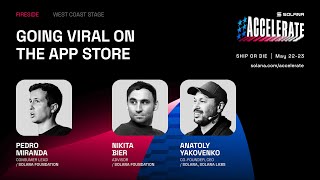
In this Solana‑focused panel, moderator Pedro Miranda interviews Solana Mobile co‑founder Anna Tolle, Solana founder Anatoly Yakovenko, and growth advisor Nikita Bier about the latest Solana Mobile announcements and how to achieve viral adoption of crypto products on mobile. The conversation opens with news that the Seeker phone will ship on August 4, the introduction of a new security architecture called TPIN, and the release of the Solana Mobile software stack for third‑party OEMs. Yakovenko explains his hardware background, the vision of a "cryptophone" that combines cold‑storage‑grade security with the seamless UX of Apple Pay, and how TPIN could replace App Store‑controlled key signing with blockchain‑based math. Bier highlights the App Store as the biggest friction point for crypto developers, the potential of micro‑transactions to curb spam, and the need for wallet interactions to be embedded directly in mobile experiences. The panel discusses why now is the right moment: commoditized phone manufacturing, broader crypto user base from meme‑coins and trading, and recent softening of App Store policies toward crypto apps. They compare virality in Web2 (TikTok, BeReal) with crypto, noting that token‑driven content (e.g., Believe app, Pump Fun) creates a different viral flywheel, and stress the importance of curation to surface genuine signals amid token spam. Finally, Bier outlines a wish‑list for builders: creator‑token frameworks, tokenized public equities or hedge‑fund‑style products, live‑stream monetization, and cautious approaches to token‑per‑post models. The session ends with a call to action for developers to experiment with these concepts.
Chapters
Good morning. How's everyone doing today? Super excited for this talk today. As you know our amazing MC mentioned, my name is Pedro Miranda, formerly lead the consumer growth team at the Solana Foundation. We have Anna Tolle here, the co founder of Solana Solana Labs and now focusing on Solana Mobile. And as Eno mentioned, first time I think publicly, Nikita, that you're here representing the Solana foundation in advisory capacity. Nikita, you're one of the most in demand experts on the growth and the consumer side. So we're extremely excited to talk about, you know, how to go viral in this new digital age. But first we have some, some news this week from Solana Mobile. A few things that you all announced when mobile. You guys actually answered that. So August 4th is the shipping date for the new seeker Solana mobile phone. You announced a net new native asset.
It boots up.
That's awesome. In the ecosystem you announced a new security architecture called tpin. Maybe we'll get into that. What, what that actually is. And my personal favorite, you also announced that the Solana Mobile software stack is available for other OEMs and hardware manufacturers. So I guess Toli, we'll tee it off to you. What does the new news mean for users and mobile app builders in the Solana ecosystem and beyond?
So I don't know if I'm cursed, but I love hardware. I spend most of my career at Qualcomm. So I was there during kind of the initial mobile boom in the early aughts. You know, I was working on these two megabyte devices and I saw the transition from that, those flip phones to iPhone that was really kind of like, you know, I think one of the most exciting times in tech because in my view a phone is almost like the final form of what a computer should look like. I don't think in 100 years this is going to change. I think we'll still be holding little slabs of computing devices with a touchscreen that give us information. Maybe they'll be a lot cooler, but I think it'll basically still look like this. So I really want to work on these devices and build something awesome. And when I started crypto and got into it just of how these devices are manufactured, it was immediately obvious to me that you have secure element and secure enclave and all the properties that you want out of a wallet already baked into the existing technologies that people like Qualcomm and Apple were shipping. We just need the software to expose it. So this is where that idea kind of warmed itself into my brain. We need A cryptophone. That was 2017, 2018. And years later, when Solana finally got big enough to where we have folks like Pedro doing all the work, I have the time to go work on this. That's where Seeker came from, it's where Saga came from. And what's cool, we can basically have hardware level like cold storage security on a device that you use as a hot wallet, your daily driver, your daily signing device with the UX of Apple Pay, so we can give developers this really, really nice conversion flow that you get on Apple and normal mobile devices. But it's crypto. And I think this is one of the biggest UX challenges in crypto to onboarding people is how do you get them to spend money? And if they have to go switch to a wallet, load like a wallet specific web app and all this stuff, sure, Nikita can tell you the conversion rates are just dropping. Like every one of these like little UX friction points, you lose 10, 20% of your customers. So until the UX is as good as Apple Pay, there's no way we can actually get crypto fully adopted. And crypto is all about removing intermediaries. How do we remove the people in the middle and replace them with math? So tpin is that if you think about it, that little piece of hardware also determines what the entire operating system that boots up on your iPhone because of that little piece of hardware and the math that signs the certificate for the operating system. This is how Apple can actually enforce 30% fees in their App Store. This is why Epic can't sideload an app on the iPhone. They can't bypass that store and the rules that they want to enforce. And this is all because of the keys that Apple, the corporation controls. But those keys are just math. We can put that math on a blockchain and we can create a full loop that's cryptographically secured between the user that holds the Seeker token and the wishes that they want to express in the rules in the App Store without any intermediaries. You don't have to rely on any people to actually enforce those. It can all be done with math. That's the exciting part. It's kind of a classic protocol Rube Goldberg machine, but it is purely just math and a bit of silicon.
So a lot of mentions in terms of the ui, UX challenges and whatnot. Nikita, I'm curious, how does this sound to you as someone focused on virality and product growth?
Well, as a developer, if you're a mobile developer, your biggest existential risk is, is the App Store. And it's particularly acute for crypto companies because they get the bulk of the rejections. Any developer who gets that email from Apple that says your app's been rejected, it's kind of like your heart skips a beat, you're like, is this the end of my company? So I think on the developer side this is a huge opportunity. I think the other side is the ability to do microtransactions passively potentially. As we've all seen, all social networks are now flooded with spam. So the ability to charge for posts in a small way to prevent spam bots flooding your X replies with LLM generated responses, I think those types of UXs will be really kind conducive to the next 10 years. The hop from your app to Phantom is like probably the biggest cognitive load ever. Like what is signing this certificate, approving this transaction, if that can be seamlessly happening inside of these mobile experiences, I think that's going to have better conversion rates but also unlock whole new business models, I guess. Yeah.
I've been wondering, as you all have have been speaking, what makes this the right time to bet on this type of product experience? Like why now? Is it the regulatory environment? Is it that the product embedded wallet infrastructure has gotten better? I'm curious about your answer to why now, Nikita.
I think there's going to be challenges certainly because the reason people come to the App Store is the dist. But I think crypto Solana has expanded its reach with Meme coins and there's more people, more people have wallets now because of trading with Moonshot. And so I think there's an opportunity where users want this and if all social networks are going to be flooded with spam and this is one of the vehicles to stop it, I think there will be some, there'll be experiences that might not even be possible on iOS or Android.
Toli, I'm curious your thoughts. You mentioned this journey from 2017 onwards and your love of hardware, but what's your answer to why now in terms of making this investment in this bet?
I honestly don't think founders think about like timing. They just get the bug and then they try to build stuff. So there wasn't like a is this the right time in the market? It's just none of those thoughts like actually crossed my mind. It was more I have a chance to go build this thing that I think should exist in the world and then you, you know, work your ass off to try to make it true. And it is like basically then up to the gods if the timing worked out or not. Which is why you see a lot of things launch too early and fail. So I think that part is really hard to predict. I think why now is because, well, like why, why we were able to succeed in actually building a phone is because manufacturing for phones has kind of become commoditized. There's the supply chains, all the technologies, the materials to get to something that looks and feels as good as an iPhone have basically all been commoditized and accessible to people outside of Apple. To like any engineer can kind of, you know, it takes a lot of work, but it is doable effectively. So I think you can build something that's as good as competing products and then figure out how to get traction. And all of that is, you know, a bit up to the gods.
I want us to focus a bit now on general virality in crypto. So zooming out and Nikita, with your experience with GAS and tbh, you have been consulting and looking at crypto companies. Now I'm curious if you see a difference in virality trends in the web two traditional app ecosystem versus in crypto. Will virality look different on Solana and in crypto compared to a bereal or a TikTok or will they fundamentally follow kind of the same pattern matching initiatives?
I think what we've seen in terms of virality in crypto has been the tokens going viral. It's like, you know, you could say Pump Fun is a viral app on crypto, but most people aren't trading on the Pump Function website, they're trading with their own, on their own dexes and everything like that. But one of the key attributes for an app to go viral is like I have these like parameters in my head. It's like 15% of users share content from your app or you have users sending four invites. Crypto doesn't really have content in that sense, but there's been a great kind of first case study of it with the Believe app where minting the token is a tweet and that's created this kind of viral flywheel for them. But I think the other part is we haven't really had an easy way to get apps into the App Store. Crypto apps in the App Store over the last decade, until recently Apple is now starting to approve many crypto apps launchpads and that's changed in the last quarter, basically.
Tully, I'm curious your thoughts since founding Solana and you've seen different iterations and attempts from Magic Eden during the NFT Craze Strip House Pump Fun and now Believe app. I'm curious if you have any thoughts in terms of are these crypto applications going to look like these web two TikTok be real viral trends, or is it the tokens as content going viral that we may be seeing early signs of?
I think it's still like my instincts about meme coins is that it's like a Keynesian beauty contest if folks know what that is. It's people betting on what everyone else they think will bet on. So you're trying to figure out what is actually going to be viral versus like you have real signals of something that's viral. Right. You're trying to predict what everybody else thinks viral, which is that's the product. But how do you surface that? And like in an environment where you can create 50,000 potential tokens per day, there's a lot of spam. So a lot of the success, I think of the apps that actually crack this and figuring out how to limit the spam and surface the things that are legitimately going viral versus not and, and the content that's attached to them, I think is almost less important than that curation process. And this is where the magic is. I don't know if there's an algorithm to do it. I think the kind of content that it's most suited for is probably more things like streaming and things like that where there is a personality that people can kind of get behind and for a long enough time to where the token's lifespan is actually valid. If it's just a short six second video, that's not enough time for people to I think actually like all be watching the same thing at the same time. You know, you're just kind of flipping screens every six seconds. Your, your attention isn't on any particular thing long enough for, for that to matter, but this is still like a super hard nut to crack.
Final 30 seconds here. Nikita, what's on your wish list for viral applications for almost like a mini RFP for builders to attempt to run through the wall and try out certain concepts?
Well, Tolle kind of touched on it. Right now there's huge amounts of trading activity, basically speculating on how long a joke will stay funny. And that has to me, like if you squint your eyes like crypto still has always been about crypto and it's never been about other things. And until recently now, now we're having some symbolic sense of ownership of products and companies with the Believe app. This Internet capital markets meta that's started to take off. I think when it starts like penetrating these other spaces beyond just being speculation within crypto, we'll see more widespread consumer adoption. So there are actually a few other ones that I wanted to highlight because it would be cool if some people built these, but I think there could be Creator tokens is another category that I think no one has cracked yet. There's been like five different versions of this. I think there's a host of issues of creators feeling responsible and creating a security. But my biggest the thing that I think is going to really unlock a lot for crypto is how can it ever represent public equities? Or how can I create a hedge fund? Like where I'm investing in a variety of things. The regulatory environment hasn't caught up there, but I do feel like founders may need to kind of put pressure by releasing things and take some risk along with that. But one of my biggest skepticisms though, is products that try to tokenize every piece of content. I think that over fragments things and I've seen a lot of different apps come to me saying we want to make a token per post. And I think you really have to concentrate things under a broader movement. And I'm really excited about Pump's live streaming feature. When that's on mobile and people are streaming, of course creators are doing that. I think that's going to be a really great content experience.
So there you have it, folks. That's a call to action in terms of specific things to actually focus on and build that. Please give it a round of applause and great. Thank you to Anatoly and Nikita. Thank you all for sharing your insights.