The Future of Mobile Apps: Nikita Bier's Explode, Social Media Trends & App Innovation
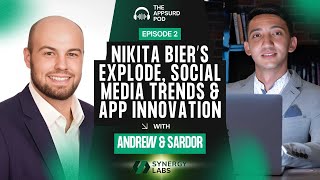
In this episode Andrew hosts a conversation with Speaker B (a product‑focused developer) covering several topics relevant to mobile‑app strategy. They start with a quick poll about the most ignored apps on a phone, revealing personal habits around WhatsApp, Telegram and Snapchat. The discussion then shifts to Nikita Bier’s new app Explode, a Snapchat‑competitor built as an iMessage plugin after Snapchat removed Bier’s access to Snap Kit. Speaker B praises the “barnacle on a whale” approach of building on existing platforms, citing examples like Fathom on Zoom, and argues that leveraging iMessage is a safe, smart move despite the risk of platform dependence. Next, they explore a micro‑SaaS idea inspired by an Andrew Wilkinson tweet: a web tool that bulk‑converts PDFs, docs, images, etc., into lightweight CSV/markdown to maximize LLM context windows. They debate market demand, the risk of being overtaken by native LLM features, and the potential of using such a tool as a lead‑magnet or SEO driver. The conversation then moves to a CRO‑focused critique of a mobile‑app landing page (Mobit). Speaker B outlines his design checklist—clear headline, trust signals, CTA hierarchy—and points out specific issues: confusing dual CTAs, misleading “as seen on” badges, and over‑use of generic trust logos. Finally, they discuss intentional offline experiences: hardware internet switches, screen‑time reduction apps (Clearspace, Zario, Opal), grayscale phone mode, and the emerging market and regulatory landscape for apps that limit device usage. The episode wraps with meta‑talk about future podcast content, interviewing successful app founders, and a forthcoming newsletter. Key takeaways include: (1) building on dominant platforms can accelerate growth but carries dependency risk; (2) micro‑SaaS utilities can serve as traffic magnets even if the core problem may be solved by larger providers; (3) landing‑page conversion hinges on clear copy, trustworthy signals, and unambiguous CTAs; (4) there is growing consumer and regulatory interest in tools that enforce intentional offline time.
Chapters
So let's roll right into it. So the first discussion is similar to our multiple choice question last week. Which browser apps you use on your phone most? So this is a little bit on the other side. What are the most ignored mobile apps on your phone? And Here is the four listed. WhatsApp, Facebook, Facebook, Instagram, Snapchat. Which app do you most often ignore on your mobile phone?
Yeah, so Snapchat. I haven't, I'm not even gonna count it because I just stopped using it all together at one point, so. But WhatsApp's super relevant. I, I wish I could use WhatsApp more, but I always like, just miss my messages on WhatsApp. I had somebody follow up with me, like, are we still meeting at 3:00'? Clock? And I'm like, crap, it's 3:00 clock now. Like, I. Sorry. So if you want me to come off unreliable, text me on WhatsApp. I just use it very badly. Like, I, I don't have a habit of checking it because I'm a huge fan of telegram, as you can tell. And I just do everything there, so doesn't receive as much love.
That makes sense. I think question's more geared for the general user versus the.
Yes.
Newer user.
Exactly. Exactly. Yeah.
Awesome. Now going to pull up an image for our second question here. We need the Jeopardy music in the background here. Sure. So this one, ironically enough, is related to a blog we post earlier this month. The man, Nikita Beer himself is back at it with a new app. Go ahead and share this. So he launched Explode. This is a Snapchat competitor. He actually there's some context behind this where he went to make a deal with the Snapchat CEO and they actually kicked them off the platform, specifically the Snap Kit platform, to develop on it. So as a response to that, Nikita Beer put together Explode, which brings Snapchat to your text messages. First off, what's your general thoughts on that?
Wait, so he was building something and then Snapchat kicked him out of the Snap Kit? Like they closed access to Snap Kit for him?
Yep. Explode is a spite app. Specifically a spite to Snapchat.
Oh, wow, that's crazy. So, but what does he explain why here openly shared how fast we were growing? Just a week later, over Thanksgiving holiday, Snapchat kicked our app off the Snapkit platform, abruptly halting our growth. Wow, that is insane. See, their revenge comes. First of all. Yeah, a lot of thoughts here, but this is one of those things, right? Like, I'm actually very surprised by what, what happened here. And A lot of kind of conclusions that come off of it because I'm like I said, actually I wasn't even counting Snapchat as an unused app on my phone because of how little I was using it. But believe it or not, I'm a huge advocate of generally this whole mindset of like, hey, do not build. If you can use somebody else's product that you can plug in, right? Why would you build it from scratch? And funny enough, I've always used Snap Kit as the example of like, you guys don't need to reinvent the wheel. I always, when I'm hiring developers to the team, I always say, hey, in this company, we're not going to reinvent the wheel. We're not going to rewrite the code for what already exists. One example, did you know that if I asked you to build a story feature in an app, you could use Snapkit? I always use that as an example of like. And never ever I would think that they would do this because they actually released Snapkit saying that everybody's copying stories, everybody copying our features. Why don't you guys just like this one from us. Here it is, right? And the fact that they actually kicked out. I understand why it's a competitive business kind of decision, but this is a bad rep on, on them because they're going to actually come off unreliable. Like, how am I going to trust now as a developer to promote this platform, to use it for our clients and for any products that anybody builds, Right? So that to me is a shocker there and a very bad rep on Snapchat. I understand they have to do a trade off, you know, and assuming this whole story is completely true. So I don't know what else happened inside there, Right? So that's one part. Another part is on the product itself. My reaction, right, Explode being the product. So when you first said Snapchat competitor, I was like, huh, A little bit. Is it a little bit too late to the party? But also, I never doubt, I never doubt Nikita's ability to promote anything. So I was like, even if it's a direct competitor, I'm not going to doubt him. But looks like it's a plugin for imessage. Is that what it is? Like you're able to send disappearing messages? Yes.
IMessage ask you about that aspect because I haven't really seen or heard people talking about developing those. Obviously I come up on my own iPhone, but haven't really thought about that as a, you know, app you would develop.
Yeah, no, that is actually so I believe it's a message app then. Right, that's what it is. So I'm a fan of like plugins, actually. I'm a fan of like being what Andrew Wilkinson calls being a barnacle on a whale. Right. You take instead of like, like a lot of founders, they try to like build their own insanely big platform to compete with another behemoth. While in reality, okay, unless you're extremely ambitious and you're trying to be the next Facebook, which some people do, but it's very low odds of success, you could still build a couple hundred million dollar product on top of an existing product. One example is Fathom, right. That completely grew on top of Zoom first and then it, it went into other platforms. But it's still like, if you think about it, it's a plugin, right? To. To other. And it's a hundred million dollar company they just raised at $100 million valuation. So with that said, I'm generally a fan of building something on top of another very big platform because that then becomes your market and that's what you target, right? It's a little bit risky. You could argue that, hey, you're relying completely on. But I feel like in Nikita's case, relying on imessage is a safe bet, right? Because I don't see imessage disappearing anywhere anytime soon. Unless OpenAI becomes a competitor to iOS and takes away the market, but in which case they can pivot and become an app for that. But this is a very smart idea, honestly. So general approach is great. Bringing an amazing feature to a product that misses that feature, I think is a great idea. He's using multiple like proven strategies here, right? One is like build something for what already exists. Another thing is use something. Use a strategy that already worked, right? As we know, Snapchat was a sexting app, right? Initially it was just, it was used on college campuses for that purpose. And I assume Explode is going to be at least starting with that kind of feature, right? Because why else do you need disappearing photos? So this is a very, very smart strategy. I love this. I did not realize that was the point of this app initially. So, you know, I would say build this for Telegram as well. But Telegram has this already built in as a feature, right? Build this for other messengers. I mean, I don't know WhatsApp would allow it. You know, another reason I don't use WhatsApp is they don't, I don't think they allow third party developers building things on top of it. But imessage is a Huge platform. Actually. I think there's other things that can be built for iMessage as well. There's a, you know, it's a whole app store of its own. So there's so many features that Imessage does not have. Even WhatsApp has more features than iMessage.
Right.
So I would say a playbook could be go on Telegram, go on other messengers that have amazing features that have really become like the driver of user growth and bring them to another existing platform like iMessage. That's very good strategy.
Well said, well said. You mentioned Andrew Wilkinson in there. We had a tweet of his pulled up last week regarding the chat GPT team training and I got one for us this week about a specific app request. Gonna go ahead and share that now. So what we have here is Wilkinson asking has anyone made a simple web app where you can upload huge amounts of PDFs, docs, text files, images and have convert them into a lightweight text CSV format to maximize LLM context window? There's a lot in there. My initial thought is there's got to be something like this exists.
But maybe.
It hasn't been put in front of the right people yet.
Yeah. You know what's funny is like there are so many ideas like that for like what we call micro SaaS. Right. Like it's such a tiny thing that could be a feature of what already exists, but you'd be surprised by how it doesn't.
Right?
Like even one thing that we were talking earlier today that our MVP of our own product that we're going to be building the plugin for. Not plugin, but like the auto posting for Google Maps. Right. That's super niche small but nobody's built it. So I haven't seen anything like this either. I think this is also a good idea of like you know, building something cool on top or like serving an existing big market, which is the LLMs. Right. But this specific one though, I think, I think it could be like a feature that GPT or these LLMs they add themselves and that could kill your whole product. So would I personally build this product? No, because I think this is too, too low hanging of a fruit that you know, like a lot of people are talking right now about like how the more features, GPT releases, OpenAI releases in ChatGPT, the more startups are dying. Like some of those rappers are dying out. Right? I don't fully agree with that thesis because rappers are still valuable. Like for example. Yeah, like GPT last week added ability to send reminders. Right. I'm sure there are a couple, like startups that are literally doing that, like AI reminders. And now you could argue, oh, are those apps dead? No, I don't think so. Because, like, there's a design aspect to it. There's other values that the wrapper adds. But this one, it's not quite a wrapper. This is too easy of a feature. I would say that I don't think it's worth building a product for. That's my opinion.
Yeah. No, it reminds me of one you showed me. The Remove BG just removes the background. Right. Like one specific purpose. Think of file conversion as well. But to your point, it reminds me of something Sam Altman said. I would say in the last six, eight months was, you know, a lot of these people complaining about the new updates killing their startups. He said, I have one piece of advice for you. Do not bet on the model not getting smarter. You know, whatever wrapper. This is what I've told people when they've talked to me about building out our GPT wrapper. Whatever it is, it should get better. With the model getting better, your whole product shouldn't be reliant on them adding a simple feature such as this.
I see. Yeah. No, for sure. I mean, it's. Yeah. Which model you bet on. It matters a lot. You know it. But maybe you're right. Maybe this would be the next remote et. It's actually a really cool example that you brought up is that remote BT is just one feature that's an entire product that I think is. It makes good. I don't know how much they make, but I'm sure it makes pretty good revenue.
Yeah. I would say a lot of us that use AI heavily understand the benefit of maximizing the context window there. So maybe there isn't a wide enough audience for this yet. Because my assumption is general users AI would not be looking for something to maximize the context.
Right. But also it's a simple app that brings a specific type of audience. Like you mentioned, you have like more of power users of LLMs like Wilkinson and us. But with this also, you know, it could be, you know what this product could be? It could be like a lead magnet for other products or other like whoever this audience of this product is, which in this case, like imagine this existed and we were the ones who built it. Right. We plugged it onto our website and we're the first result when somebody searches this product. Freaking Andrew Wilkinson would have come inbound potentially to our website. Right?
Yeah.
A Huge deal. So I would actually be down to build a small micro SaaS product like that, even making it free as a lead magnet. Right. Because I don't, I don't have an appetite to turn this into a SaaS. But I could use this as. Actually, we got to explore this more, Andrew. Like whenever we run into ideas like that, to quickly build them up, plug it into our website, use it as a lead magnet. Use it also as a way to attract more visitors to our website, increasing our SEO. And I've been thinking lately a lot about how can we make our website more interactive, add some kind of tools so people spend more time on the website itself. And I think the answer to that is just making a utility. Right. And this is one of those small utilities that attract a maybe small but very educated audience. Very. Like, who would you define as the ICP of this? Like a power reserve? GPT could be somebody building products, right? Building different products.
Yeah, it could potentially even be us if we had, you know, clients that had all these heavy documents that we needed to convert, you know, into a lighter weight format for the LLM we build out for them.
Yeah, yeah, yeah, it's something like that. I mean, that's, that's really cool to me. That is. So maybe we should build this. Like, you know, we got to scope out how easy it is to build New York. What are the comments saying? Here are people building this.
Let's see. I'm not logged in over here. Let me pull it up. Top comments. I have a script that splits all the pages of a PDF, calls OpenAI for OCR into markdown and assembles the output. They shared a git blink. PDFs are a pain. The format is optimized for printing, not for machine readability. The best, most general solution I've found is just to use GPT as ocr.
So like take a couple steps with GPT itself to do this.
Yeah, just upload it to GPT, have it analyze the PDFs through OCR and then.
Yeah, that's what I'm saying. Like it's. Can't GPT already do that? Like this is like, you know what I mean? I feel like this is like a feature within GPT itself that I don't know if you need to really build a whole product around. But even if it's a temporary thing, that could be a traffic generator until GPT adds it as a native feature or cloud as a native feature, even then I think if you can milk this traffic for like three months, that's Already good enough.
Yeah. For example, here's another helpful follow up. There's definitely a need for something like this. I would use it heavily. Right now I'm doing it with Gemini Experimental 1206 on Google AI Studio 2 million-plus token context window. I asked the model to convert the uploaded docs to summarize and topically categorized markdown. So just repurposing the data, right? When you talk about data in data out with. With AI.
Yeah, yeah, yeah. I mean, yeah, I just also would. Would need to understand like, you know, I think the, the complexity here though actually I think about the actual product is like every DF is different though, so putting it into one format could be challenging. You know, if there's images, other things like how do you convert that into.
A CSV that every output needed for wherever the data is going is different as well. So.
Yeah, yeah, yeah. It's a little more complex so you have to niche it down even more like make it required that it's one specific kind of PDF or something like that, you know. But it's interesting train of thought here that again like needs like this could be a great opportunity to bring traffic to your main product.
Yes. Well, enough on that topic. We're going to roll right into a visual look at a landing page design for mobile app. And it's just a tweet that posted it, but I kind of want to ask you some questions for your thought process on what makes a landing page stand out for a mobile.
All right, let's look into it. I mean we, we are in the business of both. We do landing pages and apps, so.
The design and bringing people in is key. So what I want to ask is what design elements or principles do you think are most important for a mobile app landing page? And does do any of those stick out to you here?
I'm not seeing your designs yet. I'm looking at. Okay, all right, so this is a landing page. Okay. For Mobit. Okay. Fast way to manage payment anytime you want. So you're asking what design elements stand out to me.
Yeah. What are most important for a mobile app landing page? Do any of those kind of stand out here?
Yeah, so a couple things here, right. I have a few of my own rules on how I, how I do like landing pages and websites. Well, first, very first thing means like the header, right? So it has to be like, it has to be clear. And my principle is like be clear, not clever. So if the headline is quote unquote clever, but you don't really understand what the Product does. That's a fail. So it's not so much design, but it's more like copy. Right. So here looking at this product for the first time, it says fastest way to manage payment anytime you want. Okay, that's. That's clear and not so clever. Great. I love that. That's it. That's a plus. Another thing is, okay, they show proof. They're showing trusted by 21,000 people with some photos there. I don't know. It's generic photos, but still helps with conversion. So anything. Again, I'm looking on all of this from the CRO perspective. The conversion rate optimization. Right. Because a good landing page, at the end of the day it should convert, should have a good call to action, clear message. And this landing page here does that pretty well. Great call to action download from App Store. C pricing. I would actually. You know, I'm confused why they have two separate CTAs. That's one critique I have is like see pricing and download free app. There is a soft CTA on the left side which is downloaded from App Store, but then that's also the main CTA on the top. So they kind of confuse that thing. The soft CTA and main CTA in the middle. Because looks like their main CTA is to download the app, but they're making their main CTAC pricing on the in the middle there. So I would switch up those two buttons.
I would agree the dark C pricing stands out more than the download app. The trusted by 21,000 people. You love that up top, right front center, even in the banner.
Yeah, that is good.
The hand of the user is something I like. You know, actually feeling it, you know, in your hand that look. But I would agree about, you know, this eta.
I'm.
I'm curious something like this. When I read the fastest way to manage payment anytime you want. I. I'm thinking it's a free mobile app for banking. You know, Venmo, whatever it may be, isn't pricing so that the pricing does kind of throw me off there.
That true. That, that. That was another point. Absolutely. Yes. Yes. I'm like this, this to me is like a mint credit Karma competitor. But yeah. What does it have to do with pricing? Like, you know, I mean it should be like a freemium app in my opinion. Right. Maybe this is. Yeah, see pricing is more of a B2B SaaS play.
Yeah.
I don't get why they throw that. So that's, that's kind of a minus even though design itself is good. So yeah, definitely there we're doing some CRO analysis here. Right. But I like that they're oh, as seen on and then. Oh, that is also confusing to me. Let's say it's seen on but then they're putting logos of non media companies like Allianz. Allianz, that's a insurance company. So that to me partners. Yeah, maybe partners. But it says as seen on. Usually those are like media features.
Yeah.
And honestly I think this is so overused and beaten up that you should stop doing as seen on and whatever. Like nobody buys that anymore.
Yeah.
I think it just honestly like even if you put tech, like unless you actually have a TechCrunch article that you're linking and I can like click on that, I'm not buying that.
That's going to definitely use case dependent. If shark tanks, another one comes to mind. As seen on Shark tank seems like a valuable, you know.
No, for sure. Yeah. If it's something like that. Yeah. But if you're doing some generic ads like Fox News and like you know, Media24 like stuff like that that you can just buy a press release on for 100 bucks.
Yeah.
That to me is like a savvy consumer knows that.
Yeah. And how that actually works is there's explicit example brand featured. You go on there and you know they say get the as seen on FOX CBS XYZ badges. What they do is they have a network, all the local affiliates of those. Your CBS 24 in Miami, your CBS 55 in Denver and they publish those articles out on those, those websites. So you know, I, I tend to agree with you that it's been pretty, pretty overused.
Yeah. And most of these, they don't even have articles published. They just put it just, just for the gimmick, you know. And it honestly does probably more harm than help. So yeah, there are some things to log on in this landing page. There are things to improve here on. As far as CRO goes, trust goes. Because like the moment I see that your article is like fake or something on your website looks shady, I don't trust rest of it. Like I don't trust that 21,000 people actually use this app anymore, you know. So like I would say keep it consistently true.
Yeah. And who knows, I'm not sure if this, this guy's just a designer that spins up random websites quickly and tweets them.
But this is not a real, real app.
I'm not, I'm not positive. Let's, let's.
Okay. Is there a website for this Mobit app? Maybe he is making concepts, right?
It is, it is a faux Miranda. It appears it's not real.
Okay. Oh, there we go. So then, then, yeah, not bad again. But, but again, as an article, as a, as a, as a designer who makes like this for a living, I think there's still definitely.
Definitely some work for improvement.
For sure. Yeah.
All right, we're gonna move on to our last tweet to go through here. This one's not specifically app related. It's more general life and tech related. Kind of a fun one. So I'm gonna go ahead and share this. Now. This guy, his house had Internet switches, like, so you can eliminate the connect by default and have a deliberate choice. So some areas, say the kids play area, the bedroom, the WI fi can be turned on.
Oh. Oh, that's interesting. I think that's a really cool concept. Yes. No, I would actually. Yeah, I'd want to have that in my house too. Or like, maybe, you know. Yeah. Dining area. I'm a fan of like specific purpose areas in your environment. Like, I like to like, have a working desk where I just work. I don't anything else or a couch is just for relaxing. Like, even though I'm guilty of, like, mixing those up, this, this is interest. So how I would use this, this switch is like, I would probably make like my dining area separate and I'd be switching off Internet and while I'm eating with family because that's, you know. Yeah, you don't have to take away the phones then, you know, if the Internet is off.
Yeah.
Or maybe use it for, like when you're going to sleep. Right. So at certain point. No, this is a great idea.
And I think it's interesting too. You make that point about going to sleep and kind of where WI fi and all this Internet technology can go. You know, some people are afraid of, you know, the WI fi signals or their 5G signals in their phone pocket. So it does give peace of mind being able to turn it off when, when you're going to sleep for sure.
And honestly, I've, I've been a lot of like, I, I've. I'm still not sure if I should be afraid of this because, like, I've, I thought it was bad for you. Then I read some research that said, no, it's, it doesn't really hurt. And then somebody on the My First Million podcast who was like a health expert came in recently. He's like, oh, the first thing here are the easiest things you can do to help your health. One of them remove the router from your bedroom. And my router is in my bedroom. So I'm like, okay, maybe, you know. Yeah. But definitely would give you a peace of mind. For sure. I would, I would use the switch because I don't if it's, if I'm 50, 50, if it's going to harm me in like 20 years, I'd rather turn it off just to be sure, you know.
I like it. All right, let's see if I had any additional questions on this one. Specifically, Ah, what are some other thoughts and examples of how developers can incorporate. Incorporate intentional offline experiences in apps or have you seen this been a part of any projects?
Yeah, yeah. Again, one of my favorite categories is like, you know that there's a saying. I don't remember who said it, but that ancient problem was scarcity. The modern problem is abundance. So especially when it comes to social media. And I honestly, this whole thing started, it's always concerned me this, this excessive use of technology, excessive use of social media. And it was 2016, I think when the Social Dilemma movie came out, or at least it was like a. Initially started as a non profit organization, then they made the movie, then all the whistleblowers came out. Like Chamath, I think was in that movie the ex VP of product at Facebook who exposed how social media apps use manipulative techniques to get you into the app and to keep you there. Right. And so even then though I thought I really did not expect this awareness to be so mainstream. And it still isn't as mainstream as you would expect. But these apps like Clearspace is what I use to block my social media. I'm using another one right now called Zario. I'm testing it. It's pretty interesting. It's like AI based. You have to like, if you overuse social media, you have to like unlock it. You have to talk to AI and explain why you're using it again, but have some bugs where they. It's not really working well. But I use Clear space. Before that I used another one, Opal. Opal was the most popular one. So to me, yeah, I think this is a trend that's going to continue.
Yeah. That leads into the next question. I think this should be a whole topic itself for a blog for sure. Is there a market for apps that encourage time away from screens, which I think is where you.
Oh, absolutely. Yeah. We can see with Opal, right. I think they're doing well. I don't know what their numbers are. We can, we can look it up. There's these softwares, by the way, that can tell you from inside how much revenue an app is making. But Opal is, I think, doing well. They raised capital. I know Zario is raising up. They actually pitched me as an angel investor to invest in them. But I've been testing their product before deciding and honestly there's a lot of areas to improve there. But there is a market for sure. There's new apps coming out. Like I said, I'm literally being pitched to invest in one of them and this is going to continue. There's parental control apps. I think there's one called Bark that, you know, interesting name, you know, that we're familiar with. But there's a Bark app that restricts kids use. I was on a vacation recently with my family and my 10 year old nephew. His parents take away his phone because they obviously don't want him to use it too much. And I said, hold on, you guys don't have to go so harsh or get paranoid to take away his phone. You can still use it for like texting and all that. But I went on his phone and installed all these screen time apps and I've really restricted all his gaming apps. Everything that really he couldn't be using more than 15 minutes a day. And I also just like my phone. I did it for my dad. I did it for him. I made it grayscale.
Yep.
So my phone by default is grayscale this year and it's supposed to reduce my screen time by 30% is what the research says. Honestly, I just used to grayscale and I'm still using it.
I tried that out for a week last August and I just couldn't keep up with it. I saw that trend though.
Me too. For first time, yes. But this, this year I really committed to keeping a grayscale the whole year. So I can still like switch back to color when I need to. Absolutely. See color.
Yeah.
But I got so used to it, it's crazy that when I see a normal phone I go like, oh, so many colors. But in general, yeah, there is definitely a market for restrictions. There's going to be stuff in the physical world that we're gonna need to restrict. There's going to be stuff in the, a lot of it is obviously in digital world, like these digital gatekeepers that we're going to be intentionally enforcing. I think also it's going to get even bigger once the regulation jumps in. So this is right now kind of like voluntary. People who are obsessed over like self development are, I think the power Users of these apps first, early adopters of these apps are people who are like, very conscious of bad habits and are keen on, like building good habits. I'm a fan of that, but I think this is going to go more mainstream once the regulations come in. I think we're going to see a lot more regulations around, like teenager or kids use of the devices and some of these are going to be enforced by law. So, yeah, I'm bullish on this market for sure.
Definitely. Definitely. It has a long way to go. And yeah, you know, in the grand scheme of human history, mortgages have only been around for 80 years. You know, Internet has only been around for 30, 40 years. So a lot of time to tell what some of the repercussions are of the device usage, the signals, the screen time, you know, every, every aspect of it.
100%. Yeah, I think this is, yeah, the early adopters are doing the right thing by going into this and this, we're gonna see this grow even more.
Yeah, I love it.
Yeah.
That's all the questions we had for, for the, the pod today. And any last thoughts for the sign off, sir?
No, I, I loved it as usual. Yeah. And this, this is great. I would love to see comments, you know, and any, any feedback that anybody leaves here. I think mainly this is for the start. It's going to be just watched by our, by our customers and whoever we talk to to potentially take on their project and then hopefully expand into a larger audience. Right. We're going to be trying to bring our guests is what I'm thinking. I really got inspired after the last episode that we did, and I've been going down the rabbit hole of like studying similar content and I'm seeing a lot of potential. I mean, we could. I'm thinking we got to start interviewing some of our clients who've been successful with their apps and also the other founders from outside that have just crushed it with their mobile apps. Yeah, I think that would be really interesting content now.
It's exciting for where this is going. And I have a newsletter coming out shortly as well. The whole brand here with this, this pod. The newsletter is going to be absurd. Branded content coming to you soon.
100%. Let's do it.
More from Nikita
Solana Stories: Crash Course on Building Viral Consumer Apps featuring Nikita Bier
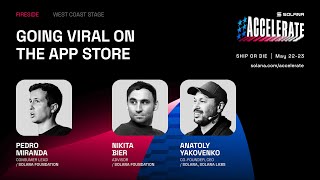
Ship or Die 2025: Going Viral on the App Store (Anatoly Yakovenko, Nikita Bier, Pedro Miranda)

Nikita Bier tells the story of 15 failed app pivots before selling TBH to Facebook for $30 million
Gas founder Nikita Bier explains why you shouldn’t worry about big companies stealing your idea

How to consistently go viral: Nikita Bier’s playbook for winning at consumer apps