Heart & Brain story
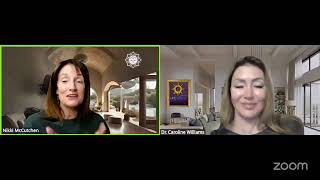
Dr. Caroline Williams and host Nikki Lea McCutchen discuss a man with a rare brain-heart breathing disorder who spent 13 years on nightly life support. After nine months using a light-based wearable device, clinicians found new neural pathways and improved heart function, suggesting the technology stimulates the body's stem cells.
Chapters
Yeah, I can hear you. I don't hear you.
Okay, awesome. That's what it was. Yeah, between the two sites. Okay. Welcome everyone. Thank you so much for joining us on The Light Effect Live with Dr. Caroline Williams. Super happy to have you all here tonight. And we are going to talk about this amazing story. We're going to dive into some brain health and heart health. And just tell you about my friend and his story that he told me last week. He has been using the technology that Dr. Caroline and I promote and help people with for about 9 months now. And he has got this very unique brain and heart condition that only affects 2 people in the United States, in all of the United States. And most of the time when they find it in people, they are postmortem. So they've already died because what happens is people go to sleep, and then their heart just stops. Uh, they stop breathing and they die. So they don't even find out that they have this condition until after the fact. He was in a very unique situation. He was actually doing some training with some EMTs. He was an EMT, and that is why they caught it, because they were sharing a room together in a hotel, and the guy was waking him up because he's like, you sound like you're dying. So anyway, so they were able to go and get the machines off of the, you know, truck and what they were using and run a test on him. And basically he was stopping breathing. And so he was like, you need to go straight home, drive all the way through, drove straight home back to Tulsa to see his doctor, had the paperwork from the readouts of everything, had him send it in to give it to the doctor. And the doctor comes out in the waiting room. He's like, whose workup is this? Like, this person is dead. Why is somebody giving me a dead person's workup? And they knew each other. And so he's like, no, No, doctor, I'm right here. That's actually my paperwork. Uh, so he was like, okay, come in right now. And they started running all these tests on him, trying to figure out what to do. Um, they actually developed a specific machine. So it's not like he's having— he's going— so he goes on life support every single night, but it's not to be intubated. So they made a special machine that he and this other man have, um, and so that he, you know, can just put that on special masks special everything, um, but not the same as having to intubate himself every night. But he's been doing this for 13 years. So 13 years, um, got this, you know, condition to where he actually has to tell himself to breathe. So during the day, he literally is telling himself to breathe, and he's been doing it for, for 13 years. Otherwise, like, if he forgets to breathe, the room starts to spin, he starts to black out, and he's like, oh my gosh, I got to breathe. So his body is no longer breathing for itself. So that's why he has to do the life support every night. So it's a— there's a brain and a heart connection with both of these things that are going on. So he's gone in 13 years, all these different, you know, checks. They run the different checks on him, you know, just to see where everything's at, how he's doing. Um, and he just went in for a check. So they were running— he's bald, and so they're running the brain scan and checks on him, and they're putting all the leads on his brain, and the technician keeps moving the leads around. And my friend is like, what are you doing? Like, what is going on? And the technician's like, I cannot figure out what's happening right now because it's showing that you have new neural pathways that were not there before. Totally. Like, and he's like, this doesn't happen. I don't understand what's going on right now. So they go in and they go to the next, you know, all the heart stuff. So he said there's this— the test that they have to run for his heart is they blow him full of air to check all of these things in his heart. And so they're running all the scans while they're doing this. And again, you know, they're like— they keep scanning and he's like, what are you guys doing? Like, why is this taking so long? And The doctor's like, we don't actually understand what's going on because it's looking as if— like, have you been breathing on your own during the day? And he's like, no, of course not. I tell myself to breathe. And they're like, okay, we want you to hold your breath and just see if your body will breathe on its own. And he's like, why would I do that? Haven't been able to breathe on my own for 13 years. Doctor's like, just go ahead and do it or whatever. They, they're running the tests. And so then they're telling him, like, we're seeing actual reversal in your heart to a place to where we could say that it— you're more along the lines of getting— you're almost— we could almost classify you as just sleep apnea and not into this other space where he's actually basically dying every night if he doesn't have the, the life support. And so, you know, they were like, we've never seen this. This doesn't happen, you know. And of course, my friend just like, God— and he calls them stickers— God and stickers. And of course, the— yes, yes, just laughing. Yeah, exactly. Yeah. So anyway, when I remember sitting down with him and talking to him about the technology, you know, and he's telling me, you know, this thing that he has going on, I just told him, I was like, okay, like, I have no idea. I can't even imagine telling you that this is even going to touch what you have going on. But if I was just, like, gonna throw a number out there. Like, you need to commit to this for 2 years. Like, let's, let's dive in, be consistent, commit to this for 2 years, and, you know, just see what hap— because I can't imagine that it would even touch what you have going on. Um, but we're talking about stem cells, right? And our bodies were designed to heal. Yes. So when your body's working the way it's designed, It's really capable of anything. It's capable of anything. Yes. So the fact that it was 9 months, I still am floored about that. I would have never expected him to have results in 9 months. And not even that. He literally doesn't feel anything. He doesn't notice anything. Now, the technology does give him more energy because he's had to set— well, he has enough energy so he doesn't feel it, but he had to set a timer on his phone every night to take the patch off because he couldn't sleep if he didn't take it off. I think it's like 6 or 7 that it said that his timer goes off to take it off because he can't sleep. And so I was joking with him and I was like, listen, I honestly think that your body's trying to keep you awake because it knows it's going to die if you go to sleep. And so it's not much energy to say you cannot go to sleep because I'm going to die. So you need to stay awake. And so, I mean, again, I'm just totally guessing, spitballing. But other than that, he feels nothing, feels absolutely nothing. So the importance of testing and doing those kinds of things and just knowing that your body, like you always say, Dr. Caroline, has innate intelligence. The technology is absolutely working. It is turning things on whether you feel it or not.
Yeah, 100%. I mean, you know, in functional medicine, that's the case. Like, you, you, you're working with people for months. Um, it's interesting how— I mean, I think like that's why I do programs with people, right? Because I know how long it's going to take on average, and I, I get them to commit to the process, and that is why they're successful. If, if I just did it month to month, like, they'd probably give up and think, well, this doesn't work. And it's just not accurate. It does work, but you have to allow for the time that it takes. And the more— the, the longer somebody's been sick and the more severe any kind of damage is in their system, the longer it will take and the more resources it will take. It's just honestly math to me. It's just math. And I understand how that math works because I've just done it for 25 years. It's going to take, you know, a commitment and some effort and some resources to turn things around. But it is absolutely possible to do that. And, um, it's incredible. And you're right, like, so many people don't have necessarily an awareness as things are changing within their body what's actually happened unless there's some testing that we're doing. And then so that's why I'm always doing testing because I'm like, hey, you're in the process. It shows like there's been improvements in your blood. Glucose, there's been improvements in your cholesterol, there have been improvements in all these areas. And that just shows that the function is improving. And but if you were to ask them, they would be like, yeah, I feel like I'm better, you know, but they don't always have a conscious awareness around that. But it clearly shows that they're better, you know what I mean, in all their testing. And so, but it can also show that there still is work to be done, right? Like, okay, we've made some progress, but we still have some you know, somewhere that we need to go. So thank goodness that he was doing that kind of testing so they could see where he was at. And, you know, that's incredible. It's incredible that, you know, he's been doing this for 13 years, that he could have died anytime and he hasn't. And then now he's using this, like you said, in 9 months, and now It's literally regenerating his brain. Exactly. To the point where he might be able to get off this. Right. It's incredible. That's what he was like. That's like a miracle.
Oh, absolutely. Because he's like, I would have never told anybody that I would ever be off life support. And now the fact that it's actually something that is a potential for me. Is truly like something he's never even contemplated.
Yeah, absolutely incredible. It reminds me of the conversation that we had around the woman that was on dialysis in her 80s, and it's after a year and a half that she was able to get off dialysis, which usually people at that age don't get off dialysis ever. They just pass away. That's part of the reason. And so Yes. So anybody who's out there listening to this, I hope it gives you some hope. If nothing else, some hope and possibility that there are things that exist like this that can be life-changing.
Absolutely.
If you give it a shot, if you give it a chance and you allow it for it to work and you remain consistent. And honestly, I feel like most things for them to work, in my opinion, to truly create change, it requires a little bit of faith in the beginning. Absolutely. It really does. You have to be— have enough faith to, number one, try it, have enough faith to allow for it and commit to it and allow for the time that it takes to work. Absolutely. Yeah, most people are pretty good at— like, most of my patients are pretty good at listening and pretty good with the faith aspect, but I cannot say all. I cannot say all of them. They, they do struggle at, at times. And, um, I've had some people, even though there were, there was evidence of like change and improvement, just give up on it for whatever reason. Like, I think a lot of it has to do with internal dialogue too, because sometimes people's perception around things, like one person will see one thing and another person will see a completely different thing. You know what I mean? So it's very interesting. So that's awesome. So tell us more about— so was he like, this is incredible, like, I'm gonna do it for 2 years? Like, what was his mentality?
Yeah, I mean, I just think he just, you know, committed to, to doing it and, um, and was just willing. And really, um, he, he, he knows a lot of people, he talks to a lot of people, um, and so there were there were all kinds of confirmations in some of the other things that he's doing, like even in his business, just in the industry, right? So he's not necessarily in per se health, but like health insurance. So he does some things like that. He does some things helping even businesses with plans that they offer to companies and things like that. So he had even before all of this, he had traveled to a surgical center in Arizona that is doing cutting-edge technology and has been for years. That's actually using light to restore and to bring recovery and faster healing during surgery. So during heart surgeries and during cancer surgeries, and they're using light technology to do all of that. And his response— and he was talking to the director of the surgical center, and his response was, oh, you mean like LifeWave on steroids? And the director turned to him and said, exactly. Yeah, that's awesome. I mean, it's just one of those to where what we're doing, even though it's on a person-to-person basis, sure, there's doctors like yourself that are using it with clients. You're still doing it on individual basis with individuals. But the fact that a director of a surgical center already understands the technology that we have, that it can be utilized to where hopefully people don't ever get in situations and having to go into a surgery like that if they start on our technology soon enough. But yeah, so he's had confirmation and just been willing to stick with it. So he's had things like that in his own industry. And even like when he's had pain, he's used our pain patches and some of the anti-inflammation. He's used those and those have really helped him as well. And even sometimes he's patched people that he's been with. He's like, listen, you don't need to be in that pain. Here, put this sticker on. And then he notices 3 hours later that the gal's not walking the way she was anymore. And he's like, hey, how's your pain? And she's like, oh my gosh, I forgot I had pain. Those stickers are amazing. Yeah. So he's definitely sticking with it for sure. That's great. So talk to me then about the brain. Like, how would GHK copper peptide influence the brain? What's even— I would have never thought that new neural pathways could be opened up like that.
Yeah, I mean, you know, stem cells, right? They can be used to create any other type of cell that's damaged. And you mentioned the innate intelligence before that runs the body, right? So the way that I look at stem cell production and use would be based on a triage triage fashion, right? In the sense that, you know, the light is stimulating your own stem cells and the innate intelligence then is kind of deciding how to use that. You know, what's the most important thing that needs repair for that individual? It's, it's making that call within, within the system. And so, you know, somebody that has what you described where, where he is concerned, You know, it's going to be what's going to keep you alive. So, you know, for him, that would be his nervous system, no doubt, because that's, you know, sounds like that's not able to— it's damaged in a way that, like you said, he doesn't breathe when he's sleeping. And so it's like the brainstem is not necessarily working like it should, right? And so, yeah. So it makes complete and total sense that because, you know, that's what stem cells do. And yeah, he could have done stem cell treatment, but I don't know that it would necessarily have the same effects exactly.
Right.
Like, right. It might have helped to a certain extent when you did it, but I don't know that it would keep going, you know, over this time. Right. Right. You might have to, like you said, do repeated stem cell treatments, and that would be extremely expensive for most people. Mm-hmm. Yeah. The fact that he can use this technology and it can increase his own stem cell production and it's way affordable, I think is great because most people can afford that price point. Right. You mean to do what it's doing for him, there's no way somebody wouldn't just— Right.
That, you know, well, it's just so amazing to me that it, that really and truly 9 months after 13 years.
Yeah.
I mean, that's insane. And not only that, like, I would've thought, okay, he'd come back and say, sure, you know, Okay, yeah, he had these new neural pathways going on in his brain, but his heart was still struggling or whatever. That really hadn't changed. But for it to go from, we think you could breathe on your own. So two major body controlling systems that got equal amounts of repair in 9 months. I mean, literally just jaw-dropping.
Yeah. I mean, it also goes to show that what's possible in 9 months with that kind of situation and potential damage, right? Clearly he was consistent with it, which is great. So it'll be amazing to see in another 9 months what happens. Right. Yeah. It'd be incredible to see that. Yeah, I just feel like if people just would stick with the technology and really be consistent and make sure they're hydrated, consistently hydrated, and really take care of yourself, it's amazing what's possible. It's interesting. I'm going to check in with— I introduced somebody in the building that I live, and he has a history of epilepsy. And, um, he just started it. And so I wanna, I'm gonna share this with him because he needs to understand what's possible and let's just see what happens. Absolutely. Yeah. Hopefully we'll be talking about that in 9 months that he's so much better.
Right. That's right. Yeah. I mean, cuz really and truly, I mean, like my friend is not doing anything else differently. I mean, there's no other changes that he's told me he's made to his diet, to his exercise. He's not made any other changes. So even at that, the fact that you can apply this technology and still get results, because, like, you and I working in the functional world, there's this list. I mean, there's like, here's what you're going to eat, here's how you're going to work out, here's the supplements you're going to take. I mean, there's this whole list. And the fact that, yes, if we do the list along with this technology, the results are going to be even better. But the fact that somebody could literally potentially change nothing else and just give your body the access to turning that peptide back on so that it's working in your body. Again, our bodies are just fabulous, fearfully and wonderfully made. I mean, just truly amazing.
It really is. It really is. I'm excited too about the water unit.
Oh my goodness.
Can you imagine? I can't wait for that. And I'll tell you why. Because so many conditions— well, pretty much every condition where you're talking about damage in the body is a result of something that caused inflammation. And so one thing about water is it it. If you're dehydrated, like, dehydration alone is a cause for inflammation. And I mean, that is one of the things that I— there's some degree of dehydration that I see with literally everyone that I work with. Like, there's degrees, like I said, there's degrees of it. Some people are way more significant than others, but there's so many symptoms of inflammation associated with dehydration that people do just do not make the connection. And so what they're talking about with the early studies with people drinking the water is super exciting.
Absolutely. It's so amazing because even when people are potentially getting good hydration, sometimes there's some kind of mitochondrial issue or absorption issue into the cell.
But that's not getting hydrated. If, like, if you're not getting it into the cell, you're not hydr— you're not getting hydrated, right? Like, you could be drinking a lot of water, but that doesn't mean you're hydrated, you know? That's what I'm saying, is just there's evidence that they're not hydrating. And we're living in an environment today where there's— things have changed. Like, we're under so much EMF exposure, that alone is a is a cause for some of the issues with hydration today. It is a reason why there's such a challenge. It's a big reason. And so not, not a lot of people are talking about that. But needless to say, a lot of health issues that are inflammatory related, there is a relationship between that and, and dehydration of the tissues. And think about just like aging in general, right? What happens when you age? Right. You dehydrate.
Absolutely.
Yeah. Yeah. It's like one of the biggest, biggest factors that you see that's very apparent. Everybody talks about collagen and collagen and collagen, but like, you could be producing collagen, but if you're dehydrated, you're still going to have, you know, you're still going to have age-related symptoms and you're going to— Absolutely. You're going to look like you're aging. Yeah, absolutely. Right? Like, Colagen matters, but so does hydration. And so I just think, you know, not enough people are talking about that or doing something about it, or if they are doing something about it, it's still a challenge. Yes.
Yes. To try to find the connection of how to get your cell to absorb the hydration.
Exactly. Exactly. I, I'm on different chats with different of my groups, and there's a number of people being like, I do this, I do this, I do this, I do this. They're doing all the things. You know, because I'm always like, are you doing this? Are you doing that? You know, they're doing all the things and they're still— it's still a challenge, you know, like, it's like they're still suffering from dehydration effects. And, yeah, it's like, it's interesting on a whole nother note, like, with literally the energetics of water being measured, it's just different now than it used to be. Right. That is a factor.
And so, yeah, well, with all the stuff that's in our water, our water is basically dead, right?
Yeah. Well, part of that is the way that we filter it too. Most people have RO systems, and a lot of the minerals that we need for the water to be able to effectively be absorbed are filtered out as well, not just the impurities. So that's part of the whole dead water factor. But yes, water has been altered in ways that it's not helping us the way that it was intended. And so, but it's a really big deal. Like, huge deal. Huge, huge deal. Absolutely. So I'm excited about the water unit. And so I just even like ready for it for myself.
Right.
Straight up. Like, I need it for me, you know? Right.
Yes.
Yes.
Absolutely.
For sure.
Yeah. Well, and even like you talking about the hydration, I have been working in a few offices, doctor's offices, helping them get their patients started with this technology. And people walk in and even just looking at people, you know, whether they're hydrated or not. I mean, it's on people's skins. I mean, it's not even just the aspect from the fact that we're seeing it, but I mean, it's obvious that they're not hydrated. And then even I'm talking to them. About how much water they're drinking and they're telling me that they're drinking a lot and I'm thinking, okay, there is a major problem going on here because your cells are not getting hydrated.
Yeah, 100%. I totally agree. Eating— there's ways that you can eat to, to help with hydration, like obviously eating plants, eating fruit. That really does help with that as a water source as well.. And a lot of people are just not eating enough of that. So that's part of the problem too. But nutrients do play a role in water being absorbed and retained in the tissues. It's a reality. And so a lot of people just think water by itself is enough, and it's just not. That's not how it works, even in nature. So, yeah, excited about that. But, man, thank you for sharing the story about your friend who's been using the technology. And because of you he's been using that. So you're doing amazing work out there, Nikki.
Oh, well, thank you. Yeah, I love it. I love sharing the technology. And really, that's what it's about. It's about helping people. Like, you know, we have access to something. We are absolutely watching changed lives. So, you know, I mean, I, I want everyone to know about it. I want everyone to have access to it and utilize it because You know, like this story tonight, we have no idea what your body is going to use the technology for and what kind of results, you know, you personally can have because of, of putting on, you know, a tiny little piece of technology, wearing it about your day, going on about your day.
So 100%. Yeah, I love it. And hopefully anybody who's listening to this, like, reach out to Nikki. You know, this is on her Facebook page this week. Next week will be mine. But reach out to Nikki if you guys are listening to this and you want to try this technology because she'll help get you started and there's like no risk, at least for the first 30 days to try it. Granted, realistically, you know, you really need to be committed longer than that if you're really going to see results, in my opinion. Absolutely. It's interesting though, some people have seen results pretty quick because they're just very aware of their body. They're very in tune with their body, but not everybody is. And so it, it can take longer for that awareness, but But yeah, we've seen amazing things as far as people healing record time, healing with minimal— like, I've had people do surgeries and you couldn't even tell after 4 weeks that they had done a surgery. Yeah, absolutely. For sure. It really healed. And somebody who's even, like, in their 80s. Yeah. Why? Because usually at that age, like, your ability to heal is— it's just not as fast. You know, the cell turnover is not as fast, not as quick.. And so usually, I mean, even 6 weeks to heal at all is, you know, you're doing good. And he healed in 4 weeks with like, you couldn't even hardly tell where the incision was. It wasn't raised at all. Right. It literally looked like you'd done it a long time ago.
Exactly. Yeah. That's how mine looked too. Obviously I'm not 80, but yeah, that's crazy for 80.
Yeah. Yeah. And I was like, wow, it's incredible. And so, yeah. Definitely can set you up for success if you're having anything like that done or you just want to work on stuff, damage that's occurred over time. Absolutely. Yeah. Yes. Minimal investment for what it can do.
Minimal, for sure. Yeah, absolutely. Yes. Definitely reach out to me. And I do have a business Facebook page as well. Embrace Optimal Health. You can find Dr. Caroline Williams at NativeSunNutrition.com.. And she does have a Facebook page of Native Sun Nutrition as well. But I think, are we going to be on your personal page next time?
Are we still going to use your business page? You know what, I'll probably use my personal page next time. So we'll just do it from there and we'll do that next Tuesday. And yeah, hopefully you guys got a lot out of this. When you shared that story on Native Sun, I was like, wow, that's incredible. I'm glad that you told the whole story tonight. That's awesome. And hopefully we can hear from him one of these days, you know.
Yes, it will be even better if you can hear from him, for sure. Yes. Yeah, I plan on keep working on him to see if we can do a testimonial Zoom with him. So thank you again so much tonight for this, Dr. Caroline. We really appreciate you. And, uh, yeah, everybody just be blessed.
Thanks for joining us.
Yeah, have a great night.
Yes, you too.
More from Nikki


What if your own body could switch on regenerative peptides already inside you?


What if your own body could switch on regenerative peptides already inside you?